
Table of Contents
Some links on The Justifiable are affiliate links, meaning we may earn a small commission at no extra cost to you. Read full disclaimer.
When I first started exploring the best e commerce sites, I wasn’t just admiring sleek web designs—I was studying what made them sell.
Some stores had this effortless way of guiding shoppers from browsing to checkout, while others inspired brand loyalty with storytelling that felt personal.
If you’re building a new online store, learning from these proven examples can save you months of trial and error. In this outline, we’ll explore the eCommerce sites that don’t just look great—but convert like pros.
Shopify — The All-In-One Platform That Scales With You
When it comes to the best e commerce sites for new store owners, Shopify stands out as the platform that simplifies everything — from design to checkout.
It’s built for growth, whether you’re launching your first product or scaling into a six-figure brand.
Why Shopify Is the Go-To for New E-Commerce Stores
The magic of Shopify lies in how easy it makes starting an online store. You don’t need to be a tech wizard — the platform takes care of hosting, security, and updates automatically.
Here’s why new stores love Shopify:
- Ease of setup: You can launch a store in less than a day using pre-designed templates.
- All-in-one management: From product listings to payments, everything lives under one dashboard.
- Scalability: Whether you’re selling 10 or 10,000 products, Shopify keeps your site running smoothly.
In my experience, the biggest advantage is focus. Shopify lets new entrepreneurs spend less time on setup and more on selling — exactly what matters in those early months.
How Shopify’s Built-In Tools Drive Consistent Sales
Shopify doesn’t just give you a storefront; it gives you a sales engine.
Key built-in tools include:
- Abandoned cart recovery: Automatically emails shoppers who didn’t complete checkout.
- Discount and promo features: Simple to create, track, and promote sales campaigns.
- Integrated analytics: You can see which products convert best and where customers drop off.
What makes Shopify powerful is that these tools are not hidden behind plug-ins. They’re right there, ready to use — making it far easier for beginners to optimize performance without paying extra for third-party apps.
Real Design Features That Inspire Trust and Conversion
Design can make or break an online store. Shopify’s design system is built around trust — clean layouts, readable fonts, and smooth navigation.
Take Shopify’s Debut theme, for instance. It’s minimalist, but every element guides the shopper’s eyes toward the “Add to Cart” button. Shopify themes also automatically adapt to mobile screens, which is crucial since nearly 70% of e-commerce traffic now comes from smartphones.
If you’ve ever wondered why some stores “just feel safe” to buy from — it’s because of this kind of visual consistency and design clarity that Shopify themes provide right out of the box.
Customization Options That Let Small Brands Compete Big
This is where Shopify truly shines. You can start simple and then expand — no need to rebuild your store from scratch.
Customization shortcuts worth knowing:
- Use Shopify Sections to drag-and-drop new content blocks without touching code.
- Integrate with apps like Klaviyo or Yotpo for advanced email marketing and reviews.
- Upgrade to Shopify Plus for enterprise features once your sales hit scale.
For small brands, these options mean you can look and operate like a big retailer without spending enterprise-level money. It’s flexibility that grows with your ambition.
Amazon — The Benchmark for Customer-Centric E-Commerce

Amazon is more than an online marketplace — it’s the playbook for how modern e-commerce should feel. Every design, feature, and interaction is optimized for convenience and customer trust.
How Amazon Perfected the Art of Simplified Shopping
Amazon’s genius is in removing friction. From one-click checkout to lightning-fast search, every step is designed to be effortless.
Amazon’s simplicity in action:
- Universal search bar: Predictive text and filters speed up product discovery.
- Prime integration: Instant shipping options remove hesitation.
- Seamless checkout: Saved payment details reduce drop-offs.
For new e-commerce owners, this is a lesson in clarity over complexity. When customers don’t have to think too hard, they buy faster.
The Role of Trust, Reviews, and Social Proof in Amazon’s Model
Social proof is Amazon’s superpower. Over 90% of shoppers read reviews before buying — and Amazon makes this process addictive.
Trust-building elements include:
- Verified buyer tags that confirm authenticity.
- Visible review averages and star ratings.
- Photo reviews that add a layer of human validation.
If you’re launching your store, take note: encourage early buyers to leave photos and detailed feedback. It creates an instant trust loop that fuels conversion.
Lessons New Stores Can Apply From Amazon’s UX Strategy
Amazon’s user experience is a masterclass in micro-decisions. Every color, font, and button placement has been A/B tested for years.
Here’s what new stores can borrow:
- Keep navigation consistent across pages.
- Minimize clicks between product discovery and checkout.
- Use recommendation sections (“You may also like”) to increase order value.
The key takeaway? Don’t overwhelm visitors. Guide them intuitively toward action.
How to Replicate Amazon’s Personalization Tactics on a Budget
You don’t need Amazon’s budget to deliver a personalized experience. Small tools and tactics can make a big impact.
Affordable personalization ideas:
- Use platforms like Klaviyo for behavior-based email campaigns.
- Display “Recently Viewed” products using built-in Shopify apps.
- Recommend add-ons or bundles based on cart contents.
Personalization doesn’t have to be complex. Start small — even using first names in emails can humanize your store.
Etsy — The Marketplace That Makes Handmade Global
Etsy carved out a space no one else could — turning handmade crafts into a global movement. It’s proof that niche platforms can thrive by leaning into authenticity, creativity, and storytelling.
What Makes Etsy’s Product Discovery So Addictive
Etsy’s discovery experience feels like browsing a cozy market — not a corporate catalog. The search engine surfaces unique, handcrafted finds, and the layout makes each product feel one-of-a-kind.
Etsy’s discovery magic comes from:
- Personalized product recommendations.
- Curated collections and seasonal themes.
- Strong visual hierarchy emphasizing product photography.
For small stores, this highlights the value of curation. When your site feels like an experience, shoppers stay longer — and spend more.
How Etsy Builds Emotional Connection With Shoppers
Etsy sellers often tell stories — not just sell products. That personal touch is what transforms a simple purchase into a meaningful exchange.
When a buyer reads, “Made by hand in a small studio in Vermont,” it builds connection and care. You can bring that same warmth into your own site by:
- Sharing your brand’s backstory.
- Adding creator bios and photos.
- Using “thank you” notes post-purchase.
It’s small touches like these that create repeat buyers who feel emotionally invested in your brand.
The Power of Niche Communities and Creator Stories
Etsy thrives on niches within niches. From vintage jewelry to custom pet portraits, micro-communities drive discovery and loyalty.
New stores can mirror this by building around shared passions — not just broad product types. Create collections that speak directly to specific interests and subcultures.
People love buying from stores that “get” them. Etsy proves that personalization isn’t just about tech — it’s about belonging.
Key Takeaways for Independent Store Owners
Here’s what every small store can learn from Etsy’s success:
- Be authentic. Don’t hide behind generic branding — show your personality.
- Nurture your niche. Focus on depth, not breadth.
- Make discovery fun. Use visuals, storytelling, and emotion to draw buyers in.
Etsy isn’t just a marketplace — it’s a masterclass in human-centered commerce. If you’re building your first store, look to Etsy for inspiration on how to make every product feel personal.
Nike — The Gold Standard of Brand Storytelling Online
Nike is one of those rare brands where every digital touchpoint feels intentional.
From its homepage visuals to its checkout flow, everything is crafted to inspire confidence, ambition, and movement. It’s not just about selling shoes—it’s about selling belief.
How Nike’s Visual Design Inspires Buyer Confidence
Nike’s design communicates power without shouting. The site relies on strong, full-screen visuals paired with clean, spacious layouts that make every product feel premium.
What makes it work:
- High-contrast photography: Nike uses dark backgrounds with bright product highlights. This contrast draws the eye and builds instant focus.
- Consistent visual hierarchy: Bold typography leads the viewer naturally through the page—from slogan to product to action.
- Subtle motion: Smooth hover effects and video loops make the experience feel dynamic and alive.
When I first analyzed Nike’s product pages, I noticed how quiet they feel. There’s no clutter, no loud pop-ups—just visual authority. That quiet confidence is what makes shoppers trust the brand before even reading a word.
The Role of Lifestyle Marketing in Nike’s Digital Storefront
Nike’s site is built around a story, not a catalog. Instead of simply showing products, it presents people in motion. Every campaign, whether it’s about running, training, or lifestyle, tells a story of challenge and victory.
Nike’s approach in action:
- Every image shows the product in use, not just on display.
- Copywriting focuses on empowerment (“Just Do It”) instead of product specs.
- Lifestyle imagery connects with aspiration—Nike sells identity, not inventory.
It’s a subtle but powerful lesson: don’t just tell shoppers what you sell. Show them who they become when they use it.
How Product Pages Reinforce a Premium Perception
Nike’s product pages feel like a luxury retail space online. Every element reinforces the idea of quality and confidence.
Key product page tactics:
- Minimal distraction: A clean background ensures full focus on the product.
- Zoom-in and 360° view: Customers can explore details up close, mimicking an in-store experience.
- Social validation: Reviews are visible but minimalistic, reinforcing trust without clutter.
It’s proof that premium doesn’t mean complicated. The more you declutter your page, the more authority your product carries.
What Small Brands Can Learn From Nike’s Branding Strategy
You might not have Nike’s budget—but you can borrow its principles.
Actionable takeaways:
- Tell a story. Don’t just show the product; show its purpose.
- Invest in visuals. Even basic photography improves when you focus on lighting and background consistency.
- Use fewer words, better chosen. Powerful copy builds emotion faster than long product descriptions.
If you can make your visitor feel something before they click “Add to Cart,” you’ve already won half the sale.
Glossier — Turning Social Proof Into a Sales Engine
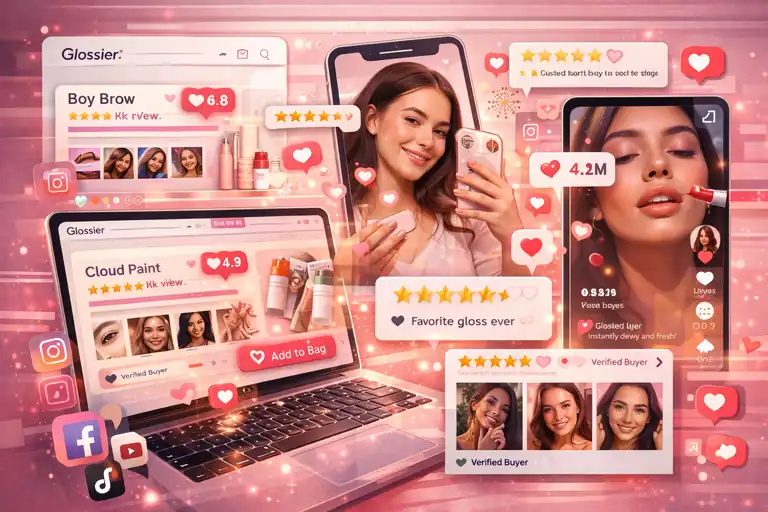
Glossier didn’t become a cult beauty brand through traditional advertising. It grew because real people—customers, not marketers—told its story.
The brand turned social proof into its most powerful growth tool.
How Glossier Uses User-Generated Content to Build Credibility
Glossier’s site is filled with real customer photos and reviews. It’s a digital mirror reflecting its community’s authenticity.
How it works:
- User-submitted photos: Real customers wearing the product appear right beside professional shots.
- Tag-based galleries: Clicking a shade or product reveals how it looks on different skin tones.
- Microtestimonials: Short, relatable review snippets placed near “Add to Cart” buttons.
This creates what I call peer-driven persuasion—where shoppers trust what others show more than what brands say. It’s community marketing done right.
The Subtle Psychology Behind Glossier’s Minimalist Design
At first glance, Glossier’s site feels almost too simple. But that’s the secret—it creates calm and confidence.
Design psychology in play:
- Soft color palettes: Light pinks and whites signal friendliness and accessibility.
- Whitespace: Empty space helps the eyes rest, improving focus and comfort.
- Gentle typography: Rounded fonts make the brand feel human and warm.
I’ve seen many stores try to copy this look but miss the tone. Glossier’s minimalism works because it aligns with its personality—effortless, not empty.
Creating a Seamless Mobile Shopping Experience Like Glossier
Over 80% of Glossier’s traffic comes from mobile, and it shows. Every interaction—from scrolling to swiping—feels intentional.
Mobile optimization tips inspired by Glossier:
- Sticky “Add to Bag” button: Keeps the call to action always visible.
- Quick view modals: Let users see details without leaving the page.
- Vertical product storytelling: Each swipe feels like turning a magazine page.
If you’re building your store, design mobile-first, not desktop-down. Shoppers decide in seconds whether your site feels effortless—or frustrating.
Why Authenticity Converts Better Than Hard Selling
Glossier’s marketing never feels pushy. Instead, it invites people to be part of something genuine.
Why it works:
- The brand speaks with its audience, not at them.
- Reviews and social posts double as marketing.
- Its tone mirrors friendly conversation, not corporate jargon.
Authenticity, especially in beauty and lifestyle niches, sells longer than hype ever could. People buy from brands that sound like friends.
Warby Parker — The Blueprint for Interactive Shopping
Warby Parker reinvented eyewear shopping by making it personal, interactive, and fun. The brand’s digital experience proves that even “boring” products can feel exciting with the right strategy.
The Secret Behind Warby Parker’s “Try Before You Buy” Model
Warby Parker’s biggest innovation was letting customers try glasses at home before purchasing—a move that shattered online buying hesitation.
How it works:
- Shoppers pick five frames online.
- Warby Parker ships them for free.
- Customers try them on and return within five days.
It removes risk and builds trust instantly. Even if you’re in a different niche, think about how you can offer a risk-free trial experience. Free samples, returns, or virtual previews all replicate that same sense of safety.
How Storytelling Elevates a Simple Product Like Glasses
Warby Parker doesn’t just sell vision—it sells clarity and self-expression. Its branding feels intelligent, witty, and human.
Storytelling strategy:
- Every frame has a name and personality, not just a model number.
- Brand copy uses conversational tone, often with humor.
- The “About” page shares a clear mission—affordable style with impact.
Even the checkout confirmation email feels like a note from a friend. That’s how you transform functional purchases into emotional ones.
Personalization and Accessibility as Core Growth Drivers
Warby Parker’s personalization doesn’t rely on guesswork—it’s built into every customer interaction.
Smart personalization examples:
- Virtual try-on tool: Uses facial recognition to show realistic previews.
- Style quiz: Helps shoppers find frames based on face shape and preferences.
- Prescription management: Simplifies reordering for existing customers.
This approach isn’t just convenient; it builds habit. Once someone experiences that ease, they rarely switch brands.
The Importance of a Seamless Online-to-Offline Experience
Warby Parker blends online and offline perfectly. You can browse online, book in-store appointments, and sync your data seamlessly between both.
What makes it special:
- Online users can see local store inventory.
- In-store experiences capture customer data for follow-ups.
- Every channel feels connected—same tone, same design.
This is the future of retail. Even if your brand is digital-only, think hybrid—how can you create continuity across touchpoints like email, chat, or social media?
ASOS — The Fast-Fashion Giant That Masters UX Design
ASOS has turned online fashion shopping into something intuitive, addictive, and visually satisfying.
The brand is a great example of how a smart user experience (UX) can make even massive product catalogs feel personal and simple to navigate.
Why ASOS’s Navigation and Filtering Are UX Gold Standards
ASOS sells thousands of items, but you never feel lost on the site. That’s because their navigation and filters are a masterclass in usability.
What ASOS does right:
- Clear top-level categories like “Women,” “Men,” and “Marketplace” set expectations immediately.
- Filters let shoppers sort by color, size, price, fit, and even occasion.
- The search bar uses predictive results to guide users quickly to what they need.
The genius here is that ASOS removes friction. Every second saved in finding an outfit increases the chance of a sale.
I’ve personally found that even when browsing “just for fun,” ASOS’s filters make me stay longer—and often, buy something I hadn’t planned on.
The Smart Use of Visual Merchandising and Product Videos
ASOS makes browsing feel like flipping through a digital magazine. Their visual merchandising relies heavily on lifestyle photography and video to bring clothes to life.
Smart merchandising techniques ASOS uses:
- Model movement videos: Every product includes short clips showing how the fabric moves in real life.
- Consistent backgrounds: Simple, neutral settings keep the focus on the clothes.
- Cross-category visuals: Outfits are shown as complete looks, encouraging more purchases.
It’s the perfect blend of inspiration and practicality. Seeing clothes in motion eliminates guesswork—and that trust translates directly to conversions.
How ASOS Nails Mobile Shopping Flow and Micro-Conversions
More than 80% of ASOS traffic comes from mobile, and their design proves it’s not an afterthought—it’s the main stage.
Mobile flow strengths:
- A clean, scroll-friendly layout that minimizes typing.
- Persistent icons for search, cart, and account access.
- Fast loading speeds and one-tap payment options like Apple Pay.
ASOS also masters micro-conversions—those small steps that lead to a sale. Things like “save for later,” “view similar,” or “style with” gently guide the user through discovery without pressure. It’s a subtle funnel that feels natural.
Retention Tactics That Keep Customers Coming Back
ASOS doesn’t just attract buyers—it keeps them.
Retention tactics worth noting:
- The ASOS app sends personalized outfit alerts and restock notifications.
- Their loyalty program rewards frequent shoppers with discounts and perks.
- Consistent new arrivals keep users checking back weekly.
It’s a reminder that post-purchase engagement matters as much as pre-purchase experience. Keep your store fresh and relevant, and customers will keep revisiting naturally.
Apple — Where Minimalism Meets Conversion Mastery

Apple’s e-commerce site is the definition of less doing more. It’s clean, consistent, and emotion-driven. Every product page feels like an experience, not just a store listing.
The Psychology Behind Apple’s Simplistic Product Layouts
Apple’s design philosophy online mirrors its products: simplicity with precision. The site uses minimal elements to create an emotional response.
Key psychological cues:
- White backgrounds evoke cleanliness and focus.
- Sparse text makes each word feel intentional.
- Product imagery is centered and surrounded by space, commanding attention.
There’s an unspoken trust when you land on Apple’s website. You instantly feel that you’re looking at something premium—and that feeling, not just the specs, drives conversions.
How Apple Builds Desire Through Visual Hierarchy
Apple’s visual hierarchy subtly directs your eyes where it wants them to go—toward desire, not distraction.
Hierarchy strategies Apple uses:
- Hero images at the top build emotion before showing details.
- Gradual reveal of features keeps users scrolling.
- Buttons are placed sparingly but strategically—each click feels meaningful.
It’s storytelling through design. Each scroll is a chapter, and by the end, you’re not comparing prices—you’re imagining ownership.
The Subtle Use of Space, Imagery, and Color to Guide Action
Apple’s site makes excellent use of whitespace. Empty space isn’t wasted—it’s intentional breathing room that helps products feel important.
Design subtleties that make Apple stand out:
- Consistent color palettes evoke brand identity.
- Clean iconography creates familiarity across pages.
- Smooth animations mimic the physical experience of handling a device.
It’s proof that great design doesn’t just look good—it feels right. Visitors subconsciously sense quality before they even process it.
Translating Apple’s Luxury Feel Into a New Brand Experience
If you’re building your own e-commerce site, you can borrow from Apple’s approach without copying it.
How to apply Apple’s tactics:
- Simplify your homepage—one clear message, one call to action.
- Use consistent colors and typefaces to create brand harmony.
- Highlight emotion before features.
In short: make your site feel like an experience, not a transaction. That’s how you elevate your brand from functional to iconic.
Allbirds — The Perfect Blend of Sustainability and Sales
Allbirds shows that sustainability can sell when it’s authentic and built into every detail. It’s one of the best e commerce sites that blends purpose, aesthetics, and performance flawlessly.
How Allbirds Turns Eco-Friendly Messaging Into Revenue
Allbirds doesn’t preach sustainability—it proves it through design and communication.
Revenue-driving sustainability strategies:
- Each product lists its carbon footprint right on the page.
- Materials like merino wool and eucalyptus fiber are explained simply and clearly.
- Product descriptions link comfort directly to natural materials.
This transparency makes eco-conscious buyers feel confident, not skeptical. When sustainability feels honest and measurable, it becomes a sales driver, not just a talking point.
Building Transparency and Brand Ethics Into Design
Allbirds’ website design mirrors its ethical message: clean, simple, and honest.
Ethical design cues:
- Earth-toned color palette that feels natural and organic.
- No hard sells—just gentle storytelling about materials and process.
- Straightforward product photos without over-editing or filters.
From a design perspective, this simplicity builds trust. There’s no manipulation—just a quiet, confident narrative that says, “We care about what you wear.”
The Role of Storytelling in Communicating Product Value
Every Allbirds product tells a story about where it comes from and why it matters.
Storytelling done right:
- “Meet Your Shoes” sections detail sourcing and materials.
- Blog-style content educates without overwhelming.
- Visual storytelling connects nature with innovation.
This emotional transparency bridges the gap between purpose and purchase. It turns buying shoes into supporting a shared mission.
Why Sustainability-Driven Stores Convert Loyal Audiences
Sustainability builds more than sales—it builds communities. People don’t just buy Allbirds; they join its vision of responsible consumption.
Loyalty-building insights:
- Repeat buyers trust brands that align with their values.
- Ethical transparency reduces price resistance.
- Sustainable storytelling drives word-of-mouth organically.
In my opinion, Allbirds shows the future of e-commerce: purpose and profit walking side by side. When your values and visuals align, you don’t have to sell harder—you simply attract better.
Casper — Reinventing a Boring Product With Smart Marketing
Casper took something as dull as buying a mattress and turned it into a brand people actually talk about. It’s a perfect example of how clarity, trust, and storytelling can transform a commodity into a lifestyle movement.
How Casper Simplified Complex Buying Decisions
Before Casper, buying a mattress was confusing. There were endless types, materials, and jargon-filled descriptions. Casper flipped that script completely.
Here’s how they made it simple:
- One flagship product to start—no analysis paralysis.
- Clear, conversational copy that explained materials and benefits without fluff.
- A 100-night trial to remove all buying anxiety.
What made this brilliant was how customer-centric it felt. Instead of overwhelming people with options, Casper removed decision fatigue. In a world full of “too much choice,” simplicity became their biggest competitive edge.
The Science Behind Casper’s Conversion-Focused Landing Pages
Casper’s landing pages are masterclasses in persuasion without pressure. They blend design psychology, copywriting, and trust triggers seamlessly.
Why their pages convert so well:
- Visual hierarchy keeps eyes flowing naturally—from image to headline to CTA.
- Calming color schemes (whites, blues, and neutrals) match the theme of sleep.
- Microcopy (tiny supportive text) reassures users at key friction points.
Even small things—like showing how easily the mattress ships in a box—play into emotion and convenience. I’ve seen stores copy this structure and instantly improve their conversion rates.
Turning Customer Reviews Into High-Impact Social Proof
Casper’s reviews don’t just exist—they sell.
Their approach to reviews is smart because:
- Real stories are highlighted, not just star ratings.
- Photo reviews show authenticity.
- Repeated themes (“best sleep ever,” “so easy to unbox”) reinforce brand messaging.
Social proof becomes even more powerful when it aligns with the story you tell. Casper didn’t just use reviews—they used them to echo their promise: better sleep, no stress.
Lessons on Making a Commodity Feel Like a Lifestyle Choice
Casper proves that no product is too boring to build a brand around. It’s all about emotion, not inventory.
How to apply Casper’s mindset:
- Tell a story around everyday comfort or convenience.
- Use humor and relatability—Casper’s tone feels human, not corporate.
- Focus on why it matters, not just what it is.
Even if you sell something ordinary, position it as part of a bigger lifestyle. That’s how Casper went from “just a mattress company” to a cultural icon.
Tips for Building Your Own Sales-Optimized E-Commerce Site
Let’s be real—there’s no one-size-fits-all formula for the best e commerce sites. But certain elements show up consistently across brands like Nike, Allbirds, and Glossier: clarity, connection, and conversion focus.
How to Combine Design, UX, and Brand Storytelling Effectively
The best stores don’t just look good—they feel right. Design and storytelling work together to guide the shopper emotionally and logically.
Start with these basics:
- Keep your navigation clear and uncluttered.
- Use brand visuals that reflect your story (colors, fonts, tone).
- Align copy with visuals—don’t let one contradict the other.
For example, if your brand is about calm wellness, don’t use loud red buttons or aggressive CTAs. Consistency between story and design creates trust subconsciously.
The Importance of Mobile Optimization From Day One
If your site doesn’t work beautifully on mobile, you’re losing sales—plain and simple. Around 70% of e-commerce traffic now comes from mobile devices.
Key mobile-first steps:
- Simplify menus and reduce scrolling fatigue.
- Prioritize fast loading speeds (under 3 seconds is ideal).
- Use sticky buttons for easy add-to-cart access.
Think of mobile like the “main showroom.” If users can browse, compare, and buy effortlessly with one thumb, you’ve nailed it.
Leveraging Trust Signals and Reviews to Boost Conversions
People don’t buy from websites—they buy from people they trust. That’s why credibility is everything.
Trust-building tactics to add:
- Verified buyer reviews (with photos).
- Visible payment security icons.
- Testimonials or press mentions above the fold.
- Simple, transparent return and refund policies.
Even small trust indicators—like showing how many others bought the same item recently—can nudge someone from hesitation to purchase.
Using Data and Heatmaps to Refine Sales Funnels Over Time
You can’t improve what you don’t measure. Tools like Google Analytics, Hotjar, or Microsoft Clarity help you visualize where customers get stuck.
How to use data effectively:
- Track bounce rates and scroll depth to identify weak sections.
- Use heatmaps to see what people click or ignore.
- A/B test headlines and CTAs for continuous improvement.
I always suggest reviewing your store data monthly. Sometimes a single design tweak—like moving your reviews higher—can boost conversions by double digits.
Expert Takeaway: What All These Top E-Commerce Sites Share
When you study the best e commerce sites—Nike, Glossier, Apple, Allbirds, and others—a clear pattern emerges. Success isn’t about luck or fancy design tricks. It’s about intention.
Consistency Between Brand Story and Shopping Experience
Every great site tells a unified story. Whether it’s Apple’s minimalism or Allbirds’ sustainability, the message stays consistent from homepage to checkout.
How to achieve this:
- Match tone, color, and copy across all pages.
- Make your design reflect your brand values.
- Keep every interaction aligned with your customer promise.
That alignment makes customers feel they’re buying into something, not just buying from something.
Prioritizing Emotional Connection Over Aggressive Promotion
The best brands sell feelings, not features. They connect before they convert.
You can do the same by:
- Using empathy-driven copy (“We get it—finding the right fit is hard”).
- Showing real people, not stock photos.
- Focusing on lifestyle benefits instead of hard sales pitches.
Emotional connection builds loyalty that discounts never could.
Why Great Design Alone Isn’t Enough Without Trust
Even the prettiest store fails without credibility. Design opens the door; trust keeps people inside.
Trust foundations to remember:
- Fast, secure checkout processes.
- Transparent pricing—no hidden fees.
- Responsive customer service that feels human.
I’ve seen too many brands focus on visuals but ignore reassurance. The best sites do both flawlessly.
Actionable Steps to Apply These Lessons to Your New Store
If you’re launching your own e-commerce store, start with these five steps:
- Define your story—why you exist and who you serve.
- Build a clean, fast, mobile-first site.
- Add social proof early and often.
- Personalize the experience using data and customer feedback.
- Test everything—your homepage, your checkout, even your thank-you page.
And here’s my personal tip: don’t chase perfection, chase clarity. If a visitor understands what you offer, feels confident buying, and emotionally connects with your brand—you’ve already built one of the best e commerce sites in your niche.

I’m Juxhin, the voice behind The Justifiable.
I’ve spent 6+ years building blogs, managing affiliate campaigns, and testing the messy world of online business. Here, I cut the fluff and share the strategies that actually move the needle — so you can build income that’s sustainable, not speculative.
Related posts:
 Best Ecommerce Websites That Nail Sales and UX
 10 Ecom Websites That Nailed Design and Conversions
 Shopify Theme Debutify Explained: Features, Pros & Cons
 Debutify Theme Free Download Guide: Safe & Easy Installation
 Dropshipping Website Examples That Inspire and Convert
 Social Commerce Strategies to Turn Engagement Into Sales