
Table of Contents
Some links on The Justifiable are affiliate links, meaning we may earn a small commission at no extra cost to you. Read full disclaimer.
If you’ve ever wondered why some people seem to effortlessly earn through affiliate programs while others barely make a sale, the truth lies in mastering a few proven principles of successful affiliate marketing.
I’ve learned that it’s not about luck—it’s about using smart strategies, understanding your audience deeply, and promoting the right products with authenticity.
In this guide, I’ll share the 10 secrets to successful affiliate marketing that actually work—the kind that turns clicks into real commissions.
1. Choose High-Quality Affiliate Programs That Align With Your Niche
Finding the right programs is one of the most overlooked steps in successful affiliate marketing.
It’s not just about joining the biggest network; it’s about aligning with brands your audience already trusts and products that genuinely deliver value.
Partner With Trusted Affiliate Networks
When starting out, it’s tempting to sign up for every affiliate network you can find. But from what I’ve seen, the most sustainable affiliates choose quality over quantity.
Here’s where I suggest focusing:
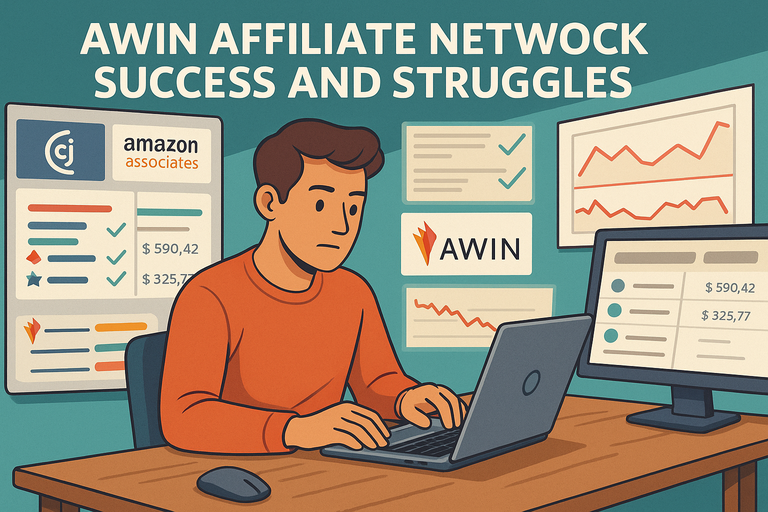
- Awin: A trusted, established affiliate network that offers a wide range of reliable brands and digital products. It recently absorbed all ShareASale programs, so if you used to work with ShareASale, Awin is your go-to now.
- Impact: Great for tech and SaaS-focused affiliates who want detailed tracking and advanced reporting.
- CJ (Commission Junction): Offers established global brands and consistent payouts.
Pro tip: Always look at EPC (Earnings Per Click) and conversion rates before committing. For example, if Awin shows a program with an EPC of $1.20 and 5% conversion, it signals solid earning potential without high traffic dependency.
Select Products You Genuinely Use and Recommend
Affiliate marketing only works when your audience believes you. That belief comes from authenticity. Before you promote any product, test it yourself or research it deeply.
Ask yourself:
- Would I recommend this if there were no affiliate link?
- Does it align with my audience’s needs or values?
For instance, if your niche is productivity tools, recommending Notion or ClickUp feels natural only if you’ve actually built workflows inside them.
You could even share screenshots or mini tutorials like: “Click on Settings → Templates → Duplicate My Workspace to follow my setup.” That makes your recommendation more practical and believable.
Focus on Long-Term Brand Partnerships, Not Quick Wins
Short-term commissions are fine, but steady affiliate income comes from long-term relationships. Brands love affiliates who understand their product, know the audience, and create consistent traffic.
Here’s how to nurture those partnerships:
- Negotiate exclusive deals or discount codes to offer your followers something special.
- Provide regular performance updates to your affiliate manager—it shows professionalism.
- Ask for custom creatives or early access to product updates.
In my experience, this approach leads to better commission rates and recurring income, instead of one-time payouts that fizzle out fast.
2. Understand Your Audience Before Promoting Anything
Promoting without knowing your audience is like shooting arrows in the dark.
To build successful affiliate marketing strategies, you need to understand what your audience actually wants—not what you think they want.
Research What Your Audience Truly Needs
Start with empathy. Imagine sitting across from your ideal reader and asking, “What are you struggling with right now?”
Use these tools and methods:
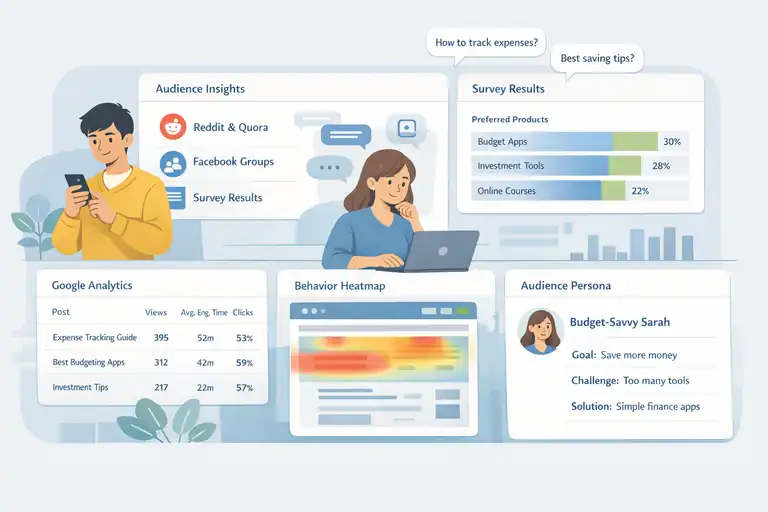
- Reddit and Quora: Search for real user pain points.
- Facebook Groups and YouTube Comments: Observe recurring questions.
- Surveys or Polls: Ask directly what type of products they’d find most useful.
For example, if you run a finance blog and notice readers asking, “How can I track expenses on mobile?”, you could review Mint or YNAB—tools that solve that exact problem.
Use Analytics Tools to Identify High-Intent Segments
Data tells the truth your instincts can’t. Using Google Analytics, track which posts get the most clicks and engagement. Combine that with tools like Hotjar (for behavior heatmaps) or Microsoft Clarity to see where people linger or drop off.
Steps you can try:
Go to Google Analytics → Engagement → Pages and Screens.
- Sort by Average Engagement Time to see what holds readers’ attention.
- Cross-check those posts with your affiliate links to identify high-intent topics.
This helps you target content that already performs well, making your affiliate promotions far more effective.
Create Audience Personas for Better Content Alignment
Think of an audience persona as your reader’s digital twin—a semi-fictional profile that represents their goals, frustrations, and behaviors.
Here’s a quick structure to create one:
- Name: “Budget-Savvy Sarah”
- Goal: Save more money without sacrificing comfort
- Challenge: Feels overwhelmed by too many finance tools
- Solution: Simple, mobile-first apps with clear tracking
When you know “Sarah,” you stop writing generic posts. You start writing to her. That connection translates to trust—and trust is what drives affiliate conversions.
3. Build Trust Through Authentic and Transparent Content
Affiliate marketing thrives on credibility. Without trust, even the best products won’t convert.
Transparency, honesty, and genuine storytelling turn your readers into long-term followers—and buyers.
Share Personal Stories or Honest Reviews
Instead of saying, “This is the best tool ever,” share why you think so. Talk about your real experience—the good, the bad, and the lessons learned.
Example: “When I first tried Aweber, I messed up my first automation workflow completely.
But once I figured out the ‘Automation → Workflow → Email Trigger’ path, it started saving me hours every week.”
That kind of honesty makes readers trust your word because it sounds real, not rehearsed.
Clearly Disclose Affiliate Relationships
Transparency is not just ethical—it’s smart business. Readers appreciate honesty, and it keeps you compliant with FTC guidelines.
Simply include a short note like: “Some links in this post are affiliate links, which means I may earn a small commission if you make a purchase at no extra cost to you.”
Place it naturally at the beginning or near your links—don’t hide it in the footer. This small act of honesty can make a surprising difference in conversions.
Prioritize Value Over Promotion in Every Post
Affiliate links should complement your content, not dominate it. Focus on teaching first, selling second.
For example:
- Write “How to Set Up an Email Welcome Series in Kit” rather than “Best Email Tool to Buy.”
- Offer step-by-step guidance, such as “Click ‘Automations → Create New → Welcome Sequence’ and add your first trigger.”
Your readers will sense that you care about helping them, not just earning commissions—and that’s the foundation of every successful affiliate business.
Expert Tip: Trust compounds. The more transparent, relatable, and consistent you are, the easier it becomes to recommend higher-value products later. In my experience, once your audience trusts one recommendation, they’ll trust the next ten. That’s how real affiliate empires are built—quietly and authentically.
4. Optimize Your Content for Search Intent and Conversions
If you’ve ever written a great blog post that didn’t convert, the problem probably isn’t your effort—it’s the alignment between search intent and conversion design.
When your content matches what readers are actually searching for, and you make it easy for them to take action, everything changes.
That’s where successful affiliate marketing really begins to scale.
Target Buyer Keywords That Convert
Not all traffic is good traffic. The secret lies in identifying buyer-intent keywords—search phrases that signal someone is ready to make a purchase.
Here’s how you can spot them:
- Informational Intent: “What is affiliate marketing?” → Great for awareness, not for conversions.
- Commercial Intent: “Best email automation tools” → Perfect for affiliate content.
- Transactional Intent: “Buy Kit email automation plan” → Direct purchase intent.
I usually start by typing my niche term into Google and checking the People Also Ask section or related searches. Then I cross-check with Ubersuggest to find keywords that have clear buying signals like “best,” “review,” “vs,” or “discount.”
Once you have those keywords, integrate them naturally into:
- Your H2 and H3 headings.
- First 100 words of your article.
- Alt text of your images.
This way, your article ranks for what people actually want to buy, not just what they want to learn.
Structure Your Posts for Easy Reading and Higher CTR
If readers can’t scan your article easily, they’ll bounce—and Google notices that. Structuring your posts clearly is one of the simplest ways to improve click-through rate (CTR) and keep readers engaged long enough to convert.
Here’s a quick format I personally use:
- Hook: A short intro that empathizes with the reader’s problem.
- Promise: One line that clearly states what they’ll gain from reading.
- Content Layout:
- Use short paragraphs (2–3 lines max).
- Break down sections with H2s and H3s.
- Add numbered lists or quick-reference boxes where appropriate.
- Visual Aids: Screenshots, flowcharts, or tables (especially when comparing tools).
For example, if you’re comparing Awin vs Impact, you could include a simple comparison table:
| Feature | Awin | Impact |
| Brand Type | Global, broad | SaaS and Tech |
| Reporting | Beginner-friendly | Advanced tracking |
| Ideal For | Lifestyle bloggers | Tech affiliates |
A table like this not only boosts clarity but also encourages readers to stay longer—improving dwell time, which Google loves.
Use Compelling CTAs Without Sounding Salesy
No one likes to be sold to—but everyone loves to be guided. A good call to action (CTA) feels like a natural next step, not a push.
Try this instead of typical “Buy Now” buttons:
- “See how Awin compares to other affiliate networks.”
- “Start your free trial with Kit to automate your first campaign.”
- “Download the checklist I use to pick winning affiliate programs.”
The trick is to make your CTAs contextual. If someone is reading a tutorial about building an email funnel, the CTA could be: “Try setting this up using Kit—it’s what I use for my own automation.”
Keep it conversational, relevant, and personal. The goal isn’t to sell—it’s to help the reader take the next step confidently.
5. Create Evergreen Content That Continuously Drives Income
The best affiliate marketers don’t chase trends—they build evergreen systems.
Evergreen content is timeless; it keeps earning even when you’re asleep because it solves long-lasting problems.
Write In-Depth Guides and Tutorials That Stay Relevant
When I write tutorials, I imagine explaining a concept to someone completely new. That mindset helps me create posts that remain valuable for years.
For example, instead of writing “Top SEO Tools in 2025”, I’d create “How to Use SEO Tools to Rank Content Fast.” Then, I’d feature durable tools like Ahrefs or Semrush—the kind that don’t disappear next year.
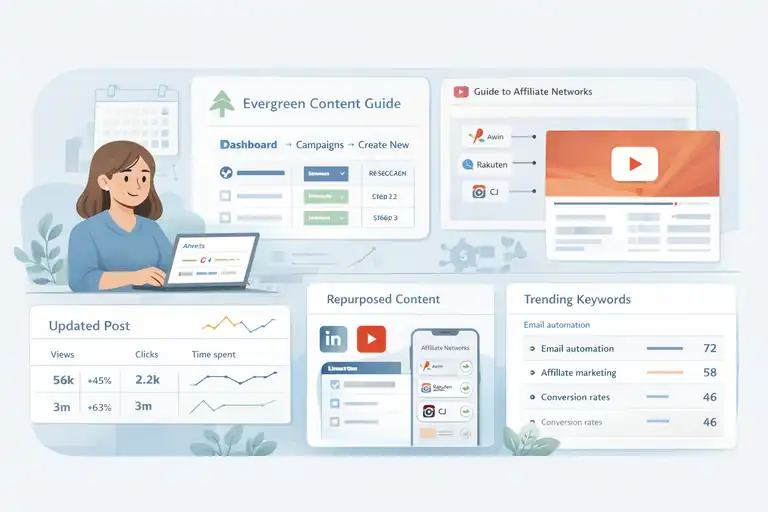
An effective evergreen guide usually includes:
- Step-by-step explanations.
- Screenshots or short walkthroughs (like “Go to Dashboard → Campaigns → Create New”).
- Updates every 3–6 months to refresh data or tool names (like updating Sendinblue to Brevo).
That’s how your post keeps ranking—and converting—long after you publish it.
Update Old Posts to Keep Them Ranking
Google rewards freshness. A quick post update can often double your traffic.
Here’s a simple refresh checklist I follow:
- Replace outdated tools or brands (e.g., Kit instead of ConvertKit).
- Add new stats or trends from credible sources.
- Reoptimize headers and meta titles for updated keywords.
- Fix broken affiliate links or swap in better offers.
I once updated a 2021 “email automation guide” by adding Brevo instead of Sendinblue and improving readability. Within a month, the post jumped from page 3 to page 1.
Small tweaks, big results—that’s the beauty of evergreen updates.
Repurpose Content Across Platforms to Extend Reach
Repurposing helps your affiliate content reach new audiences without starting from scratch.
Try these:
- Turn a blog post into a short YouTube tutorial with on-screen captions.
- Convert listicles into carousels for LinkedIn or Instagram.
- Break down a guide into an email series (using Kit or Brevo).
Let’s say your post is about “Best Affiliate Networks.”
You could create:
- A YouTube walkthrough showing how to sign up for Awin.
- A LinkedIn post summarizing the top 3 networks.
- An infographic showing commission comparisons.
This multi-format approach not only drives more traffic but also strengthens your authority across channels.
6. Leverage Email Marketing To Nurture Affiliate Sales
Email remains one of the most powerful—and personal—tools for successful affiliate marketing.
It’s where you build trust, stay consistent, and guide readers gently toward purchases.
Build an Engaged Email List With Valuable Freebies
People won’t subscribe just to “get updates.” They need a reason.
Offer something practical like:
- A mini-course (“3 Days to Build Your First Affiliate Funnel”).
- A downloadable checklist or toolkit.
- Exclusive discounts or bonuses for subscribers.
For example, you can use Mailerlite to create a simple automation: Go to Automations → New Sequence → Trigger: Form Submission. This immediately sends the freebie while tagging the subscriber for future affiliate offers.
The key is to make that first email valuable, not salesy. Give before you ask.
Use Personalized Email Sequences To Drive Conversions
Automation doesn’t mean losing your human touch. You can segment your subscribers based on interest or behavior.
Example path using Kit:
- Create a tag called “Affiliate Beginners.”
- When someone downloads your beginner checklist, assign that tag.
- Send a tailored 3-part sequence showing how to set up their first affiliate link.
Each email should build naturally:
- Email 1: Story and introduction.
- Email 2: Helpful tutorial with a product mention.
- Email 3: A soft CTA linking to your affiliate product.
When personalization feels authentic, your conversion rate can easily jump by 20–40%.
Promote Affiliate Offers Gently Through Educational Emails
The best affiliate emails don’t scream “Buy now.” They teach first, then recommend.
For instance, instead of writing, “Sign up for Brevo today,” you could share, “Here’s how I automated my first welcome series using Brevo—it took 15 minutes and now saves me hours.” Then, include your affiliate link naturally after the explanation.
Here’s what usually works well:
- Educational tone first, promotional mention second.
- Visual examples like short GIFs or screenshots.
- Occasional exclusive bonuses or coupon codes to add value.
When you blend education with subtle promotion, your readers see you as a mentor—not a marketer. And that’s when your affiliate income becomes consistent and sustainable.
Pro Tip: Your email list is your long-term asset. Algorithms change, rankings fluctuate—but a list of people who trust your voice will always convert. Nurture it like a relationship, not a funnel. That’s where successful affiliate marketing truly compounds over time.
7. Use Multiple Traffic Sources To Diversify Income Streams
Relying on just one platform is like balancing your entire business on one leg—it works until the ground shifts.
In successful affiliate marketing, you need multiple traffic streams that keep flowing even if one source slows down. This not only protects your income but also expands your reach to new audiences.
Combine SEO, Social Media, and Paid Ads Strategically
Each traffic source serves a different purpose. SEO builds long-term stability, social media drives engagement, and paid ads offer quick visibility. The secret is blending them strategically instead of treating them separately.
Here’s how I’d approach it:
- SEO for Longevity: Use keyword research tools like Ubersuggest to find buyer-intent keywords. Create blog posts that target these queries and optimize meta titles and descriptions to boost click-through rate.
- Social Media for Awareness: Use platforms where your audience actually spends time. For lifestyle or product niches, focus on Instagram and Pinterest. For B2B, LinkedIn performs better.
- Paid Ads for Testing: Use Meta Ads or Google Ads to test new offers. For instance, run a small campaign targeting “best affiliate programs” to see which ad copy brings conversions.
I like to think of SEO as the “engine,” social media as the “accelerator,” and paid ads as “nitro boosts” when you want instant traction.
Use YouTube and Podcasts for High-Trust Traffic
Video and audio platforms build something that written content alone can’t—connection. People hear your voice, see your face, and begin to trust you more.
If you’re not camera shy, YouTube can become a steady source of traffic for years.
Try this approach:
- Create short tutorials like “How to Create an Email Automation in Kit” or “How to Join Awin’s Affiliate Network.”
- Use on-screen guides or a quick UI walkthrough. For example: “Click on Dashboard → Campaigns → Create New.”
- Add your affiliate links in the description with short explanations.
If you prefer audio, podcasts work beautifully. Record practical discussions, like “My First $100 from Affiliate Marketing,” and mention products naturally. Podcasts often attract an audience that’s deeply engaged—perfect for nurturing trust before conversion.
Test and Scale Channels That Deliver the Best ROI
It’s easy to fall into the trap of doing everything everywhere. But not every channel gives equal results.
Track your analytics monthly to identify which channels actually convert. For example, you might discover that YouTube brings 40% of traffic but only 10% of sales, while email drives 30% of sales from a smaller audience. That insight helps you double down where ROI is highest.
I recommend using a simple spreadsheet to track:
- Traffic by source (SEO, YouTube, Instagram, etc.)
- Conversion rate per channel
- Revenue per source
After three months, patterns emerge. Drop what’s underperforming and reinvest time and money in the channels that pay off. That’s how you build a diversified, stable affiliate business.
8. Analyze Performance Metrics and Adjust Your Strategy
Analytics are the compass of successful affiliate marketing. Without data, you’re just guessing.
By tracking performance regularly, you can spot what’s working, fix what’s not, and maximize profits with precision.
Track Conversions, Click-Throughs, and Revenue
It’s not enough to look at page views. You need to track what happens after someone clicks your affiliate link.
Use your affiliate dashboard (like Awin or Impact) to measure key metrics:
- CTR (Click-Through Rate): Tells you if your content or buttons are compelling.
- Conversion Rate: Shows if your traffic is targeted and ready to buy.
- Earnings Per Click (EPC): Helps you compare offers fairly.
For example, if your blog on Awin shows 500 clicks with 10 conversions, that’s a 2% rate. If another post has only 200 clicks but 8 conversions, it’s performing much better. Focus your energy on creating more content like the latter.
Use A/B Testing Platforms Like VWO or Optimizely
Testing is where real optimization happens. Tools like VWO and Optimizely allow you to experiment with headlines, CTAs, button colors, and link placements to see which version performs better.
Here’s a simple setup example:
- Create two versions of your landing page—one with a blue CTA button, one with orange.
- Run the test for 7–14 days to gather enough data.
- Use the results to make permanent design changes that improve conversions.
Even small changes (like switching “Learn More” to “Get Started Today”) can increase conversions by 10–20%. It’s about constant, data-driven improvement.
Identify Low-Performing Links and Optimize Placement
Sometimes the issue isn’t the product—it’s where and how you’re promoting it.
Check your analytics for links that get clicks but not conversions.
Ask yourself:
- Is the link buried too deep in the content?
- Does the anchor text feel natural and persuasive?
- Could an image or button improve visibility?
For example, placing your affiliate link right after a value-packed section (“Here’s the tool I use for this exact task—Kit”) often performs better than tucking it at the end of an article.
Regular link optimization ensures every click has the highest chance of turning into revenue.
9. Stay Updated With Industry Trends and Algorithm Changes
Affiliate marketing evolves faster than most realize.
What worked last year might flop today. Staying ahead of trends keeps your strategy fresh, compliant, and competitive.
Follow Leading Affiliate Blogs and Forums
Set aside 10 minutes a day to read from trusted industry sources.
A few worth following include:
- Affiliate Insider for updates on affiliate tech and partnerships.
- Search Engine Journal for SEO and Google algorithm insights.
- Awin’s Partner Blog for updates on merchant programs and payout structures.
These sources often share early warnings about platform updates or new features, helping you pivot before others catch on.
Adapt Quickly to SEO or Platform Policy Updates
If you’ve been in affiliate marketing long enough, you know how sudden algorithm updates can shake traffic overnight. The best way to handle them? Stay adaptable.
For instance, when Google rolled out its Helpful Content Update, affiliates who focused on in-depth, user-first guides actually gained traffic. The takeaway: Don’t chase algorithms—align with their intent.
And for platforms like YouTube or TikTok, always keep an eye on new monetization policies. A small tweak in disclosure requirements or content format can make a big difference.
Test Emerging Tools and Techniques Before Competitors Do
Early adopters often win the biggest rewards. When a new analytics tool, traffic platform, or affiliate network emerges, test it early while competition is low.
For example, when short-form video content started exploding on TikTok, affiliates who created authentic, low-budget product demos saw massive traction before it became saturated.
Keep a “testing list” in your notes—new tools, plugins, or methods you’ll experiment with monthly. Some will fail, but the few that work will keep you years ahead of the curve.
10. Focus on Relationship Building and Community Engagement
Affiliate marketing isn’t just about links and conversions—it’s about people. Real success comes when you build relationships that amplify your reach, credibility, and long-term income.
Connect With Other Affiliates and Influencers
Networking opens doors you can’t find alone. Join affiliate Slack groups, attend virtual events, or engage with peers on X (formerly Twitter) and LinkedIn.
Here’s what usually works:
- Comment thoughtfully on others’ posts instead of self-promoting.
- Share genuine advice or wins—it attracts like-minded creators.
- Offer to collaborate on round-up articles or webinars.
When you build friendships instead of transactions, opportunities naturally follow—like cross-promotions, guest posts, or private affiliate offers.
Engage in Comments, Forums, and Social Groups
Being visible in the right communities helps people recognize you as a go-to expert. Participate in places where your target audience hangs out—Reddit threads, Quora, or niche Facebook groups.
For example, if your niche is online marketing, join communities like “Affiliate Marketing Mastery” or “SEO Signals Lab.” Share your personal experiences instead of generic tips. The goal is to add value first.
Even a short, helpful answer like “I use Kit for my email automations—it’s simple to set up under Automations → New Sequence” builds trust that leads to long-term followers.
Collaborate on Content or Cross-Promotions To Build Authority
Collaboration multiplies visibility. Partner with other creators or bloggers in your niche for mutual benefit.
Some collaboration ideas:
- Co-host a webinar on “Affiliate Marketing Strategies That Still Work.”
- Write joint comparison articles—each affiliate gets exposure.
- Swap guest posts with complementary niches.
I’ve seen even small affiliates gain huge exposure this way. A single co-authored post or webinar can attract hundreds of new readers and potential buyers, often with zero ad spend.
Expert Tip: The foundation of successful affiliate marketing is trust—built one connection at a time. When you focus on serving others, being transparent, and adding consistent value, the relationships you build will turn into your most powerful growth engine.
FAQ
What is the key to successful affiliate marketing?
The key to successful affiliate marketing is building trust with your audience through authentic recommendations and promoting only high-quality products that fit your niche.
How do beginners start successful affiliate marketing?
Beginners should choose a focused niche, join trusted networks like Awin, create valuable content, and use email marketing tools such as Kit to build long-term engagement.
How can I increase sales in affiliate marketing?
Increase affiliate sales by optimizing content for buyer intent keywords, using multiple traffic sources, and tracking conversions to refine strategies that drive consistent results.

I’m Juxhin, the voice behind The Justifiable.
I’ve spent 6+ years building blogs, managing affiliate campaigns, and testing the messy world of online business. Here, I cut the fluff and share the strategies that actually move the needle — so you can build income that’s sustainable, not speculative.
Related posts:
 Affiliate Marketing Success: Best Place to Start
 How Much Do Affiliate Marketers Make? 7 Facts That Will Shock You!
 10 Proven Tips for Successful Online Affiliate Marketing
 Getting Started in Affiliate Marketing: Best Way
 Affiliate Business Guide: How to Earn $10K a Month
 Awin Affiliate Network Success and Struggles