
Table of Contents
Some links on The Justifiable are affiliate links, meaning we may earn a small commission at no extra cost to you. Read full disclaimer.
Search engine marketing solutions have become the fuel behind how modern brands win attention online.
Whether you’re a small business or an established company, the challenge remains the same: How do you make your brand stand out in a crowded digital space?
That’s what this guide explores—how targeted SEM strategies not only increase visibility but help you capture the right audience at the right time.
Understanding What Search Engine Marketing Solutions Really Are
Search engine marketing solutions (often called SEM solutions) help businesses appear in front of potential customers through paid search results.
Think of them as a fast track to visibility—placing your brand right where people are actively searching for what you offer.
How SEM Differs From SEO and Why It Matters
SEM and SEO work toward the same goal—visibility—but take very different roads to get there. SEO (search engine optimization) focuses on organic rankings, which take time to build through content, backlinks, and site quality.
SEM, on the other hand, involves paid placements like Google Ads that can push your site to the top instantly.
I often think of it like this: SEO is planting a tree that grows over time, while SEM is renting a billboard on a busy street. Both bring results, but SEM gives immediate exposure and measurable returns.
Here’s why that difference matters:
- Speed of Results: SEM drives instant traffic; SEO takes months.
- Control: SEM lets you target exact keywords and demographics.
- Budget Flexibility: You decide how much to spend and can scale quickly.
- Testing Ground: SEM data helps refine SEO strategies based on user behavior.
Core Components That Make Up a Strong SEM Strategy
An effective SEM campaign isn’t just about running ads—it’s about running smart ads.
Here’s what a solid SEM structure includes:
- Keyword Research: Understanding what your audience is searching for using tools like Google Keyword Planner or Ahrefs.
- Ad Creation: Writing persuasive copy that matches user intent and includes a strong call to action.
- Landing Page Optimization: Ensuring users find what they expect after clicking—fast loading, clear message, and easy conversions.
- Bidding Strategy: Setting the right bid (manual or automated) to get the best ROI.
- Performance Tracking: Using Google Analytics and Ads dashboards to measure click-through rate (CTR), cost per click (CPC), and conversions.
In my experience, campaigns that combine creativity in ad copy with disciplined tracking often outperform those that rely solely on big budgets.
The Role of Paid Ads in Driving Faster Brand Visibility
Paid ads are the engine behind SEM’s power. They place your brand directly in front of searchers within hours of launching a campaign.
Imagine someone searching “best fitness coaching app”—if your ad appears first, that’s instant exposure.
The key advantage? Intent. SEM targets users already in the decision-making phase, meaning you’re not just reaching people—you’re reaching people ready to act.
Smart brands use this to dominate search spaces fast, while continuing to build organic authority in the background.
Paid ads don’t replace SEO; they amplify it by filling the gap between visibility and long-term growth.
How Search Engine Marketing Solutions Increase Brand Reach
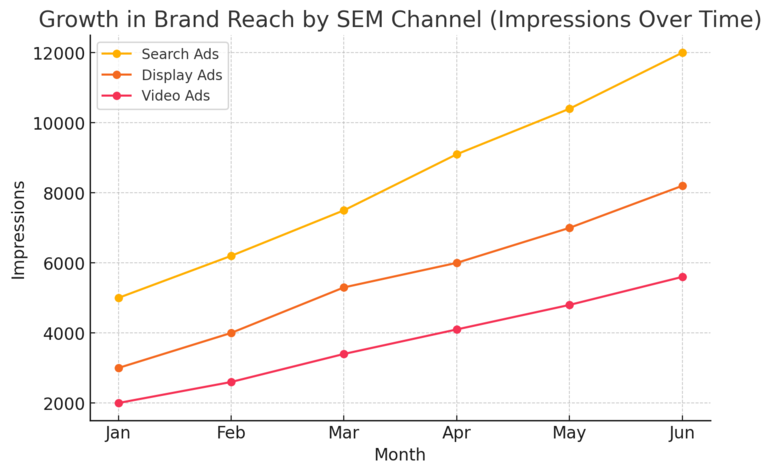
SEM solutions don’t just bring clicks—they build familiarity. Each ad impression is a micro-moment where your brand gets noticed, remembered, and trusted.
Leveraging Google Ads for Top-of-Page Visibility
Google Ads remains the backbone of most SEM campaigns. With text-based search ads, you can appear above organic results when users type specific queries related to your products or services.
For instance, if you run a home décor store, targeting “modern wall art online” ensures your ad appears before organic listings. This not only increases clicks but also brand recall—because users see your name first.
What I recommend is setting up responsive search ads, which allow Google to automatically test different headlines and descriptions, improving performance over time.
In the UI path: Google Ads Dashboard → Campaigns → Ads & Assets → Create Ad → Responsive Search Ad.
Expanding Reach Through Display and Video Advertising
While search ads capture intent, display and video ads build awareness among people who may not yet be looking for your brand.
These ads appear on websites, YouTube, and apps, showcasing visuals and short messages.
For example:
- Display banners can promote a new product launch.
- YouTube ads can introduce your brand story through short videos.
This combination of visual and search campaigns increases overall brand visibility and reinforces recognition.
According to Google data, display campaigns can raise brand awareness by up to 80% when paired with search ads.
Using Remarketing to Stay Visible to Interested Audiences
Remarketing is one of the most underutilized SEM tools, yet one of the most powerful. It targets users who’ve already visited your site but didn’t convert.
You can remind them of your offer through subtle follow-up ads while they browse other sites. In practice, I’ve seen brands reduce abandoned cart rates by up to 30% through remarketing sequences.
In Google Ads: Tools & Settings → Shared Library → Audience Manager → Remarketing Lists.
Set time frames (like 30 days) to re-engage users while your brand is still fresh in their minds.
The Impact of Keyword Targeting on Brand Awareness
Keyword targeting is the beating heart of SEM. The right keywords ensure your ads appear for the right people, not just more people.
Choosing High-Intent Keywords That Attract the Right Audience
High-intent keywords—those showing a readiness to buy or act—tend to convert far better than broad terms.
For example:
- “Best CRM software” (research intent) vs. “buy CRM software for small business” (transactional intent).
I suggest using match types wisely:
- Exact Match for precision and control.
- Phrase Match for slightly broader variations.
- Broad Match when you’re gathering data.
You can mix them strategically across campaigns to balance reach and efficiency. Tools like SEMrush can help uncover these high-intent gems.
Balancing Branded vs. Non-Branded Keyword Campaigns
A healthy SEM strategy blends branded keywords (your business name) with non-branded ones (generic product terms).
- Branded keywords strengthen identity and protect your space from competitors bidding on your name.
- Non-branded keywords expand reach to new audiences unfamiliar with your brand.
I often recommend allocating around 70% of budget to non-branded and 30% to branded—though the ratio can shift based on competition and campaign maturity.
How Smart Keyword Bidding Improves Your Visibility
Bid strategy is where performance meets precision.
Instead of manually adjusting bids all day, automated bidding strategies—like Target CPA (Cost Per Acquisition) or Target ROAS (Return on Ad Spend)—can optimize for your goals using machine learning.
Still, human oversight matters. I advise checking performance weekly to catch overbidding or poor keyword matches.
A simple tweak, like lowering bids on low-performing keywords, can stretch your ad spend significantly.
Data-Driven Optimization for Maximum Brand Exposure
The best search engine marketing solutions don’t stop at running ads—they evolve with data. Optimization is where campaigns turn from “running” to “winning.”
When you learn to read your metrics and act on them in real time, every click becomes more valuable.
Using Analytics to Refine SEM Campaigns in Real Time
Analytics give you the truth—unfiltered, unemotional, and incredibly powerful. I always say, what gets measured gets improved.
Whether you’re using Google Ads, Microsoft Advertising, or tools like SEMrush, data reveals which campaigns are worth scaling and which need a fix.
Here’s how I recommend approaching it:
- Track performance metrics daily. Focus on CTR (click-through rate), CPC (cost per click), and conversions. These are your campaign’s pulse points.
- Use the “Search Terms” report in Google Ads (UI path: Campaigns → Keywords → Search Terms) to uncover which keywords actually triggered your ads. You’ll often find unexpected gems—or wasted spend.
- Adjust in real time. If a keyword has high clicks but low conversions, either refine your ad copy or pause it.
- Apply audience insights. Google’s Audience Manager shows demographics, device data, and in-market segments. That helps you target your ideal buyers more precisely.
A small real-world example: One of my clients saw a 23% drop in CPC within two weeks simply by excluding low-converting mobile traffic after analyzing device performance. That’s how fast small tweaks compound.
A/B Testing Ad Copy to Identify What Resonates Most
A/B testing is the scientific method of SEM—it separates assumptions from results. Instead of guessing what messaging will attract clicks, you test two variations and let the data speak.
Here’s what I suggest:
- Start with one variable at a time. Change only a headline, CTA (call-to-action), or value prop, not all three.
- Use responsive search ads in Google Ads. They automatically rotate multiple headline and description combinations, showing which performs best.
- Measure emotional triggers. I’ve found that using emotionally charged CTAs (“Get your free audit today”) often beats neutral ones (“Learn more about our services”) by as much as 40%.
- Set a fair test window. Wait until you have at least 1,000 impressions per version before drawing conclusions.
Think of testing as tuning an instrument—you keep adjusting until every note feels right to your audience.
Harnessing AI Tools for Smarter, Automated Campaign Adjustments
AI has quietly become SEM’s most reliable co-pilot. Platforms like Google Ads, Optmyzr, and Adzooma use machine learning to predict what combinations of bids, keywords, and placements will deliver the best ROI.
Here’s how AI helps in practice:
- Smart Bidding: Automatically adjusts bids based on factors like device, time of day, and user intent.
- Performance Max campaigns: Google’s AI-driven system that distributes ads across Search, Display, YouTube, and Gmail while optimizing automatically for conversions.
- Anomaly detection: AI flags irregular performance trends faster than a human analyst could.
I believe the future of SEM lies in balancing automation with human creativity. Let machines handle optimization—but never let them write your story.
The Power of Ad Extensions in Strengthening Brand Presence
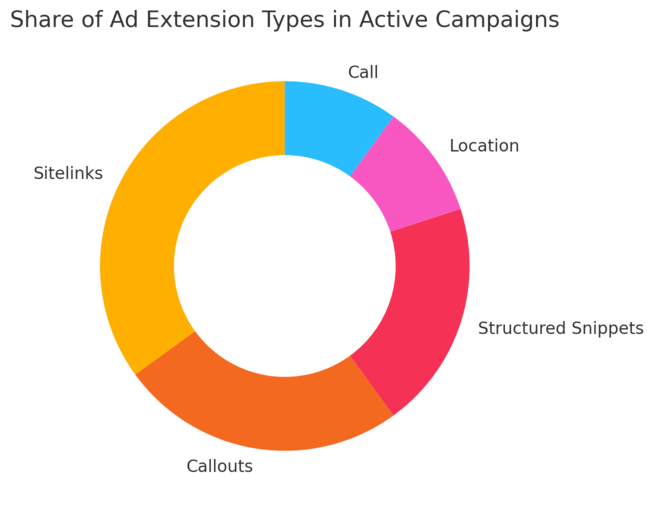
Ad extensions are small enhancements that turn ordinary ads into brand showcases.
They expand visibility, improve click-through rates, and build trust by providing extra details at no extra cost.
How Sitelinks, Callouts, and Structured Snippets Boost Visibility
These three types of extensions work like supporting cast members in your main performance.
- Sitelinks direct users to specific pages like “Pricing,” “About Us,” or “Free Trial.” They make your ad more clickable and give users shortcuts to what they want.
- Callouts highlight features such as “24/7 Support” or “Free Shipping.” They build trust and add credibility.
- Structured Snippets show grouped info—think “Services: SEO, PPC, Content Marketing.”
In Google Ads: Ads & Assets → Assets → Extensions → Add Sitelink or Callout.
I’ve seen sitelinks alone lift CTR by 15–20%, especially when they lead to high-intent pages like case studies or service comparisons.
Using Location and Call Extensions to Increase Engagement
If your business has a physical presence or direct sales team, location and call extensions are essential.
- Location Extensions: Show your business address and a clickable map pin. Perfect for local visibility.
- Call Extensions: Add a direct phone number so mobile users can contact you instantly.
In the Ads UI, go to Ads & Assets → Assets → Extensions → Add Location or Call.
For example, a restaurant running local ads could use these to let users “Tap to Call” or “Get Directions” without extra clicks. That reduces friction and increases real-world conversions.
I recommend tracking these extensions separately under “Asset Performance” to see which ones drive the most calls or store visits.
Crafting Ad Extensions That Build Trust and Credibility
Extensions aren’t filler—they’re proof points. The best-performing ones convey value in seconds.
When writing them, focus on:
- Social proof: “500+ 5-star reviews” or “Trusted by 10,000 customers.”
- Unique benefits: “Lifetime warranty” or “Eco-friendly materials.”
- Clarity over cleverness: Ads that sound simple outperform those trying to be witty.
Think of each extension as a micro-trust builder that earns one more second of user attention—sometimes, that’s all you need to win the click.
Integrating SEM with Other Digital Marketing Channels
SEM performs best when it’s part of a larger ecosystem.
When you connect it with SEO, content marketing, and even social or email channels, the data flows between them to make every touchpoint more intelligent.
How SEM Complements SEO and Content Marketing
SEM and SEO are two sides of the same coin—one fast, one steady. Together, they create a self-reinforcing growth loop.
Here’s how they complement each other:
- SEM data identifies high-converting keywords that you can later target organically with SEO.
- SEO builds authority that can lower SEM costs through better Quality Scores.
- Content marketing provides valuable landing pages that increase SEM conversion rates.
I often suggest using search term reports from paid campaigns to fuel your SEO blog strategy—it’s a direct look into what users actually search for.
Using SEM Data to Guide Social Media and Email Campaigns
SEM provides insights that no social analytics tool can match—real-time intent data. You can use this to shape your social and email campaigns.
For example:
- If your SEM campaign shows “affordable CRM tools” performing well, use that language in your Facebook ads and email subject lines.
- Use audience demographics from Google Ads (UI path: Tools & Settings → Audience Manager → Insights) to tailor content to specific age or interest groups.
This cross-channel feedback loop ensures you’re not guessing what to post or email—you’re using proven, data-backed terms your audience already responds to.
Building a Unified Message Across All Customer Touchpoints
Consistency is what turns exposure into brand equity. When users see your brand with the same message across Google Ads, social posts, and newsletters, it builds recognition and trust.
Here’s what works:
- Align tone and visuals. Use similar color palettes, phrasing, and CTAs.
- Reinforce campaigns. Launch SEM and social ads around the same offers.
- Leverage retargeting audiences. Import Google Ads audiences into Meta Ads or LinkedIn Campaign Manager to maintain continuity.
I believe integrated marketing isn’t about doing more—it’s about connecting what you already do so every platform amplifies the next.
Measuring the Success of Search Engine Marketing Solutions
You can’t improve what you don’t measure.
The beauty of search engine marketing solutions is that every click, view, and conversion leaves a trail of data you can analyze to understand real brand impact.
Key Metrics That Reveal True Brand Visibility Gains
When I work with SEM clients, I always start by defining what success looks like. For brand visibility, that usually means understanding both reach and engagement.
Here are the metrics that truly matter:
- Impression Share: The percentage of times your ads show compared to competitors. Found under Google Ads → Campaigns → Competitive Metrics. A higher share means your brand dominates search space.
- CTR (Click-Through Rate): Reveals how compelling your ads are. If your CTR is below 3%, consider rewriting your headline or improving ad relevance.
- Average Position: Although Google phased out exact rankings, metrics like Top Impression Rate and Absolute Top Impression Rate show how often you appear at the very top.
- Brand Search Lift: Measure how many people start searching your brand name after seeing your ads—an excellent indicator of increased awareness.
I’ve seen brands achieve a 25% jump in direct searches within three months after consistent SEM visibility. That’s the type of metric that truly signals growth, not just traffic.
Using Conversion Tracking to Connect Visibility to ROI
Visibility is only half the story. The other half is knowing which clicks actually bring results. Conversion tracking connects those dots.
To set it up in Google Ads: Tools & Settings → Measurement → Conversions → New Conversion Action. You can track website purchases, form submissions, or calls.
Here’s why it matters:
- It reveals your true cost per acquisition (CPA). Without it, you’re optimizing for clicks instead of revenue.
- It allows smarter bidding. Automated strategies like Target CPA and Target ROAS rely on conversion data to spend efficiently.
- It helps prove ROI to stakeholders. You can attribute every dollar spent to a measurable outcome.
For instance, a client running lead-generation ads reduced their CPA by 32% after identifying that one keyword—“free demo CRM”—was driving nearly all qualified leads.
Tools and Platforms That Help You Monitor Performance
There’s no shortage of data tools, but I recommend focusing on a few that integrate well:
- Google Ads Dashboard: Your real-time control center for metrics, keywords, and conversions.
- Google Analytics 4 (GA4): Tracks user behavior after the click—how long they stay, what they view, and where they drop off.
- Google Data Studio (now Looker Studio): Builds visual performance reports for better decision-making.
- SpyFu: Provide competitive insights, like what keywords others are bidding on.
For most small-to-medium campaigns, combining Google Ads and GA4 gives 90% of the insight you’ll ever need.
Common Mistakes That Limit SEM Effectiveness
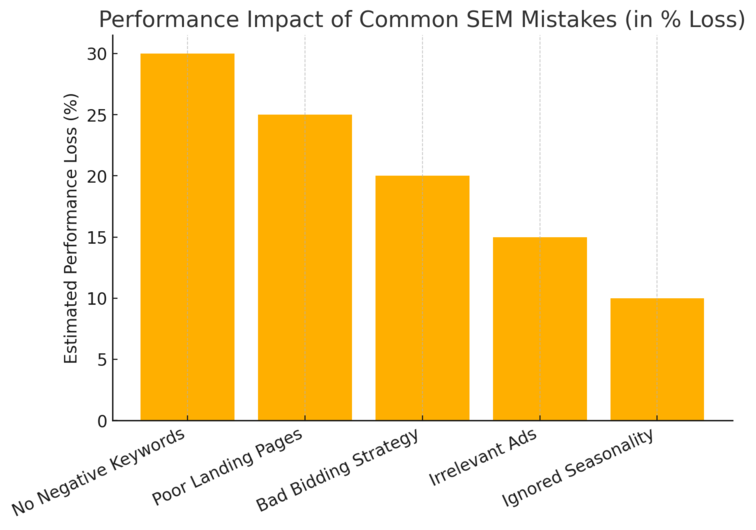
Even the most advanced search engine marketing solutions can underperform if fundamentals are ignored.
I’ve seen businesses waste thousands simply because of small but costly errors.
Overlooking Negative Keywords and Budget Waste
Negative keywords are the unsung heroes of SEM. They prevent your ads from showing for irrelevant searches. Without them, you pay for clicks that will never convert.
Example: If you sell luxury watches, you might want to exclude “cheap watches” or “free watch app.”
In Google Ads: Campaigns → Keywords → Negative Keywords → Add.
I recommend reviewing your Search Terms Report weekly. It’s one of the easiest ways to save 10–20% of ad spend just by excluding mismatched intent terms.
Ignoring Landing Page Experience and Ad Relevance
You can’t drive conversions if your landing page doesn’t deliver what your ad promised. A poor post-click experience kills even the best campaign.
Here’s what to focus on:
- Speed: Pages should load in under 3 seconds (use PageSpeed Insights).
- Message match: The headline should mirror your ad copy to reinforce trust.
- Mobile design: Over 60% of ad clicks come from mobile—if your layout breaks, so does your ROI.
Google’s Quality Score directly reflects this. A low score increases CPC and lowers visibility, so improving your landing page is not optional—it’s strategic.
Failing to Adjust Campaigns Based on Seasonal Trends
SEM isn’t static. Search behavior shifts with seasons, trends, and even news events. If your campaigns don’t adapt, you lose relevance and budget efficiency.
For example, travel agencies often spike in January and May. If they don’t raise bids or refresh ad creatives during those peaks, they miss huge traffic potential.
Use Search Ads 360 to identify when interest rises. I always suggest scheduling budget adjustments ahead of known seasonal surges.
Expert Tips to Maximize Brand Visibility with SEM
Visibility doesn’t always mean spending more—it often means spending smarter. These are the techniques I’ve seen deliver consistent brand growth.
Investing in Long-Tail Keywords for Niche Dominance
Long-tail keywords—those three-to-five-word phrases—are SEM gold. They have lower competition and higher intent.
For example:
- Broad keyword: “running shoes.”
- Long-tail keyword: “women’s trail running shoes size 8.”
That second one might cost less but convert three times better.
I suggest using Google Keyword Planner → Discover New Keywords and filtering for low competition with decent search volume.
Start by building ad groups around 10–15 long-tail phrases. This strategy helps your ads show to users who already know what they want.
Leveraging Audience Insights for Personalized Ads
The magic happens when you blend keyword intent with audience behavior. Audience insights in Google Ads (Tools & Settings → Audience Manager) show demographics, interests, and life events.
With that data, you can:
- Create custom audiences, like “recently moved” or “new business owners.”
- Adjust bids for users more likely to convert.
- Write ad copy that speaks directly to life situations.
For example, one client offering financial planning services saw conversions rise 45% after targeting the “recent college graduates” segment with tailored messaging.
Continuously Refining Campaigns for Sustainable Growth
SEM is never a “set it and forget it” system. The best results come from ongoing testing and refinement.
What I advise:
- Review ad performance weekly. Pause underperformers.
- Rotate new ad variations monthly to avoid ad fatigue.
- Refresh landing pages quarterly with updated offers or visuals.
- Use Experiments in Google Ads to safely test major changes without hurting existing performance.
Sustainable SEM growth is about steady optimization—not overnight wins.
Future Trends in Search Engine Marketing Solutions
The landscape of SEM is evolving faster than ever. What worked two years ago might be obsolete next year.
Staying ahead means adapting early to emerging technologies and user habits.
The Rise of AI and Machine Learning in Ad Targeting
AI is now the quiet architect behind most ad campaigns. Google’s Smart Bidding, Performance Max, and predictive targeting use machine learning to analyze millions of signals instantly.
What this means for you:
- Less manual bid tweaking, more strategic oversight.
- Smarter ad placements based on user behavior.
- Higher efficiency if you feed clean, accurate data into the system.
I suggest experimenting with Performance Max campaigns while still running traditional search ads. It’s the best way to let AI optimize reach while you retain message control.
Voice Search and How It’s Changing SEM Strategy
Voice queries are conversational and longer. Instead of typing “buy coffee beans online,” users now say “where can I buy organic coffee beans near me?”
To adapt:
- Focus on question-based and local keywords.
- Optimize ad copy with natural language.
- Use location extensions and mobile-friendly CTAs like “Call now” or “Get directions.”
As of recent data, nearly 30% of all searches on mobile are voice-activated. Ignoring this shift means missing a fast-growing slice of visibility.
Preparing Your Brand for the Next Evolution of Search
The next frontier of SEM will blend personalization, privacy, and automation. Third-party cookies are disappearing, and privacy-first tracking is becoming standard.
I recommend preparing now by:
- Building first-party data (email lists, CRM integrations).
- Using Google’s Consent Mode to remain compliant while tracking performance.
- Creating content-rich landing pages that can perform even with reduced targeting data.
The future favors brands that combine human storytelling with data intelligence. SEM will remain a cornerstone—but its strength will lie in how well you integrate it with smarter, privacy-conscious marketing systems.

I’m Juxhin, the voice behind The Justifiable.
I’ve spent 6+ years building blogs, managing affiliate campaigns, and testing the messy world of online business. Here, I cut the fluff and share the strategies that actually move the needle — so you can build income that’s sustainable, not speculative.
Related posts:
 What Is Media.net? Understanding the Contextual Advertising Network
 How to Promote AdWorkMedia Offers
 Squirrly SEO – The Ultimate WordPress SEO Plugin for Boosting Your Website’s Rankings
 What Are Push Notifications and How to Optimize Them for Better Results?
 Online Business Courses: Start Your Entrepreneurial Journey Today
 Top 5 Mistakes Every Online Marketer Makes – Avoid Now!