
Table of Contents
Some links on The Justifiable are affiliate links, meaning we may earn a small commission at no extra cost to you. Read full disclaimer.
Account based marketing solutions are changing how B2B companies attract and convert high-value clients.
But with so many platforms claiming to offer the “best targeting,” “AI personalization,” or “seamless CRM integration,” how do you actually choose the right one for your business?
This guide walks you through the key features, evaluation steps, and real-world criteria that help you confidently select the ideal ABM solution for your goals, team, and budget.
Understand What Account Based Marketing Solutions Do
Before choosing any platform, it’s important to understand what account based marketing (ABM) solutions actually do.
These tools aren’t designed to reach everyone—they’re built to help you target and nurture specific, high-value accounts that can make a major impact on your bottom line.
What Makes ABM Different from Traditional Marketing
Traditional marketing casts a wide net—email blasts, generic ads, and broad targeting hoping a small percentage converts.
ABM flips that model. It focuses on a handful of high-value accounts that perfectly fit your ideal customer profile (ICP).
Here’s how it differs in practice:
- Precision Targeting: Instead of chasing leads, ABM platforms like Demandbase or 6sense use firmographic and behavioral data to find who is most likely to buy.
- Personalized Campaigns: Each target account sees tailored messaging—ads, emails, and landing pages that speak directly to their business pain points.
- Sales and Marketing Alignment: ABM unites both teams under shared goals: engagement, pipeline, and revenue from a small but valuable audience.
I often describe ABM as moving from fishing with a net to fishing with a spear. You aim, you plan, and you hit your mark.
Core Functions Every ABM Platform Should Offer
When evaluating ABM platforms, look for these essential capabilities that form the foundation of any effective program:
- Account Selection: The ability to identify and prioritize the right accounts using firmographic, technographic, and intent data.
- Orchestration Tools: Manage campaigns across channels—LinkedIn ads, personalized emails, and dynamic website content—from a single dashboard.
- Measurement and Attribution: Track engagement metrics and tie them back to revenue outcomes.
- Integration: Seamless connections with CRMs (like HubSpot or Salesforce) to sync data between marketing and sales.
From what I’ve seen, the most successful companies use their ABM platform as the hub that keeps their sales and marketing aligned—no more working from different data sources or campaign goals.
The Role of Data, Targeting, and Personalization in ABM
Data is the fuel that makes ABM run. The more accurate your data, the smarter your targeting and the more relevant your personalization.
- Data Enrichment: ABM platforms combine first-party data (from your CRM) with third-party data (like intent signals) to create a 360-degree view of each account.
- Targeting Logic: Predictive algorithms rank and score accounts based on readiness to buy. For instance, if a company is researching “enterprise email automation,” your platform can trigger targeted campaigns for that topic.
- Personalization Engine: Dynamic website experiences, tailored content, and adaptive ad creative that change depending on the account visiting your site.
I suggest thinking of data as your compass—it doesn’t tell you where to go, but it ensures you never wander off course.
Define Your Goals Before Choosing an ABM Platform
Without clear goals, even the best ABM solution will feel like an expensive experiment. You need to define what success looks like before evaluating any platform.
Aligning ABM Goals with Sales and Marketing Objectives
ABM thrives when sales and marketing are rowing in the same direction. Start by defining shared objectives: pipeline contribution, deal velocity, or customer expansion.
In my experience, alignment means having one universal metric—like “revenue from target accounts”—that both teams own. Your ABM tool should track engagement metrics for both sides, allowing marketing to prove ROI and sales to act on qualified insights.
Platforms like Terminus make this easier by offering account-level dashboards where both departments can monitor outreach performance and pipeline movement together.
Setting Clear Metrics for ROI and Pipeline Growth
Before you buy any ABM platform, define what success means in measurable terms.
Some common metrics include:
- Engagement Score: How actively target accounts interact with your content.
- Pipeline Velocity: How quickly accounts move through your funnel.
- Deal Size and Win Rate: Whether ABM accounts deliver higher value deals compared to others.
Here’s a pro tip: Track cost per engaged account rather than cost per lead. It’s a much clearer reflection of ABM’s efficiency and long-term ROI.
Identifying Your Ideal Customer Profiles (ICPs) and Target Accounts
Your ICP defines the foundation of your ABM program. It’s not just about company size or industry—it’s about identifying businesses with the highest likelihood of long-term success with your solution.
To build your ICP:
- Analyze your top 10 existing customers for shared traits.
- Combine firmographics (company size, revenue) with technographics (tools they use).
- Use intent data to spot who’s actively researching your industry or competitors.
Once your ICP is defined, use your ABM platform’s account selection engine to generate a ranked list of best-fit accounts. Platforms like RollWorks can even automate this based on predictive scoring.
Evaluate Key Features in Account Based Marketing Solutions
After setting your goals, it’s time to evaluate what makes one ABM solution stronger than another.
Each feature plays a role in how effectively your campaigns reach and convert the right audience.
Account Identification and Predictive Targeting Capabilities
A powerful ABM solution doesn’t just show you who’s out there—it predicts who’s ready to buy. Predictive targeting uses AI models trained on your existing customers to find lookalike accounts that fit your ICP.
For example, 6sense uses intent data scoring to show when a prospect’s online activity signals purchase readiness. You can then automatically trigger outreach campaigns.
When comparing platforms, test how accurately they identify and rank accounts during a free trial. I always advise checking if they use multiple data sources (intent, firmographic, engagement) for better precision.
Multi-Channel Engagement: Email, Ads, and Website Personalization
ABM works best when your message reaches the right people on multiple touchpoints. The best platforms orchestrate outreach across:
- Email campaigns: Personalized outreach triggered by engagement behavior.
- Display and social ads: Targeted to specific roles or companies on LinkedIn and other channels.
- Website personalization: Tailoring homepage or landing page content based on the visitor’s company profile.
For instance, with Demandbase, you can automatically show a different homepage banner to a visitor from “Company A” versus “Company B,” based on account data.
I suggest prioritizing platforms with cross-channel orchestration—it’s what turns individual tactics into a coordinated ABM strategy.
Data Integration with CRMs and Marketing Automation Tools
Your ABM tool should integrate seamlessly with your CRM (like Monday) and marketing platforms (like Marketo). Integration eliminates silos and ensures both sales and marketing teams see the same data.
When testing a platform, check how easily it syncs contacts, engagement metrics, and deal data across systems. Poor integration can make even the best ABM platform useless.
A quick tip: Look for solutions with native connectors or open APIs—it’ll save you hours of manual data mapping.
Advanced Analytics and Reporting for Revenue Attribution
ABM success depends on accurate reporting. You need to know which campaigns influenced which deals.
Top-tier tools like Terminus offer multi-touch attribution, showing how specific ads, emails, or events contributed to closed deals. You can visualize engagement heatmaps or compare conversion rates across campaigns.
I recommend setting up custom dashboards to track metrics like account engagement rate, opportunity creation, and revenue influence. This gives you real-time visibility into your ABM impact.
AI and Machine Learning Enhancements for Smarter Targeting
Artificial intelligence has become a cornerstone of modern ABM platforms. Machine learning models analyze thousands of data points to predict which accounts are ready to convert—and what message will resonate most.
For example:
- 6sense: Uses predictive intent modeling to forecast pipeline potential.
- Demandbase: Automates ad bidding and content personalization based on real-time engagement signals.
AI also improves budget efficiency—by focusing spend only on high-intent accounts. I suggest always exploring how transparent a platform’s AI models are. The best ones let you see why an account is ranked high, not just that it is.
Compare Leading Account Based Marketing Solutions
Once you understand what to look for in account based marketing solutions, it’s time to compare the platforms leading the space.
Each one has its strengths, pricing models, and use cases—so the right fit depends on your company size, data maturity, and internal processes.
Overview of Top ABM Tools: Demandbase, Terminus, and 6sense
When I’ve worked with teams evaluating ABM software, these three names almost always come up—Demandbase, Terminus, and 6sense. They’re the most established players in the market, each with a distinct focus.
- Demandbase: Known for its Account Intelligence engine, it combines firmographic data (company details), intent signals (online research behavior), and engagement analytics. Demandbase’s AI suggests the next best action per account, like sending a targeted LinkedIn ad or email campaign.
- Terminus: Built for multi-channel engagement, Terminus helps manage campaigns across email, chat, and advertising in one place. It’s especially strong for mid-market businesses that want a unified view of marketing and sales activity.
- 6sense: This one excels in predictive analytics. It uses AI to uncover anonymous buyer intent data and map accounts showing buying signals—ideal for enterprises with long sales cycles and large deal sizes.
If I had to simplify it: Demandbase is the data brain, Terminus is the orchestration hub, and 6sense is the predictive eye.
How Each Tool Supports Different Business Sizes and Budgets
Not all ABM tools scale the same way. From what I’ve seen, businesses often overspend on complex software they don’t fully use.
Here’s a simple breakdown:
- Startups or Small Teams: Tools like RollWorks (a lighter version of Demandbase) or Terminus Basic plans are ideal. They offer foundational targeting and engagement without enterprise-level pricing.
- Mid-Market Companies: Terminus hits the sweet spot here, balancing automation, integrations, and usability. Its pricing tiers make it scalable as your ABM program grows.
- Enterprises: 6sense and Demandbase shine for companies with advanced data infrastructure. They support larger teams, deeper CRM integrations, and multi-region campaigns.
For budgeting reference, most ABM platforms range between $1,000–$10,000/month, depending on data volume and user seats.
I always recommend requesting a pricing demo—many vendors adjust costs based on your tech stack.
Evaluating Ease of Use, Integration, and Scalability
No matter how feature-rich a platform is, if your team struggles to use it, you’ll lose ROI fast.
Here’s what to assess during trials or demos:
- Ease of Use: Check for intuitive dashboards and simple UI navigation. Demandbase’s Engagement Hub is great for visual campaign tracking, while Terminus has a drag-and-drop campaign builder that’s ideal for non-technical marketers.
- Integration Depth: Look for native connections with your CRM (Salesforce, HubSpot) and automation tools (Marketo, Pardot). 6sense integrates tightly with Salesforce, allowing reps to view buying stage data directly in their dashboards.
- Scalability: As your ABM strategy matures, you’ll likely target hundreds of accounts. Ensure the platform supports scaling campaigns without manual reconfiguration.
In my experience, ease of integration is often the deal-breaker. If your CRM and ABM tool can’t share live data, your personalization efforts will always lag behind.
When to Choose a Niche ABM Platform Over an All-in-One Solution
Sometimes, you don’t need a massive ABM suite—you just need a specialized tool that fits your workflow.
You might prefer a niche solution if:
- You only need ad retargeting and account-level insights (RollWorks or Metadata.io).
- Your focus is website personalization and intent data (Madison Logic).
- You already have a strong CRM setup and just need ABM analytics (Engagio, now part of Demandbase).
An all-in-one solution works best when you want everything—ads, data, personalization, and reporting—in one platform.
But if your team uses existing marketing automation systems effectively, layering a niche ABM tool might give you 80% of the impact at half the cost.
Align Your ABM Platform with Team Capabilities
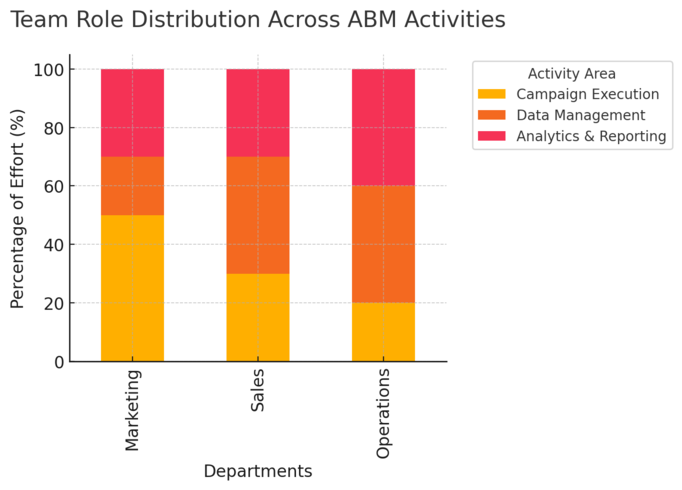
Even the most powerful ABM software will fail if your team can’t operate it effectively.
The best choice is the one your sales and marketing teams can confidently use and adapt as your strategy matures.
Matching Platform Complexity with Internal Expertise
ABM tools vary in technical depth. If your team has data analysts and CRM admins, you can handle advanced setups like 6sense or Demandbase. But if your marketing team is small or less technical, Terminus offers a smoother learning curve.
When testing tools, ask yourself:
- Can we easily pull engagement reports without coding or API work?
- Does it automate enough to save our team time?
- Will our sales team actually use the insights provided?
I believe complexity should grow with your team, not before it. You can always upgrade later—but rolling out a system that overwhelms your staff can stall progress for months.
Collaboration Between Sales and Marketing Teams
ABM is built on alignment. If marketing generates engagement but sales doesn’t follow up, the entire system collapses.
Look for platforms that facilitate collaboration, such as:
- Shared Dashboards: Demandbase lets both teams see account activity and buying signals in one place.
- Automated Alerts: 6sense can notify sales when an account shows high intent—like a surge in product-page visits.
- Playbooks: Terminus offers Sales Plays that suggest what to say and when, based on account stage.
I’ve found that when sales and marketing share data transparently, deal cycles shrink and win rates rise—sometimes by 25% or more.
Training and Onboarding Requirements for Adoption Success
Don’t underestimate the time it takes for your team to master an ABM platform. Vendors like Demandbase and Terminus offer onboarding packages, but you’ll still need internal champions.
Here’s what I suggest for smooth adoption:
- Start Small: Begin with 10–20 target accounts before scaling.
- Assign Owners: Give one person per team (marketing, sales, ops) responsibility for managing insights.
- Run Joint Reviews: Weekly syncs to review engagement data and adjust strategy.
From what I’ve seen, teams that invest in training during the first 90 days see far better long-term ROI.
Consider Data Privacy, Security, and Compliance
Data privacy isn’t a “nice to have”—it’s a non-negotiable part of any ABM platform evaluation. You’re handling firmographic and behavioral data from multiple systems, which means compliance must be airtight.
Ensuring Compliance with GDPR, CCPA, and Industry Regulations
Every ABM platform should comply with major privacy laws like GDPR (for the EU) and CCPA (for California). These regulations control how personal and business data can be collected, stored, and used.
I recommend asking vendors:
- Where is your data stored (region and provider)?
- Do you anonymize or pseudonymize data when used for targeting?
- How do you handle “right to be forgotten” requests?
6sense and Demandbase both maintain strong compliance frameworks with built-in opt-out processes and cookie consent tools for web campaigns.
Protecting Customer and Account Data in Your ABM System
Security goes beyond compliance. It’s about keeping your customer and account data safe from breaches or misuse.
Look for features like:
- Data Encryption: Both in transit and at rest.
- Access Controls: Role-based permissions that limit sensitive data access.
- Audit Logs: Tracking who accessed or modified account data.
In practice, you should also connect your ABM platform to a secure CRM environment (like Salesforce with two-factor authentication). This ensures a consistent security layer across all touchpoints.
Verifying Vendor Security Standards and Certifications
Before signing any contract, review the vendor’s security documentation. Reputable ABM providers publish details about their certifications and infrastructure safeguards.
Certifications to check for:
- SOC 2 Type II (service and operational security)
- ISO 27001 (information security management)
- GDPR-compliance documentation
Most enterprise-ready ABM solutions, including Demandbase and 6sense, are certified under these standards. I suggest requesting their security whitepaper—it’s a simple way to confirm their data protection claims.
Budget and Pricing Models for ABM Solutions
Before committing to any account based marketing solution, it’s worth getting a clear view of how pricing works. ABM tools vary widely in cost and structure depending on your team size, account volume, and data needs.
Understanding Subscription, Usage-Based, and Tiered Pricing
Most ABM platforms use one of three pricing models:
- Subscription Pricing: You pay a flat monthly or annual fee for a set number of users and accounts. Example: Terminus uses a subscription model starting around $1,000–$2,000 per month, depending on your contact volume and feature set.
- Usage-Based Pricing: You’re charged based on actual usage—like the number of impressions, accounts targeted, or data credits consumed. This model suits teams scaling gradually, so you only pay for what you use. Demandbase, for instance, adjusts pricing by account volume and ad spend.
- Tiered Pricing: Platforms like 6sense offer tiered packages (Essentials, Growth, Enterprise) with additional AI, analytics, and integrations as you move up tiers.
I advise starting small—purchase just enough licenses or accounts to run a focused pilot. Once you’ve validated ROI, you can scale up without overpaying early.
Evaluating Long-Term Costs vs. Short-Term ROI
The biggest mistake I see is judging ABM success only by short-term campaign results. ABM builds compound value over time through better targeting and higher close rates.
Here’s a simple way to evaluate ROI:
- Short-Term Wins: Track early signals—account engagement, ad click-throughs, and content interactions.
- Mid-Term ROI: Look at pipeline velocity and opportunity creation over 3–6 months.
- Long-Term Gains: Assess deal size, retention, and cross-sell revenue.
For context, most companies report seeing 20–40% faster deal cycles and 10–30% higher deal sizes within the first year of ABM adoption. I suggest calculating ROI per quarter to balance your investment expectations realistically.
Negotiating Contracts and Scaling Costs as You Grow
Pricing is more flexible than you might think. Many ABM vendors are open to negotiations—especially if you’re committing to a multi-year plan.
- Ask for a Pilot Discount: Some vendors will lower your first-quarter fee to prove performance.
- Bundle Integrations: If you’re also using Salesforce or HubSpot, request discounted integration setup.
- Negotiate Renewal Terms: Ensure your future cost increases are capped—this prevents sudden jumps when you scale.
I recommend treating your ABM platform contract like a partnership, not a purchase. The right vendor should help you grow, not penalize you for it.
Test, Measure, and Optimize Your ABM Implementation
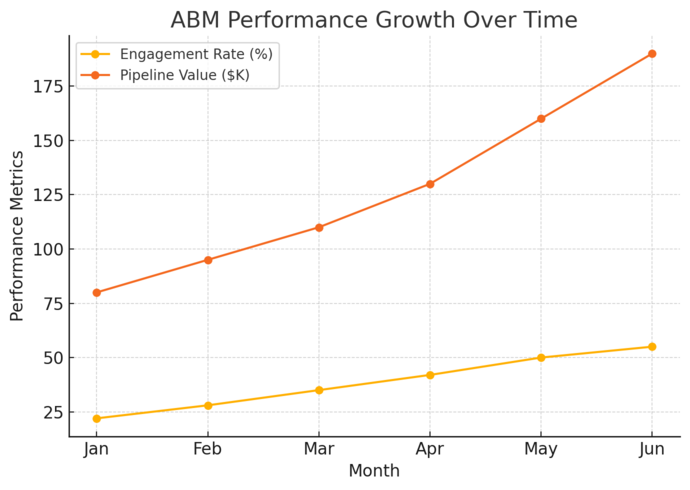
Once your platform is in place, testing and iteration determine whether your ABM strategy succeeds or stalls.
ABM isn’t a one-time setup—it’s a continuous process of measurement and improvement.
Running Pilot Programs to Validate Platform Effectiveness
A pilot program helps you confirm if your chosen ABM platform can deliver measurable results before fully rolling it out.
Here’s how I suggest structuring one:
- Select 10–20 High-Priority Accounts: Focus on those that fit your ICP perfectly.
- Run a 90-Day Test Campaign: Use personalized ads, emails, and landing pages for those accounts.
- Track Account Engagement Metrics: Log activity like visits, clicks, or intent signals in your ABM dashboard.
For example, a B2B software firm I worked with used 6sense for a 3-month pilot targeting enterprise SaaS buyers. They saw a 35% lift in engagement and 2 deals move to negotiation—proof that the platform was working before scaling.
Measuring Key ABM KPIs: Engagement, Pipeline, and Revenue Impact
ABM’s success is best measured through quality, not quantity. Instead of counting leads, you’re tracking engagement and pipeline impact across target accounts.
Some essential KPIs to monitor include:
- Account Engagement Rate: Percentage of target accounts interacting with your brand.
- Pipeline Creation: Number of new opportunities sourced from ABM campaigns.
- Revenue Influence: How much closed revenue can be attributed to ABM touchpoints.
- Deal Velocity: How quickly accounts move from first engagement to close.
Platforms like Demandbase and Terminus provide built-in account scorecards—visual dashboards that consolidate these metrics. I advise setting benchmarks after your first pilot and comparing quarterly progress.
Iterating Campaigns Based on Data Insights and Feedback
Optimization is where ABM truly compounds value. After each campaign, analyze what worked and refine your targeting or content.
You can start with small, consistent adjustments:
- Creative Testing: Swap out ad headlines or CTAs for different industries.
- Channel Rebalancing: Shift more budget to top-performing touchpoints like LinkedIn or retargeting.
- Content Personalization: Adjust messaging to each stage of the buyer’s journey—awareness, consideration, or decision.
I’ve found that even a 10% improvement in engagement rate per quarter can lead to exponential growth in pipeline performance. ABM rewards the teams that experiment constantly.
Pro Tips for Choosing the Right Account Based Marketing Solution
By this stage, you’ve learned how to assess, compare, and optimize your ABM system.
But before you finalize your decision, a few expert insights can help ensure your choice pays off long term.
How to Build an ABM Tech Stack That Grows With You
Think of your ABM platform as the centerpiece of a broader tech ecosystem. It should integrate smoothly with your CRM, marketing automation tools, and data platforms.
Here’s a scalable stack I often recommend:
- CRM: Monday or Freshsales for account and deal tracking.
- ABM Platform: Demandbase, or 6sense for targeting and engagement.
- Data Enrichment: Clearbit or ZoomInfo for firmographic and intent signals.
- Marketing Automation: Marketo or Pardot for email nurturing and scoring.
As your strategy matures, you can layer on analytics and personalization tools like Mutiny. The key is to start lean—integrate only what your team can realistically manage.
Avoiding Common Mistakes When Selecting a Platform
Many teams get stuck chasing flashy features that don’t fit their actual workflow. To save time and money, I’d avoid these common pitfalls:
- Overbuying on functionality: You don’t need enterprise-level AI if your team’s still mastering basic targeting.
- Ignoring user experience: A powerful tool that no one understands will sit unused.
- Skipping integration testing: Always confirm that your CRM and marketing automation sync properly during trials.
One client of mine switched from a complex enterprise ABM suite to a simpler mid-market solution—and improved campaign speed by 40% just because their team actually used it daily.
Expert Tip: Use Free Trials and Demos to Compare Real Results
Never rely solely on feature lists. Run demos and free trials with your actual data. This will show how each platform performs in real-world conditions.
When testing, I recommend you:
- Import a small batch of target accounts and see how accurately the system identifies buying signals.
- Test campaign automation flows—like sending LinkedIn ads or emails automatically when an account’s score rises.
- Review reporting dashboards—do they show actionable insights or just data dumps?
From what I’ve seen, a one-week hands-on trial teaches you more than hours of sales pitches. You’ll immediately see which platform aligns best with your team’s process and goals.

I’m Juxhin, the voice behind The Justifiable.
I’ve spent 6+ years building blogs, managing affiliate campaigns, and testing the messy world of online business. Here, I cut the fluff and share the strategies that actually move the needle — so you can build income that’s sustainable, not speculative.
Related posts:
 AI-Powered Ad Creative: Smarter Ads, Better ROI!
 Constant Contact Pricing: Which Plan Is Right for You?
 Aweber Email Automation Examples: Templates & Pro Insights
 10 Similar Sites To Apollo IO Every Marketer Should Try
 How Automated Marketing Solutions Save Time and Increase Revenue
 Top 7 Business Marketing Solutions Every Entrepreneur Needs