
Table of Contents
Some links on The Justifiable are affiliate links, meaning we may earn a small commission at no extra cost to you. Read full disclaimer.
B2B marketing solutions aren’t just about generating leads—they’re about building real, lasting partnerships. The challenge isn’t finding prospects; it’s turning those prospects into long-term collaborators who trust your brand.
What makes some B2B marketing strategies so effective at transforming leads into loyal partners, while others fall flat?
In this guide, we’ll uncover the most practical and proven B2B marketing solutions that go beyond surface-level engagement to create relationships that actually drive growth.
Understanding Modern B2B Buyer Behavior
Modern B2B buyers are smarter, more informed, and far less patient than they used to be. They’re not looking for vendors—they’re looking for partners who understand their world.
Let’s unpack what’s really shaping today’s B2B decision-making process and how you can adapt your marketing to build stronger partnerships.
Why Relationship-Building Matters More Than Ever
Trust is no longer optional in B2B marketing—it’s the currency that drives every deal. Buyers want genuine, long-term relationships with businesses that share their values and solve real problems.
According to a LinkedIn B2B Institute study, over 70% of B2B buyers choose a vendor they already have a personal connection with.
I believe relationship-building works because it humanizes your brand. When you position yourself as a partner rather than a salesperson, you shift the dynamic from transaction to collaboration.
That’s why relationship marketing—nurturing consistent, personalized communication—outperforms traditional lead-chasing tactics.
Practical ways to build trust early:
- Be transparent about pricing and results. Avoid hiding costs or overpromising.
- Stay consistent in tone and delivery. Buyers remember reliability more than flash.
- Personalize outreach. A tailored email referencing a buyer’s specific pain point goes much further than a generic offer.
When you focus on relationship capital, your leads start viewing you as an ally—and partnerships become the natural outcome.
How Buying Committees Influence Decision-Making
B2B purchases rarely hinge on one person anymore. The average B2B deal now involves 6 to 10 decision-makers—each with unique goals, concerns, and data preferences.
This “buying committee” structure means your marketing must appeal to a collective, not just an individual.
Let me give you an example: Imagine selling an automation tool like HubSpot. The CFO wants clear ROI proof, the CMO looks for usability, and the IT manager checks for system compatibility. If your content only speaks to one of them, you’ll lose momentum when the others weigh in.
Here’s how to adapt:
- Map your content to different personas. Use targeted landing pages or segmented email campaigns for each stakeholder.
- Arm your champion. Identify one internal advocate who believes in your solution and give them materials (case studies, ROI calculators, PDFs) to persuade the rest.
- Leverage multi-channel visibility. Buying committees research across platforms—social, search, review sites—so your brand must be consistent everywhere.
Understanding this multi-voice ecosystem transforms your marketing from a single-threaded pitch into a persuasive group dialogue.
The Shift Toward Long-Term Value Over Short-Term Gains
B2B buyers are done with quick wins. They want measurable, lasting value.
In fact, Gartner reports that 77% of B2B buyers now prioritize long-term ROI over upfront cost savings. That means your solution needs to prove it can grow with them, not just serve them today.
This shift affects everything from content strategy to pricing models.
Instead of pushing one-time sales, position your offer as a partnership that compounds value—like how Salesforce promotes its ecosystem as a growth platform, not just a CRM.
Here’s what I suggest focusing on:
- Lifecycle marketing: Continue engagement post-sale through newsletters, webinars, or check-ins.
- Customer success integration: Align your marketing with ongoing client support—when clients succeed, your brand equity rises.
- Data-driven storytelling: Use metrics that reflect long-term value (like retention rate or customer lifetime value) rather than short-term wins.
Long-term value marketing doesn’t just build credibility—it secures renewal, referrals, and expansion opportunities that short-term campaigns can’t achieve.
Creating a B2B Marketing Strategy Built on Trust
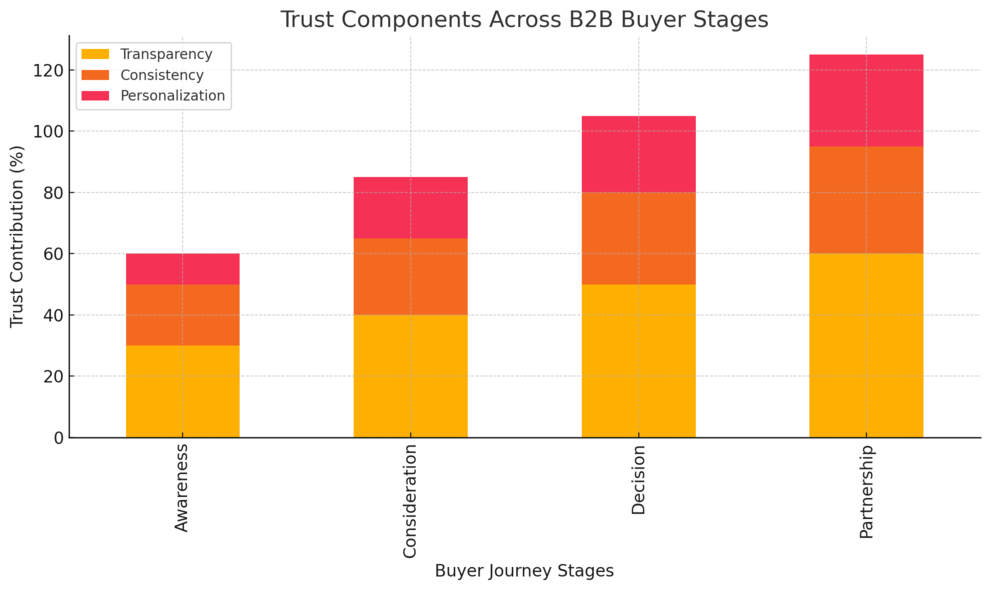
Trust-driven marketing is the new B2B standard. Buyers crave transparency, proof, and empathy from brands that act more like collaborators than vendors.
Let’s explore how to build a strategy centered on genuine partnership and credibility.
Crafting a Clear, Partnership-Focused Value Proposition
A value proposition isn’t just a tagline—it’s a promise. And in B2B, that promise must highlight shared growth.
I recommend framing your value proposition around what you help your clients achieve, not what you offer.
For example: Instead of saying “We provide cloud analytics software,” try “We help mid-sized teams make smarter, faster data decisions that drive 20% cost savings.”
Here’s how to shape yours:
- Identify your clients’ biggest long-term goals.
- Link your solution directly to measurable business outcomes.
- Use clear, jargon-free language.
In B2B, clarity beats cleverness every time. When buyers immediately see how your value aligns with theirs, trust builds naturally.
Aligning Sales and Marketing Teams for Seamless Collaboration
Nothing undermines trust faster than mixed messages from your own company. I’ve seen deals fall apart simply because marketing promised one thing, and sales delivered another.
Alignment between these teams ensures buyers experience consistency from first click to final contract.
A simple workflow I recommend:
- Shared KPIs: Both teams should track metrics like qualified leads, deal velocity, and retention rate—not separate silos.
- Unified CRM: Use a shared system like HubSpot or Salesforce, ensuring both teams access the same customer data.
- Feedback loops: Have sales regularly report back on lead quality and buyer objections so marketing can refine messaging.
When sales and marketing operate as one unit, prospects sense it. That unity communicates reliability—something every B2B buyer values deeply.
Using Data-Driven Insights to Personalize B2B Outreach
Data turns guesswork into precision. The best B2B marketing solutions use analytics not just to target prospects, but to understand them deeply.
According to McKinsey, companies that personalize experiences generate 40% more revenue than those that don’t.
Here’s how to put that into practice:
- Use CRM behavior data. Track how leads engage with your site, emails, or demos, then tailor your next outreach accordingly.
- Segment intelligently. For instance, if a prospect downloads a pricing guide, follow up with ROI calculators or industry comparisons.
- Adopt predictive tools. Platforms like 6sense and Demandbase use AI to identify which accounts are most likely to convert based on intent signals.
Personalization in B2B isn’t about using a lead’s name—it’s about showing you understand their business. When your data informs empathy, your outreach feels more human, not robotic.
Pro Tip: Combine trust, data, and alignment into a single system. A transparent message, supported by insight and delivered consistently across teams, turns your B2B marketing from transactional to transformational. That’s where partnerships are born—and where real growth begins.
Leveraging Account-Based Marketing (ABM) For Stronger Partnerships
Account-Based Marketing (ABM) is one of the most effective B2B marketing solutions for turning leads into long-term partnerships.
Instead of chasing thousands of random prospects, ABM helps you focus your energy on a smaller set of high-value accounts with the greatest partnership potential.
Identifying and Targeting High-Value Accounts Strategically
ABM starts with precision, not volume. Rather than pushing your message to everyone, you zero in on companies that align best with your ideal customer profile (ICP).
I suggest starting with a data-backed approach using your CRM and analytics tools to identify accounts showing real buying intent.
Here’s how you can pinpoint the right accounts:
- Use firmographic filters (like company size, revenue, or industry) to find businesses that match your best customers.
- Check intent data platforms like Bombora to uncover companies actively researching your type of solution.
- Score accounts based on engagement—how often they visit your website, download resources, or interact on LinkedIn.
For example, when using HubSpot, navigate to Contacts → Target Accounts to view engagement levels and open opportunities. From there, you can segment accounts for personalized outreach.
This strategic targeting ensures every resource—ad spend, content, and sales effort—goes toward prospects most likely to evolve into loyal partners.
Personalizing Campaigns to Deepen Business Relationships
Once you’ve identified your high-value accounts, the real magic happens through personalization. ABM isn’t about volume emails; it’s about bespoke communication that proves you understand each account’s specific challenges and goals.
I recommend creating micro-campaigns for each account or cluster of similar ones. For instance, if your target account struggles with lead attribution, build content around solving that exact issue.
Ways to personalize your ABM outreach:
- Customize landing pages and proposals with the client’s branding or terminology.
- Reference specific pain points in emails using insights from their LinkedIn posts or press releases.
- Collaborate with sales to co-create offers, webinars, or demos tailored for that company’s department.
A practical example: Adobe’s ABM team once personalized campaign assets for top-tier accounts, integrating their target company’s logo and messaging into ad creatives—leading to a 25% higher engagement rate.
Personalization shows you’ve done your homework. It’s the digital equivalent of saying, “We understand you—and we’re invested in your success.”
Measuring ABM Success Beyond Lead Generation
Traditional metrics like clicks or form fills don’t cut it in ABM. Success here means deepening engagement and growing account value over time.
Instead of tracking generic conversion numbers, focus on relationship-centric KPIs such as:
- Engagement Score: Measures how actively a target account interacts with your content or events.
- Pipeline Velocity: Tracks how quickly targeted accounts move through your funnel.
- Account Expansion Rate: Evaluates upsells, cross-sells, and renewals from existing partners.
In my experience, one of the most useful ABM dashboards combines CRM data (from Salesforce or HubSpot) with analytics tools like Tableau or Power BI.
Seeing how engagement and deal size evolve over quarters helps you refine your targeting model continuously.
When ABM success is measured through partnership health—not vanity metrics—you’ll know your strategy is truly working.
Content Marketing Solutions That Nurture B2B Relationships
Content marketing in B2B isn’t just about visibility—it’s about credibility.
Every blog post, whitepaper, or video should educate, inspire trust, and position your brand as a reliable partner.
Building Thought Leadership Through Educational Content
Thought leadership is earned through consistent, insightful content that helps your audience solve complex problems.
I often advise B2B brands to shift from “selling” to “serving”—share expertise before asking for anything in return.
Effective thought leadership formats include:
- Expert guides, like “The State of AI in B2B Marketing.”
- Opinion pieces addressing industry shifts or innovations.
- Podcasts or video interviews with recognized leaders in your niche.
For example, HubSpot’s The Hustle newsletter succeeds because it gives daily value before promoting any tools.
Similarly, companies like Drift or Gong regularly release actionable insights their audience can implement immediately.
When your content educates instead of sells, prospects start seeing you as a mentor—not a marketer.
Using Case Studies and Whitepapers to Establish Credibility
Case studies and whitepapers remain two of the most trusted content types for B2B decision-makers. They serve as proof that your solution works in real-world scenarios.
I recommend structuring each case study around problem → solution → measurable result. Include data points such as revenue growth, cost reduction, or time savings.
For instance: “Our software helped Company X increase lead conversion by 38% in 90 days.”
Whitepapers, on the other hand, should dive deeper into strategy and analysis. They’re perfect for C-suite audiences looking for high-level insights. Tools like Canva or Visme make it easy to design visually clean, professional reports.
Publishing these resources on LinkedIn or gated landing pages helps attract serious buyers who are actively researching solutions.
Optimizing Content Distribution Across Buyer Journeys
Creating great content means nothing if the right people don’t see it. That’s where content distribution strategy comes in. Your goal is to meet buyers exactly where they are in their decision journey.
Smart distribution tactics include:
- Awareness stage: Use short LinkedIn videos or SEO-optimized blogs to introduce your expertise.
- Consideration stage: Offer webinars, downloadable guides, or comparison charts.
- Decision stage: Share customer success stories or ROI calculators.
For example, using HubSpot’s Workflows → Lead Nurturing Sequence feature, you can automate content delivery based on which page or asset a user interacts with. This ensures prospects get content that matches their current mindset—not just random promotions.
Content distributed with intent feels like guidance, not marketing—and that’s how you turn awareness into affinity.
Email Marketing That Converts Leads Into Partners
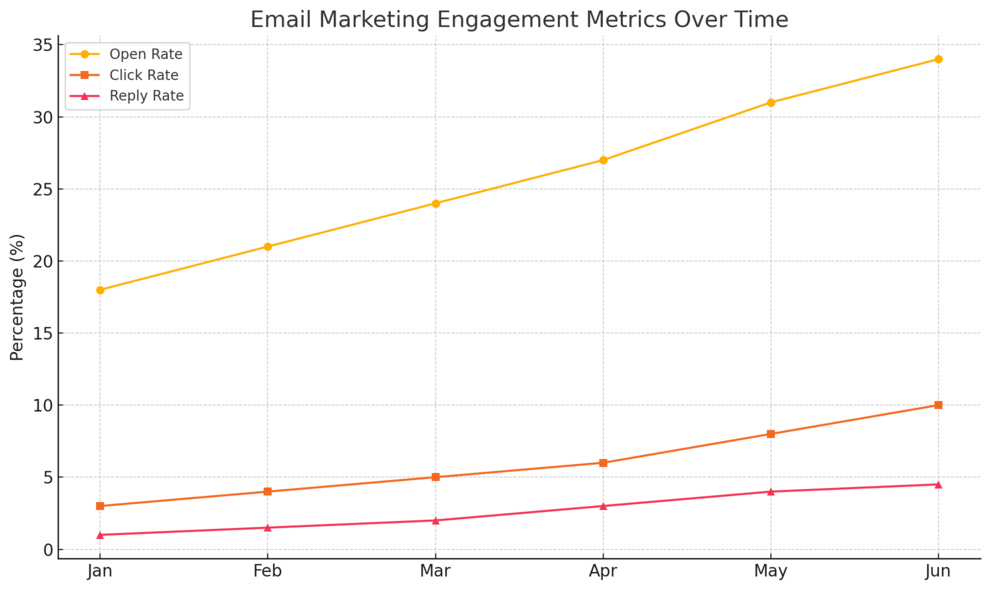
Email marketing remains one of the most powerful B2B marketing solutions when done with precision and empathy.
It’s your chance to create ongoing conversations that feel personal, not automated.
Crafting Segmented Email Sequences That Add Real Value
Email segmentation helps you speak to the right people with the right message. Generic blasts often end up in spam folders; personalized sequences start real conversations.
Segmentation ideas that work well in B2B:
- Industry or vertical (tech, healthcare, manufacturing)
- Buyer role (marketer, CEO, IT director)
- Funnel stage (lead, MQL, or active deal)
In HubSpot, for example, go to Contacts → Lists → Create Smart List to segment your audience automatically by engagement or job title.
Every sequence should deliver micro-value: one insight, tool, or quick tip per email. This builds anticipation and trust over time.
Leveraging Automation Without Losing Personal Touch
Automation saves time—but without the right balance, it can strip away authenticity. I always suggest using automation for delivery, not connection.
For instance, schedule your follow-ups through tools like Mailerlite or Aweber, but write each message as if it’s a personal check-in. Use the recipient’s name, mention their company, and keep the tone conversational.
You can also set triggers (like “contact viewed pricing page”) to send timely, relevant follow-ups—without feeling robotic.
When automation feels human, your prospects won’t even realize it’s software behind the scenes.
Using Behavioral Data to Strengthen Relationship-Based Nurturing
Behavioral data shows you what prospects care about most. When you track how leads interact with your content, you can tailor your communication to match their real interests.
Practical examples:
- If someone clicks a link about “content automation,” send them a follow-up email with a case study on that exact topic.
- If a contact consistently opens emails but never clicks, simplify your call-to-action or rework your offer.
- Use heatmaps and analytics (like Hotjar or Google Analytics) to see where visitors spend the most time on your website.
I’ve found that nurturing sequences built on behavior data convert up to 30% higher than static drip campaigns. When your communication evolves with the buyer’s actions, it mirrors the natural rhythm of a relationship.
Expert Tip: Combine ABM, content marketing, and email automation into a unified workflow. When all three systems feed each other, you create a cycle of trust—targeting the right accounts, educating them with value, and nurturing them into loyal business partners.
That’s how modern B2B marketing solutions turn conversations into collaborations.
Building Partnerships Through Social Media And LinkedIn
Social media, especially LinkedIn, has evolved far beyond a digital resume board—it’s now the most powerful relationship-building channel in B2B marketing.
The goal isn’t just visibility; it’s building meaningful, trust-based relationships that naturally lead to collaboration.
Positioning Your Brand As A Trusted Industry Partner
Your LinkedIn presence is often a prospect’s first impression of your brand. That’s why your profile and company page should instantly communicate credibility, consistency, and value.
I recommend treating your LinkedIn company page like a mini website: it should showcase who you help, how you help them, and the tangible results you deliver.
Here’s what works best:
- Profile optimization: Include a clear tagline such as “Helping SaaS founders scale with data-driven B2B marketing solutions.”
- Proof over polish: Share measurable results, like “We helped Company X increase inbound leads by 42%.”
- Visual consistency: Use your brand colors and voice across banners, carousels, and videos.
Consistency builds familiarity, and familiarity builds trust. Over time, that trust compounds into partnership opportunities as your name becomes synonymous with reliability in your niche.
Engaging Decision-Makers Through Meaningful Interaction
Decision-makers don’t respond to generic pitches—they respond to authentic engagement. I’ve found that thoughtful interaction on LinkedIn can outperform even the most sophisticated paid ads when done right.
Start by building a list of key contacts using LinkedIn’s Sales Navigator. You can filter prospects by industry, job title, or company size.
Once identified, engage naturally: comment on their posts, share insights that relate to their discussions, and tag them when appropriate.
Interaction tips that feel genuine, not forced:
- Ask insightful questions under their posts.
- Reshare their updates with short, personalized commentary.
- Send value-driven messages that focus on their goals, not your product.
A simple workflow I often recommend is to dedicate 15 minutes daily to engaging with your top 10 prospects. Over time, this steady presence positions you as an equal—not a salesperson.
Using LinkedIn Ads And Retargeting To Build Deeper Connections
LinkedIn’s advertising platform is tailor-made for B2B partnership building. Unlike broader ad networks, LinkedIn lets you target by company, job title, or even seniority—perfect for high-value account outreach.
Start with Sponsored Content to share educational materials (like reports or webinars) that add real value. Then use Retargeting Ads to re-engage users who interacted with your posts or visited your landing page.
Example workflow:
- Upload your target account list in Campaign Manager → Matched Audiences.
- Run Sponsored Content featuring a relevant case study or industry insight.
- Retarget those who click through with an offer to schedule a consultation or download a whitepaper.
This approach works beautifully for nurturing B2B relationships because it mimics real-life trust-building: first educate, then re-engage, then invite deeper discussion.
Harnessing CRM And Marketing Automation Tools
A well-chosen CRM and thoughtful automation can streamline every step of relationship management—without losing the personal touch that drives partnership success.
Choosing The Right CRM For B2B Relationship Management
The best CRM isn’t the one with the most features—it’s the one that fits your team’s workflow and integrates smoothly with your marketing stack. I usually suggest starting with tools like HubSpot, Salesforce, or Pipedrive, depending on your team’s size and complexity.
What to look for in a CRM:
- Contact segmentation: Ability to group leads by industry, behavior, or partnership potential.
- Deal tracking: Visual pipelines (like HubSpot’s “Deals Board”) to monitor relationship stages.
- Integration support: Seamless connection with email marketing, automation, and analytics platforms.
For example, in HubSpot, you can view all interactions under Contacts → Activity Timeline—from email opens to meeting notes—giving full visibility into how each relationship evolves.
Choosing the right CRM means your data becomes a living map of relationship progress, not just a digital Rolodex.
Automating Workflows While Keeping Human Connection Intact
Automation should serve your relationships, not replace them. The key is to use it to enhance personalization at scale.
For instance, you can set triggers in ActiveCampaign to automatically send a follow-up email three days after a demo—but make that message feel personal by referencing the exact problem discussed in the call.
Smart automation ideas:
- Trigger reminders for manual check-ins every 45 days.
- Use dynamic email templates that pull in company-specific details.
- Automatically assign tasks to sales when engagement scores rise.
Automation isn’t about removing human effort; it’s about freeing your team to focus on the conversations that matter most.
Tracking Metrics That Indicate Relationship Growth
If you’re only tracking leads or revenue, you’re missing the story behind your relationships. Modern CRMs can show you deeper partnership health metrics.
Metrics worth tracking:
- Engagement frequency: How often key contacts interact with your brand.
- Deal velocity: How long it takes for relationships to move from first touch to partnership.
- Retention rate: The percentage of partners renewing or expanding their contracts.
You can visualize these trends inside dashboards like HubSpot → Reports → Custom Analytics or through external tools like Tableau.
Measuring relationships instead of transactions keeps your strategy partnership-driven, not sales-obsessed.
Using Data Analytics To Strengthen B2B Partnerships

Data analytics turns gut instincts into strategic precision.
When used right, it helps you see which relationships are thriving, which are fading, and which have untapped potential.
Turning Lead Intelligence Into Relationship Insights
Raw lead data becomes powerful when transformed into relationship intelligence. Tools like Google Analytics, HubSpot Insights, or ZoomInfo can reveal which companies engage most with your brand—and what topics attract them.
I suggest setting up a dashboard that merges CRM and web analytics data. This way, you can track every step of a buyer’s journey—from their first content click to their latest meeting request.
Key insights to look for:
- Pages or topics top partners spend most time on.
- Engagement spikes after webinars or reports.
- Recurring touchpoints that precede successful deals.
This approach doesn’t just optimize campaigns; it sharpens your understanding of what nurtures real partnership momentum.
Predicting Partnership Potential With Predictive Analytics
Predictive analytics can help you forecast which accounts are most likely to become high-value partners. AI-driven tools like 6sense, Clari, or Salesforce Einstein analyze behavior patterns to highlight ready-to-convert accounts.
For instance, if an account suddenly increases engagement with your case studies or pricing pages, predictive systems flag that as “in-market” intent. That’s your cue to initiate outreach with a tailored partnership proposal.
Predictive analytics doesn’t replace intuition—it amplifies it with evidence. I often say it’s like having a “gut feeling,” backed by data.
Refining Campaigns Based On Customer Lifetime Value (CLV)
Customer Lifetime Value (CLV) reveals which relationships bring the most long-term profit—and which may not be worth overinvesting in.
To calculate CLV, use the formula: CLV = (Average Purchase Value × Purchase Frequency) × Average Relationship Duration
Tracking this metric inside your CRM lets you segment clients by profitability and adjust marketing spend accordingly. For example, high-CLV partners might receive VIP access to webinars or personalized reports.
Ways to act on CLV insights:
- Prioritize retention campaigns for high-CLV clients.
- Adjust pricing or support tiers for low-margin accounts.
- Use data storytelling to showcase ROI to top partners.
By grounding your strategy in CLV, your campaigns evolve from “one-size-fits-all” marketing into a curated partnership model—one that rewards loyalty and drives predictable growth.
Integrating Customer Success Into B2B Marketing Solutions
Customer success isn’t just a post-sale function—it’s a marketing strategy in disguise. When your clients thrive using your product or service, they become your most credible marketers.
Integrating customer success into your B2B marketing solutions turns happy clients into active promoters and long-term partners.
How Customer Success Teams Enhance Long-Term Partnerships
Customer success teams are the bridge between marketing promises and real-world results. They ensure clients actually achieve the outcomes they were sold on, which builds lasting trust and loyalty.
I often see companies treat customer success as an afterthought. But the smartest brands—like HubSpot and Salesforce—embed it directly into their marketing strategy.
For instance, HubSpot’s “Customer Success Stories” hub is a live marketing asset that shows prospects the ROI other businesses achieved.
Ways customer success supports long-term growth:
- Continuous onboarding ensures smooth adoption and fewer churn risks.
- Regular check-ins reveal expansion opportunities before clients even ask.
- Shared success metrics (like ROI or time saved) provide proof for marketing collateral.
When your clients see you’re invested in their success, they start to see you not as a vendor—but as a strategic partner who grows alongside them.
Turning Satisfied Clients Into Brand Advocates
A delighted client is the most authentic marketing channel you’ll ever have. Turning satisfied customers into advocates isn’t about asking for reviews—it’s about empowering them to share their wins.
I suggest using structured advocacy programs where you invite top clients to participate in case studies, testimonial videos, or referral initiatives.
Tools like Influitive or UserEvidence make this easy by gamifying advocacy, rewarding participants for sharing stories or referrals.
Examples of advocacy-driven marketing:
- Feature client achievements on your LinkedIn feed, tagging their business.
- Host joint webinars where clients share how they’ve scaled using your product.
- Create a “Partner Success Spotlight” section on your site featuring real data outcomes.
Advocacy is powerful because it’s social proof at scale—nothing builds credibility faster than a client proudly saying, “This partnership made us better.”
Using Feedback Loops To Improve Retention And Growth
Feedback is the oxygen of long-term partnerships. The more systematically you gather, analyze, and act on it, the stronger your client relationships become.
Set up consistent feedback loops across all touchpoints—quarterly business reviews, customer satisfaction surveys (CSAT), and Net Promoter Score (NPS) assessments.
Tools like Typeform, Survicate, or HubSpot’s Service Hub can automate this process.
Practical feedback loop steps:
- Collect feedback at key lifecycle stages (onboarding, renewal, milestone).
- Categorize responses by theme—usability, support, communication, etc.
- Share insights with sales and marketing to align messaging with real experiences.
In my experience, when feedback flows back into marketing, campaigns become more authentic and effective because they reflect actual customer language and priorities. That’s what keeps retention high and churn low.
Measuring The ROI Of Partnership-Driven B2B Marketing
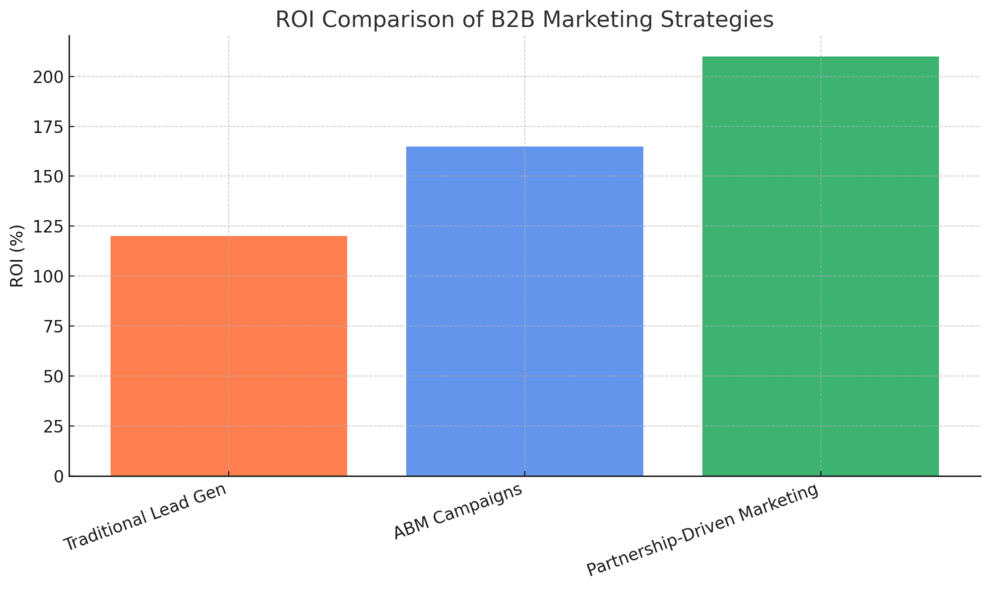
B2B marketing is evolving beyond vanity metrics like clicks and impressions. In partnership-driven strategies, success is measured by the depth of relationships and the long-term value they create.
Tracking The Right KPIs For Relationship-Based Campaigns
Traditional metrics don’t capture the nuance of partnership-driven marketing. You need KPIs that measure engagement, trust, and account growth—not just leads.
Key relationship-based KPIs include:
- Engagement Quality: How often key stakeholders interact with your brand.
- Customer Lifetime Value (CLV): Total revenue a partner generates across their relationship.
- Net Revenue Retention (NRR): Measures how much recurring revenue you retain and expand.
In platforms like HubSpot or Salesforce, you can view these metrics under Reports → Revenue Analytics → Retention Dashboard. Tracking these over time shows whether your partnerships are deepening or fading.
When KPIs focus on mutual value instead of volume, your marketing strategy becomes aligned with sustainable growth.
Evaluating Long-Term Vs. Short-Term ROI
Short-term ROI tells you what worked today. Long-term ROI tells you whether your partnerships will still thrive next year.
Both matter, but I believe too many B2B marketers focus only on immediate conversions.
Short-term ROI examples:
- Cost per lead (CPL)
- Campaign conversion rates
Long-term ROI examples:
- Renewal rates
- Client satisfaction trends
- Expansion revenue
For example, a campaign that generates 10 fewer leads but results in 3 high-value partnerships is far more valuable than one that floods your CRM with cold contacts.
I often use a blended ROI view—monthly reports for short-term adjustments, and quarterly or annual reviews for partnership health.
Proving Value Through Client Retention And Expansion
Retention is the clearest proof of marketing success. If clients stay, grow, and spend more, your strategy works. I suggest calculating Customer Retention Rate (CRR) alongside Upsell Rate to gauge partnership ROI.
Use this formula for CRR: CRR = [(Number of clients at end of period – new clients acquired) ÷ clients at start of period] × 100
High retention doesn’t just signal loyalty—it validates your entire marketing approach. Salesforce, for instance, uses customer success metrics as part of its marketing narrative, showcasing long-term partnerships instead of short-term wins.
Retention and expansion metrics help you prove to leadership (and yourself) that your marketing isn’t just performing—it’s compounding.
Future-Ready B2B Marketing Solutions For Scalable Growth
The future of B2B marketing belongs to brands that combine human connection with technological precision.
It’s not about replacing relationships with AI—it’s about using innovation to scale them.
Adopting AI And Automation For Personalized Partner Engagement
Artificial intelligence is changing how we manage relationships, not just leads. With tools like 6sense, Drift, or HubSpot AI, marketers can deliver personalization at scale—predicting what each partner needs before they even ask.
AI-driven applications you can use today:
- Predictive lead scoring to prioritize partnership-ready accounts.
- AI chatbots that offer 24/7 client support while collecting feedback.
- Smart recommendations for personalized content or next-step outreach.
For example, using HubSpot’s AI Content Assistant, you can auto-generate email drafts that align with a partner’s behavior history. This saves time without losing authenticity.
When used ethically and thoughtfully, AI allows your brand to act human—faster.
Exploring New B2B Channels Like Podcasts And Interactive Content
Modern buyers crave authenticity and engagement—and traditional ads rarely deliver that.
Podcasts, interactive webinars, and tools like Typeform quizzes or Ceros experiences can position your brand as a thought leader while building genuine community.
Why these formats work:
- Podcasts establish authority through real conversations.
- Interactive tools increase engagement and data capture.
- Live webinars foster trust through dialogue, not monologue.
For instance, Drift’s Revenue Era Podcast turned into a lead-generation channel that also strengthened partnerships, as featured guests became brand collaborators.
The takeaway? Conversation-driven media deepens relationships while educating your audience.
Building A Partnership Culture That Sustains Growth Over Time
Technology helps you scale, but culture sustains growth. Building a partnership-focused culture starts with how your internal teams think, communicate, and measure success.
I advise aligning every department—marketing, sales, and customer success—around one shared metric: client outcomes. When everyone focuses on helping clients win, partnerships naturally flourish.
Simple ways to build partnership culture:
- Celebrate client milestones as company wins.
- Share customer feedback across all teams.
- Include long-term partnership goals in KPIs.
A partnership culture transforms marketing from a department into a mindset. It ensures that every touchpoint—content, email, meeting, or product update—reinforces one clear message: we succeed when our partners do.
Expert Insight: The most future-ready B2B marketing solutions blend automation, authenticity, and alignment. When you combine human empathy with smart systems, your business doesn’t just scale—it evolves. Partnerships stop being transactions and become the foundation for sustained, predictable growth.

I’m Juxhin, the voice behind The Justifiable.
I’ve spent 6+ years building blogs, managing affiliate campaigns, and testing the messy world of online business. Here, I cut the fluff and share the strategies that actually move the needle — so you can build income that’s sustainable, not speculative.
Related posts:
 Top 5 Email Marketing Platforms: Boost Your ROI Now!
 5 Must-Have Email Signup Forms to Grow Your List Effortlessly
 How to Integrate Aweber with ClickFunnels
 10 Similar Sites To Apollo IO Every Marketer Should Try
 Omnisend Forms: How to Capture More Leads Instantly
 Inbound Marketing Solutions That Attract Quality Leads