
Table of Contents
Some links on The Justifiable are affiliate links, meaning we may earn a small commission at no extra cost to you. Read full disclaimer.
If you’ve ever dreamed of running an online business but don’t know where to start, learning how to become a dropshipper might be your best entry point.
Dropshipping lets you sell products without keeping any inventory—meaning you can start with little money and no prior experience.
But how exactly do you launch a dropshipping business when you’ve never done it before?
In this guide, I’ll break down every essential step so you can confidently go from complete beginner to managing your own profitable store.
Understanding What Dropshipping Really Means
Starting to become a dropshipper begins with understanding how this business model actually works.
It’s not about getting rich overnight—it’s about learning a system where you sell products without handling inventory or shipping yourself.
How Dropshipping Works From Start to Finish
Here’s the simplest way to picture it: You create an online store, list products from a supplier, and when someone buys, you pass the order to that supplier who ships the product directly to your customer.
Think of yourself as the connector between demand and supply. You never touch the product—you’re just the bridge.
Example flow:
- A customer orders a phone case from your store.
- You forward the order details to your supplier (often automatically using tools like DSers).
- The supplier ships the phone case directly to the customer.
- You keep the difference between the selling price and the supplier’s cost as your profit.
I like to think of it as running a digital storefront where logistics happen invisibly in the background. It’s elegant and scalable—once you get it right.
The Key Players: Supplier, Store Owner, and Customer
In dropshipping, three parties keep the wheel spinning:
- Supplier: Provides and ships the product. Your relationship with them determines your reliability and delivery quality.
- Store Owner (You): Handles marketing, branding, and customer service. You’re the face of the business.
- Customer: The person buying the product who expects fast delivery and clear communication.
When these three work together seamlessly, customers are happy, suppliers get consistent orders, and you build a sustainable business.
Why Dropshipping Appeals to Beginners With No Experience
Many beginners are drawn to dropshipping because of its low entry barrier. You don’t need to invest thousands in stock, rent a warehouse, or hire employees.
A few other reasons it’s attractive:
- Low startup cost: All you really need is a laptop, Wi-Fi, and a store platform like Shopify or WooCommerce.
- Flexibility: You can test multiple products without major financial risk.
- Automation: Tools like AutoDS and Dropified handle inventory syncing, pricing, and order forwarding automatically.
I remember when I first explored dropshipping—it was eye-opening how accessible online retail could be for someone without a logistics background.
Common Misconceptions About the Dropshipping Business Model
There are plenty of myths floating around about dropshipping. Here are the biggest ones worth clearing up:
- “It’s an easy way to get rich fast.” In reality, success takes effort, testing, and patience.
- “You don’t need customer service.” Wrong—customer support is crucial since you represent the brand.
- “Profit margins are huge.” Margins can be thin (10–30%), but with scale and smart product selection, profits grow.
Dropshipping works best when you treat it like a real business, not a side hustle shortcut.
Choosing the Right Niche to Start Your Dropshipping Journey
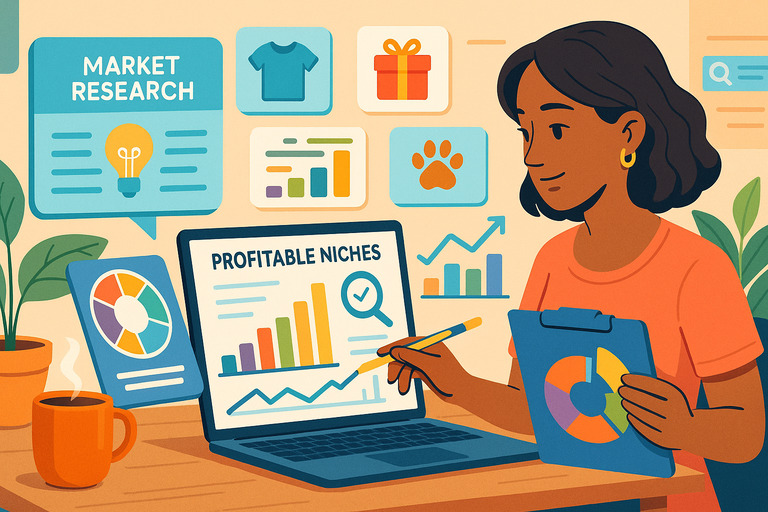
Before you can become a dropshipper, you need to know what you’re actually going to sell—and to whom. Picking the right niche is the foundation of your success.
How to Find Profitable Dropshipping Niches
The most profitable niches sit at the intersection of demand and specificity. You want to sell products that solve problems or fulfill passions, but not in markets that are already overcrowded.
Start with these ideas:
- Look for trending products using Google Trends and TikTok Creative Center.
- Focus on emotional or practical items (fitness gear, home decor, pet supplies).
- Validate interest by checking product reviews and sales volume on AliExpress.
I advise starting small. Test one niche, gather data, then expand only after finding traction.
Using Market Research Tools to Validate Your Ideas
To make data-backed decisions, use tools that show real product performance:
- Ecomhunt: Displays trending products with engagement data from Facebook ads.
- SaleHoo Labs: Helps find niches with high demand and low competition.
- Google Keyword Planner: Reveals what people are searching for and seasonal demand trends.
For example, if you see “eco-friendly yoga mats” rising steadily on Google Trends, and Ecomhunt shows strong engagement—there’s a validated niche.
Avoiding Oversaturated Niches and Finding Underserved Markets
Oversaturation happens when too many sellers chase the same audience. When that occurs, ad costs rise, and profit margins shrink.
Ways to spot and avoid it:
- Search your niche on TikTok and YouTube—if everyone’s selling it, move on.
- Find a sub-niche. Instead of “pet products,” focus on “interactive dog puzzles” or “cat hydration toys.”
- Target local or micro-markets with specific needs (like eco-conscious buyers).
The magic lies in being early to a niche before it blows up.
Balancing Passion and Profit in Niche Selection
You’ll hear advice to “follow your passion.” I agree—but only partially. Passion keeps you motivated, but profit keeps you alive.
Here’s how I suggest balancing both:
- Start with topics you care about—it helps with content creation and marketing.
- Validate profitability with data before investing.
- Be ready to pivot if the market doesn’t respond.
When you find that sweet spot—something you enjoy that also sells—you’ll have the best of both worlds.
Finding Reliable Suppliers for Your Dropshipping Store
Once you’ve chosen your niche, the next step to become a dropshipper is finding suppliers you can rely on. A great product with poor fulfillment ruins everything.
How to Identify Trustworthy Dropshipping Suppliers
Reliable suppliers are partners, not just order processors. Look for:
- Fast shipping times (ideally under 10 days for your target market).
- Consistent product quality.
- Good communication and clear return policies.
Test them early: order samples yourself. If the product arrives late, damaged, or poorly packaged—that’s your answer.
Top Platforms to Source Dropshipping Products (AliExpress, CJDropshipping, Spocket)
Each supplier platform has pros and cons. Here’s what I’ve found from experience:
- AliExpress: Huge product range, good for testing new items. Downsides: slower shipping and variable quality.
- CJDropshipping: Great for scaling. Offers U.S. warehouses, faster shipping, and custom packaging.
- Spocket: Ideal for U.S. and EU sellers. You can filter suppliers by location to shorten delivery times.
For example, using Spocket on Shopify is straightforward: Apps > Spocket > Browse Products > Import to Store.
Red Flags That Signal Unreliable Suppliers
Stay cautious if you notice:
- Poor English communication or delayed responses.
- Inconsistent pricing or product listings.
- No clear refund or return policies.
- Low feedback ratings or missing supplier history.
One unreliable supplier can wreck your customer trust. I recommend building backup supplier options for your top-selling products.
How to Communicate and Negotiate With Your Supplier
Treat your supplier relationship like a partnership. The more respectful and clear you are, the better service you’ll receive.
Tips that have worked for me:
- Always confirm pricing and shipping terms before launching a product.
- Ask about bulk discounts once you get consistent orders.
- Use direct messages on the supplier platform or contact them via WhatsApp for faster responses.
If you’re polite, transparent, and business-minded, suppliers often go out of their way to prioritize your orders—especially as you scale.
Expert tip: To build long-term success as a dropshipper, test suppliers continuously and document everything—delivery times, communication quality, and customer satisfaction. That’s how you’ll identify partners worth keeping as your business grows.
Setting Up Your Online Store the Right Way
Once you’ve chosen your niche and found reliable suppliers, it’s time to build your digital home. Your online store is where all the magic happens—it’s the bridge between your audience and the products you sell.
The way you set it up determines whether visitors trust you enough to buy.
Choosing the Best Platform to Become a Dropshipper (Shopify, WooCommerce, etc.)
The platform you choose shapes your workflow, costs, and growth potential. From my experience, two stand out: Shopify and WooCommerce.
Shopify is perfect if you want simplicity. Everything—hosting, design, payments, and apps—is under one roof. You can literally build a store in a day.
Inside Shopify, just go to Online Store > Themes > Customize to edit layouts, or Apps > DSers to connect your dropshipping supplier.
WooCommerce, on the other hand, is ideal if you’re comfortable with WordPress and want full control. It’s cheaper long-term but requires more setup (like buying hosting through WPengine or Hostinger).
I usually recommend Shopify for beginners because of its plug-and-play nature. But if you enjoy tweaking things and managing your own backend, WooCommerce offers unmatched flexibility.
Designing a High-Converting Dropshipping Website
A good design does more than look pretty—it builds trust and guides users smoothly from “browse” to “buy.”
Here’s what I focus on:
- Simple navigation: Keep menus short. Visitors shouldn’t need a map to find products.
- Professional design: Choose clean themes like Shopify’s “Dawn”.
- Fast load speed: Compress images using tools like TinyPNG.
- Social proof: Add customer reviews and trust badges (like PayPal Secure Checkout).
Imagine your store as a physical shop. Cluttered aisles and dim lighting drive people out; online, bad design does the same.
Crafting Compelling Product Descriptions That Drive Sales
Your product descriptions are your silent salesperson. Instead of listing specs, focus on benefits and outcomes.
Here’s a structure I often use:
- Start with a short, emotional hook.
- Explain the problem your product solves.
- Highlight unique features with simple bullets.
- End with a call-to-action like “Order now and get free shipping today.”
Example: If you’re selling an ergonomic office chair, don’t just say “Adjustable backrest.” Say “Stay comfortable during long work hours with a backrest that adjusts perfectly to your posture.”
It’s a small shift in language—but it dramatically boosts conversions.
Setting Up Secure Payment Gateways and Essential Store Policies
Customers won’t buy if they don’t trust the checkout process. That’s why secure payment gateways and clear store policies are non-negotiable.
Payment gateways I suggest:
- Shopify Payments: Easiest for most stores.
- PayPal: Adds familiarity and global trust.
- Stripe: Ideal for recurring payments or subscriptions.
You can set these up inside your Shopify dashboard under Settings > Payments.
Also, make sure to create essential pages like:
- Refund Policy – clear and fair builds confidence.
- Shipping Policy – specify estimated delivery times.
- Privacy Policy – required by law in most countries.
These policies don’t just protect you—they make customers feel safe enough to buy.
Selecting Winning Products for Your Dropshipping Store
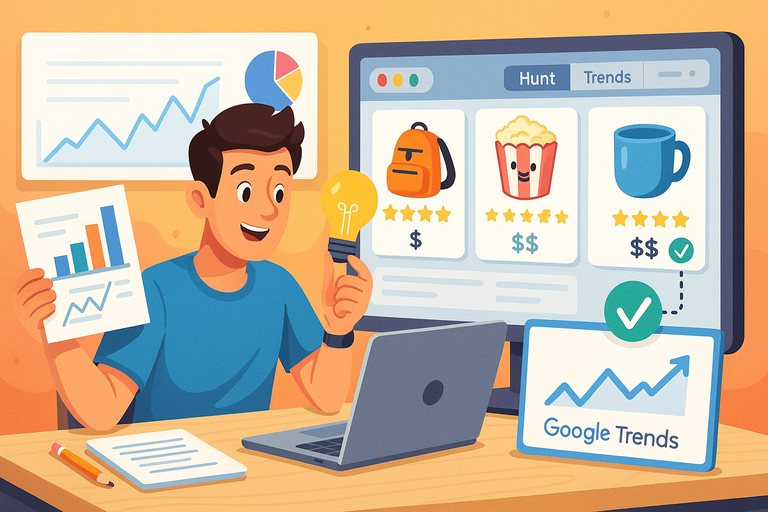
The right product can make or break your dropshipping business.
I’ve seen stores thrive simply because they picked one item that hit a trending wave early. The challenge is learning how to spot those winners consistently.
How to Spot High-Demand, Low-Competition Products
Winning products usually solve an emotional or practical problem. The trick is finding ones people want but aren’t seeing everywhere yet.
What to look for:
- Unique but useful: Something that grabs attention instantly (e.g., LED makeup mirrors).
- Clear target audience: If you can picture your buyer, you can market better.
- Proven demand: Look for strong engagement on TikTok or Facebook.
I recommend browsing social media to spot products that get organic buzz—when you see hundreds of comments like “I need this!” you might be onto something.
Tools to Research and Validate Dropshipping Products (Google Trends, Ecomhunt)
Data beats guesses every time. Tools like Google Trends and Ecomhunt give you real proof of demand.
How to use them:
- Google Trends: Enter your product idea. Look for steady or rising search interest over 3–6 months.
- Ecomhunt: Check products with high engagement and verified ad data.
- AliExpress Dropshipping Center: Sort by order volume and reviews to confirm buyer interest.
For example, if “portable blender” shows consistent upward trends globally, and Ecomhunt lists high engagement—congratulations, you’ve found validation.
Testing and Analyzing Product Performance Before Scaling
Never assume a product will sell well—test it with small ad budgets first.
My basic test setup:
- Run $5–$10 daily Facebook or TikTok ads for 3–5 days.
- Track metrics like CTR (Click-Through Rate) and CPA (Cost Per Acquisition).
- Keep only products with strong engagement and reasonable costs.
Once you find a “winning” product (good sales and low ad costs), scale gradually—double the ad spend every few days while monitoring ROI.
Understanding Seasonal and Evergreen Product Opportunities
Some products explode during certain seasons, while others sell year-round.
Examples:
- Seasonal: Halloween costumes, Christmas lights, summer pool floats.
- Evergreen: Fitness gear, kitchen gadgets, pet accessories.
I suggest keeping both types. Seasonal items give you quick spikes in profit, while evergreen ones sustain your store between those peaks.
Smart dropshippers plan ahead—start marketing holiday items 6–8 weeks before the season hits.
Marketing Your Dropshipping Business Effectively
Even with the best products, your store won’t sell unless people know it exists.
Marketing is where most new dropshippers struggle, but it’s also where the fun begins—testing creative ideas and seeing what clicks.
Building a Brand Identity That Builds Trust
A strong brand isn’t just a logo—it’s the story and feeling your store gives off.
Here’s how to build it:
- Choose a clear tone: Friendly, luxurious, eco-conscious—whatever fits your audience.
- Use consistent visuals: Stick to 2–3 main colors and one font style.
- Tell your story: Add an “About Us” page that explains why you started.
When customers feel your brand has purpose, they trust you more—and trust equals conversions.
How to Use Social Media Marketing to Drive Traffic
Social media is your biggest free advertising platform. Each channel has its own style, but here’s what works best for dropshippers:
- TikTok: Short, raw videos showing your product in action. Use trending sounds and hashtags.
- Instagram: Focus on lifestyle images and influencer shoutouts.
- Pinterest: Great for visually appealing products like home decor and fashion.
I suggest posting 3–4 times a week, testing different formats. You’ll quickly learn what kind of content your audience engages with most.
Running Paid Ads Without Wasting Money (Facebook, TikTok, Google)
Paid ads can grow your store fast—but only if you manage them wisely.
Start small: Spend $10–$20 per day testing different audiences. Once you see which ads convert best, scale those campaigns.
- Facebook Ads: Great for detailed targeting by interests or age groups.
- TikTok Ads: Excellent for viral-style videos targeting Gen Z and Millennials.
- Google Shopping: Best for buyers actively searching for products.
I usually recommend starting with TikTok—it’s cheap, high-reach, and visually powerful.
Using Email Marketing and Retargeting to Boost Conversions
Most visitors won’t buy the first time they land on your store. Retargeting and email marketing bring them back.
Here’s what to do:
- Set up abandoned cart emails using Shopify’s built-in automation or tools like Omnisend.
- Offer a discount code to re-engage hesitant buyers.
- Run retargeting ads on Facebook for people who visited your site but didn’t purchase.
Example: “Forgot something? Your order is still waiting—with 10% off!”
These small nudges often recover up to 15–20% of lost sales.
Expert tip: In marketing, consistency beats complexity. Don’t chase every platform. Pick one or two, master them, and only expand once you’re seeing steady results. That’s how you build a profitable and sustainable dropshipping business.
Managing Orders and Deliveries Smoothly
Once your store starts getting orders, your focus shifts from “How do I get sales?” to “How do I deliver them efficiently and keep customers happy?”
Managing orders and deliveries smoothly is where your business starts feeling real—and it’s also where small mistakes can snowball fast.
Automating Order Fulfillment to Save Time
When I first started, I used to process every order manually—it was exhausting. Automation changed everything. It cuts down errors and lets you focus on growth instead of logistics.
You can use apps like DSers, AutoDS, or CJ Dropshipping’s fulfillment system. These tools automatically send order details to your suppliers once a customer pays, and even update tracking info back into your store.
Here’s a simple Shopify flow:
- Go to Apps > DSers > Settings > Auto Fulfillment.
- Enable “Automatically place orders.”
- Select your preferred shipping method (ePacket or CJPacket, for example).
This ensures customers receive confirmations instantly, and you never have to worry about missing an order. I believe automation isn’t just a convenience—it’s the backbone of scaling smoothly.
Tracking Shipments and Managing Delivery Expectations
Customers are far more patient when they know where their order is. Transparency is your best friend.
Use apps like Track123 or 17Track to automatically sync shipping updates and send notifications.
I like integrating AfterShip, which shows a branded tracking page inside your store, so customers don’t have to visit third-party websites.
Best practices I suggest:
- Always provide tracking within 24–48 hours of purchase.
- Set realistic delivery estimates (especially for international shipping).
- Send proactive email updates when packages hit key checkpoints.
For example, a quick “Your order just left our warehouse!” email goes a long way toward building trust and reducing support tickets.
Handling Customer Inquiries Professionally
No matter how smooth your operations are, you’ll get customer questions—and how you answer them defines your brand.
I recommend using helpdesk tools like Gorgias, Tidio, or Zendesk. They let you manage email, live chat, and social messages from one dashboard.
When replying, always follow the 3 Cs: Clear, Courteous, and Concise.
If someone asks, “Where’s my order?” don’t just drop a tracking link. Say something like:
“Thanks for checking in! I just reviewed your order—it shipped out on [date] and is currently in transit. You can track it here: [link]. Based on recent deliveries, it should arrive by [estimated date].”
This kind of empathy builds loyalty, even in stressful moments.
Dealing With Refunds and Returns Without Losing Profit
Refunds and returns are part of doing business. What matters is how you handle them.
Here’s how to minimize losses:
- Have a clear refund policy displayed on your site.
- Offer store credit for non-defective returns when possible.
- Communicate with suppliers before approving refunds—they might compensate you for faulty items.
I suggest keeping a spreadsheet of refund reasons to spot patterns. If multiple customers complain about one product, it’s time to replace that supplier or item.
In my experience, handling refunds quickly (within 48 hours) turns potential bad reviews into loyal repeat buyers.
Scaling Your Dropshipping Business for Long-Term Success
Once your store is running smoothly, scaling becomes your next big goal.
Scaling doesn’t just mean spending more on ads—it’s about growing sustainably while maintaining profit and quality.
When and How to Start Scaling Your Dropshipping Store
You’ll know you’re ready to scale when:
- Your ads are profitable for several weeks.
- You’re getting consistent daily orders.
- Your fulfillment system can handle volume.
Start small:
- Gradually increase your ad budget by 20–30% every few days.
- Expand winning ad creatives to new audiences or regions.
- Invest in better website optimization and faster suppliers.
I suggest treating scaling like a science experiment—track every change so you can identify what’s driving growth versus what’s draining profit.
Hiring Virtual Assistants to Manage Repetitive Tasks
At some point, you’ll hit a wall trying to do everything yourself. That’s when hiring a Virtual Assistant (VA) makes sense.
A VA can handle:
- Customer service emails and live chat.
- Order tracking and updates.
- Social media posting or comment moderation.
Websites like Upwork and Fiverr are great places to find trained e-commerce VAs.
When I hired my first assistant, it felt strange to delegate—but within a week, I realized how much time I’d been wasting on admin work. That time went straight into strategy and testing new products.
Expanding Into New Product Lines or Markets
Once your original store is stable, it’s time to diversify.
You can expand by:
- Adding complementary products (if you sell yoga mats, add straps or water bottles).
- Creating sub-stores for other niches.
- Targeting new countries using localized marketing and currency converters.
Before expanding, always test the waters with a few ads. If you get strong engagement and decent conversion rates, scale that product line slowly.
Diversification protects your business from market dips and keeps revenue streams flowing.
Monitoring Metrics That Matter: ROI, CAC, and CLV
Scaling blindly is dangerous. You need to understand your numbers.
Key metrics to track:
- ROI (Return on Investment): Measures how profitable your ads are.
- CAC (Customer Acquisition Cost): Tells you how much you spend to get one buyer.
- CLV (Customer Lifetime Value): Shows how much an average customer is worth long-term.
You can monitor these using Shopify Analytics or tools like Triple Whale.
For instance, if your CAC is $15 and your CLV is $60, you’re doing great. But if your CLV barely covers CAC, it’s time to optimize ads or boost retention with email campaigns.
Numbers tell stories—listen to them, and they’ll show you where to grow next.
Avoiding Common Dropshipping Mistakes Beginners Make
Most dropshippers don’t fail because the business model is broken—they fail because they repeat the same avoidable mistakes.
If you want to become a successful dropshipper, learn from the ones who stumbled before you.
Focusing Too Much on Products and Not Enough on Customers
It’s easy to get caught up in chasing “winning” products, but the real win comes from building a connection with your audience.
Focus on why your customer buys, not just what they buy. Create content, FAQs, and support systems that make people feel understood.
A loyal customer base turns a good store into a sustainable brand.
Ignoring Branding and Store Credibility
Your store isn’t just a catalog—it’s a brand. If it looks untrustworthy, people won’t risk their money.
Make your store credible by:
- Using a custom domain (not a default Shopify URL).
- Adding clear policies and contact details.
- Including real product photos instead of generic stock images.
I’ve seen conversion rates jump 25% after a simple redesign that made a store look more professional.
Overlooking Supplier Communication and Quality Control
Suppliers are your silent partners. If they fail, you fail.
Keep regular communication—weekly check-ins go a long way. Ask for tracking updates, product stock levels, and shipping delays early.
I also recommend ordering random samples every month to check product quality firsthand. It’s a small expense that prevents huge reputation damage.
Mismanaging Cash Flow and Ad Spend
This one ruins more dropshipping businesses than anything else. Beginners often spend heavily on ads without tracking ROI or budgeting for returns and fees.
To manage cash flow:
- Set a clear ad budget you can afford to lose during testing.
- Keep 20–30% of your revenue reserved for refunds or emergencies.
- Reinvest profits into scaling only after you’ve paid yourself a small cushion.
Dropshipping success isn’t about flashy numbers—it’s about steady, sustainable growth.
Pro tip: The best dropshippers don’t chase quick wins; they focus on systems—automation, customer trust, and analytics. Those systems keep your business running smoothly, even when you’re asleep.
Staying Ahead With Trends and Continuous Learning
Dropshipping evolves fast—what works today might flop next month. To truly become a dropshipper who lasts, you need to stay flexible, curious, and informed.
I see it as an ongoing game of adaptation: learning, experimenting, and improving before your competitors do.
How to Keep Up With Dropshipping Market Changes
The e-commerce world moves at lightning speed. New platforms, products, and consumer behaviors emerge constantly. The best dropshippers don’t just react—they anticipate change.
Here’s what I recommend:
- Follow market data: Use Statista to watch shifts in global shopping habits.
- Study ad libraries: Facebook Ad Library shows trending creatives from competitors—perfect for inspiration.
- Monitor supplier updates: Platforms like CJ Dropshipping or AliExpress often release lists of “hot products,” showing where demand is moving.
A good example: when TikTok’s influence exploded, sellers who spotted its potential early built viral stores around visual, fast-moving products. Staying alert to such shifts lets you act while others hesitate.
Following Industry Experts and Online Communities
Learning directly from those ahead of you is the shortcut to success. Dropshipping isn’t just about tools—it’s about insights, mindset, and timing.
You’ll find some of the best discussions in online spaces like:
- Reddit (r/dropship and r/Entrepreneur) – Real talk and honest advice from experienced sellers.
- YouTube Channels like Wholesale Ted, Biaheza, and Verum Ecom – They regularly break down real-time product trends.
- Facebook Groups like Shopify Entrepreneurs – Great for sharing results and troubleshooting issues.
I often learn something new just by reading others’ test results or ad strategies. Community learning keeps you grounded—and saves you from costly beginner mistakes.
Using Analytics to Adapt and Improve Performance
Analytics tell the real story of your business. The data doesn’t lie—it shows what’s working and what needs fixing.
On Shopify, you can go to Analytics > Reports to track key metrics like:
- Conversion rate
- Average order value (AOV)
- Returning customer rate
Combine this with Google Analytics or Meta Pixel insights to understand your customer journey better.
For example, if your traffic is high but sales are low, it’s not your ads—it’s likely your product page or pricing. I suggest checking session time and bounce rate; they reveal where shoppers lose interest.
When you treat analytics like a compass, every marketing or product decision becomes easier and smarter.
Reinventing Your Store With New Technologies and Tools
Dropshipping technology changes constantly, and embracing innovation gives you a serious edge.
Here’s what I currently find game-changing:
- AI copy tools (like Copy.ai) for fast product description drafts.
- Automation apps like Zapier for syncing data and customer updates.
- AR (Augmented Reality) plugins on Shopify for letting customers visualize products.
I advise updating your store quarterly—try a new design layout, experiment with personalization, or add loyalty features. Reinvention doesn’t mean starting over; it means evolving before the market forces you to.
Legal and Financial Basics for New Dropshippers
Many new dropshippers skip the legal and financial setup, but I believe it’s what separates a hobbyist from a real business owner.
Setting your foundation right protects you, builds trust, and helps you scale confidently.
Registering Your Business the Smart Way
Before selling, make your business official. Registering your company protects you legally and helps with taxes and supplier relationships.
Here’s what to do:
- Choose a structure—LLC (Limited Liability Company) is the most common for dropshippers because it separates personal and business assets.
- Register with your local government or use services like LegalZoom.
- Get an EIN (Employer Identification Number) if you’re in the U.S.—you’ll need it for taxes and business bank accounts.
Once you’re registered, open a separate bank account for your business. It keeps finances clean and simplifies accounting.
Understanding Taxes and Accounting for Dropshipping
Taxes can feel intimidating at first, but managing them early keeps you stress-free later.
Dropshipping taxes typically involve:
- Income tax on profits.
- Sales tax for orders within certain states or regions.
- Import duties depending on where your supplier ships from.
You can use Shopify’s built-in Tax Settings (Settings > Taxes and Duties) to automatically calculate rates. I also suggest using accounting tools like QuickBooks or Xero to track income and expenses.
Even if you’re a beginner, consult a tax professional once a year. It’s one of the smartest investments you’ll make.
Creating Transparent Policies to Build Customer Trust
Your store policies communicate honesty. Clear and simple terms reduce confusion and disputes.
At a minimum, include:
- Shipping Policy – Outline estimated delivery times and potential delays.
- Refund Policy – Explain how and when customers can get refunds or exchanges.
- Privacy Policy – Inform users how you collect and protect their data.
You can generate templates directly in Shopify under Settings > Legal.
Transparent policies not only meet legal requirements—they also make buyers feel safe. I’ve noticed that stores with visible, fair policies often get higher conversion rates.
Protecting Your Brand With Trademarks and Compliance
As your store grows, your brand becomes your most valuable asset. Protecting it early prevents copycats from stealing your identity.
If you’re serious about building a long-term business, trademark your brand name and logo through your country’s trademark office.
Also, ensure your products meet local compliance laws—especially if selling in health, beauty, or electronics categories. For example, EU regulations require CE markings for certain products.
I advise doing a quick compliance check with your supplier before adding any new item to your catalog. It’s easier to prevent a problem than fix one later.
Final Steps to Launch and Thrive as a Dropshipper
By now, you’ve learned how to set up, market, and manage your store—but success in dropshipping comes from consistent action and refinement. Launching your store is just the beginning.
Thriving means constantly testing, improving, and caring about your customers more than your competitors do.
Building a Simple Launch Plan for Your First Store
A successful launch doesn’t need to be complicated—it just needs to be intentional.
Here’s a launch plan I often recommend:
- Finalize 5–10 high-quality products.
- Test your website on mobile and desktop.
- Set up one traffic source (e.g., TikTok Ads or Instagram).
- Announce your opening through social channels or email.
Make your first goal small: 10–20 sales. Those initial orders teach you more than months of preparation ever will.
Testing, Measuring, and Improving Store Performance
After launching, treat your store like an ongoing experiment.
Check your analytics weekly for:
- Conversion rate
- Cost per acquisition (CPA)
- Repeat customer percentage
Use A/B testing on your product pages—test different images, headlines, or pricing. Even a 1% improvement in conversions adds up fast.
I recommend tools like VWO or Shopify’s built-in A/B testing app. Small tweaks over time build massive results.
Building Long-Term Customer Relationships
Dropshipping isn’t just about quick sales—it’s about building a brand people return to.
Ways to keep customers engaged:
- Send personalized thank-you emails.
- Offer loyalty points or discounts for repeat purchases.
- Collect feedback through post-purchase surveys.
When customers feel seen and appreciated, they naturally become advocates for your brand. That kind of loyalty can’t be bought—it’s earned through consistency and care.
Proven Habits That Turn Beginners Into Successful Dropshippers
If I had to boil success down to a few daily habits, they’d be these:
- Check your analytics every morning—it keeps you grounded in data.
- Spend at least 30 minutes a day learning something new.
- Keep testing—products, ads, designs. The market rewards curiosity.
- Build relationships—with suppliers, mentors, and customers.
Every successful dropshipper I know treats this like a real business, not a side hustle. They experiment, fail, learn, and try again.
Expert tip: The best dropshipping stores don’t rely on trends—they create them. Focus on serving people better each day, and your business will naturally grow in both reputation and profit.

I’m Juxhin, the voice behind The Justifiable.
I’ve spent 6+ years building blogs, managing affiliate campaigns, and testing the messy world of online business. Here, I cut the fluff and share the strategies that actually move the needle — so you can build income that’s sustainable, not speculative.
Related posts:
 The Best Way to Dropship Without Wasting Money
 Dropshipping How to Start: Your Complete Beginner’s Guide
 What Is Dropshipping Meaning? A Complete Breakdown
 E Commerce Dropshipping Guide: How to Sell Without Inventory
 Salehoo and Shopify: How to Connect Them for Profit Fast
 Top Online Store Platforms for Building Income Streams