
Table of Contents
Some links on The Justifiable are affiliate links, meaning we may earn a small commission at no extra cost to you. Read full disclaimer.
Online dropshipping has exploded in popularity—but do you really know how it works behind the scenes?
You’ve probably seen stories about people making money without ever touching a product, but what’s the real process, and how does it actually make a profit?
In this guide, I’ll break down how online dropshipping truly operates—from setting up a store to managing suppliers and scaling sustainably—so you can see exactly what’s real and what’s hype.
What Is Online Dropshipping And Why It’s So Popular
Online dropshipping is a simple yet powerful business model where you sell products online without keeping any inventory.
Instead, when someone buys from your store, the order goes directly to a supplier who ships the product to the customer on your behalf.
It sounds almost too easy, but there’s real strategy involved in making it work profitably.
Understanding The Dropshipping Business Model
Think of dropshipping as running a digital storefront that connects buyers with wholesalers. You don’t hold stock, rent a warehouse, or handle packaging. Your job is to curate, market, and sell.
Here’s the basic flow:
- A customer places an order on your online store.
- You forward that order (automatically, if your system is set up right) to a supplier.
- The supplier ships the item directly to your customer.
You earn the difference between what the customer paid and what you paid the supplier.
I like to think of it as being the “middleman with a marketing brain.” The beauty of this model lies in its scalability — you can sell hundreds of products without ever touching a box.
How Dropshipping Differs From Traditional E-commerce
Traditional e-commerce stores buy products in bulk, manage inventory, and ship items themselves. Dropshipping flips that model completely.
Here’s how they differ:
- Upfront costs: Traditional stores need capital for stock; dropshippers don’t.
- Risk: Traditional sellers risk unsold inventory; dropshippers risk supplier reliability instead.
- Fulfillment: You manage marketing and customer service while suppliers handle the logistics.
For example, in Shopify (a leading e-commerce platform), you can install a dropshipping app like DSers, link it to AliExpress, and your entire supply chain becomes automated.
You list a product, and when a customer buys it, the app handles the forwarding process — no manual data entry, no packing tape, no shipping labels.
Why Entrepreneurs Choose Online Dropshipping For Low-Risk Startups
Most first-time entrepreneurs choose online dropshipping because it has low entry barriers. You can start with minimal capital — often under $200 — and test multiple product ideas before committing heavily.
Some practical reasons it’s attractive:
- You can work from anywhere, as long as you have Wi-Fi.
- You can test products rapidly without financial risk.
- You can scale operations with automation tools once sales start flowing.
I often suggest dropshipping to those who want to learn e-commerce before investing heavily.
It’s an excellent training ground for understanding digital marketing, audience targeting, and online sales psychology — all without huge losses if you fail early.
How The Online Dropshipping Process Works Step-By-Step
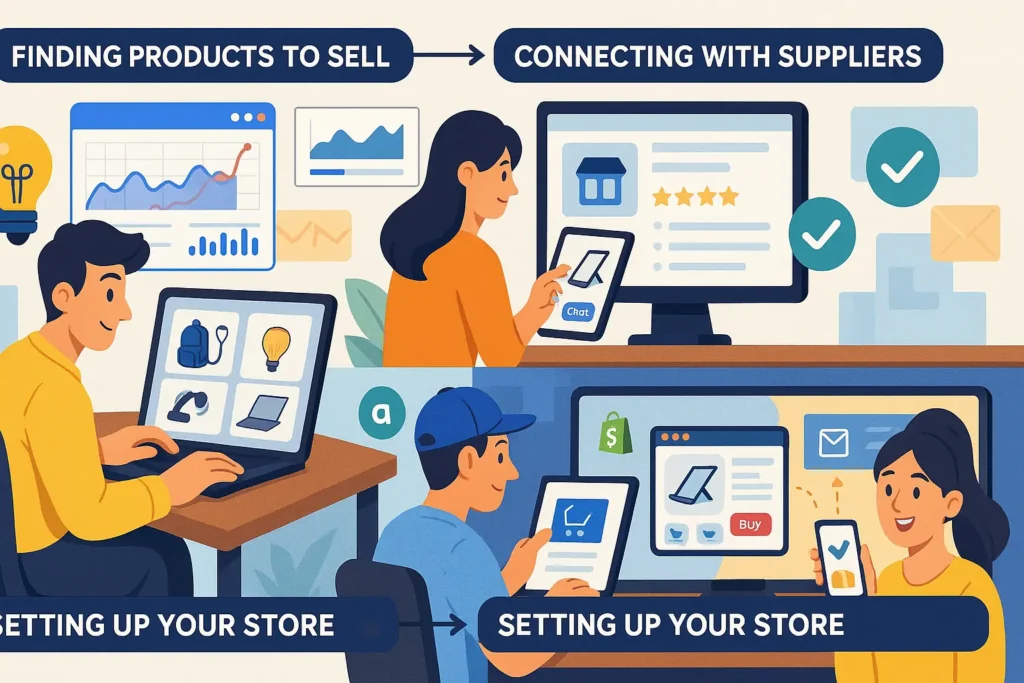
Running a successful dropshipping store is about system design — not luck. Once you understand each stage, you can automate most of it.
Finding Profitable Products To Sell Online
Product research is where every dropshipping journey begins. You need items that are both trending and profitable.
Here’s what I recommend:
- Use product research tools like Sell The Trend or Niche Scraper to see what’s performing well on AliExpress, Amazon, or TikTok Shop.
- Focus on emotional or problem-solving products — things people buy impulsively.
- Avoid saturated categories like “phone cases” unless you have a unique angle.
Example: One of my clients found success selling ergonomic laptop stands after noticing a spike in remote work setups. That insight came directly from Google Trends data — simple, free, and powerful.
Connecting With Reliable Suppliers And Platforms
Your suppliers determine whether your customers are happy or angry. Look for suppliers who ship fast, provide tracking numbers, and maintain good reviews.
Here’s what matters:
- Shipping speed: Prefer suppliers with warehouses in your target market (like U.S. or EU-based).
- Responsiveness: Message them before committing. A good supplier replies fast and clearly.
- Integration: Choose suppliers compatible with platforms like Shopify or WooCommerce.
Platforms like CJ Dropshipping are beginner-friendly, while Spocket focuses on U.S./EU suppliers for faster delivery. Always order a sample first — I can’t stress this enough. It’s your reputation on the line, not the supplier’s.
Setting Up Your Dropshipping Storefront
This is where your business comes alive. You’ll choose an e-commerce platform (Shopify is the most popular for beginners), design your store, and upload products.
Quick setup example on Shopify:
- Go to Shopify.com and start a free trial.
- Choose a theme (I recommend Dawn for simplicity).
- Use Zendrop to import products.
- Customize titles, descriptions, and images to look unique.
Pro tip: Write benefit-driven product descriptions. Instead of saying “LED Desk Lamp,” say “Create a calm, focused workspace with this adjustable LED desk lamp.” You’re not just selling a product; you’re selling the transformation it provides.
Managing Orders, Payments, And Shipping Automatically
The beauty of modern dropshipping lies in automation. Once orders start coming in, tools like AutoDS handle order fulfillment — sending details to your supplier automatically.
A typical workflow looks like this:
- Payment is processed via your store’s gateway (Shopify Payments or PayPal).
- The supplier gets the order info automatically.
- The customer receives tracking updates through automated email notifications.
You can even integrate apps like Track123 for customers to check shipping status in real time. This creates trust and reduces support requests — a must if you plan to scale.
Choosing The Right Platform For Online Dropshipping
Your choice of platform shapes how easy your store is to manage, automate, and grow. Each platform has its strengths depending on your budget, experience, and goals.
Comparing Shopify, WooCommerce, And BigCommerce
Here’s a quick breakdown from experience:
- Shopify: Ideal for beginners. It’s fully hosted, beginner-friendly, and integrates seamlessly with dropshipping tools like DSers, Zendrop, and Spocket.
- WooCommerce: Best for WordPress users who want more customization and control. You’ll need hosting, but you can use plugins like AliDropship.
- BigCommerce: Suited for scaling businesses needing multiple sales channels (like Amazon or eBay).
I generally recommend Shopify for first-timers — it handles hosting, security, and integrations out of the box. But if you’re tech-savvy and want full ownership, WooCommerce gives more freedom.
How To Integrate Dropshipping Apps Like DSers
Integrating a dropshipping app automates the most time-consuming part — product importing and order forwarding.
For Shopify, here’s a simple DSers setup:
- Install DSers from the Shopify App Store.
- Connect your AliExpress account.
- Import products directly into your store with one click.
- Set pricing rules (e.g., 2.5x markup).
DSers replaced Oberlo in Shopify’s ecosystem and is now the go-to automation tool. If you’re using WooCommerce, AliDropship works similarly, though it’s a plugin rather than a web app.
Tips For Setting Up Product Listings That Convert
A product listing can make or break your dropshipping store. I’ve seen identical products perform wildly differently just based on presentation.
Here’s what drives conversions:
- High-quality images: Use clean, lifestyle photos whenever possible.
- Benefit-focused titles: Emphasize results, not specs.
- Clear pricing and shipping info: Avoid surprises at checkout.
- Trust signals: Include reviews, guarantees, and fast shipping badges.
Example: Instead of listing “Wireless Dog Nail Grinder,” try “Keep Your Pet Calm With This Silent Nail Grinder (No Pain, No Stress).” The second sells comfort — not hardware.
The Role Of Suppliers In Online Dropshipping Success
Your suppliers are the backbone of your online dropshipping business. They directly affect your product quality, shipping speed, and customer satisfaction.
In other words, even if you’re great at marketing, a weak supplier can quietly sink your reputation.
How To Vet And Build Relationships With Quality Suppliers
A good supplier isn’t just one that ships products fast — it’s one that communicates clearly, keeps inventory updated, and consistently delivers what they promise.
I always say that suppliers are partners, not vendors.
Here’s how you can vet them effectively:
- Order samples first: This helps you check product quality and packaging before selling.
- Check responsiveness: Message potential suppliers with questions. Fast, clear replies are a green flag.
- Review ratings and history: On platforms like AliExpress or Spocket, prioritize suppliers with 4.7+ stars and at least six months of activity.
- Look for automation compatibility: Confirm they integrate with your platform (e.g., DSers for Shopify, AliDropship for WooCommerce).
Once you find a good one, maintain a relationship. Send a message of appreciation or share positive feedback from your customers.
It sounds small, but it goes a long way. Suppliers remember polite, professional clients — and they’re more likely to prioritize your orders when things get busy.
Understanding Fulfillment, Packaging, And Delivery Timelines
Fulfillment in dropshipping simply means the process of packing and shipping an order once it’s placed.
Since suppliers handle this part, you must understand how they do it — because your customers will blame you for any mistakes.
Typical fulfillment workflow:
- A customer places an order on your site.
- The order is automatically sent to your supplier.
- The supplier prepares the package, ships it, and uploads the tracking information.
When reviewing supplier options, always ask these questions:
- How long is the processing time before shipping?
- Which shipping carriers do they use (ePacket, USPS, DHL)?
- Do they include any promotional materials or invoices (which you may want removed)?
For faster delivery, I recommend suppliers that offer local warehouses or priority shipping lines for your target market.
For example, CJ Dropshipping provides U.S. and EU fulfillment options, cutting shipping from 3 weeks to 5 days in some cases. That’s a massive competitive advantage.
Managing Supplier Communication And Inventory Updates
Smooth communication keeps your business running without hiccups. Many problems in dropshipping come from assumptions — assuming stock is available or shipping times are accurate.
Here’s what I do and suggest:
- Set communication schedules: Message your supplier weekly or biweekly to confirm inventory levels.
- Use automation tools: Dropified and AutoDS sync stock and pricing in real time, reducing human error.
- Clarify restock policies: Know how suppliers handle out-of-stock items and backorders.
If you’re scaling, consider setting up a shared spreadsheet with your supplier to track inventory trends. It’s simple, but it keeps you aligned — and avoids the nightmare of selling items that suddenly go “out of stock.”
Marketing Strategies To Grow Your Online Dropshipping Store

You can have the best products and suppliers, but without smart marketing, your store will stay invisible.
Marketing in online dropshipping is about building trust, awareness, and repeat buyers — not just running ads.
Using Social Media Advertising To Attract Buyers
Social media ads, especially on platforms like Facebook, Instagram, and TikTok, are often the fuel that drives early dropshipping success. They allow you to reach your ideal customer almost instantly.
Here’s how to approach it:
- Start with video ads: Short, engaging product demos work best.
- Target narrow audiences: Focus on interests closely related to your product. For example, if you sell ergonomic chairs, target “remote workers” or “office setups.”
- Track data aggressively: Use Facebook Pixel or TikTok Pixel to monitor conversions and refine campaigns.
I’ve seen stores scale from $100 to $5,000 per day purely by testing and optimizing their ad creatives.
The secret isn’t spending more — it’s testing smarter. Try three different ad styles: A user testimonial, a before-and-after clip, and a quick demo. Then double down on whichever gets the lowest cost per click.
SEO And Content Marketing For Long-Term Organic Growth
Paid ads bring speed, but SEO brings sustainability. Optimizing your store for search engines means you’ll attract customers without constantly paying for clicks.
Here’s where to start:
- Keyword optimization: Include your main product names naturally in titles and descriptions.
- Blog content: Write articles like “Top 10 Desk Accessories for Home Offices” — it helps position your store as helpful, not just sales-driven.
- Backlinks: Get mentioned on niche blogs or forums to build credibility and rank higher on Google.
In my experience, stores that combine SEO with paid traffic often double their lifetime value per customer. People who find you through content are more loyal and less price-sensitive — a hidden bonus most dropshippers overlook.
How Email Campaigns And Retargeting Boost Repeat Sales
Email marketing is your best friend for repeat business. It’s one of the few channels you own. Once a visitor gives you their email, you can re-engage them without ad spend.
Here’s a quick strategy you can implement:
- Capture emails using pop-ups or discounts.
- Send a welcome series with value-first content before promoting products.
- Use retargeting ads for those who visited your store but didn’t buy.
Example: If a visitor adds an item to the cart but doesn’t checkout, send a reminder email after 24 hours with a small discount code. It feels personal, and you’d be surprised how often that one message turns into a sale.
Tools like Klaviyo or Omnisend integrate easily with Shopify and automate these flows beautifully.
Common Challenges In Online Dropshipping (And How To Fix Them)
Every dropshipper faces challenges — it’s part of the learning curve. The key is not to avoid problems, but to anticipate and solve them fast.
Dealing With Shipping Delays And Product Quality Issues
Delays and quality complaints are the top two reasons dropshipping stores lose customers. The best fix is prevention.
Here’s how to reduce problems:
- Work with local suppliers when possible. Faster shipping improves trust.
- Test each new product personally. This helps you spot flaws before they go public.
- Set clear delivery expectations. Don’t promise “3-day delivery” if your supplier needs 10.
When an issue does happen, respond quickly and offer a solution before the customer asks.
A partial refund or a replacement can save your store’s reputation — and often turns a complaint into a positive review.
Handling Customer Complaints And Refunds Gracefully
Your approach to customer support defines how your brand is perceived. People understand mistakes happen — what matters is how you respond.
Here’s what I recommend:
- Respond within 24 hours. Even if you don’t have a solution yet, acknowledge the issue.
- Offer clear refund policies. Transparency builds trust and reduces disputes.
- Use templates to save time. Apps like Gorgias or Re:amaze help automate replies without sounding robotic.
I once had a client in the pet niche who turned refund emails into upsell opportunities — offering 20% off a related item as an apology. That small gesture led to higher retention and repeat business.
Avoiding Legal And Tax Mistakes In Dropshipping Operations
While dropshipping seems simple, ignoring legal and tax obligations can cause serious headaches later.
Key points to remember:
- Register your business. Even as a small store, it’s important for payment gateways like Stripe or PayPal.
- Set up sales tax collection properly. Shopify has built-in tools that help configure region-specific tax rules.
- Use legitimate suppliers. Avoid counterfeit or trademarked items to prevent account bans or lawsuits.
I advise consulting a local accountant familiar with e-commerce once your store starts generating steady income. It’s a small investment that saves big trouble down the road.
Profit Margins And Pricing Strategies In Online Dropshipping
Pricing is one of the trickiest parts of online dropshipping. Set your prices too high, and you’ll scare customers away.
Set them too low, and your margins will vanish after fees and ads. The goal is to find that sweet spot where you remain competitive and profitable.
Calculating Product Costs And Setting Markup Prices
Your profit margin in dropshipping depends on multiple factors — product cost, shipping fees, transaction charges, and ad spend. Before pricing any product, you need a clear breakdown of what you’re actually paying.
Here’s a quick formula I use with clients:
Total Product Cost = Supplier Cost + Shipping + Platform Fees + Ad Cost Per Sale
Once you know that number, apply a markup that leaves you at least a 25–40% profit margin after all costs.
For example, if your supplier cost is $12 and your total expense per sale is around $18, selling the product for $30–35 gives you a fair profit buffer.
I suggest starting with a 2.5x markup rule for most items. It’s simple and keeps you safe even if ad costs fluctuate.
On Shopify, you can automate this rule using DSers pricing settings: Dashboard > Settings > Pricing Rule > Apply Multiplier (2.5x).
The biggest mistake I see new dropshippers make is ignoring ad costs. Paid traffic often eats 20–40% of your total revenue, so include it in your math from day one.
How To Balance Competitive Pricing With Profitability
Customers today compare prices in seconds — so staying competitive is key. But that doesn’t mean you have to be the cheapest. Instead, focus on perceived value.
Here’s what I advise:
- Enhance your product page: Better images, detailed descriptions, and videos justify higher prices.
- Offer free shipping: It feels like a deal, even if you’ve factored it into the price.
- Bundle products: Sell two complementary items together at a slightly discounted price — it raises your average order value.
For instance, if you’re selling a wireless charger for $29.99, offer a bundle with a phone stand for $39.99. Customers see more value, while you increase profit margins.
You can also use apps like ReConvert in Shopify to automate bundles and post-purchase offers — these small tweaks can raise your revenue by 15–25% without more traffic.
Realistic Expectations About Earnings In Dropshipping
There’s a lot of hype around “six-figure dropshippers,” but the truth is more nuanced. While some stores reach those numbers, most successful ones operate with moderate profits and strong reinvestment strategies.
On average:
- New stores often make 10–20% net profit after expenses.
- Established stores with solid branding can reach 30–40% margins.
- Break-even periods can range from 3 to 6 months, depending on ad testing and product-market fit.
I’ve seen beginners earn their first $500–$1,000 in profit within the first few months when they focus on learning marketing instead of chasing viral products.
The lesson? Sustainable growth beats flashy screenshots every time.
Tools And Software To Streamline Online Dropshipping
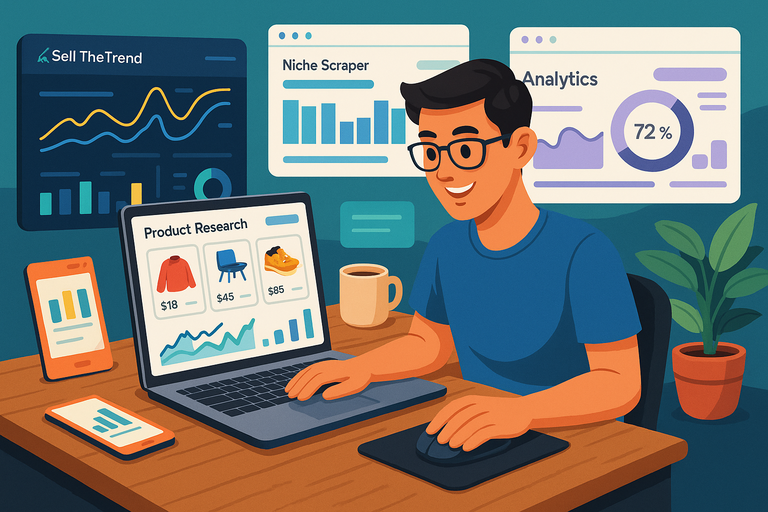
In online dropshipping, automation is your silent partner. The right tools save time, prevent mistakes, and give you real data to make smarter business decisions.
Product Research Tools Like Sell The Trend And Niche Scraper
Finding a winning product is half the battle. Instead of guessing what’s trending, use product research tools that analyze real sales data and ad performance.
- Sell The Trend: This platform tracks trending products across Shopify stores, AliExpress, and social media. You can see what’s gaining traction before the market floods.
- Niche Scraper: Ideal for competitive analysis. It shows you what products are performing well on other stores and estimates daily sales volume.
- Ecomhunt: Curates trending products daily and provides ad examples you can model for your campaigns.
For example, I once spotted a trending “posture corrector” on Sell The Trend with rising Facebook ad activity. I sourced it quickly and gained early traction before it became oversaturated — that’s the power of real-time insight.
Automation Software For Order Fulfillment And Tracking
Automation tools handle repetitive work so you can focus on marketing and strategy. Once orders start flowing, you’ll appreciate not having to manually send every order to your supplier.
- DSers: Automates order forwarding and pricing updates for Shopify.
- AutoDS: A more advanced tool that manages stock, pricing, and fulfillment across multiple suppliers.
- CJ Dropshipping: Handles both product sourcing and order automation — great for beginners.
Example setup path for DSers in Shopify: Apps > DSers > Settings > AliExpress Account > Auto Order Sync (Enable). Once that’s active, orders flow automatically from your store to the supplier, saving hours each week.
Automation also prevents errors — no missed orders or wrong addresses. It’s one of the biggest quality-of-life upgrades you can make early on.
Analytics Platforms To Monitor Sales And Conversion Rates
Data tells the real story of your business. Without it, you’re flying blind. Analytics tools help you see what’s working and what’s wasting your ad spend.
- Google Analytics: Tracks user behavior — like where visitors drop off during checkout.
- Shopify Analytics: Gives a complete snapshot of sales, average order value, and returning customer rates.
- Triple Whale: A newer tool designed specifically for e-commerce that combines ad data from Facebook, TikTok, and Google into one clean dashboard.
I personally rely on Shopify’s built-in analytics for quick insights, then layer it with Google Analytics for deeper behavior analysis.
For instance, if your “Add to Cart” rate is high but “Purchase” rate is low, that’s a signal to check your checkout process or shipping costs.
How To Scale And Automate Your Online Dropshipping Business
Scaling isn’t about doing more — it’s about doing smarter. Once your online dropshipping store makes consistent sales, it’s time to automate processes and expand strategically.
When And How To Expand Product Categories
Once you have one profitable product, don’t rush to add dozens more. Expansion should be strategic, not chaotic.
Here’s what works best:
- Identify complementary products based on customer behavior.
- Test new products with small ad budgets first.
- Gradually build collections around proven winners.
For example, if your best-seller is a “portable blender,” expand into health and lifestyle accessories like shaker bottles, reusable straws, or detox recipe eBooks. This approach builds brand cohesion and attracts repeat customers.
Shopify’s analytics tab can help here: Analytics > Reports > Product Analytics > Frequently Bought Together. That’s your clue for natural category expansion.
Building A Team Or Outsourcing Tasks Effectively
When orders increase, you’ll need help — whether it’s customer service, order monitoring, or ad management. I recommend starting with freelancers before hiring full-time.
Tasks you can outsource easily include:
- Customer support: Use platforms like Upwork or Fiverr to hire virtual assistants.
- Graphic design: Outsource product image edits or ad creatives.
- Ad management: Hire experts for Facebook or TikTok campaigns once you’re profitable.
Use tools like Trello or ClickUp to keep your freelancers organized. I also suggest Loom videos to explain tasks visually — it saves endless back-and-forth messages.
Outsourcing doesn’t mean losing control; it means buying back your time to focus on strategy and growth.
Using AI Tools To Optimize Marketing And Customer Service
Artificial intelligence is transforming online dropshipping — especially in marketing and customer support.
Some powerful AI tools worth trying:
- Writesonic: Generate product descriptions, ad copy, and emails.
- Manychat: Automate customer service chats on Facebook or Instagram.
- AdCreative.ai: Creates professional ad designs and variations for A/B testing.
Example: You can connect Manychat to your Shopify store so it automatically replies to order inquiries. When a customer types, “Where’s my package?” it pulls tracking data and responds instantly — no human needed.
I believe integrating AI early gives small dropshippers an edge that used to belong only to big brands. It’s like hiring a digital assistant that never sleeps.
The Future Of Online Dropshipping In E-commerce
The landscape of online dropshipping is evolving fast. What worked in 2018 doesn’t always work today — and what’s coming next will reshape how entrepreneurs build digital stores.
If you understand these shifts early, you’ll have a clear edge over those clinging to outdated models.
Emerging Trends Like Print-On-Demand And Private Labeling
Two major evolutions are transforming dropshipping right now: print-on-demand (POD) and private labeling.
Print-on-demand allows you to sell custom designs on products like t-shirts, mugs, and phone cases without holding inventory. When a customer orders, the design gets printed and shipped automatically. It’s still dropshipping, but with personalization.
Popular tools for POD include:
- Printful – Integrates directly with Shopify and handles everything from printing to global shipping.
- Printify – Offers more suppliers worldwide, giving better pricing flexibility.
For example, if you design a “Coffee & Hustle” mug, you can upload the design into Printful, connect it to Shopify, and instantly list it in your store. When someone buys, Printful prints and ships it — all hands-free.
Private labeling, on the other hand, gives you a stronger brand identity. Instead of selling generic products from AliExpress, you work with suppliers to customize packaging, add your logo, or slightly modify designs.
This trend is exploding because customers now care about brand trust and consistency. I’ve seen stores move from random gadget sellers to trusted brands simply by investing in simple packaging and branded inserts. It transforms perception — and profits.
The Impact Of AI And Supply Chain Automation
Artificial Intelligence is reshaping online dropshipping faster than most realize. From product discovery to marketing, AI-driven tools are making it easier to automate smart decisions.
Here’s where AI already plays a major role:
- Product selection: Tools like Minea or Dropship.io analyze thousands of ads daily to identify winning products.
- Customer support: Chatbots powered by AI tools like Manychat handle routine questions automatically.
- Ad optimization: Platforms such as Smartly.io help create and test multiple ad creatives efficiently.
Supply chains are also becoming more automated. Large-scale suppliers like CJ Dropshipping now use predictive analytics to stock best-selling items closer to high-demand regions, cutting shipping times dramatically.
This means the old stereotype of 3-week shipping from China is fading. In fact, some AI-integrated suppliers can deliver to the U.S. in under 5 days. For customers, that experience feels no different from Amazon Prime — and that’s where dropshipping is heading.
How Consumer Behavior Is Shaping The Next Era Of Dropshipping
Consumer expectations have evolved. Shoppers now value trust, transparency, and speed more than just low prices.
Here’s what I’m observing:
- Faster shipping expectations: Customers expect delivery in under a week. Local fulfillment networks are becoming essential.
- Social proof matters: People rely on video reviews, influencer demos, and authentic UGC (user-generated content).
- Sustainability sells: Eco-friendly packaging and ethical sourcing resonate with modern buyers.
I believe the next wave of successful dropshippers will behave more like brands than middlemen. They’ll focus on long-term customer relationships, sustainable sourcing, and transparency rather than chasing quick wins.
If you can create a customer experience that feels human, consistent, and fast — you’ll thrive no matter how competitive the market becomes.
Key Takeaways For Starting Your Own Online Dropshipping Store
After diving deep into how online dropshipping works and where it’s headed, let’s pull everything together.
Starting strong — and avoiding the biggest traps early — makes all the difference between a hobby and a real business.
Essential First Steps To Launch Successfully
To launch your dropshipping store the right way, focus on foundation before speed. I’ve seen too many people rush to “go live” without validating products or testing suppliers.
Here’s how I recommend you start:
- Choose a profitable niche that solves a problem or evokes emotion (think pet accessories, wellness, or productivity gadgets).
- Research suppliers carefully using tools like Spocket or CJ Dropshipping — order samples before listing anything.
- Pick a platform like Shopify for simplicity or WooCommerce for more control.
- Design your store for trust: Use clean visuals, real reviews, and transparent policies.
- Launch small ad tests: $10–$20 daily Facebook or TikTok ads can validate demand before scaling.
Once your first few sales roll in, reinvest profits into better creatives, faster suppliers, and automation tools. Dropshipping rewards patience — not shortcuts.
Mistakes To Avoid In Your First 90 Days
The first 90 days determine your learning curve. This is where most new dropshippers stumble, but those who stay strategic come out stronger.
Avoid these common traps:
- Selling “viral” products blindly: What’s trending today may already be over-saturated.
- Ignoring customer service: Late replies kill credibility fast.
- Overcomplicating your store: Keep your design simple — focus on clarity and conversion.
- Skipping analytics: If you’re not tracking what’s working, you’re guessing.
One of my early clients wasted $1,000 on ads because they didn’t set up the Facebook Pixel. Once we connected it, we identified the profitable audience within a week — and turned a losing campaign into a 3x return.
Small setup details like that separate frustration from progress.
Expert Tip: How To Build A Sustainable Brand Beyond Dropshipping
I believe the true goal isn’t just running a dropshipping store — it’s using dropshipping as a launchpad for a real brand.
Here’s how to transition smartly once you’re profitable:
- Identify your best-sellers. These are your potential branded products.
- Negotiate with suppliers for custom packaging, private labeling, or exclusive access.
- Invest in customer loyalty programs or email flows that reward repeat buyers.
- Create original content — short videos, tutorials, or behind-the-scenes posts that build trust.
When you make the shift from being “a store that sells things” to “a brand people recognize,” you reduce your dependence on ads and build long-term stability.
For example, a simple product like a fitness resistance band store can evolve into a full wellness brand by adding branded gear, digital workout guides, and a content-rich blog. The foundation stays the same — but the potential multiplies.

I’m Juxhin, the voice behind The Justifiable.
I’ve spent 6+ years building blogs, managing affiliate campaigns, and testing the messy world of online business. Here, I cut the fluff and share the strategies that actually move the needle — so you can build income that’s sustainable, not speculative.
Related posts:
 Dropshipping Step by Step: A Beginner’s Roadmap
 How to Start SaleHoo Dropshipping & Make Money Fast
 Advantages of a Dropshipping Company: Genuine Business Knowledge
 How to Make Money Dropshipping: 7 Secrets to a $10K/Month
 Affiliate Advertising vs. Dropshipping: Which One Wins?
 How to Start Dropshipping for Free and Still Make a Profit