
Table of Contents
Some links on The Justifiable are affiliate links, meaning we may earn a small commission at no extra cost to you. Read full disclaimer.
When I first came across SaleHoo dropshipping reviews, I was curious—was it really worth investing in, or just another overhyped directory claiming to simplify eCommerce success?
If you’ve been wondering the same thing, you’re not alone. With so many dropshipping platforms promising quick profits and easy supplier connections, it’s hard to tell which ones truly deliver value.
In this guide, I’ll break down everything you need to know about SaleHoo—from its pricing and supplier quality to its real pros and cons—so you can decide whether it’s the right investment for your business today.
What Is SaleHoo and How Does It Work?
If you’ve ever tried finding reliable dropshipping suppliers, you probably know how overwhelming it can get.
That’s exactly where SaleHoo steps in—it acts as a bridge between online retailers and verified suppliers, making product sourcing a lot simpler and safer.
How SaleHoo Connects Retailers With Suppliers
SaleHoo works as a wholesale and dropshipping directory where you can browse thousands of pre-vetted suppliers offering millions of products across various niches.
Here’s how it typically works in practice:
- You sign up for a SaleHoo account and access its supplier directory.
- You search for products or categories that align with your store’s niche.
- SaleHoo connects you to suppliers who allow dropshipping (meaning you don’t need to buy stock upfront).
I like that SaleHoo focuses on verified suppliers only. Each supplier is screened for legitimacy, product quality, and responsiveness. This extra layer of vetting saves countless hours compared to manually finding suppliers through Google or Alibaba.
The Difference Between SaleHoo Dropship and SaleHoo Directory
SaleHoo offers two main products, and it’s easy to confuse them at first glance.
- SaleHoo Directory: This is a searchable database of over 8,000 verified suppliers and 2.5 million products. It’s best suited if you want to research and contact suppliers manually.
- SaleHoo Dropship: This version integrates directly with Shopify and allows you to import products to your store in just a few clicks.
If you prefer control and flexibility, the Directory is ideal. But if you want an automated system that simplifies product import and inventory syncing, SaleHoo Dropship is the smarter pick.
Key Features That Set SaleHoo Apart From Other Platforms
What really makes SaleHoo stand out is its mix of simplicity and credibility. A few highlights worth mentioning include:
- Verified supplier network: Every supplier is manually approved by SaleHoo’s team.
- Market research tools: These help you identify trending, profitable products before you commit.
- Educational resources: Their in-depth training modules and community forum help new sellers avoid common pitfalls.
From what I’ve seen, SaleHoo’s strength lies in making dropshipping approachable for beginners while still offering the flexibility experienced sellers need.
Understanding SaleHoo Dropshipping: A Complete Breakdown
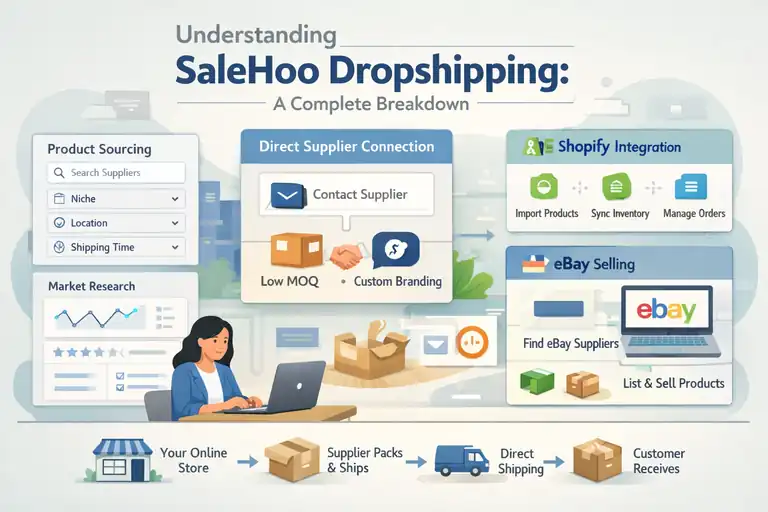
Let’s dive deeper into how SaleHoo’s dropshipping system actually works and what makes it stand out in such a crowded eCommerce space.
What Makes SaleHoo’s Dropshipping Model Unique
Unlike many other platforms, SaleHoo isn’t a middleman that marks up product prices. Instead, it connects you directly to wholesalers and manufacturers who allow you to sell their products without holding inventory.
What I appreciate most is that SaleHoo doesn’t hide supplier contact details. You can reach out directly, negotiate better deals, and even request branding customization—something rare with typical dropshipping tools like Doba.
Another advantage is SaleHoo’s focus on low minimum order quantities (MOQs). That’s a huge plus for small business owners testing new products without heavy upfront costs.
How to Source Products Through SaleHoo Step-by-Step
Here’s how the process usually unfolds if you’re using SaleHoo for dropshipping:
- Sign up and access the SaleHoo Dashboard.
- Search products or suppliers using filters like niche, location, or shipping times.
- Analyze market data with SaleHoo’s Market Research Lab to find profitable trends.
- Reach out to suppliers directly to confirm dropshipping options and product details.
- List products on your store, adjust pricing, and begin selling.
It’s surprisingly beginner-friendly. SaleHoo even provides educational support to help you handle common challenges—like understanding shipping terms or negotiating profit margins.
Integrating SaleHoo With eCommerce Platforms Like Shopify and eBay
If you’re running your store on Shopify, the integration is seamless. With SaleHoo Dropship, you can:
- Import products directly from SaleHoo’s catalog into your Shopify store.
- Sync inventory and pricing automatically to avoid overselling.
- Manage orders within one dashboard.
For eBay sellers, SaleHoo provides a slightly more manual approach via the Directory, but it’s still convenient. You find suppliers offering eBay-compatible listings and connect directly.
From my experience, the Shopify integration shines for ease and speed, while eBay sellers will appreciate the flexibility of direct supplier communication.
Is SaleHoo Legit or a Scam? Real User Experiences
It’s a fair question—because the dropshipping space is filled with flashy tools and empty promises.
So, is SaleHoo actually legit? In my opinion, yes. But let’s back it up with what real users and reviews say.
What Actual Users Say About SaleHoo Dropshipping Reviews
Across Trustpilot and Reddit, SaleHoo earns a strong reputation. The platform holds an average rating above 4.5 stars on Trustpilot, which is rare in the dropshipping industry.
Users often highlight:
- Responsive and helpful customer support.
- Reliable supplier quality.
- Great beginner education and community.
That said, some reviews mention that SaleHoo’s Dropship version can feel limited in supplier variety compared to massive directories like AliExpress. But the trade-off is clear: fewer suppliers, higher reliability.
How to Spot Genuine Feedback Versus Paid Reviews
Here’s a quick trick I use to filter authentic reviews from fake ones:
- Check for specific details. Real users mention supplier names, niches, or support interactions.
- Look for balance. A legitimate review often includes both pros and cons.
- Cross-reference platforms. Compare feedback from Trustpilot, Reddit, and independent blogs to see consistency.
I found that SaleHoo reviews tend to be consistent across platforms, which is usually a strong indicator of authenticity.
What SaleHoo Does Right (and Where It Falls Short)
What SaleHoo Does Right:
- Transparent supplier data and verified sourcing.
- Excellent training and educational support.
- Affordable pricing compared to most competitors.
Where It Falls Short:
- Smaller supplier base than larger directories.
- Limited automation unless you use the Dropship version.
- Product variety leans toward established niches, not ultra-trendy ones.
From my personal experience, SaleHoo’s biggest strength is trust. You might not find every trending TikTok gadget, but you will find suppliers who won’t vanish after your first order.
SaleHoo Pricing: What You Really Get for Your Money
Let’s be honest—before signing up for any dropshipping tool, you want to know exactly what you’re paying for.
SaleHoo’s pricing is surprisingly straightforward compared to most competitors, but it’s still important to understand where the real value lies.
Detailed Breakdown of SaleHoo Membership Plans
SaleHoo offers two main pricing options: SaleHoo Directory and SaleHoo Dropship.
Here’s the breakdown:
- SaleHoo Directory: Costs around $67 per year. This gives you lifetime access to their supplier database, product research tools, and training resources. It’s a one-time fee renewed annually—simple and transparent.
- SaleHoo Dropship: Starts at about $27 per month or $270 annually. This plan is designed for Shopify users who want a plug-and-play dropshipping system, including product import automation and inventory syncing.
What I appreciate most is that SaleHoo doesn’t charge transaction fees or hidden costs. Many dropshipping platforms take a cut from each sale or require you to pay extra for premium suppliers, but SaleHoo avoids that altogether.
If you’re still testing the waters, the Directory alone is enough to learn, research, and connect with reliable suppliers without committing to monthly fees.
Comparing SaleHoo Costs to Other Dropshipping Tools
When you compare SaleHoo’s pricing to platforms like Spocket or Doba, the difference is noticeable.
- Spocket: Ranges from $39 to $99 per month depending on the plan.
- Doba: Costs around $49.99 per month, with limited supplier transparency.
- SaleHoo: Only $67 annually for its Directory, and $27 monthly for Dropship.
That means SaleHoo is easily one of the most affordable options for verified sourcing. While it might not offer as many automation features as higher-priced tools, its supplier reliability and educational value make up for it.
From my perspective, SaleHoo’s biggest strength is cost predictability—you know exactly what you’re paying for upfront.
How to Maximize Value From Your SaleHoo Subscription
If you want to get the most out of your SaleHoo membership, treat it like a business asset, not just a database.
Here are a few ways to do that:
- Use the Market Research Lab: It helps you identify profitable product niches based on real sales data.
- Reach out to multiple suppliers: Don’t stop at the first one—compare prices, shipping times, and responsiveness.
- Leverage SaleHoo’s training resources: Their free eCommerce guides and community discussions can help you avoid rookie mistakes.
- Renew annually with a plan: Use the first year to build relationships, then upgrade to Dropship once you’ve validated a niche.
In short, SaleHoo rewards users who take the initiative to explore and experiment.
Pros and Cons of Using SaleHoo for Dropshipping
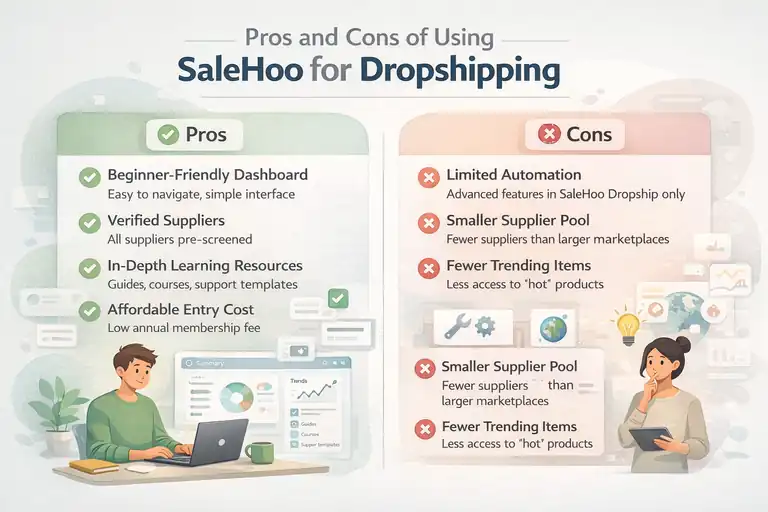
Every dropshipping platform has its strengths and weaknesses, and SaleHoo is no different.
The key is understanding where it truly shines—and where you might need to supplement it with other tools.
The Biggest Advantages of SaleHoo for Beginners
For newcomers, SaleHoo is a fantastic starting point. Here’s why:
- Beginner-friendly dashboard: The interface is clean, easy to navigate, and doesn’t overwhelm you with options.
- Verified suppliers: Every supplier is pre-screened, so you don’t waste time dealing with scammers.
- In-depth learning resources: From product research to customer support templates, SaleHoo gives you the know-how to actually run a store.
- Affordable entry cost: Unlike many tools that require monthly commitments, SaleHoo’s annual fee is low-risk.
What I personally like is that SaleHoo doesn’t overpromise. It positions itself as a foundation, not a magic shortcut—and that’s refreshing in the world of dropshipping hype.
Common Limitations You Should Know Before Joining
Even with all its positives, SaleHoo isn’t perfect. You should know what to expect:
- Limited automation: If you’re after full automation like order tracking or bulk product uploads, you’ll only get that through SaleHoo Dropship (not the Directory).
- Smaller supplier pool: While the suppliers are high-quality, the number is smaller compared to open marketplaces like AliExpress.
- Fewer trending items: Because SaleHoo focuses on verified suppliers, you may not find “hot” viral products right away.
These aren’t deal-breakers, but they matter if you want high-volume scaling. From my experience, SaleHoo is best suited for sustainable, long-term businesses—not quick-flip trend chasing.
When SaleHoo Might Not Be the Best Option
SaleHoo is an excellent tool, but it’s not a one-size-fits-all solution.
You might want to look elsewhere if:
- You rely heavily on automation and bulk imports.
- You’re only testing short-lived trending products.
- You need suppliers that specialize in hyper-niche categories.
However, if your goal is to build a reliable store with genuine supplier partnerships, SaleHoo fits beautifully. It’s about consistency over instant results, and that’s what separates sustainable dropshippers from short-term hustlers.
How SaleHoo Ensures Reliable and Verified Suppliers
The backbone of SaleHoo’s reputation is its strict supplier verification process. That’s what keeps it credible and trustworthy, even after years in the eCommerce world.
What Makes SaleHoo’s Supplier Verification Process Unique
Unlike open directories like AliExpress, where anyone can list products, SaleHoo manually checks each supplier before approval.
Their team screens for:
- Business registration and licensing.
- Shipping reliability and communication standards.
- Product quality and refund policies.
- Fulfillment timelines and responsiveness.
This verification process ensures that only legitimate suppliers make it to the platform. In a space filled with counterfeit goods and unreliable sellers, that’s a major competitive advantage.
I remember testing a few suppliers through SaleHoo years ago, and even then, response times and product consistency were far better than random suppliers I found elsewhere.
How Supplier Vetting Protects You From Scams
SaleHoo’s supplier checks aren’t just for show—they actively protect you from potential losses.
Here’s how it helps:
- Prevents fake wholesalers: SaleHoo confirms that suppliers actually own or represent the brands they sell.
- Reduces refund disputes: Verified suppliers adhere to transparent return policies.
- Avoids poor communication: SaleHoo removes suppliers who don’t meet their support standards.
Essentially, SaleHoo acts as a safety filter. It doesn’t eliminate every risk, but it significantly lowers the chance of dealing with unreliable sellers.
Tips for Finding Profitable and Trustworthy Suppliers
Even with verified suppliers, you still need to do your due diligence. Here’s what I recommend based on experience:
- Start small: Order sample products to check quality before selling.
- Compare multiple suppliers: Don’t rely on a single source for key products.
- Check shipping times: Always clarify delivery timelines for your main target regions.
- Build relationships: Communicate regularly with suppliers; responsiveness often translates to reliability.
Pro tip: Use SaleHoo’s Market Research Lab to match supplier products with proven demand data. That’s how you identify suppliers offering high-margin opportunities—without gambling on guesswork.
Customer Support and Community: How SaleHoo Stands Out
When it comes to eCommerce tools, customer support can make or break your experience.
SaleHoo’s support team and community resources are some of its strongest assets, especially for beginners who might feel lost in the early stages of dropshipping.
What to Expect From SaleHoo’s Customer Service
One thing I noticed right away about SaleHoo is how human their support feels. They don’t send copy-paste replies or generic FAQs. Instead, you get real responses from people who understand the platform and the challenges of dropshipping.
Their support is available via:
- Email (usually within 24 hours)
- Live chat on weekdays
- A detailed help center with tutorials and troubleshooting guides
What stands out is their patience and clarity. I once asked about integrating SaleHoo Dropship with my Shopify store, and their rep walked me through each step—screenshots included. It wasn’t rushed or salesy, just genuinely helpful.
In an industry filled with vague “contact us” forms, this level of accessibility makes a real difference.
Inside the SaleHoo Forum and Community Resources
SaleHoo’s community is one of its hidden gems. Inside their forum, you’ll find experienced dropshippers sharing tips, troubleshooting advice, and supplier recommendations.
You can browse threads on topics like:
- How to price products competitively
- Which suppliers have the fastest shipping
- Mistakes to avoid when scaling your first store
What I find refreshing is that SaleHoo’s team members actively participate in discussions. It feels less like a random forum and more like a mentorship hub.
For someone just starting out, this kind of peer-to-peer learning saves you from trial-and-error mistakes that could cost time or money.
How SaleHoo’s Educational Content Helps You Succeed
Beyond customer support and community, SaleHoo also invests heavily in education. Their blog, YouTube channel, and step-by-step guides cover almost every angle of running an online business—from product validation to marketing strategies.
Here’s what I’ve found most useful:
- SaleHoo Labs: Real-world examples of trending products with profit margins.
- Free training guides: Tutorials on building Shopify stores, SEO for eCommerce, and supplier communication.
- Email mini-courses: Bite-sized lessons for total beginners.
These resources aren’t just filler content—they’re based on data and experience. I’ve seen many beginners skip costly mistakes just by following SaleHoo’s training material before diving into paid ads or bulk orders.
Comparing SaleHoo vs. Competitors: Which Is Better?
When evaluating SaleHoo against competitors like Spocket, Doba, or Wholesale2B, it’s clear that each platform has its strengths.
The real question isn’t which is “best,” but which fits your business model and stage.
SaleHoo vs. Spocket: Which One Is More Beginner-Friendly?
If you’re brand new to dropshipping, SaleHoo feels more approachable. It offers more educational support and focuses on teaching you how to run a real business, not just plug in products.
Spocket, on the other hand, emphasizes automation and faster fulfillment from U.S. and EU suppliers, which is great if you already know what you’re doing.
Here’s a quick comparison:
- Ease of use: SaleHoo wins with simpler setup and clear tutorials.
- Supplier quality: Both have vetted suppliers, but Spocket focuses more on premium, higher-cost items.
- Pricing: SaleHoo is cheaper long-term ($67 annually vs. Spocket’s $39–$99 per month).
If your priority is learning and testing with low risk, go with SaleHoo. If you already have a store and want faster shipping automation, Spocket might be better.
SaleHoo vs. Doba and Wholesale2B: Which Offers Better Value?
Doba and Wholesale2B are more automation-heavy tools—they integrate deeply with marketplaces like Amazon, eBay, and Shopify. However, that convenience comes with higher costs and less transparency about suppliers.
SaleHoo’s approach is more hands-on. You can reach out directly to suppliers, build real relationships, and negotiate better pricing.
Value comparison:
- Doba: $49.99 per month, plus extra fees for certain features.
- Wholesale2B: $37.99–$49.99 per month, depending on the plan.
- SaleHoo: $67 per year (Directory) or $27 per month (Dropship).
So while SaleHoo might not offer as many built-in automations, it delivers long-term business value by connecting you to genuine suppliers and teaching you how to sustain profits.
When to Choose SaleHoo Over Other Dropshipping Platforms
You should consider SaleHoo if:
- You’re a beginner who wants to learn, not just sell.
- You prefer building supplier relationships rather than relying on marketplaces.
- You’re on a budget and want verified suppliers without monthly fees.
From my perspective, SaleHoo is like a dropshipping school that happens to include a supplier directory. It’s perfect for people who want to understand the business before scaling it.
Common Mistakes New Users Make With SaleHoo
Even with a reliable platform like SaleHoo, success depends on how you use it. I’ve seen many beginners stumble over a few avoidable mistakes—let’s talk about them.
Relying on SaleHoo Without Validating Market Demand
SaleHoo’s supplier list is impressive, but that doesn’t mean every product listed will sell. Many new users jump in without checking market demand.
To avoid that:
- Use SaleHoo’s Market Research Lab to verify demand and competition.
- Cross-check with Google Trends and eBay completed listings.
- Test small batches before scaling.
I made this mistake myself early on—chose a product because it “looked good” and ended up with zero traction. Data matters more than gut instinct here.
Ignoring Product Profit Margins and Shipping Times
A common rookie mistake is focusing only on product cost and ignoring shipping. You might find a $5 product, but if it takes 25 days to arrive, you’ll lose customers fast.
What to do instead:
- Always factor in shipping when calculating profit margins.
- Ask suppliers about express options and fulfillment centers.
- Aim for products that reach customers in under 14 days if possible.
Small tweaks like that can boost your store’s reputation and repeat purchase rate.
Failing to Leverage SaleHoo’s Research and Training Tools
It’s surprising how many users pay for SaleHoo but barely explore its educational content. Their training materials can literally shortcut months of trial and error.
If you’re serious about success:
- Take their free dropshipping course before launching your first product.
- Use their forum to troubleshoot real problems (it’s better than YouTube guessing).
- Check the Market Lab weekly for trending ideas.
In my experience, those who actively engage with SaleHoo’s resources see results faster—and make fewer costly mistakes.
Final Verdict: Is SaleHoo Worth Your Money in 2025?
So after all the analysis, is SaleHoo worth your money today? In short—yes, but it depends on what kind of seller you are and what stage you’re at in your eCommerce journey.
Who Should Consider Using SaleHoo Today
SaleHoo is ideal if you:
- Are just starting your dropshipping business and need verified suppliers.
- Want a platform that combines education with practical tools.
- Prefer building relationships with trustworthy suppliers instead of chasing trends.
I’d especially recommend it for anyone who values long-term sustainability over short-term hype. SaleHoo gives you the foundation to grow a legitimate business, not just a side hustle.
When SaleHoo May Not Fit Your Business Model
On the other hand, if you’re already an experienced dropshipper looking for large-scale automation or instant product syncing across multiple stores, SaleHoo might feel too manual.
It’s also not ideal if you rely on fast-moving, trendy products that go viral for a month and then disappear. SaleHoo’s verified suppliers focus more on consistent inventory rather than short-lived trends.
My Honest Opinion: Is SaleHoo a Smart Investment or Not?
In my experience, SaleHoo is one of the most trustworthy and transparent dropshipping platforms out there. It’s not flashy or filled with exaggerated promises—it’s practical, educational, and beginner-friendly.
If I had to sum it up:
- SaleHoo is for people who want to learn, build, and sustain.
- It’s not for those who expect overnight success.
For under $70 a year, you get access to a lifetime of reliable sourcing and mentorship. That’s a rare combination in this space.
My honest take? SaleHoo isn’t just worth your money—it’s worth your time, especially if you’re serious about building a real online business in 2026.
FAQ
Is SaleHoo a legit dropshipping platform?
Yes, SaleHoo is a legitimate dropshipping platform that connects sellers with verified suppliers. It’s trusted for its transparency, affordable pricing, and strong customer support.
How much does SaleHoo cost for dropshipping?
SaleHoo Directory costs about $67 per year, while SaleHoo Dropship starts at $27 per month. Both plans include verified suppliers and training resources.
Is SaleHoo worth it for beginners in 2026?
Yes, SaleHoo is worth it for beginners who want reliable suppliers, education, and low-risk entry into dropshipping. It’s affordable, beginner-friendly, and built for long-term success.

I’m Juxhin, the voice behind The Justifiable.
I’ve spent 6+ years building blogs, managing affiliate campaigns, and testing the messy world of online business. Here, I cut the fluff and share the strategies that actually move the needle — so you can build income that’s sustainable, not speculative.
Related posts:
 SaleHoo Review: Is It Legit or a Scam? My Honest Take
 What Is SaleHoo All About? A Clear Guide for Beginners
 Dropshipping Business Model Success: Tips for Long-Term Growth
 Viral Launch Chrome Extension: The Ultimate Tool for Sellers
 Dropshipping Marketing Strategies That Actually Drive Sales
 How the Salehoo Catalog Helps You Spot Winning Items Quickly