Table of Contents
Some links on The Justifiable are affiliate links, meaning we may earn a small commission at no extra cost to you. Read full disclaimer.
If you’ve ever wondered about the best way to create a blog that actually makes money, you’re not alone. I remember staring at a blank screen years ago, wondering where to even start—should I write about what I love, or what people search for?
The truth is, building a profitable blog isn’t about luck or chasing viral posts. It’s about combining passion, smart strategy, and monetization planning from day one.
Let’s break down exactly how to build a blog that not only grows traffic but also generates consistent income.
Choosing a Profitable Blogging Niche That Converts
Finding the best way to create a blog starts with your niche—it’s the foundation of everything else.
A profitable niche aligns with what you enjoy writing about and what people are actually searching (and paying) for.
Understanding the Balance Between Passion and Profit
When you’re starting out, it’s easy to fall into one of two traps: writing only about what you love, or chasing whatever’s trending. The truth lies somewhere in between.
Think of your blog as a long-term project. You’ll need to create hundreds of posts, so if you’re not passionate about your niche, burnout will hit hard. But passion alone doesn’t pay bills—you also need monetizable demand.
Here’s a simple test:
- Ask yourself if you can see yourself writing about this topic a year from now.
- Then, check if there are products, courses, or services related to it. If yes, that’s a good sign it has income potential.
In my experience, the most successful blogs blend personal interest with audience spending potential—like fitness for new moms, budget travel, or productivity for freelancers.
Researching Market Demand and Competition
Now that you have a few ideas, it’s time to validate them. This step helps you avoid blogging into the void.
Use tools like Google Trends or Ahrefs to see if people are actively searching for your topic. Look for steady or rising trends—if it’s spiking too fast, it might be a fad.
Then, analyze your competitors. Check what they’re ranking for, what kind of products they promote, and how engaged their audience is. Don’t be discouraged by competition; instead, use it to find content gaps or underserved angles.
Example: If “minimalist living” is too broad, maybe “minimalism for families” gives you a niche edge.
Finding Evergreen Topics That Stay Relevant
Evergreen topics are the secret sauce to consistent blog traffic and income. These are subjects that stay relevant all year—like how to save money, start a blog, or meal prep ideas.
Why it matters: evergreen content keeps attracting visitors through search engines long after you’ve hit publish.
To spot them:
- Look for “how-to” questions in your niche.
- Use SEO tools to find topics with stable monthly search volume.
- Avoid overly seasonal or news-based content unless it ties into a recurring annual event.
Evergreen content builds your authority over time, making your blog less dependent on social media spikes.
Identifying Your Unique Value and Audience Pain Points
Every profitable blog solves a specific problem. The key is knowing whose problem you’re solving.
Start by defining your audience persona—what they struggle with, what motivates them, and what outcome they want. You can gather this insight through online communities, Reddit threads, or surveys.
Then, find your unique voice. Maybe you simplify complex ideas, share personal experiences, or offer expert advice in a friendly tone. Whatever your edge is, own it—it’s what keeps readers coming back.
Pro tip: when readers say, “I feel like you’re talking directly to me,” that’s when you know your content connects.
Selecting the Right Blogging Platform for Long-Term Growth
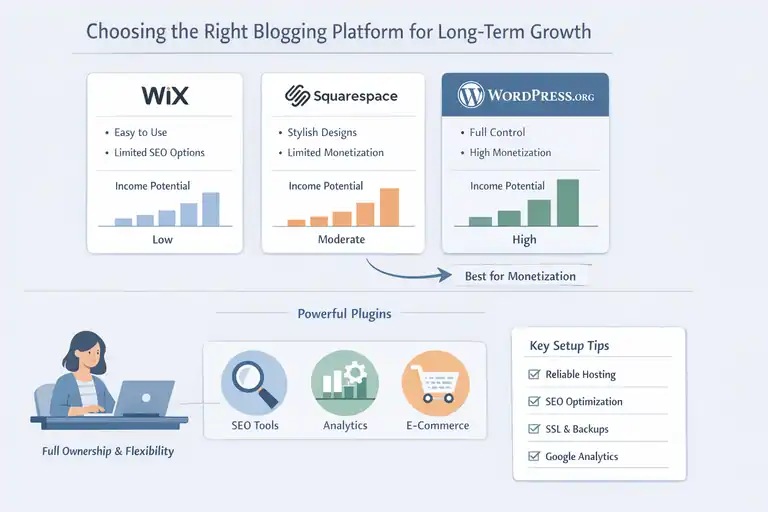
The platform you choose will shape your blog’s flexibility, control, and income potential. Let’s look at what matters most when building a blog that’s meant to last.
Comparing WordPress, Wix, and Squarespace for Income Potential
Each platform has its pros and cons:
- Wix: Great for beginners, but limited customization and SEO flexibility. It’s drag-and-drop easy, but harder to scale.
- Squarespace: Sleek designs, but less control over monetization tools and plugins. Good for portfolios, not ideal for income blogs.
- WordPress.org: Full control, thousands of plugins, and complete freedom to monetize however you want. It’s a bit more technical at first, but it pays off long-term.
If your goal is passive income, WordPress.org wins hands down. It’s what nearly all top-earning bloggers use.
Why WordPress.org Is the Top Choice for Monetization
WordPress.org gives you ownership—your domain, your data, your money. You can run ads, sell digital products, create courses, or use affiliate links without restrictions.
Unlike WordPress.com (which limits monetization unless you upgrade), the self-hosted version offers total control.
Here’s what makes it powerful:
- Thousands of plugins for SEO, analytics, and automation.
- Full design flexibility for custom branding.
- Integration with major tools like Kit (formerly ConvertKit), Mailerlite, and WooCommerce.
In short: if you’re serious about turning your blog into a business, WordPress.org isn’t just an option—it’s the only smart choice.
Key Technical Settings to Optimize from the Start
Getting your tech setup right early saves you a lot of frustration later.
Here’s what I recommend:
- Choose reliable hosting: Look for services like Hostinger or Bluehost that offer fast load times and solid uptime.
- Install an SEO plugin: Tools like Rank Math or Squirrly guide you in optimizing posts for search engines.
- Set up SSL and backups: These protect your blog’s credibility and security.
- Use Google Analytics and Search Console: They help track your audience and growth.
These steps might sound technical, but they’re what make your blog scalable and secure from day one.
Building a Professional Blog Design That Builds Trust
Your blog’s design is often the first impression visitors get—and it heavily influences whether they stick around or bounce.
Crafting a Clean, Fast, and Mobile-Friendly Layout
A cluttered site drives people away. Your readers should instantly know where to click and what to read next.
Focus on:
- Simple navigation with clear menus.
- Lightweight themes that load in under 3 seconds.
- Mobile responsiveness, since more than 60% of blog traffic now comes from phones.
Tip: Use free tools like Google PageSpeed Insights to check how your site performs on mobile.
Remember, design isn’t about being flashy—it’s about helping visitors trust you enough to stay longer and explore.
Choosing a Theme Optimized for SEO and Conversions
A good theme does more than look nice—it sets the tone for how readers interact with your content.
When picking one, look for:
- Clean code (SEO-friendly).
- Fast performance and image optimization.
- Built-in options for call-to-action buttons and opt-in forms.
Themes like Astra, GeneratePress, or Kadence are reliable, lightweight, and built with conversions in mind.
I always suggest testing your theme on multiple devices to make sure it feels consistent. Your blog should feel like home—inviting, professional, and authentic.
Designing a Homepage That Encourages Reader Engagement
Your homepage should guide visitors, not overwhelm them. Think of it as a roadmap to your best content.
Here’s what works well:
- Featured section: Highlight your most valuable or popular posts.
- About snippet: A short personal introduction to create connection.
- Email opt-in: Offer something helpful (like a free guide) in exchange for their email.
- Clear CTAs: Buttons that lead readers deeper into your blog or offers.
From my experience, simplicity converts best. The more distractions you remove, the easier it becomes for readers to take action—whether that’s reading more, subscribing, or buying.
Creating High-Value Content That Drives Traffic and Sales
At the heart of the best way to create a blog for income lies one unshakable truth: your content must serve your readers first and your business second.
Great content builds trust, attracts loyal readers, and naturally converts visitors into buyers.
Crafting Blog Posts That Rank on Google
Ranking on Google isn’t about tricking algorithms—it’s about proving relevance and authority. When you create value-driven content, SEO becomes a natural side effect.
Start with a clear search intent. If someone types “how to start a meal prep blog,” they’re not looking for theory—they want actionable steps. Structure your post to answer that intent immediately.
A simple structure that works well:
- Begin with a relatable intro or short story.
- Offer clear, step-by-step guidance.
- End with an actionable takeaway or resource.
Use subheadings strategically so readers (and Google) can skim easily. Keep paragraphs short, and include visuals like screenshots or infographics to make the content more engaging.
From what I’ve seen, blog posts between 1,500–2,500 words tend to perform best for long-tail keywords because they give room to cover topics in depth while staying readable.
Using Keyword Research to Target Income-Generating Topics
Keyword research is what separates hobby bloggers from income bloggers. It’s not about chasing high-volume terms—it’s about finding intent-rich keywords that lead to revenue.
For example, instead of targeting “best coffee,” go for “best coffee makers for home offices.” The second phrase attracts people ready to buy.
Use tools like Ahrefs, Semrush, or Ubersuggest to uncover these opportunities.
Focus on:
- Commercial intent keywords (with “best,” “review,” or “vs.”).
- Problem-solving keywords (like “how to fix,” “how to choose,” “how to start”).
- Evergreen informational keywords that build authority.
Once you find a keyword, weave it naturally into your title, first paragraph, and a few subheadings. Don’t overdo it—Google now favors natural, reader-first writing.
Writing for Readers First, Algorithms Second
Here’s the secret: when your content truly helps people, search engines notice.
Always write as if you’re explaining something to a friend who’s curious but overwhelmed. Avoid jargon unless you explain it right away. Instead of saying “optimize your CTA conversion funnel,” say “make your sign-up button easy to see so more people click it.”
Focus on clarity and empathy. Break complex steps into simple ones. And when in doubt, ask yourself: “Would someone bookmark this?” If yes, you’re on the right track.
Readers don’t remember perfect SEO—they remember how your content made them feel and whether it helped them move forward.
Incorporating Storytelling to Build a Loyal Audience
Storytelling is what transforms a blog post into a brand experience. Facts inform, but stories connect.
You don’t need to be a novelist—just sprinkle relatable moments throughout your content. Share your mistakes, lessons, or small wins.
For example, if you’re writing about affiliate marketing, tell readers about the first time you made a $2 commission and how it felt like proof that blogging could work.
Stories humanize your advice, making readers feel seen and inspired. And when people emotionally connect, they’re far more likely to return, subscribe, and buy from you later.
Setting Up SEO Foundations for Long-Term Organic Growth
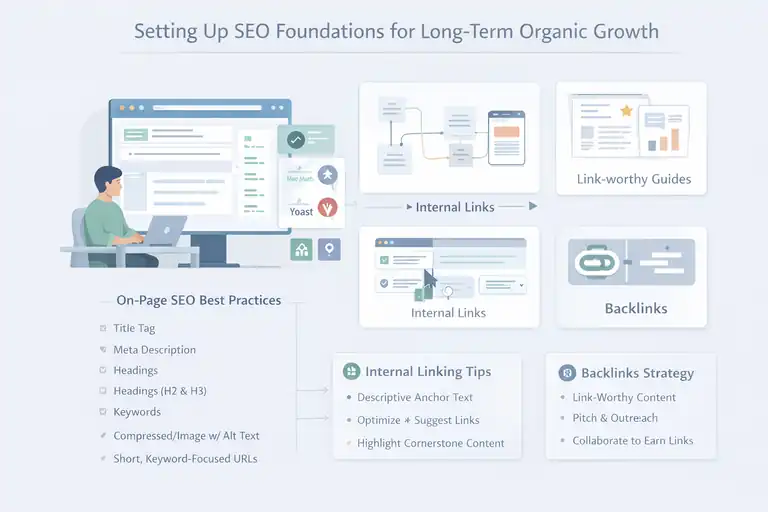
A profitable blog isn’t built overnight—it’s built on consistent, long-term visibility. Solid SEO foundations help you attract traffic that keeps paying off month after month.
On-Page SEO Best Practices for Bloggers
On-page SEO is everything you can control inside your own site to help Google understand your content.
Here’s what I recommend focusing on:
- Title tag: Include your main keyword naturally and keep it under 60 characters.
- Meta description: Write a short, enticing summary with a call to action.
- Headings (H2s & H3s): Use them to structure your ideas clearly.
- Images: Compress them and add descriptive alt text for accessibility and ranking.
- URLs: Keep them short and keyword-focused.
Internal Linking Strategies to Boost Authority
Internal linking helps Google understand which pages are most important on your site—and helps readers discover more of your content.
Think of your internal links as pathways. When you mention a related topic, link to it. For example, if you talk about “blog monetization,” you might link to a detailed post about “affiliate marketing.”
Three quick tips:
- Use descriptive anchor text (e.g., “learn more about blog SEO” instead of “click here”).
- Link older posts from new ones to keep them alive.
- Create cornerstone pages—these are your most valuable guides that other posts should link to.
Over time, this web of links strengthens your authority and keeps readers exploring longer.
Building Backlinks Through Value and Relationships
Backlinks (when other sites link to yours) are still one of Google’s biggest ranking factors. But chasing them blindly doesn’t work anymore—earning them through value does.
Start by publishing link-worthy resources like in-depth guides, templates, or data-based posts. Then, reach out to other bloggers or journalists who might find them useful.
One underrated approach is collaboration—guest posting, interviews, or joint webinars can all lead to organic backlinks and long-term relationships.
From experience, genuine connections always outperform cold link-building tactics. Focus on being helpful and consistent—the backlinks will follow.
Monetizing Your Blog Through Multiple Income Streams
Once your blog gains steady traffic, it’s time to turn those visits into income. The smartest bloggers diversify their monetization methods so they’re not reliant on one source.
Affiliate Marketing: How to Choose the Right Products
Affiliate marketing is one of the easiest ways to start earning. You promote someone else’s product, and when readers buy through your link, you earn a commission.
But the key isn’t to promote everything—it’s to promote what you trust.
Look for:
- Products you personally use or genuinely recommend.
- High-quality programs with solid commission rates (20–50% is great).
- Tools or products that solve your audience’s real problems.
Example: if your niche is personal finance, promoting a budgeting app like YNAB or a savings platform makes perfect sense. Readers can sense authenticity, and genuine recommendations convert far better than forced promotions.
Selling Digital Products and Online Courses
Once you’ve built trust, your audience will naturally look to you for deeper guidance—and that’s where digital products shine.
Popular options include:
- Ebooks or printable templates.
- Mini-courses or full online programs.
- Membership sites or private communities.
You can host them using platforms like Teachable, Podia, or even directly through WordPress using WooCommerce.
I’ve seen many bloggers start with a small $9 guide and eventually grow it into a full-fledged course earning thousands monthly. Start small, test interest, and scale what works.
Display Ads vs. Sponsorships: What Pays Better
Display ads (like Adsterra or Monetag) offer passive income, but they require high traffic—typically 50,000+ monthly visitors to be meaningful.
Sponsorships, however, can be more lucrative even with a smaller audience if your niche is specific. Brands often pay $200–$1,000+ for a single sponsored post if your audience matches their target.
In my experience, a hybrid approach works best: use ads for background income and sponsorships for strategic boosts.
Offering Services or Consulting Through Your Blog
If you have expertise—whether in marketing, writing, or design—you can use your blog as a personal brand to attract clients.
Create a simple “Work With Me” page that highlights what you offer and how you can help. Then, link it naturally in your posts when it’s relevant.
This method doesn’t require massive traffic; just a few qualified leads each month can turn into consistent income.
I’ve personally seen bloggers make their first $1,000 from consulting long before hitting 10,000 monthly visitors. It’s proof that value and trust matter more than vanity metrics.
Building an Email List to Nurture Loyal Readers
If you want your blog to generate reliable, long-term income, you need a direct line to your readers. That’s where email marketing comes in.
It’s not about sending spammy promotions—it’s about building relationships that lead to trust and, eventually, income.
Why Email Marketing Is Key to Long-Term Profitability
Your email list is the only audience you truly own. Social media algorithms change constantly, but your subscribers stay with you as long as you provide value.
Here’s why it matters:
- Email converts around 4–5 times better than social media.
- Readers who join your list are already invested in your niche.
- It allows you to nurture your audience with helpful tips, updates, and offers.
For example, if you run a personal finance blog, you might send weekly budgeting tips. Over time, these small touches build trust so when you release a budgeting course, your readers are ready to buy.
Think of your list as your blog’s heartbeat—it keeps your community engaged, even when traffic dips.
Creating an Irresistible Lead Magnet That Converts
A lead magnet is a free resource you offer in exchange for an email address. The secret is relevance—it has to solve a real problem for your audience.
Here’s what usually works best:
- A short guide (like “5 Ways to Grow Your Blog Traffic Fast”).
- A checklist or cheat sheet (for example, “SEO Setup Checklist for New Bloggers”).
- A free email course that builds anticipation over a few days.
I once created a simple one-page “Affiliate Marketing Starter Kit,” and it outperformed my long-form guides. Why? It was quick, practical, and solved a clear problem.
To set this up, use tools like Aweber or Mailerlite, which let you create forms, landing pages, and automated delivery—all without coding.
Automating Email Sequences for Passive Income
Once someone joins your list, automation lets you stay connected without manually sending every email.
Here’s a simple flow that works well:
- Welcome Email: Thank them and introduce who you are.
- Value Sequence: Send 2–3 educational emails that build trust.
- Soft Offer: Introduce a helpful product or resource naturally.
For instance, if someone downloads your free SEO guide, your sequence could include tips on keyword research and end with a link to your paid SEO course.
Set this up once in your email platform, and it works in the background, turning new subscribers into loyal followers—and paying customers.
Promoting Your Blog for Maximum Visibility
Even the best content won’t make money if no one sees it. Promotion is about getting your blog in front of the right people, not just chasing views.
Using Social Media to Drive Qualified Traffic
Social media is powerful when used strategically—not as a chore. The key is to focus on one or two platforms where your audience already hangs out.
For example:
- If you write about home decor, Instagram or Pinterest might be best.
- If your niche is entrepreneurship, LinkedIn or X (formerly Twitter) works better.
Create short, engaging posts that tease your blog content instead of copying it. Use storytelling—share a mini insight, a relatable moment, or a quick tip that leads readers to your blog for the full story.
Remember, it’s better to post less often with purpose than to post daily without intention.
Leveraging Pinterest and YouTube for Blog Growth
Pinterest and YouTube are two underrated yet incredibly effective traffic drivers because they’re search engines, not just social platforms.
- Pinterest: Create eye-catching vertical pins with keywords in the title and description. Use Tailwind to schedule pins consistently. Over time, they can bring in thousands of monthly visitors.
- YouTube: Turn your blog posts into short educational videos. Add your blog link in the description and mention it naturally in the video.
I’ve seen bloggers triple their website traffic just by repurposing one blog post into a Pinterest pin and a 5-minute video. The content you already have can work harder for you.
Guest Posting and Collaborations for Brand Exposure
Guest posting is still one of the fastest ways to get in front of new audiences. When you contribute to another blogger’s site, you gain both visibility and backlinks.
Here’s a simple strategy:
- Identify 5–10 blogs in your niche that accept guest posts.
- Pitch a fresh, unique topic that adds value to their audience.
- Include a natural link back to your site (usually in your author bio).
You can also collaborate with peers—swap newsletter mentions, co-host a webinar, or join podcast interviews. These small actions build authority fast without spending on ads.
Tracking Blog Performance and Income Metrics
If you don’t measure what’s working, you’ll waste time on things that don’t move the needle. Tracking helps you make smarter, data-backed decisions.
Setting Up Google Analytics and Search Console Correctly
Both tools are free, and together they give you a clear picture of your blog’s performance.
- Google Analytics shows how people use your site—what pages they visit, how long they stay, and where they come from.
- Google Search Console reveals which keywords bring you traffic and whether Google can properly index your site.
Once installed, check them at least once a month. Look for trends—what content is growing, where visitors drop off, and what devices people use most. Small tweaks like improving mobile experience or rewriting weak meta titles can have big payoffs.
Measuring What Content Generates the Most Revenue
Traffic is nice, but income tells the real story. Identify which posts drive actual sales, affiliate clicks, or email signups.
You can do this by:
- Tracking affiliate links using Pretty Links or ThirstyAffiliates.
- Adding UTM tags to links to see which campaigns convert best.
- Comparing revenue by topic—some niches naturally perform better.
I once found that a post with only 500 visits made more money than one with 5,000 because it targeted high-intent readers. Numbers can surprise you—always dig deeper than surface traffic.
Optimizing Low-Performing Posts for Better ROI
Before creating new content, revisit older posts that underperform. Often, a few updates can double their reach.
Try this:
- Update outdated info or examples.
- Add fresh visuals or screenshots.
- Improve the intro to match current search intent.
- Re-promote it on social or your newsletter.
A simple headline tweak or keyword adjustment can make a post more competitive overnight. Think of optimization as polishing what you already own—it’s faster and more efficient than constantly starting from scratch.
Scaling Your Blog Into a Sustainable Business
Once your blog earns consistent income, your focus should shift from doing everything yourself to building a system that grows even when you’re not working.
Outsourcing Content and Design Tasks Strategically
You don’t have to do it all alone. Outsourcing frees you up to focus on strategy and growth.
Start small:
- Hire a freelance writer to handle routine posts.
- Work with a virtual assistant for social scheduling.
- Outsource design tasks on platforms like Fiverr or Upwork.
Make sure to create a brand guideline so everything—tone, visuals, and formatting—stays consistent. I used to resist outsourcing, but once I started delegating small tasks, my productivity doubled without sacrificing quality.
Diversifying Income Sources to Avoid Revenue Drops
Depending on one income stream is risky. Algorithms change, affiliate programs shut down, and ad rates fluctuate.
Here’s how to diversify safely:
- Combine affiliate marketing with your own products.
- Add sponsorships or brand partnerships.
- Explore subscription or membership-based content.
By layering multiple revenue streams, you create financial stability. Even if one dips, others keep you afloat.
Building a Personal Brand That Attracts New Opportunities
A strong personal brand makes you more than a blogger—it turns you into a trusted authority.
Share your story and expertise consistently across platforms. Let readers see your personality, not just polished posts. Over time, this builds credibility and opens new doors like speaking gigs, collaborations, or consulting offers.
Remember, the best way to create a blog that earns real income isn’t just about traffic—it’s about trust, systems, and sustainability. When you treat your blog like a business built around helping people, the income follows naturally.
FAQ
What is the best way to create a blog that actually makes money?
The best way to create a blog for income is to choose a profitable niche, publish search-driven content consistently, and monetize through multiple streams like affiliates, products, and email marketing.
How long does it take for a blog to start earning income?
Most blogs take 6–12 months to earn steady income if you focus on SEO, publish high-quality content, and build an email list from the start.
Do you need a large audience to make money blogging?
No. A smaller, targeted audience with clear intent often earns more than large, unfocused traffic, especially with affiliate offers, services, or digital products.

I’m Juxhin, the voice behind The Justifiable.
I’ve spent 6+ years building blogs, managing affiliate campaigns, and testing the messy world of online business. Here, I cut the fluff and share the strategies that actually move the needle — so you can build income that’s sustainable, not speculative.