
Table of Contents
Some links on The Justifiable are affiliate links, meaning we may earn a small commission at no extra cost to you. Read full disclaimer.
When I first started my easy blog, I wasn’t sure if it could actually make money. I just wanted a simple space to share what I knew—no fancy tech skills, no expensive tools.
But as I learned how to structure my content, attract readers, and turn that traffic into income, everything changed.
If you’ve ever wondered how to build a blog that feels effortless yet earns real money, this guide will break it all down step-by-step.
Choose A Profitable Niche That Feels Easy To Write About
Before you even buy a domain or design a logo, the real foundation of your easy blog is choosing a niche that feels natural to write about—something that blends your interests with real income potential.
Identify Topics You Can Consistently Create Content For
One of the biggest mistakes new bloggers make is picking a niche just because it’s trendy. The problem? Trends fade—and so does your motivation.
To build a blog that’s sustainable, start with what you already talk about naturally.
Ask yourself:
- What topics do I never get tired of explaining to friends?
- What could I teach or share every week without it feeling forced?
- What challenges have I solved that others are still struggling with?
If you can brainstorm at least 20–30 potential post ideas off the top of your head, that’s usually a good sign you’ve found a niche that’s easy to sustain.
Pro tip: Don’t overthink “expertise.” You don’t have to be the best—you just have to be one step ahead of someone else.
Validate Your Blog Niche With Keyword And Market Research
Passion matters—but profit matters too. Validation is what bridges the two.
Here’s a simple way to test your idea:
- Use Google Search Autocomplete: Type in your topic and note what people are actually searching for.
- Check keyword tools: Platforms like Ahrefs, SEMrush, or even free tools like Ubersuggest can help you see if your topics have search volume.
- Look at competition: If there are already successful blogs in your niche, that’s good—it means there’s a proven audience.
From what I’ve seen, the sweet spot is a niche with steady search demand but not dominated by big brands.
Find The Right Balance Between Passion And Profit Potential
Think of your niche as a Venn diagram between three circles: what you love, what people need, and what they’ll pay for.
If you’re passionate about travel, for instance, that’s great—but “budget travel for solo women” is easier to monetize and rank for than just “travel.”
Ask yourself:
- Are there products or services I could naturally recommend?
- Are there affiliate programs, digital products, or brands in this space?
- Do readers in this niche actually buy things to solve their problems?
That’s how you know it’s not just a fun hobby—it’s a profitable blog idea.
Narrow Down Your Niche For Stronger SEO And Audience Clarity
The narrower your focus, the faster you’ll grow. A blog about “healthy living” is too broad, but one about “easy healthy meals for busy moms” instantly connects with a clear audience.
Why this matters: Google rewards authority. Writing 50 posts on one subtopic signals to search engines (and readers) that you know your stuff.
Here’s how to niche down effectively:
- Pick a specific audience (e.g., beginners, parents, freelancers).
- Focus on a problem or transformation (e.g., lose weight, save money, grow online).
- Keep your content aligned around one main theme to build topical authority.
When your blog feels cohesive, readers know what to expect—and they come back for more.
Pick A Simple Platform To Start Your Easy Blog
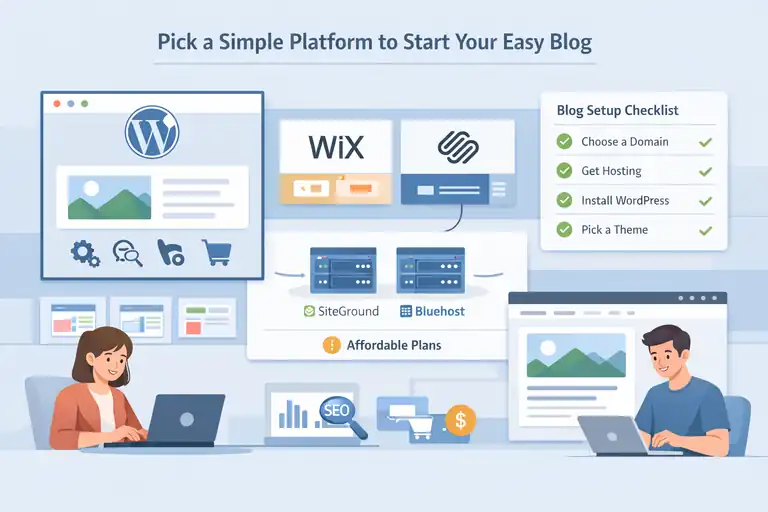
Now that your niche is clear, let’s make sure your setup doesn’t hold you back.
The best easy blog platforms are the ones that let you create, publish, and grow without technical headaches.
Why WordPress And Other Beginner Platforms Work Best
If you’re new to blogging, WordPress (self-hosted on WordPress.org) is hands-down the best option. It’s flexible, beginner-friendly, and scalable—meaning it grows with you.
Here’s why I always recommend it:
- It gives you full control over your content and income streams.
- Thousands of free and paid themes make design simple.
- You can add plugins for SEO, analytics, or eCommerce without coding.
Alternatives like Wix or Squarespace work too, but they can limit customization and monetization options later on.
In short: Start simple, but smart.
Essential Setup Steps To Launch Your Blog Fast
Launching your easy blog doesn’t have to take weeks. You can do it in a single afternoon if you focus on the essentials:
- Pick your domain name (keep it short and memorable).
- Sign up for hosting (I suggest Hostinger or Bluehost for beginners).
- Install WordPress with one click—most hosts do this for you.
- Choose a theme (Astra and Kadence are lightweight and easy).
- Write your first post and hit publish.
That’s it. Don’t get stuck tweaking design for days. The goal is progress, not perfection.
Choosing Hosting That Fits A Beginner Budget
You don’t need expensive hosting when you’re just starting out. Shared hosting plans are perfect for new bloggers and usually cost less than a cup of coffee per month.
Look for:
- Reliability: Uptime above 99.9%.
- Customer support: 24/7 chat support saves a lot of stress.
- Speed: A fast server helps your site load quickly, improving SEO.
As your traffic grows, you can always upgrade to a better plan later. Think of hosting as the “home” for your blog—it doesn’t have to be fancy, just stable and safe.
How To Set Up Your Blog Without Technical Skills
If tech intimidates you, I promise you’re not alone. I used to dread anything that looked like “coding.” But here’s the truth: You don’t need to touch a single line of code to build a great blog.
Most blogging platforms (like WordPress) now use drag-and-drop editors.
That means:
- You can customize your homepage visually.
- You can add pages like “About” or “Contact” in minutes.
- Plugins handle SEO, contact forms, and image optimization for you.
Start with one small win—like adding your first post or customizing your menu—and your confidence will grow fast.
Design A Clean, User-Friendly Blog Layout
Once your platform is ready, design is where your easy blog starts feeling real. A simple, clean layout makes visitors stay longer and helps your content shine.
Keep Your Blog Layout Simple And Fast-Loading
A cluttered design confuses readers. The rule of thumb: If it doesn’t help users read or click, remove it.
Here’s what matters most:
- Keep your sidebar minimal—no unnecessary widgets.
- Use whitespace generously so content can breathe.
- Limit animations and pop-ups; they slow down your site.
Studies show a one-second delay in page load can reduce conversions by up to 20%. Fast is friendly—both for users and Google.
Choose Readable Fonts And Mobile-Responsive Themes
Your blog should look great everywhere—from laptops to phones.
- Pick clean, easy-to-read fonts (sans-serif works best).
- Avoid tiny text or harsh color contrast.
- Always test your theme on mobile before going live.
Mobile traffic now makes up over 60% of most blog visits, so responsiveness isn’t optional—it’s essential.
Create An Intuitive Navigation Menu For Better UX
Think of your blog menu like a store map. If visitors can’t find what they’re looking for, they leave.
To fix that:
- Include only 4–6 top-level menu items (Home, About, Blog, Resources, Contact).
- Group posts under clear categories (like “Blogging Tips” or “Recipes”).
- Add a search bar for easy access to older posts.
Good navigation builds trust—it shows readers you respect their time.
Optimize Visuals Without Slowing Down Your Site
Images make your blog inviting, but oversized files can drag your speed down.
Here’s what I use:
- TinyPNG to compress images before uploading.
- WebP format for smaller, faster-loading files.
- Lazy loading plugins so images appear only when users scroll to them.
Quality visuals attract attention—but performance keeps readers around. Strike that balance, and your easy blog will feel effortless to explore.
Write Blog Posts That Build Trust And Drive Income
When your easy blog starts attracting readers, what keeps them coming back isn’t luck—it’s trust.
Writing posts that feel genuine, solve real problems, and subtly guide readers toward helpful products or solutions is how you start earning from your words.
Craft Engaging Headlines That Hook Readers Instantly
The truth is, your headline decides whether someone clicks or scrolls past. I like to think of it as the handshake before the conversation—it sets the tone.
To create a headline that actually hooks, try these quick formulas:
- “How to [Achieve Result] Without [Pain Point]” – Example: “How to Grow an Easy Blog Without Posting Daily.”
- “[Number] Proven Ways to [Desired Outcome]” – Example: “7 Proven Ways to Earn from a Small Blog.”
- “The Real Reason Why [Something Happens]” – Example: “The Real Reason Most Blogs Don’t Make Money.”
Keep headlines specific, emotional, and benefit-driven. Tools like CoSchedule’s Headline Analyzer can help test different variations.
But here’s the key: never overpromise. Readers can tell when a headline sounds like clickbait, and it’ll instantly erode trust.
Use A Clear Post Structure: Intro, Value, CTA
A strong structure makes your writing effortless to read. Think of it as a mini roadmap for your reader.
Here’s what works best:
- Introduction: State the problem your reader has and show empathy. Let them know you’ve been there too.
- Value Section: This is where you share the actual solution. Break it down step-by-step, using short paragraphs and examples.
- CTA (Call To Action): Gently lead them toward a next step—whether it’s subscribing to your list, reading another post, or trying a recommended tool.
For example, in a post about “starting a side blog for extra income,” your CTA might be: “Ready to set yours up? Grab my free checklist to launch your first blog post this week.”
That small, helpful action keeps engagement high without sounding pushy.
Incorporate Keywords Naturally Without Overstuffing
SEO is important, but writing for real humans is what earns loyalty. I like to weave keywords into natural phrases, not force them.
Try these quick practices:
- Write your post first, then go back and optimize.
- Use variations of your focus keyword (like “simple blog,” “beginner blog,” or “easy blogging tips”).
- Include your keyword once in the introduction, one or two subheadings, and once near the end.
Search engines are smarter than ever—they reward helpful content, not repetitive phrases.
Think of keywords as seasoning. Enough adds flavor, too much ruins the dish.
Add Personal Stories To Build Authenticity And Connection
People follow people, not faceless websites. Sharing your own mini-experiences can transform an average post into something memorable.
Let me give you a quick example. When I first wrote about how I monetized my easy blog, I shared how I spent three months writing posts before realizing I wasn’t linking to any products. Once I added simple affiliate links, my first sale was a $4 commission—but it felt like $400.
That tiny story connected with readers because it was real, not perfect.
Here’s how you can do it too:
- Mention a specific challenge you’ve faced and what you learned.
- Be honest about mistakes (it makes you relatable).
- End with encouragement or a practical takeaway.
Authenticity isn’t about oversharing—it’s about showing you’ve been where your readers are and can help them move forward.
Build Traffic To Your Easy Blog Without Overwhelm
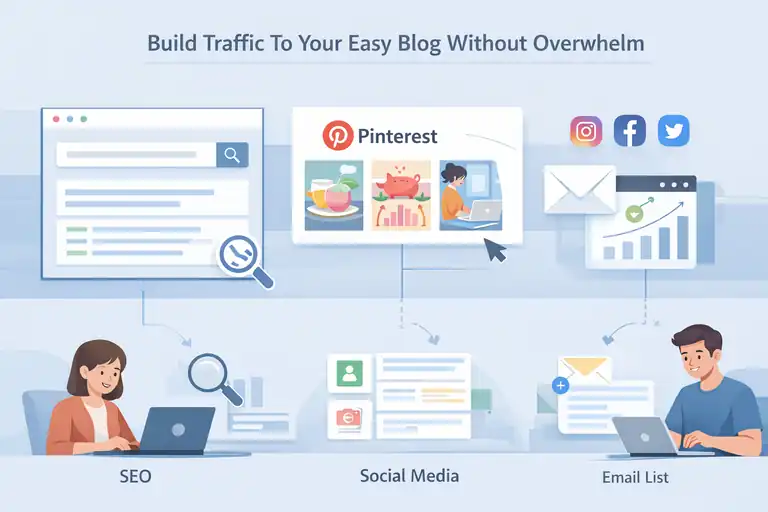
Once your content is ready, it’s time to attract readers—without turning blogging into a full-time job. You don’t need to be everywhere online; you just need to be strategic.
Use Pinterest To Drive Free, Evergreen Traffic
Pinterest is one of the easiest ways to get blog traffic without relying on SEO rankings or paid ads.
Here’s why I recommend it for beginners:
- Pins can send traffic for months, even years.
- You don’t need followers to get results.
- It works especially well for visual topics like lifestyle, food, finance, and home decor.
To get started:
- Create a Pinterest business account (it’s free).
- Design eye-catching pins in Canva (use bold text and bright contrast).
- Link each pin to a helpful blog post.
- Schedule pins consistently using Tailwind or Pinterest’s native scheduler.
In my experience, a single viral pin can drive hundreds of visitors per day—and it’s much easier than mastering social media algorithms.
Master Basic SEO To Rank On Google
SEO (Search Engine Optimization) might sound intimidating, but the basics are surprisingly simple.
Focus on three main areas:
- On-page optimization: Use clear titles, headers, and meta descriptions.
- Keyword targeting: Write about what people are already searching for.
- Backlinks: Encourage other sites to link to your content by writing quality guides worth sharing.
One tip I use often is to look at the top three results for a keyword, then ask, “What did they miss?” Add that gap to your post. Google loves content that’s more complete and useful.
And remember—SEO is a slow build. It’s not about instant traffic; it’s about creating steady, long-term growth.
Leverage Social Media For Consistent Visitors
Social media should amplify your blog, not drain your energy. You don’t need every platform—just pick one or two where your audience actually hangs out.
For example:
- Use Instagram if your blog has strong visuals (like food or fashion).
- Try LinkedIn if you write about business or productivity.
- Choose TikTok if you enjoy short, conversational videos.
I like to repurpose my blog content into bite-sized posts or reels. It keeps my feed active without creating new content from scratch.
A little consistency goes a long way—posting twice a week is often enough to build momentum.
Grow An Email List To Build Long-Term Readers
Social media traffic can vanish overnight—but an email list belongs to you.
Here’s how to grow one easily:
- Offer a freebie like a checklist, mini-guide, or template related to your blog topic.
- Use an email platform like Aweber or Mailerlite to automate welcome emails.
- Add sign-up forms at the end of posts or in your sidebar.
I like to send one newsletter per week sharing insights, links, or behind-the-scenes lessons. It keeps readers connected and turns casual visitors into loyal fans.
Monetize Your Easy Blog Strategically
Once your easy blog starts getting steady visitors, monetization becomes exciting—and surprisingly straightforward. Let’s talk about the methods that actually work for beginners.
Start With Affiliate Marketing For Simple Passive Income
Affiliate marketing is one of the easiest ways to earn from your blog without creating products.
Here’s how it works: you recommend a product you use, include a special link, and earn a commission when someone buys.
Tips to make it work naturally:
- Only promote products you truly believe in.
- Place affiliate links in context, not randomly (like inside tutorials).
- Add a disclosure so you’re transparent with readers.
For example, I once shared a post about how I designed my blog and mentioned the theme I used. That one link still earns me small commissions every month.
Create Digital Products Like Ebooks Or Courses
Once you understand your audience’s biggest struggles, you can package your knowledge into something valuable—like a mini-course or eBook.
Don’t overcomplicate it. Start small:
- An eBook made in Canva can sell for $10–$20.
- A video course recorded on Zoom can be hosted on Teachable or Podia.
- A template bundle or Notion planner can bring passive income daily.
These products work beautifully because they build off content you’ve already written.
Pro tip: Create the product after you’ve written a few posts on the topic—you’ll already know what readers want most.
Offer Services Related To Your Blog Niche
If you enjoy working directly with people, offering services is the fastest way to make real money.
For example:
- A food blogger could offer recipe photography.
- A productivity blogger might offer one-on-one coaching.
- A finance blogger could create budgeting templates.
I started offering blog audits early on—helping others simplify their layouts and improve clarity. Those first few clients taught me more about audience needs than any analytics tool could.
Use Display Ads Wisely Without Hurting User Experience
Display ads can bring in passive income once your traffic grows, but moderation is key. Too many ads make your site look cluttered and slow it down.
Start with a lightweight ad network like Monetag or Adsterra (once you meet their traffic requirements).
Here’s my personal rule:
- Avoid ads in the middle of key sections.
- Keep sidebar and footer ads minimal.
- Always test on mobile before adding more.
A few well-placed ads can bring consistent revenue while keeping your site clean and enjoyable to read.
Simplify Your Blog Workflow For Consistent Growth
If you want your easy blog to grow steadily without feeling like a second job, simplifying your workflow is key.
The goal is to stay consistent without burning out—because consistency, not complexity, is what builds momentum.
Create A Content Calendar That Keeps You Organized
Having a content calendar is like having a GPS for your blogging journey. It gives you direction, helps you plan ahead, and eliminates that stressful “what should I post next?” feeling.
Here’s how to build one that actually works:
- Pick your tool: You can use Google Sheets, Notion, or even a paper planner—whatever helps you stay on track.
- Plan monthly themes: Group topics by month so your content feels connected (for example, “SEO tips” in March, “blog monetization” in April).
- Add deadlines: Treat them like real commitments. They’ll keep you accountable.
I’ve found that having my posts planned at least two weeks ahead makes everything smoother. It also lets me focus on writing, not scrambling.
Quick tip: Include time for editing, image creation, and promotion in your calendar—not just writing. That’s where most bloggers underestimate their schedule.
Batch Write And Schedule Content For Efficiency
Batching is one of the best habits I’ve ever adopted for blogging. It means grouping similar tasks together so your brain stays in “creation mode” longer.
Here’s how I batch efficiently:
- Pick one day to brainstorm ideas.
- Another to write multiple drafts.
- Then a day just for editing or adding images.
This process can easily double your output without doubling your effort.
If you’re using WordPress, you can schedule posts in advance to publish automatically. This means you can take a week off and your blog still runs itself—it’s like putting your easy blog on autopilot.
Automate Promotion Using Social Scheduling Tools
Promotion can be one of the most time-consuming parts of blogging, but automation makes it manageable.
Try using tools like:
- Later: Schedule posts on platforms like Instagram or X (formerly Twitter).
- Tailwind: Perfect for automating Pinterest pinning and resharing old content.
- Missinglettr: Automatically pulls quotes and images from your blog to create social posts.
By setting up automation once a week, you can maintain a steady online presence without constantly logging in to post.
In my experience, spending one focused hour on automation each week saves at least five hours of scattered effort later.
Track Key Metrics To Focus On What Truly Works
Blogging isn’t just about creating—it’s about learning what works and doing more of it.
I recommend tracking a few simple metrics each month:
- Traffic sources: Where are visitors coming from (Google, Pinterest, etc.)?
- Top posts: Which articles get the most views or clicks?
- Conversions: How many people sign up for your email list or buy through affiliate links?
You can track this using Google Analytics 4 or plugins like MonsterInsights.
The idea isn’t to obsess over numbers but to use them as feedback. If a post performs well, double down on that topic. If something flops, tweak and try again.
Scale Your Easy Blog Into A Real Income Source
Once your easy blog runs smoothly, scaling is about building sustainability.
Think of it as turning your side hustle into a reliable business—one that supports your goals and still feels enjoyable.
Diversify Income Streams For Financial Stability
Relying on one income stream can be risky. If a single affiliate program changes its terms, your earnings can drop overnight.
Here are a few ways to diversify:
- Affiliate marketing: Continue recommending trusted products.
- Digital products: Sell eBooks, templates, or mini-courses.
- Services: Offer consulting, coaching, or design work.
- Ads: Monetize your traffic once you have consistent visitors.
Even if you start small—say $50 a month from affiliates and $30 from ads—it adds up. The goal is multiple small streams that eventually create one steady flow.
Collaborate With Brands Or Other Bloggers
Collaboration opens doors that solo blogging can’t. It builds credibility, grows your reach, and often leads to new income opportunities.
You can:
- Partner with a brand for a sponsored post.
- Guest post on other blogs to expand your audience.
- Co-create a digital product or webinar with another creator.
When I first collaborated with another blogger in my niche, we doubled our audience overnight because we shared readers who trusted our voices.
Just make sure collaborations align with your values and audience—it should feel like a natural extension of what you already do.
Outsource Repetitive Tasks As Your Blog Grows
You don’t have to do everything yourself forever. Outsourcing can give you back valuable time for strategy and creativity.
Common tasks to delegate include:
- Editing blog posts
- Designing graphics
- Managing social media
- Formatting newsletters
Websites like Fiverr or Upwork can help you find affordable help. Start small—maybe 2–3 hours a week—and build up from there.
It might feel hard at first to let go of control, but trust me, freeing up your mental space is worth it.
Reinvest Earnings Into Better Tools And Learning
Your blog income should work for you—not just sit idle. Reinvesting is how you accelerate growth.
A few smart reinvestments include:
- Upgrading to faster hosting or premium themes for performance.
- Taking online courses to sharpen your SEO or email marketing skills.
- Investing in automation tools to save time.
In my experience, every dollar I’ve reinvested has come back multiplied in time saved or income gained. Think long-term, not short-term.
Avoid Common Blogging Mistakes That Kill Progress
Even experienced bloggers fall into traps that slow growth or drain motivation. Recognizing these early can save you a lot of frustration.
Stop Comparing Your Blog To Others
Comparison is one of the fastest ways to lose confidence. Remember, every blogger’s journey is different—what you see online is their highlight reel, not their process.
Instead of comparing traffic or income, measure progress by your own milestones. Did you write consistently this month? Did your posts get more engagement? Those are real wins.
I used to compare my blog to others constantly until I realized that consistency always beats competition.
Don’t Overcomplicate Your Website Or Tools
It’s tempting to add every plugin, feature, or fancy design element you find—but more doesn’t always mean better.
Here’s my minimalist rule: If it doesn’t improve user experience or income, skip it.
Stick to essential plugins like:
- Rank Math for SEO.
- UpdraftPlus for backups.
- LiteSpeed Cache for speed.
Keep your site light, fast, and easy to navigate—that’s what readers (and Google) prefer.
Focus On Consistency Over Perfection
Perfection is a trap that stops progress before it starts. You don’t need perfect graphics, flawless grammar, or polished branding to succeed.
What matters most is showing up regularly.
I like to say, done is better than perfect—because done earns traffic and perfect doesn’t exist. Over time, your quality will improve naturally through practice.
Keep Learning And Adapting As The Industry Evolves
Blogging changes constantly. SEO updates, new tools, and social platforms evolve every year.
The best way to stay ahead is to keep learning. Follow SEO experts on YouTube, join blogging communities, or take one short course per quarter.
Think of learning as fuel—it keeps your easy blog moving forward, even when trends shift.
Maintain Motivation And Long-Term Success
Blogging success isn’t about quick wins—it’s about staying consistent and inspired for the long haul. Let’s talk about how to keep your motivation strong even when things feel slow.
Set Realistic Goals And Celebrate Small Wins
Big goals are exciting, but they can also feel overwhelming. Break them down into smaller milestones so you can celebrate progress along the way.
For example:
- “Publish one post per week for a month.”
- “Reach 1,000 monthly visitors.”
- “Earn my first affiliate commission.”
Each small win keeps your momentum alive. I still remember the first time I hit 10,000 pageviews—it wasn’t massive, but it felt like proof that the effort was working.
Build A Routine That Supports Creativity
A simple routine helps you stay focused even when motivation dips.
Here’s what I recommend:
- Pick set writing days each week.
- Schedule time for learning and idea generation.
- Leave buffer days for editing or updates.
Try to write when you have the most energy—I’m a morning person, so that’s when I do my best work. Figure out what works for you, and protect that creative time.
Engage With Your Readers To Stay Inspired
Readers are your best motivation. When you interact with them, blogging feels less like a solo project and more like a community.
You can:
- Reply to comments or emails personally.
- Ask what topics they want to learn about next.
- Share behind-the-scenes stories to build connection.
When someone emails me saying a post helped them start their own blog, it’s the best reminder of why I do this work.
Remember Why You Started Your Easy Blog
Whenever you hit a slump, go back to your “why.” Maybe it’s freedom, flexibility, or simply helping others. That original spark is still your best motivator.
I like to revisit my early posts sometimes—they remind me how far I’ve come. Your easy blog doesn’t have to be perfect to make an impact; it just has to stay alive and evolving.
Final Thought: Blogging is a journey of growth, not perfection. Keep it simple, stay genuine, and treat your easy blog like a long-term relationship—it rewards consistency, patience, and care.
FAQ
How can I start an easy blog with no experience?
You can start an easy blog by choosing a simple platform like WordPress, picking a clear niche, and using beginner-friendly themes. Focus on writing helpful posts consistently rather than perfect design.
How does an easy blog make real income?
An easy blog earns income through affiliate links, ads, digital products, and sponsored content. Once you build steady traffic and trust, monetization becomes simple and sustainable.
How long does it take for an easy blog to make money?
Most bloggers start earning small income within 3–6 months if they post regularly, optimize for SEO, and promote content on platforms like Pinterest or email lists.

I’m Juxhin, the voice behind The Justifiable.
I’ve spent 6+ years building blogs, managing affiliate campaigns, and testing the messy world of online business. Here, I cut the fluff and share the strategies that actually move the needle — so you can build income that’s sustainable, not speculative.
Related posts:
 Start a Blog Website and Build a Profitable Side Income
 How to Create a Blog Site and Start Making Money
 How Do I Create My Own Blog and Get Paid Fast?
 Setting Up a Blog Website That Earns From Day One
 Where Is the Best Place to Start a Blog and Make Money?
 Create a Blog Free and Start Earning With No Risk