
Table of Contents
Some links on The Justifiable are affiliate links, meaning we may earn a small commission at no extra cost to you. Read full disclaimer.
When people ask me about doba and amazon, it’s usually because they’re worried about one thing: getting banned before they even make their first sale.
This is for sellers who want to use Doba as a dropshipping supplier while selling on Amazon, and who need a clear, honest answer to whether it’s allowed.
The question this answers is simple but critical: can you dropship with Doba on Amazon without violating Amazon’s rules and risking your seller account?
Amazon Dropshipping Policy Explained For Doba Sellers
Before you even touch Doba, you need a clean mental model of how Amazon actually defines dropshipping.
In my experience, most bans happen not because sellers are careless, but because they misunderstand what Amazon means by allowed dropshipping versus prohibited fulfillment.
What Amazon Allows And Prohibits In Dropshipping Models
Amazon technically allows dropshipping, but only under very specific conditions. The platform does not care whether you hold inventory. It cares about control and accountability.
Here’s what Amazon allows:
- You can source products from a third-party supplier.
- You can ship orders directly to customers.
- You can automate order routing, as long as it does not expose the supplier.
Here’s what Amazon prohibits:
- Shipping orders that show another retailer or supplier as the seller.
- Using packing slips, invoices, or labels that mention Doba or the underlying supplier.
- Letting another business handle customer-facing responsibilities.
A stat worth knowing: according to Amazon seller forum data aggregated by multiple suspension services, dropshipping-related policy violations account for roughly 20–25% of sudden account suspensions in beginner seller accounts. Most of those sellers thought they were “doing it right.”
Why Amazon Requires You To Be The Seller Of Record
Seller of record simply means Amazon wants you to look like the business behind the order at every step. Not Doba. Not the supplier behind Doba.
Being the seller of record means:
- Your name appears on the packing slip.
- Your company handles returns and customer support.
- Your Amazon account is responsible for refunds and chargebacks.
Think of it this way: Amazon is lending you its customers. In return, it expects you to fully own the transaction. The moment a buyer sees another brand name, Amazon assumes you are acting as a middleman instead of a seller.
This is where doba and amazon often clash. Doba is designed to streamline supplier access, not to guarantee Amazon compliance by default.
How Supplier Branding Triggers Amazon Policy Violations
This is the fastest way sellers get banned, and I’ve seen it happen in under 48 hours.
Common branding triggers include:
- Supplier logos on packing slips.
- Return addresses pointing to a third-party warehouse.
- Invoices showing a different company name.
Amazon’s system flags these issues in two ways:
- Automated scans of uploaded invoices and tracking data.
- Customer complaints that mention “another company shipped my order.”
One complaint is usually enough to trigger a manual review. Two or three can escalate into an immediate suspension.
Where Most Doba And Amazon Sellers Misinterpret The Rules
The biggest misconception is believing that Amazon bans dropshipping outright. It doesn’t. It bans retail arbitrage-style fulfillment disguised as dropshipping.
Another common mistake is assuming that because Doba is a “dropshipping platform,” it must be Amazon-safe by default. That assumption gets people burned.
What Amazon actually evaluates is:
- Who appears to fulfill the order.
- Who the customer believes they bought from.
- Whether Amazon can hold one accountable party.
If you remember nothing else, remember this: Amazon doesn’t punish sourcing models. It punishes broken customer trust.
How Doba’s Fulfillment Model Fits Amazon Rules
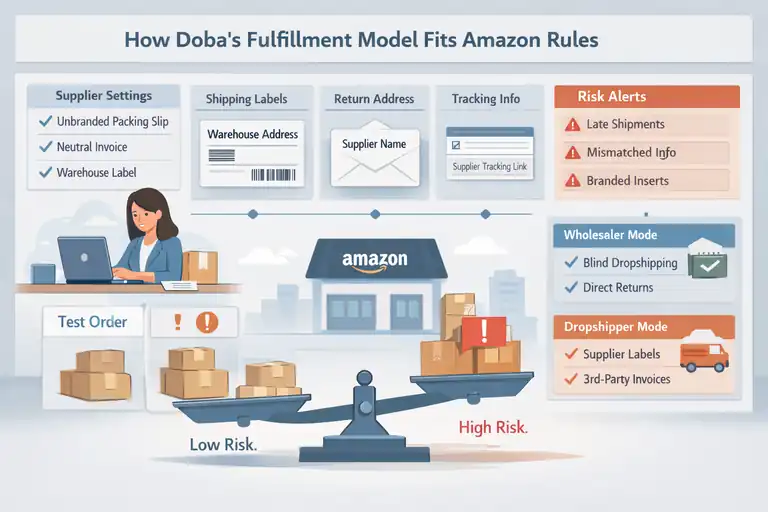
Doba sits in a gray zone. It can function in a way that aligns with Amazon policy, but it can also violate it very easily depending on how you configure and manage orders.
This section is where theory meets reality.
How Doba Handles Packaging, Invoices, And Shipping Labels
By default, Doba connects you to multiple suppliers, each with their own fulfillment processes. That’s both the strength and the risk.
Key things to understand:
- Some suppliers support neutral or unbranded packing slips.
- Others automatically include their business name unless you request changes.
- Shipping labels may reflect the supplier’s warehouse, not your business.
In practice, this means you must actively vet suppliers inside Doba. I suggest starting with a test order shipped to yourself. If you see any third-party branding, that supplier is not Amazon-safe without customization.
Whether Doba Orders Identify Third-Party Suppliers
Yes, they can. And this is where many sellers unknowingly cross the line.
Supplier identification can appear through:
- Return addresses tied to supplier names.
- Tracking links registered under another business.
- Customer service inserts inside the package.
Amazon doesn’t require perfection, but it does require consistency. If even one order exposes the supplier, Amazon treats it as a systemic issue, not a one-off mistake.
This is why doba and amazon setups require ongoing monitoring, not a “set it and forget it” mindset.
When Doba Works Like A Wholesaler Vs A Dropshipper
This distinction matters more than most people realize.
Doba behaves more like a wholesaler when:
- You choose suppliers that support blind dropshipping.
- You control branding and customer communication.
- You handle returns directly.
It behaves like a risky dropshipper when:
- Suppliers auto-insert their identity.
- You rely on supplier return processing.
- You never audit fulfillment details.
Amazon is far more tolerant of wholesale-style operations, even when inventory isn’t physically owned by you.
Red Flags In Doba Fulfillment That Cause Amazon Suspensions
From what I’ve seen, these are the warning signs you should never ignore:
- Inconsistent tracking uploads or delayed confirmations.
- Supplier backorders causing missed ship dates.
- Customers asking, “Why did another company ship this?”
Amazon tracks seller performance obsessively. Late shipment rate, valid tracking rate, and order defect rate all feed into suspension risk.
If you’re using Doba, you need tighter controls than a typical FBA seller. That’s the tradeoff.
Expert tip: Before scaling, lock yourself to two or three proven suppliers and ignore the rest. Variety feels powerful, but consistency is what keeps your Amazon account alive.
Real Reasons Amazon Bans Doba-Based Sellers
Most Amazon suspensions tied to Doba are not random. They follow very specific patterns. I’ve reviewed enough suspension notices to tell you this: Amazon usually bans sellers for process failures, not intent.
Understanding these patterns is how you avoid becoming another cautionary tale.
Supplier-Branded Packing Slips And Invoice Violations
This is the number one killer of Doba-based Amazon accounts.
Here’s how it usually happens in real life:
- You place orders through Doba.
- A supplier includes their company name on the packing slip.
- A customer contacts Amazon support asking why another business shipped their order.
That single message is often enough to trigger an investigation.
Amazon’s policy is clear: if any documentation inside the package identifies a third party, you are no longer the seller of record. From Amazon’s perspective, that breaks trust with the customer.
What makes this tricky with Doba is that not all suppliers behave the same way. Some comply. Others don’t. And Amazon doesn’t care which one you used.
If you remember one thing: Amazon does not give warnings for packing slip violations. It moves straight to enforcement.
Late Shipping And Tracking Upload Failures
This is the silent killer, especially for newer sellers using Doba.
Doba relies on external suppliers, which means:
- You don’t control warehouse speed.
- You don’t control carrier pickup schedules.
- You often receive tracking information late.
Amazon tracks two metrics aggressively:
- Late shipment rate.
- Valid tracking rate.
Amazon expects tracking uploaded within 24 hours of shipment confirmation. Many Doba suppliers miss this window. When it happens repeatedly, Amazon assumes you cannot meet customer expectations.
Internal Amazon data shared at seller events has shown that sellers exceeding a 4% late shipment rate are far more likely to face account reviews. Doba sellers hit that threshold faster than they expect if they’re not careful.
Customer Complaints Linked To Doba Fulfillment Gaps
Customers are surprisingly good at spotting inconsistencies.
Common complaints include:
- Packages arriving much later than the promised delivery date.
- Items shipping from unexpected locations.
- No clear return instructions.
Amazon treats customer messages as hard evidence. Even if the complaint is subjective, Amazon assumes the seller is at fault.
This is where doba and amazon friction becomes real. Doba optimizes supplier access. Amazon optimizes customer experience. When those goals collide, Amazon wins every time.
Order Routing Issues Between Doba And Amazon Seller Central
This one feels technical, but it causes real damage.
Order routing issues usually look like:
- Orders not syncing correctly between platforms.
- Duplicate shipments.
- Orders marked shipped in Amazon before they actually ship.
Amazon’s system flags mismatches automatically. When it sees inconsistent data, it assumes fulfillment manipulation or poor operational control.
From what I’ve seen, sellers who manually audit their first 50–100 orders avoid most of these issues. Sellers who rely entirely on automation get burned.
How To Dropship From Doba On Amazon Safely
Yes, it is possible to use Doba without getting banned. But it requires discipline. You cannot treat it like a side hustle you check once a week.
This section is the playbook I’d follow if I were starting today.
Setting Yourself As Seller Of Record On Every Order
Everything flows from this principle.
You must ensure:
- Your business name appears on packing slips.
- Your return address is customer-facing.
- You handle all customer communication through Amazon.
Practical steps that work:
- Contact Doba suppliers before listing products and confirm blind dropshipping support.
- Place test orders to your own address.
- Document which suppliers are Amazon-safe and ignore the rest.
If a supplier cannot meet seller-of-record requirements, they are not worth the risk. Period.
Removing Third-Party Branding From Doba Shipments
This is where most sellers cut corners and regret it later.
You need written confirmation from suppliers that:
- No logos are included.
- No promotional inserts are added.
- No invoices identify the supplier.
Some Doba suppliers will do this only if asked. Others charge a small fee. In my opinion, that fee is cheaper than rebuilding an Amazon account from scratch.
A simple rule I follow: if you wouldn’t want Amazon reviewing the package, don’t ship it.
Using Amazon-Compliant Order And Tracking Workflows
Your workflow matters as much as your supplier.
Best practices that reduce risk:
- Do not confirm shipment in Amazon until the supplier confirms dispatch.
- Upload carrier-provided tracking only, not placeholder numbers.
- Set longer handling times to create buffer room.
Yes, longer handling times may reduce conversions. But they dramatically reduce suspension risk. You can optimize later. You can’t undo a ban easily.
Creating A Doba Process That Matches Amazon Policies
This is where sustainable sellers separate themselves.
A compliant Doba workflow usually includes:
- A limited supplier list.
- Weekly audits of tracking accuracy.
- Manual checks on customer-facing documentation.
I’ll be honest: Doba works best as a controlled system, not a scaling machine. Sellers who respect that reality last longer.
Amazon Seller Central Settings That Protect Your Account
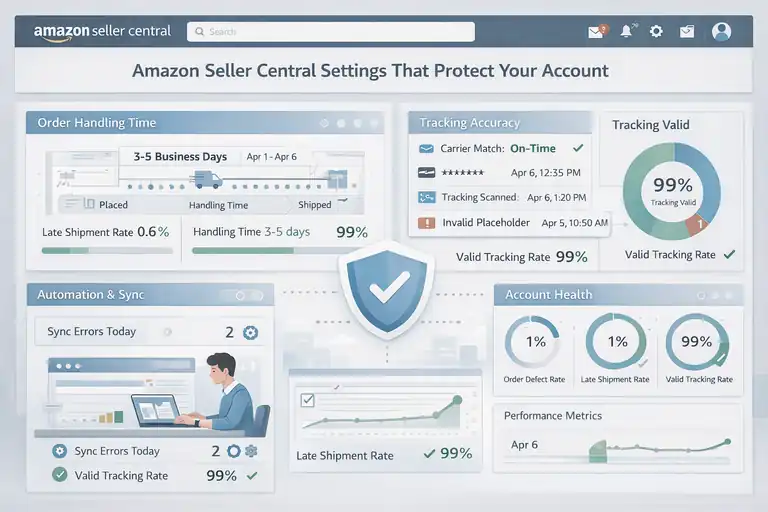
If you’re using doba and amazon together, Seller Central is not just a dashboard. It’s your safety net.
Small configuration choices here quietly determine whether Amazon sees you as a reliable seller or a risk waiting to happen.
Order Handling Time Settings That Reduce Late Shipments
This is one of the simplest fixes, and almost everyone ignores it.
Amazon defaults many sellers to short handling times, sometimes one or two days. That works for FBA. It rarely works for Doba.
What I recommend instead:
- Set handling time to 3–5 business days for Doba listings.
- Treat this as buffer time, not actual processing time.
- Shorten it later only after real data proves consistency.
Here’s a real-world scenario I’ve seen repeatedly. A seller leaves handling time at two days. The Doba supplier ships on day three. Amazon counts it as late, even though the item arrives on time. Enough of these add up, and Amazon flags the account.
Handling time does not hurt your account health. Late shipments do.
Tracking Upload Rules Amazon Enforces Strictly
Amazon is obsessive about tracking accuracy, especially for dropshipping sellers.
Key rules Amazon enforces:
- Tracking must be valid and carrier-recognized.
- Tracking must be uploaded promptly after shipment.
- Tracking must show movement, not just a number.
Many Doba suppliers send tracking late or update it slowly. Amazon doesn’t care why.
A helpful habit:
- Do not mark orders as shipped until tracking is live.
- Check that the carrier matches Amazon’s accepted list.
- Avoid manual placeholder tracking numbers at all costs.
From what I’ve seen, valid tracking rate dropping below 95% dramatically increases review risk for dropshippers.
Automations That Reduce Doba And Amazon Sync Errors
Automation helps, but blind automation hurts.
Tools that sync Doba orders into Amazon Seller Central can:
- Reduce manual errors.
- Speed up order placement.
- Keep inventory in sync.
But automation should never remove oversight.
Smart automation practices:
- Automate order creation, not shipment confirmation.
- Review daily sync error logs.
- Manually spot-check orders every week.
I tell people this all the time: automation should save time, not remove responsibility.
Metrics Amazon Reviews Before Issuing Dropshipping Bans
Amazon rarely bans without looking at trends.
Metrics that matter most:
- Late shipment rate.
- Order defect rate.
- Valid tracking rate.
- Customer message sentiment.
Amazon does not judge you on one bad order. It judges patterns. If multiple metrics slip together, especially in a dropshipping model, scrutiny increases fast.
If you check one thing weekly, make it account health.
When Doba And Amazon Are Not A Good Fit
I want to be honest here. Doba is not wrong. Amazon is not wrong. But sometimes, they are simply wrong for each other.
This section is about knowing when to walk away before Amazon forces the decision.
Product Categories That Trigger Higher Amazon Scrutiny
Some categories are magnets for enforcement.
High-risk categories include:
- Branded consumer electronics.
- Health and personal care.
- Baby products.
- Supplements and ingestibles.
These categories already face higher customer complaints and stricter policy enforcement. Adding a third-party fulfillment layer through Doba multiplies the risk.
If you’re selling in these categories, I strongly suggest reconsidering your model.
Price Competition Risks With Doba Supplier Listings
Doba suppliers often sell to many sellers at once.
That creates:
- Identical listings.
- Aggressive price undercutting.
- Razor-thin margins.
What happens next is predictable. Sellers lower prices to compete. Margins shrink. Sellers rush orders. Mistakes increase. Amazon notices.
If you find yourself racing to the bottom on price, that’s a warning sign, not a growth strategy.
Situations Where FBA Or Wholesale Is Safer
There are times when Doba simply isn’t worth the stress.
FBA or wholesale is usually safer when:
- You have consistent sales volume.
- Products are small and lightweight.
- Brand control matters.
Yes, FBA requires upfront investment. But it dramatically reduces policy risk. Amazon fulfills the order, controls the packaging, and absorbs shipping mistakes.
From a pure account-safety perspective, FBA wins almost every time.
Signs You Should Stop Using Doba On Amazon
Here’s the checklist I use.
If you see these signs, pause immediately:
- Repeated late shipment warnings.
- Customers mentioning other companies in messages.
- Tracking issues you can’t control.
- Constant supplier excuses.
At that point, the question isn’t whether Doba can work. It’s whether it’s worth risking your Amazon account.
Best practice: Protect the account first. Business models can change. Suspensions are much harder to undo.
Alternatives To Doba For Amazon Dropshipping
If I’m being honest with you, most long-term Amazon sellers don’t stick with pure Doba-based dropshipping forever. They evolve. Not because Doba is useless, but because Amazon rewards control, consistency, and predictability.
This section walks through safer models I’ve seen protect accounts far better than relying only on Doba.
Using Wholesale Accounts Instead Of Dropship Networks
Wholesale means you open a direct account with a brand or authorized distributor and buy inventory in bulk, even if it ships to you or a prep center.
Why this works better than Doba:
- You are clearly the seller of record.
- Invoices match your Amazon account name.
- Amazon trusts wholesale documentation.
A simple example. Instead of sourcing a kitchen gadget from five Doba suppliers, you open one wholesale account, order 100 units, and send them to a prep center. You now control packaging, returns, and documentation.
Yes, wholesale requires upfront cash. But from what I’ve seen, sellers using wholesale are significantly less likely to face dropshipping-related suspensions.
Amazon FBA As A Compliance-First Fulfillment Option
FBA stands for Fulfillment by Amazon. Amazon stores, ships, and handles customer service for you.
Why FBA is safer:
- Amazon becomes responsible for shipping speed.
- Tracking and delivery are handled internally.
- Packaging and branding are Amazon-controlled.
This removes nearly every risk that doba and amazon setups struggle with.
Here’s a quick comparison to make it clearer:
| Model | Account Risk | Control Level | Upfront Cost |
| Doba Dropshipping | High | Low | Low |
| Wholesale FBM | Medium | High | Medium |
| Amazon FBA | Low | Medium | Medium–High |
If your goal is account longevity, FBA is hard to beat.
Private Label Models That Avoid Dropshipping Risks
Private label means selling a product under your own brand, usually sourced from a manufacturer.
Why Amazon likes this model:
- You are clearly the brand owner.
- There is no third-party identity exposure.
- Customer trust is higher.
Private label isn’t beginner-friendly for everyone, but it removes the core issue Amazon has with dropshipping: unclear ownership.
In my experience, sellers who switch from Doba to private label often say the stress reduction alone is worth it.
Hybrid Models That Reduce Amazon Policy Exposure
This is my favorite approach for cautious sellers.
A hybrid model might look like:
- Testing products with limited Doba orders.
- Moving winners into wholesale or FBA.
- Phasing out high-risk suppliers.
This lets you validate demand without fully committing to a risky fulfillment setup. You’re using Doba as a research tool, not a long-term crutch.
That mindset shift alone can save your account.
Final Verdict On Doba And Amazon Account Safety
Let’s cut through the noise and answer the question directly. You don’t need theory at this point. You need clarity.
Clear Answer On Whether Doba Is Amazon-Compliant
Yes, Doba can be used with Amazon. But no, it is not automatically Amazon-compliant.
Doba becomes compliant only when:
- You control branding and documentation.
- You act as seller of record.
- You manage fulfillment metrics tightly.
Amazon does not approve platforms. It approves behavior. That distinction matters more than people realize.
Who Should And Should Not Use Doba On Amazon
Doba makes sense if:
- You are testing products cautiously.
- You understand Amazon policy deeply.
- You actively manage suppliers and metrics.
Doba is a poor fit if:
- You want passive income.
- You rely on automation without oversight.
- You cannot tolerate account risk.
I’ve seen beginners jump into doba and amazon thinking it’s easy. Amazon punishes that assumption quickly.
The One Mistake That Gets Most Sellers Banned
Here it is, plain and simple.
Most sellers get banned because they assume Amazon will warn them before taking action.
Amazon usually doesn’t.
- One supplier-branded packing slip.
- One customer complaint.
- One tracking failure too many.
That’s all it takes.
How To Decide Before You List Your First Product
Before listing anything, ask yourself:
- Can I defend this order if Amazon audits it?
- Can I explain my fulfillment process clearly?
- Can I control what the customer sees?
If the answer to any of those is no, pause.
Final tip: Your Amazon account is more valuable than any single product or supplier. Build every decision around protecting it, and you’ll outlast sellers who chase shortcuts and disappear just as fast.
FAQ
Can You Use Doba And Amazon Together Without Getting Banned?
Yes, you can use doba and amazon together, but only if you fully comply with Amazon’s dropshipping policy. You must be the seller of record on every order, remove all third-party branding, and control customer service, returns, and tracking. If any supplier identity appears to the customer, Amazon can suspend your account.
Why Do Sellers Get Banned Using Doba On Amazon?
Most sellers get banned because of supplier-branded packing slips, late shipments, or invalid tracking uploads. These issues usually come from relying on Doba suppliers without verifying how orders are fulfilled. Amazon treats repeated fulfillment errors as a sign that you cannot meet customer expectations.
Is Doba A Safe Long-Term Strategy For Amazon Sellers?
For most sellers, Doba is not ideal long term. It can work for testing products, but ongoing use carries higher risk due to limited fulfillment control. Many sellers eventually switch to wholesale or Amazon FBA to reduce policy exposure and protect their Amazon account.

I’m Juxhin, the voice behind The Justifiable.
I’ve spent 6+ years building blogs, managing affiliate campaigns, and testing the messy world of online business. Here, I cut the fluff and share the strategies that actually move the needle — so you can build income that’s sustainable, not speculative.
Related posts:
 Viral Launch Amazon Success: Boost Rankings & Revenue!
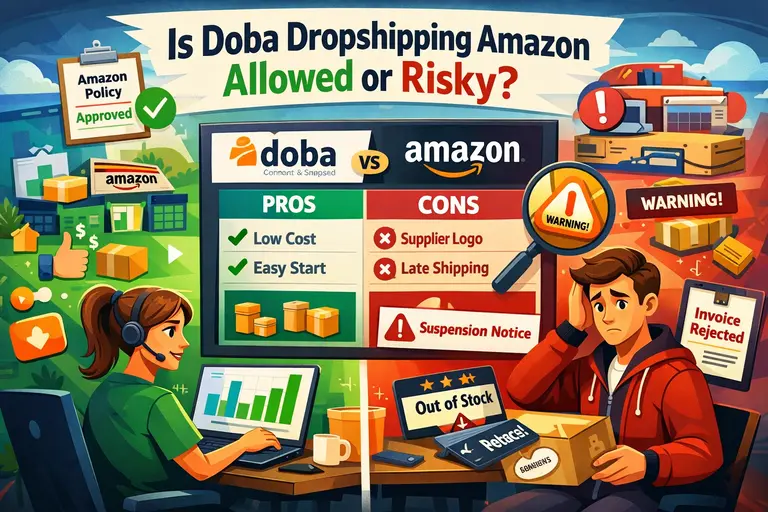 Is Doba Dropshipping Amazon Allowed or Risky?
 How to Make Money Dropshipping: 7 Secrets to a $10K/Month
 How To Start A Dropshipping Business With No Money
 Dropshipping Business Model Success: Tips for Long-Term Growth
 Viral Launch Chrome Extension: The Ultimate Tool for Sellers