
Table of Contents
Some links on The Justifiable are affiliate links, meaning we may earn a small commission at no extra cost to you. Read full disclaimer.
Doba shipping is one of those things people hear mixed opinions about, and if you’re considering using it for real customer orders, speed is probably your biggest concern.
This guide is for dropshippers, ecommerce store owners, and anyone evaluating Doba as a supplier who wants a realistic answer—not marketing promises.
I’m answering one core question here: how fast is Doba shipping for real orders, based on how the platform actually works in practice.
How Fast Is Doba Shipping Compared To Expectations
When people ask about doba shipping speed, what they’re really asking is whether it matches what the platform implies versus what customers actually experience.
From what I’ve seen, the answer depends heavily on supplier choice and expectations you set upfront.
Average Doba Shipping Timeframes For U.S. Orders
If you stick to U.S.-based suppliers, doba shipping is usually moderate, not lightning-fast but not painfully slow either.
Here’s what typical timelines look like in real scenarios:
- Processing time: 1–3 business days before the supplier ships
- Transit time: 3–7 business days via USPS, UPS, or FedEx
- Total delivery window: Around 5–10 business days for most U.S. orders
Why this matters: Many sellers assume “U.S. supplier” equals Amazon-speed delivery. In reality, most Doba suppliers operate more like small wholesalers, not fulfillment giants.
In my experience, when everything goes smoothly, customers rarely complain about a 7–8 day delivery window. The trouble starts when processing drags out silently and pushes delivery past the 10-day mark.
International Doba Shipping Speeds And Delays Explained
International doba shipping is where expectations and reality tend to clash the hardest.
Typical international timelines look like this:
- Processing time: 2–5 business days
- Transit time: 10–25 business days depending on destination
- Customs delays: Anywhere from 2–10 additional days
That means a real-world delivery window of 15–35 days is not unusual.
This happens because many international orders are fulfilled by overseas suppliers using consolidated shipping methods. That’s cheaper, but slower and harder to track. Customers used to Prime-like experiences often interpret this as “lost” or “stuck,” even when it’s moving normally.
Why Doba Shipping Feels Slower Than Advertised
I think the biggest reason doba shipping feels slow is expectation mismatch, not outright failure.
A few common causes:
- Supplier-listed shipping times are estimates, not guarantees
- Processing time is often overlooked when sellers calculate delivery speed
- Tracking delays make orders look inactive for days
Doba doesn’t control fulfillment directly, so the platform’s advertised ranges assume ideal conditions. Real-world orders include weekends, supplier workload, and carrier delays that stretch timelines quietly.
When Doba Shipping Is Fast Enough For Customers
Despite the complaints you might see online, doba shipping can be fast enough in the right situations.
It tends to work best when:
- You’re selling non-urgent products
- Your product pages clearly state delivery expectations
- You focus on U.S.-fulfilled inventory
- You’re testing products before scaling
I’ve found customers are far more forgiving when you’re transparent. A clearly stated “7–10 business day delivery” often converts better than vague promises of fast shipping that don’t hold up.
Where Doba Shipping Times Actually Come From
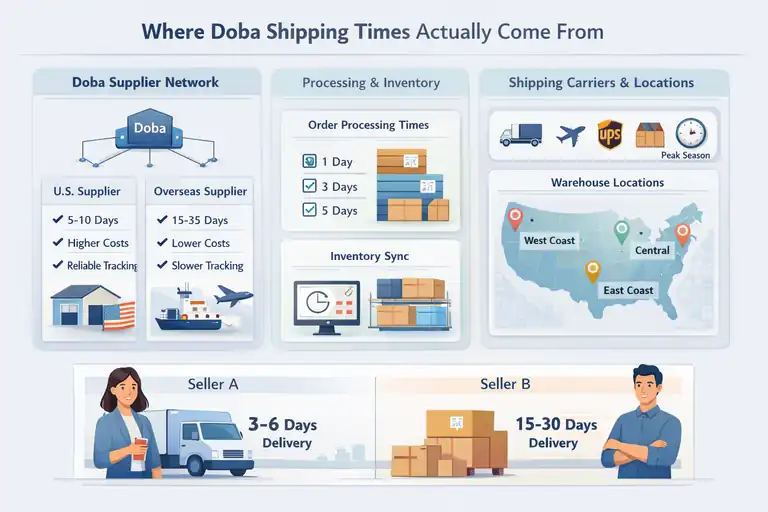
To really understand doba shipping speed, you have to look under the hood.
Doba itself isn’t a warehouse—it’s a connector between you and hundreds of independent suppliers.
How Doba’s Supplier Network Impacts Shipping Speed
Doba works as a marketplace, not a fulfillment service.
That means:
- Each supplier sets their own processing time
- Each supplier chooses their own shipping carrier
- Each supplier manages inventory independently
In practical terms, you’re only as fast as the supplier you choose. Two sellers can use Doba and have completely different shipping experiences simply because they picked different vendors for similar products.
This is why experienced sellers treat supplier selection as a shipping strategy, not an afterthought.
Differences Between U.S.-Based And Overseas Suppliers
This is one of the most important distinctions inside doba shipping.
U.S.-based suppliers:
- Faster delivery (5–10 days typical)
- Higher product costs
- More reliable tracking
Overseas suppliers:
- Lower product prices
- Longer delivery windows (15–35 days)
- Less consistent tracking updates
If speed is part of your value proposition, U.S. suppliers are usually worth the margin tradeoff. If price is your main advantage, overseas suppliers can still work—but only if you set expectations clearly.
Why Doba Shipping Times Vary Order To Order
Even with the same supplier, doba shipping times can fluctuate.
Common reasons include:
- Inventory syncing delays between Doba and the supplier
- Batch shipping schedules where orders ship only on certain days
- Carrier congestion during holidays or peak seasons
This variability is normal in distributed supplier networks. It’s not ideal, but it’s predictable once you understand the patterns.
How Warehouse Locations Affect Doba Shipping
Warehouse location quietly plays a massive role in delivery speed.
For example:
- An order shipping from California to New York may take 2–3 days longer than one shipping within the same region.
- Central U.S. warehouses often deliver more consistently nationwide.
What I suggest is checking supplier warehouse locations before committing to a product. A supplier with slightly higher costs but better geographic coverage often wins in customer satisfaction.
Expert tip: If you want faster doba shipping without switching platforms, build a short supplier shortlist and place test orders to your own address. Nothing reveals true processing and transit times faster than seeing the labels, carriers, and delivery windows firsthand.
Real Order Fulfillment Timeline Inside Doba
This is where doba shipping becomes much clearer once you stop thinking in “delivery days” and start thinking in stages.
Every order goes through several quiet steps before a package ever moves, and most delays happen before shipping even begins.
Order Processing Time Before Doba Ships Products
Before anything ships, Doba has to pass your order to the supplier. This step is easy to underestimate.
Here’s what typically happens:
- Order sync: Your store sends the order to Doba, usually instantly.
- Payment verification: Doba confirms funds and order validity.
- Supplier handoff: The order is routed to the selected supplier.
In real-world terms, this stage usually takes 12–48 hours. On weekends or holidays, it can stretch closer to 72 hours.
In my experience, sellers often forget to include this time when calculating shipping speed. Customers don’t see any movement yet, so impatience quietly builds even though nothing is technically “late.”
How Long Suppliers Take To Confirm And Ship Orders
This is the most unpredictable part of doba shipping.
Most suppliers list a processing time of 1–3 business days, but here’s what I’ve actually seen:
- Best case: Ships same or next business day
- Average case: Ships in 2–3 business days
- Slow case: Takes 4–5 days due to stock checks or batching
Why batching matters: Some suppliers only ship orders on specific days to save costs. Your order might be ready, but it waits for the next shipping window.
This is where experienced sellers test suppliers privately before trusting listed timelines.
Tracking Updates And When Customers See Movement
Tracking is where customers judge you, even if the delay isn’t your fault.
Common tracking behaviors with doba shipping:
- Tracking numbers are often generated before carrier pickup
- Status may say “Label Created” for 1–3 days
- First real scan appears once the carrier physically receives the package
I always warn sellers about this gap. Customers interpret “no movement” as “nothing is happening,” which triggers emails and chargeback risk if expectations aren’t set early.
Total End-To-End Doba Shipping Timeline Breakdown
When you add everything together, here’s a realistic U.S. timeline:
- Order processing: 1–2 days
- Supplier handling: 2–3 days
- Transit time: 3–7 days
That puts most successful deliveries at 6–12 business days door to door.
This isn’t fast, but it’s predictable once you understand the workflow.
Doba Shipping Speed By Product Category Differences
One mistake I see all the time is assuming doba shipping speed is the same across all products. It’s not. Category matters more than most sellers realize.
Doba Shipping Times For Electronics And Gadgets
Electronics tend to ship faster, but with a catch.
Typical behavior:
- Processing: Faster due to standardized SKUs
- Shipping: Often 4–8 business days domestically
- Risk: Higher chance of backorders during promotions
Electronics suppliers are usually more operationally mature, but stock volatility can cause sudden delays. I’ve seen gadgets ship in 5 days one week and stall for 10 the next.
Apparel And Accessories Shipping Speed On Doba
Apparel is usually slower than sellers expect.
Here’s why:
- Size and color variations require manual picking
- Quality checks add processing time
- Returns sensitivity makes suppliers cautious
Average delivery often lands around 8–14 business days. Fashion customers are also less patient, so this category needs very clear delivery messaging.
Home And Lifestyle Products Shipping Timelines
Home goods sit in the middle ground for doba shipping.
Common timelines:
- Processing: 2–4 business days
- Transit: 4–10 business days
These products often ship from regional warehouses, which helps consistency. Décor items, organizers, and kitchen tools usually perform well if margins allow for U.S. fulfillment.
Bulky Or Heavy Items And Slower Doba Shipping
This is where things slow down noticeably.
Bulky items involve:
- Freight or oversized shipping methods
- Extra handling time
- Longer carrier transit windows
It’s not unusual for these orders to take 12–20 business days domestically. In my opinion, bulky items only make sense on Doba if margins are strong and customers are fully informed upfront.
Best practice: If shipping speed affects conversions in your niche, don’t guess. Place one test order per product category to your own address. That single experiment will teach you more about real doba shipping behavior than any supplier listing ever will.
Factors That Slow Down Doba Shipping Most Often
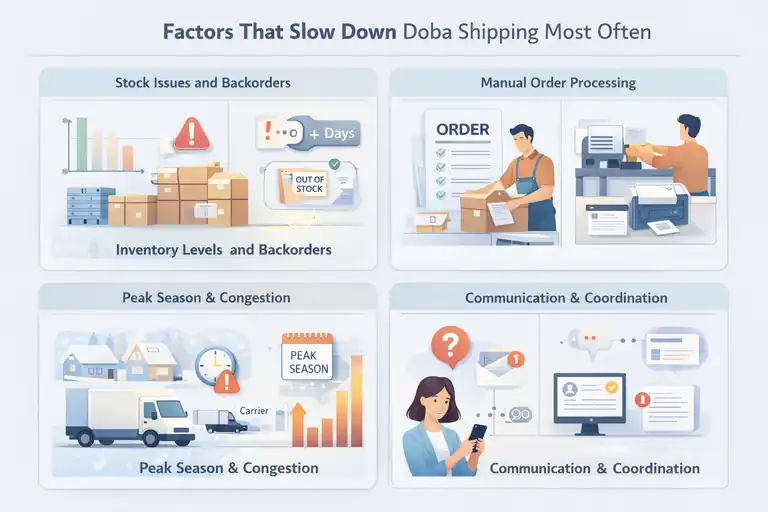
If doba shipping feels inconsistent, it’s usually not random. The same issues show up again and again, especially for sellers who don’t dig into supplier behavior early.
Supplier Stock Issues And Backorder Delays
Stock problems are one of the quietest shipping killers on Doba.
Here’s how it usually plays out:
- You place an order assuming inventory is available
- The supplier realizes stock is low or depleted
- The order pauses while they restock or source alternatives
Doba doesn’t always surface these delays immediately. In real terms, a backorder can add 3–10 extra days before shipping even begins.
What I’ve learned the hard way is that “in stock” often means “available recently,” not guaranteed inventory. This is especially common with electronics and trending products.
Manual Order Processing And Human Bottlenecks
Unlike fully automated fulfillment platforms, many Doba suppliers still rely on manual workflows.
That includes:
- Printing orders by hand
- Manually picking items from shelves
- Creating shipping labels in batches
Manual processing introduces human delays. If a supplier is understaffed, behind on orders, or dealing with returns, your shipment waits. This can quietly turn a 2-day processing window into 4 or 5 days without warning.
In my experience, suppliers with slightly higher prices often move faster simply because they invest more in operations.
Peak Seasons That Extend Doba Shipping Times
Certain times of year stretch doba shipping across the board.
Common slow periods include:
- Q4 holidays (November–December)
- Back-to-school season
- Major promotional events
During peak seasons, carriers are slower and suppliers prioritize volume over speed. Even reliable vendors can slip by several days. If you sell during these periods, padded delivery estimates aren’t optional—they’re survival.
How Communication Gaps Delay Doba Fulfillment
One overlooked factor is communication lag.
Delays happen when:
- Suppliers don’t immediately confirm orders
- Clarifications are needed for variants or addresses
- Tracking numbers are generated late
Every unanswered message adds friction. I’ve found that suppliers who respond within 24 hours almost always ship faster overall. Silence is usually a warning sign.
How To Choose Faster Shipping Suppliers On Doba
If you want faster doba shipping without switching platforms, supplier selection is where you win or lose.
This is where experienced sellers separate themselves from beginners.
Identifying U.S. Fulfilled Products Inside Doba
The fastest wins almost always come from U.S.-fulfilled products.
What to look for inside Doba:
- Warehouse location listed as United States
- Domestic carriers like USPS, UPS, or FedEx
- Clear processing time ranges
U.S. fulfillment doesn’t guarantee speed, but it dramatically improves consistency. In my opinion, this is the single biggest lever you can pull.
Reading Supplier Shipping Data The Right Way
Supplier shipping data can be misleading if you take it at face value.
Instead of focusing only on transit time, pay attention to:
- Processing time ranges
- Order cutoff times
- Notes about batching or handling delays
A supplier advertising “3–5 day shipping” with a 4-day processing time is slower than one advertising “5–7 day shipping” with 1-day processing. Always add the hidden days.
Filtering Products By Processing And Ship Time
Doba allows filtering, but most sellers underuse it.
I recommend:
- Filtering for the shortest processing times first
- Comparing multiple suppliers for the same product
- Favoring consistency over cheapest cost
One shortcut I use is exporting shortlisted products and tracking their listed timelines side by side. Patterns show up quickly.
Red Flags That Signal Slow Doba Shipping
Some warning signs are surprisingly reliable.
Watch out for:
- Vague shipping descriptions
- Missing warehouse locations
- Long processing ranges like “3–7 business days”
- Poor or slow supplier communication
If a supplier feels unclear before you order, they’re almost always slower after you do.
Expert tip: Build a “fast supplier” list and protect it. Once you find vendors who ship reliably on Doba, prioritize them even if margins are slightly thinner. Predictable doba shipping almost always beats chasing the lowest cost.
How Doba Shipping Compares To Other Dropship Tools
This is usually the moment where people ask me, “Okay, but compared to other platforms… is doba shipping actually bad?”
The honest answer is that it sits somewhere in the middle, and understanding the tradeoffs matters more than chasing the fastest option on paper.
Doba Shipping Vs AliExpress Standard Shipping
AliExpress is often the first comparison people make, and for good reason.
Here’s how they stack up in real use:
| Factor | Doba Shipping | AliExpress Standard |
| Average delivery (U.S.) | 6–12 business days | 12–30 business days |
| Supplier location | U.S. and overseas | Mostly overseas |
| Tracking reliability | Moderate to good | Inconsistent |
| Communication | Centralized via Doba | Seller-dependent |
AliExpress can be cheaper, but the shipping speed gap is noticeable. In my experience, customers tolerate slower delivery less than they tolerate slightly higher prices. Doba usually wins on predictability, even if it’s not “fast.”
Doba Shipping Vs Spocket And U.S. Suppliers
Spocket is built almost entirely around U.S. and EU suppliers, and it shows.
Typical differences:
- Spocket orders often arrive in 3–7 business days
- Doba orders land closer to 6–12 business days
- Spocket products cost more upfront
If shipping speed is your main selling point, Spocket is objectively faster. But here’s the catch: margins are tighter. I’ve seen many sellers switch back to Doba because they could test more products without pricing themselves out of the market.
Doba Shipping Vs Wholesale2B Fulfillment Speed
Wholesale2B feels similar to Doba on the surface, but shipping consistency is where differences show up.
From what I’ve seen:
- Wholesale2B delivery ranges are wider
- Supplier communication is slower
- Tracking delays are more common
Doba isn’t perfect, but it tends to surface supplier details more clearly. That transparency makes it easier to manage expectations, which matters more than shaving off a day or two.
When Doba Shipping Is The Better Tradeoff
Doba shipping makes sense when:
- You want access to a wide product catalog
- You’re testing niches quickly
- You need U.S. fulfillment without premium pricing
I personally see Doba as a “testing and scaling” platform, not a luxury shipping solution. It’s not Amazon-fast, but it’s faster than many alternatives once you factor in real-world friction.
Is Doba Shipping Fast Enough For Real Customers
This is the question that actually matters. Not how Doba compares to tools, but whether customers are okay with it when money is on the line.
Customer Expectations Versus Doba Shipping Reality
Most customers don’t expect two-day delivery anymore unless you promise it.
What they do expect:
- Honest delivery timelines
- Visible tracking updates
- No surprise delays
When doba shipping is clearly communicated as 7–10 business days, complaint rates stay low. Problems happen when stores imply “fast shipping” without defining what that means.
When Doba Shipping Works For Testing Products
Doba shines during product testing.
Why:
- You can validate demand without holding inventory
- Slight delays don’t hurt exploratory ads
- You learn which products justify faster fulfillment later
I’ve tested dozens of products this way. If something sells despite average shipping speed, that’s a strong signal to double down or upgrade fulfillment later.
Situations Where Doba Shipping Hurts Conversions
There are cases where doba shipping actively works against you.
These include:
- Gift-driven purchases with deadlines
- Impulse buys where speed drives emotion
- Competitive niches advertising “fast delivery”
In these scenarios, even a 2–3 day delay compared to competitors can quietly kill conversions.
Who Doba Shipping Is Actually Best Suited For
From what I’ve seen, doba shipping fits best for:
- New dropshippers learning fulfillment basics
- Sellers prioritizing product range over speed
- Stores with transparent shipping policies
If your brand promise is speed, Doba isn’t the best fit. But if your promise is value, variety, or problem-solving products, it can work surprisingly well.
Final thought: Shipping doesn’t have to be perfect to be profitable. It just has to be honest, predictable, and aligned with what your customer actually cares about.
FAQ
How fast is doba shipping for U.S. orders?
Doba shipping for U.S. orders typically takes 6–12 business days total. This includes 1–3 days for supplier processing and 3–7 days for carrier delivery, depending on the supplier and warehouse location.
Why does doba shipping sometimes feel slow?
Doba shipping feels slow when supplier processing time, batching, or tracking delays aren’t accounted for. Many delays happen before the package is handed to the carrier, even though the order is moving behind the scenes.
Is doba shipping fast enough for real customers?
Doba shipping is fast enough for customers when delivery expectations are clearly stated. It works best for non-urgent products, testing new items, and stores that communicate a 7–10 business day delivery window upfront.

I’m Juxhin, the voice behind The Justifiable.
I’ve spent 6+ years building blogs, managing affiliate campaigns, and testing the messy world of online business. Here, I cut the fluff and share the strategies that actually move the needle — so you can build income that’s sustainable, not speculative.
Related posts:
 The Best SaleHoo Shopify Suppliers for Dropshipping
 How the Salehoo App Works and Why It Speeds Up Product Research
 Why the Salehoo Wholesale Directory Helps You Scale
 Salehoo Directory Review: Is It the Best Supplier Database?
 Doba Wholesale Pricing, Access, and Product Quality Breakdown
 Doba Supplier Network Explained: Quality and Reliability