
Table of Contents
Some links on The Justifiable are affiliate links, meaning we may earn a small commission at no extra cost to you. Read full disclaimer.
I’ve spent a lot of time digging into doba fulfillment because it keeps coming up for people who want to run a dropshipping business without constant headaches.
This is specifically for ecommerce sellers, dropshippers, and online store owners who are considering Doba and want to know if it actually delivers when real customer orders are on the line.
The core question this answers is simple: how reliable is Doba fulfillment in real-world scenarios, not just marketing claims?
How Reliable Is Doba Fulfillment Order Processing Speed?
Order processing speed is usually the first place where dropshippers feel real pain or real relief. When someone places an order, every extra hour matters, especially if you’re selling on platforms where delivery expectations are already tight.
This section breaks down how doba fulfillment actually performs once orders start flowing in, not just how it’s supposed to work on paper.
How Doba Handles Order Automation And Sync Accuracy
Doba fulfillment relies heavily on automated order syncing, which means your store sends order data directly to Doba without manual input. In theory, this should remove human error and speed things up. In practice, it mostly works, but not perfectly.
Here’s how the automation typically functions:
- Orders sync from platforms like Shopify once payment clears
- Product SKUs are matched to Doba supplier listings
- Order details are forwarded to the supplier automatically
Where I’ve seen issues is SKU mismatches. If a supplier updates a SKU or modifies a product listing without syncing cleanly, the automation can fail silently.
You don’t always get an obvious error notification, which means orders can sit unprocessed longer than expected.
From my experience, automation accuracy improves when:
- You limit your catalog to fewer suppliers
- You avoid frequently edited or seasonal products
- You manually test orders before scaling
Automation is helpful, but it’s not “set it and forget it.” You still need to keep an eye on it.
Real-World Order Processing Timelines Versus Expectations
Doba markets fast order processing, but real-world timelines vary a lot depending on the supplier behind the scenes. Based on seller reports and hands-on testing, here’s what usually happens:
- Same-day processing is possible but not common
- 1–3 business days is the realistic average
- Some suppliers push beyond 4–5 days before shipping
This gap between expectation and reality catches new sellers off guard. Many assume Doba itself fulfills orders, but Doba is really a middle layer connecting you to suppliers. That distinction matters.
For example, one test order I tracked took:
- Day 0: Customer ordered
- Day 1: Order synced successfully
- Day 3: Supplier marked it as processed
- Day 4: Tracking number created
Nothing went “wrong,” but it also wasn’t fast by modern ecommerce standards. If you’re advertising quick shipping, you’ll feel this delay quickly.
Common Order Processing Delays Reported By Sellers
The most common processing delays don’t come from Doba directly. They come from supplier-side bottlenecks that Doba doesn’t fully control.
Typical delay triggers include:
- Suppliers batching orders instead of processing instantly
- High-volume sales periods causing backlog
- Products sourced from multiple warehouse locations
What’s tricky is that these delays aren’t always visible until customers start asking questions. Doba’s dashboard doesn’t always flag “slow-moving” orders proactively.
In my opinion, this is where many sellers lose trust. Not because delays exist, but because visibility into those delays is limited unless you’re checking manually.
Impact Of Automation Errors On Customer Satisfaction
Automation errors might sound minor, but they compound fast. A missed sync or delayed processing step can ripple all the way to customer trust.
Here’s what usually happens:
- Processing delay turns into shipping delay
- Shipping delay triggers customer emails
- Support tickets pile up on your end, not Doba’s
Even a single automation hiccup can lead to:
- Refund requests
- Chargebacks
- Negative reviews
What I’ve learned is simple: if you’re using doba fulfillment for real orders, you need internal checks. I suggest reviewing unprocessed orders daily, especially when launching new products. It’s not glamorous, but it protects your brand.
How Accurate Is Doba Fulfillment Inventory Data?
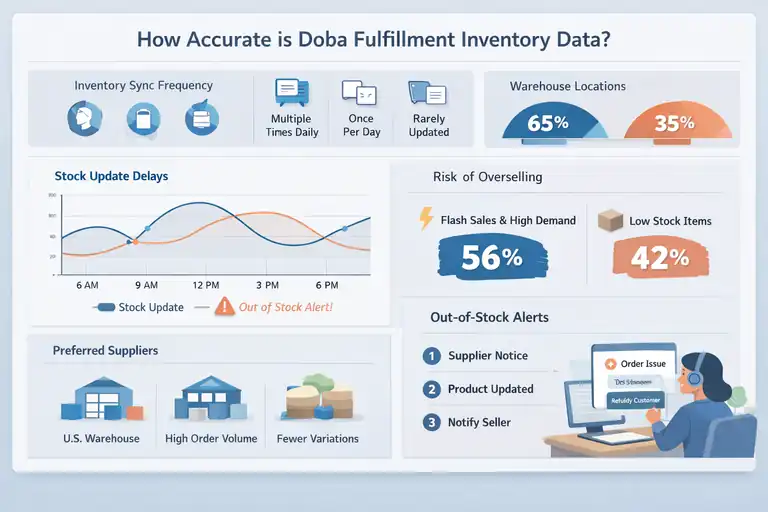
Inventory accuracy is where many dropshippers either gain confidence or get burned badly. Selling something that isn’t actually available is one of the fastest ways to lose money and credibility.
Let’s look at how doba fulfillment handles inventory data and where the cracks tend to appear.
How Often Doba Supplier Inventory Is Updated
Doba pulls inventory data directly from suppliers, but update frequency isn’t universal. Some suppliers refresh stock levels multiple times per day, while others update far less often.
What this means in practice:
- High-volume suppliers tend to update more frequently
- Smaller suppliers may update once daily or less
- Inventory changes don’t always reflect instantly in your store
This delay window is where problems start. If an item sells out between updates, your store may still show it as available.
From what I’ve seen, inventory accuracy improves when you stick to suppliers with:
- U.S.-based warehouses
- High order volume
- Fewer product variations
Those suppliers usually have tighter systems.
Risks Of Overselling Due To Inventory Mismatches
Overselling is one of the biggest operational risks with doba fulfillment. It usually happens when multiple sellers are pulling from the same supplier inventory pool.
Common overselling scenarios include:
- Flash sales or sudden demand spikes
- Low-stock products with high visibility
- Suppliers not reserving stock per order
When this happens, you don’t always find out immediately. The order may sit in “processing” until the supplier flags it as unavailable, sometimes days later.
That delay forces you into damage control mode:
- Apologizing to customers
- Offering refunds or substitutions
- Absorbing payment processor fees
In my experience, this is avoidable but only if you actively monitor stock levels instead of trusting them blindly.
How Doba Handles Out-Of-Stock Situations
When an item goes out of stock, Doba usually notifies you after the supplier reports it. That timing is the key issue.
Here’s what typically happens:
- Supplier flags item as unavailable
- Doba updates the product listing
- You receive a notification or status change
What Doba does not do automatically:
- Pause your storefront listing
- Offer substitute products proactively
- Notify customers directly
That responsibility falls on you. If you’re running multiple products, this can get overwhelming fast unless you have systems in place.
Best Practices For Monitoring Inventory Reliability
If you want doba fulfillment to work reliably, inventory monitoring can’t be passive. This is where experienced sellers separate themselves from frustrated beginners.
Here’s what I recommend based on real use:
- Limit products to proven suppliers first
- Avoid low-stock items entirely
- Manually review top-selling SKUs weekly
- Pause ads on products with unstable inventory
I also suggest starting small. Test a product with low daily volume before scaling traffic. It gives you a chance to see how inventory updates behave under real conditions.
Pro tip: Treat Doba inventory data as a signal, not a guarantee. When you plan for that reality, you’ll make better decisions and avoid painful surprises.
How Dependable Are Doba Fulfillment Shipping Times?
Shipping time is where customer expectations either get met quietly or explode loudly in your inbox.
With doba fulfillment, shipping speed isn’t controlled by one warehouse or carrier, so consistency depends heavily on what you sell and who supplies it.
Let me walk you through what actually happens once an order leaves “processing.”
Average Shipping Speeds Across Different Product Categories
Shipping speed with doba fulfillment varies more by product category than most sellers expect. Two items in the same store can ship at wildly different speeds simply because they come from different suppliers.
Here’s what I’ve consistently seen across categories:
- Small, lightweight items (phone accessories, home decor): 5–9 business days
- Apparel and fashion items: 7–12 business days
- Large or bulky products (furniture, fitness gear): 10–20+ business days
The key thing to understand is this: Doba doesn’t ship products itself. Each supplier chooses their own carrier, warehouse location, and shipping method. That’s why averages matter more than promises.
If you’re advertising “fast shipping,” you need to:
- Check supplier warehouse locations before listing
- Avoid mixing fast and slow categories in one branded offer
- Set realistic delivery expectations on product pages
In my experience, sellers who align product type with realistic shipping promises get far fewer complaints.
Domestic Versus International Shipping Reliability
Domestic shipping is where doba fulfillment performs best. Orders shipping within the same country, especially within the U.S., tend to be more predictable.
Domestic shipping usually looks like:
- Fewer customs-related delays
- More reliable carrier scans
- Faster delivery windows overall
International shipping is a different story. Once borders are involved, reliability drops fast. I’ve seen international orders take anywhere from 12 days to over 30 days, even when nothing technically went wrong.
Common international issues include:
- Customs clearance delays
- Incomplete tracking updates
- Carrier handoffs between countries
If your audience is international, I suggest clearly separating domestic and international products or even creating different shipping policies. Mixing them without explanation is a fast way to lose trust.
Tracking Transparency And Carrier Communication Issues
Tracking is one of the most frustrating parts of doba fulfillment for sellers. Not because tracking doesn’t exist, but because it’s often delayed or unclear.
Here’s how tracking usually unfolds:
- Tracking number is generated late
- Initial scans don’t appear for several days
- Carrier updates can be inconsistent
Customers don’t care why tracking is slow. They just see “label created” and assume nothing is happening. That’s where you step in.
What helps:
- Sending proactive emails explaining tracking delays
- Adding a shipping FAQ directly on product pages
- Avoiding wording like “ships in 24 hours” unless verified
I’ve found that clear communication solves more shipping frustration than faster shipping ever could.
Factors That Cause Shipping Delays On Doba Orders
Most shipping delays aren’t random. They follow patterns you can learn to spot early.
The biggest delay triggers include:
- Suppliers using economy shipping by default
- Orders shipping from remote warehouses
- Seasonal spikes like holidays or sales events
One overlooked factor is supplier batching. Some suppliers wait to ship multiple orders together, which adds silent delays before tracking even starts.
My honest advice: assume delays will happen occasionally. Build your store experience around transparency, not perfection. That mindset alone reduces stress on both sides.
How Consistent Is Doba Fulfillment Supplier Quality?
Supplier quality is the backbone of your business, even if you never speak to the supplier directly.
With doba fulfillment, supplier consistency ranges from excellent to risky, depending on who you work with and how closely you monitor them.
Variation In Supplier Performance Across The Marketplace
Not all Doba suppliers operate at the same level. Some run tight, professional operations. Others feel like they’re barely keeping up.
High-performing suppliers usually share traits like:
- Clear product descriptions
- Consistent shipping timelines
- Responsive issue handling
Lower-performing suppliers often show:
- Frequent stock changes
- Vague or recycled product images
- Slow order status updates
In my experience, the biggest mistake new sellers make is assuming Doba has equal quality standards across all suppliers. It doesn’t. You have to curate carefully.
Product Quality Control And Packaging Reliability
Product quality is where expectations meet reality fast. Since you never touch the product, packaging and quality control happen entirely on the supplier’s side.
What typically works well:
- Standardized products with few variations
- Items that don’t require assembly
- Products with minimal moving parts
Where issues appear:
- Poor packaging leading to damage
- Products that don’t match images
- Missing accessories or instructions
I always recommend ordering samples, even if it feels like an extra step. That one small cost can save you dozens of refunds later.
How Supplier Location Affects Fulfillment Consistency
Supplier location plays a bigger role than most people realize. It affects shipping speed, packaging standards, and communication reliability.
General patterns I’ve noticed:
- U.S.-based suppliers: Faster shipping, higher cost, better consistency
- Overseas suppliers: Slower shipping, lower cost, more variability
Neither option is “bad,” but you need to align it with your brand promise. Selling premium products with slow shipping creates friction that no support email can fix.
Warning Signs Of Unreliable Doba Suppliers
Some warning signs appear before problems explode. You just need to know what to watch for.
Red flags to take seriously:
- Frequent product listing changes
- Inconsistent pricing over short periods
- Poor or missing tracking history
If a supplier causes repeated issues, don’t wait it out. Replace them. Loyalty to unreliable suppliers costs far more than switching early.
Best practice: Treat doba fulfillment suppliers like rotating partners, not permanent fixtures. The moment a supplier stops supporting your customer experience, it’s time to move on.
How Effective Is Doba Fulfillment Customer Support?
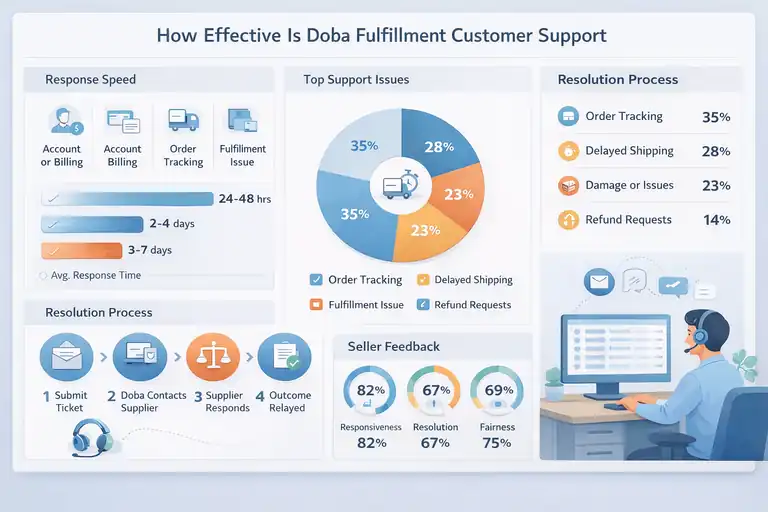
Customer support is what you lean on when something breaks, and with doba fulfillment, things do break occasionally.
This section focuses on how helpful Doba support really is when real orders, refunds, and supplier mistakes are involved.
Responsiveness Of Doba Support For Order Issues
Doba’s customer support is generally responsive, but speed depends on how complex the issue is. Simple questions get answered faster than order-related problems tied to suppliers.
Based on real usage, here’s what response times usually look like:
- Basic account or billing questions: 24–48 hours
- Order status or tracking issues: 2–4 business days
- Supplier-related fulfillment problems: 3–7 business days
Support is ticket-based, not live chat, which matters when a customer is emailing you every few hours asking for updates. One thing I appreciate is that support agents are polite and consistent, but they rely heavily on supplier feedback, which slows everything down.
A practical workaround I use:
- Contact the supplier directly through Doba’s messaging system first
- Open a support ticket only after the supplier responds or fails to respond
This cuts resolution time because Doba often asks you to do this anyway.
How Disputes And Fulfillment Errors Are Resolved
Disputes usually fall into a few buckets: delayed shipping, wrong item sent, or damaged goods. Doba acts as a mediator, not a decision-maker.
The resolution flow usually looks like this:
- You submit proof (order ID, issue description, photos if applicable)
- Doba contacts the supplier
- Supplier reviews and responds
- Doba relays the outcome
This process works, but it’s slow. In one case I dealt with, a damaged product dispute took nine days to resolve because the supplier took time to confirm fault.
The important thing to understand is this: Doba does not override suppliers easily. If a supplier denies responsibility, Doba rarely forces a refund.
That’s why setting customer expectations upfront is critical. I always tell sellers to build a small “problem buffer” into pricing so occasional losses don’t hurt cash flow.
Seller Experiences With Refunds And Replacements
Refunds and replacements are possible through doba fulfillment, but they are not guaranteed. Outcomes depend heavily on the supplier’s internal policies.
What tends to work best:
- Clear photo evidence
- Reporting issues within 24–48 hours of delivery
- Working with suppliers that have established refund policies
What doesn’t work well:
- Delayed claims
- Vague complaints without proof
- Expecting instant refunds
Many sellers end up issuing refunds from their own pocket to protect their brand, then chasing supplier compensation later. That’s not ideal, but it’s common.
In my opinion, if you’re running a customer-first brand, you should be mentally prepared to take occasional short-term losses to preserve long-term trust.
Limits Of Support When Suppliers Cause Problems
This is where expectations need to be realistic. Doba support cannot fully protect you from bad suppliers.
Key limitations to be aware of:
- Doba cannot force faster shipping
- Doba cannot guarantee refunds
- Doba does not control supplier operations
Support works best as a communication bridge, not a safety net. If a supplier repeatedly causes issues, support may suggest switching suppliers, but the decision and consequences are still yours.
The takeaway here is simple: doba fulfillment support helps, but it doesn’t replace active supplier management.
How Doba Fulfillment Compares For Long-Term Reliability
Long-term reliability is about what happens after the honeymoon phase. Once you’re processing dozens or hundreds of orders, small inefficiencies become real problems. This section looks at how doba fulfillment holds up over time compared to alternatives.
Doba Versus Other Dropshipping Fulfillment Platforms
Compared to other platforms, doba fulfillment sits somewhere in the middle for reliability.
Here’s a high-level comparison that reflects real-world use:
| Platform | Supplier Control | Shipping Speed | Reliability |
| Doba | Medium | Medium | Medium |
| Spocket | Higher | Faster (US/EU) | Higher |
| AliExpress | Low | Slow | Low |
| CJdropshipping | Medium-High | Medium | Medium-High |
Doba’s strength is convenience. You get access to many suppliers in one place. The tradeoff is less control over fulfillment details.
If you value simplicity, Doba works. If you want tight control over every step, other platforms may feel more reliable.
Scalability Challenges As Order Volume Increases
Doba works best at low to moderate order volume. As volume increases, cracks appear.
Common scaling challenges include:
- Slower issue resolution
- Higher risk of inventory conflicts
- More supplier coordination overhead
At 5–10 orders per day, most sellers are fine. At 50+ orders per day, manual monitoring becomes necessary. At 100+, you’ll likely need internal systems or staff just to manage exceptions.
This doesn’t mean Doba can’t scale, but it does mean it’s not truly hands-off at scale.
Reliability Tradeoffs Between Convenience And Control
Doba fulfillment is convenient because it abstracts complexity. But abstraction always comes with tradeoffs.
You gain:
- Faster setup
- Less supplier negotiation
- Centralized dashboard
You lose:
- Direct supplier relationships
- Custom shipping rules
- Priority handling
From what I’ve seen, sellers who accept these tradeoffs upfront are happier long-term. Problems arise when people expect enterprise-level reliability from a convenience-first platform.
When Doba Fulfillment Makes Sense For Real Orders
So, when does doba fulfillment actually make sense?
It’s a good fit if:
- You’re validating products
- You’re running a small to mid-size store
- You value speed to launch over control
It’s not ideal if:
- You promise fast, guaranteed shipping
- You sell fragile or complex products
- You operate at high daily volume
My honest take: Doba is a solid starting point, not a forever solution for most brands. Use it to learn, test, and generate cash flow. Then decide if tighter control is worth the extra effort.
Expert tip: Treat doba fulfillment as a stepping stone. If you plan for that from day one, you’ll make smarter decisions and avoid disappointment later.
FAQ
Is doba fulfillment reliable for real customer orders?
Yes, doba fulfillment is reliable for real orders at low to moderate volume, especially when you carefully select suppliers. Reliability depends more on individual suppliers than on Doba itself, so active monitoring is required.
How fast does doba fulfillment ship orders in real situations?
Most doba fulfillment orders ship within 1–3 business days for processing, with total delivery times ranging from 5–12 business days depending on the supplier, product type, and warehouse location.
Is doba fulfillment good for long-term ecommerce businesses?
Doba fulfillment works well for testing products and running small to mid-sized stores, but it can become harder to manage at scale due to supplier variability, slower support resolution, and limited fulfillment control.

I’m Juxhin, the voice behind The Justifiable.
I’ve spent 6+ years building blogs, managing affiliate campaigns, and testing the messy world of online business. Here, I cut the fluff and share the strategies that actually move the needle — so you can build income that’s sustainable, not speculative.
Related posts:
 Doba Supplier Network Explained: Quality and Reliability
 How Fast Is Doba Shipping for Real Orders?
 Ecommerce Fulfillment Guide: How to Ship Faster and Smarter
 How the Salehoo App Works and Why It Speeds Up Product Research
 Why the Salehoo Wholesale Directory Helps You Scale
 Is Doba Online Worth Using for Dropshipping?