Table of Contents
Some links on The Justifiable are affiliate links, meaning we may earn a small commission at no extra cost to you. Read full disclaimer.
An envato elements vs creative market comparison matters more than most people think, because these two platforms solve very different problems even though they both sell design assets.
If you pick the wrong one, you can easily overspend, use the wrong license, or waste hours digging for files that do not fit your workflow. I have seen this happen a lot with bloggers, marketers, Etsy sellers, and freelance designers.
The real question is not just which platform is better overall. It is which one fits the way you actually buy, use, and scale creative assets.
What Envato Elements And Creative Market Actually Are
These platforms often get grouped together, but their business models are completely different.
That difference affects pricing, licensing, download behavior, and even the kind of buyer who gets the best value.
Envato Elements Is A Subscription-First Asset Library
Envato Elements is built around a subscription model. You pay for access, then download from a very large catalog that Envato says includes more than 26 million, and in some places 27+ million, creative assets.
The subscription includes unlimited downloads of creative stock assets, subject to fair use, and the platform now also bundles AI tools into its plans. That means the value proposition is simple: one recurring payment, broad access, and repeat use across many projects.
In practice, this makes Envato feel like a production library. If you are building landing pages every week, editing YouTube videos, testing ad creatives, or producing content for clients, unlimited access changes your behavior.
You stop treating each file like a financial decision and start treating assets like working materials. I believe that is the biggest psychological advantage Envato has. It removes friction.
Another important detail is licensing. Envato uses a single commercial license model across stock asset types, with project-based registration. In simple terms, you register the item to a use case or end product, and that gives you broad commercial rights for that use.
Fonts and add-ons have special flexibility once installed, and some rights continue after cancellation for work created during an active subscription.
Creative Market Is A Marketplace For Individual Purchases
Creative Market is a marketplace where independent creators sell digital assets such as fonts, templates, graphics, and more. Instead of paying for unlimited downloads, you usually purchase items individually.
The platform also offers membership plans that include monthly credits, discounts, and a monthly free asset drop, but the core experience still revolves around selecting and buying specific products from specific shop owners.
That difference matters a lot. Creative Market feels more curated and product-led. You are shopping, not browsing a production warehouse. Many buyers prefer that, especially when they want a distinctive font, a premium branding kit, or a specific illustration style that feels more “designer-made” than volume-stock.
The other big distinction is licensing structure. Creative Market uses multiple license options, including personal, commercial, and extended commercial tiers, and pricing can vary by item because shop owners set their own prices
That creates flexibility, but it also creates complexity. You need to pay closer attention before checkout.
The Biggest Difference: Subscription Vs Per-Item Buying
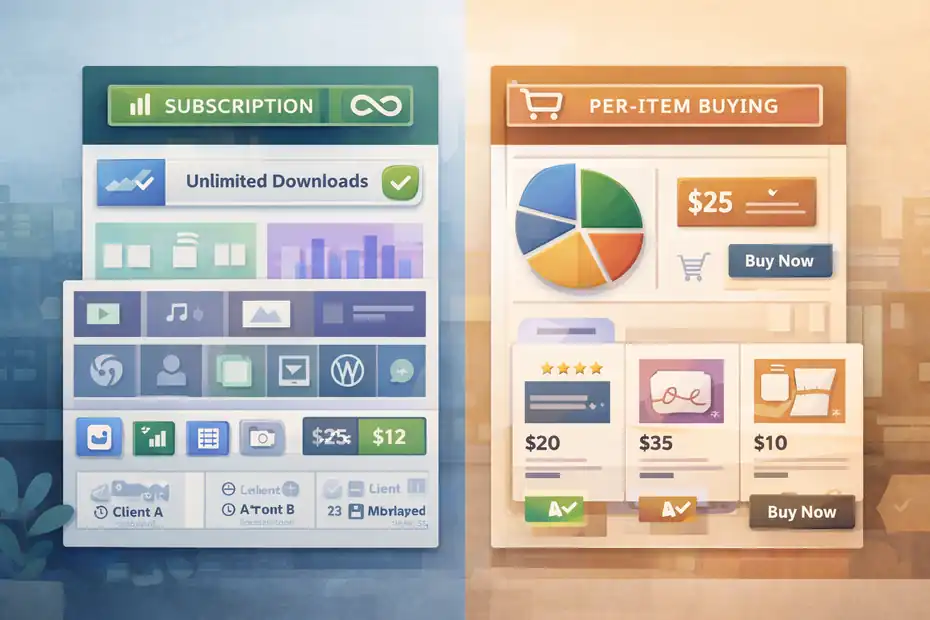
If you only remember one thing from this guide, let it be this: Envato is best when you need volume, while Creative Market is best when you need selectivity.
Envato Wins When You Need High Download Volume
Envato’s model rewards frequent use. If you download social templates, stock video, presentation decks, fonts, mockups, WordPress themes, music, or graphics every week, a subscription can become cost-efficient very quickly.
The more projects you touch, the better the economics usually get. Envato explicitly positions its offer around unlimited downloads and all-in-one creative access.
Imagine you run a small marketing agency with four retainer clients. In one month, you might need 12 Instagram templates, 3 mockups, 2 presentation decks, 6 stock photos, a short music bed for reels, and a font pairing for a rebrand pitch.
Buying those one by one on a marketplace gets expensive fast. A subscription library starts to make more sense because the marginal cost of the next file feels like zero.
I usually recommend Envato first for content teams, affiliate marketers, social media managers, niche site owners, YouTube editors, and fast-moving freelancers. In those environments, speed beats perfection. You need enough quality, right now, at scale.
Creative Market Wins When You Buy Fewer But More Deliberate Assets
Creative Market tends to work better when each purchase is intentional. You may only need one signature serif font, one wedding invitation template, one illustration bundle, or one polished brand kit for a premium client.
In that case, a marketplace model can be smarter than paying every month for access you barely use. Creative Market’s membership still adds discounts and monthly credit, but it does not turn the platform into an unlimited-download service.
This is where many people get the decision wrong. They subscribe to Envato because it looks cheaper at first, then barely download anything. Or they buy repeatedly on Creative Market when they are clearly operating like a subscription user.
The platform that “wins” depends less on brand reputation and more on your asset velocity.
A simple way to think about it is this: If your creative needs are ongoing and varied, Envato usually wins on value. If your needs are occasional and quality-specific, Creative Market often feels more satisfying.
Pricing And Cost Efficiency: Which Gives Better Value?
Pricing is where most comparison articles stay shallow. I think the better question is not “which is cheaper?” but “what kind of buyer wastes less money on each platform?”
Envato Usually Delivers Better Cost Per Asset
Envato’s pricing page centers on subscription tiers, with access to unlimited creative assets and AI tools, while enterprise plans add legal, support, and organizational features for bigger teams. Because the subscription is all-you-can-use for stock assets, the effective cost per asset drops the more actively you use the platform.
Here is the practical shortcut I use: if you expect to need more than a handful of assets per month across different categories, Envato often becomes the cheaper option even before you calculate precisely. This is especially true when those assets span multiple media types like video, audio, templates, and photos.
For example, say you are launching a course and need slide templates, sales page visuals, promo video elements, background music, thumbnails, and lead magnet graphics. On a per-item marketplace, you would likely make many separate purchases. On Envato, that behavior is exactly what the subscription is designed to encourage.
Creative Market Can Be Cheaper For Low-Frequency Buyers
Creative Market’s economics look better when you buy less often. Membership plans include monthly credits that can be used toward purchases, plus discounts of up to 25% and free monthly asset drops.
That makes the platform more flexible than a pure marketplace, but your real cost still depends on the specific products and licenses you choose.
If you are a wedding photographer who buys a couple of Lightroom presets and one album design set every few months, Creative Market may save you money because you only pay when there is real need.
The same goes for Etsy sellers who need a few premium fonts or mockups rather than a whole creative stack every month.
My honest view is this: Envato has the stronger “bulk value” story, while Creative Market has the stronger “buy exactly what you want” story. One is optimized for throughput. The other is optimized for discretion.
Asset Quality, Style, And Catalog Experience
This is where taste starts to matter. Price matters, but creative fit matters more when the asset will define a brand, product, or client impression.
Envato Offers Breadth And Workflow Convenience
Envato’s biggest strength is range. The catalog covers stock video, graphics, templates, music, fonts, photos, presentations, and more, all inside one ecosystem. For users who need mixed asset types in one place, that convenience is hard to beat.
The tradeoff is that broad catalogs always contain some repetition and some filler. That is not unique to Envato. It is just part of scale.
In my experience, Envato performs best when you know how to search with intent.Instead of browsing vague terms like “modern Instagram template,” narrow by format, visual style, aspect ratio, niche, and use case. The faster you get at filtering, the better the platform feels.
Envato is also strong for experimentation. Since downloads are not individually priced, you can test three logo reveal templates, four thumbnail styles, or five presentation decks without feeling punished for exploring.
Creative Market Often Feels More Boutique And Distinctive
Creative Market’s marketplace structure tends to create a more creator-driven feel. Shop owners build their own product pages, set pricing, and develop recognizable styles. That often leads to stronger differentiation, especially in categories like fonts, illustrations, branding kits, and social media templates.
If brand personality matters, Creative Market can feel more premium. Many buyers use it when they want assets that look less generic and more identity-focused. For a designer building a luxury skincare brand or a coach creating a polished workbook, that distinctiveness can matter more than download volume.
That said, “better quality” is not always the right conclusion. I would say Creative Market often feels more selective, while Envato often feels more operationally useful. The right choice depends on whether you are trying to stand out or move fast. Sometimes those are different goals.
Licensing: The Part Most People Ignore Until It Hurts
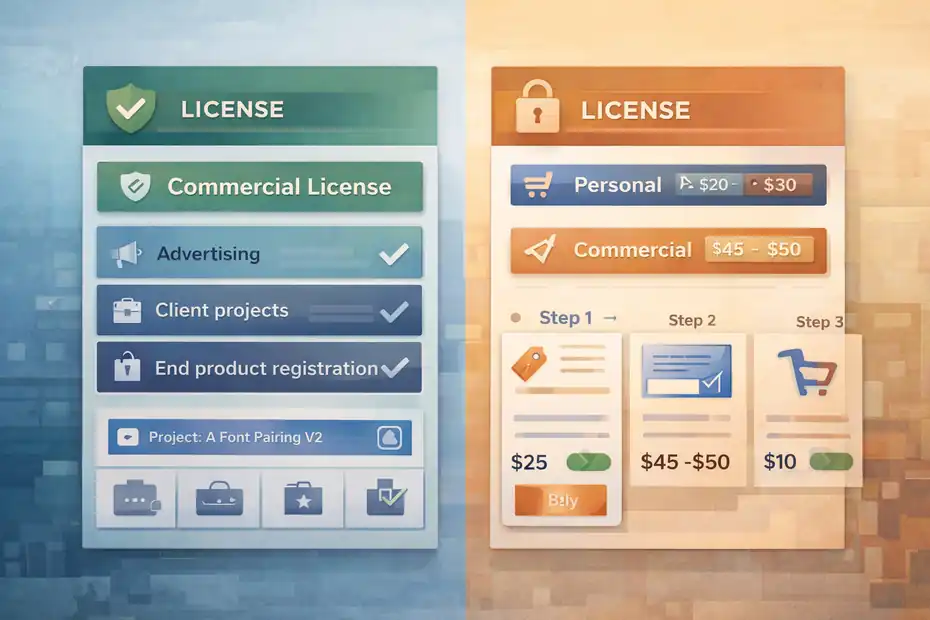
Licensing is where a smart purchase can turn into a messy one if you assume too much.
Both platforms support commercial use, but they do it in very different ways.
Envato Keeps Licensing Simpler For Repeated Project Work
Envato’s licensing system is intentionally streamlined. The core idea is one simple commercial license across stock items, with project-specific registration.
You can use an item broadly for commercial work, including client projects, advertising, marketing materials, and end products for sale when meaningful value is added, but you typically register each use to a specific project or end product.
For many buyers, that simplicity is a major advantage. You do not spend as much time comparing license tiers for every single item. That matters if you work quickly or manage many small deliverables. It also reduces the odds of accidental under-licensing.
A useful nuance: Some rights continue after cancellation for projects created during your active subscription, particularly with fonts used in completed designs. But you cannot keep using the subscription to create new projects after cancellation. That distinction is worth understanding before you pause your plan.
Creative Market Gives More Granular Control But Requires More Attention
Creative Market uses multiple license types, and pricing can vary by license because shop owners price their products individually. This gives you flexibility, but it also means you need to actively select the right rights level for your intended use.
That can be a strength if your use case is unusual. Maybe you need broader resale rights, nonprofit business usage, or a more expansive commercial context. Creative Market’s tiered model can fit those needs more precisely.
The downside is decision fatigue. If you are buying several assets across several shops, license checking becomes part of the workflow.
I suggest treating Creative Market purchases like procurement, not casual downloads. Read the license summary on the item. Confirm the intended end product. Check seats or usage rules where relevant. It is not hard, but it is less automatic than Envato.
Which Platform Is Better For Different Types Of Buyers?
This is the section most people are really looking for. The winner changes depending on how you work.
Best For Bloggers, Marketers, Agencies, And Content Teams
For bloggers, affiliate publishers, small agencies, in-house marketers, and content teams, Envato usually wins. These users often need a rotating mix of visuals, templates, mockups, music, B-roll, and presentation assets.
They also benefit from speed, volume, and the freedom to test ideas without counting every file. Envato’s subscription model and broad catalog are built for that exact behavior.
I especially like Envato for people running ongoing content systems. Think weekly Pinterest graphics, monthly lead magnets, seasonal campaign visuals, YouTube thumbnails, or client reporting decks. In these cases, the platform becomes part of your workflow rather than a place you occasionally shop.
There is also an operational advantage for teams. Envato offers team and enterprise options with additional organizational features, which can matter once several people are sourcing assets at once.
Best For Designers, Brand Creators, And Selective Buyers
Creative Market often wins for designers, boutique agencies, Etsy shop owners, course creators, and brand-focused businesses that buy fewer assets but care deeply about aesthetic individuality.
Because you are purchasing individual products from specific creators, the marketplace can feel more intentional and style-led.
This is especially true for fonts and identity assets. A great font choice can shape an entire brand. In that situation, you may not want “good enough and unlimited.” You may want “exactly right.” Creative Market serves that mindset well.
If I were helping someone build a premium stationery brand, a luxury wellness brand, or a high-end coaching brand, I would probably search Creative Market first for the core visual identity pieces. Then I might use Envato for supporting production assets later.
Which Platform Is Better If You Are A Seller?
This comparison is not just for buyers. Sellers also look at these platforms differently because revenue, pricing control, and discoverability are not the same.
Creative Market Gives Sellers More Direct Product Ownership And Pricing Control
Creative Market lets shop owners sell directly through their own shop presence on the marketplace, and support documentation says sellers have full control over pricing their items. That matters if you want to position your work as premium, test price points, or build a recognizable brand around your products.
This model can be attractive for illustrators, font designers, template creators, and niche product sellers who want their catalog to feel authored rather than pooled. You are not just contributing to a giant subscription library. You are running a storefront inside a marketplace.
Creative Market also highlights creator success stories and positions its seller side around reaching millions of buyers. As with any marketplace, results vary widely, but the structure favors product identity and repeat-customer trust.
Envato Favors Scale And Subscription Distribution
Envato’s seller economics are different. Official author information says authors receive a share of revenue from subscription downloads, and Envato’s author materials emphasize distribution through subscriptions and broader ecosystem exposure.
One official page promotes a 50% share of net revenue from certain subscription types for Elements authors, while other author earnings documentation explains revenue allocation in more detail across products and purchase types.
That can work very well for creators producing assets that perform consistently at scale inside a large subscription ecosystem. But it is a different game. You are optimizing for download demand, catalog fit, and platform volume rather than only premium direct pricing.
One current wrinkle is that Envato author applications were temporarily closed, with official guidance saying some content-type applications are expected to reopen from mid-April 2026. So if you are choosing a selling platform right now, availability matters too.
Step-By-Step: How To Decide Which One You Should Use
If you are still unsure, let me break it down in a practical way. You do not need a complicated framework.
You need a purchase decision you will not regret next month.
Choose Envato If Your Workflow Is Repetitive And Multi-Format
Pick Envato if most of these sound like you: you create content weekly, need several asset types, work across multiple client or internal projects, test lots of variations, or hate thinking about the cost of each download. The subscription is built for repeat usage, broad access, and simplified licensing.
A quick self-check helps here.
- Step 1: Count how many assets you used last month across photos, templates, video, music, fonts, or mockups.
- Step 2: Ask whether speed matters more than uniqueness in your day-to-day work.
- Step 3: Decide whether you want one platform for many media types.
If your answer is “a lot,” “yes,” and “yes,” Envato is probably the stronger fit. In my experience, most marketers and operators land here.
Choose Creative Market If You Buy With Intent And Care About Signature Style
Pick Creative Market if you buy less often, care more about individual creator style, want pricing flexibility by product, or are usually shopping for one standout asset rather than stocking a workflow.
Its marketplace structure, membership discounts, and creator-led product pages are better suited to deliberate, style-sensitive buying.
Use this filter.
- Step 1: Ask whether each asset purchase is a high-importance decision.
- Step 2: Decide whether you prefer browsing creator shops over scanning a giant subscription catalog.
- Step 3: Confirm you are comfortable checking license tiers before buying.
If that sounds natural to you, Creative Market will likely feel better even if it is not always cheaper on paper.
Common Mistakes People Make With Both Platforms
You can get great value from either platform, but there are a few expensive mistakes I see over and over.
Mistake 1: Choosing Based On Headline Price Instead Of Usage Pattern
The most common mistake is comparing only monthly price versus item price. That is the wrong comparison. The right comparison is usage pattern versus platform model. Envato looks cheap if you use it heavily and wasteful if you do not.
Creative Market looks precise and premium when you buy sparingly, but can become expensive if you are constantly sourcing assets.
I recommend doing a 90-day asset audit before committing hard. Look at how many files you actually bought or downloaded recently, what categories they came from, and whether those needs are growing. That one exercise usually makes the answer obvious.
A mini scenario: If you downloaded 35 assets over the last quarter across three clients, you are probably subscription-shaped. If you bought four carefully chosen items over the last quarter, you are probably marketplace-shaped.
Mistake 2: Ignoring The License Until After The Purchase
The second mistake is assuming all commercial use rights work the same everywhere. They do not. Envato’s one-license-per-project approach is simpler, but it still requires proper registration for use cases.
Creative Market’s license tiers offer flexibility, but you need to select the right one before purchase.
This matters even more if you are serving clients. The last thing you want is to hand off a brand package or product listing design and then realize you licensed the asset incorrectly.
I always advise people to save the download record, screenshot the chosen license, and document where the asset is used.
That sounds cautious, but it saves stress later.
Final Verdict: Which Platform Wins?
There is no single universal winner, but there is a clear winner for each kind of user. That is the honest answer.
Envato Elements Wins For Most High-Volume Users
If your work involves regular publishing, campaign production, client deliverables, or content systems, Envato Elements usually wins the comparison.
The unlimited-download model, broad commercial licensing approach, mixed asset categories, and built-in AI features make it a stronger operational tool for marketers, agencies, creators, and teams that move fast.
I would call Envato the practical winner. It is not always the most boutique-feeling platform, but it often gives the best working value. For many businesses, that matters more than artistic romance.
If your goal is output, testing, and efficient production, Envato is probably the better buy.
Creative Market Wins For Selective, Brand-Driven Buying
Creative Market wins when your priority is style specificity, creator individuality, and intentional one-off purchases.
Its marketplace model, shop-based ecosystem, membership credits, and flexible item-level licensing make it appealing for designers, premium brands, and selective buyers who care more about finding the right asset than downloading lots of assets.
I would call Creative Market the aesthetic winner. It often feels more curated, more creator-centric, and more satisfying when each asset really matters.
So, here is my bottom line: Choose Envato if you create often, choose Creative Market if you choose carefully. That is the simplest version of the truth, and in most cases it will steer you in the right direction.
FAQ
What is the main difference between Envato Elements and Creative Market?
Envato Elements uses a subscription model with unlimited downloads, while Creative Market operates as a marketplace where you buy individual assets. This difference affects pricing, usage behavior, and licensing. Envato suits high-volume users, while Creative Market is better for selective, one-time purchases.
Is Envato Elements cheaper than Creative Market?
Envato Elements is usually cheaper if you download multiple assets regularly because of its unlimited subscription model. Creative Market can be more cost-effective if you only need a few high-quality assets occasionally, since you only pay for what you use.
Which platform has better asset quality?
Both platforms offer high-quality assets, but Creative Market often feels more curated and unique due to independent creators selling individual products. Envato Elements provides a wider range of assets, making it more practical for frequent use and diverse project needs.
Can I use assets commercially on both platforms?
Yes, both Envato Elements and Creative Market allow commercial use, but their licensing differs. Envato uses a simpler project-based license, while Creative Market offers multiple license tiers. It is important to review the license terms on Creative Market before purchasing.
Who should use Envato Elements vs Creative Market?
Envato Elements is ideal for marketers, agencies, and content creators who need frequent assets across multiple projects. Creative Market is better suited for designers or brand creators who prioritize unique, high-quality assets and make fewer, more intentional purchases.

I’m Juxhin, the voice behind The Justifiable.
I’ve spent 6+ years building blogs, managing affiliate campaigns, and testing the messy world of online business. Here, I cut the fluff and share the strategies that actually move the needle — so you can build income that’s sustainable, not speculative.