
Table of Contents
Some links on The Justifiable are affiliate links, meaning we may earn a small commission at no extra cost to you. Read full disclaimer.
Learning how to start affiliate advertising can feel confusing because the model looks simple from the outside: share a link, recommend a product, and earn a commission. In practice, your first sale depends on choosing the right offer, reaching people with buying intent, and giving them enough confidence to act.
This guide shows you how to build that path without wasting months on random content or expensive tools. You will learn how affiliate advertising works, what to set up first, where to find offers, how to attract targeted traffic, and how to improve results after your first clicks arrive.
Understand How Affiliate Advertising Actually Works
Affiliate advertising is performance-based promotion. You recommend another company’s offer through a trackable link and may earn when a referred visitor completes the program’s defined action.
Follow The Customer Journey From Click To Commission
The basic affiliate journey has four parts: a merchant creates an affiliate program, you join as the publisher or affiliate, a potential customer clicks your tracking link, and the merchant attributes an eligible purchase or action to your referral. People rarely buy because an affiliate link exists. They buy because your content helps them solve a problem, compare alternatives, reduce uncertainty, or choose the next step. Your real job is therefore not “posting links.” It is moving a specific reader from a question to a confident decision.
Tracking usually relies on a unique URL and attribution technology controlled by the merchant or affiliate network. Programs differ in what counts as a conversion, how long referrals can be attributed, which traffic sources are allowed, and when commissions become payable. Read those terms before promotion rather than assuming every program works the same way.
For your first commission, simplify the journey. Promote one offer to one audience through one main traffic source. Fewer moving parts make it easier to understand why visitors click, why they leave, and what you should improve next.
Know What “Fast” Should Mean For A Beginner
There is no reliable timetable for earning an affiliate commission. Someone with an existing audience can convert quickly, while a new website may need time to gain visibility. Treat “fast” as a strategy for reducing unnecessary delay, not a promise that income will appear within a fixed number of days.
The fastest route usually comes from proximity to purchase intent. A person searching “best accounting software for freelancers” is closer to a decision than someone reading “what is accounting software.” When your goal is the first commission, prioritize content that reaches people who are already comparing, evaluating, or trying to solve an immediate problem.
That does not mean publishing thin “best product” pages. A high-intent page still needs real help: who the product suits, where it falls short, what alternatives exist, what the buyer should check before paying, and how to make the decision.
I recommend optimizing for the first useful conversion, not the first large audience. Ten qualified visitors can teach you more than a thousand visitors who were never likely to buy.
Understand The Main Ways Affiliates Get Paid
Most beginners think only about a percentage of a sale, but affiliate programs can reward different outcomes. Some pay for completed purchases, while others may pay for qualified leads, subscriptions, trials, bookings, or another defined action. Your job is to understand the event that actually creates a commission.
Cost-per-sale offers are intuitive because your earnings depend on revenue generated. Lead-based offers may convert earlier in the customer journey, but the advertiser can apply qualification rules. Recurring programs can sometimes continue paying while a referred customer remains subscribed, whereas one-time programs reward only the original transaction.
Do not choose an offer based on commission size alone. A high payout is meaningless if the product is hard to trust, poorly matched to your audience, or rarely purchased. A lower-paying offer can be more useful when the buying decision is simple and the conversion path is strong.
Evaluate the full equation: audience fit, purchase intent, product credibility, price, commission structure, attribution terms, approval requirements, refund exposure, and traffic restrictions.
Choose A Niche And Offer With Real Buying Intent
Your first major decision is choosing a market where people have problems worth solving and products they are already willing to buy.
Pick A Narrow Problem Before You Pick Products
Start with a problem category rather than a giant topic. “Fitness,” “software,” and “travel” are broad markets. “Home workouts for apartment living,” “invoicing tools for solo consultants,” or “carry-on gear for short business trips” are easier starting points because the audience and buying context are clearer.
A useful niche usually has three characteristics. First, people actively search, compare, or ask questions about products. Second, multiple relevant products or services exist, so your business is not dependent on one merchant. Third, you can create genuinely useful content because you understand the audience or are willing to research its decisions carefully.
You do need enough subject understanding to explain trade-offs accurately. If every article simply repeats merchant claims, readers have little reason to trust your recommendation.
Test your niche by writing down ten purchase-related questions a real buyer might ask. If you can easily identify comparisons, setup questions, alternatives, “is it worth it” concerns, and troubleshooting topics, the niche probably has enough depth. If every idea collapses into the same generic recommendation, narrow or change the angle before building anything.
Score Affiliate Offers Instead Of Chasing The Highest Payout
Create a simple offer score before joining programs. Rate each candidate from one to five for audience fit, buyer urgency, product confidence, conversion simplicity, commission attractiveness, and program clarity.
Suppose one product pays a much larger commission but costs several thousand dollars and requires a sales call. Another product pays less but solves an urgent problem with a straightforward checkout. For a beginner with a small audience, the second offer may produce useful conversion data sooner because fewer steps stand between interest and purchase.
Also consider whether you can explain the product responsibly. A good affiliate offer gives you enough public information to discuss pricing structure, core use cases, limitations, alternatives, and who should not buy. If the only persuasive angle is “this pays me well,” skip it.
I also suggest having a primary offer and one credible alternative. That makes comparison content more honest and protects you if one program changes its terms. Your goal is to help the reader choose well, even when the alternative produces a smaller commission or none at all.
Match The Offer To The Reader’s Decision Stage
A visitor’s stage of awareness changes what you should recommend. Someone learning why a problem exists may need education. Someone comparing two products needs decision criteria. Someone searching for a specific product review is evaluating risk, limitations, and value.
For first-commission content, concentrate on the middle and bottom of the funnel. Useful formats include product comparisons, alternatives, “best for” pages, detailed reviews, implementation guides that naturally require a tool, and problem-solving tutorials where a product is part of the solution.
For example, a beginner targeting freelancers could publish “invoice software vs spreadsheet: which is better for a solo business?” That query gives you room to explain workflow differences and introduce an affiliate product naturally. It is stronger than inserting the same product into an unrelated productivity article.
The principle is simple: let the reader’s decision create the promotion opportunity. Do not build content around the affiliate link and then search for a reason to use it. When the recommendation appears at the exact moment a reader needs a choice, conversion feels like a helpful next step rather than an interruption.
Build The Minimum Setup You Need To Start
You need a credible publishing base, basic tracking, clear disclosures, and a simple path that sends interested people toward relevant offers.
Choose A Publishing Platform You Can Maintain
A website gives you control over long-form content, search visibility, internal linking, and conversion pages. If that is your preferred route, WordPress.org is one common publishing option because you can manage your own site structure and content. Social or video platforms can also work, especially when your audience already spends time there.
Choose one primary home for your content and one supporting distribution channel. A beginner often loses momentum by trying to manage a blog, newsletter, YouTube channel, TikTok account, Pinterest profile, and several communities at once. Each channel has a learning curve, and fragmented attention slows the feedback loop.
Your publishing base should make three things easy: creating useful content, placing disclosures and affiliate links clearly, and measuring which pages or posts generate clicks. If you build a website, start with essential pages such as About, Contact, Privacy Policy, and any disclosure information appropriate for your jurisdiction.
Keep navigation simple. Readers who land on a commercial article should be able to understand who created the site, what the page is trying to help them do, and where a recommended link leads.
Disclose Affiliate Relationships Clearly
Affiliate income creates a financial relationship that readers should be able to understand before it affects their decision. For content reaching U.S. consumers, FTC guidance says material connections should be disclosed clearly and conspicuously. A vague label that a reasonable reader may not understand is weaker than plain language stating that you may earn a commission from purchases made through links.
Place the disclosure close enough to the recommendation that readers do not have to search for it. On a blog post, that often means a brief disclosure near the beginning and, where needed, additional context around promotional elements. On video or social content, disclosures should be presented in a way people are likely to notice in that format.
Also make honest claims. Do not present merchant marketing copy as personal experience if you have not used the product, and do not claim results you cannot substantiate. If you are evaluating based on research rather than direct use, say so.
Rules vary by country, platform, network, and advertiser. Review the requirements that apply to your audience and promotion method.
Set Up Links And Tracking Before Traffic Arrives
Affiliate tracking becomes difficult when every link is pasted manually with no naming system. Create a simple convention from the beginning. Record the program, offer, destination page, content URL, date added, and any tracking parameter or sub-ID the program supports.
For WordPress publishers, link-management tools such as Pretty Links or ThirstyAffiliates can help organize URLs. Use them only if they fit the merchant’s rules and do not interfere with required tracking or disclosure. Some affiliate programs restrict link masking or modification, so the program terms always come first.
You also need a basic analytics baseline. Record pageviews or post views, clicks on affiliate calls to action, and conversions reported by the affiliate program. If a page gets 300 qualified visits but only two affiliate clicks, the issue is probably before the merchant site. If many people click but nobody converts, the offer, expectation, traffic quality, or merchant landing page may be the problem. You cannot diagnose that difference without clean tracking.
Find And Join Affiliate Programs Worth Promoting
Once you know your audience and offer criteria, look for programs that match the reader’s problem through networks or direct merchant programs.
Start With Relevant Networks And Direct Programs
Large affiliate networks connect publishers with multiple advertisers. Depending on your niche, you may find suitable merchants through Impact, Awin, CJ Affiliate, or PartnerStack. Product-focused publishers may also consider programs such as Amazon Associates when the products and program terms fit their content.
A direct merchant relationship may offer closer communication or a program tailored to one product line, while a network can make account management and reporting more centralized. The right choice depends on the offers you actually need.
Do not apply everywhere at once. Select a small group of merchants you can promote credibly. Before applying, make sure your site or profile clearly communicates its topic, audience, and content quality. Some advertisers review applications manually and may reject incomplete or unrelated properties.
Your first program list should be compact enough that you understand every offer. If you cannot explain the buyer, the conversion event, and the allowed promotion methods without reopening the terms every time, you have too many programs for this stage.
Read The Program Terms Before Creating Content
Affiliate terms are part of your business model, not fine print to check later. Review allowed traffic sources, restricted keywords, paid-search policies, trademark rules, coupon restrictions, geographic limits, email requirements, social-media permissions, link rules, attribution details, payment thresholds, and reasons commissions can be reversed.
This matters especially if you plan to use paid advertising. Some merchants prohibit bidding on their brand name, direct-linking from ads, or using certain trademarked language. A campaign can be profitable on paper and still violate the program if you ignore those restrictions.
Also note the conversion definition. A lead program may require a qualified application rather than a form submission. A sale may become commissionable only after the refund or cancellation period. Understanding that distinction prevents you from treating pending commissions as guaranteed income.
Keep a small program sheet with the rules that affect your publishing process. You do not need to copy every legal clause. Record the practical constraints you must remember when writing, running ads, using email, or creating promotions.
Give Yourself A Backup Offer
Depending on one merchant creates unnecessary risk. Your application can be declined, a product can disappear, terms can change, or the offer can simply fail to convert for your audience. A backup gives you another path without rebuilding the entire content strategy.
Choose alternatives that solve the same core problem in a meaningfully different way. If your primary recommendation is a premium software subscription, the backup could be a simpler lower-cost option. If the audience values convenience, compare that against flexibility rather than pretending the products are identical.
Networks such as ClickBank or Digistore24 may expose you to additional digital offers in certain categories, but selection still requires scrutiny. Review the product, claims, customer fit, refund implications, sales page, and merchant reputation before you attach your name to an offer.
The ideal outcome is a page where a visitor can understand who should choose option A, who should choose option B, and when neither option is appropriate.
Create Content That Turns Intent Into Clicks
Traffic becomes valuable when content helps the right person decide. Build your first conversion page around a specific buyer question rather than a vague, broad keyword.
Start With One High-Intent Conversion Page
Choose one topic where the reader is clearly evaluating a purchase. Good patterns include “Product A vs Product B,” “best tool for a specific use case,” “Product A alternatives,” “is Product A worth it for a defined audience,” or a tutorial where the product is necessary to complete the task.
Build the page around decision criteria. Explain the reader’s situation, define what matters, compare the relevant options, address drawbacks, and give a recommendation for distinct use cases. Include pricing only when you can verify it and keep it current; otherwise explain the pricing model without inventing figures.
“See current plan options” can be more helpful than a generic “Buy now” when the reader still needs to compare. The destination should also match the promise. Sending someone to a generic homepage after discussing one specific feature creates friction.
Aim for one primary conversion goal per page. You can mention alternatives, but do not scatter unrelated affiliate offers through every section. Clarity improves both trust and your ability to interpret click data.
Write Recommendations That Earn Trust
A persuasive affiliate recommendation explains both fit and limitation. Readers are more likely to believe you when you make clear who should not choose the product, because that shows the recommendation is conditional rather than automatic.
Use concrete criteria. Instead of saying a tool is “great for beginners,” explain why: perhaps the workflow is simple, setup requires fewer decisions, or the feature set matches common beginner tasks. If you cannot verify those details, do not make the claim. Specificity should come from evidence, direct testing, documented capabilities, or transparent research.
A strong review also separates facts from judgment. Product facts describe what exists. Your judgment explains why those facts matter for a particular user. For example, two services can offer similar functionality but differ in the amount of configuration a new user must handle.
Avoid fake urgency, invented scarcity, or exaggerated income promises. Those tactics may increase curiosity temporarily but damage credibility.
Place Calls To Action Where The Decision Happens
Affiliate links convert best when they follow useful reasoning. Place a relevant call to action after you have answered the question that naturally precedes the click. For example, after explaining why one option suits budget-conscious beginners, link to that option there rather than forcing the reader to scroll back to a button at the top.
The body should carry the persuasion through explanation.
Use descriptive anchor text that tells the reader what happens next. “Check the current plan details” is clearer than “click here.” On a comparison page, separate calls to action by use case so visitors understand why each destination exists.
A good affiliate link feels like the next logical step in the reader’s decision. If the click feels premature, the content probably has not resolved enough uncertainty yet.
After publishing, inspect which calls to action receive clicks. If readers engage heavily with the article but ignore the offer, improve the transition, clarify the value, or reconsider whether the offer really matches the query.
Get Targeted Traffic Without Spreading Yourself Too Thin
Your first commission requires exposure, but not all traffic is equal. Choose a channel where you can repeatedly reach people already asking questions related to your offer.
Use Search Content For Compounding Buyer Intent
Search traffic can be valuable because the query tells you what the reader wants. Start by mapping keywords to decision stages rather than chasing volume alone. A lower-volume comparison or troubleshooting query can be commercially stronger than a broad informational term.
Build a small topic cluster around your main conversion page. One article can answer a beginner question, another can compare approaches, another can troubleshoot implementation, and the commercial page can help readers choose a product. Internal links should move people naturally from learning toward evaluation.
Connect your site to Google Search Console so you can see which queries and pages gain visibility. Early data can reveal phrases you did not originally target and show whether your page is attracting informational or commercial searches.
Do not wait for rankings before learning. Publish high-intent content first, then use faster distribution methods to bring initial readers and collect behavioral feedback while search visibility develops.
Use One Social Or Community Channel For Immediate Distribution
A supporting platform can put useful content in front of people before search traffic grows. Choose the channel that fits the format you can produce consistently. YouTube works well when demonstrations or detailed explanations matter, while Pinterest can support visual discovery in certain niches. Other platforms can work too, but audience fit matters more than trendiness.
Do not turn social content into a stream of affiliate links. Teach something complete within the post, video, or thread, then direct interested people to a deeper resource or eligible affiliate destination where platform and program rules allow it.
Communities require even more restraint. Answer the question first. If a link is permitted and genuinely improves the answer, use it transparently. Spamming links into forums, groups, or comment sections can damage your reputation and may violate community or affiliate rules.
For example, turn each commercial article into a short comparison video, a visual checklist, or a problem-solving post. This reduces production effort while keeping the message aligned across channels.
Treat Paid Ads As An Advanced Accelerator, Not A Shortcut
Beginners often assume they can buy an ad click for less than the expected affiliate commission and pocket the difference. The missing variables are conversion rate, attribution, refunds, ad-platform costs, merchant rules, and the quality of the landing page.
Before spending, calculate your break-even economics. If a commission is $40 and your affiliate landing page converts 2% of outbound visitors into approved sales, the theoretical revenue per qualified outbound click is $0.80 before reversals and other costs. Your actual allowable acquisition cost must leave room for uncertainty.
Do not run paid ads until you have checked the affiliate program’s traffic rules. Some advertisers restrict brand bidding, direct linking, display placements, or trademark use. Your ad platform will also have its own policies.
I recommend proving the message organically first. If people consistently click your recommendation and the merchant converts them, paid acquisition becomes an optimization problem. If the organic funnel does not persuade anyone, buying more traffic usually magnifies the weakness rather than fixing it.
Diagnose Why Your First Commission Has Not Arrived
When an affiliate offer does not convert, diagnose the funnel in order: reach, engagement, affiliate clicks, merchant conversions, and approved commissions.
Fix A Traffic Problem Before A Conversion Problem
If almost nobody sees your content, rewriting buttons will not solve the real issue. First determine whether your topic has discoverable demand and whether your distribution channel is producing impressions.
For search content, inspect indexing and query visibility. If a page receives impressions but few clicks, the title and search snippet may not match the query strongly enough. If it receives almost no impressions, the topic may be too competitive, too narrow, poorly indexed, or insufficiently connected to your site’s broader subject.
For social content, look at reach and retention. If viewers leave before the recommendation appears, move the key problem and payoff earlier. If posts reach the wrong audience, refine the topic and examples rather than posting more frequently for the sake of volume.
A new affiliate project needs enough relevant visitors before conversion data becomes meaningful. Your goal is to increase qualified exposure while preserving intent. A thousand accidental views are less useful than fifty visitors actively comparing the type of product you recommend.
Fix A Click Problem By Improving Relevance And Placement
If people consume your content but rarely click affiliate links, investigate the recommendation itself. Ask whether the product solves the exact problem promised by the page, whether the reader understands why you recommend it, and whether the call to action appears after enough evidence.
One common mistake is introducing the offer too early. Another is burying the recommendation after the reader’s decision has already been made. Review the page as a sequence of questions: What is my problem? What options do I have? Which option fits me? What are the downsides? What should I do next? Your link belongs where the next step becomes obvious.
Generic hype can make readers cautious. Clear, conditional guidance usually works better: choose this option when X matters; choose the alternative when Y matters.
Track clicks by placement if your program or analytics setup allows it. When the same offer appears in a comparison table and a detailed recommendation, knowing which placement gets action can help you simplify the page instead of adding more links.
Fix A Merchant Conversion Problem Before Sending More Traffic
If affiliate clicks are healthy but sales are absent, your page may not be the main bottleneck. The merchant destination could have a different price than readers expected, require more commitment, load poorly for your audience, or simply fail to match the promise made in your content.
Start by checking alignment. The anchor text and surrounding copy should accurately describe where the visitor lands. If you discuss a specific plan, product, category, or feature, send the visitor to the closest eligible destination rather than a generic page whenever the program allows deep linking.
Next, question traffic quality. A viral informational post can generate many curious clicks without purchase intent. Compare conversion behavior by source and page instead of pooling everything together.
If several pages and traffic sources send qualified clicks but the merchant consistently underperforms, test a credible alternative. You are not obligated to keep promoting an offer that does not serve readers or convert. Affiliate optimization includes merchant selection, not just changing your own content.
Measure, Optimize, And Scale What Works
Your first commission is a signal. Once a page converts, identify what caused the result and build around the same audience and decision pattern.
Track A Small Set Of Funnel Metrics
Avoid drowning in dashboards. A beginner affiliate business can learn a great deal from a handful of numbers: qualified page visits, affiliate-link clicks, click-through rate, conversions reported by the program, approved commissions, and earnings per visitor or per outbound click.
A compact measurement framework looks like this:
| Metric | What It Tells You | First Question To Ask |
|---|---|---|
| Qualified visits | Whether the right audience is arriving | Is traffic aligned with buying intent? |
| Affiliate click-through rate | Whether content creates action | Is the recommendation relevant and well placed? |
| Merchant conversion rate | Whether referred visitors buy | Does the offer match expectations? |
| Approved commission rate | Whether tracked conversions become payable | Are cancellations or qualification rules affecting results? |
| Earnings per visitor | Overall monetization efficiency | Which pages deserve more traffic and updates? |
If you use Google Analytics 4, configure events only to the level you can maintain accurately. Simple, trustworthy tracking is better than a sophisticated setup full of broken events.
Optimize The Winning Page Before Publishing Twenty More
When a page produces the first commission, resist the urge to abandon it and chase a new niche. Study why it worked. Which query or channel brought the visitor? Which call to action received the click? What decision was the reader trying to make?
Improve the page by filling genuine gaps. Add a clearer comparison criterion, update outdated details, answer a recurring objection, improve internal links, or make the recommendation easier to scan. Do not change every element at once because you will lose the ability to understand what helped.
You can also build adjacent content around the same buyer. If “best invoicing tool for solo consultants” converts, logical next topics might address setup, alternatives, pricing decisions, client payment workflows, or mistakes during migration. Those articles can support the same commercial hub without duplicating it.
This is how a small affiliate site becomes an asset: one proven decision page leads to a cluster of closely related content. Scale demonstrated demand before expanding into a completely different audience.
Expand Offers And Channels Only After You Have A Repeatable Pattern
Scaling affiliate advertising is not adding more links. It is repeating a proven sequence with controlled changes: identify a buyer problem, create useful decision content, attract qualified traffic, measure clicks and conversions, then improve the weakest point.
Once that sequence works, expand in one dimension at a time. You might add a second offer for the same audience, publish more topics around the same problem, test another distribution channel, or improve email follow-up where permitted. Changing the niche, offer, channel, and content format simultaneously makes it difficult to know what drove the outcome.
Also protect what already works. Keep program terms, product details, links, and disclosures current. Update commercial pages when pricing models, features, or availability change. Remove recommendations you can no longer support confidently.
The safest way to scale is to multiply evidence, not assumptions. One conversion shows possibility; repeated conversions from the same pattern show something you can deliberately build on.
Turn Your First Commission Into A Repeatable System
If you want to know how to start affiliate advertising, focus on the sequence rather than the promise of quick money. Choose a narrow audience with clear buying problems, select trustworthy offers that fit those problems, build a simple publishing and tracking setup, and create content around decisions people are already trying to make.
Then drive qualified traffic from one primary channel, measure what happens before and after the affiliate click, and fix the weakest part of the funnel. Your first commission may come quickly or it may take sustained testing, but each useful data point should make the next decision better.
The best next action is simple: choose one audience problem, one relevant offer, and one high-intent piece of content. Publish it, distribute it, measure the clicks, and improve from evidence rather than adding complexity.

I’m Juxhin, the voice behind The Justifiable.
I’ve spent 6+ years building blogs, managing affiliate campaigns, and testing the messy world of online business. Here, I cut the fluff and share the strategies that actually move the needle — so you can build income that’s sustainable, not speculative.
Related posts:
 How to Become a Better Affiliate Marketer
 10 Digital Marketing Affiliate Marketing Hacks That Work
 The Affiliate Marketing Guide No One Told You About
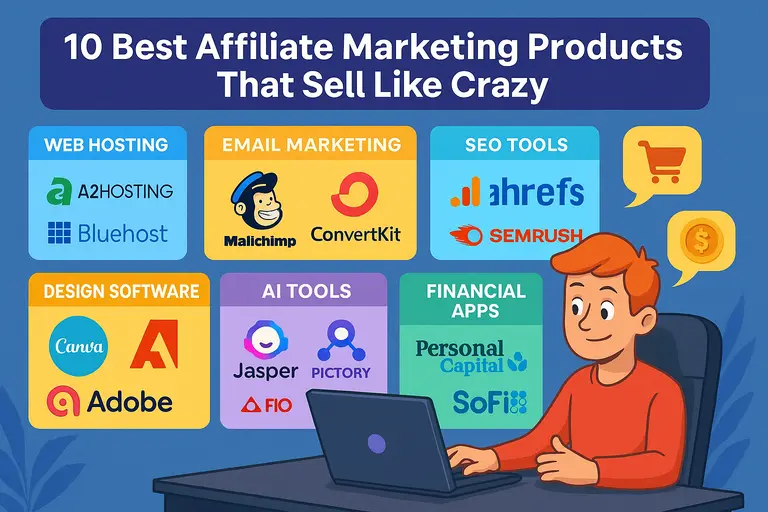 10 Best Affiliate Marketing Products That Sell Like Crazy
 How to Find Reliable Affiliate Marketing Partners Fast
 Affiliate Marketing Business Real Income Examples That Prove It Works