
Table of Contents
Some links on The Justifiable are affiliate links, meaning we may earn a small commission at no extra cost to you. Read full disclaimer.
Composable commerce is changing how online stores are built, managed, and scaled.
Instead of relying on one rigid eCommerce platform, composable commerce gives brands the freedom to choose and connect the best tools for their business—from checkout to product search.
It’s like assembling your own perfect digital storefront with modular building blocks instead of being stuck with a one-size-fits-all box.
But what makes composable commerce the future of online retail, and how can businesses actually put it into practice without chaos?
Let’s break it down piece by piece.
What Is Composable Commerce and Why It Matters
Composable commerce is more than a new eCommerce trend—it’s a complete mindset shift.
Instead of being locked into a single, all-in-one platform, brands can compose their online store using the best tools for each function—like checkout, search, or content management.
This approach gives full control over how a store looks, feels, and performs.
Understanding the Concept of Composable Architecture
Think of composable architecture like building with LEGO blocks. Each block (or microservice) handles one thing really well—such as payment, product catalog, or customer service—and you can stack or swap them as your business evolves.
This architecture is built on the idea of modularity, where different independent parts connect through APIs (Application Programming Interfaces).
For example, if your product recommendation engine isn’t performing well, you can replace just that “block” without touching the rest of your tech stack.
In simpler terms, composable commerce is like having the power to customize your store’s DNA. It’s flexible, adaptable, and built to evolve—making it ideal for fast-changing markets.
How Composable Commerce Differs from Traditional Monolithic Systems
Traditional eCommerce platforms—like early versions of Shopify or Adobe Commerce—are monolithic, meaning everything from checkout to analytics lives inside one massive structure.
While this makes setup easy at first, it becomes restrictive as your business grows.
In a monolithic system:
- Every feature depends on the core platform’s codebase.
- Customization often breaks updates or adds technical debt.
- Scaling up usually means expensive overhauls.
By contrast, composable commerce unbundles the system. You can pair a headless CMS like Contentful with commercetools for product management and Algolia for search—all without conflict. Each service does its job independently while communicating smoothly through APIs.
The biggest shift? Control moves from the platform to you. You choose what fits your strategy rather than adjusting your strategy to fit a platform.
Why Flexibility and Scalability Are the Core Advantages
Two words define composable commerce: freedom and future-proofing.
Flexibility: You can adapt quickly to market changes—like adding a new payment method, language, or personalization feature—without rebuilding your site. For instance, during peak seasons, retailers can integrate AI-powered upselling tools in days instead of months.
Scalability: Each service can scale independently. If traffic spikes during a big sale, your checkout microservice can scale without slowing down your CMS or product catalog. This micro-level scaling saves money and boosts performance.
In my experience, this flexibility means teams innovate faster and waste less time fixing platform limitations. It’s not just about going “headless”—it’s about staying nimble in a world that never stops shifting.
Key Components That Power Composable Commerce
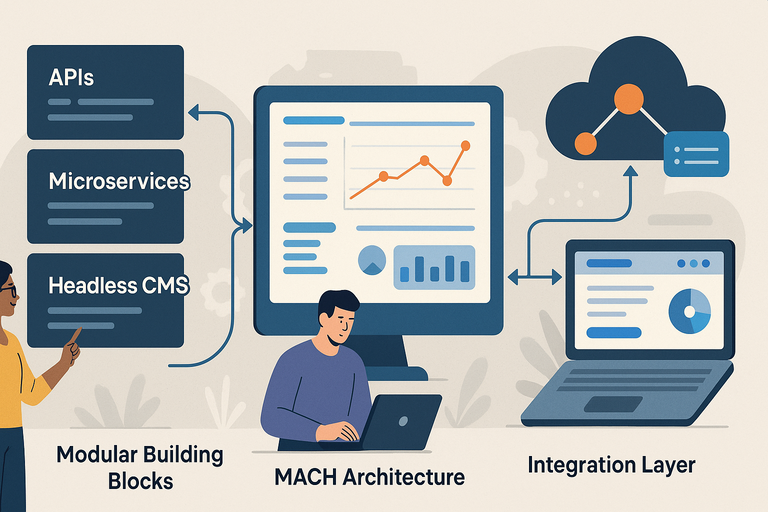
Behind the sleek front-end of composable commerce lies a sophisticated system of modular parts that work together in harmony.
Each component plays a specific role in creating a seamless customer and developer experience.
Modular Building Blocks: APIs, Microservices, and Headless CMS
The foundation of composable commerce rests on three main building blocks:
- APIs (Application Programming Interfaces): These act as digital messengers between systems. For example, your product data API talks to your CMS, ensuring that when you update a price, it appears everywhere instantly.
- Microservices: These are small, independent applications designed to handle one task each—like pricing, checkout, or user authentication.
- Headless CMS: A “headless” content system like Storyblok lets you manage content separately from the website’s design. This means your content can appear anywhere—on apps, smart devices, or websites—without duplication.
This modular setup gives teams freedom to innovate faster. When your architecture is built on small, connected systems, each improvement compounds instead of colliding.
Role of MACH Architecture (Microservices, API-First, Cloud-Native, Headless)
MACH architecture—short for Microservices, API-first, Cloud-native, and Headless—is the guiding principle behind composable commerce.
Here’s how each part contributes:
- Microservices: Break your commerce into small, specialized parts.
- API-first: Every service communicates through standardized APIs, allowing full flexibility.
- Cloud-native: Everything runs in the cloud, so scaling and deployment are fast and reliable.
- Headless: The front-end (what users see) and back-end (data systems) are independent, giving total creative freedom.
For instance, a brand could use Elastic Path as its commerce engine, Contentstack for content, and Alokai (former Vue Storefront) for the front-end—all connected through APIs. MACH isn’t a single product; it’s an ecosystem philosophy that enables limitless integration.
I like to think of MACH as the digital equivalent of a well-designed orchestra: each instrument plays independently but in perfect rhythm through shared protocols (APIs).
Integration Layer: Connecting Systems Seamlessly for Efficiency
If microservices are instruments, the integration layer is the conductor. It ensures everything stays synchronized and efficient.
This layer is where middleware tools like MuleSoft come in. They act as bridges between applications, translating data formats and ensuring smooth communication. Without this layer, even the best microservices can turn into data chaos.
A well-implemented integration layer can:
- Synchronize customer and order data in real-time.
- Automate workflows between marketing, inventory, and logistics.
- Minimize manual input errors.
It’s worth investing in a strong integration foundation early. I’ve seen businesses struggle when they treat integrations as afterthoughts—they often end up with fragmented systems and rising costs.
How Composable Commerce Transforms Online Stores
Composable commerce isn’t just about technology—it’s about experience. It reshapes how customers shop, how teams work, and how businesses grow.
Personalized Shopping Experiences Through Modular Design
One of the biggest transformations comes from personalization. With composable systems, each part of the shopping journey can adapt to the user in real time.
For example:
- A customer’s past purchases can trigger personalized product recommendations powered by AI microservices like Nosto.
- A headless CMS can adjust content layouts automatically for mobile or desktop views.
- Marketing teams can experiment with custom landing pages without involving developers.
Because every component operates independently, personalization becomes fluid instead of forced. I’ve seen brands boost conversion rates by over 20% simply by swapping static modules with dynamic recommendation services.
Faster Innovation Cycles and Reduced Time to Market
With composable commerce, you don’t need to wait months for a full rebuild just to test an idea. You can experiment safely, replacing or adding microservices as you go.
A great example is when fashion retailers test new “buy now, pay later” systems. Instead of overhauling checkout, they can just plug in a Klarna microservice and track performance immediately.
This kind of agility reduces time to market dramatically. I often describe it as “launching in weeks, not quarters.” The faster your team can test and learn, the faster your store evolves.
Improved Performance and Reliability Across Channels
Composable systems are inherently more resilient. Since every service scales independently, traffic surges or system errors don’t take the entire site down.
Here’s what that looks like in practice:
- During a Black Friday rush, your checkout service can auto-scale in the cloud while your content delivery stays stable.
- APIs ensure that mobile apps, desktop sites, and voice assistants all pull from the same core data, preventing inconsistencies.
In short, composable commerce gives online stores the reliability of enterprise systems with the agility of startups. It’s like having a race car that repairs itself mid-lap—you stay fast, flexible, and always in motion.
Expert tip: Start with one composable module—like a headless CMS or AI search—and expand gradually. You’ll see immediate performance gains without overhauling your entire system. This “compose as you grow” approach keeps risk low and momentum high.
Benefits of Adopting a Composable Commerce Strategy
Adopting a composable commerce strategy gives businesses control and freedom that traditional eCommerce platforms simply can’t match. It’s not just about swapping technologies; it’s about rethinking how your digital store evolves, scales, and connects with customers.
Increased Agility for Rapid Market Adaptation
In today’s eCommerce world, speed wins. The ability to test, tweak, and launch quickly often separates growing brands from stagnant ones.
Composable commerce allows you to adapt faster because every system—from checkout to CMS—operates independently.
Here’s what that means in practice:
- You can launch new features (like a subscription model or loyalty program) without waiting on a platform-wide update.
- You can test new channels such as voice commerce or social selling by simply connecting a new API.
- You can respond to trends—like adding new payment methods such as Apple Pay or Klarna—without lengthy rebuilds.
I’ve seen retailers go from idea to implementation in weeks using composable architecture. That’s because the modular setup means each change happens in isolation, reducing risk and downtime.
When markets move fast, your technology needs to move faster—and composable commerce gives you that agility.
Enhanced Customer Experience Across Touchpoints
A big part of composable commerce’s power lies in creating seamless experiences across every channel your customer touches.
Because composable systems are built around APIs, all customer data—shopping history, preferences, browsing behavior—flows between services in real time. That allows brands to deliver highly personalized experiences everywhere, from email to in-app notifications.
Imagine this:
- A customer browses a pair of sneakers on your app. The product data syncs instantly with your web store and marketing system.
- The next day, they get a tailored email with matching accessories powered by your headless CMS and personalization engine.
That’s the kind of experience modern consumers expect—and composable commerce makes it possible. I believe this personalization is what truly keeps customers coming back. When everything feels connected, friction disappears.
Cost Efficiency and Long-Term ROI Gains
Composable commerce might seem complex upfront, but it’s often more cost-effective over time. Instead of paying for bloated all-in-one software with features you never use, you only invest in what delivers value.
Some practical examples of cost savings:
- Pay-as-you-grow model: Cloud-native tools like commercetools or Elastic Path charge based on usage, not fixed licensing.
- Reduced developer overhead: You can upgrade or replace individual microservices without replatforming.
- Optimized performance costs: Since each service scales independently, you only allocate resources where demand spikes.
From what I’ve seen, the long-term ROI comes not just from lower costs but from faster innovation. When you can experiment easily, you uncover new revenue opportunities.
It’s like shifting from a heavy ship to a fleet of nimble boats—you move quicker, spend smarter, and steer more freely.
Common Challenges in Implementing Composable Commerce
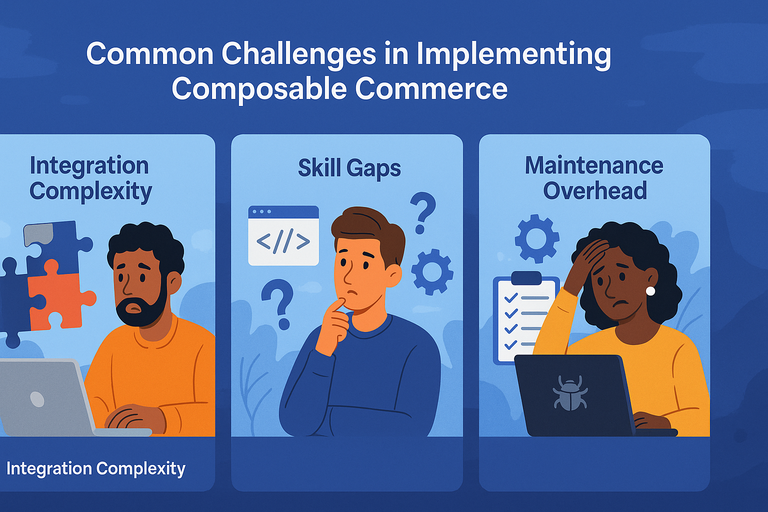
Composable commerce is powerful, but it’s not plug-and-play. It demands planning, technical skill, and a shift in mindset from “platform owner” to “ecosystem architect.”
Let’s unpack the most common hurdles businesses face.
Integration Complexity and Vendor Management
With composable commerce, you’re assembling multiple services—each possibly from different vendors. That creates integration complexity, especially when those systems must communicate in real time.
To manage it effectively:
- Use middleware tools like MuleSoft or Boomi to standardize data flow between APIs.
- Establish clear SLAs (Service Level Agreements) with each vendor to ensure consistent uptime and support.
- Design a central integration layer early in your architecture to minimize future rework.
I’ve worked with teams that underestimated this part, and it led to messy handoffs and data mismatches. Integration isn’t just a technical step—it’s the foundation that determines how smoothly your ecosystem will run.
Skill Gaps and the Need for Technical Expertise
Composable commerce requires a different skill set than traditional platforms. Developers must understand API management, microservice orchestration, and headless front-end frameworks like React or Vue.
If your in-house team isn’t ready, consider:
- Partnering with a MACH-certified agency for the initial setup.
- Upskilling your developers through vendor-provided courses (commercetools and Contentstack both offer great training resources).
- Building a cross-functional “composable squad” that combines tech, marketing, and UX teams.
I recommend treating your team’s learning curve as an investment. The payoff comes when your internal developers can add or replace systems in days instead of weeks.
Balancing Customization with Maintenance Overhead
While composable commerce gives flexibility, it can also create maintenance fatigue if not managed well. Each component must be monitored, updated, and optimized independently.
To balance flexibility and stability:
- Adopt a DevOps culture with automated testing and continuous integration pipelines.
- Set clear version control practices for all microservices.
- Use centralized observability tools like Datadog to monitor the entire ecosystem.
From experience, I suggest starting small—maybe two or three core services—and scaling gradually. This keeps your system clean and manageable without overwhelming your teams.
Step-by-Step Guide to Building a Composable Commerce Ecosystem
Building a composable commerce ecosystem doesn’t happen overnight. It’s a step-by-step journey that combines strategy, technology, and culture.
Step 1: Define Business Goals and Digital Maturity
Before jumping into tools, assess where your business stands digitally. Are you looking for faster innovation, better performance, or new revenue channels?
Here’s a quick checklist I use:
- Identify core business drivers (e.g., faster launches, personalized CX).
- Evaluate current systems for scalability and integration readiness.
- Set measurable goals, like “reduce time-to-market by 30% in six months.”
Understanding your digital maturity helps you avoid overcomplicating your setup. If your team is new to APIs or headless CMSs, start simple and evolve as your skills grow.
Step 2: Choose the Right Microservices and APIs
Once goals are clear, select best-of-breed solutions that fit each function of your store.
For example:
- Commerce engine: commercetools or Elastic Path.
- CMS: Contentful or Storyblok for flexible content control.
- Search: Algolia or Bloomreach for fast product discovery.
- Payments: Stripe for global coverage.
When evaluating tools, I suggest checking:
- API documentation clarity and developer support.
- Scalability options and uptime guarantees.
- Cost structure based on projected usage.
Choosing the right mix of tools early can save enormous time and rework later.
Step 3: Integrate and Test for Seamless Functionality
Integration is where composable commerce truly comes alive. The key is ensuring every service communicates cleanly and performs under load.
Best practices I follow:
- Use middleware or integration platforms to manage data translation.
- Conduct load testing to identify bottlenecks early.
- Set up sandbox environments for safe experimentation.
For instance, if you’re integrating commercetools with Contentful, start by syncing product data via API calls, then build small test components on your front end. Once you see stable performance, scale to full production.
Testing continuously during integration ensures your system doesn’t just work—it thrives.
Step 4: Continuously Optimize and Scale Over Time
Composable commerce isn’t a one-and-done setup. It’s an evolving ecosystem that needs ongoing tuning.
Here’s how I recommend managing growth:
- Monitor KPIs like conversion rate, load time, and API response speed.
- Replace underperforming services as new vendors emerge.
- Automate updates and backups to maintain reliability.
One retailer I worked with replaced its recommendation engine twice in a year without downtime—all thanks to composable flexibility. That’s the beauty of this model: it grows with you, not against you.
Pro tip: Treat composable commerce as a living organism, not a project. Start with a strong backbone (integration layer), nurture it with automation, and let it adapt naturally as your business expands. The brands that think modularly today will own tomorrow’s digital marketplace.
Tools and Platforms That Enable Composable Commerce
Choosing the right tools is where composable commerce becomes tangible. These platforms act as the building blocks of your digital ecosystem—each designed to handle a specific function while working seamlessly with others through APIs.
I’ll walk you through some of the most trusted tools that make composable commerce possible and practical.
Commercetools: The Pioneer in API-First eCommerce Platforms
Commercetools is often the first name that comes up when people talk about composable commerce—and for good reason.
It’s one of the original API-first, headless commerce platforms built to give developers total freedom to customize every part of the shopping experience.
Here’s what makes it stand out:
- Microservices architecture: Each part of your store (cart, catalog, checkout) functions independently, letting you upgrade or replace modules anytime.
- Extensive API coverage: Over 300 APIs allow smooth integration with CMSs, CRMs, and analytics tools.
- Developer-first design: commercetools has SDKs (Software Development Kits) in multiple languages and excellent documentation, making setup efficient.
Imagine you want to connect a headless CMS like Contentful to commercetools. You’d simply use API calls to pull product data and display it in customized layouts. No messy code rewrites, no rigid templates—just pure flexibility.
I’ve seen mid-sized retailers grow into enterprise-level operations using commercetools without needing a replatform. It’s future-ready from the start.
Elastic Path: Empowering Brands with Flexible Integrations
Elastic Path takes a slightly different but equally powerful approach. It focuses on flexibility and composability for complex businesses that manage multiple brands, catalogs, or pricing models.
Its key strengths include:
- Composable architecture: You can integrate with nearly any front-end or back-end system, from SAP to Adobe Experience Manager.
- Commerce Cloud flexibility: The Elastic Path Commerce Cloud allows you to manage multiple storefronts from one platform.
- Price Books and Catalog Composer: These tools simplify complex catalog structures—great for enterprises managing regional variations.
A real-world example: A global sportswear brand used Elastic Path to unify its regional stores under one system while maintaining unique promotions and languages. The result? Faster launches and consistent brand identity across countries.
I’d say Elastic Path is ideal if you’re already working with multiple systems and need a composable engine that adapts around your existing tech stack rather than replacing it.
Contentful and Storyblok: Headless CMS Solutions for Dynamic Content
While commercetools and Elastic Path handle the commerce side, you still need a way to manage your content—and that’s where headless CMS platforms like Contentful and Storyblok come in.
- Contentful: It’s one of the most widely used headless CMS platforms in composable commerce setups. With Contentful, your marketing team can manage product descriptions, blogs, and visuals from one interface while developers push the same content to multiple channels—web, mobile, or even IoT devices.
- Storyblok: Unlike many CMSs, Storyblok gives you a visual editor, so content creators can see page updates in real time before publishing. It also integrates easily with frameworks like Next.js and Nuxt for front-end development.
If I had to recommend one, I’d say start with Storyblok if your team is design-heavy or prefers visual editing, and go with Contentful if you’re scaling globally and need strong API performance.
Together, these CMS tools make content management as flexible as your commerce engine—so your storytelling keeps pace with your store’s innovation.
Future Trends Shaping Composable Commerce
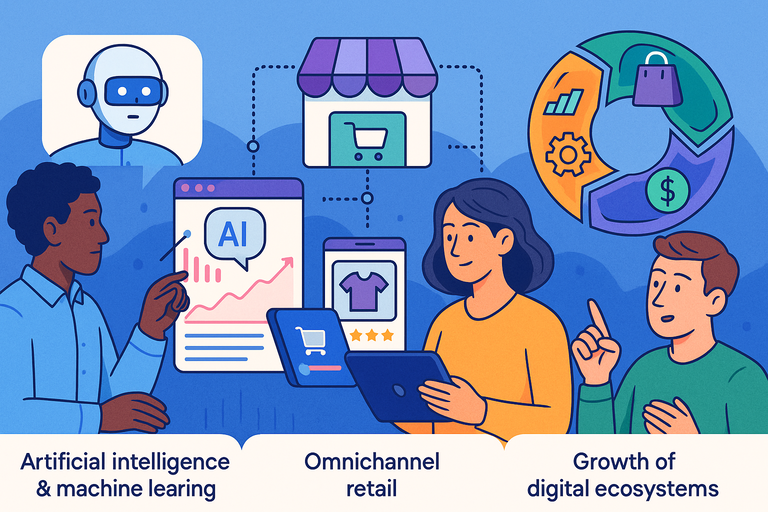
Composable commerce is still evolving, and it’s about to get even more intelligent, connected, and specialized. These trends are shaping the next generation of digital commerce ecosystems.
AI and Machine Learning Integration for Smarter Commerce
Artificial Intelligence (AI) and Machine Learning (ML) are redefining personalization and automation in composable commerce. Instead of manually segmenting audiences or predicting trends, AI-driven microservices now do it automatically.
For example:
- Product recommendations powered by tools like Nosto or Bloomreach analyze real-time browsing data.
- Chatbots and virtual assistants using AI APIs like Google Dialogflow personalize customer support.
- Inventory and pricing optimization systems adjust stock and discounts dynamically based on buying behavior.
I’ve noticed that composable setups make integrating these AI tools seamless since each system communicates through APIs.
You can add, test, or replace AI-driven services without disrupting your existing store. This adaptability is what makes composable commerce future-proof.
The Rise of Omnichannel Experiences and Digital Touchpoints
Customers now shop everywhere—websites, apps, social media, smart speakers, even wearables. Composable commerce is built for this world.
Because it’s headless and API-based, your product data and content can flow to any channel automatically. For example:
- A customer can start browsing on a tablet, add items to a cart via voice on Alexa, and complete checkout on mobile—all without losing data.
- Promotions created in your CMS appear across platforms instantly, keeping brand consistency intact.
This kind of connected commerce is becoming the new normal. I believe the brands that invest early in omnichannel composability will dominate customer loyalty because they’ll deliver frictionless, familiar experiences everywhere.
Growing Ecosystems of Specialized Commerce Vendors
As more brands adopt composable commerce, new vendors are emerging to fill niche roles—everything from sustainability tracking to 3D product visualization.
Some examples I’ve seen gaining traction:
- Klevu: AI-powered site search and navigation.
- Byrd: Logistics microservice for global eCommerce fulfillment.
- Clerk.io: Personalized recommendations and email automation.
These specialized tools let you fine-tune every aspect of your store instead of relying on generic “all-in-one” systems. In a way, the future of composable commerce looks more like a digital ecosystem than a single platform.
How to Know If Composable Commerce Is Right for Your Business
Composable commerce isn’t for everyone—at least, not right away. It fits businesses ready to move from convenience-based platforms to control-based architectures.
Let’s look at how to evaluate your readiness.
Evaluating Readiness Based on Size, Budget, and Goals
Start by assessing where your business is today and where it’s headed. Composable commerce usually benefits:
- Mid-to-enterprise-level companies with complex operations or multiple brands.
- Growing eCommerce stores needing more customization and scalability.
- Tech-forward teams with access to developers familiar with APIs and cloud systems.
Budget-wise, the initial investment might be higher due to integration work, but over time, you save by only paying for what you actually use.
I’d advise starting small—maybe by composabilizing just your CMS or search system first—before going all-in.
Identifying Signs That a Monolithic System Is Holding You Back
If your current platform feels limiting, that’s often your cue to consider composable commerce.
Look out for these red flags:
- Adding new features or integrations takes weeks or months.
- Your platform updates break customizations or plugins.
- Site performance drops during traffic surges.
- Marketing teams can’t make quick changes without developer help.
I’ve seen this pattern in dozens of growing brands. Once they switch to a composable setup, they often describe it as “breathing fresh air” after being stuck in a box. The difference in flexibility is immediate.
Building a Roadmap for Gradual Transition to Composable
Transitioning doesn’t have to happen all at once. A phased approach reduces risk and helps your team adapt comfortably.
Here’s a simple roadmap I recommend:
- Audit your current architecture. Identify what works well and what doesn’t.
- Pick a starting point. Common entry points include your CMS, checkout, or product catalog.
- Select compatible tools. Ensure new services can connect easily to existing systems via APIs.
- Pilot a small use case. For example, build a headless blog or a microservice-powered search feature.
- Expand gradually. Once the pilot proves successful, extend the composable setup to other areas.
Remember: The goal isn’t to rebuild your store overnight—it’s to evolve it piece by piece. The beauty of composable commerce is that you can start wherever you want and grow on your own terms.
Pro tip: I always tell clients that composable commerce isn’t about chasing the latest tech buzz—it’s about designing a business that never gets stuck again. Start small, build strong, and let your ecosystem grow around your customer’s needs, not your platform’s limits.
Expert Tips for a Successful Composable Commerce Implementation
Implementing composable commerce is exciting, but it can feel overwhelming at first. The key is to treat it like an evolving strategy rather than a one-time project.
The following expert tips come from real-world implementations I’ve seen succeed—where teams didn’t just go composable, but did it smartly.
Start Small, Scale Strategically with Proven Tools
It’s tempting to rebuild everything at once when you first discover the freedom composable commerce offers. But the most successful transitions start small and grow gradually.
Begin by identifying one area of your eCommerce ecosystem that’s holding you back—like your CMS, checkout system, or product search. Replace that with a composable solution first.
This lets you:
- Test the new architecture in a controlled way.
- Prove the value of composable commerce to your stakeholders.
- Build internal confidence and expertise before scaling further.
For example, I once worked with a mid-size beauty brand that started by integrating Contentful (a headless CMS) with commercetools for product data. Within months, they saw faster product launches and smoother content updates. Only then did they expand into microservices for payments and analytics.
I advise using tools with solid reputations and active support ecosystems—like commercetools, Elastic Path, or Storyblok—because you’ll rely on them as the backbone of your composable setup. Once the foundation is stable, scaling becomes almost effortless.
Prioritize Interoperability and Vendor Collaboration
Composable commerce thrives when systems communicate flawlessly. That means interoperability—the ability for all your microservices and APIs to work together—is not optional; it’s mission-critical.
Before choosing any vendor, make sure they support:
- Open APIs: So your systems can exchange data easily.
- Webhook or event-driven integrations: To ensure real-time communication between services.
- Shared data formats: Like JSON or GraphQL for consistent interoperability.
Also, don’t treat vendors as just software providers—treat them as long-term partners. The most successful composable ecosystems I’ve seen came from teams that worked with their vendors to optimize integrations.
A quick tip: Host regular “integration reviews” with your vendors and developers. This ensures alignment, catches potential conflicts early, and keeps your architecture cohesive.
I believe collaboration is the glue that holds composable commerce together. The technology may be modular, but the relationships shouldn’t be.
Invest in Training Teams for Long-Term Success
Even the best composable architecture will fall flat if your team doesn’t understand how to use it. This is where training and internal alignment come in.
Composable commerce often requires new skills—especially in API management, DevOps, and headless development.
I recommend:
- Offering vendor-led workshops for your developers and marketers. commercetools and Elastic Path both offer excellent partner training.
- Building a cross-functional “Composable Task Force” that includes marketing, IT, and operations. This ensures no one works in silos.
- Encouraging hands-on experimentation. Set up sandbox environments so teams can test new integrations safely.
A company I worked with in retail saw a 40% reduction in time-to-market after investing in staff training. Their marketers learned to update content independently via Storyblok, freeing developers to focus on more complex projects.
In my view, composable commerce success isn’t about having the best technology—it’s about having a confident, capable team that knows how to use it.
The Future of Online Stores in a Composable World
The shift toward composable commerce isn’t slowing down. In fact, it’s shaping what the next generation of online retail will look like.
The future will belong to brands that can adapt fast, personalize deeply, and innovate continuously—all things composable systems were designed to do.
From One-Size-Fits-All to Hyper-Personalized Experiences
Traditional eCommerce platforms often limit personalization because everything—from layout to logic—is tied together. Composable commerce breaks those chains.
By combining independent microservices for data, personalization, and front-end design, businesses can deliver tailored experiences for every user segment.
For example:
- A fitness brand could display different homepage products for beginners and athletes using a personalization engine like Dynamic Yield.
- A travel company might adjust pricing and offers in real time based on customer location or booking history.
This modular setup makes hyper-personalization scalable, not just possible. In my experience, when brands personalize at this level, they see conversion rates jump by 15–30%. Customers notice when a store feels like it was built for them.
How Composability Fuels Continuous Digital Innovation
Composable commerce gives teams the creative freedom to experiment constantly without fear of breaking the entire system. Since every component—like payments, search, or loyalty—works independently, you can innovate in one area while keeping the rest stable.
That’s why composable commerce is becoming the go-to model for companies focused on long-term digital transformation.
You can:
- Swap underperforming services instantly without downtime.
- Test new technologies (like AI chatbots or voice shopping) in isolated environments.
- Add new sales channels—mobile, social, marketplace—whenever you’re ready.
I’ve seen marketing teams roll out new campaigns in days instead of weeks because they’re no longer bottlenecked by monolithic CMS limitations. This continuous innovation loop is what keeps businesses ahead in competitive markets.
To put it simply, composability turns your store into a living organism—it grows, adapts, and evolves with your audience.
Why Composable Commerce Is the Sustainable Path Forward
Beyond flexibility and innovation, composable commerce is also more sustainable in the long run—both technically and economically.
Here’s why:
- You only use and pay for the components you need.
- You avoid complete replatforming every few years.
- Each service can scale independently, reducing unnecessary infrastructure load.
From an environmental perspective, cloud-native microservices consume fewer resources compared to traditional, always-on monolithic systems. From a business perspective, that translates to lower costs and longer platform lifespan.
I often tell clients that composable commerce is not just about building a better store—it’s about building a smarter, more sustainable digital future. It’s like switching from owning a single heavy machine to managing a fleet of agile, efficient tools that never stop improving.
Pro tip: Think of composable commerce as your digital insurance policy for the future. You’re not just future-proofing your tech stack—you’re future-proofing your business strategy. Start where you are, evolve intentionally, and let flexibility become your greatest competitive advantage.

I’m Juxhin, the voice behind The Justifiable.
I’ve spent 6+ years building blogs, managing affiliate campaigns, and testing the messy world of online business. Here, I cut the fluff and share the strategies that actually move the needle — so you can build income that’s sustainable, not speculative.