
Table of Contents
Some links on The Justifiable are affiliate links, meaning we may earn a small commission at no extra cost to you. Read full disclaimer.
Content marketing solutions have become more than just a digital strategy—they’re the foundation for building long-term trust and authority in your niche.
But how exactly do they help you move beyond short-term traffic spikes and position your brand as a leader people turn to repeatedly?
This guide breaks down how smart, consistent, and audience-driven content can transform your brand’s reputation, visibility, and influence over time.
Understanding How Content Marketing Builds Authority
To build authority, your content marketing efforts need to do more than attract clicks—they must educate, inspire trust, and stay consistent over time.
Authority grows when audiences begin to see you not as a promoter, but as a go-to source for reliable answers.
Defining What True Authority Means in Digital Marketing
Authority in digital marketing isn’t about having the loudest voice; it’s about being the most trusted one.
True authority happens when your content becomes the reference point others quote or link to. Google recognizes this through E-E-A-T (Experience, Expertise, Authoritativeness, and Trustworthiness).
For example, if you’re a marketing consultant publishing SEO guides, your authority shows when other creators reference your strategies or when readers bookmark your posts.
I often advise clients to check whether their content passes a simple test: Would someone confidently share this article as the best explanation of the topic? If not, it’s not authoritative yet.
You can strengthen perceived authority by:
- Publishing in-depth, original insights based on experience, not speculation.
- Backing every claim with credible data sources (like Statista or HubSpot).
- Consistently updating old content to stay relevant.
Authority compounds. Once your readers trust your insights, your words carry more weight in every new piece of content you publish.
Why Authority Matters More Than Virality
Virality gets attention; authority earns loyalty. Viral posts can bring a short-term influx of traffic—but without substance, it fades fast. Authority, on the other hand, keeps people returning for your expertise long after a trend dies.
Consider a brand like Ahrefs. Their blog rarely relies on flashy headlines. Instead, they publish comprehensive, data-backed guides. These posts rank for years and consistently drive organic traffic because readers trust the brand’s expertise.
I believe this is where most marketers trip: chasing numbers instead of reputation. When your audience sees your content as a reliable resource, every article you write strengthens your long-term visibility and influence.
The Role of Consistency and Credibility in Brand Perception
Authority isn’t earned overnight—it’s built through consistent delivery of credible information. Even a single misleading or poorly researched post can erode months of progress.
Here’s how to build and maintain credibility:
- Consistency: Stick to a regular posting cadence—whether that’s once a week or twice a month—and maintain your tone and values across every channel.
- Transparency: Cite your sources. When you share opinions, make it clear they’re based on personal experience.
- Engagement: Reply to comments and questions with genuine intent. This builds trust and shows you stand behind your message.
I often recommend setting up a content quality checklist—a quick internal review system to ensure every piece of content meets your authority standards before going live.
How Content Marketing Solutions Strengthen Brand Trust
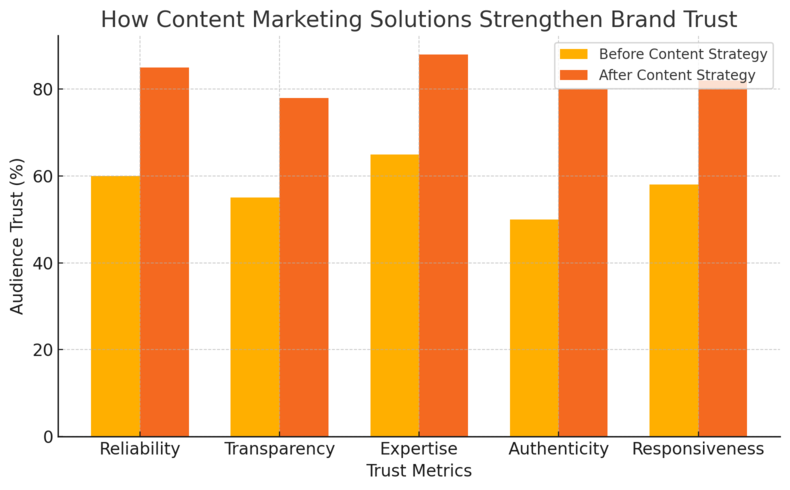
Trust is the currency of authority. Without it, even the best content won’t convert or resonate.
Smart content marketing solutions help you establish reliability and emotional connection with your audience through transparency, expertise, and authenticity.
Creating Reliable, Fact-Backed Content That Builds Confidence
Readers can spot fluff instantly. Reliable, data-supported content demonstrates not just what you know—but that you care about getting it right.
Here’s how to make your content more trustworthy:
- Use recent, verifiable data from credible sources.
- Avoid exaggerations; stick to measurable facts.
- Show results when possible—like “Using this strategy, our client saw a 42% rise in organic leads.”
Tools like BuzzSumo or Google Scholar help you find reputable references. Personally, I use them to ensure my stats are current and verifiable. This doesn’t just build confidence with readers—it signals quality to search engines too.
Using Thought Leadership to Demonstrate Expertise
Thought leadership isn’t about bragging; it’s about providing insights others can’t. When you publish original perspectives, case studies, or industry predictions, you show you’re not repeating information—you’re shaping it.
For instance, a SaaS company might share lessons from product testing or user feedback, turning those findings into actionable blog posts. That’s real thought leadership—not recycled trends.
To develop it:
- Share firsthand experiences.
- Publish your take on new developments in your industry.
- Use platforms like LinkedIn Articles to distribute deeper, idea-driven content.
When audiences feel they’re learning from someone with genuine experience, trust grows naturally.
Aligning Brand Voice With Audience Expectations for Authenticity
Authenticity isn’t about being casual—it’s about being consistent and human. When your tone, visuals, and values align with what your audience believes in, your brand becomes relatable and memorable.
Start with understanding your audience’s tone preferences.
For example:
- B2B audiences often prefer a confident but respectful tone.
- B2C audiences usually respond better to storytelling and empathy.
I suggest creating a voice and tone guide—a simple one-page document that defines how your brand “sounds.” This keeps your messaging aligned across content, email, and social media.
When people sense your brand genuinely “gets” them, they trust your advice, recommendations, and even your promotions.
Establishing a Long-Term Content Strategy That Scales
Long-term authority requires a scalable strategy—a system that grows with your brand without burning out your team or diluting your message.
How to Map Content Around Core Pillars and Evergreen Topics
Pillar content is your foundation. These are comprehensive, high-value pages that anchor your authority in key subject areas. Supporting articles then link back to these pillars, creating a clear content structure that search engines love.
Example: If your focus keyword is content marketing solutions, your pillar might be “The Complete Guide to Content Marketing.” Supporting posts could include topics like “Best Tools for Content Planning” or “How to Measure Content ROI.”
I recommend using tools like Notion or Airtable to visualize your content map. They help you keep track of topics, publish dates, and interlinking opportunities.
Balancing Evergreen and Trending Content for Sustainable Growth
Evergreen content builds authority; trending topics drive bursts of visibility. You need both.
Evergreen posts attract consistent traffic for months or years, while trend-based posts position you as current and responsive.
Here’s how to balance them:
- Maintain a 70/30 ratio—70% evergreen, 30% trending.
- Use Google Trends to spot rising topics in your industry.
- Regularly update evergreen articles with new stats or insights.
I’ve seen this mix keep blogs fresh without compromising long-term growth. Evergreen pieces provide stability, while trending ones spark timely engagement.
Creating a Consistent Publishing Schedule Without Burnout
Consistency doesn’t mean posting daily—it means posting reliably. Burning out your team (or yourself) leads to rushed, low-quality work that hurts authority.
To keep your schedule realistic:
- Plan content in monthly batches using Trello or Asana.
- Repurpose one long-form article into shorter assets (like social posts, emails, or videos).
- Use AI tools for research support—but never for raw publishing.
I suggest setting a manageable rhythm—like one strong article per week. Over time, it’s this steady cadence that builds reader expectation and trust.
Pro Tip: True authority doesn’t come from volume—it comes from value, consistency, and integrity. When your audience knows they can rely on your words, your brand moves from just being visible to being believed.
Leveraging SEO and Data-Driven Insights for Sustainable Visibility
To make content marketing solutions truly sustainable, you have to think long-term—beyond rankings and traffic spikes.
SEO and data are your compasses. They reveal what your audience actually searches for, how they engage with your content, and where your authority stands in the bigger picture.
Using Keyword Intent to Build Long-Term Topical Relevance
When I plan SEO-driven content, I don’t just look for keywords—I look for intent. Keyword intent shows what your reader really wants to achieve.
There are typically three types: informational (looking to learn), navigational (looking for a specific brand), and transactional (ready to buy).
For example, if your focus keyword is content marketing solutions, an informational keyword might be “how to create a content strategy,” while a transactional one could be “best content marketing software.”
By creating content for all three, you build topical depth—something Google’s algorithms reward heavily.
Here’s how to approach it:
- Use tools like SEMrush to analyze search intent and related queries.
- Create content clusters: one core topic supported by several subtopics that address different intents.
- Use internal links between those posts to strengthen your site’s authority around that subject.
I suggest tracking keyword performance monthly. If a post starts ranking for unplanned long-tail keywords, expand that section or create a new related article. That’s how topical authority compounds over time.
Tracking Content Performance and Refining Strategy Over Time
Data tells you what’s working—and what’s not. The smartest brands use performance insights to adjust their strategy continuously.
Start by reviewing metrics that matter:
- Organic traffic growth (via Google Analytics) shows visibility trends.
- Engagement metrics (like time on page, bounce rate, or scroll depth) reveal how much readers value your content.
- Conversion data shows which content actually drives sign-ups, downloads, or sales.
- I recommend setting up Google Looker Studio dashboards (previously Data Studio). It allows you to visualize SEO and engagement data in real time, making insights easier to act on.
A practical example: I once noticed a client’s blog post ranking high but with low time-on-page. We added visuals, improved formatting, and inserted an FAQ section.
Within three weeks, engagement doubled—and conversions increased 28%. That’s the power of iterative optimization.
The Connection Between Search Authority and Brand Authority
Search authority and brand authority are two sides of the same coin. Search authority is Google’s trust in your site; brand authority is your audience’s trust in your voice. When you optimize content for both, growth becomes exponential.
You build search authority by earning backlinks, maintaining site structure, and producing topically rich content. You build brand authority by staying authentic, consistent, and reliable across every touchpoint.
Over time, these reinforce each other. As your content ranks higher, more people discover your brand—and the more your brand is trusted, the more people search specifically for it. That feedback loop is where lasting visibility lives.
I often say: You don’t just want clicks—you want recognition. Recognition keeps you relevant long after algorithm updates.
Building Multi-Channel Authority Through Content Distribution
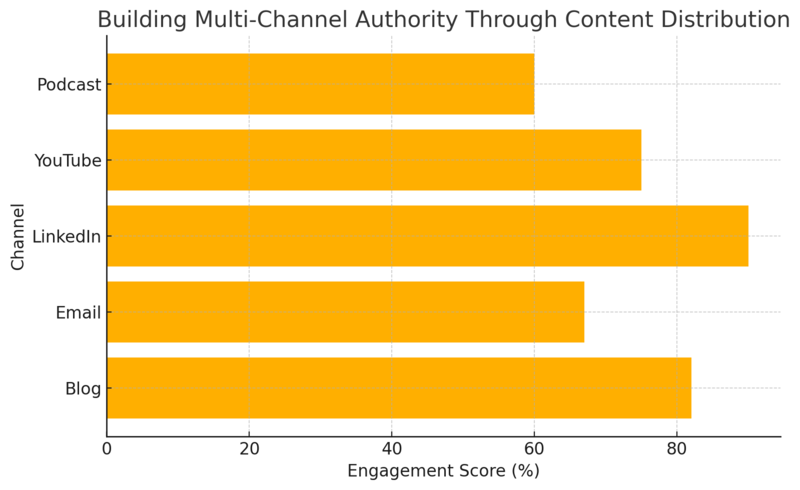
Even the best content fails without smart distribution. True authority isn’t limited to one platform—it’s built through consistent, high-value visibility across multiple channels.
Think of distribution as your amplifier.
How to Repurpose Content Across Platforms for Wider Reach
Repurposing doesn’t mean repeating—it means adapting. Each platform speaks a different language, and your content should fit its native format.
For instance, a long-form blog post can become:
- A LinkedIn carousel summarizing key insights.
- A YouTube video explaining your process.
- A podcast episode discussing the topic with an expert.
- A newsletter section driving traffic back to the full guide.
I suggest using a content matrix—a simple table mapping one idea into multiple assets. Tools like Notion or Airtable make this easy to track. This approach saves time while keeping your message consistent across all channels.
Why Omnichannel Consistency Builds Audience Familiarity
When your audience hears the same core message across different platforms, it reinforces memory and trust.
That’s the beauty of omnichannel consistency—it doesn’t just expand reach; it strengthens recognition.
Here’s how to stay consistent:
- Keep your visual identity uniform (colors, fonts, tone).
- Sync your messaging. A campaign theme on your blog should echo in your emails and social posts.
- Maintain cadence. Audiences remember rhythm—posting regularly keeps you top of mind.
I’ve seen this work beautifully with brands that use Buffer or Later for content scheduling. It helps ensure every message aligns perfectly, regardless of where it appears.
Familiarity breeds comfort, and comfort leads to trust. That’s the path to authority.
Leveraging Email, Social Media, and Podcasts for Brand Reinforcement
Each channel serves a unique purpose:
- Email marketing nurtures deeper connections. You can share exclusive insights, early updates, or behind-the-scenes stories that make your audience feel valued.
- Social media builds community and real-time engagement. It’s where authority becomes visible through interaction.
- Podcasts humanize your brand voice. You’re not just words on a page—you’re a person sharing ideas in conversation.
I recommend integrating your content ecosystem.
For example: share your new podcast episode in your weekly newsletter, and turn key takeaways into short LinkedIn posts. This kind of cross-promotion multiplies your content’s impact without extra work.
Using Storytelling to Create Emotional Connection and Loyalty
Facts inform, but stories connect. Storytelling transforms content marketing solutions from informative to unforgettable.
When people see themselves in your narrative, they remember your brand—and they return to it.
Crafting Brand Narratives That Resonate With Your Core Audience
A strong brand story centers on empathy. It shows your audience that you understand their challenges because you’ve lived them or helped others overcome them.
To craft a powerful narrative:
- Identify the emotional core—what transformation are you promising?
- Use real customer journeys or founder stories.
- Keep it human—focus on struggle, growth, and success, not perfection.
For example, a small SaaS brand might share how it began as a side project to solve a personal workflow problem. That’s relatable. People love stories of genuine purpose.
I believe storytelling should make readers feel seen. When they see your journey mirrors theirs, loyalty follows naturally.
Showing Vulnerability and Authenticity in Brand Stories
Perfect brands feel fake. Audiences today crave realness—mistakes, lessons learned, and all. Vulnerability builds credibility faster than polished marketing ever will.
Here’s how to show it without oversharing:
- Share challenges you’ve faced and how you overcame them.
- Highlight lessons, not failures.
- Use first-person storytelling where appropriate—it humanizes your brand voice.
For instance, I once wrote a campaign that started with, “We failed our first launch.” That opening drew people in, and engagement doubled compared to typical posts. Authenticity is magnetic because it’s rare.
How Storytelling Converts Readers Into Advocates
Stories create belonging—and belonging drives advocacy. When your readers emotionally invest in your journey, they want to be part of it.
You can encourage advocacy by:
- Featuring customer success stories that spotlight them, not just you.
- Inviting your community to share their experiences using your brand hashtag.
- Responding publicly and warmly to their stories.
When people retell your story as part of theirs, you’ve achieved real influence. That’s how authority moves from awareness to loyalty—and from loyalty to advocacy.
Pro Tip: Storytelling and SEO are not opposites—they’re allies. SEO gets your story found; storytelling makes it remembered. Combine the two, and your content won’t just rank—it’ll resonate, creating authority that lasts for years.
Collaborating With Experts and Influencers for Authority Growth
No brand builds authority in isolation. Collaborating with experts and influencers gives your content marketing solutions the credibility and exposure you can’t achieve alone.
It’s about alignment, not just amplification—working with voices your audience already trusts to enhance your own.
Co-Creating Valuable Content With Industry Leaders
Co-creation turns thought leadership into shared leadership. When you create content with respected figures in your field, you borrow their credibility while giving them a platform to share their expertise.
It’s mutually beneficial, but only when done thoughtfully.
Here’s how I approach it:
- Identify experts whose values and audience align with yours. Use tools like SparkToro to see which voices your audience already follows.
- Pitch collaboration ideas that create value for both audiences, not just visibility for you. For example, a joint research report, expert roundup, or video interview.
- Use clear co-branding. Feature both names or logos to signal partnership authenticity.
One of my favorite examples is HubSpot partnering with Canva for content creation guides. Each brand leveraged the other’s audience and expertise, amplifying authority in both the design and marketing communities.
Co-creation doesn’t have to be massive—sometimes a single shared blog post with a respected figure can elevate how your audience perceives your authority.
Leveraging Guest Posts, Podcasts, and Interviews for Credibility
Guest content is one of the fastest ways to expand your reach and reinforce your reputation. It places your voice where your audience is already paying attention.
If you’re guest posting:
- Choose high-authority sites within your niche (use tools like Moz Domain Authority Checker to assess relevance and trust).
- Focus on educational, insight-driven content—not self-promotion.
- Include a strong bio that subtly reinforces your authority (“Juxhin Bregu, content strategist with 6+ years of experience helping businesses grow through SEO-driven storytelling”).
Podcasts and interviews are equally powerful. They humanize you—listeners hear your tone, humor, and perspective, which builds emotional connection.
I always suggest repurposing these interviews into blog content or social media clips. It extends their life and multiplies visibility.
How Collaborations Amplify Trust and Brand Recognition
When trusted experts vouch for you, it shortens the trust-building curve. That’s the magic of collaborations—they serve as social proof at scale.
Think of it as authority transference: when a respected figure appears beside you, audiences subconsciously perceive your expertise as validated.
Here’s how to maximize that effect:
- Promote collaborations across all channels. Share quotes, highlights, or behind-the-scenes photos.
- Tag collaborators and encourage cross-sharing.
- Turn collaborations into ongoing relationships—invite them back for new projects or updates.
In the long run, these relationships turn into an ecosystem of mutual trust and visibility that fuels sustainable growth.
Measuring Long-Term Impact of Content Marketing Solutions
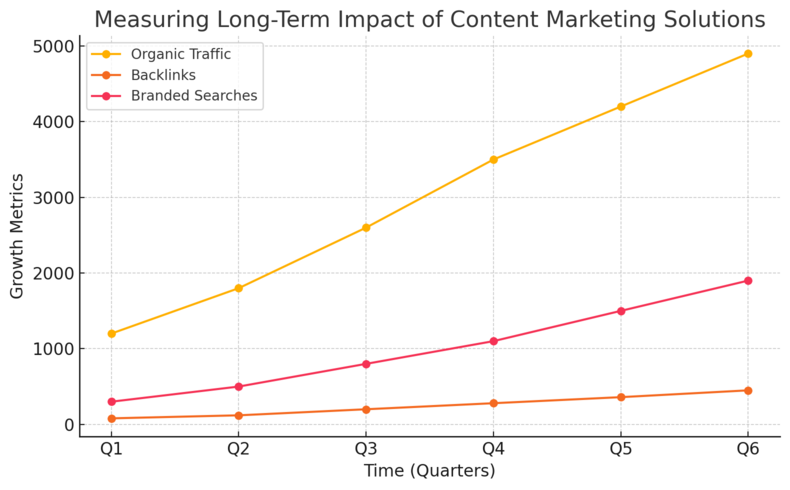
To know whether your content marketing solutions are truly working, you need to track the right indicators—not just clicks or impressions, but metrics that reflect authority, influence, and audience trust.
Setting Clear KPIs That Reflect Authority and Influence
Authority can’t be measured by traffic alone. It’s measured by how much your audience believes and engages with you.
Some effective KPIs include:
- Brand mentions across platforms (use tools like Brand24 or Mention).
- Backlink growth, indicating that others trust and reference your work.
- Engagement rate, showing that your content resonates.
- Branded search volume, revealing direct recognition.
I suggest setting quarterly KPI targets tied to these indicators.
For instance, aim to increase brand mentions by 20% or backlinks by 15% each quarter. This approach moves you from short-term vanity metrics to long-term influence tracking.
How to Measure Trust, Engagement, and Brand Mentions Over Time
Trust and engagement are subtle, but measurable with the right systems.
Here’s a simple setup I’ve used for clients:
- Track brand sentiment using Google Alerts and Social Mention to monitor tone in mentions.
- Analyze engagement quality, not just volume. Comments, shares, and dwell time matter more than likes.
- Survey loyal readers or subscribers twice a year to gauge perceived credibility.
A case in point: I worked with a B2B SaaS company that started tracking “content trustworthiness” through reader surveys. Their focus on accuracy and transparency led to a 37% rise in brand trust ratings within six months.
Evaluating ROI Beyond Short-Term Conversions
The ROI of authority is cumulative—it grows slowly but compounds over time. You might not see direct conversions from every post, but each one strengthens brand equity.
To measure this:
- Track assisted conversions in Google Analytics to see how often your content contributes to sales indirectly.
- Monitor content longevity—how long posts continue driving traffic or leads.
- Compare customer acquisition cost (CAC) for organic versus paid traffic.
I advise creating a Content Value Timeline in Google Sheets. Map which pieces bring in leads months after publishing. You’ll start noticing how timeless authority-driven content outperforms short-lived campaigns.
Overcoming Common Challenges in Maintaining Authority
Building authority is hard, but maintaining it can be even harder. It requires adaptation, consistency, and humility—especially when the digital landscape shifts.
Avoiding Content Fatigue and Staying Relevant
Even experts can burn out or lose spark. I’ve seen many creators publish repetitively just to meet quotas, which erodes audience interest.
To avoid fatigue:
- Update existing content instead of always creating new.
- Rotate content formats—switch between blogs, videos, and short posts.
- Schedule rest or “creative reset” weeks to recharge.
Also, keep a pulse on what your audience cares about. Use AnswerThePublic or Reddit threads to explore new pain points and ideas. When your content evolves with your audience, it never feels stale.
Adapting to Algorithm Changes Without Losing Authenticity
Algorithms change constantly, but your brand’s authenticity shouldn’t. Instead of chasing trends, focus on timeless principles: relevance, clarity, and credibility.
Here’s my rule of thumb:
- Review analytics monthly to identify shifts in content performance.
- Update metadata, structure, and links as needed—but never compromise your voice.
- Diversify traffic sources (SEO, social, email) so no single algorithm can disrupt your visibility.
I’ve seen brands panic with every Google update, rewriting everything to “please” the algorithm. Ironically, those who stay true to user intent tend to weather updates best.
How to Rebuild Trust After a Drop in Visibility or Reputation
Losing visibility—or worse, credibility—can feel devastating. But it’s fixable if handled with transparency and strategy.
Steps I recommend:
- Acknowledge the issue honestly. If content quality dipped or misinformation slipped through, own it publicly.
- Reassess your strategy—identify what caused the drop (algorithmic, technical, or trust-related).
- Reinvest in value. Publish updated, well-researched content to re-establish expertise.
One client of mine regained lost visibility after a Google penalty by cleaning up outdated posts and building a “Transparency Hub” to show their data sources. Their traffic recovered 80% within four months.
Trust can always be rebuilt when authenticity leads the repair process.
Future-Proofing Your Brand With Continuous Improvement
Authority isn’t a one-time achievement—it’s a habit. The brands that endure are the ones that keep learning, experimenting, and adapting to change with curiosity, not fear.
Staying Ahead With AI and Emerging Content Tools
AI is no longer optional—it’s a competitive advantage when used wisely. But it should enhance creativity, not replace it.
Practical uses I recommend:
- Use SurferSEO for real-time optimization guidance.
- Leverage ChatGPT or Jasper for content outlines or brainstorming, but always humanize the final copy.
- Analyze user intent faster with Frase or MarketMuse.
AI should make your workflow smoother so you can focus on strategy and storytelling—the human side of authority.
How to Reinvest Insights Back Into Content Strategy
Every piece of content teaches you something. The key is to turn those lessons into strategy.
Do this quarterly:
- Review analytics to identify top-performing topics and formats.
- Interview customers to see what kind of content influenced their decisions.
- Expand on proven formats—if tutorials perform best, create more in that style.
I advise maintaining a “Content Wins” document—a running list of what’s working and why. It becomes your living playbook for continuous improvement.
Building a Culture of Learning and Thought Leadership Within Your Team
Authority grows when everyone in your organization becomes a learner and a teacher.
Encourage your team to:
- Attend webinars or industry conferences.
- Share insights internally—create a Slack channel for marketing learnings.
- Publish under their own names to build both personal and brand authority.
When people feel empowered to think and create independently, your brand becomes a collective voice of expertise. That’s how thought leadership scales.
Pro Tip: Long-term authority isn’t about being perfect—it’s about being progressive. Keep refining, collaborating, and sharing what you learn. In the end, your consistency and honesty will outlast any algorithm or trend.

I’m Juxhin, the voice behind The Justifiable.
I’ve spent 6+ years building blogs, managing affiliate campaigns, and testing the messy world of online business. Here, I cut the fluff and share the strategies that actually move the needle — so you can build income that’s sustainable, not speculative.