
Table of Contents
Some links on The Justifiable are affiliate links, meaning we may earn a small commission at no extra cost to you. Read full disclaimer.
Every freelance Google Ads specialist dreams of scaling beyond project-to-project work—building consistent clients, higher retainers, and stronger ROI results.
But what exactly separates those who hit six figures from those who struggle to break even?
In this guide, we’ll uncover seven secrets that top freelancers use to grow faster, attract better clients, and run smarter campaigns that deliver undeniable value.
1. Mastering Campaign Data Beyond Surface Metrics
When you want to scale as a freelance Google Ads specialist, data is everything.
But not just clicks and impressions—profit-driving data that uncovers what truly moves revenue.
Understanding the Metrics That Actually Drive Profit
Most freelancers fixate on click-through rate (CTR) or cost per click (CPC) because they’re easy to read.
But those don’t necessarily equal business growth. What matters more are conversion rate (CVR), return on ad spend (ROAS), and customer lifetime value (LTV).
Here’s how I suggest thinking about it:
- ROAS (Return on Ad Spend): If you spend $1 and make $4, that’s a 400% ROAS. Focus your analysis around this number—it tells you which campaigns actually earn money.
- Conversion Value/Cost: Found in Google Ads under “Columns > Conversions > Conv. value/cost.” This ratio shows profit efficiency better than CPC ever will.
- LTV (Customer Lifetime Value): A client who spends $100/month for 12 months is worth far more than a one-time buyer. I often use a simple spreadsheet to estimate LTV and adjust bids based on that insight.
When you start reporting these numbers, clients see you as a strategist, not just a technician pushing buttons.
Using Conversion Tracking and Attribution Tools Effectively
If you’re not tracking properly, you’re optimizing blind.
Setting up Google Tag Manager (GTM) is step one. It lets you deploy tags like conversion pixels without touching code.
Here’s the workflow I recommend:
- In GTM, create a new tag → choose Google Ads Conversion Tracking.
- Add your conversion ID and label (you’ll find these in your Ads account).
- Set the trigger to fire on the desired thank-you page or button click.
Once tracking is live, move to Attribution models in Google Ads (Tools → Measurement → Attribution).
Avoid “Last Click.” Instead, use Data-Driven or Position-Based models. They give credit across multiple touchpoints, revealing how users interact before buying.
This data lets you make smarter bidding and budget decisions—especially for campaigns feeding long sales cycles.
Turning Data Insights Into Scalable Client Strategies
Raw data means nothing without interpretation. I like to pull weekly insights from Google Analytics 4 (GA4) or Looker Studio dashboards and ask: “Where are we losing profitable users?”
From there:
- Identify underperforming devices: If mobile ROAS is lower than desktop, adjust bids by device in Campaign Settings > Devices.
- Scale winning audiences: Duplicate high-performing ad groups and expand to Similar Audiences or Custom Segments.
- Reduce budget drains: Exclude search terms or placements with high spend but no conversions (use the “Search Terms” report).
This approach transforms metrics into a growth framework. Instead of chasing impressions, you start managing profit levers.
2. Building High-Performance Client Funnels
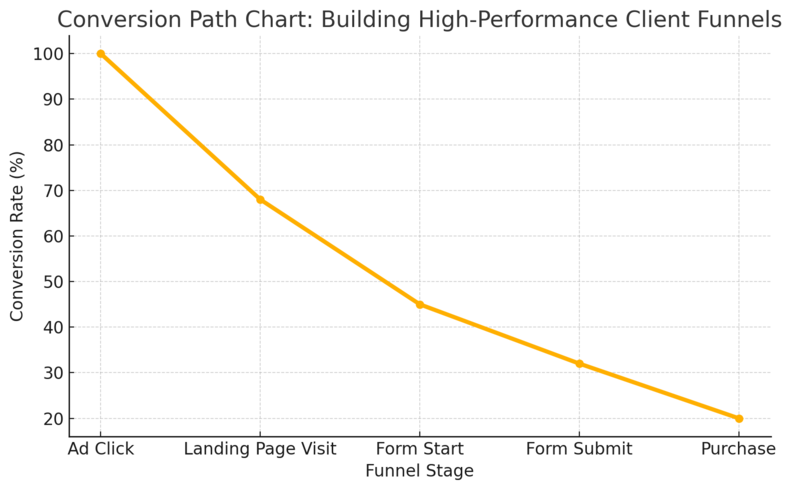
Campaign success isn’t just about ads—it’s about the funnel they drive traffic into. The best freelance Google Ads specialists think like conversion architects, not media buyers.
Crafting Offers That Make Ads Convert Consistently
Your ad can be beautifully written, but if the offer is weak, conversions stall. The offer is what the user gets right now for taking action—like “Free 15-Minute Strategy Call” or “20% Off First Order.”
When I work with service-based clients, I recommend testing offers using Responsive Search Ads (RSAs). Create multiple variations: one focusing on urgency, one on exclusivity, and one on value. Example:
- “Get a Free Audit—Discover 3 Ways to Cut Your CPC in Half.”
- “Save 20% on PPC Setup—This Week Only.”
Track which headline/offer combo drives higher CTR and conversion rate, then build your client funnel around that winning hook.
Using Landing Page Psychology to Improve Quality Scores
Google rewards relevance, which means your landing page must match your ad promise. Quality Score (QS) directly affects your CPC, so improving it can stretch every dollar further.
Here’s what I look for:
- Headline Match: The landing page headline should mirror your ad’s top-performing headline almost word-for-word.
- Visual Hierarchy: Use clear CTAs (call-to-actions) above the fold—like “Get My Free Quote.”
- Trust Signals: Add reviews, testimonials, or client logos to reduce friction.
If you’re using tools like Unbounce or Webflow, A/B testing these elements is fast. Even small tweaks—like button color or social proof—can increase conversion rates by 10–20%.
Mapping the Full Buyer Journey to Reduce Ad Waste
Many freelancers stop optimizing once users click the ad. Big mistake. Every touchpoint matters—from ad to checkout.
I suggest mapping the funnel visually using Funnelytics or Miro.
Include:
- Entry points: Search, display, or YouTube ads.
- Micro-conversions: Email sign-ups, quiz completions, video views.
- End goal: Purchase or lead submission.
Once you see drop-off points, you can retarget users intelligently.
For example, create a custom audience in Google Ads for users who visited but didn’t convert within 7 days, then show them an incentive-based ad (“Still Thinking It Over? Here’s 10% Off”).
That’s how you turn leaky funnels into closed loops.
3. Leveraging Automation Without Losing Control
Automation in Google Ads can be a lifesaver—or a money pit—depending on how you handle it.
The key is to let the algorithms work for you, not instead of you.
How to Use Smart Bidding Without Overspending
Smart Bidding strategies like Target CPA (Cost Per Acquisition) and Target ROAS use Google’s machine learning to optimize bids automatically. But I’ve seen freelancers burn cash when they enable it too early.
Here’s my rule:
- Don’t switch to Smart Bidding until you have at least 30 conversions in the past 30 days. That’s the minimum data Google needs to optimize effectively.
- Start with Maximize Conversions to collect data, then move to Target CPA once you have steady results.
Monitor the Bid Strategy Report weekly. If your actual CPA exceeds your target by more than 15% for 7+ days, dial it back or adjust conversion goals.
Creating Custom Scripts to Automate Repetitive Tasks
Custom scripts are short snippets of JavaScript you can add to your Google Ads account (Tools → Scripts). They automate repetitive actions—saving you hours every week.
Here are two that I use often:
- Pause Low-Performing Ads: Automatically pauses ads below a certain CTR threshold.
- Budget Pacing Script: Ensures daily spend aligns with monthly targets.
Google provides a library of free scripts at developers.google.com/google-ads/scripts. I recommend testing them in preview mode before applying to live campaigns.
Balancing Manual Optimization With AI-Powered Features
Automation doesn’t replace strategy—it enhances it. You should still review search terms, negative keywords, and placement reports manually.
Here’s how I balance the two:
- Use automation for bidding and scheduling.
- Handle creative testing, keyword pruning, and audience expansion manually.
- Review campaign insights weekly to make human judgment calls Google can’t—like seasonal trends or brand tone alignment.
Think of automation as your assistant, not your pilot. The moment you stop analyzing results yourself, your campaigns lose their competitive edge.
Pro Tip: The most successful freelance Google Ads specialists I’ve seen treat data, funnel design, and automation as one ecosystem—not three separate skills. Once you connect those dots, scaling stops being luck and starts being process.
4. Developing a Personal Framework for A/B Testing
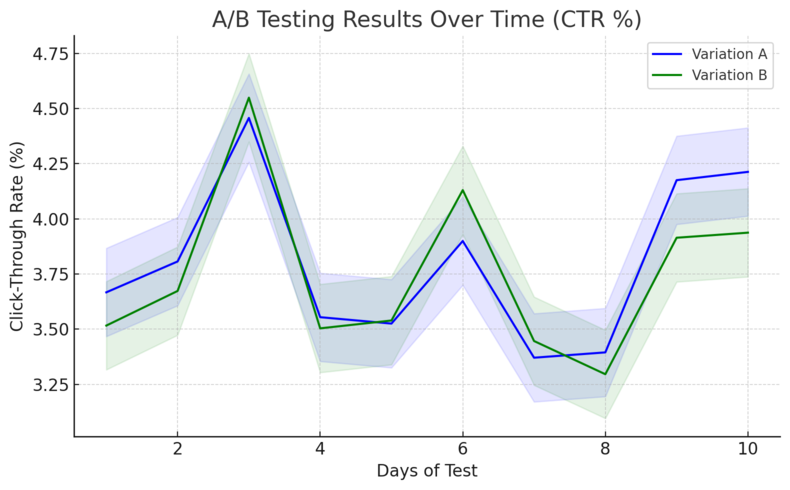
As a freelance Google Ads specialist, you can’t scale campaigns without testing.
But running random A/B tests isn’t enough—you need a repeatable framework that helps you identify what truly drives conversions.
Setting Up Test Structures That Reveal Clear Winners
A solid test starts with a clear hypothesis. I suggest writing it like this: “If I change [element], then [outcome] will improve because [reason].”
For instance, “If I switch the ad headline to focus on urgency, then CTR will increase because users respond to limited-time offers.”
To structure your test:
- Choose one variable per test—like headline, CTA, or audience.
- Use Google Ads’ Experiments feature: Go to Tools & Settings → Drafts & Experiments → New Experiment.
- Split traffic evenly (50/50) for two weeks minimum.
- Track statistical significance—you want 95% confidence before declaring a winner.
I always test ads that have received at least 1,000 impressions; anything lower can produce misleading results.
Tracking and Analyzing Tests for Long-Term Growth
Once your tests are running, it’s time to analyze. In the Reports → Predefined Reports (Dimensions) section, monitor CTR, Conversion Rate (CVR), and Cost per Conversion.
Here’s how I interpret the data:
- If CTR improves but CVR drops, the new headline might attract the wrong audience.
- If both CTR and CVR rise, that’s a winning ad worth scaling.
- If results are inconclusive, keep testing—your hypothesis might need refinement.
To visualize this data over time, I use Looker Studio dashboards connected to Google Ads. It’s an easy way to spot performance trends and keep a long-term record of what’s worked.
Knowing When to Stop Testing and Scale What Works
A common mistake freelancers make is never ending tests—they just keep tweaking. I believe in a “test, decide, move on” approach.
Once a test reaches 95% significance and has run for two conversion cycles, pick your winner and apply it across campaigns.
Scale the winner by:
- Increasing daily budget gradually (10–15% per week).
- Applying winning ad copy to other audiences.
- Creating ad variations with small tweaks for different segments.
The secret is knowing when “good enough” is actually good enough. Endless testing wastes time that could be spent scaling results.
5. Positioning Yourself as a Premium Expert
The difference between a $30/hour freelancer and a $10,000/month consultant isn’t skill—it’s positioning.
Clients pay more when they see you as an authority who drives measurable outcomes, not just clicks.
Creating Authority With Case Studies and Micro-Wins
Even small wins can establish credibility if presented correctly. Document them.
For example, if you improved a client’s ROAS from 3x to 5x in 30 days, create a simple Before vs. After snapshot using Google Ads screenshots (hide client details).
Structure your case studies like this:
- Challenge: “The client’s CPC was too high and conversion rate low.”
- Action: “I optimized targeting and introduced Smart Bidding.”
- Result: “CPA dropped by 35% within two weeks.”
These stories turn data into proof. Share them on LinkedIn, your portfolio site, or in cold pitches.
Packaging Services Into Performance-Based Retainers
Instead of charging hourly, package your services around outcomes. For instance:
- “$1,500/month retainer for ad management + strategy + reporting.”
- “10% of ad spend for accounts above $15k/month.”
You can also introduce performance-based pricing, such as a base fee plus a bonus for hitting CPA or ROAS targets.
I use this model when I trust the product and have data access—it keeps both sides invested in results.
Using Social Proof and Referrals to Build Client Trust
People trust what others already trust. Ask clients for short testimonials immediately after a positive milestone—like hitting ROI targets. You can even automate this with a simple email template:
“Hey [Name], glad to see your ads hit 4x ROAS this month! Would you mind sharing a quick sentence about your experience?”
Referrals are gold.
I recommend keeping a Client Referral Tracker (even a Google Sheet works). Offer a small incentive—like one free campaign audit—for successful referrals. Over time, word-of-mouth can become your strongest acquisition channel.
6. Managing Multiple Accounts Efficiently
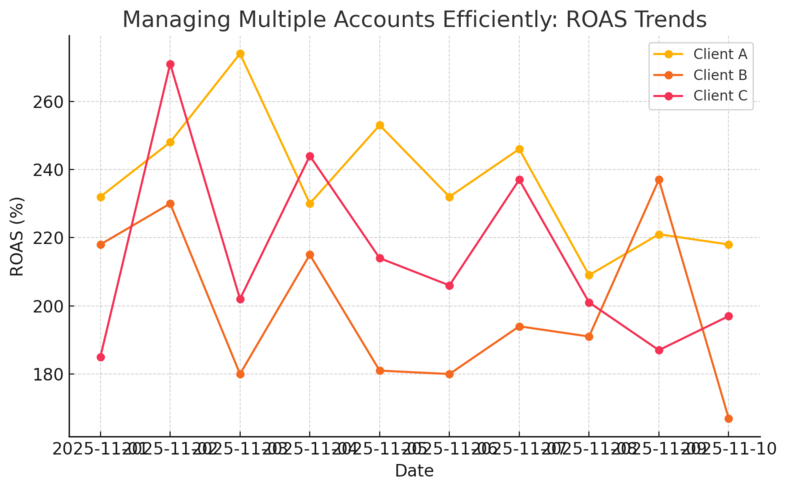
Once you manage more than three clients, juggling campaigns becomes chaos—unless you build systems.
Efficiency isn’t optional; it’s how top freelancers stay consistent and scale sustainably.
Setting Up a Scalable Account Management System
Start with a clear folder and naming structure inside your Google Ads Manager Account (MCC). Label accounts by client name and industry (e.g., “SmithCo_Ecommerce” or “BrightFinance_LeadGen”).
Then, use a task management tool like ClickUp or Notion for weekly optimization checklists:
- Review search terms
- Adjust bids
- Add negative keywords
- Refresh ad copy
I also recommend setting automated email alerts inside Google Ads (Tools → Rules → Create Rule).
For instance:
- Alert when Cost > $200 with no conversions.
- Alert when CTR < 1.5% for over 3 days.
This setup keeps you proactive instead of reactive.
Using Tools Like Google Ads Editor and Slack Integrations
Google Ads Editor is a free desktop tool that lets you make bulk edits offline. I use it when updating hundreds of ads at once. Example:
- Export campaigns → Change all final URLs to new UTM-tracked links → Re-upload.
For communication, I integrate Slack with Zapier. Each client gets a private Slack channel, and I set up automated alerts like “Campaign paused due to low budget.”
These integrations save hours weekly and keep clients in the loop without endless email chains.
Maintaining Quality Control Across Multiple Clients
To keep performance high, I conduct weekly account audits using a simple 3-step process:
- Performance Audit: Review metrics (CTR, CVR, ROAS).
- Budget Audit: Check pacing versus monthly targets.
- Creative Audit: Rotate ad variations if frequency > 2.5.
Document findings in a shared Google Sheet or dashboard. This transparency builds client trust and makes handoffs seamless if you ever scale with team support.
7. Building Long-Term Growth Through Education and Networking
The best freelance Google Ads specialists never stop learning. Algorithms evolve, competitors adapt, and staying sharp keeps you in demand.
Staying Ahead With Google Skillshop and Industry Updates
Google Skillshop is a free learning platform where you can earn certifications for Google Ads Search, Display, and Video. I revisit it quarterly—not for credentials, but for updates on algorithm changes and new features.
Follow official sources like Google Ads Help Center, Search Engine Land, and PPC Hero. I also subscribe to newsletters like Optmyzr and Adalysis for optimization insights.
Investing 30 minutes daily in learning compounds fast. Within a year, you’ll know things most freelancers don’t.
Joining Paid Masterminds and Private Freelancer Groups
I believe every serious freelancer needs a community. Paid masterminds or private groups often share insider strategies you won’t find publicly.
Platforms like Superpath, Freelance Coalition, or private Slack groups for PPC pros are great starts. You’ll find mentorship, accountability, and partnership opportunities that shorten your learning curve.
Collaborating With Other Specialists for Mutual Referrals
Collaboration beats competition. I often partner with web designers, SEO experts, or email marketers to offer bundled services. If a client needs landing page optimization, for instance, I collaborate instead of saying no.
Keep a small referral network of trusted specialists. When you share leads, you’re more likely to receive them back. This creates a steady pipeline without relying solely on cold outreach.
Expert Tip: Scaling as a freelance Google Ads specialist isn’t about mastering every tactic—it’s about building a system that runs smoothly even when you’re busy. Test deliberately, position yourself confidently, automate wisely, and keep learning relentlessly. That’s how the best freelancers grow beyond survival and into real independence.

I’m Juxhin, the voice behind The Justifiable.
I’ve spent 6+ years building blogs, managing affiliate campaigns, and testing the messy world of online business. Here, I cut the fluff and share the strategies that actually move the needle — so you can build income that’s sustainable, not speculative.
Related posts:
 How to Become a Freelance Google Ads Expert Fast
 How to Use QuillBot Paraphrasing Tool Effectively
 Is Paraphrase Quillbot Accurate? Real User Results Revealed
 10 Best Upwork Alternative Sites Freelancers Love in 2025
 Sprout Social Listening: How It Works for Brands
 Python Freelance Jobs Where to Land High-Paying Projects