
Table of Contents
Some links on The Justifiable are affiliate links, meaning we may earn a small commission at no extra cost to you. Read full disclaimer.
Becoming a freelance copywriter in 2025 isn’t about knowing a few clever words and throwing them on a page. It’s about mastering persuasion, building trust with clients, and learning how to make your words pay the bills.
If you’ve ever thought, “I want to get paid to write,” this guide will walk you through the exact steps to turn that thought into a career.
Understand What a Freelance Copywriter Actually Does
A freelance copywriter doesn’t just write—your job is to sell through words. Whether it’s a landing page, an email, or an Instagram ad, your copy should drive a specific action.
Copywriting vs Content Writing: Know the Difference
A lot of beginners confuse the two. Content writing is about educating and entertaining, like blog posts or guides. Copywriting is persuasion-heavy, like sales pages or ad campaigns. For example:
- A blog post explaining “10 Tips for Growing Tomatoes” is content writing.
- A landing page selling tomato-growing kits is copywriting.
Knowing this difference will help you position yourself clearly to clients.
The Core Skills Every Copywriter Needs
From what I’ve seen, the top freelance copywriters always sharpen these three skills:
- Research: Digging into customer psychology, pain points, and desires.
- Storytelling: Turning facts into narratives people actually care about.
- Conversion tactics: Using formulas like AIDA (Attention, Interest, Desire, Action) to move readers toward buying.
The truth? Writing is only half the job. The other half is psychology.
Build the Right Skills Before Selling Your Services

You can’t just announce “I’m a freelance copywriter” and expect high-paying clients tomorrow. Start by building a strong foundation.
Practice with Real-World Copy Projects
I always suggest beginners practice by rewriting existing ads. Take a brand you love and rework their email subject lines, landing pages, or product descriptions.
Compare your version against theirs and ask yourself: would I click? Would I buy?
Learn the Most Used Copywriting Frameworks
Here are three I’d start with:
- AIDA: Attention, Interest, Desire, Action.
- PAS: Problem, Agitation, Solution.
- Before-After-Bridge: Show the pain, show the ideal outcome, then bridge the gap.
You’ll see these formulas everywhere once you know them, and clients love when you can explain why your copy works.
Study Successful Copy in the Wild
Sign up for newsletters from big brands, scroll ads on Instagram, and pay attention to what hooks you. Every screenshot folder you build becomes a private swipe file you can learn from.
Create a Freelance Copywriter Portfolio That Stands Out
Without samples, clients won’t hire you. The good news? You don’t need paid experience to create a strong portfolio.
How to Build Samples Without Clients
You can create mock projects based on imaginary companies. Write a homepage for a yoga studio, an email campaign for a coffee brand, or a product description for a tech gadget. Label them as “spec work,” and they’ll still prove you can write.
What to Include in Your Portfolio
Keep it clean, simple, and persuasive (practice what you preach):
- 3–5 strong samples (emails, ads, landing pages).
- A short bio that positions you as a problem-solver.
- Testimonials if you have them—even from free or low-paying jobs at first.
Pro tip: Host your portfolio on a simple website with yourname.com. It looks way more professional than sending Google Docs.
Learn Where to Find Clients in 2025

Once your skills and portfolio are in place, the next step is landing paying work.
Platforms That Still Work for Beginners
- Upwork: Crowded, but if you niche down, you can get traction.
- Fiverr Pro: Only worth it if you want volume-based gigs.
- Contra & Worksome: Up-and-coming platforms where competition is lower.
Pitching Clients Directly
The best freelance copywriters don’t sit around waiting for job postings—they pitch. A cold email might look like:
“Hi [Name], I noticed your product pages don’t highlight customer benefits as clearly as they could. I put together a quick sample rewrite to show you what I mean. Would you be open to chatting?”
That kind of value-first approach works better than blasting a generic resume.
Networking on Social Media
LinkedIn and Twitter/X are gold mines for freelance copywriters. Post breakdowns of good copy, share mini case studies, and comment thoughtfully on posts from marketing managers.
The goal isn’t to beg for work—it’s to get noticed.
Set Your Freelance Copywriter Rates With Confidence

Pricing is where most beginners stumble. Charge too low, and you’ll get stuck with clients who don’t value you. Charge too high with no track record, and you’ll scare people off.
Popular Pricing Models for Copywriters
- Per project: Best for landing pages, emails, ads.
- Hourly: Useful for retainers or ongoing content updates.
- Retainers: Monthly fee for regular work, like managing an email newsletter.
I suggest starting with per-project pricing. For example: $100–$200 for an email sequence, or $300–$500 for a landing page. Once you’ve got results to show, raise your rates.
Positioning Yourself as Worth the Investment
Don’t just say “I write copy.” Say, “I write email campaigns that increase click-through rates.” Results sell. Words are just the vehicle.
Stay Ahead of Copywriting Trends in 2025
Copywriting changes fast, especially with AI tools flooding the market. Clients don’t just want words—they want words that cut through the noise.
Use AI Without Losing Your Voice
AI tools like Jasper or ChatGPT can help with brainstorming, but don’t rely on them to write client work word-for-word. Use them for idea generation, outlines, and research—but polish every sentence with your human voice.
Keep Learning Psychology and Marketing
The best freelance copywriters in 2025 are students of human behavior. I recommend reading books like “Influence” by Robert Cialdini or keeping up with consumer trend reports.
Your edge will always be in understanding people better than the next writer.
Expert Tip: Treat Yourself Like a Business, Not Just a Writer
If you want real success, don’t just think like a writer—think like a business owner. Track your income, reinvest in better tools (email software, website hosting), and protect your time with contracts.
The freelance copywriter who treats their work like a business almost always earns more than the one who treats it like a side hustle.

I’m Juxhin, the voice behind The Justifiable.
I’ve spent 6+ years building blogs, managing affiliate campaigns, and testing the messy world of online business. Here, I cut the fluff and share the strategies that actually move the needle — so you can build income that’s sustainable, not speculative.
Related posts:
 Best Freelance Writing Sites That Actually Pay Well
 Survival Tips for Freelance Writers
 How Fiverr Affiliate Program Will Make You Tons Of Cash
 Freelancing Websites: Top 10 Platforms to Kickstart Your Career
 Is Paraphrase Quillbot Accurate? Real User Results Revealed
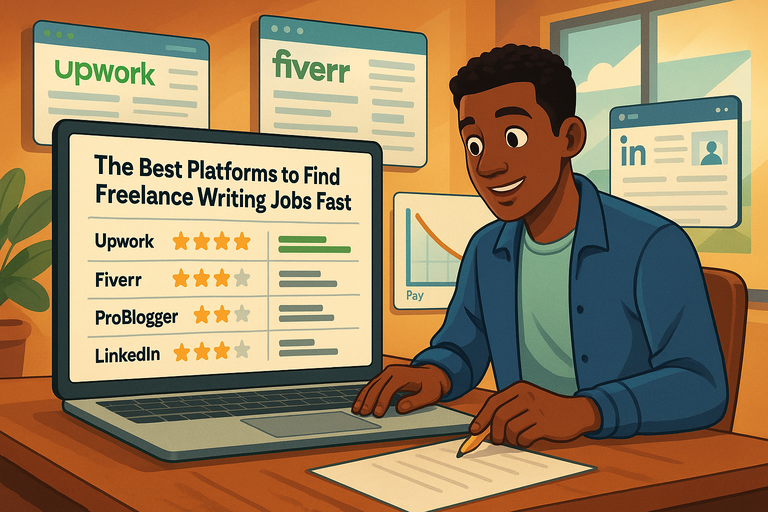 The Best Platforms to Find Freelance Writing Jobs Fast