
Table of Contents
Some links on The Justifiable are affiliate links, meaning we may earn a small commission at no extra cost to you. Read full disclaimer.
If you’ve been wondering how to make money dropshipping without spending a fortune upfront, you’re not alone. Many aspiring entrepreneurs want to start an online business but hesitate at the idea of big inventory investments.
The good news? You don’t need to buy thousands of dollars’ worth of products to build a profitable dropshipping business. The real trick lies in smart planning, low-cost tools, and clever marketing strategies.
So, how can you launch and grow a dropshipping business without risking your savings? Let’s break it down step by step.
Understand How Dropshipping Works to Reduce Risk
Dropshipping is one of the simplest online business models for people who want to make money dropshipping without investing heavily upfront.
Instead of purchasing products in bulk, you partner with suppliers who handle the inventory and shipping. You only pay for what customers order, which dramatically lowers financial risk.
How Dropshipping Minimizes Inventory Costs
The beauty of dropshipping is that you never buy stock before making a sale. This eliminates storage costs, excess inventory, and the stress of unsold products.
For example, let’s say you’re selling wireless earbuds through your online store. When a customer places an order, your supplier (let’s say from Doba or Salehoo) ships the item directly to them.
You earn the difference between your selling price and the supplier’s cost—without ever touching the product.
Here’s what this means for your wallet:
- Zero upfront inventory cost: You only buy what you sell.
- No warehouse fees: Your supplier stores and ships the products.
- Reduced financial risk: If an item doesn’t sell, you lose nothing but listing time.
I’ve seen beginners start with less than $100—mostly for their domain name, basic marketing, and small app subscriptions. It’s proof that dropshipping rewards strategy, not spending power.
Why Supplier Relationships Matter for Profitability
Suppliers are the backbone of your dropshipping business. A reliable supplier ensures fast shipping, consistent product quality, and fair prices—all critical for long-term profit.
Think of it this way: the better your supplier partnership, the smoother your operations. I always suggest reaching out to potential suppliers directly before committing. Ask these key questions:
- What’s your average delivery time to my target region?
- Do you provide real-time inventory updates?
- Can you handle returns or replacements quickly?
Building rapport with suppliers can even lead to exclusive deals or discounted pricing once you generate steady sales. A simple message like, “I plan to scale my store—can we discuss bulk discounts in the future?” opens the door to stronger relationships and better margins.
Common Myths About Upfront Costs in Dropshipping
Many people still believe you need thousands to start. That’s simply not true. The misconception comes from confusing dropshipping with traditional retail, where businesses purchase stock in advance.
Here’s the truth:
- Myth 1: You need to buy inventory upfront.
- Reality: You pay the supplier only when a customer buys.
- Myth 2: Marketing requires massive budgets.
- Reality: Organic traffic through TikTok, Pinterest, and SEO can drive sales for free.
- Myth 3: You need expensive tools to automate everything.
- Reality: Many beginner-friendly tools (like DSers or AutoDS) have free plans.
I believe the real investment is time and consistency, not money. Focus on learning, testing, and improving one small step at a time.
The Role of Automation in Keeping Startup Costs Low
Automation isn’t just about convenience—it’s your secret weapon for saving money. Instead of hiring people to handle repetitive tasks, you can use free or low-cost tools.
A few smart automation tools I recommend:
- DSers: Syncs orders between Shopify and AliExpress automatically.
- AutoDS: Automates price monitoring and stock updates.
- Mailerlite (free plan): Sends automated email campaigns to nurture customers.
Imagine getting a new order, and your supplier is automatically notified while the tracking number updates in your store—all hands-free. That’s time and money saved.
The more you automate, the more you can focus on what truly grows your business: product testing, branding, and customer engagement.
Choose a Low-Cost, High-Profit Niche

Your niche defines your dropshipping journey. Pick the wrong one, and you’ll struggle to stand out. Pick the right one, and you’ll make money dropshipping faster than you’d expect.
How to Identify Products with Low Competition and High Demand
The sweet spot is finding a product that sells consistently but isn’t oversaturated. I suggest starting with small, lightweight items that solve a specific problem.
A few examples of proven categories:
- Pet accessories (e.g., portable dog water bottles)
- Health gadgets (e.g., posture correctors)
- Kitchen tools (e.g., multi-use slicers)
Here’s my quick product validation test:
- Check TikTok and Amazon for trending but under-marketed items.
- Use Google Trends to see if demand is steady or seasonal.
- Search the product name on AliExpress—if 10–20 suppliers exist, competition is manageable.
Products that solve pain points always perform best.
Using Free Tools to Validate Your Product Ideas
You don’t need expensive analytics tools to find winners. Some of the best insights come from free platforms.
- Google Trends: Tracks interest over time.
- Ecomhunt (free version): Reveals trending products and their prices.
- TikTok Creative Center: Shows viral products and ad ideas.
Here’s how I use them together: start with an idea (like “LED cat collar”), check if Google Trends shows steady interest, then verify TikTok videos’ engagement.
If both metrics look strong—congratulations, you’ve got a potential product worth testing.
Why Evergreen Niches Help You Make Consistent Income
Evergreen niches are categories that stay relevant year-round—think skincare, home organization, or fitness. They may not explode overnight, but they deliver steady, reliable profits.
Evergreen products also help you build a brand with recurring customers. If you sell yoga accessories, for example, you can easily expand into meditation tools or fitness gear later. That’s how sustainable businesses are built.
I always advise beginners to start with evergreen items before chasing trends. It gives stability while you learn marketing and operations.
Avoiding Expensive Niches That Drain Your Budget
It’s tempting to sell “luxury” gadgets or fashion items, but those niches often come with:
- High refund and return rates
- Complex shipping requirements
- Fierce competition with big brands
Stay away from items like electronics, branded clothing, or anything requiring certification (like skincare with chemicals). Instead, focus on simple products that are lightweight, easy to ship, and under $50.
The less money tied up in risk, the faster you’ll see returns.
Set Up a Free or Affordable E-Commerce Store
Creating your dropshipping store doesn’t have to be expensive. You can launch a clean, professional-looking site using free tools and starter plans.
Best Free Platforms to Start a Dropshipping Store
Three solid options stand out for beginners:
- Shopify (free trial): Best for simplicity and built-in integrations.
- WooCommerce (WordPress plugin): Perfect if you want full control with minimal cost.
- Big Cartel: Offers free plans for small product catalogs.
Shopify is beginner-friendly, while WooCommerce gives you flexibility. If you’re starting from zero, I’d recommend Shopify for its drag-and-drop design and app ecosystem.
Step-by-Step: Setting Up a Shopify or WooCommerce Store on a Budget
Here’s a simple roadmap:
- Buy a domain – You can get one for around $10/year from Namecheap.
- Connect your platform – Shopify walks you through setup; WooCommerce needs a WordPress site first.
- Install a free theme – Start with Shopify’s “Dawn” or WordPress’s “Astra.”
- Add your first product – Connect DSers to import products directly from AliExpress.
- Customize your store’s branding – Add your logo, adjust colors, and write short product descriptions that focus on benefits.
I suggest testing your checkout flow before launch to ensure everything works smoothly.
How to Find Free or Cheap Website Themes That Look Professional
A great-looking store doesn’t have to cost a cent. Shopify’s Dawn, Craft, and Sense themes are free and mobile-optimized. For WooCommerce, themes like Astra and OceanWP perform beautifully.
When browsing themes, focus on:
- Fast load times (under 3 seconds)
- Easy navigation
- Clean product pages with visible “Add to Cart” buttons
Remember: design isn’t about being flashy—it’s about clarity. I recommend previewing your store on mobile since most customers shop on phones.
Optimizing Store Design to Increase Conversions Without Extra Cost
You don’t need expensive apps to increase conversions. Start by simplifying your layout and improving user experience.
Try these low-cost tweaks:
- Add customer reviews using Loox or Judge.me (both have free plans).
- Use Sticky Add to Cart buttons to reduce friction.
- Write benefit-driven product descriptions—focus on what the item helps people do, not just what it is.
A small but powerful tip: use one call-to-action per page. Too many options confuse shoppers. I believe simplicity converts better than flashy design every time.
Find Reliable, Low-Cost Suppliers for Dropshipping
Choosing the right suppliers is one of the most important parts of learning how to make money dropshipping successfully. A trustworthy supplier not only fulfills your orders but also protects your reputation.
Even one bad supplier can lead to delayed shipping, refund requests, and negative reviews—something every new dropshipper wants to avoid.
How to Use AliExpress, CJ Dropshipping, and Spocket Effectively
Each platform has its strengths, and knowing how to use them properly can save you both time and money.
- AliExpress: Great for beginners because it offers millions of products and free-to-start sourcing. When you’re browsing, filter by “Top Brands” or “4.7+ star ratings” to find reliable sellers. I suggest ordering one sample first—just click “Buy Now” and test shipping speed and packaging quality.
- CJ Dropshipping: A fantastic alternative for faster shipping times, especially to the U.S. They handle product sourcing, packaging, and even white-label branding. Inside the CJ Dashboard, go to “My CJ” → “Sourcing” to request specific products at custom prices.
- Spocket: Focuses on suppliers in the U.S. and Europe. That means quicker delivery, but often slightly higher product prices. To find good ones, toggle “Ships From: United States/Europe” in your search filters and compare delivery estimates.
If I had to choose a starting point, I’d go with CJ Dropshipping for balanced pricing and reliability. It’s also easier to transition to your own branded packaging later, which helps your business look more professional.
Vetting Suppliers Without Paying for Premium Directories
You don’t need expensive databases like SaleHoo or Doba to find good suppliers. You can manually vet them for free with a simple process I use regularly.
Here’s my three-step method:
- Check supplier history: On AliExpress or CJ Dropshipping, look for sellers with at least one year of activity and over 95% positive feedback.
- Communicate directly: Send them a quick message asking about restock frequency and average order fulfillment times. You can tell a lot about professionalism by how fast and clearly they reply.
- Inspect sample quality: Always order at least one product before listing it in your store. This lets you test not only the item but also packaging and delivery accuracy.
This extra hour of research can save weeks of frustration down the road. I’ve had suppliers ghost me before—since then, I never skip this step.
Negotiating Better Pricing and Shipping Terms Early On
Most new dropshippers think negotiation is only for large-scale sellers. The truth? Even if you’re starting small, you can negotiate better prices and terms.
I suggest opening your first conversation with something like: “I plan to scale my orders in the coming months. Can we discuss bulk pricing options or faster shipping methods?”
Here’s what often works:
- Ask for discounted shipping if you can commit to a minimum number of monthly orders.
- Inquire about private labeling—sometimes suppliers offer free custom logos after consistent sales.
- Request combined shipping if you plan to sell multiple related products (for example, dog collars and leashes).
Negotiation isn’t just about lower prices—it’s about building a mutual relationship that helps both sides grow profitably.
Building Trust and Consistency with Your Chosen Supplier
Once you’ve selected a supplier, focus on developing a long-term working relationship. Consistency is key in dropshipping, and suppliers are more likely to prioritize your orders if they know you’re serious.
A few habits that build trust quickly:
- Send regular updates about expected order volume.
- Pay invoices promptly.
- Provide honest feedback about product quality and packaging.
When a supplier sees you as a professional, they’ll often return the favor with faster shipping, better prices, and even early access to new products.
I’ve had suppliers hold exclusive stock for me simply because I maintained steady communication.
Use Free Marketing Strategies to Drive Traffic

Marketing doesn’t have to drain your wallet. The smartest dropshippers today rely heavily on free platforms to attract attention and convert visitors into buyers.
Leveraging TikTok and Instagram Reels to Promote Products
Short-form video content is the most powerful free marketing tool right now. A single viral TikTok video can drive thousands of visitors to your store overnight.
Here’s what works best in practice:
- Show product benefits in real life: Instead of saying “This blender is powerful,” record it crushing ice in five seconds.
- Use trending sounds: Check TikTok’s “Trending” tab under Creative Center → Popular Sounds.
- Add captions and text overlays: Keep them short, punchy, and benefit-driven (e.g., “Save 10 minutes every morning with this tool”).
I suggest posting at least three videos per week and experimenting with different hooks. The key is authenticity—users can sense when a video feels overly “salesy.”
How to Use SEO to Get Free Organic Store Traffic
Search engine optimization (SEO) is your long-term traffic engine. By optimizing your product pages, you can attract steady visitors without paying for ads.
Start with these fundamentals:
- Keyword research: Use free tools like Ubersuggest to find phrases like “best wireless dog collar” or “eco-friendly kitchen tools.”
- On-page optimization: Include those keywords naturally in your product title, description, and image alt text.
- Blog content: Write short guides that help solve problems your products address. For example, if you sell ergonomic office chairs, publish a blog titled “How to Fix Back Pain from Remote Work.”
Organic traffic takes time to build, but it pays off indefinitely. I’ve seen stores earn consistent daily visitors months after posting a single optimized article.
Building an Email List Without Paid Tools
Email marketing is still one of the most effective ways to turn visitors into loyal customers. Fortunately, you don’t need expensive tools to start.
- Use Omnisend or Klaviyo’s free plan to collect emails from your store’s checkout or pop-up form.
- Offer a simple incentive, like a 10% discount or free shipping on first orders.
- Send value-based emails—not just promotions. For example, “3 ways to get more out of your new posture corrector.”
The goal is to build trust and stay top-of-mind. I believe an engaged email list is more valuable than a one-time viral post—it gives you control over your traffic.
Growing Your Brand Through Content Marketing and Social Proof
People don’t just buy products—they buy trust. Content marketing helps you build that trust over time.
You can start by:
- Posting short how-to videos or lifestyle tips on social media.
- Asking customers to send pictures of their products in use (then feature them on your website).
- Sharing behind-the-scenes stories about your brand journey.
Even simple content like “Why I Started This Store” can humanize your business and connect emotionally with potential buyers. Social proof, such as real reviews or user-generated content, strengthens that connection even further.
Automate Your Store to Save Time and Money
Once your dropshipping business starts growing, automation becomes essential. It helps you handle daily tasks efficiently, leaving you more time for marketing and strategy.
Free and Low-Cost Apps to Simplify Order Fulfillment
You can easily automate most backend processes with beginner-friendly apps:
- DSers (Shopify app): Syncs product orders from AliExpress and automates fulfillment.
- AutoDS: Handles stock tracking, repricing, and order placement automatically.
- AfterShip: Sends real-time delivery updates to customers and reduces “Where’s my order?” messages.
These tools can save hours each week and help prevent costly human errors. Even on free or trial plans, they offer enough functionality to keep a small store running smoothly.
How to Set Up Email Automation for Customer Retention
Automated email flows can keep customers engaged long after their first purchase.
Here’s a quick setup idea using Mailchimp or Klaviyo:
- Welcome flow: Send a thank-you email right after signup.
- Product education flow: 2–3 days later, send tips on how to use the purchased product.
- Re-engagement flow: Two weeks later, offer a small discount or suggest complementary items.
This kind of personalized automation helps increase repeat purchases without additional ad spend. I’ve seen stores double their lifetime customer value with just a few well-written automated sequences.
Managing Orders and Returns Without Hiring a Team
The secret to handling operations smoothly without hiring help is clear systems.
You can:
- Use Shopify’s Order Status Page to track updates automatically.
- Set up auto-replies through Gmail or HelpScout to handle common inquiries.
- Create a simple return policy page—clear instructions reduce confusion and support requests.
I recommend setting aside 30 minutes daily to review your fulfillment dashboard. Staying proactive helps you spot issues before customers do.
Using Data Analytics Tools to Boost Sales Without Extra Costs
Data is your business compass. You can analyze what’s working and what’s not—all without paying for premium analytics tools.
Start with these free resources:
- Google Analytics: Tracks your store traffic and user behavior.
- Shopify Analytics: Shows top-performing products and abandoned cart rates.
- Hotjar (free plan): Provides heatmaps showing where customers click most.
By looking at these numbers weekly, you’ll uncover insights like which products attract the most attention or where customers drop off in checkout. That’s how you refine your store to drive more conversions and profit—without spending more on ads.
Scale Your Dropshipping Business Strategically
Scaling your store is where the real growth happens. Once you’ve made consistent sales, your next challenge is to make money dropshipping more efficiently—not just by selling more, but by managing smarter.
Scaling isn’t about spending more; it’s about multiplying results from what’s already working.
When and How to Reinvest Profits Wisely
When your store starts generating consistent revenue, resist the temptation to withdraw profits immediately. The smartest move is to reinvest strategically in areas that have already proven effective.
I suggest starting with these three priorities:
- Improve marketing assets: Reinvest in better product videos or higher-quality photos.
- Upgrade automation tools: Free tools work fine early on, but premium ones save hours once sales grow.
- Test new products slowly: Use profits from your best-selling items to fund new experiments.
Here’s what I do personally: I reinvest about 30% of profits back into the business. This keeps the store growing steadily while protecting cash flow. It’s a balance between safety and momentum.
Testing Paid Ads Without Overspending
Running ads can scale your sales quickly, but it’s also one of the easiest ways to lose money if done wrong. I believe testing small is the key to long-term profitability.
Try this approach:
- Start with $5–$10 daily test budgets on Meta Ads (Facebook & Instagram) or TikTok Ads Manager.
- Test three to five creative variations of your best-selling product videos.
- Track performance using cost-per-click (CPC) and cost-per-purchase (CPP).
If a video or audience performs well, slowly increase the budget by 20% every few days. Avoid jumping from $10 to $100 overnight—it confuses the algorithm and burns your ad budget.
A little trick I use: Duplicate your winning ad set instead of editing it directly. This keeps performance data separate and easy to track.
Expanding into New Product Lines at Minimal Cost
Once you’ve found a product that sells consistently, use that success as your launchpad. You don’t need to start from scratch. Instead, introduce complementary items that appeal to your existing audience.
For example:
- If your winning product is a pet grooming brush, add pet shampoo or portable paw cleaners.
- If you’re selling yoga mats, introduce resistance bands or foam rollers.
You can test new items using pre-orders or limited drops. This reduces upfront costs and lets you gauge interest before fully committing.
I usually upload the new product to my store and send an email to existing customers asking for feedback—it feels personal and builds excitement.
Building a Sustainable Brand Beyond Dropshipping
At some point, you’ll want to move from “dropshipping store” to “real brand.” This doesn’t mean you need a warehouse or huge staff—it means focusing on customer loyalty, consistent branding, and long-term reputation.
Here’s how to start:
- Create branded packaging: Even a small custom logo on product boxes can elevate your image.
- Develop a story: People connect with brands that stand for something. Share why you started and what you value.
- Build repeat trust: Send follow-up emails with helpful tips instead of constant promotions.
I’ve seen stores triple their lifetime customer value (LCV) just by focusing on branding. Dropshipping may start as a shortcut, but building a brand turns it into a sustainable business.
Common Mistakes That Stop You from Making Money Dropshipping
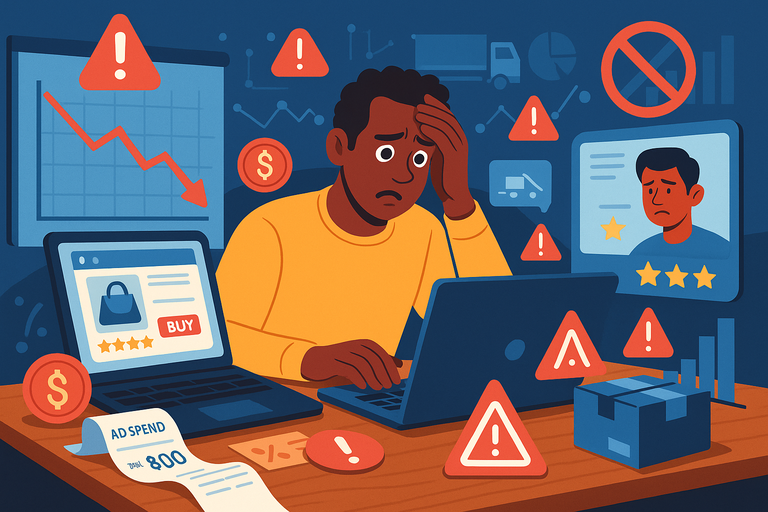
It’s easy to make small mistakes that quietly drain profits. Avoiding these pitfalls can save you time, money, and frustration.
Overspending on Ads Too Early
A lot of beginners burn through their budget chasing viral ads. The problem is that without data, every dollar spent is a guess.
If you’re just starting out, focus on organic marketing first—TikTok videos, Pinterest pins, and SEO blogs. Once you get organic sales, you’ll know what kind of ad creatives actually convert. That’s when paid ads make sense.
The rule I follow: spend only what you can afford to lose during testing. Ads should amplify results, not replace strategy.
Ignoring Supplier Reliability and Product Quality
Even the best marketing won’t save you if customers receive poor-quality items. Always test your supplier’s products before launching.
Order samples and check:
- Shipping time
- Packaging quality
- Product accuracy (does it match photos?)
I once ordered a batch of “anti-scratch pet gloves” that arrived with weak stitching. A single bad batch can lead to refunds and negative reviews, so testing beforehand is non-negotiable.
Skipping Market Research Before Launching
Guessing what to sell is risky. Market research tells you what customers already want.
Before listing a new product, I use:
- Google Trends to see demand patterns.
- TikTok Creative Center to spot trending products.
- Amazon Best Sellers to identify proven niches.
This 20-minute research step can prevent you from wasting months on a product nobody’s buying.
Failing to Build Long-Term Customer Relationships
Dropshipping often attracts “quick cash” thinking. But long-term success comes from repeat customers.
Small gestures like handwritten thank-you notes, post-purchase tips, or simple “how-to” videos make customers feel valued.
I’ve had customers return months later because of a single follow-up email that offered real advice, not just discounts.
Relationships are your best marketing strategy—they cost nothing and create loyalty.
Expert Tips to Maximize Profit Without Spending Big
Making more money doesn’t always mean spending more. Smart tools and strategies can multiply your results on a budget.
Using AI Tools for Market Research and Ad Copy
AI tools can save hours of guesswork. For example:
- ChatGPT: Use it to brainstorm ad headlines, product names, or benefit-driven descriptions.
- Gemini: Great for analyzing competitor trends and identifying market gaps.
- Copy.ai: Generates ready-to-use ad text that you can tweak for personality.
I often use AI to test different angles for ad copy before launching a campaign—it’s like having a brainstorming partner that never sleeps.
Leveraging Free Analytics to Track Store Performance
Knowing your numbers is key to smart decision-making. You don’t need premium tools for that.
Use these free options:
- Google Analytics: See which pages bring traffic and conversions.
- Shopify Reports: Identify best-selling products and repeat buyers.
- Meta Pixel: Tracks which ads bring the highest return on ad spend (ROAS).
I recommend reviewing your analytics weekly. It’s like a health check for your business—quick, simple, and revealing.
Partnering with Micro-Influencers for Affordable Promotion
You don’t need to pay thousands for influencer marketing. Micro-influencers (1K–20K followers) often promote products for free samples or small commissions.
To find them, search hashtags relevant to your niche—like #petlover or #homefitnessgear—and look for creators with engaged comments. Send a personalized message offering collaboration, not just promotion.
A single honest review from a trusted creator can outperform paid ads because it feels authentic.
Creating a Unique Value Proposition That Doesn’t Cost Money
Your “value proposition” is what makes your store stand out. It doesn’t have to be expensive—it just needs to connect emotionally.
For example:
- Fast delivery promise if you use U.S.-based suppliers.
- Eco-friendly packaging if your audience cares about sustainability.
- Personalized customer service if you reply quickly and genuinely.
I believe uniqueness isn’t about inventing something new—it’s about presenting familiar things in a way that feels special.
Final Step: Turn Your Dropshipping Store into a Long-Term Business
At this stage, you’re no longer just trying to make money dropshipping—you’re building something lasting. Long-term success is about consistency, branding, and smart financial planning.
Turning Short-Term Sales into Repeat Customers
Customer retention is the easiest way to increase profits. It’s cheaper to keep an existing buyer than to find a new one.
Try these simple tactics:
- Offer loyalty points or discounts for repeat purchases.
- Send product usage tips after delivery.
- Create bundles or complementary offers for returning customers.
When customers feel seen and supported, they come back naturally.
Building Brand Authority with Minimal Financial Investment
You don’t need huge budgets to build authority—just consistency and transparency.
Start by:
- Posting behind-the-scenes videos on social media.
- Sharing customer testimonials on your homepage.
- Writing blog content that educates your audience, not just sells.
I’ve found that the more value you give, the more trust you earn. Authority grows through authenticity, not advertising.
Setting Realistic Financial Goals and Tracking Progress
Scaling is easier when you have measurable goals. I suggest setting targets like:
- 10% monthly revenue growth
- 20% repeat customer rate
- Under 3% refund rate
Track these metrics inside Shopify or Google Sheets. Adjust your efforts monthly based on what’s working. Progress becomes predictable when it’s measurable.
Preparing for the Next Stage: Private Labeling or Custom Products
Once you’ve built momentum, consider private labeling—selling products under your own brand. This increases control over quality, pricing, and customer experience.
Start by asking your top supplier if they offer branding options (many do). Even small customizations like logo printing or branded packaging can elevate your store from generic to memorable.
This is where your business shifts from “dropshipping” to “e-commerce brand.” You’ll have the flexibility to set higher prices, build customer loyalty, and stand out in competitive markets.

I’m Juxhin, the voice behind The Justifiable.
I’ve spent 6+ years building blogs, managing affiliate campaigns, and testing the messy world of online business. Here, I cut the fluff and share the strategies that actually move the needle — so you can build income that’s sustainable, not speculative.
Related posts:
 How to Make Money Dropshipping: 7 Secrets to a $10K/Month
 Top 10 Best Money Making Methods You Can Start Today!
 Affiliate Advertising vs. Dropshipping: Which One Wins?
 10 Proven Strategies for Creating Passive Income Streams
 Instant Success: Easy Way to Make Quick Money Fast
 How To Start A Dropshipping Business With No Money