
Table of Contents
Some links on The Justifiable are affiliate links, meaning we may earn a small commission at no extra cost to you. Read full disclaimer.
When I first came across the Salehoo Directory, I was skeptical—another “supplier database” promising to make dropshipping easier?
But after digging deeper, I realized it’s not just a random list of wholesalers; it’s a curated platform with real potential for new and seasoned eCommerce sellers.
In this review, I’ll break down exactly what makes the Salehoo Directory stand out, what it gets right (and wrong), and whether it’s really worth your investment as a product sourcing tool.
What Is The Salehoo Directory And How It Works
The Salehoo Directory is an online supplier database designed to help eCommerce sellers find reliable wholesalers and dropshippers quickly.
Think of it as a matchmaking service between product sellers and trusted suppliers—only far more organized and data-driven.
Understanding Salehoo’s Core Function
At its heart, Salehoo Directory serves one clear purpose: to make sourcing products safe and simple. Instead of browsing random suppliers online and hoping they’re legitimate, Salehoo acts as a pre-vetted library.
It connects you to over 8,000 verified suppliers offering more than 1.6 million products across almost every niche—from electronics and fashion to home décor and beauty.
What makes it different is that Salehoo focuses heavily on trust. Every supplier in the directory undergoes background checks for authenticity, contact reliability, and delivery history.
So when you browse a product listing, you’re not just seeing a name—you’re seeing verified business credentials.
This saves hours of research time and reduces the risk of scams, which, if you’ve ever sourced from Alibaba or other open marketplaces, you know can be a serious headache.
How Salehoo Curates And Verifies Suppliers
Salehoo’s verification process is surprisingly hands-on. Before a supplier makes it into the directory, Salehoo’s team manually confirms:
- Business legitimacy – Registration documents, trading licenses, and physical business addresses are reviewed.
- Operational reliability – They check customer feedback, order fulfillment rates, and how long the supplier has been in business.
- Product quality consistency – Sample orders and spot checks ensure products meet expected standards.
In my experience, this screening process is what truly sets Salehoo apart. It doesn’t just rely on self-submitted data like some directories do. It’s a curated list, not a crowdsourced one.
Difference Between Salehoo Directory And Other Marketplaces
Here’s the thing—Salehoo isn’t a marketplace. You can’t buy directly through it. Instead, it acts as a bridge that connects you to the supplier. That’s a crucial distinction.
Unlike Alibaba or DHgate, where you often deal with middlemen and unverified vendors, Salehoo ensures that the businesses you find are legitimate suppliers, not resellers.
Plus, since Salehoo focuses on English-speaking markets like the US, UK, and Australia, communication is smoother and less prone to misunderstandings.
In short, if Alibaba feels like walking into a chaotic bazaar, Salehoo Directory feels more like walking into a vetted trade fair—everything cleaner, safer, and easier to navigate.
Key Features That Make Salehoo Directory Stand Out
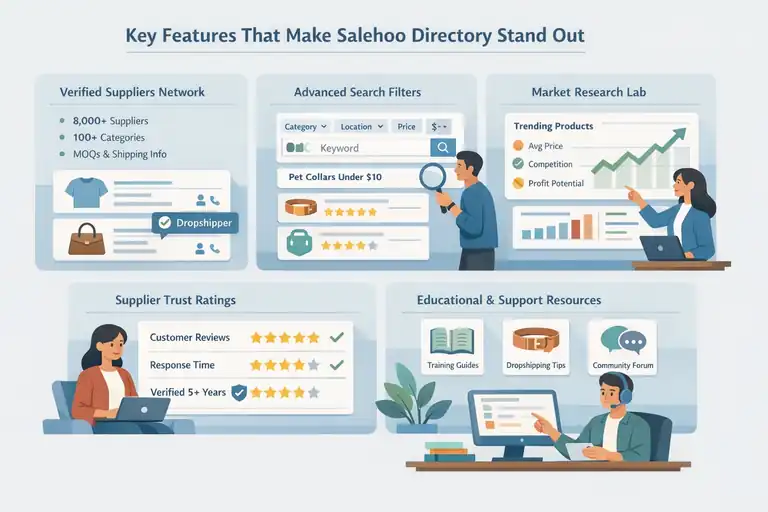
The Salehoo Directory doesn’t just list suppliers; it gives you tools to make smarter sourcing decisions. Here’s where it shines.
Access To Verified Wholesalers And Dropshippers
Salehoo gives users access to a massive network of over 8,000 verified suppliers across 100+ product categories.
Whether you’re building a dropshipping store or looking for wholesale deals to stock your Amazon or eBay shop, you’ll find suppliers tailored to your business model.
Each supplier profile includes details like:
- Product categories and pricing options
- Minimum order quantities (MOQs)
- Contact details and location
- Shipping methods and lead times
What I like most is that you can filter specifically for dropshippers—those who handle storage and shipping for you. That’s a huge time-saver if you’re just starting out and don’t want to manage inventory.
Advanced Search Filters For Product Discovery
Finding products inside Salehoo Directory is refreshingly simple. You can search by product type, category, supplier location, or even niche keywords.
Let’s say you’re targeting the pet accessories market. You can narrow your search to dropshippers in the US offering pet collars under $10. The results show suppliers who meet every filter—saving hours of manual browsing.
It’s not just about speed, though. These search filters help you compare suppliers on the same level, which is key to finding the right balance between price and reliability.
Built-In Market Research Lab For Product Validation
This is one of Salehoo’s most powerful features—and one that often gets overlooked.
The Market Research Lab analyzes real-world eCommerce data to help you identify trending, profitable products before you commit to sourcing them.
It shows metrics like:
- Average selling price
- Competition level
- Profit margin potential
- Sales performance data across platforms like eBay and Amazon
For example, if you’re considering selling LED dog collars, the tool can tell you whether that product is trending upward or already saturated. It’s like having a built-in research assistant that helps you avoid costly mistakes.
Supplier Performance And Trust Metrics Explained
Each supplier listing includes detailed trust metrics, so you don’t have to guess their credibility. You can view factors like customer ratings, communication quality, and return policy transparency.
Salehoo also shows how long a supplier has been verified, which adds an extra layer of confidence.
Personally, I always prefer suppliers who’ve been verified for at least a year—it usually means they’ve proven their reliability over time.
Customer Support And Educational Resources
One thing Salehoo does exceptionally well is community support. Their customer service team is available via live chat and email, and they’re genuinely responsive (not just scripted responses).
On top of that, Salehoo provides:
- Free eCommerce training guides
- Dropshipping blueprints for beginners
- Community forums where you can connect with other sellers
If you’re new to product sourcing, these resources can help you avoid common beginner traps and move faster toward your first sale.
Pros And Cons Of Using Salehoo Directory
No platform is perfect, and Salehoo is no exception. Here’s a balanced look at what it does well—and where it could improve.
Major Advantages For Dropshippers And Wholesalers
There’s a lot to love about Salehoo, especially if you value reliability and structure.
Key benefits include:
- Verified suppliers only – dramatically reduces scam risk.
- Beginner-friendly platform – intuitive layout and easy navigation.
- Educational content – helps new users understand how to start and scale.
- Market insights – via the research lab for smarter product selection.
- Global reach – suppliers from the US, UK, China, and beyond.
In my experience, the directory feels designed for both beginners and intermediate sellers who want quality control without corporate-level budgets.
Common Drawbacks And Limitations You Should Know
There are a few areas where Salehoo could be better.
- Smaller supplier pool compared to giants like Alibaba.
- Limited free trial – you’ll need to pay upfront to access full features.
- No direct transactions – since Salehoo doesn’t facilitate payments, you must handle communication and payments directly with suppliers.
While these aren’t deal-breakers, they’re worth knowing so you can plan accordingly—especially if you’re used to plug-and-play integrations like Spocket offers.
When Salehoo Works Best (And When It Doesn’t)
In my opinion, Salehoo works best for:
- New eCommerce sellers who want safe, verified suppliers.
- Dropshippers looking for trusted partners in English-speaking markets.
- Wholesalers who prefer quality assurance over bulk discounts.
It may not be ideal for:
- Sellers chasing ultra-cheap products from unverified suppliers.
- Businesses that need instant automation or Shopify-integrated dropshipping.
If you’re okay with doing some manual outreach and want peace of mind that your suppliers are real, Salehoo Directory is an excellent foundation for your sourcing strategy.
Pro tip: Use Salehoo’s Market Research Lab before contacting suppliers—it can save you from jumping into oversaturated niches and help you build a store with real profit potential.
Salehoo Directory Pricing And Membership Options
Let’s talk about pricing because, honestly, that’s one of the first things anyone asks before committing to a platform like Salehoo Directory.
The good news is, Salehoo keeps things pretty straightforward. You won’t find hidden fees or confusing tiers, but understanding what you actually get for your money is key before signing up.
Cost Breakdown Of Salehoo Subscription Plans
Salehoo Directory currently offers two main options: an annual membership plan and a lifetime access plan.
Here’s a quick breakdown:
- Annual Plan: $67 per year
- Full access to the supplier directory
- Entry to Salehoo’s education hub and community
- Market Research Lab access
- Email and live chat support
- Lifetime Access Plan: $127 one-time payment
- Includes everything in the annual plan
- Lifetime access—no renewals or recurring charges
From my perspective, the annual plan is ideal if you just want to test the waters. But if you’re serious about eCommerce and see yourself sourcing long-term, the lifetime plan is a no-brainer. Two years of annual payments already exceed the one-time lifetime cost.
Salehoo also offers a 60-day money-back guarantee, which is reassuring. It gives you enough time to test the platform and make sure it aligns with your sourcing strategy before fully committing.
Comparing Salehoo’s Pricing To Competitors Like Doba And Spocket
When you compare Salehoo’s pricing with other popular supplier databases like Doba or Spocket, it’s easy to see how affordable it really is.
Here’s a quick look at how they stack up:
| Platform | Monthly Cost | Supplier Verification | Access Type | Refund Policy |
| Salehoo Directory | $67/year or $127 lifetime | Manual, in-house vetting | Global supplier directory | 60 days |
| Doba | Starts at $24.99/month | Automated supplier feed | Dropshipping platform | 30 days |
| Spocket | Starts at $39.99/month | Verified partners | Shopify/BigCommerce integration | No refunds on monthly plans |
In essence, Salehoo is more of a research and sourcing tool, while Doba and Spocket function as integrated dropshipping platforms.
Salehoo doesn’t automate fulfillment, but it gives you broader supplier options and lifetime value at a fraction of the long-term cost.
So, if you’re comfortable managing supplier relationships manually and want full control over your sourcing process, Salehoo’s flat-rate pricing is much more sustainable.
Is The Lifetime Access Plan Worth It?
In my honest opinion—yes, the Salehoo Lifetime Access Plan is one of the best deals in the supplier directory space. Let me explain why.
For one, the lifetime plan doesn’t just lock in your access—it locks in the future updates too. Salehoo regularly adds new suppliers, expands categories, and updates research tools.
Paying once and enjoying all of that without renewals feels like getting a paid VIP upgrade that keeps improving over time.
Second, most other supplier tools charge $30–$50 per month. That’s $360–$600 annually, compared to a one-time $127 for Salehoo.
Even if you use the platform for just six months to find your first set of reliable suppliers, you’ll still get your money’s worth.
Quick tip: If you’re starting small and plan to test multiple product categories, go with the lifetime plan right away. It removes the time pressure of “making it pay off” within 12 months, letting you explore at your own pace.
How To Find Reliable Suppliers Using Salehoo Directory
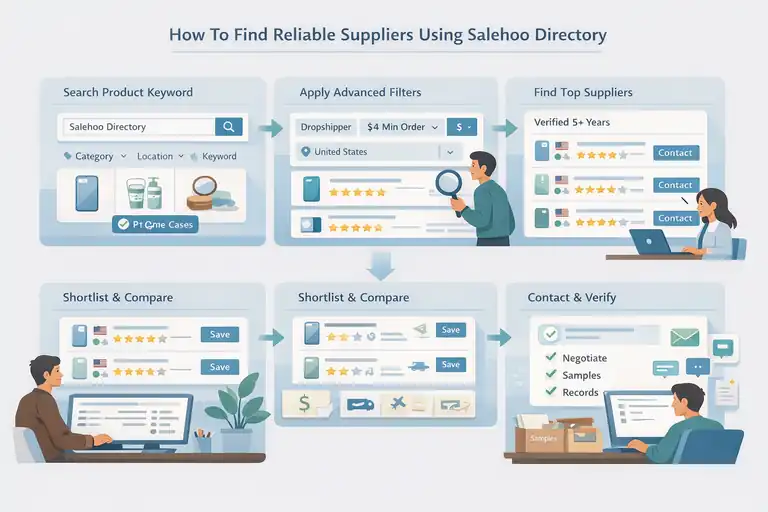
Finding great suppliers inside Salehoo isn’t complicated—it’s about knowing where to look and how to filter. Here’s a step-by-step approach I use (and recommend) to get consistent results.
Step-By-Step Process To Search And Filter Trusted Suppliers
Here’s how I usually navigate the Salehoo Directory efficiently:
- Start with your niche. Type your product or niche keyword in the search bar (like “phone cases” or “organic skincare”).
- Use advanced filters. Narrow down by supplier location, minimum order quantity (MOQ), or whether they support dropshipping.
- Check supplier profiles. Look for verified badges, contact info, and how long they’ve been listed.
- Review catalog size and categories. Suppliers with diverse catalogs often have better fulfillment systems.
- Shortlist and compare. Save 3–5 potential suppliers and compare prices, return policies, and communication response times.
This system helps you quickly eliminate unreliable or low-value suppliers and zero in on the ones that fit your goals.
Evaluating Supplier Quality Before Partnering
Once you’ve shortlisted suppliers, the real work begins—verification. Even though Salehoo already pre-vets suppliers, it’s smart to do your own checks.
Here’s what I look for personally:
- Responsiveness: Send a test email. A good supplier should respond within 24 hours.
- Professional communication: Look for clear pricing, answers to your questions, and proper English (a good sign of international readiness).
- Sample quality: Always order a sample before listing a product. This is your quality guarantee.
- Shipping reliability: Ask about delivery times and tracking options, especially for international orders.
This small due diligence step can prevent massive headaches later. I once skipped the sample stage early in my dropshipping journey—and ended up refunding 60% of orders due to quality issues. Lesson learned.
How To Contact And Negotiate With Suppliers Professionally
Approaching suppliers the right way can set the tone for a long-term partnership.
Here’s how I recommend doing it:
- Be clear and polite. Introduce yourself, mention your business, and specify what you’re looking for.
- Ask smart questions. For example: What’s your MOQ? Do you offer private labeling? Can you handle international shipping?
- Negotiate respectfully. Don’t start with aggressive price demands. Instead, discuss volume discounts once you’ve established trust.
- Keep records. Use email instead of chat apps initially so all agreements are documented.
Remember, suppliers deal with hundreds of inquiries weekly. A professional, clear message will instantly set you apart—and they’ll be more likely to prioritize your orders and offer better rates over time.
Salehoo Directory Vs. Other Supplier Databases
There are plenty of supplier databases out there, but they’re not all built the same. Here’s how Salehoo stacks up against its biggest competitors in usability, reliability, and value.
Salehoo Vs. Alibaba: Which Is Better For Beginners?
If you’re new to sourcing, Salehoo wins hands down. Alibaba is massive—millions of listings, but with that size comes inconsistency.
Here’s the difference:
- Salehoo: 8,000+ verified suppliers manually checked by Salehoo staff.
- Alibaba: Millions of suppliers, but many are middlemen or unverified traders.
- Ease of use: Salehoo’s filters are beginner-friendly, while Alibaba can feel overwhelming.
From my experience, beginners often get lost in Alibaba’s complexity. Salehoo simplifies the process by removing the guesswork and risk of scams, making it a safer learning environment.
Salehoo Vs. Spocket: Ease Of Use And Supplier Quality
Spocket is excellent if you’re focused purely on dropshipping automation—it integrates directly with Shopify and WooCommerce. But that convenience comes with a monthly subscription cost and limited supplier choice.
- Spocket: Fast automation and shipping, but fewer suppliers and higher product prices.
- Salehoo: Manual setup, but larger selection, better pricing flexibility, and lifetime access.
If you’re building a brand and want to control product selection and supplier relationships, Salehoo gives you more creative freedom.
Salehoo Vs. Worldwide Brands: Value And Database Depth
Worldwide Brands is one of the oldest directories, and while it offers a bigger list of suppliers (around 16 million products), its interface feels outdated and less intuitive.
- Worldwide Brands: Huge database, one-time $299 payment.
- Salehoo: Smaller but more curated supplier base, with better modern tools like the Market Research Lab.
In practice, I’ve found Salehoo easier to navigate. Its suppliers are more active, and the educational support makes it better suited for modern eCommerce sellers.
Comparing Overall Profitability Across Platforms
When you factor in total cost, ease of use, and product sourcing potential, Salehoo offers one of the best ROI values out there.
Here’s why:
- Lower upfront cost with lifetime access.
- Higher trust and supplier reliability, which reduces refund losses.
- Ongoing product trend tools to keep your store competitive.
In short, if you want a directory that’s both affordable and practical for long-term use, Salehoo Directory edges out its competitors in overall value.
Expert tip: Combine Salehoo’s supplier vetting with your own mini product test orders. This hybrid approach gives you confidence in product quality before scaling—and that’s what truly separates sustainable sellers from short-term ones.
Real User Feedback And Salehoo Directory Reviews
Before trusting any supplier directory, I always like to hear what other sellers are saying. Salehoo Directory has been around since 2005, which means there’s no shortage of opinions online—some glowing, some skeptical.
Let’s look at what real users have to say, what patterns emerge, and whether the feedback actually holds up under scrutiny.
What Customers Are Saying About Salehoo Directory
If you browse through Trustpilot or Reddit threads, you’ll notice most Salehoo Directory users share one common theme: trust and transparency.
Many dropshippers and Amazon sellers mention how Salehoo made it easier to find legitimate suppliers without worrying about scams.
Here are a few recurring comments I’ve seen:
- “It’s easy to navigate and find verified suppliers.”
- “I actually found a US-based supplier who ships faster than the ones on Alibaba.”
- “Their customer support actually replies and helps.”
On Trustpilot, Salehoo currently holds a rating above 4.0 stars, which is impressive for a B2B platform. Sellers often mention the Market Research Lab as a favorite feature because it saves time figuring out which products are worth selling.
In my own use, I’ve found those reviews mostly accurate. The interface really is clean, and I like that I can see supplier contact info immediately instead of digging through layers of listings like on Alibaba.
Common Praise And Complaints From Real Users
While many reviews are positive, it’s not all sunshine. Here’s a breakdown of what people praise—and where they think Salehoo falls short.
The good:
- Verified suppliers that actually respond.
- Transparent pricing with no hidden costs.
- Educational resources for beginners.
- Community support that feels authentic and active.
The not-so-good:
- Some users wish for more suppliers in specific niches (like electronics or luxury goods).
- Others say it’s not a plug-and-play tool—you still have to communicate with suppliers manually.
- A few note that the Market Research Lab data can sometimes feel limited for niche-specific searches.
From what I’ve seen, these “negatives” are mostly about expectations. Salehoo isn’t meant to automate your business—it’s meant to help you build it right from the start. That distinction matters.
How Reliable Are The Reviews Found Online?
When researching Salehoo, you’ll find a mix of reviews across blogs, YouTube, and review sites. Some are genuine; others, not so much.
I always recommend checking for verified purchase reviews on Trustpilot or looking for users who share specific examples (like product categories they sourced or suppliers they’ve contacted).
Here’s what I noticed:
- Trustpilot and BBB reviews tend to be the most reliable.
- YouTube reviews can be hit-or-miss—some are affiliates pushing signups.
- Reddit discussions are often bluntly honest but not always up to date.
Overall, Salehoo’s reputation is solid. The negative reviews usually stem from misunderstandings about how supplier directories work rather than actual issues with the product.
Who Should (And Shouldn’t) Use Salehoo Directory
Not every eCommerce seller will get the same value out of Salehoo Directory. Knowing where you fit can help you decide whether it’s worth your time and money.
Ideal Users: Dropshippers, Amazon Sellers, And eBay Retailers
If you fall into any of these groups, Salehoo can genuinely make your life easier:
- Dropshippers: Perfect for those who want pre-vetted suppliers offering dropship options without worrying about fake listings.
- Amazon FBA sellers: Great for finding wholesale suppliers with products that meet Amazon’s sourcing requirements.
- eBay retailers: Especially useful for finding bulk deals and trending low-cost products for quick turnover.
I’d also add small online store owners who want to expand their product lines responsibly. Salehoo’s filters help you find domestic suppliers faster, which can reduce shipping times—a big win for customer satisfaction.
When Salehoo Might Not Be The Right Fit
There are cases where Salehoo might not suit your needs, and it’s better to know upfront.
You might want to skip Salehoo if:
- You need automated dropshipping tools that integrate directly with Shopify (like Zendrop).
- You’re only after the cheapest possible suppliers, even if they’re unverified.
- You prefer instant product import tools over manual communication.
Salehoo is best suited for people who want control over their supplier relationships, not full automation.
Alternative Tools For Specific eCommerce Needs
If Salehoo doesn’t tick every box, consider these alternatives:
- Spocket: Best for automated US/EU dropshipping with Shopify and WooCommerce.
- CJ Dropshipping: Offers fulfillment, branding, and custom packaging.
- Worldwide Brands: Huge database for wholesalers, though less modern in design.
- Doba: Automated product importing and order syncing, but more expensive long-term.
Each of these platforms serves slightly different business models. Personally, I use Salehoo alongside CJ Dropshipping—it’s a great combination of research and execution.
Expert Tips To Maximize Value From Salehoo Directory
I’ve used the Salehoo Directory on and off for years, and if there’s one thing I’ve learned, it’s that how you use it matters just as much as the tool itself.
These tips can help you squeeze every drop of value from your membership.
How To Use The Directory To Discover High-Margin Products
Start with Salehoo’s Market Research Lab. Instead of browsing aimlessly, search by category or keyword and look for products with:
- Low competition
- Moderate to high demand
- A profit margin of at least 40%
Then, cross-check the product on Amazon and eBay to verify pricing trends. If you see consistent sales with decent margins, that’s a strong indicator of a viable product.
I once found a niche item—reusable silicone kitchen lids—through Salehoo’s data and sold through my first batch in two weeks. It worked because I validated demand before reaching out to suppliers.
Building Long-Term Supplier Relationships
Don’t treat suppliers like one-time vendors. They can become strategic partners. Once you find a reliable one, here’s how to nurture that relationship:
- Communicate regularly and respectfully.
- Pay invoices on time (it builds trust fast).
- Share feedback and request small customizations once trust is built.
In my experience, long-term suppliers often reward consistency with better pricing and priority fulfillment. That’s an advantage many sellers overlook.
Leveraging Salehoo’s Education Hub For Faster Growth
Salehoo isn’t just a directory—it’s also an education platform. Their Education Hub offers free courses on dropshipping, eCommerce marketing, and supplier negotiation.
I recommend starting with their Dropshipping for Beginners course if you’re new. It gives you a foundation that makes the directory easier to use strategically rather than randomly browsing listings.
The best part? You can apply what you learn immediately—like how to spot trending products or avoid suppliers with weak fulfillment records.
Avoiding Common Mistakes New Users Make
Here are some pitfalls I’ve seen new users fall into (and how to avoid them):
- Jumping into trending products too fast. Always verify demand with Salehoo’s research tools first.
- Contacting too many suppliers at once. Focus on 3–5 solid options so you can manage communication effectively.
- Ignoring shipping policies. Always check fulfillment times before listing a product online.
If you keep your approach organized, you’ll get far better results from the Salehoo Directory in less time.
Final Verdict: Is Salehoo Directory The Best Supplier Database?
At this point, you might be wondering—does Salehoo Directory really live up to the hype? The short answer: it depends on your goals, but for most sellers, yes, it’s worth it.
Summary Of Strengths And Weaknesses
Strengths:
- Verified, scam-free supplier network
- Affordable lifetime access option
- Built-in product research tools
- Excellent community and educational support
Weaknesses:
- Smaller database than Alibaba
- No automated dropshipping integrations
- Limited niche options for certain industries
Still, those trade-offs come with the benefit of trust—and that’s something money can’t easily buy in eCommerce.
Who Will Benefit Most From Using It
You’ll get the most out of Salehoo Directory if you’re:
- A beginner dropshipper who values supplier legitimacy.
- An Amazon or eBay seller seeking new wholesale options.
- A small business owner ready to diversify your product range safely.
If you’re a seasoned seller running automated stores, you might find it too manual—but even then, it’s a great research and validation tool.
My Personal Recommendation Based On Experience
After testing countless platforms, I still find Salehoo Directory to be the most balanced option for affordability, trust, and usability. It’s not flashy, but it’s dependable—and that’s exactly what most sellers need.
If I had to sum it up, I’d say this: Salehoo is the reliable friend who quietly gets things done. It won’t automate your entire business, but it will help you build one that actually lasts.
Pro tip: Treat Salehoo as your product research foundation, not just a directory. Use it to identify suppliers and verify product potential before committing to a niche. That’s how you turn its simplicity into a powerful advantage.
FAQ
What is the Salehoo Directory?
The salehoo directory is a curated online database of verified wholesalers and dropshippers that helps ecommerce sellers quickly find reliable suppliers, check key details like MOQs and locations, and avoid scams when sourcing products.
Is Salehoo Directory the best supplier database for beginners?
For most beginners, the salehoo directory is one of the best options because it combines pre-vetted suppliers, simple search filters, and training resources, making it easier to start sourcing products safely than on open marketplaces like Alibaba.
How does Salehoo Directory work for dropshipping and wholesale?
You use the salehoo directory to search products or niches, filter by supplier type and region, review supplier profiles and trust metrics, then contact the suppliers directly to arrange dropshipping or wholesale deals for your online store.

I’m Juxhin, the voice behind The Justifiable.
I’ve spent 6+ years building blogs, managing affiliate campaigns, and testing the messy world of online business. Here, I cut the fluff and share the strategies that actually move the needle — so you can build income that’s sustainable, not speculative.
Related posts:
 The Best SaleHoo Shopify Suppliers for Dropshipping
 How the Salehoo App Works and Why It Speeds Up Product Research
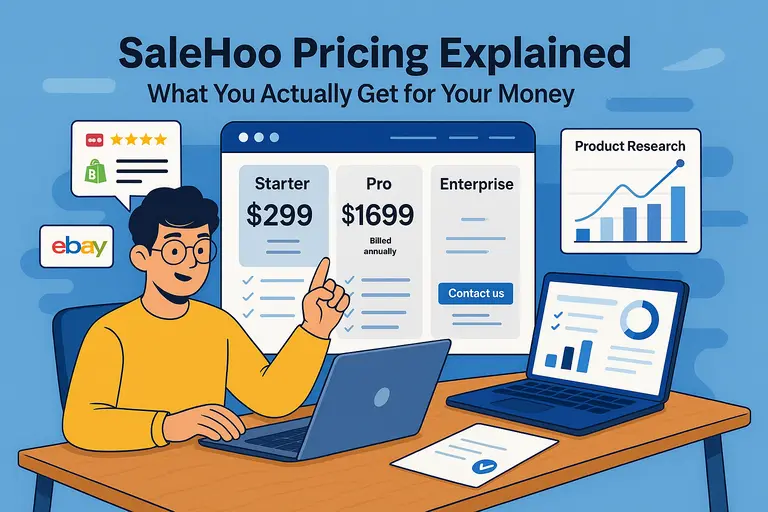 Salehoo Pricing Explained: What You Actually Get for Your Money
 Why the Salehoo Wholesale Directory Helps You Scale
 Salehoo Suppliers Explained: How to Find Reliable Partners
 Is SaleHoo Legit? What Real Sellers Actually Discover