
Table of Contents
Some links on The Justifiable are affiliate links, meaning we may earn a small commission at no extra cost to you. Read full disclaimer.
When I first heard people asking what is SaleHoo all about, it was usually from beginners who felt overwhelmed by dropshipping, suppliers, and all the promises floating around online.
This guide is for beginners, aspiring dropshippers, and small ecommerce owners who want a clear, honest explanation of SaleHoo without hype or jargon.
By the end, you’ll have a straightforward answer to what SaleHoo actually is, how it works, what you get, and whether it makes sense for your situation.
What Is SaleHoo And Why Beginners Use It
SaleHoo often comes up when someone asks what is SaleHoo all about in simple terms, without hype.
At its core, it’s a paid research and supplier discovery platform designed to remove early-stage confusion for new ecommerce sellers.
What SaleHoo Is Designed To Help You Do
SaleHoo is built to help beginners find legitimate suppliers without spending months guessing or getting burned by scams.
What it focuses on in practice:
- Finding pre-vetted dropshipping and wholesale suppliers
- Researching products with existing demand
- Avoiding fake “middleman” suppliers posing as manufacturers
In my experience, beginners don’t fail because they lack motivation. They fail because they don’t know who to trust. SaleHoo tries to shortcut that painful learning curve by putting guardrails around supplier discovery.
Instead of cold-emailing factories or gambling on random Google results, you start with a curated database. That alone can save weeks of frustration.
The Core Problems SaleHoo Claims To Solve
SaleHoo positions itself as a solution to three beginner pain points that show up repeatedly.
Supplier trust issues:
- Fake suppliers
- Unresponsive contacts
- Poor product quality surprises
Product selection confusion:
- Choosing items with no demand
- Entering oversaturated niches
- Pricing products without margin awareness
Lack of experience:
- Not knowing industry terms
- Misunderstanding minimum order quantities
- Confusing wholesale with dropshipping
From what I’ve seen, SaleHoo doesn’t magically fix these problems. What it does is reduce the odds of making the worst beginner mistakes early on.
How SaleHoo Positions Itself In Ecommerce
SaleHoo does not try to be an all-in-one ecommerce platform. That’s intentional.
It positions itself as:
- A research layer, not a store builder
- A supplier gateway, not a fulfillment service
- A learning aid, not a business-in-a-box
This matters because beginners often expect tools to “run the business for them.” SaleHoo instead assumes you’ll still make decisions, but with better data and fewer traps.
If Shopify is the storefront and payment engine, SaleHoo sits quietly behind the scenes helping you decide what to sell and who to source it from.
How SaleHoo Works Step By Step For New Users
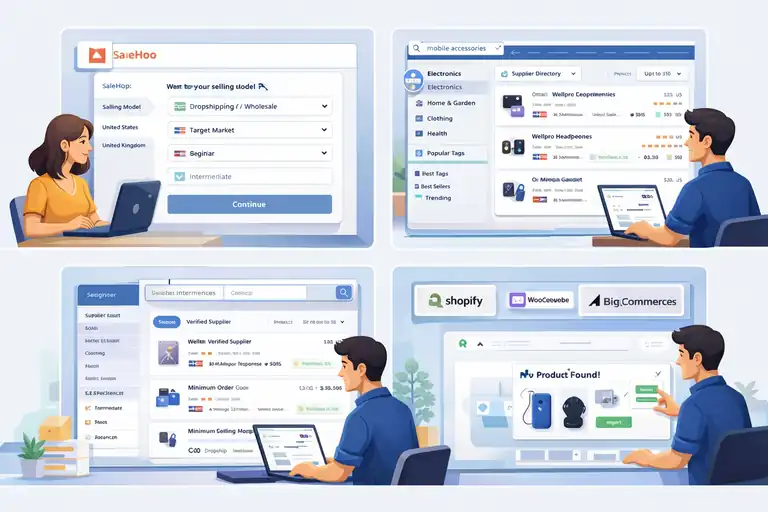
Understanding how SaleHoo works removes a lot of anxiety for beginners.
The platform is simple, but knowing how to use it properly makes a big difference.
Creating And Setting Up A SaleHoo Account
Signing up is straightforward, but the onboarding choices matter.
Key setup steps that matter:
- Selecting your selling model (dropshipping or wholesale)
- Choosing your target market (US, UK, global)
- Indicating your experience level
SaleHoo uses this information to surface more relevant suppliers and products. I’ve noticed beginners who skip this step often complain that results feel “random.”
This is not a tool you rush through in five minutes. Spending 15 intentional minutes here improves everything that follows.
Searching The Supplier Directory Effectively
The supplier directory is SaleHoo’s main attraction, but how you search determines the quality of results.
Effective search habits:
- Use product categories instead of vague keywords
- Filter by country to reduce shipping delays
- Exclude suppliers with unrealistic pricing
For example, if you search “electronics” broadly, you’ll drown in options. Narrowing to “mobile accessories” with US-based suppliers instantly improves relevance.
SaleHoo rewards specificity. The more precise you are, the more usable the results become.
Evaluating Suppliers Inside The Platform
Not all listed suppliers are equal, even if they’re vetted.
What I personally check first:
- Years in business
- Average response time
- Minimum order requirements
- Supported selling model
SaleHoo provides these data points directly on supplier profiles. Beginners often overlook minimum order quantities and only realize later that a supplier requires bulk purchases.
Treat the directory as a shortlist, not a final answer.
Using SaleHoo With Existing Online Stores
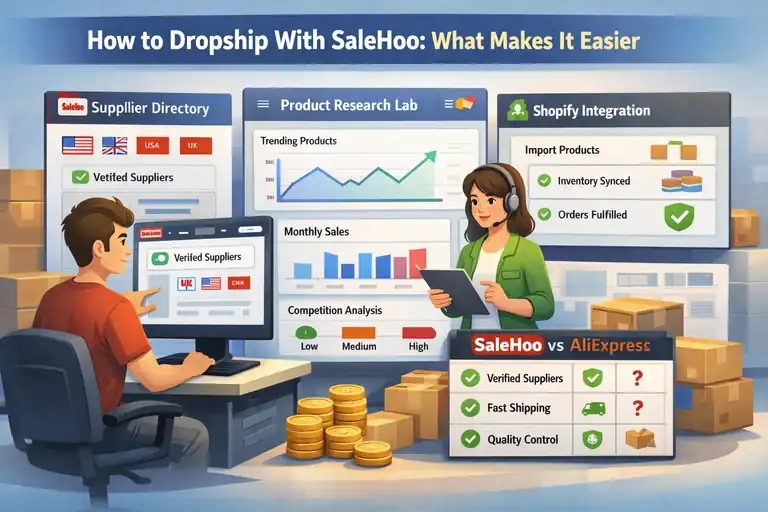
SaleHoo does not replace your store platform. It complements it.
You can use SaleHoo with:
- Shopify
- WooCommerce
- BigCommerce
- Custom ecommerce setups
There’s no native one-click product import. That’s a downside for some, but it forces you to understand pricing, margins, and descriptions instead of blindly importing products.
In my opinion, that friction actually helps beginners build better stores long term.
SaleHoo Supplier Directory Explained In Detail
The supplier directory is the heart of SaleHoo. If you understand its structure and limits, you’ll get far more value from it.
Types Of Suppliers Available On SaleHoo
SaleHoo includes multiple supplier categories, not just dropshippers.
Common supplier types:
- Dropshipping suppliers
- Wholesale distributors
- Manufacturers
- Brand-authorized resellers
This mix matters because your business model determines which suppliers make sense.
Beginners often assume dropshipping is the only option, but wholesale can offer better margins if you’re ready for inventory.
SaleHoo doesn’t push one model. It exposes options and lets you decide.
Dropshipping Versus Wholesale Suppliers
Understanding this difference avoids costly mistakes.
Dropshipping suppliers:
- No inventory upfront
- Lower margins
- Slower fulfillment control
Wholesale suppliers:
- Bulk purchases required
- Higher margins
- Better branding control
SaleHoo clearly labels supplier types, which is helpful when you’re still learning terminology.
I’ve seen beginners accidentally contact wholesale suppliers expecting dropshipping and get confused by pricing.
That clarity alone saves awkward emails.
How Supplier Vetting And Verification Works
SaleHoo claims to manually review suppliers before listing them.
What verification usually includes:
- Business registration checks
- Website legitimacy review
- Industry reputation research
This doesn’t mean every supplier is perfect. It means they’re real businesses, not overnight scams.
According to SaleHoo’s own data, thousands of suppliers are rejected before listing. While I always suggest independent verification, this screening dramatically lowers risk for beginners.
Common Supplier Limitations Beginners Miss
Even vetted suppliers have constraints that surprise new sellers.
Common overlooked issues:
- Limited branding customization
- Strict return policies
- Restricted product images usage
- Region-specific shipping limitations
SaleHoo doesn’t hide these details, but beginners often don’t look for them. My advice is to treat each supplier profile like a contract preview, not a marketing page.
Reading the fine print early saves expensive lessons later.
Quick expert tip: Use SaleHoo as a learning filter, not a final decision-maker. Shortlist suppliers, then validate them independently before committing. That balance gives you speed without blind trust.
SaleHoo Market Research Tools And Use Cases
This is the part most beginners overlook, even though it’s where SaleHoo quietly delivers the most long-term value.
Beyond suppliers, SaleHoo includes built-in research tools meant to help you decide what is worth selling before you invest time or money.
Product Research Features Inside SaleHoo
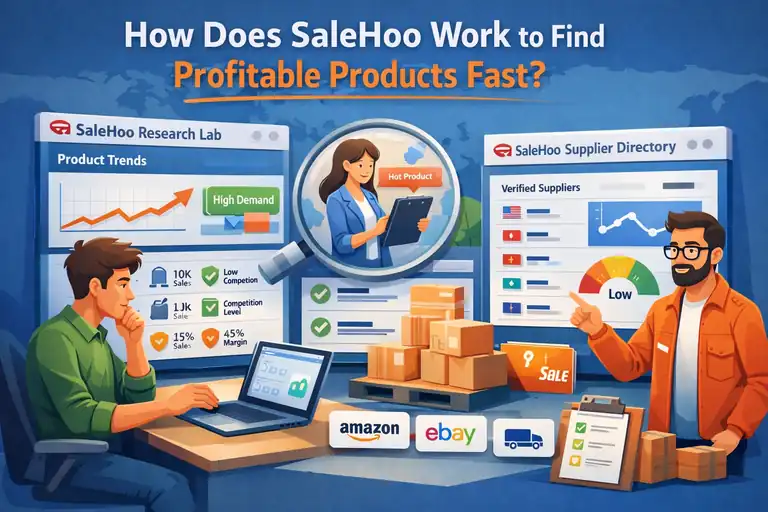
SaleHoo’s Market Research tool focuses on demand signals rather than guesswork. It pulls data from marketplaces like eBay to show what’s already selling.
What you can research inside the tool:
- Average selling price ranges
- Number of sellers competing for the product
- Historical sales trends
- Category-level demand patterns
This isn’t advanced analytics software, but that’s actually a benefit for beginners. You don’t need to interpret complex graphs or metrics. You’re simply looking for proof that people already buy the product.
In my experience, beginners who skip research usually choose products based on personal taste. SaleHoo gently forces you to check reality first.
Understanding Demand, Competition, And Margins
SaleHoo’s real strength is showing relative demand versus competition, not just popularity.
Here’s how I suggest reading the data:
- High demand + low competition usually signals opportunity
- High demand + high competition often means price wars
- Low demand + low competition is usually a dead end
Margins matter just as much. SaleHoo helps you estimate them by showing typical selling prices so you can compare against supplier costs.
If your margin doesn’t leave room for ads, refunds, and mistakes, it’s not a beginner-friendly product.
Using Data To Avoid Oversaturated Products
Oversaturation is where many beginners burn out fast.
SaleHoo helps you spot this early by showing:
- Seller volume trends
- Repeated product listings
- Narrow price ranges that signal race-to-the-bottom pricing
For example, if 200 sellers are all pricing within a $2 range, you’re not competing on value. You’re competing on who can survive the longest.
From what I’ve seen, avoiding bad products matters more than finding perfect ones.
Practical Product Validation For Beginners
Here’s a simple validation flow I recommend using SaleHoo for:
- Identify a product with steady demand
- Check supplier pricing and shipping speed
- Confirm at least 30–40% margin potential
- Verify competition isn’t dominated by big brands
This process isn’t glamorous, but it works. Beginners who validate even one product properly tend to stick with ecommerce longer than those who chase trends.
SaleHoo Pricing Plans And What You Actually Pay
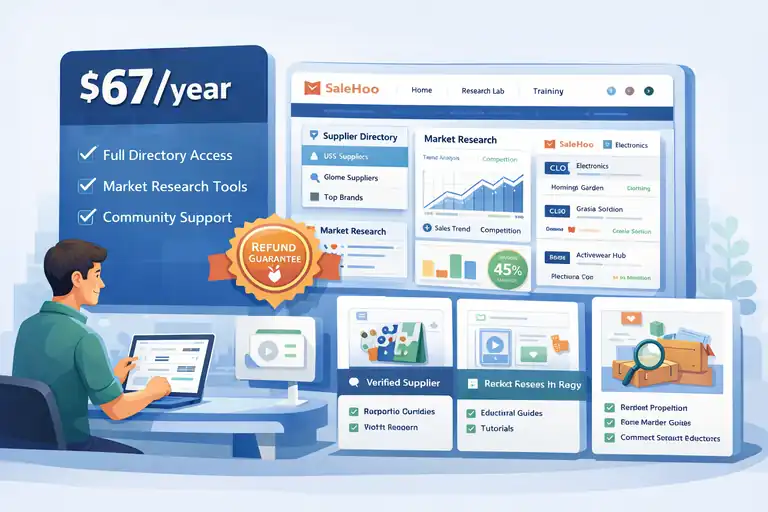
Pricing is usually where beginners pause and ask if SaleHoo is worth it. Let’s break it down without marketing language.
SaleHoo Annual Membership Breakdown
SaleHoo uses a single annual membership model.
What you pay:
- One yearly fee for full access
- No per-supplier commissions
- No upsells required to unlock core tools
There’s no monthly plan, which feels risky at first. But SaleHoo positions this as a commitment filter rather than a casual trial tool.
Compared to tools that charge monthly plus add-ons, SaleHoo’s pricing is predictable.
What Features Are Included Or Locked
With the annual plan, you get:
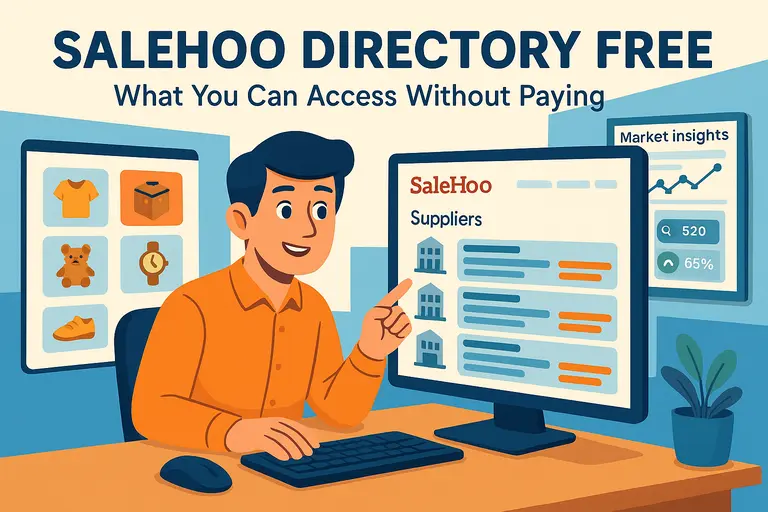
- Full supplier directory access
- Market research tools
- Educational guides and tutorials
- Community support resources
There are no feature tiers. You’re either in or out.
I actually prefer this structure for beginners because it avoids constant “upgrade anxiety.”
Refund Policy And Trial Expectations
SaleHoo offers a limited refund window, which acts as a safety net.
What this means practically:
- You should test suppliers immediately
- Use the research tools right away
- Don’t wait weeks before exploring features
If you treat the first few days as an evaluation sprint, you’ll know quickly if it fits your workflow.
Cost Versus Value For First-Time Sellers
For first-time sellers, the real value isn’t just suppliers. It’s mistake prevention.
One bad supplier relationship can cost more than the annual fee. One unsellable product can waste weeks of effort.
In my opinion, SaleHoo earns its cost if it helps you avoid even one major beginner error.
Pros And Cons Of Using SaleHoo In 2026
No tool is perfect, and SaleHoo is no exception. The key is knowing what it does well and where it falls short before committing.
Advantages That Matter Most To Beginners
SaleHoo’s biggest strengths are clarity and safety.
Notable advantages:
- Reduced risk of supplier scams
- Simple, beginner-friendly interface
- Clear distinction between dropshipping and wholesale
- Research tools that prevent impulse decisions
For someone still learning ecommerce vocabulary, that structure matters more than advanced features.
Real Limitations You Should Know Early
There are trade-offs you should be aware of.
Key limitations:
- No automated product imports
- Limited direct integrations
- Some suppliers overlap with other directories
This means you’ll do more manual work. If you expect a push-button business, SaleHoo may feel slow.
Personally, I see this as a learning benefit, not a flaw.
Situations Where SaleHoo Is Not Ideal
SaleHoo may not be the right fit if:
- You want private-label manufacturing only
- You need instant automation and fulfillment
- You already have strong supplier relationships
Advanced sellers often outgrow SaleHoo once they establish direct contacts.
Common Misconceptions About Results
The biggest misconception is that SaleHoo guarantees success.
It doesn’t.
It never promised to.
SaleHoo gives you better inputs. What you do with them still matters. Beginners who treat it as a shortcut fail faster than those who treat it as a guide.
Practical takeaway: Use SaleHoo as your decision filter, not your decision-maker. When you combine its data with your own judgment, you dramatically improve your odds of building something that lasts.
Who SaleHoo Is Best For And Who Should Skip It
This section is about honesty. SaleHoo isn’t for everyone, and knowing where you fit saves time, money, and frustration.
If you’ve been wondering what is SaleHoo all about in real-world terms, it comes down to whether your current situation matches what the platform is designed to support.
Beginners With No Supplier Connections
If you’re starting from zero and don’t know a single supplier, SaleHoo makes a lot of sense.
Here’s why it works well for true beginners:
- You avoid random Google searches that often lead to scams
- You learn supplier terminology by seeing real examples
- You get context around pricing, minimum orders, and regions
I’ve seen beginners lose months emailing suppliers who were never going to work with small sellers. SaleHoo narrows that field fast. It doesn’t guarantee success, but it dramatically reduces blind outreach.
If you’re still asking basic questions like “What’s the difference between wholesale and dropshipping?”, SaleHoo meets you where you are.
Dropshippers Focused On US And Global Markets
SaleHoo is especially useful if you want suppliers outside of China-only marketplaces.
What stands out here:
- US, UK, and EU supplier listings
- Clear shipping origin details
- Better expectations around delivery times
For dropshippers targeting customers who expect faster shipping, this matters more than trendy product catalogs. In my experience, faster shipping alone can improve conversion rates without changing the product itself.
SaleHoo doesn’t replace logistics strategy, but it helps you avoid unrealistic fulfillment promises.
Small Budget Sellers Testing Ecommerce
If you’re testing ecommerce with limited capital, SaleHoo can act as a risk filter.
Helpful for:
- Validating product demand before spending on ads
- Avoiding bulk inventory purchases too early
- Understanding margins before committing money
One overlooked benefit is confidence. When you know your product has demand and your supplier is legitimate, you’re less likely to quit after the first setback.
That psychological safety is underrated.
Users Who May Outgrow SaleHoo Quickly
SaleHoo isn’t built for long-term scaling.
You may outgrow it if:
- You move into private labeling
- You negotiate direct factory contracts
- You require deep automation and APIs
That’s not a failure. That’s progression.
I actually see SaleHoo as a transitional tool. It helps you get from “I don’t know what I’m doing” to “I know enough to move on.”
SaleHoo Compared To Popular Alternatives
Comparisons matter because tools don’t exist in isolation. The right choice depends on how you want to build your business, not which platform has the loudest marketing.
SaleHoo Versus Spocket For Supplier Quality
Spocket focuses on curated dropshipping suppliers with tighter integrations.
Quick comparison:
| Feature | SaleHoo | Spocket |
| Supplier Discovery | Broad directory | Curated list |
| Automation | Manual | High |
| Pricing Model | Annual | Monthly |
| Learning Curve | Low | Medium |
If you value control and learning, SaleHoo wins.
If you want speed and automation, Spocket feels smoother.
Personally, I see SaleHoo as better for learning and Spocket as better for execution.
SaleHoo Versus Modalyst For Brand Focus
Modalyst leans heavily into branded and name-recognition products.
Key differences:
- Modalyst emphasizes recognizable brands
- SaleHoo focuses on supplier legitimacy
- Modalyst integrates tightly with Shopify
If brand association matters to your strategy, Modalyst has an edge. If supplier variety and research flexibility matter more, SaleHoo pulls ahead.
SaleHoo Versus Alibaba For Wholesale Buying
Alibaba is powerful but unforgiving.
Here’s the honest tradeoff:
- Alibaba gives you access to factories
- SaleHoo gives you context and safety
Alibaba assumes you know how to negotiate, vet suppliers, and manage quality control. SaleHoo assumes you don’t yet.
I wouldn’t recommend Alibaba first unless you’re comfortable making expensive mistakes.
How To Choose Based On Your Business Model
Ask yourself:
- Do I want speed or understanding?
- Am I testing or scaling?
- Do I need automation right now?
If you’re still learning, SaleHoo is often the calmer starting point.
Is SaleHoo Worth It For Beginners Today
This is the question most people really care about. The answer depends less on features and more on expectations.
When SaleHoo Makes Sense As A Starting Tool
SaleHoo is worth it when:
- You want guidance, not shortcuts
- You need help choosing products responsibly
- You value risk reduction over speed
It’s not exciting software. It’s practical software.
And sometimes, boring tools keep you in the game longer.
How Long Beginners Typically Use SaleHoo
Most beginners use SaleHoo for:
- The first 6 to 12 months
- Initial supplier discovery
- Early product validation
After that, many move on with direct relationships. That’s a healthy outcome, not a flaw.
What To Do After You Outgrow The Platform
Once you outgrow SaleHoo:
- Keep your supplier contacts
- Move to direct negotiations
- Invest in automation tools
- Build brand-specific processes
SaleHoo’s role ends when your confidence begins.
Final Beginner Takeaway On SaleHoo
Here’s the honest takeaway.
SaleHoo doesn’t build your business for you. It helps you make fewer bad decisions while you’re learning how to build one yourself.
If you’re asking what is SaleHoo all about, the simplest answer is this: It’s a safety net for beginners who want clarity before commitment.
And in ecommerce, that clarity can be the difference between quitting early and staying long enough to succeed.
FAQ
What Is SaleHoo All About?
SaleHoo is a paid supplier directory and product research tool designed to help beginners find legitimate dropshipping and wholesale suppliers while avoiding scams and low-quality products.
Is SaleHoo Good For Beginners With No Experience?
Yes. SaleHoo is built specifically for beginners who don’t have supplier connections and want guided access to vetted suppliers, basic market research data, and clear ecommerce terminology.
Is SaleHoo Worth Paying For Compared To Free Options?
SaleHoo is worth it if you value reduced risk and time savings. While free options exist, they often require manual vetting and trial-and-error that can cost more in mistakes than SaleHoo’s annual fee.

I’m Juxhin, the voice behind The Justifiable.
I’ve spent 6+ years building blogs, managing affiliate campaigns, and testing the messy world of online business. Here, I cut the fluff and share the strategies that actually move the needle — so you can build income that’s sustainable, not speculative.
Related posts:
 Viral Launch Chrome Extension: The Ultimate Tool for Sellers
 Salehoo Dropshipping Reviews: Is It Worth Your Money Today?
 How the Salehoo App Works and Why It Speeds Up Product Research
 How to Dropship With SaleHoo: What Makes It Easier
 How Does SaleHoo Work to Find Profitable Products Fast?
 Salehoo Directory Free: What You Can Access Without Paying