
Table of Contents
Some links on The Justifiable are affiliate links, meaning we may earn a small commission at no extra cost to you. Read full disclaimer.
Here’s something I’ve seen again and again: most store owners don’t struggle because they lack ideas—they struggle because they don’t have the right execution partner.
A strong ecommerce agency can change everything, especially when growth speed actually matters.
If you’re trying to scale without wasting months testing the wrong tactics, this outline breaks down the exact services that move the needle fast.
SmartSites Ecommerce Agency For Conversion-Driven Scaling
SmartSites is the kind of ecommerce agency I point people to when they want growth that’s disciplined, measurable, and tied directly to revenue.
They’re especially strong when a store already has traffic but isn’t converting as well as it should.
Shopify And WooCommerce Growth Campaign Execution
SmartSites works deeply inside Shopify and WooCommerce, not just at the surface level. That matters more than most people realize.
They typically start by aligning campaign structure with how your catalog is built.
For example, instead of sending paid traffic to generic collections, they often segment campaigns by product margin, inventory depth, and buyer intent.
Here’s what that looks like in practice:
- High-margin products get more aggressive spend and faster creative testing.
- Evergreen products are used as stable revenue anchors.
- Seasonal products are isolated so they don’t distort performance data.
In my experience, this approach alone can lift blended ROAS by 15–30 percent because spend stops leaking into low-impact SKUs.
SmartSites doesn’t reinvent platforms; they use Shopify and WooCommerce the way they were meant to be used.
Paid Media Optimization Built Around ROAS Targets
SmartSites is very ROAS-driven, sometimes to a fault—but if profitability matters to you, that’s a feature.
They typically set:
- A target ROAS by channel.
- A minimum acceptable CPA by product group.
- Clear kill rules for underperforming ads.
What I like here is restraint. Instead of scaling spend the moment an ad looks good for 48 hours, they wait for statistical stability. That patience helps avoid the classic ecommerce mistake of scaling too fast and collapsing margins.
For stores spending $20k–$200k per month, this kind of structure often leads to steadier growth instead of volatile spikes.
Landing Page And Funnel Conversion Improvements
SmartSites treats landing pages as sales assets, not design exercises.
They usually focus on:
- Message match between ad copy and page headline.
- Reducing visual noise above the fold.
- Reordering product benefits based on objection strength.
A simple but effective tactic they use is rewriting hero sections to answer one question clearly: “Why should I trust this product right now?”
I’ve seen this alone push conversion rates from 2.1 percent to 2.8 percent without touching traffic volume.
CRO Testing Frameworks For Ecommerce Stores
Rather than random A/B tests, SmartSites uses a hypothesis-first CRO framework.
Each test starts with:
- A behavioral insight from heatmaps or recordings.
- A specific conversion barrier.
- A single measurable outcome.
They avoid testing multiple variables at once, which keeps results clean. For mid-sized stores, this often results in 5–10 percent incremental gains every quarter. Not flashy, but compounding.
Analytics Setup Focused On Revenue Attribution
SmartSites places heavy emphasis on clean tracking.
They commonly:
- Configure GA4 ecommerce events properly.
- Validate Meta and Google Ads conversion signals.
- Build simple dashboards that tie spend to revenue.
This clarity helps store owners make faster decisions without guessing. When attribution is clean, confidence goes up—and so does spend efficiency.
Disruptive Advertising Ecommerce Agency For Rapid Scale
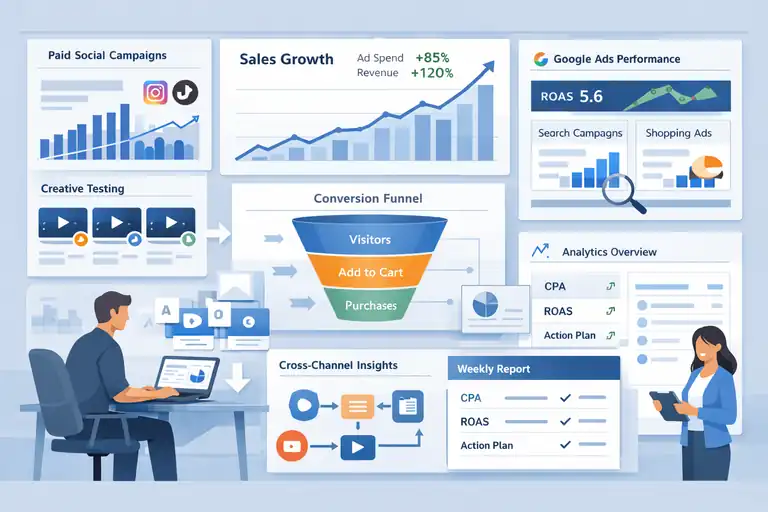
Disruptive Advertising is the ecommerce agency I associate with speed.
They’re aggressive, data-heavy, and well-suited for brands that want to push volume fast without flying blind.
Paid Social Campaigns Designed For Fast Volume Growth
Disruptive Advertising excels at scaling Meta and TikTok ads quickly.
Their playbook usually includes:
- Multiple campaign types running in parallel.
- Aggressive creative rotation.
- Broad targeting paired with strong creative hooks.
They rely heavily on platform algorithms, letting Meta do the heavy lifting while they control inputs like creative angles and budgets. I’ve seen brands double spend in 60–90 days under this model, provided creative keeps pace.
Google Ads Management For High-Intent Buyers
Where Disruptive really shines is high-intent Google traffic.
They often:
- Separate brand, non-brand, and Shopping campaigns.
- Bid more aggressively on bottom-of-funnel keywords.
- Use negative keyword sculpting to protect efficiency.
This setup works well for stores with established demand. If people are already searching for what you sell, Disruptive knows how to capture that intent without overspending.
Creative Testing Systems That Reduce Wasted Spend
Creative fatigue kills scale. Disruptive addresses this with structured testing systems.
Their teams typically:
- Test new hooks weekly.
- Rotate formats, not just visuals.
- Kill losers fast without emotional attachment.
A common outcome is lowering CPA by 20–25 percent simply by refreshing messaging, not changing targeting or budgets. That’s a lever many brands overlook.
Ecommerce Funnel Optimization Across Traffic Sources
Disruptive looks at funnels holistically.
Instead of optimizing each channel in isolation, they analyze:
- Where users drop off across devices.
- How paid traffic behaves differently than organic.
- Whether landing pages match traffic temperature.
This cross-channel view often uncovers simple fixes, like sending cold traffic to explainer pages instead of product pages.
Performance Reporting Built For Scaling Decisions
Their reporting is blunt, which I respect.
You usually get:
- Clear CPA and ROAS benchmarks.
- Week-over-week trend analysis.
- Recommendations tied to action, not theory.
This helps founders and marketing leads answer one question quickly: “Can we safely spend more right now?” When the answer is yes, Disruptive moves fast. When it’s no, they explain why.
Coalition Technologies Ecommerce SEO Agency Expertise
Coalition Technologies is an ecommerce agency I think of when organic growth needs to become a serious revenue channel, not just “nice traffic.”
They’re methodical, technical, and especially strong for stores with large catalogs that struggle to rank consistently.
Ecommerce SEO Strategies For Product And Category Pages
Coalition focuses heavily on category and product pages because that’s where ecommerce SEO actually converts.
Their approach usually starts with restructuring how pages target keywords. Instead of chasing broad terms, they map pages to commercial intent phrases, meaning searches where people are ready to buy, not just browse.
Common tactics they use include:
- Optimizing category pages for mid-funnel keywords like “best running shoes for flat feet.”
- Writing product descriptions that answer objections, not just list features.
- Improving internal linking so authority flows to money pages.
I’ve seen stores with 1,000+ SKUs see 30–50 percent organic revenue growth within six to nine months when category pages are treated like landing pages instead of catalogs.
Technical SEO Fixes That Unlock Organic Growth
This is where Coalition really earns its reputation.
They go deep into technical SEO, which is basically the behind-the-scenes structure of your site that Google cares about. Things like crawlability, indexation, and page speed.
They typically audit:
- Duplicate URLs caused by filters and sorting.
- Slow-loading templates on Shopify and custom platforms.
- Broken internal links that waste crawl budget.
One practical win I’ve seen is fixing faceted navigation issues. That alone can free up thousands of wasted crawls, helping important pages rank faster without creating new content.
Content Development For Buyer-Intent Keywords
Coalition’s content isn’t blog fluff. It’s designed to support revenue pages.
They usually create:
- Buying guides that internally link to categories.
- Comparison content that targets high-intent searches.
- Supporting articles that reinforce topical authority.
For example, instead of “What Is Protein Powder,” they’ll target “Whey vs Plant Protein For Muscle Gain” and funnel readers into product collections. This kind of content often converts at 2–3x the rate of informational blog posts.
Link Acquisition For Ecommerce Authority
Coalition focuses on relevance over volume when it comes to backlinks.
Their link building often includes:
- Digital PR placements in niche publications.
- Partner and supplier link opportunities.
- Content-led outreach tied to buying guides.
This avoids the spammy link profiles that can hurt long-term rankings. I prefer this slower approach because it compounds safely.
SEO Revenue Tracking And Forecasting
Coalition connects SEO work directly to revenue outcomes.
They usually:
- Track organic revenue by category.
- Forecast traffic growth based on keyword positions.
- Tie rankings to actual sales, not vanity metrics.
This makes SEO feel less abstract and more like a predictable growth channel.
Common Thread Collective Ecommerce Growth Agency Model
Common Thread Collective is an ecommerce agency built for brands that want alignment across every growth lever. They’re not cheap, but they’re thoughtful, strategic, and very focused on profitable scale.
Full-Funnel Ecommerce Strategy And Media Buying
CTC doesn’t treat paid media as isolated campaigns.
They build full-funnel systems that connect:
- Prospecting ads for awareness.
- Consideration-stage creative.
- Conversion-focused offers.
What stands out is how tightly strategy and execution are connected. Media buying decisions are tied directly to margin, inventory, and growth goals, not just ROAS dashboards.
Lifecycle Marketing Across Paid, Email, And SMS
CTC integrates lifecycle marketing deeply into growth plans.
They often design:
- Email flows that support paid acquisition.
- SMS campaigns timed around buyer behavior.
- Retention strategies that increase repeat purchase rate.
For DTC brands, even a 5 percent lift in repeat customers can increase profit by 25–40 percent. CTC builds systems around that reality.
Growth Planning Based On Profitability Metrics
This agency is obsessive about contribution margin.
They look beyond surface metrics and focus on:
- Cost to acquire a customer.
- Gross margin by product.
- Payback periods.
In my opinion, this is why brands trust them at higher spend levels. Growth feels controlled instead of reckless.
Ecommerce Analytics And Attribution Frameworks
CTC invests heavily in analytics.
They usually set up:
- Blended ROAS tracking.
- Platform-specific attribution comparisons.
- Custom dashboards for leadership teams.
This reduces decision fatigue and keeps teams aligned on what actually matters.
Long-Term Scaling Systems For DTC Brands
CTC builds for sustainability.
Instead of hacks, they focus on:
- Repeatable testing frameworks.
- Scalable creative systems.
- Cross-team accountability.
It’s slower upfront, but far more stable long term.
Blue Wheel Ecommerce Agency For Marketplace Expansion
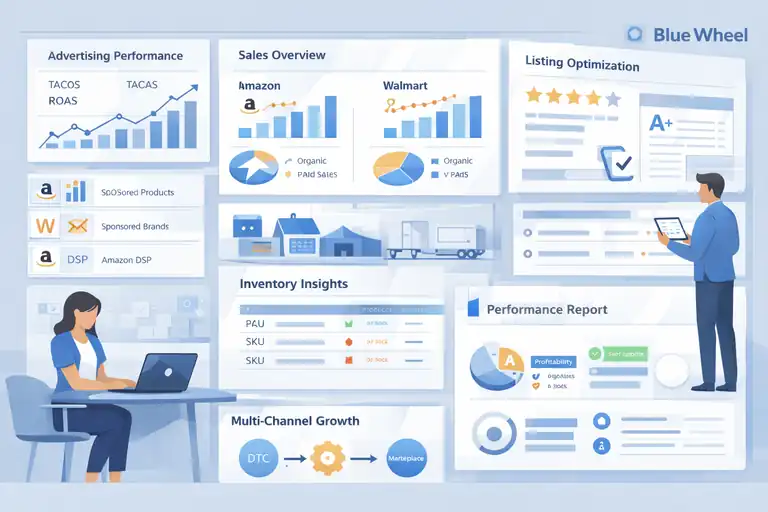
Blue Wheel is the ecommerce agency I associate with marketplace growth, especially Amazon and Walmart. If your brand wants to expand beyond your site, they’re very hard to ignore.
Amazon And Walmart Ecommerce Advertising Management
Blue Wheel specializes in marketplace ads.
They manage:
- Amazon Sponsored Products and Brands.
- Walmart Connect campaigns.
- DSP for upper-funnel marketplace traffic.
They’re strong at balancing visibility with profitability, which is critical as ad costs rise.
Marketplace SEO And Listing Optimization
Marketplace SEO is different from Google SEO.
Blue Wheel optimizes listings by:
- Improving keyword indexing inside Amazon.
- Enhancing titles and bullet points for conversions.
- Testing images and A+ content.
Small tweaks here can improve conversion rates by 10–20 percent without increasing ad spend.
Multi-Channel Ecommerce Growth Strategy
Blue Wheel doesn’t isolate marketplaces.
They help brands:
- Coordinate DTC and marketplace pricing.
- Avoid channel conflict.
- Use marketplaces as acquisition engines.
This is especially useful for brands worried about cannibalization.
Inventory And Profitability Management Support
Inventory mistakes kill marketplace growth.
Blue Wheel supports:
- Demand forecasting.
- Stock-level planning.
- Margin analysis by SKU.
Running out of stock can erase months of ranking gains, so this support is more valuable than it sounds.
Marketplace Analytics And Performance Tracking
Their reporting focuses on clarity.
They track:
- TACoS instead of just ACOS.
- Organic vs paid marketplace sales.
- Profit per SKU, not just revenue.
This makes scaling decisions far less risky.
Hawke Media Ecommerce Agency For Omnichannel Growth
Hawke Media is an ecommerce agency I usually associate with brands that feel “stuck in the middle.” They’re past scrappy growth but not yet operating like a mature machine. Hawke’s strength is connecting channels so growth feels coordinated instead of chaotic.
Performance Marketing Across Paid And Organic Channels
Hawke Media doesn’t believe paid and organic should live in separate silos, and I agree with them here.
They typically align:
- Paid social and search campaigns.
- Organic SEO and content priorities.
- Retargeting logic based on organic behavior.
For example, if a category page starts ranking organically, Hawke may reduce paid spend there and redirect budget to higher-cost acquisition keywords. This sounds simple, but most teams don’t do it.
In practice, this blended approach often improves overall efficiency by 10–20 percent because spend supports momentum instead of fighting it.
Ecommerce Creative Strategy And Production
Creative is where many ecommerce brands quietly fail. Hawke treats it like a system, not a guessing game.
They usually build:
- Modular creative assets that can be reused.
- Clear messaging frameworks tied to customer pain points.
- Creative roadmaps aligned with promotions and launches.
Instead of chasing viral ads, they prioritize consistency. I’ve seen this stabilize CPAs even when platforms get volatile, which is huge during scaling phases.
Email And SMS Growth Systems
Hawke Media leans heavily into lifecycle marketing.
They often focus on:
- Abandoned cart and browse flows.
- Post-purchase upsell sequences.
- Win-back campaigns for lapsed customers.
Email and SMS are explained simply as owned channels, meaning you don’t pay every time you reach your audience. For many stores, these channels drive 25–40 percent of total revenue once properly built.
CRO And Website Optimization Services
Hawke’s CRO work is pragmatic.
They usually prioritize:
- Checkout simplification.
- Mobile usability fixes.
- Trust-building elements like reviews and guarantees.
One small but effective tactic I’ve seen is simplifying product page layouts for mobile. That alone can lift mobile conversion rates by 10 percent or more.
Fractional CMO Strategy For Scaling Brands
This is where Hawke stands out.
Their fractional CMO model gives brands access to senior strategy without hiring full-time.
That person helps align:
- Channel strategy.
- Budget allocation.
- Growth priorities.
For founders overwhelmed by decisions, this can be a real relief.
Tinuiti Ecommerce Agency For Enterprise-Level Scaling
Tinuiti is an ecommerce agency built for scale at serious volume. If you’re spending seven figures a month, this is where advanced systems start to matter more than hacks.
Advanced Paid Media Management For Ecommerce
Tinuiti specializes in complex paid media environments.
They manage:
- Large Meta and Google Ads accounts.
- Multiple audiences and creatives at scale.
- Budget pacing across regions and brands.
Their strength is control. When spend increases, performance doesn’t collapse because everything is modeled in advance.
Amazon DSP And Retail Media Strategy
Amazon DSP is essentially Amazon’s display advertising platform, allowing brands to target shoppers on and off Amazon.
Tinuiti excels here by:
- Using first-party Amazon data.
- Targeting in-market shoppers.
- Connecting DSP to Sponsored Ads performance.
For brands with strong Amazon presence, this often unlocks incremental growth rather than cannibalizing existing sales.
Data-Driven Attribution And Measurement Systems
Tinuiti invests heavily in attribution.
They typically compare:
- Platform-reported conversions.
- Modeled attribution.
- Blended performance metrics.
This reduces overreaction to short-term fluctuations. I believe this level of measurement is essential once spend gets large enough to influence financial planning.
Omnichannel Ecommerce Growth Planning
Tinuiti treats growth like a portfolio.
They balance:
- Risk across channels.
- Short-term and long-term bets.
- Brand and performance spend.
This keeps growth sustainable instead of spiky.
Forecasting And Budget Allocation Optimization
Tinuiti builds forecasts tied to inventory, seasonality, and margin.
This allows leadership teams to answer:
- How much can we safely spend?
- When should we pull back?
- Where will growth come from next quarter?
At scale, this clarity is invaluable.
WebFX Ecommerce Agency For Revenue-Focused Execution
WebFX is an ecommerce agency I think of as dependable and execution-driven. They’re strong for brands that want consistent improvement without excessive complexity.
Ecommerce SEO And Paid Search Integration
WebFX integrates SEO and paid search closely.
They often:
- Use paid data to inform SEO priorities.
- Test keywords in ads before investing in content.
- Coordinate landing pages across channels.
This shortens learning cycles and avoids wasted effort.
Conversion Rate Optimization Programs
WebFX approaches CRO with steady iteration.
They focus on:
- Clear calls to action.
- Page speed improvements.
- Reducing friction at checkout.
It’s not flashy, but it works. Over time, these small gains compound.
Content Marketing For Ecommerce Visibility
Their content strategy supports sales, not just traffic.
They create:
- Buying guides.
- Category-level content.
- Comparison pages.
This content feeds both SEO and paid campaigns, improving efficiency across the board.
Marketing Automation And CRM Integration
WebFX helps brands connect marketing tools.
They often integrate:
- Email platforms.
- CRM systems.
- Analytics dashboards.
This creates a clearer view of the customer journey from first click to repeat purchase.
Transparent Reporting And ROI Tracking
Their reporting is straightforward.
They focus on:
- Revenue generated.
- Cost efficiency.
- Trends over time.
For many founders, that simplicity builds trust.

I’m Juxhin, the voice behind The Justifiable.
I’ve spent 6+ years building blogs, managing affiliate campaigns, and testing the messy world of online business. Here, I cut the fluff and share the strategies that actually move the needle — so you can build income that’s sustainable, not speculative.
Related posts:
 Affordable Ecommerce Email Marketing Agency Services
 How to Make Money Dropshipping: 7 Secrets to a $10K/Month
 Dropshipping Marketing Strategies That Actually Drive Sales
 Ecommerce Marketing Guide: Turn Traffic Into Sales
 Ecommerce CRM Tools That Turn Customers Into Repeat Buyers
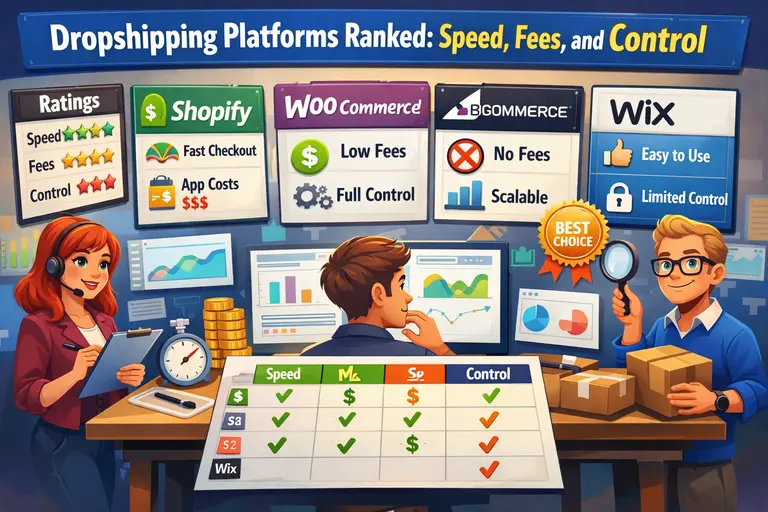 Dropshipping Platforms Ranked: Speed, Fees, and Control