Table of Contents
Some links on The Justifiable are affiliate links, meaning we may earn a small commission at no extra cost to you. Read full disclaimer.
If you’ve ever wondered how to make your own blog and actually turn it into an income-generating machine, you’re not alone. Many people start blogs full of passion but struggle to figure out how to turn their ideas into real profit.
The truth is, building a blog that earns consistently isn’t about luck—it’s about strategy, structure, and persistence. So how do you go from setting up your first post to building a sustainable online income engine?
Let’s break it down step by step in this complete guide.
Choose Your Blog’s Niche and Purpose
Finding your niche is where your blogging journey truly begins. I always say this step sets the foundation for everything that follows — from your content ideas to how you’ll make money later.
Your niche is the heartbeat of your blog, so it has to be both meaningful and marketable.
Identify What You’re Passionate About and What Sells
If you’re going to make your own blog and grow it long term, it must be rooted in genuine passion. Writing about something you don’t care about burns you out fast — and your audience can tell.
But passion alone isn’t enough. The secret is balancing passion and profitability.
Here’s how I suggest approaching it:
- List topics you genuinely enjoy. For example, fitness, tech tools, travel, or cooking.
- Ask yourself what people pay for in that space. Are there affiliate products, coaching opportunities, or online courses?
- Look for overlap between your interests and existing monetized niches.
A quick tip: go to Amazon, Udemy, or Etsy and search for products in your niche. If there’s healthy competition, that’s a sign people are spending money there — which is exactly what you want.
Evaluate Market Demand Before Committing to a Niche
Before you dive in, validate your idea. I recommend using Google Trends and Ahrefs’ Keyword Explorer to check search volume and trends.
If you see consistent or growing interest in your topic, you’re on the right track. On the other hand, if the interest is seasonal or declining, it might not be ideal for building a sustainable blog.
Here’s a simple validation checklist I personally use:
- Search Demand: Do people actively Google topics in this niche?
- Competition: Are there successful blogs already ranking for it?
- Profitability: Are there products, services, or affiliate programs available?
Example: “DIY home décor” shows strong evergreen demand with tons of affiliate potential, while “2020 travel tips” would be a bad long-term bet.
Define Your Blog’s Unique Value Proposition
Let me be real — there are thousands of blogs out there. So, why should readers choose yours? Your answer becomes your value proposition.
Think of it this way: if your blog were a person, what personality and purpose would it have? Maybe your travel blog focuses on budget-friendly city breaks for solo travelers, or your wellness blog offers science-backed advice for busy professionals.
Write down a short statement like: “I help [specific audience] achieve [specific result] through [unique method or focus].”
That one line keeps your blog’s purpose crystal clear and guides your tone, design, and content strategy.
Understand the Audience You Want to Attract
Every great blog is built for a specific reader — not everyone on the internet. I believe in creating reader avatars: fictional profiles representing your target audience.
For example:
- Name: Sarah
- Age: 29
- Goal: Start a side hustle while working full-time
- Challenge: Lacks tech skills and consistent motivation
When you picture someone like Sarah reading your content, it’s easier to write naturally, connect emotionally, and deliver exactly what they need.
Pick the Right Blogging Platform and Domain Name
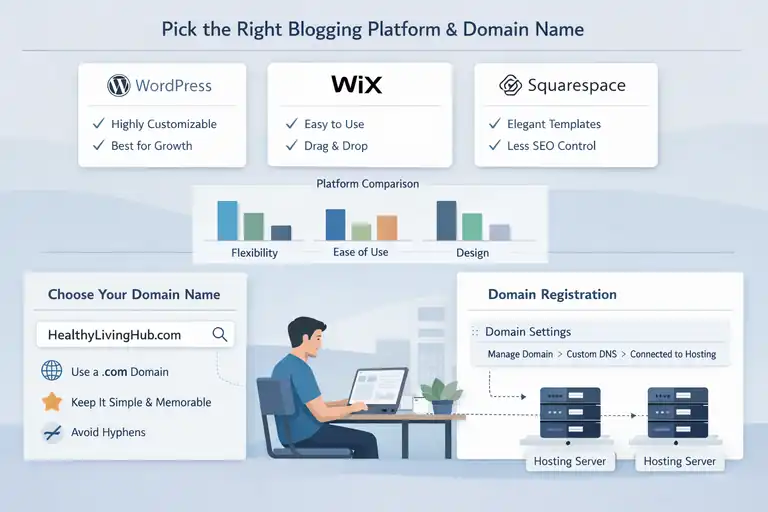
Now that you’ve nailed your niche, it’s time to pick where your blog will live.
Your platform and domain name shape your brand’s identity and user experience — so choosing wisely here saves you from headaches later.
Compare Top Platforms: WordPress, Wix, and Squarespace
When people ask me which blogging platform to choose, I almost always recommend WordPress.org — not WordPress.com. It’s self-hosted, meaning you own your site, can install any plugin, and fully control monetization.
Here’s a quick comparison:
| Platform | Best For | Pros | Cons |
| WordPress.org | Flexibility & control | Free core software, thousands of plugins | Slight learning curve |
| Wix | Beginners wanting drag-and-drop | Easy setup, good templates | Limited SEO flexibility |
| Squarespace | Creatives & small portfolios | Beautiful design options | Less customizable than WordPress |
If you plan to grow your blog as a business, WordPress.org is the clear winner.
Choose a Domain Name That Reflects Your Brand Identity
Your domain name is your online home. It should feel personal, clear, and easy to remember. Avoid long, hyphenated, or complex names.
Here’s what I recommend:
- Keep it short: Aim for under 15 characters if possible.
- Make it brandable: Choose something you can grow with.
- Check availability: Use tools like Namecheap to confirm it’s free.
Example: instead of TheBestFitnessTipsForYouToday.com, go for FitFoundry.com — it’s clean, catchy, and memorable.
Register and Secure Your Domain the Right Way
Once you’ve chosen your name, register it fast — good domains vanish quickly. Use a trusted registrar like Namecheap and GoDaddy.
After purchasing, I suggest:
- Activate domain privacy protection: Hides your personal contact info.
- Enable auto-renewal: Prevents losing your domain accidentally.
- Connect your domain to your hosting provider: Usually found under “DNS settings.”
That’s it — your digital real estate is officially yours.
Set Up Reliable Hosting and Technical Foundations
Hosting might not sound glamorous, but it’s what keeps your blog alive and fast. A slow or unreliable host can crush your traffic and SEO rankings, no matter how great your content is.
Understand the Difference Between Shared and Managed Hosting
Here’s how I explain it: shared hosting is like living in an apartment complex — cheap, but you share resources with neighbors.
Managed hosting is like owning your own condo — more expensive, but faster and safer.
Shared hosting:
Managed WordPress hosting:
- Optimized for WordPress speed and security
- Automatic updates and backups
- Example: WP Engine, Kinsta, SiteGround
If you’re serious about your blog’s growth, I personally suggest starting with managed hosting from day one — it’ll save you hours of tech headaches later.
Pick Hosting Providers That Offer Speed and Uptime Reliability
Look for these non-negotiables when choosing a host:
- 99.9% uptime guarantee: Keeps your site available at all times.
- Fast loading speeds: Aim for under 2 seconds.
- 24/7 support: Especially if you’re new to web management.
- Free SSL certificate: Secures your blog and boosts SEO.
A few reliable options: SiteGround, WP Engine, and Hostinger. I’ve used all three — SiteGround stands out for beginners thanks to its balance of cost, reliability, and service quality.
Install WordPress and Essential Setup Plugins
Once your hosting is ready, most providers offer a one-click WordPress installation inside your dashboard. Just log in to your hosting control panel and look for something like “Install WordPress” → “Get Started.”
Next, install a few must-have plugins to get your blog running smoothly:
- Rank Math: Helps you optimize your posts for search engines.
- WP Rocket: Speeds up your site with caching and optimization.
- UpdraftPlus: Automatically backs up your site to cloud storage.
- Akismet Anti-Spam: Keeps your comments section clean.
Once those are set, your blog’s backbone is in place — fast, secure, and ready for design.
Design a Blog That Builds Trust and Engagement
Your blog design is more than just “how it looks.” It’s about how it feels to someone visiting for the first time. I always say: a well-designed blog silently tells your readers, “You can trust me.”
And trust is what keeps people reading, subscribing, and eventually buying from you.
Choose a Theme That Matches Your Niche and Tone
The theme you choose sets the emotional tone of your blog. It’s like choosing your outfit before meeting someone new — it communicates your personality before you even speak.
If your niche is about wellness or minimalism, pick a light, airy theme with calm colors and lots of white space. For tech or business, go for modern, structured layouts with clean typography.
I personally recommend starting with Astra, GeneratePress, or Kadence if you’re using WordPress. They’re lightweight, customizable, and SEO-friendly.
Quick tip: After installing WordPress, go to Dashboard → Appearance → Themes → Add New, and search for “Astra.” Click Install and Activate. From there, you can import a starter template that fits your niche and adjust it under Customizer → Colors or Typography.
Your theme should look professional but never overcomplicated. Readers should focus on your words, not your widgets.
Optimize for Mobile Responsiveness and User Experience
Today, more than 60% of all blog traffic comes from mobile devices. If your site looks messy on a phone, you’re losing readers — and Google rankings.
To test mobile responsiveness:
- Open your site on your phone and scroll through.
- Check if images load properly and text stays readable.
- Use Bing’s Mobile-Friendly Test Tool to see how your site scores.
If your theme isn’t automatically mobile-optimized, use plugins like Elementor or SeedProd to create responsive layouts visually.
From my experience, a great user experience feels invisible. Your visitors don’t have to think; they just flow. That’s the kind of design that converts casual visitors into loyal followers.
Focus on Clean Navigation and Readability
Think of navigation as a roadmap for your readers. If they can’t find what they need within seconds, they’ll leave — even if your content is gold.
Here’s what I suggest:
- Keep your menu simple: Home, About, Blog, Resources, Contact.
- Use breadcrumbs so users know where they are on your site.
- Limit your sidebar clutter — too many widgets distract readers.
- Use short paragraphs, subheadings, and plenty of white space for readability.
A clean layout builds subconscious trust. I always design with one rule in mind: if something doesn’t help the reader make a decision or take action, remove it.
Create High-Value Content That Converts Readers
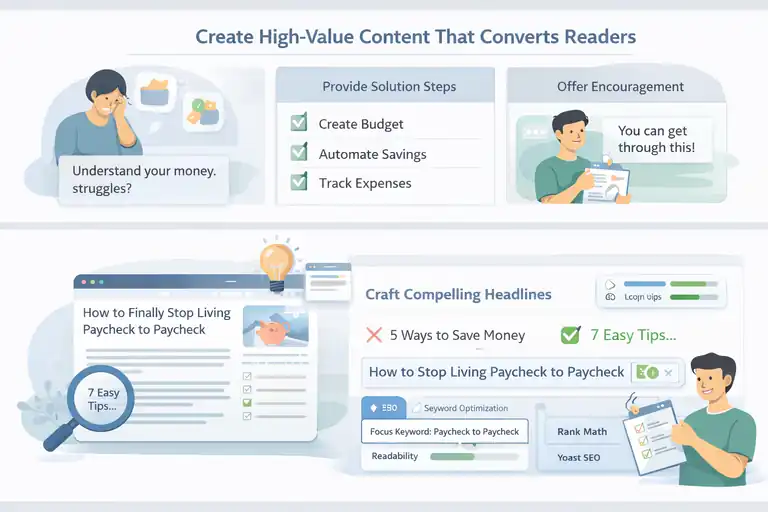
You can have the prettiest blog in the world, but if your content doesn’t help, it won’t grow. The real power lies in crafting posts that solve real problems and connect emotionally.
Learn to Write Blog Posts That Solve Real Problems
Every post should start with this question: What pain point am I solving? When readers feel understood, they engage and return.
Here’s my simple framework for writing problem-solving posts:
- Start with empathy: Describe the reader’s struggle.
- Offer insight: Explain why the problem exists.
- Provide a solution: Give actionable steps.
- Reassure: Remind them the issue is fixable.
Example: If your niche is budgeting, don’t just write “5 Ways to Save Money.” Write “How to Finally Stop Living Paycheck to Paycheck (Even If You’re Earning Less).” Address emotions, not just logic — that’s how you build connection.
Craft Headlines That Drive Clicks and Shares
Headlines are the gatekeepers of your content. I’ve learned that small tweaks in wording can double your click-through rate.
Use proven headline structures like:
- “How to [Achieve Goal] Without [Common Pain Point]”
- “[Number] Proven Ways to [Do Something Specific]”
- “What I Learned After [Personal Experience or Mistake]”
A tool I personally use is CoSchedule’s Headline Analyzer. It scores your titles based on emotional power, readability, and length.
But remember: curiosity should never replace clarity. The best headlines make a promise — and the content keeps it.
Use SEO Best Practices Without Sounding Robotic
Good SEO writing isn’t about stuffing keywords. It’s about understanding search intent — what the reader really wants to know.
Here’s how I naturally integrate SEO:
- Use the focus keyword (make your own blog) in the title, first paragraph, and one subheading.
- Include synonyms like build a blog, start blogging, or create a blog site.
- Add internal links to related posts (e.g., “choosing a niche” or “how to monetize your blog”).
- Write meta descriptions that summarize the benefit, not just the topic.
I suggest using Rank Math or Squirrly to check optimization. But never sacrifice tone for algorithms. Readers come first — Google follows.
Incorporate Visuals and Storytelling to Keep Readers Hooked
Visuals aren’t decoration — they’re part of your message. A single image, chart, or story can make a complex idea feel simple.
You can use:
- Infographics for guides or comparisons.
- Screenshots for tutorials (e.g., showing WordPress setup steps).
- Personal photos if you’re building a brand around yourself.
When telling stories, be relatable. Talk about mistakes, small wins, or moments of realization.
For instance, “When I published my first blog post, it got 12 views. But instead of quitting, I studied why — and that’s how I discovered keyword research.”
Stories humanize your advice and make readers feel, “If they did it, I can too.”
Build a Smart Content Strategy for Long-Term Growth
Now that your blog looks great and your content resonates, the next step is sustainability. A strategy keeps your growth consistent instead of random.
Develop a Keyword Research Plan That Works
I’ve seen bloggers skip this step — and it’s a big mistake. Without keyword strategy, you’re just guessing what people want.
Start simple:
- Go to Google Keyword Planner.
- Type your niche topic, like “budget travel tips.”
- Look for long-tail keywords (phrases with 3–5 words). They’re easier to rank for and match real user intent.
- Organize keywords by content type: how-to guides, comparisons, and listicles.
Example: “How to Travel Europe on $50 a Day” beats “Travel Tips” because it targets a specific, searchable phrase.
Over time, your keyword list becomes your content roadmap — ensuring every post brings in organic traffic.
Use an Editorial Calendar to Stay Consistent
Consistency is what separates hobby blogs from income-generating ones. I like to use Trello or Notion to organize my editorial calendar.
Here’s how you can set one up:
- Add columns like Idea, Writing, Editing, Published.
- Assign one post per week or biweekly — whatever you can maintain.
- Include color tags for content types (SEO, email, social).
By planning ahead, you stay on track even when motivation dips. I’ve found that scheduling content two weeks in advance keeps your momentum steady and stress low.
Repurpose Old Content to Extend Its Lifespan
One of the smartest blogging moves I’ve learned is repurposing. Your older posts are goldmines waiting to be rediscovered.
Try this:
- Turn a blog post into a YouTube video or podcast episode.
- Create carousel graphics for Instagram using your article’s key tips.
- Update outdated posts with new data, screenshots, or internal links.
For example, I once updated a 2019 article about “freelance blogging” with 2024 rates and SEO data. Within a month, its traffic doubled.
The key is to keep your content fresh and relevant — Google rewards that, and readers notice it too.
Drive Traffic Through Multiple Proven Channels
Once your blog looks polished and your content starts flowing, it’s time to bring people in. I believe traffic isn’t about chasing viral moments — it’s about creating consistent visibility.
You don’t need to be everywhere, but you do need to show up strategically where your audience already spends time.
Use Social Media Platforms Strategically, Not Randomly
Social media can be a powerful traffic engine — if you use it intentionally. The mistake I often see new bloggers make is trying to be active on every platform.
Instead, I suggest focusing on one or two where your readers genuinely hang out.
Here’s how I usually approach it:
- Instagram: Great for personal brands, lifestyle, and visual storytelling. Use stories to show behind-the-scenes moments and Reels to promote new posts.
- LinkedIn: Ideal for business, finance, or career-focused blogs. Share insights and short summaries of your latest posts.
- Twitter (X): Perfect for quick thoughts, tips, and engaging in industry conversations.
- Facebook Groups: Join or create niche communities where people are actively asking questions your blog answers.
If you’re using a tool like Later, you can schedule posts ahead of time. I suggest a simple rhythm — three posts per week per platform. Quality beats quantity every single time.
Implement Basic Email Marketing to Build Relationships
Your email list is your most reliable traffic source — it’s unaffected by algorithms and ad changes. Even if you’re starting small, begin collecting emails from day one.
Set up a free account with MailerLite or Aweber and create a simple opt-in form. Then, offer something valuable in exchange — like a free guide, checklist, or template.
Example flow:
- Sign-up form: “Get my free guide: How to Make Your Own Blog from Scratch.”
- Welcome email: Introduce yourself and share your best beginner tips.
- Weekly updates: Send short, value-packed emails linking to your latest posts.
I advise focusing on relationship first, selling second. Think of each email as a personal note, not a sales pitch.
Guest Post and Collaborate for Quality Backlinks
Guest posting is one of the most underrated ways to grow your audience and domain authority.
It’s simple: write valuable articles for other blogs in your niche, and in return, you get exposure and backlinks.
To find guest posting opportunities:
- Search Google for “[your niche] + write for us.”
- Reach out with a personalized email offering specific topic ideas.
- Include a short bio with a link to your blog.
But don’t stop there. Collaborate with other bloggers on roundups, interviews, or co-written guides.
For instance, I once collaborated with a productivity blogger — we exchanged posts and promoted each other’s newsletters. Both of our audiences grew by over 25% in two months.
Backlinks matter because Google treats them as trust signals. The more quality links you have, the higher your posts rank.
Leverage Pinterest and YouTube for Long-Term Discovery
If you want evergreen traffic, Pinterest and YouTube are unbeatable. Pinterest works like a visual search engine — pins you post today can bring traffic for years.
Pinterest strategy I suggest:
- Create vertical pins (1000×1500 px) using Canva.
- Add a keyword-rich title like “How to Make Your Own Blog in 2025.”
- Link directly to your article.
- Pin consistently using Tailwind or manual scheduling.
YouTube, on the other hand, builds deep trust. When people watch your tutorials, they see you as an authority.
If your blog is about teaching or demonstrating — like cooking, marketing, or fitness — YouTube can drive massive traffic back to your blog via descriptions and call-to-actions.
Consistency matters more than perfection. Even two videos per month can compound into real growth.
Monetize Your Blog With Sustainable Income Streams
Once you’ve built traffic and trust, monetization becomes the natural next step.
I like to think of it as building multiple “income streams” that flow into one river — your online business.
Explore Affiliate Marketing and Product Reviews
Affiliate marketing is one of the simplest ways to earn from your blog. You promote products or services you genuinely use, and when someone buys through your link, you earn a commission.
Example: If you write about blogging tools, you can recommend Bluehost for hosting or Omnisend for email marketing.
Steps to get started:
- Join affiliate networks like Awin, CJ Affiliate, or Flexoffers.
- Add affiliate links naturally in your content — never force them.
- Include disclaimers (“This post contains affiliate links…”) to stay transparent.
I suggest only recommending products you truly believe in. Readers can sense authenticity, and trust is worth more than short-term profit.
Offer Digital Products Like Ebooks, Templates, or Courses
Digital products are the ultimate form of passive income. Once you create them, they can sell 24/7 with little maintenance.
A few product ideas:
- Ebooks (e.g., “The Beginner’s Guide to Starting a Profitable Blog”)
- Canva templates for social media or blog graphics
- Mini online courses hosted on Teachable
If you’re unsure what to create first, ask your email subscribers what they struggle with most — their answers will point you in the right direction.
To make sales smooth, I use SendOwl for checkout and delivery. They integrate seamlessly with WordPress.
Use Display Ads Without Hurting User Experience
Display ads can generate steady income once your blog reaches around 10,000+ monthly views. But too many ads can slow your site and drive people away.
Here’s how to balance it:
- Start with Google AdSense when traffic is low.
- Upgrade to Mediavine once you reach higher pageviews.
- Limit ads to clean placements — sidebar, end of posts, or between paragraphs (not after every few lines).
I’ve found that fewer, well-placed ads often perform better than cluttered ones. Readers stay longer, and your RPM (revenue per 1,000 views) actually increases.
Create Paid Memberships or Premium Content Sections
Once your blog builds a loyal community, offering exclusive content is a smart move. Memberships work best when your audience wants continued guidance or insider access.
You can use tools like MemberPress to create members-only areas.
Examples include:
- Private tutorials or webinars.
- Access to a resource library or template vault.
- Monthly Q&A or live sessions.
In my experience, the key is ongoing value. If members feel like they’re getting personalized help, they’ll stay subscribed month after month.
Analyze, Optimize, and Scale Your Blog Performance
At this stage, you’ve built something real — your blog is live, earning, and growing. But to scale it into a true income engine, you need to measure and refine what works.
Track Metrics That Actually Matter (Beyond Pageviews)
Many bloggers focus only on traffic, but I believe engagement and conversions matter more.
Here are metrics worth tracking:
- Average session duration: Shows how long people stay on your posts.
- Bounce rate: If it’s above 70%, readers might not be finding what they expect.
- Email sign-up rate: Reflects content trustworthiness.
- Revenue per visitor: Helps you gauge profitability.
Once you understand what your audience responds to, you can double down on it — instead of spreading yourself thin.
Use Tools Like Google Analytics and Search Console
Both tools are essential and free.
- Google Analytics: Reveals user behavior — where visitors come from, how long they stay, and which posts perform best.
- Google Search Console: Shows how your site appears in search results, what keywords bring traffic, and whether there are errors affecting performance.
To connect them, log in to your Google account, add your site’s domain, and verify ownership (usually by adding a short code to your WordPress “Header & Footer” section).
I suggest checking both once a week — not obsessively, just to see patterns forming.
A/B Test Headlines, CTAs, and Landing Pages
A/B testing (split testing) lets you compare two versions of a page to see which performs better. It’s one of the simplest ways to improve conversions.
You can test:
- Headlines (e.g., “How to Make Your Own Blog” vs. “How to Start a Blog That Pays You”)
- Email sign-up forms (pop-up vs. inline)
- CTA buttons (color, wording, placement)
Tools like Thrive Optimize make this process easy. Even a small 5% improvement in conversion rate can make a big difference over time.
Outsource Tasks to Scale Without Burnout
As your blog grows, doing everything yourself becomes impossible. I’ve been there — and burnout kills creativity faster than anything.
I recommend outsourcing tasks like:
Start small — maybe delegate one repetitive task per month. This frees your time to focus on strategy, content quality, and revenue growth.
Scaling isn’t about working harder; it’s about working smarter.
Build a Personal Brand That Fuels Your Blog’s Success
Your personal brand is the human face of your blog — it’s what makes readers trust you beyond the articles.
When you make your own blog, the design and content attract attention, but your voice and personality are what make people stay.
I like to think of personal branding as the bridge between “a blogger” and “a trusted expert.”
Position Yourself as an Authority in Your Niche
Becoming an authority doesn’t mean pretending to know everything — it means being honest, helpful, and consistent in sharing what you do know. People follow experts they can relate to.
Start by focusing on clarity:
- Define your expertise clearly in your bio and about page.
- Use a consistent tone and message across all platforms.
- Publish in-depth content that teaches, not just tells.
For example, if your niche is sustainable living, don’t just list eco-friendly tips — explain how you’ve tested them and what results you’ve seen. Real stories build credibility faster than credentials.
I suggest creating a short tagline that sums up your purpose, like “Helping beginners make their own blog and turn it into real income.” This line becomes your signature message across every platform — your blog, email footer, and social bios.
Network with Other Bloggers and Industry Experts
No blog grows in isolation. I’ve seen that collaboration can multiply your reach faster than any SEO trick.
Here’s what I personally recommend:
- Engage on social media: Comment thoughtfully on posts by other creators in your niche. Don’t just say “great post”; add genuine insights.
- Join online communities: Platforms like Reddit’s Blogging subreddit, Facebook blogging groups, or Slack communities can help you connect with peers.
- Collaborate on content: Offer to do guest posts, co-host webinars, or exchange interviews.
Example: I once co-wrote a blogging checklist with a productivity writer. We shared it on both our audiences’ newsletters — and both lists grew by over 20% that week.
Networking isn’t about asking for favors; it’s about showing up, giving value, and building mutual respect.
Use Authentic Storytelling to Build Reader Loyalty
Readers don’t connect with blogs — they connect with people. Storytelling makes your lessons stick because it turns information into emotion.
Here’s how you can do it:
- Share personal experiences — especially mistakes and lessons learned.
- Let readers see your journey, not just your results.
- Use conversational phrasing like “Here’s what I found when I tried…”
For instance, if you’re writing about monetizing a blog, include a small story like, “I remember my first affiliate sale — it was $4.23, but it felt like a million.”
That honesty makes readers feel like they’re learning with you, not from you. Over time, they’ll trust your recommendations because they know you’ve lived what you teach.
Keep Learning, Adapting, and Experimenting
The blogging world changes constantly — SEO updates, new tools, shifting audience habits. To keep growing, I believe you need to stay curious and open to change. The best bloggers are lifelong learners.
Follow Trends in SEO and Digital Marketing
Google updates its algorithm hundreds of times a year. You don’t have to follow every change, but staying aware of major trends helps keep your content visible.
A few sources I personally follow:
- Search Engine Journal – for reliable SEO updates.
- Neil Patel’s Blog – great for practical marketing strategies.
- Ahrefs YouTube Channel – short, actionable SEO tutorials.
I suggest checking these once a week and adjusting slowly. For instance, if you notice Google emphasizing “helpful content,” update your posts to include clearer, more actionable insights.
And don’t ignore analytics — it’s your personal feedback loop. If certain posts lose traffic, it’s not failure; it’s data telling you where to improve.
Join Blogging Communities for Support and Growth
Blogging can get lonely sometimes, and having a supportive community keeps you motivated. These groups are not just for networking — they’re for learning, brainstorming, and accountability.
Some good places to start:
- Facebook groups like “Blogging Newbs” or “Grow Your Blog.”
- Slack or Discord communities for content creators.
- Reddit communities under r/Blogging or r/Entrepreneur.
If you’re more of an introvert, I suggest joining a smaller mastermind group — just 3–5 bloggers who meet monthly to share goals and feedback. In my experience, these micro-communities are where the biggest breakthroughs happen.
Set Long-Term Goals and Track Progress Consistently
Without a clear destination, even the best strategy loses direction. I advise setting 3 types of goals:
- Traffic goals – e.g., “Reach 10,000 monthly views by June.”
- Income goals – e.g., “Earn $500/month from affiliate sales.”
- Skill goals – e.g., “Learn Canva design and SEO basics.”
Use a tool like Notion to track these monthly. Mark what’s working and what’s not.
It’s also okay if your goals change — they should. What matters is staying aware and adjusting your course instead of drifting aimlessly.
Pro Tip: Treat Your Blog Like a Business, Not a Hobby
This is where many bloggers stop short. They love writing and connecting but hesitate to treat their blog as a business. The truth is, the shift in mindset changes everything — from how you plan content to how you invest your time.
Create a Simple Income Plan and Stick to It
Think of your blog like a small startup. You need a business model — even a simple one.
I usually break it down into three pillars:
- Traffic source: Where will your readers come from (SEO, social, email)?
- Revenue stream: How will you make money (affiliate, ads, products)?
- Growth engine: How will you reinvest profits to expand?
Write down your plan — even if it’s one page. This clarity turns vague effort into measurable progress.
Example:
“My main focus is SEO traffic → affiliate income through blogging tools → reinvest 30% into content upgrades and email growth.”
Once you define this, decisions become easier.
Reinvest Profits Into Growth Tools and Learning
When income starts rolling in, the best move isn’t to spend it — it’s to reinvest it.
I recommend putting a portion of your earnings back into:
- Better hosting (like SiteGround or WP Engine).
- Premium SEO tools (Ahrefs, SEMrush, or RankIQ).
- Online courses or workshops that sharpen your skills.
In my experience, every dollar I’ve reinvested has paid off tenfold in growth or time saved. The fastest-growing bloggers think like investors, not hobbyists.
Maintain Patience and Consistency — That’s the Real Secret
If I could leave you with one final truth about blogging success, it’s this: consistency beats intensity every time.
Some months you’ll publish three posts and get a surge of traffic. Other months will feel slow. That’s normal. Blogging is a long game — it’s about steady progress, not instant wins.
Whenever I hit a slump, I remind myself that every established blogger you admire once started from zero, too. Keep writing. Keep showing up. Each post builds momentum.
In time, your blog becomes more than a website — it becomes an income engine, a personal brand, and a platform that truly changes your life.
FAQ
How long does it take to make your own blog profitable?
Most blogs take 3–6 months to gain traction and 6–12 months to earn consistent income, depending on niche, content quality, and traffic strategy.
Do you need technical skills to make your own blog?
No. Modern platforms like WordPress allow you to build and manage a blog with basic computer skills using themes, plugins, and visual editors.
What is the best way to make money after you make your own blog?
The most reliable methods are affiliate marketing, digital products, and display ads, combined with steady traffic from SEO and email marketing.

I’m Juxhin, the voice behind The Justifiable.
I’ve spent 6+ years building blogs, managing affiliate campaigns, and testing the messy world of online business. Here, I cut the fluff and share the strategies that actually move the needle — so you can build income that’s sustainable, not speculative.