
Table of Contents
Some links on The Justifiable are affiliate links, meaning we may earn a small commission at no extra cost to you. Read full disclaimer.
I meet a lot of people who want to become a blogger and get paid, but they often feel stuck on where to start or how to speed up the process.
If you’ve been wondering how to turn your writing into income without waiting years, this guide breaks it all down in a simple, actionable way.
What steps actually move the needle when you’re trying to earn faster as a new blogger?
Building A Clear Blogging Foundation To Earn Faster
When you want to earn sooner rather than later, the foundation of your blog matters more than anything.
Let me walk you through the parts I’ve seen make the biggest difference for new bloggers.
Choosing A Profitable Niche With Real Revenue Potential
Picking a niche sounds simple, but in my experience it’s where most new bloggers lose months of progress. A profitable niche is one where people already spend money, search for solutions regularly, and have ongoing problems you can help with.
One way to make this easier is to look for commercial intent keywords. These are searches like “best,” “review,” “software,” “tools,” or “how to fix.” They show that people are already willing to buy.
For example, a niche like “home coffee brewing” has strong earning potential because readers often purchase equipment, grinders, beans, and accessories.
I usually advise new bloggers to test a niche by scanning Amazon product categories, Etsy demand, online course marketplaces, and YouTube topics with high view counts. If buyers and learners already exist, earning becomes much faster.
To evaluate profitability quickly, try listing five products or services within your niche that someone might purchase. If you can’t list five in under a minute, the niche may not monetize well.
Defining A Reader Persona That Guides Content Strategy
I used to skip this step, but once I started drafting a simple, realistic reader persona, my content became clearer and conversions increased. A persona is just a fictional version of your ideal reader.
Think about their age, situation, motivations, and what they type into Google on bad days versus good days. For example: “Jenna, 32, wants to start a side blog for extra income, feels overwhelmed by SEO, and has limited time after work.”
This kind of clarity helps you write posts that feel like they were written specifically for someone. And in my experience, readers who feel understood stick around longer and eventually click, subscribe, or buy.
If you want a simple tool path: Google Docs → Insert → Table → Build a one-page persona with motivations, challenges, goals, and favorite platforms.
Validating Topic Demand With Search And Competitor Data
Before writing a single post, it’s smart to validate whether people are actually searching for the topics you plan to cover. I recommend starting with simple tools like Google Trends, the Google Keyword Planner (Tools & Settings → Keyword Planner → Discover New Keywords), and YouTube search suggestions.
You don’t need big search volume to get paid. You just need consistent demand. For example, a keyword with 200–500 monthly searches can still earn extremely well if the intent is strong or commercial.
I also like scanning competitors’ most popular posts. You can do this using tools like Ahrefs (Site Explorer → Top Pages) or free alternatives like Ubersuggest. Look for patterns in their highest traffic pages—those are clues for what you should write first.
A quick validation formula I often use: Topic demand + commercial intent + manageable competition = fast monetization potential.
Establishing A Simple Framework For Consistent Publishing
What helped me speed up earnings wasn’t writing more—it was writing consistently. A posting framework removes confusion and keeps your content pipeline moving.
A simple schedule looks like:
- Keyword Research Day: Gather 5–10 topics.
- Outline Day: Create clear H2/H3 structures.
- Writing Day: Draft one fully optimized article.
- Publishing Day: Add images, internal links, and meta descriptions.
You can build this workflow directly inside Notion. For example, in Google Sheets: Columns can include Topic, Keyword, Search Intent, Status, Publish Date, and Target Affiliate.
This kind of structure keeps your blogging momentum running even when motivation dips, and from what I’ve seen, that’s what gets you paid faster.
Creating High-Quality Blog Content That Drives Income
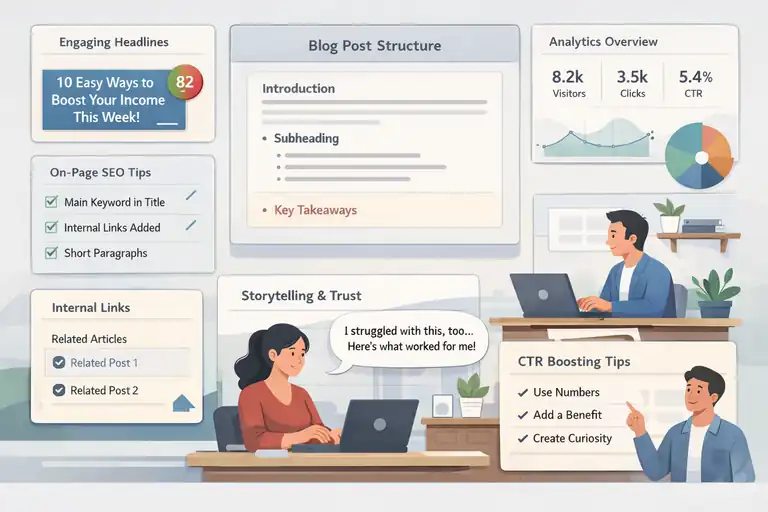
Once your foundation is set, the next step is producing content that doesn’t just attract readers but nudges them toward actions that lead to income. Here’s where quality and strategy work together.
Structuring Posts For Engagement And Search Visibility
The structure of your blog posts plays a huge part in how well they rank and how long people stay on the page. Search engines reward content that is clear, organized, and easy to skim.
A practical structure I suggest using:
- An engaging introduction that sets the reader’s expectation
- Clear H2 and H3 headings for each subtopic
- Short paragraphs of 1–3 sentences
- Occasional bullet points for steps or comparisons
- Internal links to relevant posts
- A summary or next-step recommendation
Think of your post like a guided tour. If readers can easily see what’s coming next, they stay longer—and longer engagement can boost your rankings.
I’ve also noticed that adding internal links early in the article helps keep readers within your ecosystem, which increases earnings through both ads and affiliate links.
Using Seductive Headlines That Boost Click-Through Rates
Headlines are often the difference between a post that gets ignored and one that gets read. The trick is balancing clarity with curiosity—without slipping into clickbait.
I recommend using a simple headline enhancer technique: combine a problem, a promise, and a specific detail.
Example: “How to Fix Slow Page Speed in Under 10 Minutes (Simple Steps)”
You can test headlines using CoSchedule’s Headline Analyzer, but I usually go by what feels most natural for the reader. People click when they feel you understand their struggle.
Small adjustments—like adding a time frame, outcome, or relatable emotion—can raise your click-through rate significantly. For instance, changing a headline from “Start a Travel Blog” to “How to Start a Travel Blog That Earns Even If You’re a Beginner” often results in more clicks.
Applying On-Page SEO Principles Without Keyword Stuffing
SEO doesn’t have to be intimidating. In fact, applying a handful of simple on-page techniques can help you rank without feeling like you’re writing for robots.
Here’s what I personally follow:
- Place the main keyword in the title naturally.
- Add a variation of it in the first 100 words.
- Use semantic keywords in headings where it fits.
- Write for humans, then lightly optimize for search engines.
I only place keywords when they sound natural. Forced SEO language makes readers bounce, which hurts rankings in the long run.
One trick I use is reading each paragraph aloud. If the keyword sounds unnatural, I remove it. You’ll find that search engines prefer clean, readable writing over stuffed content.
Leveraging Storytelling To Build Trust And Reader Loyalty
I believe storytelling is one of the most underrated blogging tools for earning faster. People connect through stories—they remember your experience, your honesty, your mistakes, and your wins.
You don’t need long narratives. Even a single sentence of personal insight can create connection. For example: “I once spent three months writing content no one read until I understood search intent.”
Storytelling works because it builds emotional credibility. When readers trust you, they follow your recommendations more willingly, which increases conversions for both affiliate links and products.
You can weave in micro-stories such as:
- A lesson you learned while struggling with your niche
- A moment when a strategy finally clicked
- A quick example of what worked vs. what didn’t
These moments make your content feel real, authentic, and human—and from what I’ve seen, that’s exactly what keeps people coming back.
Setting Up Your Blog Platform For Fast Monetization
Before you start trying to become a blogger and get paid, you need a platform that’s built for speed, simplicity, and earning potential.
I’ve tested most major setups, and the right foundation saves you months of headaches later.
Selecting A Platform And Theme Optimized For Earnings
Choosing the right platform sets the tone for your entire blogging journey. I personally recommend starting with WordPress.org because it gives you full control over monetization, plugins, and growth tools.
If you’re unsure what that means, here’s the simple distinction: WordPress.org is self-hosted, meaning you install it on a hosting provider like SiteGround or WPX, while WordPress.com limits your ability to use plugins or monetize freely.
A lightweight, fast theme can also speed up earnings. I like themes such as GeneratePress or Kadence because they load quickly, use clean code, and give you flexible layouts without needing a developer. Fast themes directly affect your income because search engines reward speed, and slow pages reduce conversions.
Here’s a quick UI path to install a theme in WordPress: Appearance → Themes → Add New → Search for “GeneratePress” → Install → Activate. It’s beginner-friendly and takes less than two minutes.
Installing Tools That Improve Speed And User Experience
Your blog’s loading time is one of the biggest factors affecting bounce rate. I’ve seen sites double their earnings simply by reducing page load times by a second or two. If readers wait too long, they leave—and no ads or affiliate links get clicked.
To speed things up, here are tools I usually install right away:
- LiteSpeed Cache: A caching plugin that speeds up how pages load.
- ShortPixel: Compresses images without ruining quality.
- Cloudflare CDN: Sends your content through faster servers so readers around the world load pages quicker.
When setting up LiteSpeed, a simple recommended path is: LiteSpeed Cache → Page Optimization → Turn on CSS/JS Minify and HTML Minify. This reduces file sizes and improves speed without requiring technical skills.
Even small improvements—like reducing image size or deleting unnecessary plugins—can increase revenue because traffic stays on your site longer.
Configuring Essential Plugins For Monetization And SEO
Plugins are like power tools for your site. The right ones help you optimize for traffic and earnings without needing a developer.
Plugins I suggest installing early include:
- Rank Math: Helps you optimize posts for search visibility.
- Pretty Links: Makes affiliate links cleaner and easier to manage.
- WPCode: Lets you safely add ad scripts or tracking pixels.
- WPForms: Allows you to collect emails from day one.
A small example of what Rank Math helps with: When you open a blog post in WordPress, Rank Math sits under the editor and guides you to optimize your meta title, description, keyword usage, and schema. It’s like having a small SEO assistant right inside your post editor.
These plugins work together to increase visibility, track conversions, and create a blog that’s ready to earn from the moment traffic starts arriving.
Creating A Seamless Navigation Structure That Converts
A blog that’s hard to navigate loses money. Your goal is to help readers find exactly what they need with as few clicks as possible.
A simple rule I use is to keep the main menu limited to 4–6 essential categories. For instance, if your niche is personal finance, your menu might include Budgeting, Saving, Side Hustles, and Investing.
A clean navigation path reduces confusion and guides readers to your most valuable content. If your affiliate-heavy posts are buried, your earnings drop. If they’re easy to find, your earnings rise.
To adjust menus: WordPress Dashboard → Appearance → Menus → Add Items → Save. Keeping it simple creates a smooth user journey that naturally leads to more clicks and conversions.
Using Smart Strategies To Become A Blogger And Get Paid
Once your blog is set up, the next step is learning how to monetize strategically—without overwhelming your readers.
I’ve found that early monetization is possible when it’s approached with care and honesty.
Implementing Early Monetization Without Hurting Trust
The biggest mistake I see new bloggers make is pushing monetization too aggressively. Readers need to trust you before they buy anything you recommend.
A simple approach I use is to start with natural monetization opportunities inside helpful content. For example, a post about improving home office productivity could include links to an affordable chair or noise-canceling headphones—but only when they truly serve the reader.
Early monetization works when it feels like a friend offering advice, not a salesperson pushing products. I usually wait until after the first 5–10 value-driven posts before adding more obvious monetization like banners or email opt-ins.
This slow-build strategy creates trust, and trust leads to clicks and purchases.
Integrating Affiliate Links With Natural Reader Value
Affiliate marketing becomes powerful when you place links intentionally. I like to use something I call “contextual linking,” where the product fits naturally within your sentence.
For example: “I switched to a compact USB microphone that made recording tutorials so much clearer.”
Then you add the affiliate link to the specific microphone. Readers appreciate recommendations that come from personal experience, and many purchase because it feels real.
I suggest creating one affiliate resources page early on. You can set this up by going to Pages → Add New → “Resources I Personally Recommend.” This becomes a hub for trusted products and works well for more passive income over time.
Setting Up Display Ads Strategically To Maximize CPMs
Display ads are one of the most passive ways to earn, but they need proper placement. I’ve seen bloggers increase their CPM (cost per thousand impressions) by rearranging where ads appear.
Most ad networks like Ezoic and Mediavine offer dashboards where you can control ad density.
A good starting point is:
- Above-content ad
- In-article ads after the first two paragraphs
- Sidebar ad for desktop only
These placements keep the content readable while still earning consistent revenue. If you start too early with a high ad density, though, you risk driving away new readers—so balance is key.
Creating Digital Products That Solve Specific Problems
Digital products often produce the highest earnings per reader, especially when they solve a clear, painful problem.
I like starting with simple products such as:
- Mini eBooks that answer a specific question
- PDF checklists
- Simple templates (like social media or budgeting templates)
For example, if your blog teaches meal prep, you might create a 7-day meal plan template. It’s quick to produce and can sell steadily forever.
You can use Canva to design your product by going to Home → Create a Design → US Letter Document → Export as PDF. Then upload it to Gumroad or Payhip.
The beauty of digital products is that once they’re created, they can earn revenue on autopilot while your blog continues to grow.
Growing Blog Traffic Rapidly With Proven Methods
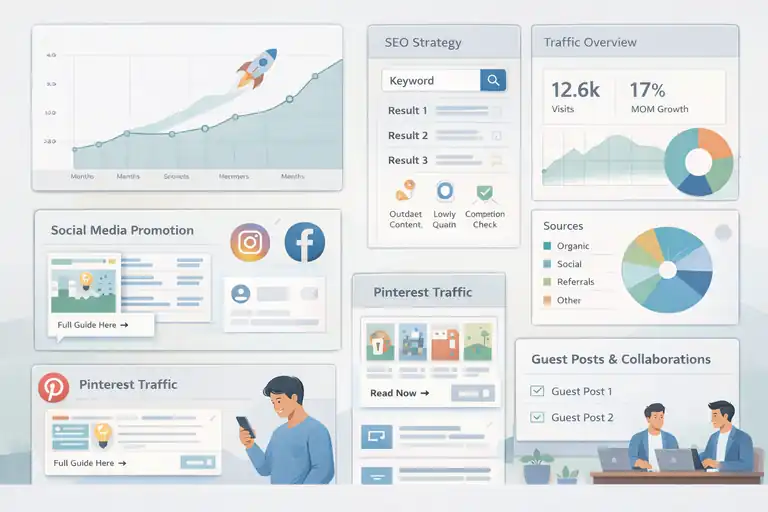
Traffic is the lifeblood of every blog, and when you’re trying to become a blogger and get paid, getting eyeballs on your content as soon as possible makes all the difference.
Using SEO To Build Steady, Long-Term Organic Traffic
SEO is your long-term engine. It takes time, but it produces traffic that compounds month after month. I always suggest focusing on low-competition keywords first. These are searches with clear intent and fewer competitors.
A simple workflow:
- Google the keyword
- Scan the top 3 results
- Check whether the pages are short, outdated, or missing depth
If you can offer something more useful, you can rank.
Search engines reward content that genuinely helps, so prioritize clarity, completeness, and structure. And I’ve found that adding internal links to newer posts boosts indexing speed, helping Google understand your site faster.
Applying Social Media Promotion That Drives Clicks
Social media can send a quick burst of traffic when you’re just getting started. I recommend choosing just one or two platforms early on so you don’t burn out.
For example, on Instagram, share micro-tips that link back to your blog. A template I use is:
- Small problem → quick solution → “I wrote a full breakdown here” followed by your blog link.
On Facebook groups, answer questions honestly and naturally include your post link when relevant. Always follow group rules, but I’ve seen new blogs get their first 100 visitors this way within a few days.
Leveraging Pinterest For Fast Blog Visibility
Pinterest is more of a visual search engine than a social platform. It can deliver fast traffic when optimized well. I’ve seen blogs jump from zero to a few thousand monthly visits just by pinning consistently for 30 days.
To begin: Pinterest → Create Pin → Upload graphic → Add your blog link → Write a short keyword-rich description.
Pin at least 3–5 fresh images per post. Tools like Canva make this easy with their Pinterest templates.
Pinterest works best for niches like food, DIY, home decor, fitness, travel, and personal development. If you’re in one of these areas, it can dramatically speed up early traffic growth.
Building Authority With Guest Posts And Collaborations
Guest posting helps you build backlinks, visibility, and credibility. Even one good guest post can help your domain start ranking faster.
I usually suggest reaching out to blogs slightly bigger than yours. The key is offering a topic that genuinely fits their audience. When you write your pitch, keep it simple:
Who you are → what you like about their blog → a topic idea that adds value.
A small collaboration—like a podcast interview or expert roundup—also boosts authority. Readers trust you more when they see your name in multiple places, and trust leads to better conversions across your monetization methods.
Turning Readers Into Loyal Subscribers And Buyers
If you want to become a blogger and get paid consistently, you need a way to keep readers coming back.
Email is where loyalty and conversions happen, and I’ve seen even tiny lists outperform large social audiences when used well.
Creating Lead Magnets That Incentivize Email Signups
A lead magnet works when it feels like a shortcut to something your reader already wants.
I always recommend keeping it small, simple, and quick to consume. Most readers don’t want a 70-page eBook—they want a fast win.
Here are ideas I’ve seen convert extremely well:
- Checklists: Simple step-by-step guides like “5 Things to Fix Before Publishing Your Next Blog Post.”
- Templates: Editable Google Docs or Notion templates (File → Make a Copy → Share).
- Mini Roadmaps: A one-page plan that answers a specific problem.
If you’re using Kit (ConvertKit), you can create a lead magnet by going to Grow → Landing Pages & Forms → Create New → Form. Upload your file under Incentive Download. This triggers automatic delivery each time someone subscribes.
A small scenario: Let’s say you run a fitness blog. A “10-Minute Morning Stretch Routine” PDF can bring in hundreds of signups because people love actionable, easy-to-start freebies.
Designing Welcome Sequences That Boost Conversions
A welcome sequence is simply a set of automated emails that introduces you, teaches something helpful, and ends with a soft offer. When done right, it can turn a brand-new reader into a customer within days.
I like a simple three-email approach:
- Email 1: Welcome & Big Promise — Share who you are and the transformation your content supports.
- Email 2: A Small Win — Give them something practical they can do today.
- Email 3: Gentle Offer — Introduce a relevant product, affiliate recommendation, or next step.
In MailerLite, you set this up under Automation → Create Workflow → New Subscriber Trigger. The interface makes it easy to drag-and-drop each step.
A quick insight from my experience: Conversions go up significantly when you keep your tone friendly instead of overly professional. People buy from people.
Using Email Newsletters To Sell Naturally Over Time
Your weekly or biweekly newsletter is where long-term trust is built. You don’t need to sell every time, but you should mix value and recommendations naturally.
What works well:
- Share a personal story that leads into the lesson.
- Offer practical advice they can apply in minutes.
- Recommend a tool or product that helps solve the problem you just described.
For example, if you talk about burnout, you might mention how using Trello (Boards → Create Board → “Content Ideas”) helped you simplify tasks. Readers appreciate honest, real-life examples.
I try to follow a rhythm: value → personal insight → gentle offer. It feels authentic, and it converts well without pressuring anyone.
Segmenting Subscribers To Personalize Recommendations
Segmentation simply means sending people content based on what they care about. It improves conversions because readers only see what’s relevant.
Inside Kit, you can tag subscribers by choosing Automations → Rules → Add Tag When Form Is Completed.
For example:
- Tag: “Beginner Blogger”
- Tag: “SEO Focused”
- Tag: “Affiliate Marketing Interested”
Then you can send targeted emails, such as a list of SEO tools only to subscribers tagged “SEO Focused.” This small step often increases sales because the content feels tailored, not generic.
A real-world scenario: I once segmented readers into “Monetization Beginners” and “Advanced Bloggers.” The advanced group responded far better to product recommendations because they were already in buying mode.
Tracking Performance Metrics To Speed Up Earnings
If you want to get paid faster, you need to know what’s working and what’s wasting your time.
Tracking metrics doesn’t have to be complicated—I’ll walk you through what actually matters.
Identifying Pages With The Fastest Revenue Potential
Some posts will naturally earn more than others. These are usually posts with strong commercial intent or posts that get consistent organic traffic.
In Google Analytics 4, go to Reports → Engagement → Pages and Screens. Sort by highest views.
Then look at:
- Pages with high traffic but low conversions
- Pages with decent traffic and strong intent
- Pages already ranking but needing a small update
These pages are your biggest opportunity. By improving them—adding clearer recommendations, better internal links, or updated info—you can increase revenue without publishing anything new.
I’ve seen bloggers double earnings just by optimizing their top five posts.
Analyzing Traffic Sources To Prioritize What’s Working
Traffic sources tell you where your best readers come from. In GA4, open Reports → Acquisition → Traffic Acquisition.
Look at which sources bring:
- Low bounce rates
- High engagement
- Conversions
If Pinterest traffic bounces quickly but SEO readers stay longer, you know where to focus. Conversely, if Facebook posts suddenly send spikes of traffic, consider posting there more often.
A simple rule I follow: invest 70% of your energy into the source with the highest quality traffic, not the highest volume.
Improving Conversion Rates With Simple Tweaks
You don’t need complicated funnels to increase conversions. Small tweaks often produce big results.
Here are the adjustments I suggest trying:
- Add calls-to-action earlier in the post.
- Insert in-text links where readers need them most.
- Improve product explanations by adding why you personally use them.
- Reduce clutter so key links stand out.
For example, moving an affiliate link from the bottom of a post to a natural moment mid-article can increase clicks significantly. Readers often don’t scroll all the way down.
I once tested two CTA placements and saw a 38% improvement just by positioning the link after the second subheading.
Using Data To Optimize Monetization Over Time
The goal is to make decisions based on data, not guesswork. I like reviewing metrics once a month and updating three things:
- Underperforming articles
- Affiliate links with low clicks
- Headlines with poor CTR
Tools like Google Search Console make this easy. Go to Performance → Queries to see which keywords your pages already rank for. If you see a keyword you didn’t intentionally target, add a section or update to serve that search intent better.
Over time, these small refinements compound into higher revenue across your entire blog.
Scaling Your Blogging Income With Repeatable Systems
Once your blog starts earning consistently, the real growth comes from building systems. Systems let you scale without burning out.
Outsourcing Tasks To Increase Publishing Volume
Outsourcing doesn’t mean giving up control—it means freeing up your time for tasks that actually grow income. I usually start by hiring help for repetitive tasks like formatting posts, creating graphics, or editing.
Platforms I’ve used include Fiverr and OnlineJobs.ph. When hiring, I suggest creating a simple SOP in Google Docs: Tools → Checklists → Add Step-by-Step Instructions.
This ensures every task is completed exactly the way you want. Outsourcing even a couple of hours a week can double your output.
Building Content Pipelines For Predictable Output
A content pipeline is a workflow that removes decision fatigue. It helps you know exactly what to work on each day.
Mine usually looks like this:
- Stage 1: Research
- Stage 2: Outline
- Stage 3: Draft
- Stage 4: Edit & Optimize
- Stage 5: Publish
You can build this inside Trello using boards like “Ideas,” “Writing,” “Editing,” and “Ready to Publish.” Add due dates under Card → Dates → Set Deadline so nothing falls through the cracks.
A pipeline keeps you consistent even when motivation dips.
Repurposing Blog Posts Into Multiple Income Streams
One of the fastest ways to scale is to repurpose your existing content. A single blog post can become:
- A YouTube video outline
- A Pinterest carousel
- An email lesson
- A digital product bonus
- A mini eBook
For example, a detailed “How to Meal Prep on a Budget” article can turn into a downloadable one-week meal plan. This multiplies your reach without creating brand-new content every time.
Repurposing also improves authority across platforms, which indirectly boosts revenue.
Expanding Into Courses, Coaching, And Related Offers
Once you understand your audience deeply, you can create higher-ticket offers that solve their biggest problems.
This might be:
- A small online course
- A premium workshop
- A group coaching program
- A digital toolkit
You don’t need expensive tools to start. For simple workshops, you can use Zoom (New Meeting → Share Link). For courses, platforms like Teachable or Thinkific let you upload videos and lessons easily.
I suggest starting small—maybe a $27 mini course. These often convert extremely well and help you validate whether your audience wants more from you.
FAQ
How long does it take to become a blogger and get paid?
Most bloggers earn their first income within 3–6 months if they choose a profitable niche, publish consistently, and monetize early with affiliates or simple digital products.
What is the fastest way to become a blogger and get paid?
The fastest path is targeting low-competition keywords, creating helpful content with buying intent, and using affiliate links or lead magnets from day one.
Do you need a large audience to get paid blogging?
No. You can get paid with a small audience if your content solves specific problems and attracts readers who are ready to buy or take action.

I’m Juxhin, the voice behind The Justifiable.
I’ve spent 6+ years building blogs, managing affiliate campaigns, and testing the messy world of online business. Here, I cut the fluff and share the strategies that actually move the needle — so you can build income that’s sustainable, not speculative.
Related posts:
 Create a Blog and Make Money in 30 Days: Real Results
 The Best Way to Start a Blog That Actually Makes Money
 How to Create a Blog Site and Start Making Money
 Create a Blog Free and Start Earning With No Risk
 Start a Blog Website and Build a Profitable Side Income
 How to Set Up a Blog for Free and Make Money