
Table of Contents
Some links on The Justifiable are affiliate links, meaning we may earn a small commission at no extra cost to you. Read full disclaimer.
If you’re wondering how much can you make on Udemy, the honest answer is: it ranges from almost nothing to a real side income, and for a smaller group of instructors, it can become a serious business.
That wide range is exactly why so many new instructors feel confused at the start. You see screenshots of big wins, then hear stories of courses that barely sell.
In this guide, I’ll break down what new instructors usually earn, how Udemy payouts actually work, what numbers are realistic, and what you can do to give yourself a much better shot at real income.
What New Instructors Need To Understand First
Before you try to estimate income, it helps to understand what you are actually selling on Udemy and what controls your payout.
Why There Is No Single “Average” Udemy Income Number
When people ask how much can you make on Udemy, they usually want one clean number. I get it. We all want a shortcut. The problem is that Udemy income does not behave like a salary.
A new instructor might upload one course in a crowded topic and earn very little for months. Another instructor might pick a stronger niche, launch with better positioning, and cross their first few hundred dollars much faster. Then there are instructors with multiple courses, years of reviews, and a catalog that compounds over time.
What makes the difference is usually a mix of these factors:
- Course topic demand
- Competition level
- Your course quality
- Pricing and promotions
- Review velocity
- Number of courses in your catalog
- How well you bring your own audience
In my experience, most beginners get in trouble when they assume course quality alone decides income. It matters a lot, but it is not the whole game. Topic selection and conversion matter just as much.
A course on a high-demand practical skill like Excel automation, Python, resume writing, or project management will often have more earning potential than a beautifully produced course on a topic very few students are searching for.
So the right question is not just, “How much can you make?” It is, “How much can this specific course in this specific market realistically make?”
How Udemy’s Business Model Changes What You Earn
Udemy is not just a course host. It is a marketplace, and that changes everything.
On a marketplace, you get access to search traffic, email promotions, discount campaigns, and a giant existing audience. Udemy says its platform has 84 million learners, 90,000 instructors, and more than 290,000 courses, which tells you both the opportunity and the competition are huge.
That reach is the upside. The downside is that Udemy controls much of the pricing environment, promotion system, and shopper experience. In plain English, you are not fully running your own storefront.
That means your earnings are affected by things like:
- Whether a sale came from your own coupon link
- Whether Udemy generated the sale
- Whether your course is included in subscription products
- Whether your topic performs well during sitewide discount periods
This is why two instructors with similar course ratings can earn very different amounts. One may rely mostly on marketplace traffic. Another may drive students directly and keep a much larger share per sale.
I believe this is where a lot of beginners misread the platform. They treat Udemy like a simple “upload once, get paid forever” machine. It can become passive later, but early on it rewards strategy a lot more than wishful thinking.
The Real Range: From Pocket Money To Full-Time Income
Let me put this in the most practical way possible.
For many new instructors, the early earnings range looks something like this:
| Instructor Stage | Typical Situation | Rough Income Pattern |
|---|---|---|
| First course, no audience | New instructor in a competitive topic | $0–$100 per month early on |
| First course, decent niche fit | Better topic choice and clearer positioning | $100–$500 per month |
| Small catalog builder | 2–5 courses with growing reviews | $500–$2,000 per month |
| Established instructor | Several strong courses and ranking history | $2,000+ per month |
| Top-tier outlier | Strong brand, strong topic, large catalog | Full-time or high full-time income |
These are not guarantees. They are realistic patterns I suggest using for planning, not promises.
A lot of instructors will sit in the first two rows for a while. That is normal. The big leap usually happens when someone stops thinking course-by-course and starts thinking catalog-by-catalog. One course can earn money. A portfolio of courses is where Udemy starts to feel like a business.
I believe the safest way to approach Udemy is to treat your first course as market validation, not as your retirement plan.
How Udemy Pays Instructors
The next step is understanding how the money gets split, because revenue share is where expectations get real.
Marketplace Sales: Your Share Depends On Where The Sale Came From
Udemy’s official instructor revenue share rules are pretty clear. If you bring in the student through your own instructor coupon or referral link, you keep 97% of the net amount. If the sale comes through Udemy’s own organic or paid marketplace channels, your share is lower.
On its official support page, Udemy says instructors receive 37% for organic marketplace sales and 25% for paid user acquisition sales.
That difference matters more than most beginners realize.
Here is a simple example. Imagine your course sells for $14.99 during a promotion.
- Sale through your own coupon link: You keep almost all of the net sale
- Sale through Udemy organic discovery: You keep much less
- Sale through paid acquisition: You keep even less
So when someone says, “I sold 100 courses,” that number alone tells you almost nothing. What matters is the mix of sales sources.
This is also why your own small email list, YouTube audience, LinkedIn following, or niche community can make a surprisingly big difference. You do not need millions of followers. Even a modest audience can dramatically improve your revenue per sale if they buy through your instructor links.
For new instructors, this is one of the biggest mindset shifts: not all sales are equal.
Subscription Revenue Works Very Differently
Udemy also has subscription-based products, including Udemy Business and other subscription plans. These do not pay you per individual course purchase in the same way.
According to Udemy’s support documentation, instructors are paid from a revenue pool based on learner engagement, and Udemy allocates 15% of monthly subscription revenue from Udemy Business customers to that instructor pool.
That means your income here depends on how much your content is actually consumed, not just how many students clicked enroll.
In practical terms, this changes what tends to win:
- Courses that solve ongoing professional needs
- Courses with strong completion and watch time
- Content used in workplace learning paths
- Courses in business-relevant skills like data, cloud, leadership, IT, and AI
A short niche course with a narrow hobby audience may do fine in the marketplace, but a deeper career-focused course may perform better in subscriptions.
From what I’ve seen, beginners often ignore this distinction. They optimize their course title and thumbnail for clicks, but they do not think enough about ongoing engagement. On subscriptions, engagement is part of the income engine.
Why Udemy Discounts Do Not Always Mean Low Earnings
This part surprises people.
You may list a course at a higher price, but Udemy often sells it at heavily discounted prices through promotions. New instructors sometimes panic when they see low sale prices. They assume that means the platform is impossible for earning.
That is not always true.
Udemy discounts because lower promotional prices can improve conversion volume. Sometimes making less per sale still leads to higher total revenue because more students buy. Marketplace businesses often work that way.
The real issue is not whether your course is discounted. The real issue is whether your course converts well at the discount level where most buyers actually purchase.
Ask yourself these questions:
- Does your title make the result feel concrete?
- Does your course image look credible?
- Does your landing page explain outcomes clearly?
- Do your preview videos reduce buyer hesitation?
- Are early reviews strong enough to support conversions?
If the answer is yes, discount pricing may still work very well for you. If the answer is no, even a great course can underperform.
I suggest looking at discounted pricing as the normal operating reality of Udemy, not as a personal insult from the platform.
Real Numbers New Instructors Should Expect
This is the section most people actually came for, so let’s make it practical.
What A First Course Often Makes In The First 3 To 6 Months
A first course usually earns less than the internet success stories make it seem.
In many cases, a new instructor with no existing audience, no review base, and one course in a competitive category may earn somewhere between $0 and $300 in the first few months. A better-positioned course in a healthier niche might do more, but I would still call slow starts normal.
Here is a realistic first-course scenario:
- Course topic: Beginner Excel reporting
- Course price shown to market: Frequently discounted
- First 90 days: 10–40 sales
- Revenue mix: Mostly marketplace, little or no direct traffic
- Result: Modest early earnings, but useful validation
Now compare that with a better launch scenario:
- Course topic: AI for HR teams, very specific use case
- Clear outcome in the title
- Good audio, clean structure, practical templates
- Instructor promotes through LinkedIn and email
- Result: Better conversion rate and higher share from direct sales
Same platform. Very different income outcome.
This is why I usually tell people not to judge Udemy based on the first 30 days alone. The first course is doing more than making money. It is teaching you what your market responds to.
A Simple Earnings Model You Can Use Before You Publish
One of the smartest things you can do is estimate income before you record 20 hours of video.
Use this simple planning model:
Monthly Revenue = Traffic x Conversion Rate x Average Instructor Share
For example, imagine:
- 1,000 monthly course-page visits
- 3% conversion rate
- 30 sales per month
- Average instructor take of $4 to $8 per sale after revenue share and discounting
That gives you a rough monthly income range of $120 to $240.
Now imagine you improve one variable:
- Better title and landing page raise conversion from 3% to 5%
- 50 sales per month instead of 30
- Same average instructor share
- New monthly range: $200 to $400
This is why tiny changes matter. On Udemy, you often do not need miracles. You need better economics.
A lot of new instructors waste time obsessing over production polish while ignoring the three levers that usually matter most:
- Demand
- Conversion
- Revenue share mix
If you improve those, your income math gets healthier very fast.
Why Some Instructors Stay Stuck Below $100 Per Month
Let’s be honest about the common traps.
Some courses stay under $100 per month because the topic never had enough demand. Others get buried because the landing page is weak. Some are simply too broad, too generic, or too easy to compare against stronger competitors.
The most common problems I see are:
- Teaching a topic students are not actively buying
- Choosing a niche already dominated by hundreds of similar courses
- Making the course title too vague
- Launching without any plan for early reviews
- Creating one course and then waiting for magic
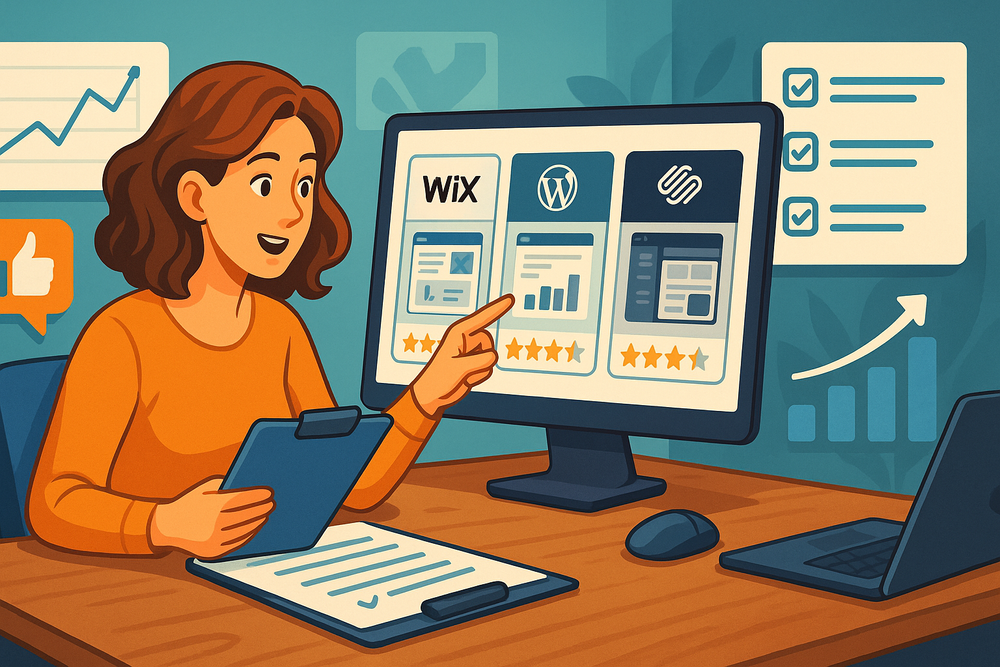
This is where platform comparisons can help your thinking.
| Platform | Best For | Traffic Source | Margin Control | Difficulty Of Getting Sales |
|---|---|---|---|---|
| Udemy | Marketplace exposure | Built-in marketplace | Lower | Easier to get visibility, harder to control pricing |
| Teachable | Independent course business | Your own audience | Higher | You must generate traffic yourself |
| Thinkific | Branded course site | Your own audience | Higher | Better control, but slower without audience |
| Kajabi | Full creator business | Your own audience | Higher | Strong for funnels, weak for built-in discovery |
If you want demand handed to you, Udemy can help. If you want maximum pricing and customer control, other platforms may fit better. The trade-off is simple: more marketplace help usually means less control over earnings per sale.
What Actually Increases Your Income On Udemy
Once you understand the payout mechanics, the next question becomes much more useful: what actually moves the needle?
Pick Topics Students Already Buy, Not Topics You Merely Like
This sounds obvious, but it is where a lot of course businesses live or die.
Being interested in a topic does not automatically mean the topic has strong buyer intent. A good Udemy topic usually has three things:
- Clear student demand
- Clear outcome
- Room for a differentiated course
Udemy’s own instructor resources highlight its Marketplace Insights tool as a way to assess demand, competition, and opportunity before creating a course.
That matters because market selection usually beats content perfection. A very good course in a weak market often earns less than a solid course in a high-intent market.
Here is how I’d think through it:
- Bad topic angle: “Communication Skills”
- Better topic angle: “Communication Skills For Remote Engineering Managers”
- Even better: “Run Better 1:1 Meetings And Team Updates As A Remote Engineering Manager”
The more practical and outcome-driven your angle, the easier it is for a buyer to say yes.
Imagine you’re a student browsing ten course options. Which one feels safer to buy: the generic one, or the one that seems built for your exact job and problem? That decision is where revenue starts.
Build A Course Landing Page That Sells Before Students Watch Lesson One
Many new instructors think the course itself sells the course. Not exactly. The landing page sells the click into enrollment.
Before a student experiences your teaching, they judge:
- Title
- Subtitle
- Thumbnail
- Promo video
- Reviews
- Course outline
- Promise of outcome
That means your sales page needs to reduce uncertainty quickly.
I suggest focusing on these page elements:
- Title: Make the outcome tangible
- Subtitle: Clarify who it is for and what result they get
- Promo video: Build trust fast
- Curriculum: Show logical progress
- First reviews: Remove buyer hesitation
A weak title like “Learn Python Today” is easy to ignore. A stronger title like “Python For Data Analysis: Build Real Reports And Automation Projects” gives the buyer a reason.
In my experience, beginners overestimate how much buyers care about course length and underestimate how much they care about relevance. People do not buy hours. They buy confidence.
I suggest writing your course title only after you can finish this sentence clearly: “This course helps this type of student achieve this specific result.”
Use Your Own Audience, Even If It Is Small
This is one of the simplest ways to increase earnings without increasing course volume.
Because direct instructor sales pay much more favorably than many marketplace-generated sales, even a small personal audience can improve your economics. Udemy’s official revenue-share rules make that gap clear.
Your audience could be:
- A modest email list
- A small YouTube channel
- A LinkedIn following
- A blog audience
- A niche Facebook or community presence
- Students from previous coaching or workshops
You do not need influencer numbers. You need relevance.
For example, imagine you have only 1,000 LinkedIn followers, but they are HR professionals and your course teaches AI workflows for recruiting. That audience may outperform a much larger but less targeted audience.
I recommend creating a simple launch plan:
- Announce the course before it goes live.
- Share the transformation it helps with.
- Use an instructor coupon link.
- Ask your audience for honest early feedback.
- Keep talking about the problem your course solves, not just the fact that the course exists.
This is not just about making more on launch week. It also helps you build early sales velocity, which can improve momentum inside the marketplace.
A Realistic Path To $500, $1,000, And Beyond
Hitting specific income milestones on Udemy usually comes from systems, not luck.
How To Think About Your First $500 Per Month
Your first $500 per month is often the point where Udemy starts to feel real.
For many instructors, that milestone comes from one of two paths:
- One strong course in a healthy niche
- Two to four decent courses that stack together
I believe the second path is more reliable for most people. Depending on a single course is emotionally exhausting. A small catalog gives you more shots on goal.
A realistic roadmap might look like this:
- Course 1 validates demand
- Course 2 targets a related beginner problem
- Course 3 serves an intermediate next step
- Course 4 supports a different angle for the same audience
That creates a simple catalog ladder.
Example:
- Excel Basics
- Excel Dashboards
- Excel Automation
- Excel Reporting For Managers
Now your earnings no longer depend on one search term or one conversion page. Your catalog becomes more resilient.
What matters here is not speed. It is strategic consistency. A lot of instructors quit after one underperforming launch when they were actually one or two better-positioned courses away from meaningful side income.
What Usually Needs To Happen To Reach $1,000 Per Month
Crossing $1,000 per month usually means you are no longer just publishing. You are operating.
At this level, some combination of the following is usually true:
- You have multiple courses
- At least one course ranks well or converts strongly
- Reviews build buyer trust
- You understand your niche audience
- You update content regularly
- You use direct promotion intelligently
Here is a simple example model:
| Revenue Driver | Conservative Example |
|---|---|
| Course A | $350/month |
| Course B | $250/month |
| Course C | $180/month |
| Course D | $120/month |
| Direct launch pushes | $100–$200/month extra |
| Total | Around $1,000/month |
Notice what is happening here. No single course is a superstar. The total becomes meaningful because the catalog is working together.
This is why I often say Udemy rewards accumulation. One decent course is nice. Four useful courses in the same ecosystem can become a real asset.
If you are aiming for this level, stop asking, “How do I make one course go viral?” Start asking, “How do I build a catalog that compounds?”
Full-Time Income Is Possible, But It Is Not The Default
Yes, some instructors make full-time money on Udemy. Some make very large amounts. Udemy has published older examples of top instructors generating hundreds of thousands or even millions in course earnings, though those are clear outliers rather than normal beginner outcomes.
For most new instructors, full-time income is not the starting expectation you should use. It is a long-term possibility.
Full-time results usually require:
- Strong topic-market fit
- Repeated publishing
- Consistent updates
- Brand credibility
- Audience building outside the platform
- Patience through slow early growth
I think this is where beginners get emotionally ambushed. They compare their month-three numbers to someone else’s year-five catalog.
That comparison is brutal and usually useless.
A healthier benchmark is this: can you create one course that proves demand, then another that improves your average results, then another that strengthens your niche position? That is how full-time potential gets built in the real world.
Common Mistakes That Keep Udemy Earnings Low
A lot of disappointing income is not random. It is predictable.
Creating Courses Without Validating Demand
This is the most expensive beginner mistake.
You spend weeks or months building a course, upload it, and then realize students were never actively shopping for that topic at scale. The course may still be good, but the market is weak.
Demand validation is not glamorous, but it saves you from wasting effort. Before you record, check:
- Is the topic already selling?
- Is there obvious student demand?
- Are buyers leaving detailed reviews on similar courses?
- Can you position your course differently?
- Is the topic practical enough to justify payment?
A course can fail for many reasons, but lack of market demand is the hardest one to fix after launch.
In most cases, it is smarter to build the course students are already trying to buy than to educate the market from scratch.
Making The Course Too Broad
Broad courses sound attractive because they seem to appeal to everyone. In practice, they often convert worse.
A broad course usually struggles because:
- The title feels generic
- The buyer cannot tell if it is for them
- The outcome is blurry
- Competitors look similar
- Reviews may not reinforce a clear promise
A focused course often wins because it feels more relevant.
Compare these:
- “Digital Marketing Masterclass”
- “Digital Marketing For Local Service Businesses”
- “Google Ads For Dentists And Clinics”
The more specific the student problem, the easier it is to position the course.
This does not mean every course should be ultra-narrow forever. It means your offer should be clear enough that a student instantly understands the fit.
Ignoring Updates, Reviews, And Student Feedback
Udemy income is not just about publishing. It is about maintaining trust over time.
Courses get stale. Software changes. Screenshots age badly. Student expectations shift. If you ignore updates, your sales page may slowly lose effectiveness even if the course once performed well.
What to monitor:
- Review trends
- Student questions
- Completion friction
- Outdated lessons
- New competitor positioning
A practical routine helps:
- Review student questions weekly.
- Check low-rated reviews for patterns.
- Refresh lessons that became outdated.
- Improve the intro and promo assets quarterly.
- Add new examples when the market changes.
I suggest treating your best course like a living product, not a finished file.
In my experience, the instructors who earn steadily are not always the flashiest. They are often the ones who keep making their course easier to buy and easier to complete.
Smart Ways To Increase Earnings Over Time
Once your first course is live, the game becomes optimization and expansion.
Build A Course Ecosystem Instead Of Random Standalone Products
One of the best long-term moves is creating courses that connect logically.
A course ecosystem helps because students who trust one course are more likely to buy another course from the same instructor. It also gives your catalog a clearer brand.
For example, instead of publishing random unrelated courses like photography, public speaking, and Excel, you might build around one theme:
- Excel basics
- Excel dashboards
- Excel formulas
- Excel for finance teams
- Excel automation
Now your catalog supports itself. Students who enter at beginner level have obvious next purchases.
This also helps you market more clearly. You are no longer “someone who teaches stuff.” You become the instructor known for solving a specific category of problems.
That clarity tends to improve both sales and retention.
Improve Watch Time And Practical Outcomes
This matters even more when subscription revenue is part of your mix.
Udemy’s subscription payouts are engagement-based, so learner consumption matters. That means your structure should help people keep going, not just click enroll.
Simple ways to improve engagement:
- Start with a quick win
- Break lessons into logical chunks
- Remove fluff
- Use real projects
- Add templates or worksheets
- Explain why each step matters
Students stay longer when they feel momentum.
A lot of instructors try to sound impressive. I think it is more profitable to sound useful. Clear instruction, practical examples, and faster student wins usually beat bloated theory.
Use Other Platforms Strategically Without Diluting Focus
At some point, many instructors ask whether they should stay only on Udemy or diversify.
That depends on your goals.
If you want discovery and marketplace demand, Udemy is valuable. If you want higher margins, email control, upsells, and a more direct relationship with buyers, platforms like Teachable, Thinkific, or Kajabi can make sense too.
The mistake is trying to do everything at once.
For many people, the smarter sequence is:
- Validate demand on Udemy.
- Learn which topics convert.
- Build authority and audience.
- Expand into owned-platform products later.
That way, Udemy becomes both a revenue stream and a market research engine.
I would not rush diversification before you have at least one proven offer. Focus is usually more profitable than platform hopping.
Final Verdict: So, How Much Can You Make On Udemy?
How much can you make on Udemy? For a new instructor, the realistic answer is usually somewhere between very little and a meaningful side income at first, with bigger income becoming more likely as you build a catalog, improve your positioning, and drive some of your own sales.
If you want the most honest summary, here it is:
- One weak course can make almost nothing
- One strong course can validate the model
- Several focused courses can create real monthly income
- A strategic catalog can become a serious business
Udemy’s official payout structure makes it clear that who brings the sale matters, and its subscription model shows that student engagement matters too. So the income ceiling is not just about publishing more. It is about publishing smarter.
If I were starting today, I would not chase “passive income” first. I would chase proof. I’d pick a marketable topic, build one tightly scoped course, learn what converts, then expand from there.
That approach is less exciting than the guru version. But it is a lot more real.
I believe Udemy works best for instructors who are willing to think like both a teacher and a product marketer. When you do that, the numbers start making much more sense.

I’m Juxhin, the voice behind The Justifiable.
I’ve spent 6+ years building blogs, managing affiliate campaigns, and testing the messy world of online business. Here, I cut the fluff and share the strategies that actually move the needle — so you can build income that’s sustainable, not speculative.
Related posts:
 10 Proven Strategies for Creating Passive Income Streams
 Instant Success: Easy Way to Make Quick Money Fast
 Top Ways to Make a Lot of Money with No Risk
 5 Ways to Make Money That Will Change Your Life Forever
 How To Start Selling On Udemy: A Simple Step-By-Step Beginner Guide
 How To Create Online Course Using Thinkific Without Feeling Overwhelmed