
Table of Contents
Some links on The Justifiable are affiliate links, meaning we may earn a small commission at no extra cost to you. Read full disclaimer.
Is online ecommerce worth it when you are a beginner with limited money, no audience, and little business experience? In many cases, yes—but only when you treat it like a real business rather than a shortcut to passive income.
Ecommerce gives you access to a large online market, relatively low startup barriers, and several ways to test products before making a major investment.
However, competition, advertising costs, thin profit margins, and inventory mistakes can quickly turn a promising idea into an expensive lesson.
This guide will help you understand the risks, calculate the opportunity, launch carefully, and decide whether ecommerce genuinely fits your goals.
Is Online Ecommerce Still Worth It For Beginners?
Ecommerce remains a legitimate opportunity, but the easy-money version promoted on social media is misleading.
Your results will depend less on launching a beautiful website and more on choosing the right market, controlling costs, and consistently attracting qualified customers.
The Honest Answer: Ecommerce Is Worth It Under The Right Conditions
Online ecommerce can be worth starting when you have a specific customer problem to solve, a realistic method for reaching buyers, and enough patience to improve your offer over time. It becomes much riskier when you choose a random product, copy another store, and assume paid advertising will automatically create demand.
The opportunity itself is not disappearing. Consumers continue to buy products online because ecommerce offers convenience, broader selection, easy price comparison, and home delivery. The challenge is that shoppers also expect fast websites, clear return policies, trustworthy reviews, competitive shipping, and responsive support.
That means the bar has risen. A beginner can still compete, but simply uploading products is no longer enough.
Imagine you find a reusable lunch container that costs $12 to manufacture and can sell for $35. On the surface, the $23 difference looks attractive. Once you subtract packaging, payment fees, shipping support, returns, discounts, software, and customer acquisition costs, your real profit might fall below $5.
The business may still work, but only if you understand those numbers before ordering hundreds of units.
I believe ecommerce is still one of the most accessible business models for beginners, but accessibility should not be confused with simplicity. Starting is easy. Building reliable demand is the difficult part.
The most promising beginner businesses usually share three qualities:
- A clear audience: The owner knows exactly who the product is for.
- A defensible offer: The product, bundle, positioning, service, or story gives buyers a reason to choose it.
- Manageable risk: The owner tests demand before committing substantial money.
When those conditions exist, ecommerce can become a profitable side business or a scalable full-time company. Without them, it can become an ongoing series of subscriptions, advertisements, and unsold inventory.
Why Ecommerce Looks Easier Than It Really Is
The visible parts of ecommerce are deceptively simple. You can register a domain, choose a theme, upload a product, connect payments, and technically own an online store within a day.
The invisible work is where most of the difficulty lives.
You must understand customer demand, calculate contribution margin, negotiate with suppliers, produce persuasive product pages, generate traffic, improve conversion rates, handle customer questions, manage returns, and keep enough cash available to reorder products.
A polished storefront does not solve these problems. It only gives customers a place to buy.
Many beginners also confuse revenue with profit. A store generating $20,000 per month may look successful, but it could still be losing money after advertising, fulfillment, refunds, transaction fees, and operating costs.
For example, consider this simplified monthly result:
| Metric | Amount |
|---|---|
| Revenue | $20,000 |
| Product costs | $7,000 |
| Shipping and fulfillment | $3,000 |
| Advertising | $5,500 |
| Payment fees | $700 |
| Apps and software | $400 |
| Refunds and replacements | $1,200 |
| Estimated operating profit | $2,200 |
The store generated impressive sales, but the owner kept only about 11% before taxes and personal compensation. A small increase in advertising costs or refunds could erase that profit.
This is why I suggest evaluating ecommerce through margins and cash flow rather than screenshots of sales dashboards. Revenue can make a business look healthy while its bank account tells a completely different story.
What “Worth It” Should Mean For You
Before deciding whether ecommerce is worth it, define what success actually means in your situation.
You may want:
- An additional $500 per month.
- A business you can eventually leave your job for.
- A way to monetize an existing audience.
- A practical method for selling handmade products.
- A scalable brand that could be sold later.
- Experience in marketing, logistics, or product development.
Each goal requires a different strategy.
A person seeking an extra $500 per month may succeed with a focused catalog, organic social content, and a few high-margin products. Someone trying to build a multimillion-dollar brand may need larger inventory commitments, employees, systems, capital, and more aggressive customer acquisition.
You should also consider the value of the skills you develop. Even if your first store does not become highly profitable, you may learn copywriting, analytics, customer research, pricing, website management, email marketing, and supplier negotiation.
Those skills can create opportunities beyond the original store.
However, learning should not become an excuse to lose money indefinitely. Set a testing budget, a deadline, and specific success criteria. For example, you might allow yourself $1,500 and 90 days to confirm that customers will buy at a sustainable margin.
A defined experiment gives you evidence. An open-ended dream gives expenses more time to accumulate.
How The Online Ecommerce Business Model Works
An ecommerce business earns money by attracting a customer, converting that visitor into a buyer, delivering the promised product, and keeping enough revenue after expenses. Understanding that complete cycle helps you identify where risk enters the business.
The Basic Ecommerce Profit Equation
The simplest version of ecommerce profitability is:
Revenue − variable costs − fixed costs = operating profit
Revenue is the money customers pay you. Variable costs rise with each order and may include product cost, packaging, payment processing, shipping, fulfillment, marketplace commissions, and returns.
Fixed costs remain relatively stable whether you receive one order or 1,000. These may include website subscriptions, accounting software, insurance, storage, and professional services.
A more useful beginner metric is contribution margin:
Selling price − variable costs = contribution margin
Suppose you sell a product for $50. Your product, packaging, processing, fulfillment, and average return allowance total $28. Your contribution margin is $22.
That $22 must pay for customer acquisition and fixed expenses before you make a profit.
If advertising costs $18 to acquire one customer, only $4 remains. If acquisition costs $25, the order loses money unless the customer returns and buys again.
This is why customer acquisition cost and customer lifetime value matter.
- Customer acquisition cost: The average amount spent to gain one new customer.
- Customer lifetime value: The gross profit a customer generates across all purchases.
- Average order value: The average revenue generated per order.
- Conversion rate: The percentage of visitors who complete a purchase.
You do not need to become a financial analyst. You simply need to know which numbers determine whether every order helps or hurts the business.
The Main Ecommerce Models Beginners Can Choose
Not every ecommerce business requires a warehouse or a large inventory order. Several models exist, and each creates a different balance of cost, control, and risk.
| Ecommerce Model | Initial Cost | Margin Potential | Operational Control | Main Risk |
|---|---|---|---|---|
| Private-label inventory | Medium to high | High | High | Unsold stock |
| Wholesale resale | Medium | Medium | Medium | Price competition |
| Dropshipping | Low | Low to medium | Low | Quality and delivery problems |
| Print on demand | Low | Low to medium | Medium | Thin margins |
| Handmade products | Low to medium | Medium to high | High | Limited production capacity |
| Digital products | Low | High | High | Creating demand |
| Marketplace selling | Low to medium | Medium | Low to medium | Platform dependence |
Private labeling involves placing your brand on a product manufactured by another company. It offers strong branding potential but may require minimum order quantities and upfront inventory.
Wholesale resale means buying established products at a discount and reselling them. Demand may be easier to verify, but competitors can often sell the same item.
Dropshipping allows a supplier to ship orders directly to customers. It lowers inventory risk, although you sacrifice control over packaging, product quality, and delivery speed.
Print on demand works similarly but focuses on customized products such as shirts, mugs, posters, and notebooks. Items are produced after a customer orders.
Digital products avoid physical fulfillment completely. Templates, guides, courses, downloadable designs, and software can provide excellent margins, but they still require a valuable offer and effective distribution.
For many beginners, the safest model is not necessarily the most fashionable one. It is the model that lets you validate demand without risking money you cannot afford to lose.
Where Ecommerce Businesses Actually Create Value
A beginner may assume the product creates all the value. In reality, ecommerce businesses often win by improving the experience around the product.
Two stores may sell similar insulated water bottles. One presents a generic listing with basic photographs. The other targets long-distance hikers, explains how long the bottle keeps water cold, includes a cleaning brush, offers replacement lids, and publishes practical outdoor hydration guides.
The second store has created more value through positioning, education, bundling, convenience, and trust.
This matters because finding a completely unique product is difficult. Creating a more useful offer is usually more realistic.
You can differentiate through:
- Better instructions or educational content.
- More attractive or protective packaging.
- Faster or more transparent delivery.
- Product bundles built around one outcome.
- A stronger guarantee.
- Specialized customer support.
- Personalization.
- A community or mission customers care about.
- Accessories that improve the primary product.
Your goal is not to ask, “What can I sell online?”
A better question is, “What frustrating buying experience can I improve for a specific group of people?”
That shift moves you away from commodity competition and toward customer value.
The Biggest Benefits Of Starting An Ecommerce Business
Ecommerce offers several advantages that make it attractive to new entrepreneurs. These benefits become especially powerful when you start lean and use customer feedback to guide your decisions.
You Can Start Smaller Than A Traditional Retail Business
A physical retail location may require a lease, renovations, fixtures, local staffing, utilities, insurance, and enough inventory to fill a store. Ecommerce can remove or reduce many of those expenses.
You may still need inventory, packaging, software, marketing, and legal setup, but you can control the scale more carefully.
A beginner could launch with:
- One customer segment.
- One core product.
- One simple website.
- One primary traffic source.
- A small inventory batch or preorder test.
This focused approach is easier to manage than launching 50 products and trying to promote them everywhere.
A lean launch also creates better feedback. When you offer one clear product to one defined audience, you can identify why people buy or hesitate. When your store contains unrelated products, it becomes difficult to understand what is working.
You can start with a minimum viable offer—a basic version of the product and customer experience that is good enough to test demand.
That does not mean launching something careless or incomplete. It means avoiding expensive extras before customers prove they want the core solution.
For example, you may not need custom boxes, five product colors, a premium photoshoot, or a loyalty program before your first sale. Good natural-light photos, clear copy, reliable packaging, and one well-tested product may be enough to begin.
You Can Reach Customers Beyond Your Local Area
Ecommerce removes many geographic limits. A small business can potentially reach customers throughout a country or across multiple international markets.
That opportunity matters most for niche products.
A local store selling specialized equipment for left-handed calligraphy artists may struggle to find enough nearby customers. Online, the same business can gather a smaller but highly relevant audience from many locations.
The internet rewards specificity. You do not always need millions of customers. You may need a few thousand people with a strong and recurring need.
Suppose your store earns an average contribution margin of $30 per order. Reaching 300 monthly orders would produce $9,000 in contribution margin before fixed expenses.
Three hundred orders is meaningful, but it does not require dominating an entire industry. It requires consistently reaching a focused market and providing enough value to convert a portion of that audience.
Geographic reach also lets you test multiple markets. One region may respond better to your offer than another. You can compare demand, shipping costs, return rates, and purchasing behavior before expanding further.
International sales introduce taxes, duties, currencies, regulations, and delivery complications, so I recommend mastering one primary market first. Reach is useful, but unmanaged complexity can quickly cancel its benefits.
Ecommerce Produces Measurable Customer Data
Traditional businesses often struggle to connect a specific advertisement to a specific purchase. Ecommerce gives you more opportunities to measure the customer journey.
You can track:
- Where visitors came from.
- Which product pages they viewed.
- Where they abandoned checkout.
- Which offers generated purchases.
- Which products customers bought together.
- How frequently buyers returned.
- Which traffic sources produced profitable customers.
A free analytics platform such as Google Analytics 4 can help you understand how users arrive and move through your site. Advertising systems may also use tools such as the Meta Pixel to measure actions taken after someone interacts with an advertisement.
Data does not automatically create better decisions. You must connect each metric to a question.
For example:
- Low traffic may indicate a visibility problem.
- High traffic with few add-to-carts may indicate weak product-market fit or an unconvincing page.
- Frequent add-to-carts with few purchases may indicate pricing, shipping, trust, or checkout friction.
- Strong first-order sales with no repeat purchases may indicate a retention or product quality problem.
The advantage is that you can find the weak point rather than guessing blindly.
What Makes Ecommerce Risky For Beginners?
The greatest ecommerce risks usually come from financial assumptions, unreliable demand, and operational complexity.
Understanding these risks before launching allows you to design a safer business model.
Unsold Inventory Can Trap Your Cash
Inventory is not simply a collection of products. It is cash that you cannot use until someone buys those products.
Suppose you spend $8,000 on inventory. If the products sell quickly, that investment may fund growth. If they sell slowly, you may lack money for marketing, shipping, taxes, or a better-performing product.
Inventory risk grows when you:
- Order based on enthusiasm rather than evidence.
- Select too many variations.
- Ignore seasonal demand.
- Misjudge shipping or customs costs.
- Accept large supplier minimums too early.
- Buy products with short shelf lives or changing trends.
A common beginner mistake is ordering multiple colors and sizes to make a store feel complete.
Imagine a clothing brand launches five shirt colors in six sizes. That creates 30 stock-keeping units, commonly called SKUs. Even a modest order of ten units per SKU requires 300 shirts.
Some combinations may sell quickly while others remain untouched. The business may appear to have inventory, yet frequently run out of the combinations customers actually want.
I suggest starting with fewer variations and expanding according to real purchase data. A limited choice can feel less impressive, but it is usually easier to forecast, finance, and fulfill.
Preorders, samples, small manufacturing runs, and made-to-order production can also reduce risk. The goal is to purchase evidence before purchasing scale.
Customer Acquisition Can Cost More Than Your Profit
A store without traffic is like a shop hidden on a road no one uses. Building the website does not create an audience.
You need a reliable way to reach potential customers through search, social content, partnerships, communities, email, referrals, marketplaces, advertising, or an existing audience.
Paid advertising can generate traffic quickly, but it can also expose a weak offer quickly.
Consider a product with a $24 contribution margin before marketing. If you spend $600 on advertisements and acquire 20 customers, your acquisition cost is $30.
You lose $6 on each first order before fixed expenses.
That model might still work when customers reorder frequently, but it is dangerous for a one-time purchase.
Organic marketing costs less in direct cash but requires time and consistency. Search content may take months to gain visibility. Social content can be unpredictable. Partnerships require outreach and relationship building.
There is no truly free traffic. You pay with money, labor, attention, or time.
Before launching, choose one primary acquisition strategy and confirm that it matches your audience. A product for professional accountants may perform poorly through entertainment-focused short videos but well through educational search content, industry communities, or targeted partnerships.
Do not build a store first and ask where customers will come from afterward. Distribution should influence the business from the beginning.
Low Margins Leave Little Room For Mistakes
Thin margins make every problem more dangerous.
A delayed package, replacement item, discount code, advertising increase, or payment dispute may eliminate the profit from several successful orders.
Beginners sometimes price products by looking at competitors. That approach ignores differences in product cost, shipping contracts, advertising efficiency, order volume, and customer lifetime value.
Instead, build your price from your economics.
Include:
- Product manufacturing or wholesale cost.
- Inbound freight.
- Duties and import charges.
- Packaging.
- Fulfillment labor.
- Outbound shipping subsidies.
- Payment processing.
- Expected refunds and replacements.
- Customer support.
- Marketing.
- Software and overhead.
- Target profit.
Payment costs deserve particular attention. Services such as Stripe and PayPal make online payments more accessible, but transaction fees reduce the amount you keep from every order.
A fixed processing charge also affects inexpensive products more severely. A 30-cent fee represents only 0.3% of a $100 order but 3% of a $10 order before the percentage-based fee is added.
You can protect your margin by increasing average order value, creating bundles, establishing free-shipping thresholds, reducing unnecessary discounts, and choosing products that can support healthy pricing.
Returns, Fraud, And Customer Service Create Hidden Work
Ecommerce buyers cannot physically inspect a product before purchasing. That creates uncertainty, which can lead to questions, returns, and disputes.
Return rates vary significantly by product category. Clothing, footwear, and size-dependent products typically create more return complexity than consumables, standardized accessories, or clearly demonstrated household products.
A return may cost more than the refund itself. You could pay for outbound shipping, return shipping, payment costs, inspection, repackaging, and damaged inventory.
Fraud adds another layer. A buyer may use a stolen card, claim a delivered package never arrived, or dispute a legitimate transaction. You need clear documentation, address checks, tracking, and sensible fraud controls.
Customer service also consumes time. A store receiving 20 orders per day might generate questions about delivery, sizing, product use, address changes, cancellations, and returns.
The best defense is proactive communication:
- Show realistic delivery estimates.
- Explain sizing and dimensions clearly.
- Use accurate photographs.
- Publish a readable return policy.
- Send order and shipping updates.
- Provide setup or usage instructions.
- Make support contact information easy to find.
Good product information is not merely marketing. It reduces preventable support costs.
How Much Money Do You Need To Start Ecommerce?
Startup costs vary dramatically by business model. You can test a digital or print-on-demand offer with a few hundred dollars, while an inventory-heavy brand may require several thousand dollars before generating reliable sales.
A Realistic Beginner Startup Budget
Your budget should cover more than the website. You need enough money to create the offer, attract customers, deliver orders, and absorb early mistakes.
Here is a practical range for a lean physical-product launch:
| Expense | Lean Test | More Developed Launch |
|---|---|---|
| Business registration and administration | $100–$500 | $500–$1,500 |
| Domain and ecommerce platform | $50–$150 | $150–$600 |
| Samples or initial inventory | $300–$1,500 | $2,000–$10,000 |
| Packaging | $50–$300 | $500–$2,000 |
| Product photography and creative | $0–$300 | $500–$2,500 |
| Marketing tests | $200–$1,000 | $1,500–$5,000 |
| Software and apps | $0–$150 | $300–$1,000 |
| Emergency reserve | $300–$1,000 | $1,000–$5,000 |
| Estimated total | $1,000–$4,900 | $6,450–$27,600 |
These are planning ranges, not universal requirements. Your location, category, supplier, shipping method, and platform will change the result.
A handmade seller may already own the necessary equipment. A private-label cosmetics company may need testing, regulatory support, professional packaging, and a larger production run.
Do not use your maximum available money as your launch budget. Preserve a reserve.
Ecommerce often creates timing gaps. You may need to pay a supplier before collecting sales, reorder stock before receiving all customer payouts, or issue refunds after spending the original revenue.
A business can be profitable on paper and still run out of cash.
Low-Cost Does Not Mean No-Cost
Some ecommerce models are promoted as businesses you can start with no money. Technically, you can create listings or test content with minimal cash, but building a dependable business usually requires resources.
Even a dropshipping store may need:
- Product samples.
- A domain.
- A selling platform.
- Creative assets.
- Customer support.
- Refund reserves.
- Marketing.
- Tax and accounting support.
Print-on-demand avoids bulk inventory, but the supplier charges a relatively high unit cost because each product is produced individually. That can make it difficult to offer competitive prices, free shipping, and advertising while retaining profit.
Digital products avoid manufacturing and fulfillment costs, but you still need expertise, production time, a checkout system, audience access, and customer support.
The more useful question is not, “Can I start for free?”
Ask, “What is the smallest responsible test I can run?”
You might create a sample, show it to 20 target buyers, build a landing page, collect email signups, accept preorders, or sell a small batch through a marketplace before funding a complete store.
These tests cost less than building a full business around an unproven assumption.
How To Calculate Your Break-Even Point
Your break-even point tells you how many units you must sell before revenue covers your fixed costs.
Use this formula:
Break-even units = fixed costs ÷ contribution margin per unit
Suppose your fixed launch and monthly costs total $2,400. You sell a product for $60, and variable costs equal $36.
Your contribution margin is $24.
$2,400 ÷ $24 = 100 units
You must sell 100 units to break even.
This calculation becomes more useful when you add customer acquisition.
Suppose you expect to spend $14 in marketing for each order. Your remaining contribution becomes $10.
$2,400 ÷ $10 = 240 units
The advertising cost more than doubled your break-even volume.
I recommend calculating three scenarios:
- Best case: Strong conversion, low returns, and efficient acquisition.
- Expected case: Realistic assumptions based on available evidence.
- Stress case: Higher costs, weaker sales, and more returns.
The stress case is important because beginners often model everything going right. A responsible business plan asks whether you can survive when several assumptions are wrong.
How To Decide What To Sell Online
Product selection has a greater effect on your odds than your logo, store theme, or launch announcement.
A strong product does not need to be revolutionary, but it should serve clear demand and support workable economics.
Start With A Customer Problem, Not A Trending Product
Trend lists can generate ideas, but they rarely provide a complete business strategy.
By the time a product appears repeatedly in “winning product” videos, many sellers may already be competing on the same photographs, supplier descriptions, and advertising angles.
Instead, study a group of people.
Look for:
- Tasks they find frustrating.
- Products they repeatedly complain about.
- Accessories they combine manually.
- Questions they ask before purchasing.
- Features they wish existed.
- Reasons they replace or return products.
- Expensive solutions they tolerate because alternatives are weak.
Imagine you are interested in home coffee brewing. Rather than launching another generic mug, you notice apartment residents struggle to organize filters, scales, beans, and tools in small kitchens.
You could create a compact coffee-preparation organizer, bundle existing accessories, or design educational content for small-space coffee stations.
The opportunity comes from the specific situation, not merely the broad coffee category.
Talk to potential customers before finalizing the product. Ask about recent behavior rather than hypothetical interest.
“Would you buy this?” often produces polite and unreliable answers.
Better questions include:
- What did you purchase most recently to solve this problem?
- What did you dislike about it?
- How often does this issue happen?
- What have you already tried?
- What would make you switch?
Past behavior usually predicts demand better than compliments.
Validate Demand Before Building The Full Store
Validation means gathering evidence that real people will take meaningful action.
Likes and positive comments are weak signals. Email signups are stronger. Deposits, preorders, and purchases are stronger still.
You can validate through:
- Marketplace research: Study sales activity, reviews, common complaints, and pricing.
- Search research: Look for recurring questions and product-specific searches.
- Customer interviews: Speak directly with likely buyers.
- Landing-page tests: Present a clear offer and measure signups or purchase intent.
- Small-batch sales: Sell a limited quantity before increasing inventory.
- Preorders: Collect orders before production when you can provide honest timelines.
Marketplaces such as Amazon and Etsy can provide useful evidence because customers already search there with buying intent. You should not copy existing sellers, but reviews can reveal unmet expectations.
For example, repeated complaints about confusing instructions, weak packaging, missing accessories, or difficult sizing may point toward an improved offer.
Validation is not about proving that someone somewhere buys the category. It is about proving that your audience responds to your product, positioning, price, and acquisition method.
A popular market can still reject a weak offer.
Choose Products With Beginner-Friendly Economics
Some products are naturally easier for first-time operators.
Beginner-friendly products often have:
- Healthy gross margins.
- Low breakage risk.
- Simple sizing.
- Stable demand.
- Low shipping weight.
- Few legal or safety complications.
- Clear demonstration value.
- Bundle or repeat-purchase potential.
- Enough differentiation to avoid pure price competition.
Large, fragile, perishable, regulated, or highly seasonal products can work, but they increase complexity.
A $25 glass product that costs $12 to ship and frequently breaks may be more difficult than a $50 lightweight accessory with a $6 shipping cost.
You should also examine return sensitivity. A product that must fit a body, room, device model, or personal preference creates more chances for mismatch.
That does not mean avoiding these products completely. It means accounting for the operational cost.
In my experience, beginners often focus on how exciting a product feels. I suggest placing equal weight on how easy it is to explain, store, ship, support, and reorder.
A slightly less glamorous product with strong economics can create a much healthier business.
How To Start An Ecommerce Business Step By Step
A careful launch sequence reduces wasted spending and gives you opportunities to stop or adjust when evidence is weak. You do not need to complete every imaginable task before selling.
Step 1: Define Your Customer And Offer
Write a one-sentence description of who you serve and what outcome you help them achieve.
For example:
“We help apartment-dwelling coffee enthusiasts organize their brewing equipment without sacrificing counter space.”
That sentence gives you more direction than “We sell coffee accessories.”
Next, define your offer:
- What product will you sell?
- What problem does it solve?
- Why should someone choose it?
- What will it cost?
- What is included?
- How quickly will customers receive it?
- What risk does your guarantee remove?
Your offer includes more than the item. It includes the product, price, bundle, delivery, support, guarantee, and buying experience.
Keep your first offer narrow. One excellent bundle can be easier to market than a broad catalog.
You should also identify the customer’s current alternative. They may already use a competitor, a homemade solution, a local shop, or nothing at all.
Your product must be meaningfully better than continuing with that alternative.
Step 2: Calculate Your Unit Economics
Create a spreadsheet and calculate the cost of one completed order.
Include every cost you can reasonably estimate:
- Product cost.
- Freight to you or the fulfillment center.
- Packaging.
- Pick-and-pack fees.
- Shipping.
- Payment fees.
- Marketplace commissions.
- Customer acquisition.
- Refund allowance.
- Support and replacement allowance.
Then calculate contribution margin at your intended price.
Do not use the lowest possible shipping quote or best-case advertising result. Conservative estimates protect you from false confidence.
For example:
| Order Component | Cost |
|---|---|
| Product | $14.00 |
| Inbound freight | $2.50 |
| Packaging | $1.50 |
| Payment fee | $1.75 |
| Fulfillment | $3.50 |
| Shipping subsidy | $5.00 |
| Refund allowance | $2.00 |
| Customer acquisition | $12.00 |
| Total variable cost | $42.25 |
| Selling price | $59.00 |
| Contribution margin | $16.75 |
The order creates $16.75 before fixed costs and taxes.
Now test what happens when advertising rises to $18 or the refund allowance doubles. If the business becomes unprofitable after a small change, you may need a higher price, lower cost, stronger bundle, or different product.
Step 3: Validate The Offer With Real Buyers
Create the simplest version of your sales message.
You need:
- A clear product name.
- A concise explanation of the problem.
- Product images or a realistic prototype.
- Key benefits.
- A price.
- Delivery expectations.
- A call to action.
Show the offer to people who match the intended customer. Avoid relying entirely on friends and relatives because they may encourage you without behaving like real buyers.
Run a small test through a relevant community, organic content, direct outreach, a marketplace listing, or limited advertising.
Measure actions rather than opinions.
Suppose 500 relevant visitors see the offer, 35 add the product to their cart, and five purchase. That creates a 1% purchase conversion rate.
The result does not automatically mean success or failure. Examine the economics. If those five customers cost $20 each to acquire but your pre-marketing contribution is only $15, you need to improve the offer or acquisition strategy.
Your first test should answer questions, not prove your intelligence.
Step 4: Choose A Selling Platform
Choose your platform after understanding your product, technical comfort, and selling needs.
Shopify offers an all-in-one hosted system that helps beginners manage products, payments, themes, and orders without maintaining the underlying website infrastructure.
WooCommerce adds ecommerce capabilities to WordPress. It can provide greater flexibility and control, although you may need to manage hosting, updates, security, plugins, and technical troubleshooting.
Other beginners may start on a marketplace because it provides access to existing buyer traffic. The tradeoff is less control over customer relationships, branding, fees, and platform policies.
| Option | Best For | Main Advantage | Main Limitation |
|---|---|---|---|
| Hosted ecommerce platform | Beginners wanting simplicity | Integrated store management | Recurring platform cost |
| WordPress ecommerce plugin | Users wanting flexibility | More technical control | More maintenance |
| Online marketplace | Testing demand quickly | Existing buyer traffic | Fees and platform dependence |
| Social commerce | Visually demonstrable products | Direct audience engagement | Algorithm dependence |
| Custom-built store | Complex established businesses | Maximum customization | High cost and complexity |
Do not choose based only on the lowest monthly fee. Consider your time, technical ability, essential features, payment costs, and expected growth.
A cheap system that requires constant troubleshooting may be more expensive than a straightforward platform that lets you focus on customers.
Step 5: Build A Trustworthy Product Page
Your product page must answer the questions a customer would ask if they could hold the item in a store.
Include:
- A clear benefit-focused headline.
- Multiple accurate images.
- Dimensions, materials, compatibility, or sizing.
- The problem the product solves.
- How it works.
- What is included.
- Delivery estimates.
- Return information.
- Reviews or proof when available.
- Frequently asked product questions.
- A visible purchase button.
Avoid copying supplier descriptions. They usually emphasize generic features and fail to explain why the product matters.
Turn features into practical benefits.
Instead of saying, “Made with 600D polyester,” explain that the dense fabric resists everyday abrasion and helps the bag hold its shape.
Use specific language. “Premium quality” provides little evidence. Describe the material, construction, test, warranty, or design decision that supports the claim.
You should also remove surprises. Unexpected shipping fees, unclear subscriptions, hidden conditions, and vague delivery estimates create abandonment and distrust.
Step 6: Set Up Fulfillment And Customer Support
Decide what happens immediately after a customer places an order.
Document:
- How the order is received.
- Where inventory is stored.
- Who picks and packs it.
- How labels are created.
- Which carrier collects it.
- How tracking reaches the customer.
- What happens when delivery fails.
- How returns are handled.
You may fulfill early orders yourself. That can be useful because you learn how long packing takes, which questions customers ask, and where damage occurs.
As volume grows, a third-party logistics provider can store inventory and ship orders on your behalf. Outsourcing saves time but adds storage, receiving, picking, packing, and account fees.
Create basic support templates for common situations, but personalize them before sending.
A calm, helpful answer can preserve a customer relationship even when something goes wrong. Silence usually makes the problem worse.
Step 7: Launch With One Primary Traffic Channel
Do not attempt search optimization, five social platforms, influencer marketing, paid advertisements, affiliate partnerships, and email campaigns simultaneously.
Choose one channel based on customer behavior.
Search content works well when buyers actively research the problem. Short-form video can help when the product creates a visible transformation. Partnerships can work when trusted educators or communities already serve the audience.
Your initial goal is not maximum reach. It is repeatable learning.
Track:
- Content or advertisement spend.
- Relevant visitors.
- Product-page engagement.
- Add-to-cart rate.
- Checkout completion.
- Customer acquisition cost.
- Contribution margin.
- Refund and cancellation rate.
After you find evidence that one channel can acquire profitable customers, add another.
How To Reduce The Risk Of Starting Ecommerce
You cannot eliminate business risk, but you can control how much money, inventory, and time you expose before receiving evidence.
Start With A Test Budget You Can Afford To Lose
Set a fixed amount for the first experiment.
This should be money that will not affect rent, debt payments, emergency savings, healthcare, or essential living costs.
Divide the budget into categories:
- Product validation.
- Samples or inventory.
- Store setup.
- Marketing.
- Fulfillment.
- Contingency.
Do not keep adding money because the previous amount “almost worked.” Define the conditions required for additional investment.
For example:
“I will invest another $1,000 only when I complete at least 30 sales, maintain a contribution margin above $15, and keep refunds below 8%.”
This decision rule separates evidence from emotion.
Beginners often become attached to the time and money already invested. Economists call this the sunk-cost problem. Past spending should not force future spending when the opportunity no longer looks healthy.
You are allowed to stop, change the offer, or choose a different market.
Use Small Batches And Reorder Points
A smaller first order may have a higher cost per unit, but it buys valuable information.
Suppose a supplier offers:
- 100 units at $12 each.
- 500 units at $9 each.
Ordering 500 saves $3 per unit but requires $4,500 instead of $1,200. If demand is uncertain, the larger order risks an additional $3,300 to save money on inventory that may not sell.
The lower unit price is only valuable when the units sell.
Once sales become consistent, create a reorder point.
A simple formula is:
Average daily sales × supplier lead time + safety stock
If you sell three units daily, replacement inventory takes 30 days, and you want 30 units of safety stock:
3 × 30 + 30 = 120 units
You should reorder when inventory reaches approximately 120 units.
Adjust this formula for seasonal demand, supplier reliability, and cash availability.
Protect Cash Flow Before Chasing Growth
Fast growth can create financial pressure.
You may need to purchase more inventory, hire support, increase advertising, and pay fulfillment expenses before customer revenue becomes fully available.
Monitor:
- Cash in the bank.
- Inventory value.
- Upcoming supplier payments.
- Tax obligations.
- Refund exposure.
- Advertising bills.
- Platform payouts.
- Debt payments.
Separate business and personal finances. Reserve money for taxes rather than treating every payout as spendable income.
You should also prepare a simple 13-week cash-flow forecast. List expected money entering and leaving the business each week.
The forecast will not be perfectly accurate. Its value comes from showing when a cash shortage may occur while you still have time to respond.
In my opinion, cash flow deserves more attention than revenue during the first year. A growing store can recover from an unattractive logo. It cannot operate for long without enough cash to fulfill orders.
Common Ecommerce Mistakes Beginners Should Avoid
Most beginner failures do not come from one dramatic event. They come from several preventable mistakes that gradually reduce cash, focus, and confidence.
Building Before Validating
Spending months perfecting a brand before testing demand feels productive because the work is visible and controllable.
Customer validation feels less comfortable because people may reject the idea.
However, rejection is cheaper before you order inventory.
Do not begin with:
- An expensive custom website.
- Large packaging orders.
- Dozens of product variations.
- Long-term software subscriptions.
- A large manufacturing commitment.
Begin with customer conversations, samples, pricing tests, and small purchase experiments.
Your first version should look trustworthy, but it does not need every feature of an established brand.
Competing Only On Price
Price competition is difficult for small businesses because larger sellers may have lower manufacturing, shipping, and advertising costs.
If the only reason to buy from you is a lower price, another seller can take the customer by reducing its price slightly.
Compete through specialization, service, product education, bundling, convenience, design, community, guarantees, or customer experience.
A narrowly positioned product can justify a higher price when customers recognize that it was designed for their situation.
Instead of selling a generic travel organizer, you might design a compact document and medication organizer for parents traveling internationally with young children.
The narrower positioning makes the product easier to explain and market.
Installing Too Many Apps And Tools
Software can solve real problems, but beginners often subscribe before the problem exists.
One app adds reviews, another adds urgency, another creates pop-ups, another tracks visitors, and another adds elaborate rewards. Soon, the store costs hundreds of dollars per month and loads slowly.
Use the fewest tools necessary to:
- Display and sell products.
- Accept payments.
- Communicate with customers.
- Track essential performance.
- Manage fulfillment.
Add software when it solves a measured bottleneck.
For example, a loyalty system may be worthwhile when you have repeat customers. It provides little value before you have regular first-time buyers.
Scaling Unprofitable Sales
Increasing advertising does not fix weak economics. It multiplies them.
If every order loses $4, generating 1,000 orders creates a $4,000 loss before fixed expenses.
Before scaling, confirm that:
- Contribution margin is positive.
- Customer acquisition is reasonably stable.
- Refunds and disputes are controlled.
- Inventory can support additional demand.
- Fulfillment can maintain service quality.
- Cash flow can fund growth.
- Customers are satisfied with the product.
Scale the system that works, not the hope that volume will make it work.
How To Optimize An Ecommerce Store For Profit
Once the store generates consistent orders, your focus should move from simply making sales to improving the value created by each visitor and customer.
Increase Conversion Rate Before Buying More Traffic
Conversion optimization means improving the percentage of visitors who purchase.
Suppose 10,000 monthly visitors produce 100 orders. Your conversion rate is 1%.
Increasing it to 1.5% would generate 150 orders from the same traffic, a 50% increase in order volume.
Begin with the largest sources of friction:
- Slow page speed.
- Weak mobile usability.
- Unclear product benefits.
- Inadequate photographs.
- Unexpected shipping costs.
- Missing delivery information.
- Complicated checkout.
- Low trust.
- Confusing product options.
Review customer support questions. Repeated questions often reveal missing information on the product page.
Watch where visitors leave the purchasing process. If many reach checkout but do not complete it, examine shipping costs, payment options, technical errors, and delivery expectations.
Change one major element at a time when possible. If you replace the headline, photographs, price, and page layout simultaneously, you may not know which change affected the result.
Increase Average Order Value Carefully
Average order value measures revenue per completed order.
You can increase it through:
- Product bundles.
- Quantity discounts.
- Relevant accessories.
- Free-shipping thresholds.
- Post-purchase offers.
- Premium versions.
- Subscriptions for replenishable products.
The offer must remain useful.
A customer buying a camera-cleaning kit may appreciate an optional lens cloth bundle. An unrelated desk ornament would feel like a distraction.
Suppose your average order is $45 and your contribution margin is $18. A relevant $12 add-on might cost only $3 to supply and almost nothing extra to ship.
The new $57 order could increase contribution margin to $27, depending on processing and fulfillment costs.
That extra margin can support marketing without requiring another customer.
Avoid aggressive upselling that makes checkout feel manipulative. The goal is to help customers complete the intended outcome, not pressure them into unnecessary purchases.
Improve Customer Retention
Acquiring an existing customer’s next order is often easier than persuading a complete stranger to trust you.
Retention works best when the product naturally supports repeat purchases, replenishment, accessories, upgrades, gifting, or collections.
You can encourage retention through:
- Helpful post-purchase education.
- Timely replenishment reminders.
- Product-care guidance.
- Relevant new releases.
- Personalized recommendations.
- Reliable customer service.
- A consistent product experience.
Do not send constant promotions immediately after purchase. Give customers time to use the product.
For example, a skincare business might send usage instructions after delivery, a progress check two weeks later, and a replenishment reminder based on the expected product lifespan.
The communication follows the customer’s experience rather than an arbitrary marketing calendar.
Track repeat-purchase rate and the time between orders. Those numbers help you estimate customer lifetime value and decide how much you can reasonably spend to acquire a new customer.
How To Scale Ecommerce Without Losing Control
Scaling should increase profit and stability, not simply increase revenue and workload. You are ready to scale when customer demand, unit economics, operations, and cash flow have become reasonably predictable.
Standardize Repetitive Processes
Write down how recurring work should be completed.
Create simple procedures for:
- Processing orders.
- Responding to support requests.
- Approving refunds.
- Reviewing inventory.
- Reordering stock.
- Publishing promotions.
- Handling damaged products.
- Reconciling payments.
- Reviewing weekly metrics.
Documentation makes delegation easier and reduces dependence on memory.
You do not need a complex operations manual. A checklist, screen recording, or one-page procedure can be enough.
Begin with tasks that cause repeated confusion or errors.
When you delegate, define the expected outcome, decision limits, and escalation conditions. For example, a support assistant may be allowed to approve refunds below $50 when the order meets specific conditions.
Clear authority prevents every small issue from returning to you.
Expand Products Based On Customer Evidence
Do not add products simply because the store looks small.
Expand when customers request a complementary solution, purchase patterns reveal an opportunity, or a new item can use your existing audience and operations.
A sensible expansion might:
- Increase repeat purchases.
- Raise average order value.
- Serve the same customer.
- Use the same supplier or fulfillment process.
- Strengthen the main brand promise.
Suppose you sell compact gardening kits for apartment balconies. Customer questions may reveal demand for refill seeds, replacement soil pods, watering accessories, or seasonal planting guides.
These products extend the existing outcome.
Launching unrelated kitchen appliances would require a new customer message, supplier system, support process, and marketing strategy.
Depth within a proven audience is often safer than expansion into a completely new one.
Diversify Traffic Only After One Channel Works
Depending on one traffic source creates risk. An advertising account may be restricted, search rankings may change, marketplace policies may shift, or social reach may decline.
However, spreading yourself across many channels too early also creates risk because none receives enough attention to work.
Use a sequence:
- Establish one repeatable acquisition channel.
- Document the creative, targeting, content, or outreach process.
- Build customer retention and email communication.
- Test a second channel with a limited budget.
- Compare customer quality, not just traffic volume.
Owned customer relationships matter. Email subscribers and repeat customers reduce dependence on algorithms, although you must still earn attention by sending useful communication.
Diversification should strengthen a working business, not distract from an unresolved one.
When Ecommerce Is Probably Not Worth It
Ecommerce is not the right business model for every person or every situation. Recognizing a poor fit early can save money and stress.
You Need Fast And Guaranteed Income
Ecommerce income is uncertain, especially during the validation stage.
You may spend several months testing products, learning marketing, and improving operations without earning reliable personal income.
When you need predictable money for immediate expenses, employment or service-based work may provide a safer path.
A service business can often generate cash faster because you sell your time or expertise before investing in inventory. You might use those profits to fund ecommerce later.
There is no failure in choosing stability first.
You Dislike Marketing And Customer Service
Ecommerce is not only product selection and website design. It is a marketing and customer-service business.
You must repeatedly explain the offer, create demand, answer questions, resolve complaints, and study customer behavior.
You can eventually hire people for some of these tasks, but you need enough understanding to manage them effectively.
If you enjoy making products but strongly dislike selling, consider partnering with someone who enjoys marketing or using a marketplace that already attracts buyers.
Be honest about which responsibilities you are willing to perform consistently.
You Are Relying On Debt Without Proven Demand
Borrowing to fund a tested, profitable operation is different from borrowing to test an uncertain idea.
Debt creates fixed repayment obligations whether sales arrive or not.
A beginner using credit cards to fund large inventory orders, advertisements, premium branding, and monthly software may lose both business capital and personal financial flexibility.
Start smaller, validate demand, and seek evidence before increasing financial exposure.
It may feel slower, but controlled learning is usually more valuable than rapid spending.
Final Verdict: Is Online Ecommerce Worth It?
So, is online ecommerce worth it for beginners? It can be, provided you start with realistic expectations and treat the first stage as a controlled business experiment.
Ecommerce is worth considering when you can identify a specific customer need, validate demand before making a large commitment, maintain healthy margins, and accept that marketing and operations require consistent work.
It becomes too risky when you rely on untested products, borrowed money, thin margins, or the assumption that a website will generate its own traffic.
A practical beginner approach is simple:
- Choose one audience and one meaningful problem.
- Develop a focused offer.
- Calculate every major order cost.
- Validate demand with a small test.
- Launch with limited inventory or financial exposure.
- Master one customer-acquisition method.
- Improve conversion, retention, and average order value.
- Scale only after the economics become repeatable.
You do not need a perfect product, a massive audience, or a complicated store to begin. You need evidence, discipline, and enough patience to improve based on what customers actually do.
My honest view is that ecommerce remains worthwhile, but it no longer rewards careless execution. The beginners with the best chance of succeeding are not necessarily those with the most money or the most fashionable products. They are the ones who test assumptions early, protect cash, listen to customers, and improve the business one measurable problem at a time.

I’m Juxhin, the voice behind The Justifiable.
I’ve spent 6+ years building blogs, managing affiliate campaigns, and testing the messy world of online business. Here, I cut the fluff and share the strategies that actually move the needle — so you can build income that’s sustainable, not speculative.
Related posts:
 Online Store Builder Review For Beginners: Easy Start Or Costly Mistake?
 Dropshipping Passive Income: What Works & What Fails in 2025
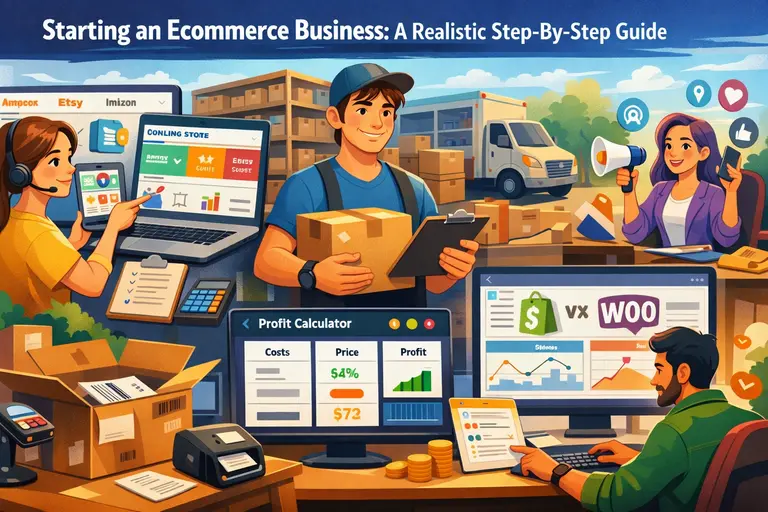 Starting an Ecommerce Business: A Realistic Step-By-Step Guide
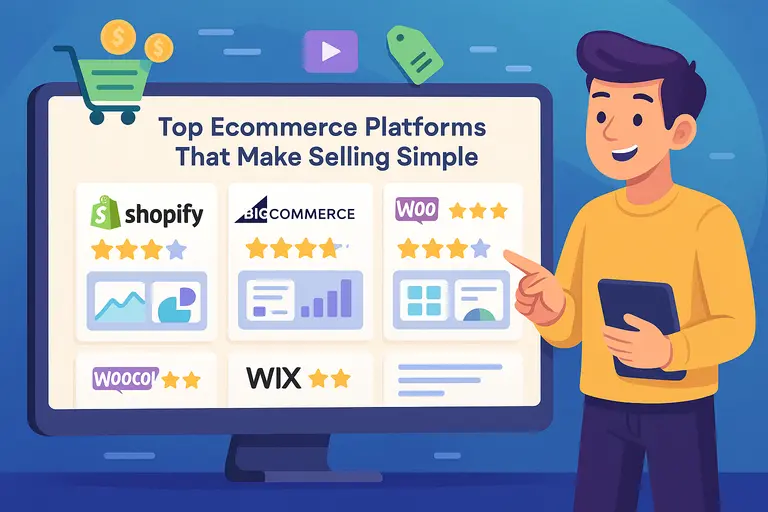 Top Ecommerce Platforms That Make Selling Simple
 How Much Can An Ecommerce Store Make? Real Numbers And Profit Examples
 Ecommerce Platform Business Opportunities You Can Start With Real Profit Potential