
Table of Contents
Some links on The Justifiable are affiliate links, meaning we may earn a small commission at no extra cost to you. Read full disclaimer.
If you’re searching for a trustworthy connective ecommerce review, you probably want to know whether the model is genuinely practical or simply another expensive route into dropshipping.
Connective eCommerce promises a lower-risk way to launch an online store by avoiding inventory purchases, expensive custom development, and paid advertising at the beginning. That sounds attractive, especially if you are new to ecommerce. But low startup risk does not mean easy profit.
This review explains how the method works, what the eCom Babes program currently teaches, what it may cost, where the risks sit, and who is most likely to benefit.
What Connective Ecommerce Actually Is
Before judging the course or business opportunity, it helps to separate the underlying method from the marketing around it. Connective eCommerce is essentially a framework for testing an online store with existing platforms, supplier fulfillment, and low-cost traffic before committing larger amounts of capital.
How The Connective Ecommerce Model Works
Connective eCommerce was popularized by Cortney Fletcher, founder of eCom Babes. The idea is to remove three expensive parts of a traditional ecommerce launch: custom website development, inventory ownership, and upfront advertising.
Instead, you use an existing ecommerce platform, work with suppliers that fulfill orders for you, and generate early traffic through social media, affiliates, influencers, or other organic channels. You might build a store on Shopify, choose products from a supplier, publish content around a defined niche, and recruit small creators to promote your products for a commission.
When a customer orders, the supplier ships the item instead of you storing boxes at home. The useful part is the sequence: validate demand cheaply, learn what customers respond to, and only spend more after you have evidence.
That sequencing can protect a beginner from the common mistake of buying inventory or running ads before knowing whether the offer converts. You save capital by taking on more work in product research, content creation, supplier management, outreach, and customer service.
Connective eCommerce reduces financial exposure; it does not remove execution risk.
Connective Ecommerce Versus Traditional Dropshipping
Dropshipping describes fulfillment. You sell a product without keeping it in your own inventory, then a supplier ships the order directly to your customer. Connective eCommerce uses dropshipping, but adds a broader launch strategy around it.
The distinction matters because a dropshipping store can still spend heavily on paid ads, buy a premium theme, hire freelancers, and test dozens of products rapidly. Connective eCommerce instead favors inexpensive store setup, careful niche selection, organic traffic, affiliate-style promotion, and reinvestment after early traction.
That makes it closer to a lean startup framework for ecommerce than a completely separate business model. If you already understand dropshipping, influencer outreach, organic social content, and conversion optimization, much of the method may feel familiar. A beginner, however, may benefit from seeing those pieces arranged in a deliberate order.
The real questions are whether you can find products with sufficient margin, attract qualified traffic without overspending, deliver a reliable customer experience, and improve the store using actual data. Those fundamentals determine whether the business survives, regardless of what the method is called.
The Role Of eCom Babes And Cortney Fletcher
The paid education side of the method is associated with eCom Babes, a program aimed primarily at women who want to start or grow online stores. The current curriculum presents a 42-day framework with onboarding followed by six weeks covering personal transformation, product and brand selection, store building, social media, Connective eCommerce, and advertising or advanced scaling.
You do not need to buy eCom Babes to use the underlying business model. Store builders, dropshipping suppliers, affiliate arrangements, and organic marketing are all available independently. What you are paying for in a program like this is structure, sequencing, training, community, coaching, and the convenience of having a defined path.
The current eCom Babes site also promotes lifetime content updates, mentor access, community support, and additional training.
However, treat the company’s student counts, success stories, revenue examples, and promotional claims as marketing evidence rather than a forecast for your own results. Your outcome depends on product economics, execution, market demand, supplier performance, content quality, and time.
A course can shorten the learning curve, but it cannot transfer business results automatically.
What You Get From The eCom Babes Program
The program is more than a single lesson about Connective eCommerce. Its current structure is designed as a guided beginner journey, so the value depends heavily on whether you need that guidance or already know how to build and market a store.
The Six-Week Curriculum And 42-Day Framework
The current curriculum starts with onboarding, then moves through six weekly stages. Week one focuses on personal transformation and mindset. Week two covers product selection and brand mastery. Week three moves into building the store, followed by social media in week four.
Connective eCommerce is taught in week five, and paid advertising plus advanced scaling comes in week six.
Several of the current modules are described as AI-enhanced, which reflects how ecommerce workflows now use AI for tasks such as ideation, research, content support, and store operations. Still, “AI-enhanced” should not be interpreted as automated success.
The commercial work remains the same: choose a market, create a credible offer, attract the right people, fulfill orders, solve problems, and manage margins.
I like the curriculum sequence for a true beginner because it avoids starting with advertising. The potential weakness is that experienced sellers may find the early material too foundational.
If you can already research products, build a storefront, vet suppliers, create organic content, recruit affiliates, read conversion data, and run ads, you may be paying mainly for coaching and community rather than new technical knowledge.
Coaching, Community, And Accountability
Training libraries are easy to buy and easy to ignore. The stronger argument for eCom Babes is therefore not the existence of videos; it is access to people who can help you interpret what happens after you implement them.
The current site advertises weekly access to mentors, support, Q&A opportunities, an alumni network, and lifetime access to course updates.
A tutorial can show you how to set up a product page, but it cannot automatically tell you why your particular page gets clicks without sales. A coach may help you identify whether the issue is pricing, trust, product-market fit, shipping expectations, creative quality, or something else.
When you are launching alone, it is easy to spend three weeks changing logos rather than contacting potential partners or publishing content. A structured group can push you toward revenue-producing work.
Before joining, ask exactly how mentor access works, whether questions are answered live or asynchronously, how frequently sessions run, whether replays exist, and whether one-to-one feedback is included. “Support” can mean very different things across online programs, so the format matters as much as the promise.
Bonuses, Updates, And What Is Still Your Responsibility
The current program advertises extras such as a live implementation workshop, legal and tax education, wealth-management education, print-on-demand training, lifestyle planning, and ongoing content updates. These can make the package feel more complete, but they should not distract you from evaluating the core ecommerce training.
If you are stuck on supplier economics, another mindset lesson will not fix the problem. If you cannot create a workable offer, a wealth-management module is premature.
You should also recognize what remains outside the course’s control. You are responsible for choosing a viable niche, complying with laws in the markets where you operate, understanding taxes, setting policies, handling customer issues, monitoring suppliers, protecting cash flow, and deciding when advertising risk is acceptable.
A course can provide checklists and examples, but you still own the store.
That means checking any legal or tax guidance with qualified professionals when appropriate and reading current platform policies yourself. The best use of education is to improve your judgment, not replace it.
How Much Connective Ecommerce Really Costs
The “low-cost” positioning refers mainly to how the store is launched, not necessarily to the price of the training program. To decide whether this is worth your money, separate course tuition from the ongoing expenses of operating an ecommerce business.
The Course Price Is Not Publicly Transparent
As of this review, eCom Babes does not display a standard enrollment price on its main public website. Prospective students are directed toward an application or training funnel, which means you may need to speak with the company before receiving a specific offer.
A 2026 independent review reports a price around $3,000, while older reviewers have described different quoted amounts. Because the company does not publish one universal price on the public site, I would treat those figures as reference points rather than a guaranteed current price.
A multi-thousand-dollar education purchase should be evaluated against exactly what is included, how long access lasts, what support you receive, and what cancellation or refund terms apply to your specific purchase.
The current general terms state that individual products, services, events, or courses may have their own refund policies. Ask for the total price, payment-plan total, refund terms, access duration, coaching limits, and any additional required purchases in writing before paying.
I would not make the decision during a sales call. Get the complete offer in writing, leave the call, and compare the cost with the value of the support you will realistically use.
Your Store Still Has Operating Expenses
Connective eCommerce can reduce startup spending, but “low cost” is not “no cost.” You will normally need an ecommerce platform, a domain, transaction processing, samples, and potentially supplier or app fees.
You may later add email software, creative tools, paid themes, advertising, or outsourced support. Platforms and marketplaces such as Spocket, Zendrop, or AliExpress can help you source products, but catalog access alone does not create a viable business.
You still need to compare landed product cost, shipping speed, tracking quality, return handling, product consistency, and supplier communication.
A practical budget should include a cash reserve for refunds, chargebacks, reshipments, and timing gaps between customer payments and supplier bills.
| Cost Area | Why It Matters |
|---|---|
| Store and domain | Keeps the storefront live and credible |
| Product samples | Lets you verify quality before promotion |
| Supplier costs | Determines gross margin and fulfillment reliability |
| Payment fees | Reduces the amount retained from each sale |
| Refund reserve | Protects cash flow when orders go wrong |
| Marketing | May expand from organic promotion into paid acquisition |
The business is leaner than inventory-heavy retail, but it is not financially frictionless.
The Bigger Cost Is Your Time
A beginner can underestimate how much labor is hidden inside a low-capital model. If you are not buying inventory or paying heavily for traffic, you are usually replacing money with effort.
Product research, store setup, content creation, partner outreach, customer messages, supplier follow-up, and analytics all require consistent attention.
The 42-day framework is useful as a launch schedule, but six weeks should not be interpreted as a deadline for profitability. You might launch within that period and still need months of testing to understand what converts.
If the course costs several thousand dollars and you can devote only two distracted hours per week, the value proposition becomes weaker. If you have a realistic implementation schedule and know you benefit from structured coaching, the same price may be easier to justify.
I suggest planning at least three focused work blocks per week during launch. Track the tasks that move the business forward: supplier checks, product-page improvements, creator outreach, content publishing, and customer feedback.
How To Use The Connective Ecommerce Method Properly
The strongest part of the framework is its emphasis on validating before scaling. To make that principle useful, you need a disciplined implementation process rather than simply opening a store and waiting for organic traffic.
Start With A Niche And Product Economics
A good connective store starts with a customer problem or desire, not a random catalog. Choose a niche narrow enough that you can understand the buyer, but broad enough to support multiple products and repeatable content.
“Fitness” is broad; “home mobility tools for desk workers” gives you a clearer audience and content angle.
Estimate the selling price, supplier cost, shipping, payment fees, expected refunds, affiliate commissions, and eventual advertising costs. A product can generate sales while still being a poor business if the remaining contribution margin is too thin.
Google Trends can help you see whether interest is stable, seasonal, or declining. Social platforms can reveal what customers complain about, what demonstrations get attention, and how crowded the creative landscape is.
Order samples of serious candidates. Check packaging, delivery time, instructions, product quality, and whether the item matches supplier photos.
If you would feel uncomfortable sending it to someone you know, do not build your customer acquisition around it.
Build A Store That Makes One Clear Promise
A low-cost store should still look deliberate. You do not need custom development, but you do need clear positioning, trustworthy product information, sensible navigation, shipping expectations, contact details, and policies that a customer can understand before buying.
Start with a small catalog rather than importing hundreds of unrelated items. A focused store makes it easier to create content, explain the brand, compare product performance, and understand why customers buy. It also reduces the operational burden of monitoring multiple suppliers.
Explain what each item does, who it is for, what is included, how long delivery normally takes, how returns work, and what the customer should expect after ordering. Use your own sample knowledge to improve descriptions instead of copying supplier text.
Trust is especially important in dropshipping because the customer does not know that you lack physical inventory. If the supplier ships late, the customer still contacts you.
Before launch, place a test order. Confirm checkout, payment, confirmation emails, mobile layout, tracking flow, and supplier routing.
Prove Demand With Organic And Partner Traffic
Instead of immediately buying ads, you try to generate early demand through content and performance-based partnerships. That can include short-form videos, niche pages, micro-influencers, ambassadors, or affiliates who earn a commission when they drive sales.
The advantage is that you collect market feedback without committing a large advertising budget. If creators repeatedly refuse the offer, their audiences ignore it, or visitors reach the store but do not convert, you have information to improve the product, positioning, or page before scaling.
Your time has value, and creators may request samples, fixed fees, or higher commissions. Track the cost of those efforts just as you would track ad spend.
A simple outreach test can be structured around 30 to 50 relevant creators rather than sending five messages and concluding the strategy does not work. Record contact rate, reply rate, acceptance rate, content published, traffic sent, and sales produced.
Only after you have a working offer should paid advertising become the next experiment.
Where Connective Ecommerce Has Real Advantages
The model is most useful when you treat it as a capital-allocation philosophy rather than a shortcut. It encourages you to learn cheaply, keep fixed costs low, and expand only when customer behavior justifies the next investment.
It Reduces The Cost Of Being Wrong
Traditional retail can punish a bad product decision quickly. If you buy 500 units and demand never appears, your cash is trapped in inventory. With dropship fulfillment, you can test a product without owning a warehouse full of mistakes.
A prebuilt theme lets you validate positioning without paying a developer thousands of dollars. Organic content and affiliate outreach let you test customer response without immediately committing to a large ad budget.
That flexibility is particularly useful for first-time founders because beginners will make mistakes. The goal is not to avoid every mistake; it is to make the early ones inexpensive and informative.
When you have not sunk a large amount of money into one product, it is easier to stop defending a weak idea.
The limitation is that low downside can encourage endless testing. Give each product a defined test period and minimum evidence threshold. Decide in advance what would justify continuing, changing the offer, or stopping.
It Gives Beginners A Logical Order Of Operations
One reason ecommerce feels overwhelming is that everything appears important at once: branding, suppliers, content, email, ads, analytics, customer support, conversion optimization, and more.
The connective framework gives beginners an order: choose the market, build the store, create organic demand, prove the offer, then scale.
Similarly, learning advanced ad tactics before you understand your customer can make testing expensive. The eCom Babes curriculum reinforces this sequence, which may be especially helpful if you want clear weekly assignments rather than a library of disconnected lessons.
I would still modify the sequence slightly by placing unit economics and supplier quality checks very early. A product with poor margin or unreliable fulfillment can produce misleading validation because sales may look promising while the customer experience or cash flow is unsustainable.
For a beginner who tends to jump between strategies, structure can be worth money. For a self-directed learner who already follows a disciplined launch process, the same structure may have less incremental value.
It Encourages Validation Before Advertising
Paid acquisition can scale a strong offer, but it can also amplify a weak one. If a page converts poorly, every additional visitor becomes another opportunity to lose money. The connective method’s emphasis on proving an offer before aggressive ad spending is therefore sound.
Creator feedback can show which product angle feels credible. First buyers tell you whether shipping or quality meets expectations.
When you eventually test ads, you can use those insights to create better messaging. You may already know which hook attracts attention, which product benefit matters most, and which audience responds.
The mistake is demanding perfect organic performance before ever testing paid traffic. Organic reach is inconsistent, and some products are better suited to intent-driven or paid acquisition.
A sensible progression is to prove that real people will engage with the offer, confirm that the store can convert some qualified traffic, verify fulfillment, and then run controlled paid tests with a loss limit.
That keeps the principle of risk reduction while avoiding paralysis.
The Drawbacks You Should Understand Before Buying
A connective ecommerce review should be clear about where the model can fail. Most problems do not come from the store builder itself; they come from thin margins, unreliable suppliers, inconsistent traffic, unrealistic expectations, and paying for education that you do not fully use.
The Business Is Not Passive Or Fully Automated
Because suppliers handle fulfillment, connective eCommerce can sound more automated than it actually is. You do not pack boxes, but you still own the customer relationship.
When an order is late, damaged, incorrect, or missing, your store receives the complaint.
Content must be created, creators must be contacted, partnerships must be managed, and performance must be reviewed. If one social channel drives most of your sales, changes in reach or account access can affect revenue quickly.
More orders create more tickets, refunds, supplier exceptions, data to review, and cash-flow movement. Automation can help later, but it should be built around a process that already works.
This is why I would avoid the model if your main goal is “passive income.” It is better understood as a real retail business with outsourced inventory and fulfillment.
If you enjoy testing products, creating content, working with creators, and improving customer experience, the workload may feel worthwhile. If you want a hands-off investment, this business model is a poor match.
Supplier Risk Can Become Your Reputation Risk
Dropshipping transfers inventory and shipping tasks to another business, but it does not transfer responsibility in the customer’s mind. A supplier can change stock levels, ship slowly, alter packaging, send inconsistent quality, or provide weak tracking.
The best defense is supplier due diligence. Order samples, test communication speed, verify delivery estimates, understand return procedures, and keep records of recurring issues. Do not rely solely on marketplace ratings or attractive product photos.
If you sell an item for $50 and the landed supplier cost is $25, you do not have a $25 profit. Payment fees, affiliate commissions, refunds, discounts, customer service, software, taxes, and future advertising can consume much of the remainder.
Chargebacks are especially painful because you may lose revenue after already paying the supplier.
If customers repeatedly complain about shipping or product quality, that is not merely a support problem; it is a signal that the offer may be unsafe to scale.
A scalable supplier is one that can support the experience your brand promises.
Organic Traffic Is Cheap In Cash, Expensive In Consistency
Organic social and affiliate traffic can be powerful, but neither is guaranteed. Algorithms change, creators ignore outreach, posts underperform, and audiences can become saturated. A strategy that depends on free reach still needs systematic testing.
Track content like a marketing channel. Measure output, reach, profile visits, store sessions, email signups, add-to-cart rate, conversion rate, and revenue.
If you publish frequently but almost no qualified visitors reach your store, the problem is probably not the checkout page.
Smaller creators with focused audiences can outperform larger accounts, but only if the product fits the audience and the promotion feels credible.
Collect email subscribers where appropriate, encourage repeat purchases, develop direct customer relationships, and create search-friendly content. Platform reach is rented attention; your customer list and brand reputation are more durable.
If organic acquisition remains weak after repeated, measured tests, do not keep calling it “free marketing.” The hidden cost may be months of labor. At some point you need to improve the offer, change the channel, test paid acquisition carefully, or stop.
Who Connective Ecommerce Is Best For
The method and the paid program should be judged separately. The business model can make sense for many lean startups, while a multi-thousand-dollar coaching program is more appropriate for a narrower group of buyers.
When The Model Is A Good Fit
Connective eCommerce is a good fit if you want to learn ecommerce by operating a real store but want to limit early capital risk. It suits people who are willing to create content, contact partners, study customer behavior, and manage vendors rather than simply fund advertising.
Fashion accessories, hobby products, certain home items, and print-on-demand products can fit the structure more naturally than products that require tight quality control, specialized handling, or complex regulatory compliance.
The paid eCom Babes program may make sense if you are a beginner, prefer a women-focused learning environment, value live support, and know that accountability improves your follow-through.
Before joining, ask yourself one practical question: “What problem am I paying this program to solve?” If the answer is lack of structure, feedback, and accountability, the offer has a clear job.
If the answer is simply “I hope the course gives me a winning product,” your expectations are too dependent on the program.
When I Would Skip The Paid Program
I would be cautious if the purchase would consume most of your available business capital. Even an excellent course cannot compensate for having no money left for a domain, product samples, refunds, supplier payments, or controlled marketing tests.
An experienced Shopify or dropshipping operator who understands product research, organic content, affiliates, conversion, fulfillment, and advertising may find limited incremental value in beginner modules. Coaching could still be useful, but then you should evaluate the coaching itself rather than the curriculum.
The program is also a weak fit if you dislike outreach or content creation. Its low-upfront-cost philosophy depends heavily on doing work that paid advertising might otherwise accelerate. If you know you will not contact creators or publish consistently, the strategy will stall.
A course should still make sense after you have reviewed the written terms, total price, financing cost if applicable, refund policy, access period, and support format.
The right question is not whether other students have succeeded. It is whether the program solves a specific gap in your skills or execution strongly enough to justify its cost.
How To Learn The Method Without Buying The Course
You can implement the underlying strategy independently. Start by learning basic ecommerce economics, choose one niche, validate a handful of products, order samples, build a simple store, and run a structured organic traffic test.
Week one can focus on niche research and product economics. Week two can cover suppliers and samples. Week three can be store setup. Week four can build a content library and outreach list. Weeks five and six can run traffic tests and collect customer data.
The danger of free education is not lack of information; it is lack of sequence. You can spend months watching tutorials while avoiding the uncomfortable work of launching. Create a fixed curriculum for yourself and define deliverables for each week.
For example, if store design is blocking launch, a specialist may be more useful than a broad course. If you keep making unclear product decisions, targeted coaching could have more value.
If you can execute the first few stages independently, you will understand more clearly whether you need comprehensive mentorship at all.
How To Measure Results And Scale Without Losing Control
A lean launch only becomes a durable business if you measure what is happening and know when to increase investment. Revenue alone is not enough; you need to understand whether each sale leaves enough money and customer goodwill to justify more volume.
Track Unit Economics Before Celebrating Revenue
Start with contribution margin per order. Take revenue and subtract the costs that rise with each sale: product cost, shipping, payment fees, affiliate commissions, discounts, expected refunds, and variable fulfillment expenses.
This tells you how much is left to cover fixed costs and profit.
Then track conversion rate, average order value, refund rate, chargeback rate, delivery time, repeat purchase rate where relevant, and customer acquisition cost once you use paid channels.
Organic traffic should also be measured by effort: how many posts or creator contacts are required to generate visits and sales?
Suppose a hypothetical store generates $5,000 in monthly revenue. If product and shipping costs consume $2,600, creator commissions use $700, refunds and payment fees total $400, and software costs another $200, the business has $1,100 left before tax and before valuing the owner’s labor.
If delivery complaints are rising or contribution margin disappears as commissions increase, more sales can create more problems.
Scale a healthy system, not merely a busy one.
Move From Testing To A More Defensible Brand
If a product proves demand, your next goal should be improving control. That can mean negotiating better supplier terms, shortening delivery times, developing custom packaging, building exclusive products, creating bundles, increasing repeat purchases, or eventually holding some inventory.
This transition matters because popular dropship products are easy to copy. If competitors can source the same item and use similar content, price competition can erode margins.
Brand assets such as customer trust, proprietary creative, a loyal audience, differentiated bundles, and reliable delivery are harder to replicate.
Start paid advertising with a controlled test budget and define the maximum loss you will tolerate while gathering data. Use proven organic messaging as creative input, but do not assume an organic winner will automatically perform in ads.
Reinvest where additional dollars improve acquisition, fulfillment, customer experience, or retention.
That is the most durable lesson in the connective framework: make the expensive decisions after you have learned something, not before.
Is Connective Ecommerce Worth Your Time And Money?
For the business model itself, yes—Connective eCommerce is a sensible way to reduce the cost of testing an online store. Using an existing platform, supplier fulfillment, and organic or performance-based marketing can protect beginners from expensive early mistakes. But it is still dropshipping-based ecommerce, with the same need for good margins, reliable suppliers, strong marketing, and responsive customer service.
For the eCom Babes program, the answer is more conditional. The curriculum is structured, beginner-friendly, and supported by coaching and community, but the public site does not show a standard price. If your quote is around the multi-thousand-dollar figures reported by independent reviewers, the value depends heavily on how much you need mentorship and accountability.
My recommendation is simple: learn the model first, calculate your total business budget, obtain the exact program terms in writing, and decide what specific problem the coaching will solve. If that value is clear and affordable, the program may be worthwhile. If not, you can apply the core connective strategy independently and invest your money directly into testing the business.

I’m Juxhin, the voice behind The Justifiable.
I’ve spent 6+ years building blogs, managing affiliate campaigns, and testing the messy world of online business. Here, I cut the fluff and share the strategies that actually move the needle — so you can build income that’s sustainable, not speculative.
Related posts:
 Advantages of a Dropshipping Company: Genuine Business Knowledge
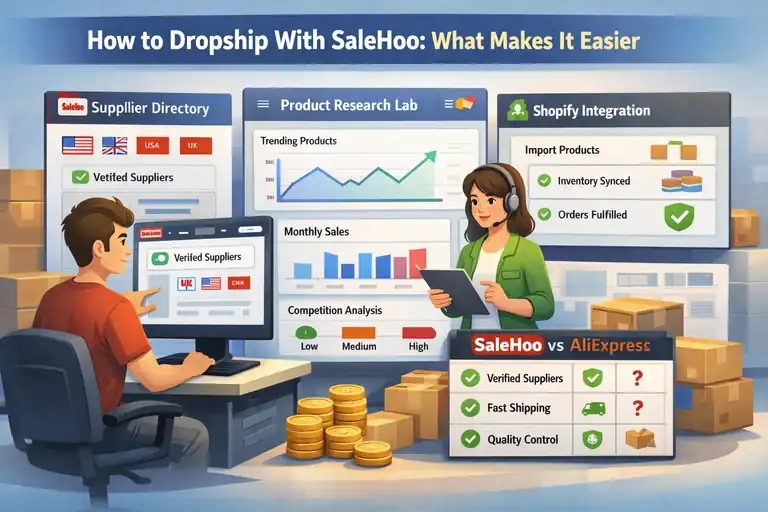 How to Dropship With SaleHoo: What Makes It Easier
 How To Launch An Ecommerce Store As A Beginner Without Costly Mistakes
 Creating An Online Store With No Experience: A Beginner-Friendly Guide
 How To Fix An Ecommerce Business That Is Losing Money Without More Ads
 Is the Ecommerce Industry Still Profitable? Costs and Margins Explained