
Table of Contents
Some links on The Justifiable are affiliate links, meaning we may earn a small commission at no extra cost to you. Read full disclaimer.
How to start blogging for profit sounds simple from the outside: pick a niche, write posts, add a few affiliate links, and wait for income. In reality, profitable blogging works more like building a small media business.
You need the right topic, a site people trust, content that solves real problems, and revenue streams that match your audience instead of distracting them.
In this guide, I’ll walk you through the full process step by step, from choosing a profitable angle to getting your first traffic and turning that traffic into income you can actually grow.
What Profitable Blogging Really Means
A profitable blog is not just a website with ads. It is a focused content business that attracts the right readers, helps them solve specific problems, and earns money through aligned offers.
Understanding The Real Business Model
When most people think about blogging income, they picture passive revenue showing up while they sleep. That can happen, but only after you build the foundation. A blog usually makes money because it does one or more of these things well: it recommends products, captures email subscribers, sells something directly, or monetizes pageviews through ads.
The key difference between a hobby blog and a profit-focused blog is intent. A hobby blog says, “Here’s what I want to write about.” A profitable blog says, “Here’s what my reader wants solved, and here’s how I can help.”
A strong blog business usually sits at the intersection of three things:
- Audience pain point: A real problem people actively want help with.
- Search demand: Topics readers are already typing into Google.
- Monetization fit: Products, services, or business models that naturally match the problem.
Imagine you start a baking blog because you love sourdough. That is a passion. But if your content shifts toward “best bread proofing baskets,” “how to fix dense sourdough,” and “meal prep freezer bread,” you begin serving commercial and practical intent too. That is where revenue starts to make sense.
“I believe the fastest way to get discouraged with blogging is treating it like a diary when your goal is income. Profit usually comes when your content becomes useful enough to influence decisions.”
How Blogs Actually Make Money
There is no single best monetization method for every blog. The right model depends on your niche, your traffic quality, and what readers expect from you.
Here are the most common revenue streams:
- Affiliate marketing: You earn a commission when readers buy through your recommendation.
- Display ads: You get paid for pageviews or ad impressions.
- Digital products: You sell templates, courses, guides, printables, or memberships.
- Services: You use the blog to attract clients for consulting, freelance work, or coaching.
- Sponsored content: Brands pay for exposure, reviews, or integrations.
- Email monetization: You promote offers directly to your subscribers.
Affiliate income often starts earlier than ad income because it does not require huge traffic numbers. Ad income usually becomes more meaningful when you have steady, growing pageviews. Products and services can be the highest-margin option, but they take more effort and trust to sell.
For many of us, the best model is not choosing one revenue stream. It is layering them. A blog might start with affiliate links, add email marketing, then bring in ads, and finally launch a small paid product once the audience trusts the brand.
Why Profit Comes From Strategy, Not Publishing More
Publishing more content does not automatically lead to more money. Publishing the right content does.
A lot of new bloggers write broad articles that get little traffic and convert even less. For example, “my morning routine” may be easy to write, but it has weak buyer intent unless your blog is already well known. Compare that with “best standing desks for small apartments” or “how to budget on irregular income.” Those topics connect to products, problems, and search behavior.
This is where profitable blogging starts to feel less random. You are not just posting. You are creating assets.
A strong profit-focused article usually does at least one of these jobs:
- Pulls in search traffic
- Builds trust with the reader
- Moves the reader toward an email signup
- Helps the reader compare options
- Encourages a purchase or inquiry
In my experience, the bloggers who grow fastest are not always the best writers. They are the ones who understand what each article is supposed to do.
Choose A Niche That Can Actually Make Money
Your niche shapes everything that follows, including traffic potential, content ideas, monetization options, and how long it takes to see results.
Pick The Intersection Of Demand, Expertise, And Commercial Intent
A profitable niche is not just “something people like.” It is a topic area where readers need ongoing help and where businesses already spend money.
The sweet spot usually looks like this:
- You can talk about it consistently: You do not need to know everything, but you should care enough to stay with it.
- Readers search for solutions regularly: Search demand matters if you want long-term organic traffic.
- There are products or services to recommend: Without commercial intent, monetization becomes harder.
Good examples include personal finance, parenting, home organization, software tutorials, health habits, career growth, travel planning, pet care, food, gardening, and online business. Within these categories, narrower angles often work better.
Instead of starting a “fitness blog,” you might build a blog around strength training for women over 40. Instead of a “marketing blog,” you might focus on email marketing for creators. Instead of “travel,” you might target budget travel for families in Europe.
That narrowing helps Google understand your site faster. It also makes your content more memorable to readers.
Validate The Niche Before You Build The Site
Before you buy hosting or design a logo, spend time validating whether the niche has room for revenue.
Here is a simple validation framework:
- Search the niche in Google: Look for blogs, forums, product roundups, and how-to content.
- Check monetization signals: Are there affiliate programs, software tools, courses, or physical products in the space?
- Look at content depth: If every article is thin and outdated, that can be an opportunity.
- Study the search results: Are people asking beginner questions, comparison questions, and problem-solving questions? That is a good sign.
You do not need a niche with giant search volume. You need a niche where the right readers take action.
For example, a niche with 500 highly targeted monthly visits can outperform a niche with 5,000 low-intent visits if the smaller audience is closer to buying. Someone searching “best budgeting app for couples” is usually worth more than someone searching “why money matters.”
“I suggest picking a niche you can stay in for at least two years. Blogging for profit is hard when you are bored after month three.”
Avoid The Niche Traps That Slow Growth
Some niches look exciting but are difficult to monetize or rank in. Others are so broad that you end up sounding like everyone else.
Here are a few common mistakes:
- Choosing pure passion without market demand: Loving a topic is helpful, but readers still need to search for it.
- Going too broad: Broad blogs confuse both Google and the reader.
- Picking a niche with no clear offers: If there is nothing to recommend or sell, income options shrink.
- Chasing trends only: Trend traffic can spike, then disappear before the site matures.
Another trap is trying to cover multiple unrelated niches on one site. A blog about recipes, crypto, productivity, and dog training might feel flexible, but it is difficult to brand and harder to grow.
A cleaner approach is building topical authority around one central audience. Once that audience trusts you, you can expand carefully into adjacent areas.
Set Up Your Blog Like A Real Business Asset
Your blog setup does not need to be fancy, but it should be solid, fast, and easy to manage from day one.
Choose The Right Platform And Hosting
For most people learning how to start blogging for profit, self-hosted WordPress.org is still the most flexible place to begin. It gives you control over design, SEO, monetization, and long-term ownership in a way that simpler platforms often do not.
If you want a faster all-in-one writing platform, Substack, Ghost, and Beehiiv can work well for newsletter-first businesses. But for a blog built around search traffic, content expansion, plugins, and multiple monetization paths, WordPress is usually the safest bet.
For hosting, Bluehost and SiteGround are common starting points for beginners because setup is straightforward and support is built for new site owners.
Here is a quick comparison of common starting options:
| Platform/Service | Best For | Strength | Limitation |
|---|---|---|---|
| WordPress.org | SEO-driven blogs | Full control and scalability | Slightly more setup |
| Substack | Newsletter-led creators | Easy publishing | Limited site flexibility |
| Ghost | Clean publishing businesses | Fast and modern | Smaller plugin ecosystem |
| Beehiiv | Newsletter monetization | Built-in email growth tools | Less flexible for classic blogging |
| Bluehost | New bloggers | Simple setup | Entry plans can feel basic at scale |
| SiteGround | Growth-focused beginners | Good performance and support | Higher renewal pricing |
The right choice depends on your model. But if your plan includes search traffic, affiliate content, and long-term growth, WordPress is hard to beat.
Get The Core Site Structure Right From The Start
A new blog does not need twenty pages. It needs a clean structure readers and search engines can understand.
At minimum, I recommend setting up:
- Home page
- Blog page
- About page
- Contact page
- Privacy policy
- Affiliate disclosure
- A few key categories based on your niche
Keep your URLs simple. Use clear category names. Avoid cluttered menus with too many dropdowns. A clean site architecture makes it easier for Google to crawl your content and easier for readers to find related posts.
If your niche is personal finance, categories might include budgeting, saving, side hustles, and investing basics. If your niche is blogging, categories might include SEO, monetization, email marketing, and content strategy.
This step matters more than many people realize. A messy site structure creates confusion later when you have 50 or 100 posts and no clear internal linking pattern.
Install Only The Essentials
New bloggers often overload their sites with plugins and design extras before they have traffic. That slows the site and creates maintenance headaches.
Start lean. The essentials usually include:
- An SEO plugin like Rank Math or Yoast SEO
- Caching and performance support such as WP Rocket
- Security and backup tools
- Basic image optimization
- Analytics and tracking
Design-wise, simple wins. Use a clean theme, readable fonts, and clear spacing. Your goal is trust and usability, not showing off every customization option.
I also recommend writing your legal and disclosure pages early. If you plan to use affiliate links or collect email addresses, transparency helps with reader trust and future compliance.
Build A Content Strategy Around Buyer Intent
Content is where most blogging advice gets fluffy. To make money, you need content that attracts visitors and moves them closer to action.
Create Content Buckets That Support Traffic And Revenue
Not every article should try to sell. Some should educate. Some should rank. Some should build trust. The strongest blogs mix these roles intentionally.
I like to think in four content buckets:
- Problem-solving posts: “How to create a blog content calendar”
- Comparison posts: “Best email marketing platforms for bloggers”
- Commercial investigation posts: “ConvertKit vs Mailchimp for creators”
- Authority-building posts: “How to grow blog traffic from zero”
A healthy blog uses all four, but not equally. Early on, problem-solving and commercial posts usually deserve more attention because they can bring in search traffic and conversions faster.
For example, if you run a food blog, “how to meal prep breakfast sandwiches” can bring broad traffic, while “best meal prep containers for freezing” supports affiliate income. The first builds reach. The second captures buying intent.
That balance is what makes a site sustainable.
Learn Search Intent Before You Write
Search intent is the reason someone typed a phrase into Google. If your article misses that reason, rankings and conversions both suffer.
Most profitable blog keywords fall into one of these patterns:
- Informational: The reader wants to learn
- Navigational: The reader wants a specific brand or site
- Commercial: The reader is comparing options
- Transactional: The reader is close to buying
A beginner mistake is trying to rank an educational article for a keyword that clearly needs a product roundup. If the search results are full of “best” lists, Google probably expects comparison content. If the search results are step-by-step tutorials, a thin listicle will not compete.
This is where tools like Semrush, Ahrefs, and Ubersuggest become helpful, but the real skill is interpretation. Tools give you data. Strategy tells you what kind of page to create.
In practice, before I write a post, I want to know:
- What format is already ranking?
- Is the keyword beginner, advanced, or mixed intent?
- Does the topic connect to a monetization path?
- Can I create something better, clearer, or more useful?
Build A 30-Post Plan Instead Of Writing Randomly
A profitable blog grows faster when posts work together. Random publishing creates isolated pages. Strategic publishing builds topical authority.
A strong starter plan might look like this:
- 10 foundational how-to posts
- 8 low-competition long-tail posts
- 6 commercial or comparison posts
- 4 email list-focused lead generation posts
- 2 pillar pages that connect related content
If your blog is about blogging, that plan could include articles on domain setup, keyword research, writing SEO titles, affiliate disclosures, monetization methods, and email list growth. These pieces support one another and make internal linking natural.
I recommend mapping content in clusters. One core topic should link to supporting articles around questions, tools, mistakes, and examples. This helps readers stay on-site longer and helps search engines understand your expertise.
“From what I’ve seen, a blog usually starts feeling like a business when your content stops being random and starts behaving like a system.”
Write Blog Posts That Rank And Convert
A profitable article needs more than keywords. It needs clarity, structure, trust, and a reason for the reader to keep moving.
Use A Structure That Matches How People Read
Most readers do not read line by line. They scan first, then commit if the page looks promising.
That means your posts should be built for skimming:
- A clear promise in the title
- A short introduction that confirms relevance
- Logical headings that answer real sub-questions
- Short paragraphs and simple sentences
- Examples, steps, and visuals where helpful
When you write, think about momentum. Each section should make the next one feel worth reading. If the content drifts, repeats itself, or adds filler, the reader drops off before the money-making parts of the page.
One helpful trick is writing with micro-commitments in mind. A reader should keep saying, “Yes, this is exactly what I needed,” at every stage of the article.
For example, a post about starting a blog should not jump straight into plugins or monetization. It should first explain niche selection, platform setup, content planning, and beginner expectations. That sequence builds trust because it respects the reader’s stage.
Write For Conversion Without Sounding Salesy
Conversion-focused content is not aggressive. It is helpful content with a clear next step.
You can do this by:
- Recommending products only where they solve the problem
- Explaining why a product fits a specific use case
- Including realistic examples instead of hype
- Being transparent about tradeoffs
If you are writing a hosting recommendation, for example, do not just say a host is “the best.” Explain who it suits, where it falls short, and what kind of blogger should choose it. That feels more honest and often converts better because readers trust nuance.
The same applies to affiliate content. A comparison post that calmly walks through pricing, use cases, ease of use, and who should choose each option will usually outperform one that sounds like an ad.
I also suggest using calls to action that match the article’s intent. A tutorial post may ask for an email signup. A product comparison may point the reader to a free trial. A beginner guide may invite them to read the next article in the series.
Add Trust Signals Early And Often
Trust is the hidden lever behind profitable blogging. Readers buy when they feel understood and guided.
You can increase trust by including:
- Personal experience or honest observations
- Clear explanations without inflated promises
- Specific examples and mini scenarios
- Balanced recommendations
- Transparent disclosures
Imagine you are reviewing email platforms for bloggers. Instead of saying, “This tool is amazing,” you might say, “This works best if you want simple automations and creator-friendly forms, but it may feel expensive if your list is still tiny.” That is a trust-building sentence because it sounds like real advice.
You do not need to pretend to be the biggest expert on the internet. You need to be useful, specific, and credible.
Set Up Traffic Systems That Compound Over Time
Traffic is the fuel behind blog revenue. Without traffic, even the best monetization plan stays theoretical.
Focus On Search First If You Want Long-Term Leverage
Social traffic can help, but search traffic usually compounds better for blogs because it matches ongoing intent. A good article can bring visitors month after month without constant reposting.
That is why beginner bloggers often do best by prioritizing SEO content first. Search traffic gives you stable readers who are already looking for an answer.
To support that, set up Google Search Console and Google Analytics 4 early. Search Console shows which queries are bringing impressions and clicks. Google Analytics 4 helps you understand user behavior, traffic sources, and which pages actually keep people engaged.
Your early SEO goals should be simple:
- Publish consistently
- Target low-competition long-tail keywords
- Build internal links between related posts
- Improve click-through rate with better titles
- Refresh posts that begin gaining traction
This is also where patience matters. Blogging for profit is rarely instant. Search traffic often starts slowly, then grows in layers as Google begins trusting your site.
Use Email To Protect Your Revenue From Traffic Swings
Traffic can change. Algorithms change. Platforms change. Your email list is the asset you actually own.
That is why I strongly recommend collecting email subscribers earlier than most beginners expect. Even a simple freebie, weekly newsletter, or content upgrade can help turn casual readers into repeat visitors.
If you want email tools designed for bloggers and creators, Kit and Mailchimp are both common starting points depending on your needs.
The goal of your email list is not just sending updates. It is building a relationship that increases trust and conversion over time. A subscriber who reads three emails and returns to your site is much more likely to click an affiliate link or buy a product than a first-time visitor from search.
A basic email funnel for a new blogger can be very simple:
- Offer a helpful free resource
- Send a welcome sequence
- Share your best articles
- Introduce useful offers naturally
- Keep showing up consistently
Use Pinterest, Short-Form Content, Or Communities As Support Channels
Search can be the core engine, but support channels can accelerate discovery. This part depends on your niche.
For visual niches like recipes, decor, fashion, DIY, and travel, Pinterest can still drive meaningful top-of-funnel traffic. For personality-driven or educational niches, short-form video or creator communities may help you get content in front of people faster.
The mistake is trying to master every channel at once. I suggest choosing one primary traffic source and one support source.
For example:
- SEO + Pinterest
- SEO + email
- SEO + YouTube
- Newsletter + social content
This keeps your workflow realistic while your blog is still small.
Monetize Your Blog With Revenue Streams That Fit Your Audience
Monetization works best when it feels like a natural extension of the content, not an interruption.
Start With Affiliate Marketing Because It Fits Early Traffic
Affiliate marketing is often the easiest first revenue stream because you do not need your own product and you do not need huge traffic numbers. You need the right content and reader intent.
Good affiliate posts usually target:
- Best-of roundups
- Product comparisons
- Tool recommendations
- Tutorials featuring relevant products
- Gift guides or buying guides
Affiliate networks such as Impact, Awin, CJ Affiliate, and Amazon Associates can help you access offers across different niches.
The real secret is context. A random affiliate banner rarely performs well. A detailed tutorial showing how and why a product solves a problem usually converts much better.
Imagine your reader is a beginner blogger comparing email tools. A calm breakdown of features, pricing logic, and best use cases is far more persuasive than a generic “click here” link.
I also recommend tracking which posts generate affiliate clicks and which programs convert best. Not all traffic is equal, and not all commissions are worth the same amount of effort.
Add Display Ads Once Traffic Justifies Them
Display ads are attractive because they let you monetize informational content that does not naturally lead to affiliate sales. But ad revenue becomes meaningful only when traffic volume is strong enough.
As traffic grows, many bloggers look at networks like Ezoic, Mediavine, or Raptive, depending on eligibility and site quality.
Here is a simple revenue stream comparison:
| Revenue Stream | Best Stage | Pros | Cons |
|---|---|---|---|
| Affiliate marketing | Early to advanced | High upside per visitor | Requires trust and buyer intent |
| Display ads | Growth stage | Monetizes pageviews passively | Needs substantial traffic |
| Digital products | Mid to advanced | High margins | Takes time to create and sell |
| Services | Early to mid | Fastest route to cash flow | Less scalable |
| Sponsored posts | Mid to advanced | Good one-off income | Can be inconsistent |
If your site is still small, I would not rush to ads. Too many ads on a low-traffic blog can hurt user experience without generating meaningful income.
Create Your Own Offers For Better Margins
At some point, many bloggers realize affiliate income is great, but owning the offer can be even better. That is where digital products, templates, memberships, and services come in.
A few examples:
- A meal planning printable on a food blog
- A budgeting spreadsheet on a personal finance blog
- A media kit template on a blogging blog
- One-on-one consulting on a career blog
- A mini course on a software tutorial blog
The best products often come from repeated reader problems. If people keep asking the same question, there may be a product hiding inside that pain point.
In my experience, simple products often outperform overbuilt ones. A focused $19 template that solves one annoying problem can sell better than a giant course nobody finishes.
“I recommend earning your first dollars with audience-aligned offers, not by copying every monetization tactic you see online. Simpler usually scales better in the beginning.”
Track What Makes Money And Improve It
Once your blog starts getting traffic, the next stage is optimization. This is where blogging becomes less about guessing and more about improving what already works.
Measure Revenue By Page, Not Just By Site
One of the biggest mindset shifts in profitable blogging is realizing that pages make money, not just blogs.
If one post gets 1,000 visits and earns nothing, while another gets 300 visits and drives three affiliate sales, the second post may be more valuable.
Track metrics like:
- Pageviews
- Click-through rate on affiliate links
- Email opt-in rate
- Average session engagement
- Revenue per post
- Revenue per 1,000 sessions
This helps you identify your highest-leverage content. Then you can update, expand, and internally link to those pages more aggressively.
For example, if a product comparison post converts well, you may create supporting tutorials that funnel readers into it. If a beginner guide gets lots of impressions but few clicks, you may rewrite the title and meta description to improve click-through rate.
Improve Existing Posts Before Chasing New Ones
Publishing new content matters, but updates often produce faster wins once your site has traction.
A smart content optimization workflow looks like this:
- Find posts with impressions but low clicks
- Improve titles and introductions
- Add missing sections based on competing pages
- Refresh screenshots, examples, or recommendations
- Strengthen internal links and calls to action
This is especially useful for affiliate content. A post ranking in positions 6 to 12 may only need a clearer angle, better formatting, or stronger relevance to move into the top results.
I believe too many bloggers underestimate content refreshes because they are less exciting than publishing something new. But updates can produce some of the highest ROI work on the site.
Watch User Experience Closely
Profit falls when the site becomes frustrating. This is where speed, layout, readability, and mobile experience matter.
Common problems include:
- Too many popups
- Slow-loading pages
- Cluttered affiliate placement
- Weak navigation
- Long intros that bury the answer
Good monetization should support the user journey, not hijack it. A site that feels clean and helpful tends to build more trust, generate more pages per session, and convert better over time.
A simple test I like is this: Open your article on a phone and ask, “Can a new reader quickly understand what this page offers and what to do next?” If not, conversion friction is already present.
Avoid The Mistakes That Keep Most Blogs Unprofitable
Most blog failures are not caused by one dramatic mistake. They come from a stack of small strategic errors repeated for months.
Publishing Without A Revenue Path
A lot of bloggers create traffic-first content without thinking about monetization until later. That usually leads to weak revenue because the site was not designed to connect content to offers.
This does not mean every article should sell something. It means your content plan should include natural bridges to monetization.
For example, if your blog only publishes inspirational content with no product tie-in, no email capture, and no buyer-focused posts, your traffic may feel encouraging while revenue stays flat.
The fix is building content with purpose. Every post should support at least one of these outcomes:
- Traffic
- Trust
- Email growth
- Revenue
- Internal linking to stronger money pages
Trying To Monetize Too Early Or Too Aggressively
There is a difference between monetizing early and over-monetizing. Early monetization is smart. Aggressive monetization damages trust.
Signs of overdoing it include:
- Too many affiliate links before value is delivered
- Display ads everywhere on thin content
- Pushing products unrelated to the article
- Writing keyword-stuffed “best” posts with no real insight
Readers can feel when a page exists only to extract a click. Google can often feel that too.
A better approach is to earn attention first, then recommend thoughtfully. When the recommendation feels like part of the solution, conversion improves naturally.
Ignoring The Long Game
The hardest truth in blogging is that profit usually lags behind effort. A new blogger may publish for months before seeing meaningful traffic or revenue. That delay causes many people to quit just before momentum begins.
To handle that, set realistic milestones:
- First 10 quality posts
- First Google impressions
- First email subscribers
- First affiliate clicks
- First $100 month
- First repeatable traffic pattern
Those milestones matter because they show the system is working, even before the revenue feels exciting.
I suggest treating your first year like an asset-building phase. You are not just writing articles. You are building a searchable library, a trust engine, and future income infrastructure.
Scale Your Blog Into A More Reliable Income Stream
Once the basics are working, scaling becomes less about doing more and more about doing better.
Double Down On What Already Converts
The fastest way to grow blog income is usually not launching brand-new experiments every week. It is finding what already works and expanding it.
If comparison content converts well, create more comparisons. If one affiliate program performs far better than another, build supporting content around that category. If a lead magnet brings in subscribers who later buy, promote it more visibly across the site.
Scaling often looks like:
- Creating clusters around top money posts
- Updating top pages quarterly
- Expanding high-performing categories
- Testing better calls to action
- Building a stronger email funnel
This is how a blog starts acting like a business instead of a publishing hobby.
Add Systems And Templates To Save Time
As your site grows, you will need repeatable systems. Otherwise, content production and optimization start feeling chaotic.
Useful systems include:
- A content brief template for every article
- A standard post checklist before publishing
- Internal linking rules
- Image and formatting workflows
- Monthly analytics reviews
- A content refresh calendar
Even simple documentation helps. You do not need a giant operations manual. You just need enough structure to make quality consistent.
If you eventually outsource writing, editing, or design, those systems become even more valuable because they preserve your standards.
Think Beyond Traffic To Brand Equity
The biggest blogs do not just rank. They become trusted names in a space.
That happens when your content has a clear voice, strong positioning, and a memorable point of view. Readers begin to recognize your recommendations. Brands notice your influence. Your email list becomes more valuable. Your product launches get easier.
This is where profitable blogging stops being only about SEO and starts becoming a real media asset.
You can build that by:
- Maintaining consistent quality
- Taking clear editorial positions
- Publishing genuinely useful content
- Creating recognizable frameworks or teaching angles
- Building direct relationships through email
That last piece matters a lot. Search traffic is borrowed attention. Brand trust is earned attention.
Final Thoughts: Start Small, But Build Intentionally
Learning how to start blogging for profit is really about learning how to build a useful, trustworthy content business one asset at a time.
You do not need a perfect brand, a massive budget, or fifty monetization tricks on day one. You need a profitable niche, a solid platform, a clear content plan, and the patience to let good work compound.
If I were starting from scratch today, I would keep it simple. I would choose one narrow audience, build on WordPress, publish thirty strategically planned articles, start an email list early, and monetize only where the recommendation genuinely helps the reader. That path is not flashy, but it is reliable.
Blogging for profit still works. It just rewards strategy more than noise, consistency more than speed, and usefulness more than hype.

I’m Juxhin, the voice behind The Justifiable.
I’ve spent 6+ years building blogs, managing affiliate campaigns, and testing the messy world of online business. Here, I cut the fluff and share the strategies that actually move the needle — so you can build income that’s sustainable, not speculative.
Related posts:
 Blog Monetization Strategies: 5 Proven Ways to Earn More
 Best Blogs to Make Money for New Content Creators
 How Do I Create My Own Blog and Get Paid Fast?
 What’s the Best Way to Create a Blog for Income?
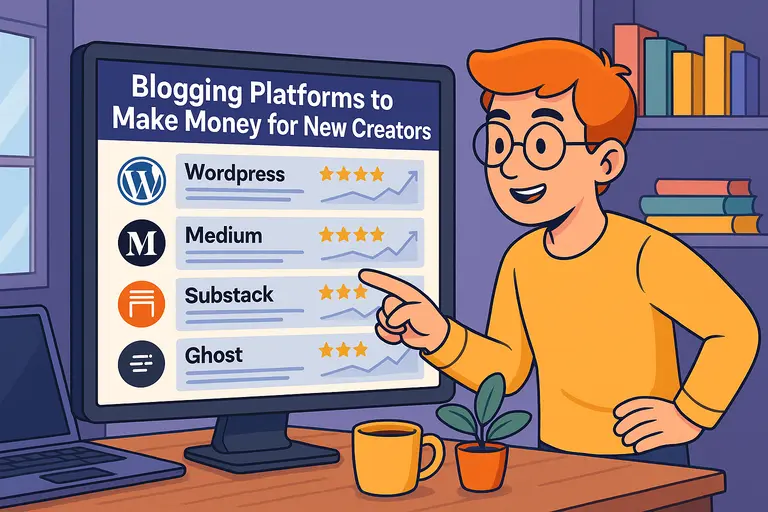 Blogging Platforms to Make Money for New Creators
 Setting Up a Blog Website That Earns From Day One