Table of Contents
Some links on The Justifiable are affiliate links, meaning we may earn a small commission at no extra cost to you. Read full disclaimer.
If you’ve ever wondered how to make a blog post that actually brings in income—not just traffic—you’re not alone.
I’ve been there too, writing post after post that got clicks but no conversions. The truth is, profitable blogging isn’t just about writing well; it’s about writing strategically.
In this guide, I’ll walk you through exactly how to craft a blog post that earns money—from the first word to the final call-to-action.
Choose a Profitable Blog Post Topic That Attracts Buyers
Before you start typing, you need to know exactly who you’re writing for and what they’re willing to spend money on.
Great blog posts that make income always begin with understanding buyer intent—not just traffic potential.
Research What Your Audience Actually Pays For
If your audience isn’t buying, your blog won’t be earning. Start by figuring out what they already spend money on.
Here’s how I do it:
- Check product reviews: Look at reviews on Amazon or niche marketplaces. See what people love or complain about—that’s your content angle.
- Join niche communities: Facebook groups, Reddit threads, and Slack channels reveal real conversations about problems people pay to solve.
- Use surveys or polls: Ask your audience directly what they’d invest in to solve their problem.
Example: If you run a fitness blog, and readers often ask for “meal prep guides,” that’s a clear signal for a paid digital product or affiliate recommendation opportunity.
Validate Blog Post Ideas With Keyword and Search Intent Data
Even the best ideas fail if no one’s searching for them. Use tools like Ahrefs, SEMrush, or Google Keyword Planner to validate search volume and intent.
- Commercial intent keywords: Look for phrases like “best,” “review,” “compare,” or “alternatives.” These indicate buying intent.
- Low competition opportunities: Long-tail keywords (e.g., “affordable productivity planners for moms”) may have less volume but higher conversion rates.
- SERP analysis: Read the first page of results. What’s missing? What’s outdated? That’s where your blog can stand out.
Tip: Always match your topic with the stage of the buyer journey—awareness, consideration, or decision.
Find Evergreen Topics With Long-Term Monetization Potential
Trendy content brings quick spikes. Evergreen content brings consistent income.
Ask yourself:
- Will this topic still be relevant in a year?
- Does it solve a recurring problem (like budgeting, fitness, or productivity)?
- Can I update it easily as new info appears?
Example: “Best AI writing tools for small businesses” might evolve as tools change, but the problem—writing efficiently—remains constant.
Focus on topics you can refresh periodically for ongoing traffic and sales.
Analyze Competitor Content to Spot Gaps You Can Monetize
You don’t need to reinvent the wheel—just make it roll better.
- Audit top-ranking posts: Use tools like Surfer SEO or Frase to compare your competitors’ content depth, structure, and keywords.
- Look for weak CTAs: If they’re missing strong product mentions or helpful recommendations, that’s your chance to monetize better.
- Offer a new format: Turn text-heavy posts into step-by-step guides, video summaries, or interactive resources.
When you close these content gaps, you not only rank better—you create a more valuable resource your readers (and sponsors) trust.
Craft a Compelling Blog Post Title That Sells
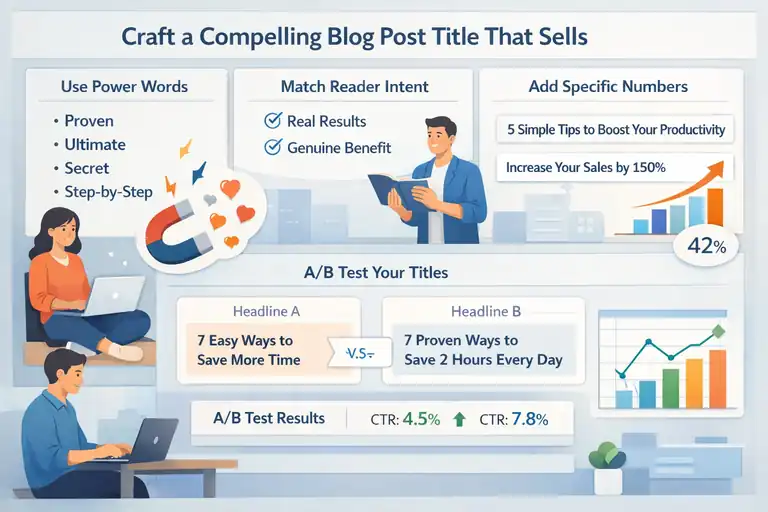
Your title is your first impression—and it determines whether your post gets read or ignored. Think of it as a promise that must deliver value once someone clicks.
Use Power Words That Trigger Clicks and Curiosity
Power words evoke emotion and urgency. They make readers stop scrolling.
Examples that convert:
- Proven, Effective, Secret, Ultimate, Step-by-Step, Hidden, Powerful
- Combine emotional and practical cues: “10 Proven Strategies to Double Your Freelance Income”
Don’t overdo it—choose authenticity over hype. People can spot clickbait instantly.
Align Title Promises With Real Reader Intent
If your headline promises quick results, make sure the post delivers them. Mismatched intent kills trust.
To align effectively:
- Understand what the searcher wants to achieve with their query.
- Avoid overpromising (“Earn $10K a Month Overnight!”).
- Use words that reflect genuine benefit: “real,” “sustainable,” “simple,” or “beginner-friendly.”
When readers feel understood, they stay longer—and that engagement drives both rankings and income.
Add Specific Numbers or Outcomes for Higher CTR
Numbers make your title concrete and believable. They set expectations and make it easier to skim.
Examples:
- “7 Tools That Help You Make a Blog Post in Half the Time”
- “3 Simple Tweaks That Increased My Blog Income by 40%”
Numbers also help with SEO by implying structured, scannable content.
A/B Test Headline Variations to See What Converts
Don’t assume your first title is the best one. Test it.
Ways to test:
- Use tools like Title Experiments (for WordPress).
- Split your email subject lines and track open rates.
- Repost on social media with slight title changes and monitor engagement.
You’ll often find that small tweaks—like changing a verb or adding specificity—can double your click-through rate.
Structure Your Blog Post for Readability and Engagement
A blog post that makes money must also keep readers reading. The longer they stay, the more trust—and income—you can build.
Use a Hook That Builds Instant Emotional Connection
The first few lines matter more than you think. You need to emotionally hook the reader before they bounce.
Good hooks often:
- Start with a relatable problem (“I used to write posts that nobody read.”)
- Ask a compelling question (“Ever wonder why your blog gets traffic but no sales?”)
- Promise a transformation (“This one structure changed how I write—and earn—from every post.”)
When your reader feels seen, they’ll keep reading.
Break Content Into Short, Scannable Sections
People skim. If they can’t find what they’re looking for quickly, they’ll leave.
Best practices:
- Keep paragraphs under 3–4 lines.
- Use plenty of H3s and lists for quick scanning.
- Highlight takeaways in italics or short bullet lists.
Skimmable formatting improves readability, user experience, and even your SEO dwell time metrics.
Add Visual Elements Like Charts, Screenshots, or Infographics
Visuals make your blog more engaging and easier to understand. They also help explain complex points quickly.
Use visuals for:
- Data (charts, stats, or survey results)
- Step-by-step tutorials (screenshots or diagrams)
- Comparison summaries (infographics or tables)
Example: If you’re explaining how to use affiliate links, a quick screenshot of your dashboard helps readers follow along effortlessly.
Optimize Formatting for Mobile Readers and SEO
Over half of blog readers visit from their phones. If your layout isn’t mobile-friendly, you’re losing income opportunities.
Here’s how to fix that:
- Use responsive design with large font sizes.
- Keep sentences short—mobile users scan, not read deeply.
- Add subheadings every 150–200 words for structure.
- Compress images for faster loading (TinyPNG).
Remember: readability equals profitability. When your post is easy to consume, readers stay longer, trust more, and click more—leading directly to higher income potential.
Write Value-Driven Content That Naturally Leads to Income
A blog post that drives income doesn’t sell first—it serves first.
The key is to give genuine value that solves a reader’s problem, then naturally guide them toward a solution that happens to make you money.
Educate First, Then Subtly Introduce Offers
No one likes being sold to, but everyone loves being helped. Your goal is to teach your reader something genuinely useful before suggesting any product or offer.
Here’s how I approach it:
- Start each post with clear, practical education. For example, if I’m writing about “how to make a blog post that converts,” I first explain what conversion means and what mistakes to avoid.
- Once readers understand the “why,” I introduce the “how” using tools or resources that solve their problem.
- When I mention a product (like Aweber or Mailerlite), I briefly explain what it does in simple language, so even a beginner can follow along.
This builds trust first, income second—and that’s how long-term blogging profits grow.
Use Storytelling to Build Trust and Authenticity
People remember stories, not sales pitches. Your personal experiences—even small ones—can make your advice more relatable.
Try this:
- Share a quick story about a mistake you made, and what you learned.
- Use reader stories (with permission) or general examples to make your point.
- Keep it human—don’t sound like a corporate brochure.
Example: I once wrote a post that tanked because I stuffed it with affiliate links. When I rewrote it with real tips and mentioned the tools naturally, conversions tripled. That kind of honesty makes readers feel like you’re on their side.
Provide Actionable Takeaways That Show Real Expertise
Readers want clear next steps, not theory. Every section of your post should leave them thinking, “I can do this right now.”
Add mini how-tos like:
- Step 1: Identify one specific pain point your product solves.
- Step 2: Create a small, free resource around it (like a checklist or worksheet).
- Step 3: Mention how a paid solution can take that further.
By giving actionable takeaways, you show expertise without bragging. It also helps readers trust your recommendations—because they see results first-hand.
Blend Affiliate Links or Product Mentions Seamlessly
Affiliate links work best when they fit naturally into your content—not when they interrupt it.
To blend them in smoothly:
- Only recommend products you’ve used or genuinely trust.
- Introduce them within context: “I use Brevo to automate my email follow-ups, and it saves me hours every week.”
- Avoid phrases that sound like ads. Keep it conversational.
- Use contextual anchor text instead of “click here.”
When done right, readers don’t feel sold to—they feel guided. And that’s exactly what builds consistent affiliate income.
Incorporate Strategic SEO to Make Your Blog Post Discoverable
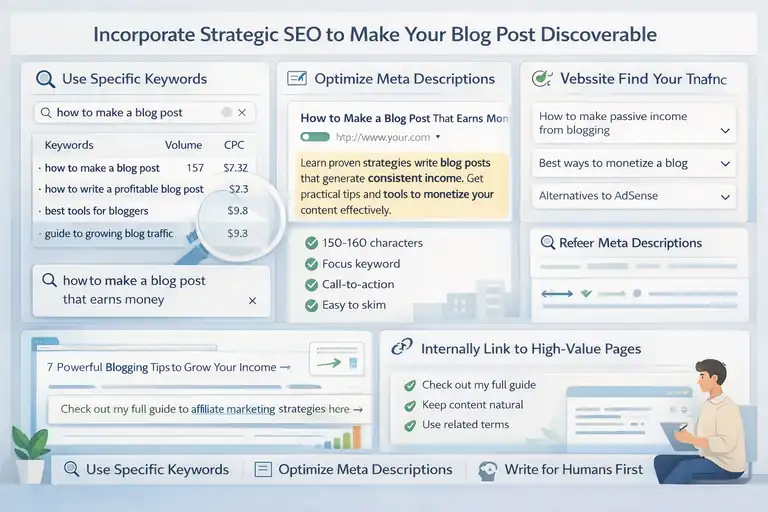
Even the best-written post can’t earn income if no one finds it. SEO helps your content reach the right audience—those already searching for what you offer.
Use Long-Tail Keywords With Commercial Intent
Long-tail keywords are specific phrases people type when they’re ready to buy. They may have lower search volume, but their intent is stronger.
Example: Instead of targeting “how to make a blog post,” try “how to make a blog post that earns money.”
How to find them:
- Use Google’s “People Also Ask” and “Related Searches.”
- Explore tools like Ubersuggest or Keywords Everywhere.
- Look for “best,” “reviews,” “alternatives,” and “guide” in keyword phrases.
These small tweaks help attract readers who are more likely to convert.
Optimize Meta Descriptions and Headers for Clickability
Your meta description and headers act like mini billboards in search results—they decide if someone clicks or scrolls past.
Quick checklist:
- Keep meta descriptions around 150–160 characters.
- Include your focus keyword once, naturally.
- End with a soft call-to-action, like “Learn how to create posts that earn consistent income.”
Headers (H2s and H3s) should also reflect the reader’s intent and make the page easy to skim.
Internally Link to High-Value Pages That Drive Sales
Internal links aren’t just for SEO—they guide readers deeper into your content funnel.
Best practice:
- Link to related articles or landing pages that lead to conversions (like email signup pages or product reviews).
- Use descriptive anchor text (“check out my full guide on affiliate marketing strategies”) instead of generic links.
- Keep links relevant and helpful—never force them.
Internal linking improves both dwell time and authority, which boosts search rankings and revenue potential.
Keep SEO Natural—Focus on Humans First, Algorithms Second
Search engines evolve constantly, but one rule never changes: write for humans.
To stay natural:
- Don’t force keywords into every paragraph.
- Use variations and synonyms naturally (like “write a profitable blog post” or “create income-generating articles”).
- Keep sentences conversational and simple.
- Write as if you’re explaining the topic to a friend, not optimizing for a robot.
When readers enjoy your content, search engines reward it automatically.
Monetize Your Blog Post With the Right Income Streams
Now that your content educates, engages, and ranks—it’s time to make it earn. There’s no one-size-fits-all method; it depends on your niche, audience, and goals.
Add Affiliate Links That Fit Contextually
Affiliate marketing can be a major income driver, but it must feel authentic.
What works best:
- Choose high-quality programs aligned with your audience’s needs.
- Place links where they make sense—like inside tutorials or product comparisons.
- Add small disclosure lines (it builds trust and is legally required).
Example: If you’re showing how to set up an email funnel, mention Kit and how it simplifies automation for creators.
Use Lead Magnets to Build an Email List
An email list is your most reliable income channel—it’s traffic you own.
Ideas for lead magnets:
- Checklists or templates related to your post
- Free mini-courses or workshops
- Exclusive access to discounts or resources
You can integrate signup forms directly in the post using tools like ConvertBox. Once subscribers trust you, they’ll naturally buy from your recommendations.
Promote Your Own Products or Services
If you have your own offers—courses, ebooks, or coaching—your blog can serve as your best sales funnel.
How to integrate them:
- Mention them as part of a larger solution (“In my course, I go deeper into creating SEO-optimized content.”)
- Create posts that demonstrate results your product achieves.
- Offer a free preview or limited-time discount to drive conversions.
Readers who already value your free advice are much more likely to invest in your paid offers.
Include Sponsored Mentions Without Losing Credibility
Sponsored content can bring great income, but it’s easy to lose trust if it feels forced.
Best practices:
- Only partner with brands you genuinely believe in.
- Clearly label sponsored content (transparency builds credibility).
- Keep your authentic tone—don’t sound scripted.
When done right, sponsored collaborations feel like genuine recommendations rather than paid ads.
At the end of the day, the secret to making a blog post that drives income is balancing generosity with strategy.
When you focus on helping your readers first—educating them, inspiring them, and offering real value—income becomes a natural byproduct, not a forced goal.
Add Persuasive CTAs That Turn Readers Into Customers
A blog post that makes money doesn’t just inform—it inspires action. Your call-to-action (CTA) is where curiosity turns into commitment.
The secret isn’t being pushy; it’s being intentional and emotionally clear about what you want readers to do next.
Place CTAs Strategically Throughout the Post
A single CTA at the end isn’t enough. Most readers never scroll that far, so you need to guide them gently at the right points in the post.
Here’s how to structure them naturally:
- Early CTA: Offer a soft suggestion after your introduction, like “Download this free checklist to follow along.”
- Mid-post CTA: Add one after delivering value—this works well for promoting an affiliate product or your own tool.
- Final CTA: End with a strong action step that summarizes your post’s promise and leads to your core offer.
Think of CTAs as conversation checkpoints rather than interruptions. Each one should feel like a logical next step in the reader’s journey.
Use Emotion-Based Language That Encourages Action
People act when they feel something. A great CTA speaks to emotion, not just logic.
Instead of: “Sign up for my newsletter.”
Try: “Get weekly strategies that help you earn from every post you publish.”
Quick formula for emotional CTAs:
- Highlight a benefit (“Start saving hours every week”)
- Add urgency (“Join before this free resource expires”)
- Emphasize transformation (“Turn your blog into a steady income stream”)
Emotional CTAs connect with human motivation—security, success, belonging, and growth.
Offer Clear Next Steps—Downloads, Purchases, or Subscriptions
Ambiguity kills conversions. Tell readers exactly what to do next.
Examples:
- “Download the free keyword research worksheet here.”
- “Try Kit free for 14 days to start building your email list.”
- “Grab the content planner template to map your next income post.”
Each CTA should match where your reader is in their journey. A beginner might prefer a free resource, while an experienced reader might be ready to buy.
Test Different CTA Formats (Buttons, Text, or Inline Links)
Different audiences respond to different formats. What works for one blog may not for another.
Ways to experiment:
- Test button vs. text CTAs using A/B tools like Thrive Optimize.
- Try inline text CTAs in the middle of a paragraph—they often feel more conversational.
- Change CTA color, size, or placement to see what draws more clicks.
I’ve found that subtle, text-based CTAs within educational sections often outperform flashy buttons because they feel less like marketing and more like helpful guidance.
Optimize Your Blog Post for Conversions After Publishing
Publishing is just the beginning. The best income-generating posts are refined over time using real data.
Optimizing your blog post means continuously improving what’s already working—and removing what’s not.
Track Clicks, Scroll Depth, and Conversion Rates
Data reveals what your readers actually do—not what you think they do.
Tools to use:
- Google Analytics 4 for engagement metrics.
- Microsoft Clarity for heatmaps and scroll tracking.
- Affiliate dashboards (like Awin or Impact) to measure link performance.
Look for patterns. If most readers drop off before your CTA, move it higher. If a particular link converts better, highlight it more. Let behavior—not guesses—guide your updates.
Update Outdated Links and Stats Regularly
Outdated information kills trust fast. Make a habit of reviewing your top posts every 3–6 months.
When updating:
- Check affiliate links—programs like Brevo or Kit may change URLs.
- Replace old stats with newer studies or data.
- Refresh screenshots, product details, and step-by-step visuals.
Even small updates can improve your post’s search ranking and conversion rate. Google rewards freshness, and so do your readers.
Add Social Proof to Strengthen Credibility
Readers trust people more than promises. Adding social proof—like testimonials, user quotes, or metrics—can make your CTAs more believable.
Ideas for proof elements:
- Embed screenshots of real comments or user feedback.
- Mention your own success with a product (authentically).
- Cite numbers (“Over 3,000 bloggers have downloaded this guide”).
Social proof works because it reassures readers they’re making a safe, smart choice.
Re-Promote Top-Performing Posts Through Email and Social Media
Sometimes the easiest way to increase conversions is to get more eyes on what already works.
Here’s what I recommend:
- Share updated posts with your email list—especially when you’ve added new tools or bonuses.
- Repurpose your content snippets into short social posts or reels.
- Use platforms like Buffer or Metricool to schedule consistent resharing.
A single post can bring in consistent income if you keep it visible and relevant over time.
Repurpose Your Blog Post to Multiply Income Potential
Your blog post is just the beginning. Repurposing extends its life, giving you more opportunities to reach people and earn from the same content.
Turn Posts Into YouTube Scripts, Podcasts, or Carousels
Different audiences prefer different formats. By turning your blog post into video or audio, you reach new people who might never read your blog.
Practical examples:
- Record a YouTube tutorial explaining your article step by step.
- Summarize your main points as a short podcast episode.
- Turn key lessons into LinkedIn or Instagram carousels.
Repurposing keeps your message alive and builds multiple entry points into your content ecosystem.
Create Lead Magnets or Mini Courses From Blog Content
If your post performs well, it’s proof the topic resonates. Expand it into a lead magnet or a small paid course.
Example workflow:
- Turn your post outline into a downloadable workbook.
- Add a short email sequence teaching each section.
- Offer a deeper paid version—like a “Blog to Income” workshop.
Repurposing not only grows your list but builds authority by offering structured learning experiences.
Use Snippets for Email Sequences or Ads
Small sections of your blog post can do wonders in email or ad campaigns.
Ideas:
- Use your best opening paragraph as an email hook.
- Turn bullet points into ad copy variations.
- Highlight success stories or product examples in retargeting ads.
By reusing snippets, you maintain consistent messaging and reinforce trust across multiple channels.
Refresh and Repost Evergreen Content for Consistent Traffic
Don’t let your best posts collect digital dust. Refreshing and reposting keeps them relevant and performing.
What to update:
- Replace outdated product examples or screenshots.
- Add a “2025 Update” section to show freshness.
- Re-share on social media with a new headline angle.
Search engines favor updated posts, and readers appreciate content that feels current.
Measure and Scale What Works to Increase Blog Income
Once your blog starts earning, the next step is to optimize for scale. Focus on what’s bringing the best results and double down strategically.
Track Revenue From Each Post Using Analytics Tools
You can’t improve what you don’t measure. Tracking revenue helps you understand which posts are truly driving income.
Tools I recommend:
- Google Analytics (set up conversion goals for email signups or purchases).
- Affiliate dashboards (track commissions by post).
- Excel or Notion sheets for manual tracking and trends.
When you know where your income comes from, you can invest more energy into similar content.
Identify Which Topics and Formats Perform Best
Patterns reveal growth potential. Pay attention to which posts get the most engagement, conversions, or affiliate clicks.
Analyze things like:
- Topic type (how-to, comparison, review)
- Format length (short-form vs. in-depth)
- Content angle (educational vs. storytelling)
Use this data to shape your next posts around proven winners instead of starting from scratch each time.
Double Down on High-ROI Keywords and Offers
Once you find a keyword or affiliate program that performs well—maximize it.
How to scale:
- Create cluster content around that keyword to dominate the topic.
- Build comparison guides or “best of” lists that highlight your top-converting offers.
- Negotiate better commission rates with partners once you bring consistent referrals.
This turns individual wins into sustainable, predictable income streams.
Build a Content System That Consistently Generates Income
To move from earning occasionally to earning consistently, you need a system.
Here’s what works:
- Plan your content calendar around revenue-focused topics.
- Automate promotion with tools like Metricool or Buffer.
- Reuse high-performing CTAs and templates across posts.
- Schedule quarterly audits to refresh your top 10 income posts.
Think of your blog as a small media business—one where every post has a job to do. When you treat it that way, income becomes the natural outcome of value delivered consistently.
Pro Tip: Every blog post is a small asset. If you keep refining, tracking, and reinvesting time into what works, your content library will grow into a long-term income engine—earning for you even while you sleep.
FAQ
How do you make a blog post that actually makes money?
To make a blog post that drives income, start with a buyer-focused topic, solve a specific problem, and guide readers toward a clear action like an affiliate product, email signup, or paid offer.
What type of blog posts generate the most income?
Posts with commercial intent perform best, such as how-to guides, comparisons, reviews, and problem-solving content tied to products or services people already want to buy.
How long does it take for a blog post to generate income?
It depends on traffic, SEO, and monetization strategy, but a well-optimized post can start earning within weeks and grow into consistent income over several months.

I’m Juxhin, the voice behind The Justifiable.
I’ve spent 6+ years building blogs, managing affiliate campaigns, and testing the messy world of online business. Here, I cut the fluff and share the strategies that actually move the needle — so you can build income that’s sustainable, not speculative.