
Table of Contents
Some links on The Justifiable are affiliate links, meaning we may earn a small commission at no extra cost to you. Read full disclaimer.
Modis freelance opportunities catch a lot of attention, especially for tech talent trying to figure out whether this platform is worth their energy.
I’ve explored enough freelance ecosystems to know how confusing these portals can feel at first glance. What does Modis actually offer, how does the process work, and what should you expect once you jump in?
This guide breaks everything down so you can decide with clarity and confidence.
How Modis Freelance Works From Start To Finish
When you first step into the Modis freelance ecosystem, the process might seem complex—but it’s actually designed to help connect skilled professionals with companies that need specific technical expertise.
Let’s break down how it all unfolds from start to finish, so you know exactly what to expect.
Understanding The Modis Talent Matching Process
Modis (now part of Akkodis) uses an AI-driven matching system to connect freelancers with suitable projects. Think of it as a hybrid between a staffing agency and a smart recruitment platform.
Once you create your Modis profile, their recruiters and internal system start matching your experience with open roles.
The algorithm prioritizes:
- Skills and certifications relevant to current openings
- Industry experience (e.g., IT, engineering, life sciences)
- Geographic and work preferences like remote or hybrid setups
I’ve seen Modis emphasize technical precision in its matches—if you’re a DevOps engineer with AWS certification, for example, your profile will surface in searches for that specific skill combination.
To boost your visibility:
- Keep your profile keywords aligned with job listings.
- Update certifications and skills as soon as you earn them.
- Set clear availability and role preferences in your dashboard.
What Happens After You Submit Your Modis Application
After applying to a Modis freelance role, your application doesn’t vanish into the void—it enters a structured review workflow. A recruiter first checks if your resume aligns with client requirements, and if it does, they’ll contact you directly.
Here’s the typical flow:
- Application submission: You upload your resume and complete role-specific questions.
- Initial screening: A recruiter reviews your experience for fit.
- Follow-up call: You’ll often get a short call to confirm interest, rate expectations, and timeline.
- Client submission: If approved, Modis presents your profile to the hiring company.
Pro tip: Keep communication prompt. Recruiters move fast when clients are actively hiring, and delays can cost you the role.
How Modis Screens Technical Skills And Experience
This is where Modis separates serious freelancers from resume-padding hopefuls. Depending on the role, you might go through:
- Technical assessments using platforms like Codility or HackerRank.
- Portfolio reviews for creative or design-based positions.
- Reference checks or client feedback if you’ve worked through Modis before.
I’ve noticed Modis places more emphasis on verified performance than some gig platforms like Upwork or Fiverr. Their clients expect vetted professionals, not generalists.
Passing these screenings isn’t just about getting the job—it builds your long-term credibility within the Modis network.
Creating A Profile That Attracts Recruiter Attention
A Modis profile acts like your digital resume, but smarter—it powers their internal matching engine. Recruiters look for clarity, not clever wording.
Here’s what stands out:
- Clear technical titles: “Data Analyst – Power BI & SQL” beats “Data Enthusiast.”
- Quantified results: Include metrics like “Reduced deployment errors by 30%.”
- Updated certifications: Cloud, cybersecurity, and AI credentials catch instant attention.
Also, upload a professional photo and include availability dates. Modis recruiters often skip incomplete profiles during urgent client searches.
If you want to get noticed faster, I suggest you log in weekly and adjust keywords to mirror current job postings—this keeps your profile fresh in Modis’s internal system.
Navigating The Modis Interview And Vetting Workflow
Once your application moves forward, you’ll likely face two interview rounds:
- Recruiter interview – a short discussion confirming your background, pay rate, and availability.
- Client interview – usually more technical or role-specific, sometimes involving task demos or situational questions.
Recruiters often coach you before the client call, giving hints about what the client values most. Use this—it’s insider guidance.
You can also access your interview details inside the Modis talent portal, under Applications → Interview Schedule. I recommend double-checking timezone settings there; Modis works globally, and time confusion is surprisingly common.
After interviews, feedback typically arrives within 3–7 business days. Recruiters keep you updated through email or the Modis dashboard.
How Long It Takes To Land Your First Modis Freelance Contract
Timelines vary based on your field, but most freelancers see offers within 2–4 weeks if they stay responsive and match current demand.
Here’s a quick breakdown based on Modis data and recruiter trends:
- High-demand tech roles (cloud, cybersecurity, AI): 1–2 weeks
- Engineering or specialized science roles: 3–4 weeks
- Creative or hybrid roles: up to 6 weeks
Speed depends heavily on your interview performance and flexibility. Accepting both remote and hybrid roles, for example, can double your opportunities.
One thing I’ve learned: Modis recruiters remember professionals who communicate clearly, show reliability, and respond quickly. Treat the process like a partnership—not a transaction. That attitude often lands repeat projects and better-paying contracts later.
Pro Tip: Update your Modis profile monthly and maintain contact with your assigned recruiter even between projects. It keeps you on their radar for upcoming high-value contracts before they’re publicly posted.
What To Expect From Modis Freelance Job Opportunities
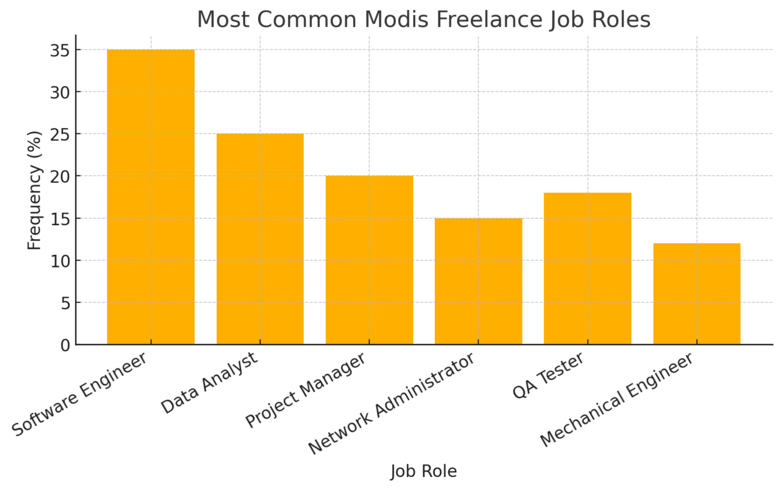
Working through Modis freelance isn’t just another gig marketplace experience—it’s closer to joining a professional staffing network that values long-term expertise.
The platform focuses on connecting you with structured contract roles, often with large enterprises or specialized tech firms. Let’s unpack what the opportunities look like in practice.
Types Of Roles Modis Usually Offers In Tech And Engineering
Modis specializes in tech-heavy and engineering-focused freelance positions, meaning you’ll mostly find contract work in fields where technical precision matters.
You’ll commonly see openings like:
- Software Developers (Java, .NET, Python, React, etc.)
- Data Analysts and Data Scientists
- Systems Engineers and Network Administrators
- Cloud Architects (AWS, Azure, Google Cloud)
- Project Managers for IT and engineering rollouts
- Mechanical and Electrical Engineers for product design or R&D
- QA Testers and Automation Specialists
What makes Modis different is that many of these roles are enterprise-level. Instead of bidding for small tasks, you’re matched with full-scale projects from companies in sectors like aerospace, finance, and healthcare.
In my experience, Modis tends to prioritize quality over volume—so while you might not see hundreds of listings like on Upwork, the ones you do see are often more stable and better paid.
Contract Lengths, Workloads, And Expected Time Commitments
Unlike most gig sites, Modis freelance contracts usually mirror traditional employment in structure—but with flexible durations.
Here’s what’s typical:
- Short-term contracts: 3–6 months (great for pilot projects or migrations)
- Mid-term contracts: 6–12 months (common for development or data projects)
- Long-term contracts: 1–2 years (often for enterprise systems or ongoing maintenance)
Workloads can vary from 20 hours weekly for consulting gigs to full 40-hour commitments for embedded team roles. Clients expect consistent delivery and availability during agreed hours, so if you’re juggling multiple clients, time-blocking is crucial.
One thing I suggest: Clarify time zones and daily overlap early. Modis serves global clients, so an engineering role in Germany may expect overlap with a U.S.-based product manager.
How Project Requirements Differ From Other Platforms
Modis operates differently from freelance sites like Fiverr or Freelancer.com. You won’t be pitching projects—Modis does the matching and client introductions for you.
Here’s how it stands apart:
- Defined scope: Clients provide structured role descriptions and timelines upfront.
- Professional environment: You’re working with enterprise systems, not ad-hoc small business tasks.
- Collaborative workflow: You’re usually part of a team, not working solo.
Because projects often involve sensitive data or internal systems, Modis enforces compliance protocols—think NDA agreements, IT onboarding, and sometimes equipment provisioning.
For example, a cybersecurity consultant may be issued a secure laptop to connect via VPN, reflecting Modis’s commitment to enterprise-grade professionalism.
Remote, Hybrid, And On-Site Expectations For Contractors
Modis supports various work modes, but your flexibility can impact how many opportunities you receive.
Here’s how roles generally break down:
- Remote: 60–70% of roles (especially software and data-focused)
- Hybrid: 20–25% of roles (common in management and engineering design)
- On-site: 10–15% of roles (often for lab or manufacturing projects)
Most remote jobs use collaboration tools like Microsoft Teams, Jira, and Slack. Modis typically lists location flexibility directly in each posting—check the “Work Arrangement” field in the job listing page or your recruiter’s email summary.
If you’re remote-first, set that in your Modis profile preferences. Recruiters filter by this, so it helps you surface in the right searches faster.
How Modis Communicates Job Updates And New Openings
Once you’re in the Modis system, you’ll start receiving updates through two main channels:
- Recruiter contact: They’ll email or call you when matching roles appear.
- Talent portal notifications: You’ll see new job alerts under the “Recommended Opportunities” section of your Modis dashboard.
Recruiters also use LinkedIn for faster outreach, so keeping your LinkedIn status aligned with your Modis profile helps you catch early openings.
I recommend maintaining light contact with your recruiter even when not actively looking—they’ll often flag roles before they go public, giving you a head start.
Earning Potential And Pay Structure On Modis Freelance
Let’s talk about the part everyone wonders about—how much you can actually earn through Modis freelance and what the pay system looks like.
How Modis Determines Freelance Pay Rates For Each Role
Pay rates depend on three main factors: skill demand, project complexity, and client budget. Modis uses benchmarking data from its enterprise contracts to set competitive rates.
For instance:
- Software engineers can earn between $45–$85 per hour depending on specialization.
- Data scientists or AI specialists often range from $70–$120 per hour.
- Project managers typically fall around $50–$90 per hour.
Rates also reflect location—U.S. and Western Europe contracts usually pay higher than offshore roles due to client budgets. Recruiters discuss expected ranges early, which helps you avoid awkward negotiations later.
In my experience, Modis’s pay is fairer than most freelance platforms because it’s tied to enterprise budgets, not client-by-client haggling.
Understanding Bill Rates, Pay Cycles, And Payment Methods
Once you’re contracted, Modis uses a straightforward payment structure.
- Bill rate: The total hourly rate Modis bills the client for your work. Your pay rate is the amount you actually receive.
- Pay cycles: Most freelancers are paid biweekly or monthly, depending on client terms.
- Payment methods: Direct bank transfer is the default, though some regions support wire payments.
Example: If Modis bills a client $100 per hour for your role, you might receive $80 per hour depending on your negotiated rate and Modis’s margin.
You’ll log hours in their time-entry system (often accessible through the Modis Talent Portal → Time Management). Make sure entries are submitted before the cut-off date—late entries can delay payments.
Negotiating Higher Rates With Recruiters Effectively
Negotiation is part of freelancing, and Modis recruiters expect it—so don’t shy away from it.
A few strategies that work well:
- Anchor with data: Use salary insights from Glassdoor or PayScale to justify your rate.
- Emphasize certifications: Specialized credentials like AWS, PMP, or CISSP justify premium rates.
- Prove reliability: If you’ve completed projects under Modis before, highlight consistent delivery.
I’ve personally seen contractors secure 10–15% higher rates simply by presenting verified experience and up-to-date skills. Recruiters appreciate confidence backed by evidence, not just requests.
How Taxes, Benefits, And Classification Work For Contractors
Modis freelancers are typically classified as independent contractors (1099) in the U.S. or similar equivalents globally. This means you’re responsible for your own taxes and benefits.
However, Modis sometimes offers W-2 contract roles in certain regions, which include limited benefits like health insurance and paid time off. Always confirm classification upfront during your recruiter call.
Tip: Use accounting tools like QuickBooks Self-Employed or Wave to track invoices, taxes, and deductions automatically—it saves hours during tax season.
Realistic Income Expectations Compared To Other Marketplaces
Compared to open gig platforms, Modis freelancers generally earn more per project because the contracts are larger and client budgets are corporate-level.
To put it in perspective:
- Upwork average: $25–$50/hour for technical roles
- Modis average: $50–$100/hour for comparable work
- Top Modis specialists: $120+/hour for niche expertise
The tradeoff is fewer, longer contracts instead of many small gigs. If stability and consistent work matter more to you than volume, Modis is a stronger long-term option.
In my opinion, the best way to thrive here is to think of yourself as a consultant, not just a freelancer. Build relationships with recruiters, deliver high performance, and those contracts will keep coming.
Pro Tip: Track your completed projects and request recruiter feedback. Modis uses internal performance notes when deciding who to prioritize for premium contracts. Strong reviews can unlock access to better-paying roles long before they’re posted publicly.
Tools And Platforms You’ll Use In Modis Freelance Projects
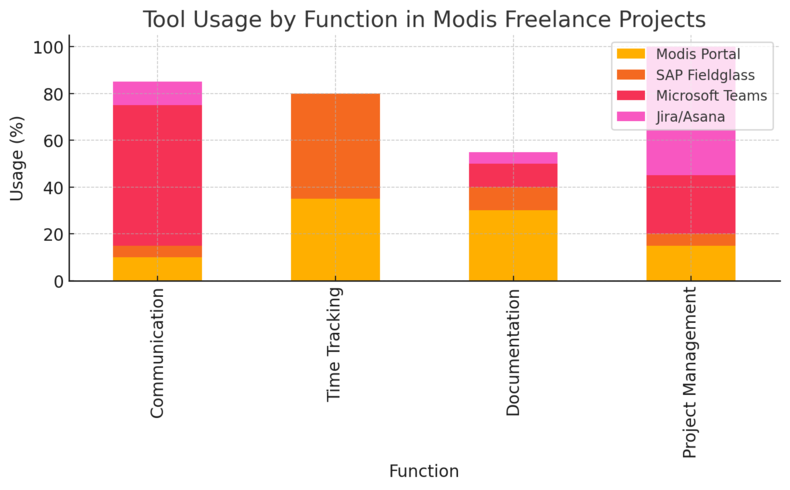
When working through Modis freelance, you’re not just plugging into random systems—you’re entering a structured, enterprise-grade environment.
The tools you’ll use depend slightly on the client, but Modis provides a consistent core setup for managing your applications, tracking time, and communicating with teams.
Let’s walk through what that looks like in real life.
The Modis Talent Portal For Applications And Profile Updates
The Modis Talent Portal is the command center for your freelance journey. It’s where you apply for roles, track your status, and keep your professional information up to date.
Once logged in (via talent.modis.com), you’ll see key tabs like:
- My Profile: Update your resume, certifications, skills, and availability.
- Applications: Track submitted applications and recruiter feedback.
- Recommended Jobs: View roles matched to your skills by Modis’s AI.
- Time Management: Log hours if you’re under an active contract.
I suggest you treat this portal like a living resume. Updating it every few weeks—especially after completing projects or gaining certifications—helps recruiters find you faster in their internal searches.
Also, if you get an error while uploading large files, compress your resume to under 5MB. Modis’s system sometimes rejects oversized attachments without a clear warning.
Time-Tracking Tools Commonly Required For Client Contracts
Time tracking is non-negotiable in Modis freelance projects, especially since most contracts are hourly. The tool depends on the client, but these are the most common:
- SAP Fieldglass: Used for large enterprise clients. You’ll submit hours weekly, and your manager approves them before payroll.
- ADP Workforce Now: Handles both time logging and pay stubs for W-2 contractors in certain regions.
- Modis Portal Time Entry: For smaller contracts directly managed by Modis, accessible under “Time Management” → “Submit Hours”.
Here’s a quick tip: Always double-check your timesheet cut-off dates. Missing a submission deadline can delay payments by an entire pay cycle. I recommend setting a recurring reminder every Friday to log hours and submit them by the weekend.
Communication Tools You’ll Use With Recruiters And Project Teams
Communication inside Modis freelance projects feels closer to a corporate environment than a casual gig chat. You’ll usually work with tools that ensure compliance and consistency.
The main platforms include:
- Microsoft Teams: Used for daily communication, meetings, and project coordination.
- Outlook Email: Standard for Modis and most enterprise clients—set up filters to separate client communication from personal inbox noise.
- Jira or Asana: Common for tracking development tasks or sprint progress.
- Slack: Used occasionally, though most Modis clients prefer Teams for security.
Recruiters primarily contact you via email or phone, but once assigned to a project, internal communication shifts to the client’s preferred environment.
Keep your accounts synchronized, and test video/audio setups early—corporate firewalls can block permissions if not configured properly.
I personally suggest installing both the Teams desktop app and mobile version; you’ll avoid missing meeting pings or last-minute task updates.
How To Manage Documentation And Compliance Requirements
Modis works with enterprise clients, so compliance is taken seriously. Expect to handle documentation through their secure upload systems or digital signing platforms.
Typical documents include:
- Contract agreements and NDAs (Non-Disclosure Agreements)
- Proof of ID and eligibility to work
- Background check authorization forms
- Client-specific security acknowledgments
These usually appear in your Modis portal under “Documents → Pending Actions.” Always submit within the requested timeframe—most clients won’t onboard you without clearance.
If you ever need to resend forms, contact your recruiter directly rather than uploading duplicates. Modis’s system sometimes flags multiple submissions as inconsistencies.
Best Practices For Keeping Project Data And Credentials Secure
Security is central to Modis freelance projects because you’ll often access confidential corporate systems.
Here’s what I recommend:
- Use the client’s VPN (Virtual Private Network) at all times. It encrypts your connection and prevents unauthorized access.
- Avoid public Wi-Fi for sensitive work—even with a VPN.
- Enable MFA (Multi-Factor Authentication) for all Modis and client logins.
- Store credentials in encrypted password managers like 1Password or Bitwarden.
- Back up project files only using approved systems (OneDrive, SharePoint, or client-provided tools).
I’ve seen contractors lose access to projects after using unapproved storage services like Dropbox. Stay within client guidelines; Modis tracks compliance closely, and violations can end contracts early.
Pros And Cons To Expect With Modis Freelance Work
No platform is perfect, and Modis freelance is no exception. What makes it worth it for some might be frustrating for others.
Let’s look at the genuine upsides and challenges based on real contractor experiences.
Key Advantages Of Using Modis For Tech Contracting
Modis freelance stands out because it offers structured opportunities, not random gigs.
Here’s why many professionals prefer it:
- Stable, long-term contracts: Unlike short freelance sprints, Modis projects often run 6–12 months or more.
- Enterprise-level exposure: You work with Fortune 500 clients and gain experience with global systems.
- Streamlined payment process: Recruiters handle rate negotiations and billing for you.
- Career progression: Modis often reassigns high-performing contractors to new projects without reapplying.
One of the biggest perks, in my opinion, is credibility. When your portfolio includes names like IBM or Siemens through Modis, it strengthens your professional brand and attracts better opportunities in the future.
Common Frustrations And How To Navigate Them Smoothly
Despite the advantages, Modis does have pain points that freelancers should be prepared for.
Some of the common challenges include:
- Slow onboarding: Enterprise clients require background checks and multi-step approvals that can delay project starts.
- Limited flexibility in role selection: You depend on recruiter matching rather than direct client outreach.
- Inconsistent recruiter communication: Some recruiters respond quickly, others may take days.
I suggest taking a proactive approach—send polite follow-ups every few days if communication lags. Also, keep backup opportunities open until your contract officially begins. Modis recruiters won’t mind as long as you’re transparent.
Who Modis Works Best For And Who Should Look Elsewhere
From what I’ve seen, Modis suits professionals who treat freelancing as a structured career, not a side hustle.
Ideal for:
- Experienced tech and engineering specialists seeking consistent contract work.
- Professionals comfortable in corporate environments.
- Freelancers who value stability and predictable pay.
Not ideal for:
- New freelancers seeking fast, entry-level gigs.
- Creatives or marketers (Modis focuses mainly on technical sectors).
- People who prefer casual project-based freedom over structured workflows.
If you’re someone who thrives under clear processes and teamwork, Modis can be an excellent home base for your contracting career.
Differences Between Modis And Similar Staffing Firms
While Modis competes with other staffing agencies like Robert Half Technology, Adecco, and TEKsystems, it offers a slightly different flavor.
Here’s a simple comparison:
| Feature | Modis | Robert Half | TEKsystems |
| Focus | Tech & Engineering | Accounting & Tech | IT & Cybersecurity |
| Contract Length | 6–12 months typical | 3–6 months typical | 6–18 months typical |
| Onboarding | Detailed and structured | Moderate | Fast but less detailed |
| Pay Rates | Competitive, market-aligned | Slightly lower | Similar |
| Work Mode | Hybrid & Remote | Mostly hybrid | Mostly on-site |
Modis tends to invest more in client partnerships, meaning recruiters often have stronger insight into what a client truly needs. This makes interviews smoother and placements longer-lasting.
I believe Modis fits well for freelancers who want enterprise exposure without losing independence. It bridges the gap between full-time employment and pure freelancing better than most agencies I’ve seen.
Pro Tip: Build a long-term relationship with one recruiter. Modis has internal notes about reliability and client feedback—having a consistent point of contact increases your chances of being prioritized for top-tier contracts before they’re publicly listed.
Tips To Succeed And Stand Out On Modis Freelance
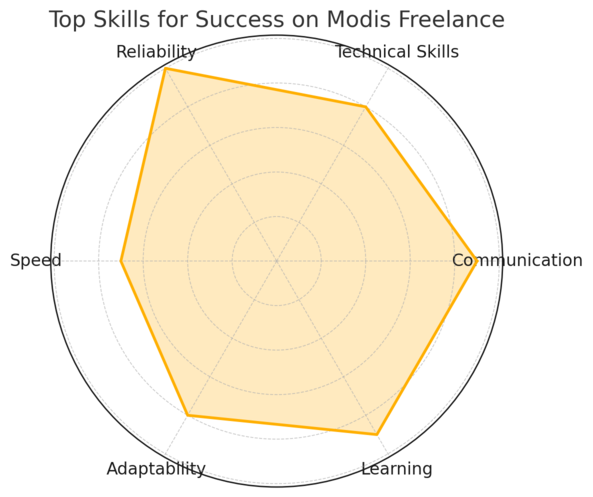
Working on Modis freelance is more than just landing one contract—it’s about building a professional reputation that keeps recruiters coming back to you first.
The freelancers who thrive on this platform aren’t necessarily the most skilled; they’re the ones who know how to position themselves, communicate clearly, and treat every project like a partnership.
Optimizing Your Resume And LinkedIn For Modis Recruiters
Your resume and LinkedIn profile are the first impressions Modis recruiters get—and trust me, they scan them fast. The key is clarity and keyword alignment.
Here’s how to stand out:
- Use precise, role-based titles: Instead of “Tech Enthusiast,” write “AWS DevOps Engineer – Cloud Automation.”
- Mirror Modis job listings: Include exact skill terms that appear in openings (like Python, Kubernetes, or SAP).
- Add quantified results: “Reduced deployment time by 40%” grabs attention better than vague task lists.
- Keep your LinkedIn headline and About section aligned with your resume—recruiters often cross-check both.
In your Modis profile, make sure your resume is uploaded in PDF format and named clearly (e.g., Firstname_Lastname_Specialty.pdf). I also recommend syncing your LinkedIn URL in your Modis profile—it adds credibility and makes it easier for recruiters to verify your background.
How To Communicate With Recruiters For Faster Placement
Modis recruiters handle dozens of candidates daily. The faster and clearer you communicate, the higher your chances of being prioritized.
Here’s what works best:
- Respond within 24 hours when a recruiter contacts you.
- Be upfront about your availability, rate expectations, and preferred work mode (remote/hybrid).
- After interviews, send a short thank-you email summarizing key points you discussed—it shows professionalism and engagement.
Example message:
“Thanks for arranging the interview with [Client Name]. I really enjoyed discussing [project detail]. Please keep me posted on the next steps. I’m available to start as early as [date].”
From my experience, Modis recruiters remember polite, proactive communication. They’re more likely to offer you early access to upcoming contracts when you’ve proven reliable.
Strategies To Build A Long-Term Contracting Relationship
Success on Modis freelance isn’t about hopping from one gig to the next—it’s about consistency. Recruiters and clients value freelancers who treat contracting like an ongoing career.
Here’s how to build that relationship:
- Deliver predictably: Always meet deadlines, even if it means adjusting your schedule slightly.
- Stay transparent: If you face delays or challenges, communicate early—it builds trust.
- Request feedback: Ask recruiters or clients how you can improve; it shows growth mindset.
- Reconnect periodically: Even between projects, send brief updates (“I just wrapped a new certification—happy to share availability next month”).
In my experience, freelancers who maintain ongoing relationships with one recruiter often get offers 2–3 times faster than those who treat every project as one-off.
Keeping Your Skills Competitive For Future Modis Roles
Modis works with cutting-edge companies, so skill relevance is everything. Roles evolve quickly, and being slightly outdated can cost you the next big opportunity.
To stay competitive:
- Earn certifications that align with Modis trends—AWS, Azure, CompTIA, or PMP certifications are highly valued.
- Use platforms like Coursera, Udemy, or LinkedIn Learning for continuous learning.
- Track in-demand keywords from recent Modis job postings—if you see recurring tools (e.g., Terraform, Kubernetes, or Tableau), prioritize them in your upskilling plan.
I suggest updating your Modis profile every 3–4 months to reflect new skills or achievements. Even a single new certification can push your name to the top of recruiter searches.
How To Secure Repeat Contracts And Stable Project Flow
Once you’ve completed a few projects, the goal shifts from getting work to keeping work steady. Modis values loyalty and consistency, and that’s something you can use strategically.
Here’s what I recommend:
- Ask for reassignments early: A month before your contract ends, let your recruiter know you’re open for extension or new roles.
- Document achievements: Keep a simple summary of your completed deliverables; recruiters use this to market you internally.
- Stay in touch between projects: Send occasional check-ins like, “Just wrapped a client project and am available starting next week.”
A contractor I know who followed this pattern had continuous work with Modis for over four years—without ever needing to apply through the public portal again. It’s all about relationships, timing, and reliability.
Is Modis Freelance Worth It For Your Career Path?
Deciding whether Modis freelance is right for you depends on your goals, preferred work style, and career stage. It’s not the fastest or flashiest platform—but it’s one of the most stable and career-oriented.
When Modis Helps Your Career And When It Slows You Down
Modis shines when you’re aiming for depth in your career rather than constant client chasing.
When it helps:
- You want access to Fortune 500-level projects.
- You prefer structured, longer contracts over short gigs.
- You value predictable pay and professional credibility.
When it slows you down:
- You thrive in fast-paced freelancing with total autonomy.
- You want to experiment with small, creative projects.
- You dislike lengthy onboarding and background checks.
I believe Modis is best suited for professionals who want to grow inside enterprise ecosystems—learning large-scale systems, processes, and collaboration frameworks that smaller freelance jobs can’t offer.
How To Evaluate If Modis Fits Your Work Style And Goals
Before committing, ask yourself a few questions:
- Do I prefer structure or flexibility?
- Am I okay with waiting for recruiter matches instead of pitching directly?
- Do I enjoy teamwork within corporate systems?
If you lean toward stability, mentorship, and predictable growth, Modis will feel like a strong fit. But if you’re driven by creative freedom and variety, you might feel boxed in after a few contracts.
From what I’ve seen, many freelancers start with Modis for structure and later blend it with side projects for balance—that’s often the best of both worlds.
What To Expect Long Term If You Rely On Contract Work
Building a long-term career through Modis freelance can absolutely work if you approach it with intention. Many professionals use it as a bridge between full-time employment and independent consulting.
Here’s what you can expect over time:
- Stable income streams from back-to-back contracts.
- Deep industry experience through enterprise-level projects.
- Networking advantages—recruiters and managers often refer top contractors to future roles.
However, you’ll need to manage your own benefits, taxes, and downtime between projects. I suggest creating a three-month financial buffer—just in case new assignments take time to appear.
In the long run, the most successful Modis freelancers treat themselves like micro-businesses. They keep learning, stay visible to recruiters, and document every success to strengthen their value for the next contract.
Pro Tip: Keep a simple “Contract Log” file. Track each project’s start and end date, client, achievements, and recruiter contact. Not only does this help with tax and resume updates, but it also makes it easy for Modis recruiters to market you to future clients quickly.

I’m Juxhin, the voice behind The Justifiable.
I’ve spent 6+ years building blogs, managing affiliate campaigns, and testing the messy world of online business. Here, I cut the fluff and share the strategies that actually move the needle — so you can build income that’s sustainable, not speculative.
Related posts:
 Top 6 Freelancing Jobs That Promise Financial Freedom
 Freelance Developer: How to Find the Perfect Fit for Your Project
 9 Best Freelance Websites for Beginners to Start Today
 Freelance Data Entry Jobs You Can Start From Home Today
 The Best Platforms to Find Freelance Writing Jobs Fast
 13 Top Freelance Websites to Land Jobs That Pay Well