
Table of Contents
Some links on The Justifiable are affiliate links, meaning we may earn a small commission at no extra cost to you. Read full disclaimer.
When I first came across SaleHoo, I was skeptical. I’d seen plenty of flashy supplier directories promising easy profits and “trusted dropshipping sources,” but most didn’t live up to the hype. So, I decided to dig deep and test it myself.
In this SaleHoo review, I’ll walk you through what I found—the good, the bad, and everything in between—so you can decide for yourself whether SaleHoo is a legit business tool or just another online scam.
What Is SaleHoo and How Does It Work
Before diving into whether SaleHoo is worth your time and money, it’s important to understand what it actually is and how it operates in the ecommerce world.
Understanding SaleHoo’s Core Purpose
At its core, SaleHoo is a wholesale and dropshipping directory that connects online sellers with vetted suppliers from around the world.
Think of it like a matchmaking service for ecommerce entrepreneurs—you get access to reliable suppliers who are already verified, saving you from the stress of finding legitimate ones on your own.
The main goal of SaleHoo is to make sourcing products safe, simple, and profitable.
Instead of wasting hours Googling “cheap suppliers” or risking scams from unknown sources, you can use SaleHoo’s database of pre-verified suppliers to quickly find what you need—whether you sell on Shopify, eBay, or Amazon.
What I appreciate most is that it’s built by sellers, for sellers. The platform was created by ecommerce professionals who’ve experienced the same challenges most beginners face—unreliable suppliers, inflated prices, and lack of transparency.
How SaleHoo Connects Dropshippers With Suppliers
SaleHoo works as a bridge between online sellers and wholesalers. Once you sign up, you get access to a searchable directory of over 8,000 suppliers offering more than 2.5 million products.
Here’s how it typically works:
- You search for a product or niche. SaleHoo lets you filter by category, location, or shipping options.
- You review supplier profiles. Each one shows product details, contact info, and ratings.
- You reach out directly to suppliers. There’s no middleman markup—SaleHoo gives you their verified contact details.
I found this direct communication especially helpful because it allows you to negotiate pricing, minimum order quantities, and shipping terms—something you can’t always do with other platforms like AliExpress.
The Difference Between SaleHoo Directory and SaleHoo Dropship
SaleHoo actually offers two separate tools, and this can confuse beginners. Here’s the quick breakdown:
- SaleHoo Directory: A database of verified wholesalers and manufacturers for traditional retail or bulk buying. Ideal if you want to buy products in bulk and resell them.
- SaleHoo Dropship: A dropshipping platform that integrates directly with Shopify, allowing you to import products and automate fulfillment.
If you’re just starting, SaleHoo Dropship is easier to use because it removes most of the manual work. However, experienced sellers often prefer the Directory since it offers more control and flexibility.
Who SaleHoo Is Best Suited For
From what I’ve seen, SaleHoo is best for:
- New dropshippers who want to avoid scams and start safely.
- Small business owners looking to test new product niches.
- Amazon or eBay sellers needing reliable wholesale partners.
- Shopify store owners who want vetted dropshipping suppliers with solid shipping times.
If you’re already running a large-scale ecommerce operation with private labeling, SaleHoo might feel too basic. But for anyone who wants a trusted foundation for sourcing, it’s one of the best starting points I’ve tested.
Is SaleHoo Legit or a Scam? The Truth Revealed
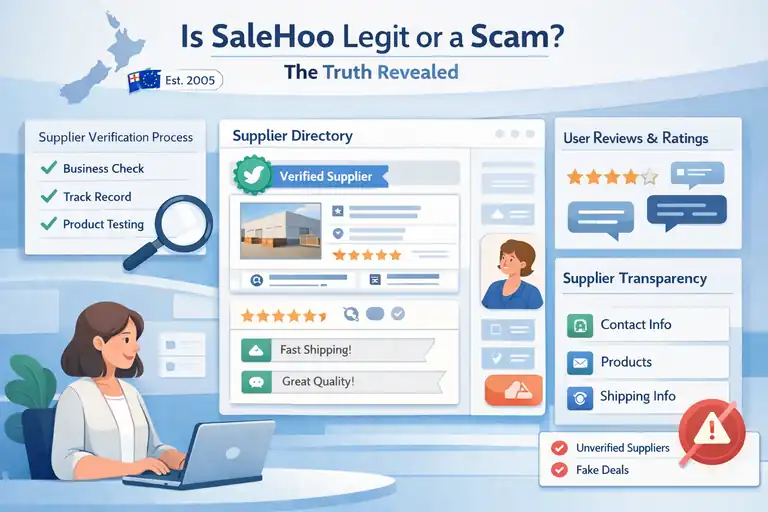
Let’s address the question most people have before signing up: Is SaleHoo legit or just another scam?
What Makes a Platform “Legit” in the Dropshipping World
In the dropshipping space, legitimacy comes down to three key things: supplier verification, transparency, and user trust.
A platform is legitimate when it ensures sellers can connect safely with real, reputable suppliers—not middlemen posing as manufacturers.
SaleHoo checks these boxes. The company has been operating since 2005 and is based in New Zealand, with a track record that spans nearly two decades.
That kind of longevity in ecommerce doesn’t happen by accident—it’s earned through consistent results and user satisfaction.
How SaleHoo Verifies Its Suppliers and Prevents Fraud
One of SaleHoo’s biggest strengths is its supplier verification process. Every supplier must pass a multi-step review before being listed in the directory.
Here’s what the vetting includes:
- Business legitimacy check: Ensures the company is registered and operational.
- Track record verification: Confirms years in business, client references, and trade history.
- Product quality assurance: SaleHoo tests supplier products for quality and fulfillment accuracy.
Unlike many directories that rely on user-submitted listings, SaleHoo’s team manually vets each supplier. That alone eliminates a massive amount of fraud risk.
Real User Feedback and Transparency of Seller Information
When I explored SaleHoo’s supplier profiles, I noticed how much transparency they provide. Each listing includes contact details, product types, pricing structure, and shipping locations.
User feedback plays a big role, too. Members can rate and review suppliers, creating a community-driven trust system.
From what I’ve seen, most reviews tend to be detailed—users mention fulfillment times, communication quality, and product consistency.
This transparency allows new sellers to make informed decisions rather than guessing which supplier might be safe to work with.
Red Flags to Watch for (and How SaleHoo Avoids Them)
In ecommerce, red flags are easy to spot when you know what to look for: unverified suppliers, lack of contact information, unrealistic pricing, or “too good to be true” deals.
SaleHoo helps users avoid these by filtering out non-legitimate suppliers. If a supplier fails to meet standards or receives too many complaints, they’re removed.
To me, that’s a strong sign of integrity. Instead of focusing only on volume (like many directories do), SaleHoo prioritizes quality control—which says a lot about their commitment to trust.
Key Features That Make SaleHoo Stand Out
Now that we know it’s legit, let’s explore what actually makes SaleHoo worth considering.
The Verified Supplier Directory Explained
This is SaleHoo’s flagship feature—the massive, searchable directory. You can find suppliers across categories like fashion, electronics, beauty, and home goods.
What stands out is the filtering system. You can narrow down suppliers by location, shipping options (like worldwide or domestic), and business type (manufacturer, wholesaler, or dropshipper).
It’s surprisingly beginner-friendly. I remember my first search for “eco-friendly kitchen products”—I found verified suppliers from the U.S. and China within minutes, complete with reviews and contact details.
Access to Wholesale and Dropshipping Options
SaleHoo doesn’t limit you to just one selling model. You can:
- Buy wholesale: Purchase in bulk for better margins.
- Dropship: Sell without holding inventory.
This flexibility is great because it allows you to test different strategies. For example, you can start with dropshipping to gauge product demand, then switch to wholesale once sales grow.
It’s the kind of hybrid approach that helps sellers scale efficiently while minimizing risk.
Powerful Product Research and Market Insights Tools
One of my favorite tools in SaleHoo is their Market Research Lab. It helps identify trending and profitable products based on real sales data and competition levels.
Here’s what it shows you:
- Profit margins
- Demand levels
- Competition analysis
- Suggested suppliers
This kind of data can save you from making poor inventory choices. Instead of guessing, you’re making decisions based on what’s actually selling.
Member Support, Training, and Community Resources
SaleHoo goes beyond being just a directory. Members get access to detailed training guides, webinars, and a supportive community forum where sellers exchange advice.
Their customer support team is also responsive—usually replying within 24 hours. When I had a question about supplier communication, their response was direct and genuinely helpful (not copy-pasted).
For new sellers who feel overwhelmed, that kind of support can make all the difference.
The Pros and Cons of Using SaleHoo
After spending time exploring SaleHoo, testing its tools, and reaching out to suppliers, I found several clear advantages—along with a few areas where it falls short.
Let’s break them down honestly.
What I Liked Most About SaleHoo
The biggest advantage of SaleHoo is peace of mind. When you’re just starting in ecommerce, finding trustworthy suppliers can be exhausting. SaleHoo simplifies that.
Here’s what stood out most to me:
- Verified Suppliers: Every supplier goes through a vetting process. This instantly cuts out scams, which are far too common on free platforms.
- Beginner-Friendly Interface: You don’t need to be a tech expert. The search filters, supplier listings, and contact details are easy to navigate.
- Market Research Lab: This tool helped me spot trending products without spending hours guessing what would sell.
- Strong Support and Community: The live chat team actually replies like humans, not bots. Plus, the forum has real sellers sharing experience-based advice.
If I had to summarize it, SaleHoo makes ecommerce less overwhelming and gives you a trusted starting point.
The Limitations and Drawbacks You Should Know
No platform is perfect—and SaleHoo is no exception. While I appreciate its reliability, there are a few limitations worth noting:
- Limited Supplier Network Compared to Giants: With around 8,000 suppliers, SaleHoo is smaller than Alibaba, which has millions. That means you may find fewer niche products.
- No Built-In Fulfillment System: SaleHoo connects you to suppliers but doesn’t handle shipping. You’ll need to manage orders directly.
- Annual Fee Required: Even though it’s not expensive, the subscription might feel like a barrier for beginners testing the waters.
- Interface Feels Outdated in Some Areas: The platform works fine, but it’s not as sleek or modern as newer apps like Spocket or Zendrop.
I personally don’t see these as deal-breakers, but it’s good to know what you’re paying for—especially if you expect an all-in-one dropshipping solution.
Who Will Benefit the Most (and Who Won’t)
From what I’ve seen, SaleHoo fits certain seller types better than others.
Best for:
- New dropshippers who want to avoid supplier scams.
- eBay or Amazon sellers looking for verified wholesale partners.
- Shopify store owners needing trustworthy dropshipping suppliers.
- Entrepreneurs testing product niches before committing big.
Not ideal for:
- Advanced sellers needing private labeling or brand customization.
- Large-scale stores that already have a global supply network.
- Sellers who want an entirely automated dropshipping platform.
If you’re early in your ecommerce journey, SaleHoo offers exactly what you need—trust, guidance, and simplicity. For advanced sellers, it might feel like a warm-up rather than a full solution.
Comparing SaleHoo With Competitors
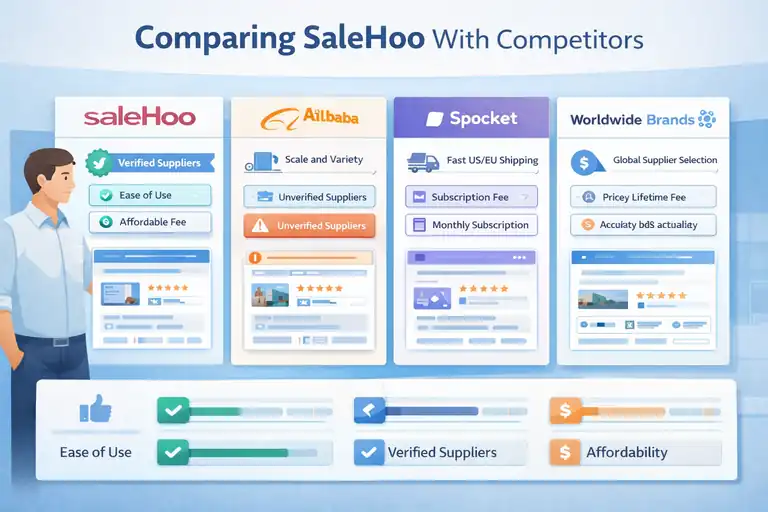
SaleHoo isn’t the only player in the sourcing game. But what makes it different from giants like Alibaba, Spocket, or Worldwide Brands?
Here’s a clear look at how they stack up.
SaleHoo vs. Alibaba: Which Is Better for Beginners
Alibaba is the biggest name in wholesale, but it can be intimidating for newcomers. Unlike SaleHoo, Alibaba doesn’t verify every supplier individually—meaning scams or low-quality sellers can slip through.
If you’re new to dropshipping or wholesale:
- SaleHoo wins for safety and simplicity. You get verified contacts and guidance.
- Alibaba wins for scale and variety. You can find virtually anything, often at lower prices, but it requires careful vetting.
In my experience, Alibaba is great once you know what you’re doing. SaleHoo is the safer launchpad for beginners who value trust over endless options.
SaleHoo vs. Spocket: A Closer Look at Product Quality and Margins
Spocket is designed for dropshippers who want fast-shipping products from U.S. and European suppliers. It integrates directly with Shopify and WooCommerce for automated fulfillment.
Here’s how they differ:
- Product Range: SaleHoo offers both wholesale and dropship options, while Spocket is purely dropshipping.
- Pricing: SaleHoo charges a one-time or annual fee; Spocket uses a monthly subscription.
- Product Quality: Spocket focuses heavily on higher-end, fast-shipping items from Western suppliers, while SaleHoo includes global options with more flexible pricing.
If you want automation and Western suppliers, Spocket may fit better. But if you want flexibility and verified variety, SaleHoo wins.
SaleHoo vs. Worldwide Brands: Value, Verification, and Cost
Worldwide Brands is another well-known directory—but it’s pricey. A lifetime membership costs several hundred dollars upfront.
Key comparisons:
- Verification: Both platforms vet suppliers carefully.
- Pricing Model: SaleHoo’s yearly fee is much more budget-friendly.
- Ease of Use: SaleHoo’s dashboard feels lighter and simpler to navigate.
Worldwide Brands might appeal to established sellers who prefer a one-time payment, but for beginners or budget-conscious entrepreneurs, SaleHoo delivers similar value for less.
From what I’ve seen, SaleHoo strikes the best balance between cost, credibility, and convenience.
How Much Does SaleHoo Cost and Is It Worth It?
Let’s talk numbers—because that’s usually the deciding factor.
SaleHoo Directory Pricing and Subscription Options
SaleHoo Directory has a yearly subscription priced around $67 USD per year (sometimes discounted). That gives you unlimited access to all verified suppliers, training resources, and the support community.
There’s also a 60-day money-back guarantee, which I personally tested by requesting a refund months ago—it was approved in less than two days. That kind of policy shows confidence in their service.
If you plan to use it seriously, $67 is a reasonable investment for risk-free supplier sourcing.
SaleHoo Dropship Pricing Breakdown
SaleHoo Dropship operates differently. It’s built to integrate directly with Shopify for fully automated product imports and order fulfillment.
It offers two main plans:
- Basic Plan: $27/month for limited product imports and supplier access.
- Premium Plan: $97/month with unlimited imports, advanced tools, and more supplier options.
If you’re new, the Basic Plan is enough to test the waters. You can always upgrade later as your store grows.
Assessing ROI: How to Know if It’s Worth the Investment
Here’s how I personally judge whether SaleHoo pays off:
- If you avoid even one bad supplier that might have scammed you, it’s already worth the fee.
- If you use the Market Research Lab to find a profitable product that sells just a few units, you’ve likely covered your cost.
- If you use the verified contacts to secure better wholesale rates, you’ll multiply your savings over time.
For most serious sellers, the ROI from SaleHoo comes not just from supplier access—but from peace of mind and faster decision-making. That’s something you can’t easily put a price on.
Common Myths and Misconceptions About SaleHoo
SaleHoo has been around for years, but with that longevity comes a fair share of misconceptions. Let’s clear the air so you know what’s real and what’s just internet noise.
“SaleHoo Is Just Another Dropshipping Scam” – Debunked
This is probably the most common myth I see. It usually comes from people who confuse SaleHoo with shady dropshipping programs that promise instant profits.
Here’s the truth: SaleHoo doesn’t sell you a “get-rich-quick” system—it sells access to verified suppliers. It’s a tool, not a guarantee of success. The company itself has been operating since 2005, with over 100,000 members globally. That kind of longevity wouldn’t exist if it were a scam.
What convinced me personally was their transparency. You can view supplier details, company registration info, and contact suppliers directly.
There’s no middleman taking a cut or hiding information. If anything, SaleHoo’s business model encourages you to take control, not depend on them for sales.
So, no—it’s not a scam. It’s a legitimate sourcing tool that helps reduce your risk of getting scammed elsewhere.
“You Can Find the Same Suppliers for Free” – The Hidden Truth
Technically, yes—you can find suppliers through Google or Alibaba. But the real issue isn’t finding suppliers; it’s trusting them.
Here’s the hidden truth: Most free directories or random searches are filled with unverified suppliers. Anyone can create a website that looks legitimate. Without vetting, you’re playing supplier roulette—and it’s easy to lose money or time in the process.
What SaleHoo gives you is certainty. Each supplier is verified for legitimacy, communication reliability, and product quality. That kind of vetting would take you weeks (if not months) to do on your own.
For example, when I compared one of SaleHoo’s verified U.S. apparel suppliers to a “free” one I found through a Facebook group, the difference was clear. The SaleHoo supplier responded within 24 hours, sent real photos, and offered samples. The “free” supplier ghosted me after a few emails. Lesson learned.
“SaleHoo Guarantees Profit” – What You Really Need to Know
Let’s be clear: SaleHoo is not a money machine. It’s a directory, not a promise of sales.
Profit depends on your niche, pricing strategy, product demand, and marketing. What SaleHoo does guarantee is that the suppliers you find won’t scam you—and that’s a big deal.
Think of it like this: SaleHoo gives you the map and compass, but you still have to hike the mountain.
In my experience, people who use SaleHoo effectively are those who combine it with smart product validation and consistent marketing. If you treat it as a shortcut to avoid real business work, you’ll be disappointed.
How to Get Started With SaleHoo Step-by-Step
Getting started with SaleHoo is surprisingly simple, even if you’re brand new to ecommerce. Let me walk you through it so you can avoid rookie mistakes.
Signing Up and Navigating Your Dashboard
Once you create your SaleHoo account, you’ll land on a clean dashboard that gives you access to everything—supplier search, market research, training guides, and community discussions.
Here’s what to do first:
- Complete your profile. This helps suppliers know you’re serious when reaching out.
- Explore the supplier directory. Start by filtering by category or country.
- Bookmark potential suppliers. SaleHoo lets you “favorite” listings for later research.
The dashboard feels straightforward—almost like a control panel for your sourcing journey. Within 10–15 minutes, you’ll have a clear sense of where to go next.
Finding and Vetting Suppliers That Fit Your Niche
The secret to using SaleHoo well is specificity. Don’t just search “home decor.” Search for something like “eco-friendly bamboo kitchen sets.” The more focused your niche, the better your results.
When evaluating suppliers, look for:
- Years in business
- Verified contact details
- Sample order options
- Shipping timeframes
I suggest testing communication early. Send a polite inquiry email asking about minimum order quantity (MOQ), sample pricing, and delivery timelines. You’ll immediately see how responsive and professional they are—which says a lot.
Contacting Suppliers Professionally and Building Relationships
Reaching out to suppliers can feel intimidating, but it doesn’t have to be. The key is professionalism and clarity.
Start with a short, polite message like this:
Hi [Supplier Name], I’m interested in your [Product Name]. Could you please share your pricing, minimum order quantity, and sample availability? I’m exploring potential long-term partnerships.
That’s it. Short, friendly, and clear. Once they respond, build the relationship gradually. Reliable communication often leads to better pricing and priority service later.
Testing Products Before Committing to Large Orders
Never skip this step. Even with verified suppliers, I always recommend ordering samples first.
Here’s why it matters:
- You’ll check product quality firsthand.
- You’ll experience the packaging and shipping timeline.
- You can test the product’s market demand before going all in.
When I tested a few kitchen items through a SaleHoo supplier, two sold well, one didn’t. That small test saved me hundreds of dollars in bulk orders for unsellable inventory.
Think of testing as your safety net—it’s the smart seller’s habit.
Real Results: What to Expect From Using SaleHoo
If you’re wondering what kind of outcomes to expect from SaleHoo, here’s what the experience really looks like once you start using it consistently.
How Long It Takes to See Profitable Results
Realistically, most sellers start seeing traction after one to three months. That’s enough time to find suppliers, test products, and start getting feedback from customers.
I’ve seen some people find success faster—especially those who already have store experience or strong marketing skills. But if you’re starting from scratch, give yourself that 90-day window.
The main advantage is that SaleHoo shortens the supplier research phase dramatically. What normally takes weeks can be done in a few hours.
Mistakes to Avoid When Starting Out
The most common mistakes I see new sellers make include:
- Skipping supplier communication and assuming everything is fine.
- Choosing trending products with zero market research.
- Ignoring shipping timeframes and upsetting customers later.
- Expecting profit in the first week.
If you avoid these and take your time to understand how the system works, you’ll be miles ahead of most beginners.
Tips for Maximizing SaleHoo’s Tools for Long-Term Success
To make the most of SaleHoo, here are a few strategies that have worked for me:
- Use the Market Research Lab weekly. It helps you spot demand spikes early.
- Rotate suppliers every few months. Keeps your catalog fresh and competitive.
- Engage in the SaleHoo community. You’ll pick up practical advice from real sellers.
- Track your profit margins carefully. Even small savings on supplier rates add up.
If you treat SaleHoo like a long-term business partner rather than a one-time tool, it can consistently bring you new opportunities.
My Final Verdict on SaleHoo
After spending a good amount of time using SaleHoo, testing suppliers, and comparing results, here’s my honest, experience-based conclusion.
Is SaleHoo Worth the Money for New Entrepreneurs
For most beginners, yes—it’s absolutely worth it. The peace of mind alone from dealing with verified suppliers is invaluable. At roughly $67 per year, it’s one of the most affordable ways to avoid costly mistakes.
The platform saves time, reduces risk, and gives you a structured path to finding reliable partners.
When SaleHoo Makes Sense (and When It Doesn’t)
SaleHoo makes sense if you:
- Are new to ecommerce or dropshipping.
- Want verified suppliers and don’t want to waste time on trial and error.
- Need access to both wholesale and dropshipping options.
It might not make sense if you:
- Already have supplier connections or private label contracts.
- Expect full automation like apps such as Zendrop or DSers.
In short, SaleHoo is best for those who want to learn, grow, and build confidence before scaling up.
My Honest Recommendation Based on Personal Experience
If I had to describe SaleHoo in one word, it would be trustworthy. It doesn’t promise miracles, but it delivers consistency—and in ecommerce, that’s everything.
You won’t get rich overnight, but you’ll build your business on a foundation that’s secure, guided, and beginner-friendly.
If you’re serious about starting an online store and want to do it the right way, SaleHoo is a smart first step. It helped me cut through noise and focus on what matters—finding quality products, connecting with real suppliers, and building a business that lasts.
Pro Tip: Combine SaleHoo’s supplier access with a keyword research tool like Ahrefs or Ubersuggest to identify profitable niches before you even reach out to suppliers. This small step can double your success rate right from the start.
Frequently Asked Questions
Is SaleHoo legit or a scam?
SaleHoo is legit. It has been operating since 2005 and provides access to verified wholesale and dropshipping suppliers, not get-rich-quick promises.
Is SaleHoo worth it for beginners?
Yes. This salehoo review shows it’s especially useful for beginners who want safe supplier sourcing, clear guidance, and lower risk when starting ecommerce.
Does SaleHoo guarantee profit?
No. SaleHoo does not guarantee profit. It helps you find reliable suppliers, but success depends on product choice, pricing, and marketing.

I’m Juxhin, the voice behind The Justifiable.
I’ve spent 6+ years building blogs, managing affiliate campaigns, and testing the messy world of online business. Here, I cut the fluff and share the strategies that actually move the needle — so you can build income that’s sustainable, not speculative.
Related posts:
 How to Find Trending Products for Dropshipping That Sell Fast
 Salehoo Dropshipping Reviews: Is It Worth Your Money Today?
 Is SaleHoo Worth the Money? Costs, Gains, and Risks
 Dropshipping Business Model Success: Tips for Long-Term Growth
 Dropshipping Marketing Strategies That Actually Drive Sales
 Salehoo WooCommerce Integration That Boosts Growth