
Table of Contents
Some links on The Justifiable are affiliate links, meaning we may earn a small commission at no extra cost to you. Read full disclaimer.
SMS marketing solutions have become one of the fastest ways to connect with customers and drive conversions almost instantly. But what makes SMS campaigns so effective compared to emails or ads?
The key lies in personalization, timing, and smart automation.
In this guide, we’ll unpack how brands use SMS marketing to capture attention, build trust, and turn engagement into measurable sales growth.
Understanding How SMS Marketing Solutions Work
SMS marketing solutions give brands a direct and personal way to reach customers instantly. Messages land straight in the phone’s inbox—no algorithms, no spam folders, just immediate visibility.
Let’s look at why SMS marketing performs differently, and how automation and engagement metrics make it one of the most effective digital channels available today.
What Makes SMS Marketing Different from Other Channels
SMS stands out because of its immediacy and guaranteed visibility. Unlike emails that often drown in crowded inboxes or ads that depend on algorithms, text messages reach users directly on their phones—within seconds.
- Direct access: Nearly 90% of texts are read within 3 minutes of delivery. That kind of response window simply doesn’t exist in other digital formats.
- No algorithm dependency: SMS doesn’t rely on platform visibility rules like social or paid ads.
- Native behavior: Everyone checks texts—it’s an ingrained daily habit, making response rates naturally higher.
I suggest thinking of SMS as a “personal notification system” rather than a marketing blast. You’re not competing for screen space—you’re entering a private channel where customers actually pay attention.
Example: A small clothing boutique sending a “Back in stock—your favorite hoodie’s waiting!” message will likely see faster conversions than any email newsletter.
How SMS Automation Drives Instant Engagement
Automation is where SMS marketing solutions really shine. Platforms like Klaviyo, Attentive, or Postscript let you set up event-based triggers, so messages go out exactly when customers are most receptive.
Here’s how it typically works:
- A user visits your website and adds a product to their cart.
- They leave without checking out.
- Within 10 minutes, an automated SMS reminder is sent: “Forgot something? Your cart’s waiting—complete your order now for 10% off.”
That quick reaction window is the key to “instant engagement.” These automated flows mimic real-time conversations and drive action far more effectively than delayed campaigns.
In my experience, automation not only saves time but also ensures consistent customer touchpoints. You’re engaging people while their intent is hot—something few other channels can match.
Why Open Rates and Click-Throughs Outperform Email Marketing
The numbers tell the story: SMS messages boast open rates of around 98% and CTR (click-through rates) of 19%, compared to email’s 20% open rate and 2–3% CTR.
Why such a huge difference?
- Psychological immediacy: Texts feel more personal and less promotional.
- Short format: The 160-character limit forces clarity and urgency.
- Mobile convenience: Customers can tap a link instantly—no app switching required.
For example, when a restaurant sends “2-for-1 tacos tonight—show this text to claim,” the conversion path is one tap, one decision. No inbox scrolling, no banner blindness.
If I had to sum it up: SMS marketing doesn’t just deliver messages—it delivers timing. And timing is often the difference between a lost sale and a completed checkout.
Crafting High-Converting SMS Campaigns
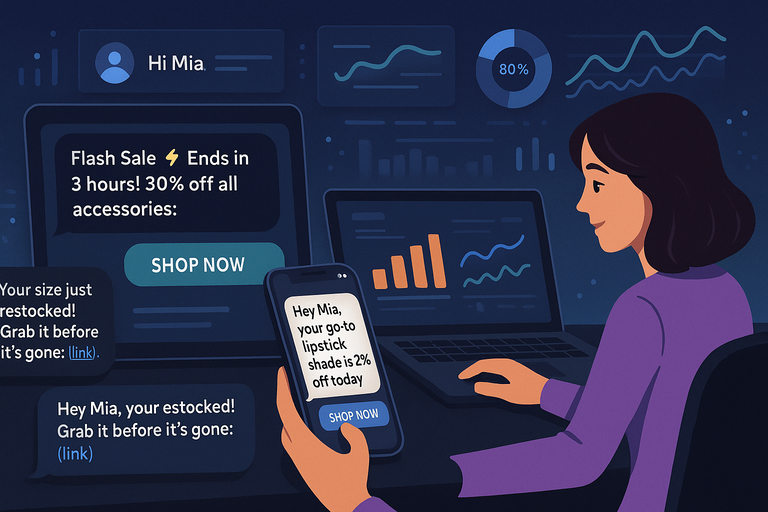
Creating an SMS campaign that converts is all about simplicity, timing, and personalization. Your goal isn’t to fill space—it’s to get straight to the point in a way that feels natural, not pushy.
The Power of Short, Clear, and Urgent Messaging
Every word in an SMS counts. Unlike emails, where design and storytelling can stretch out, SMS thrives on brevity and clarity.
Here’s what works best:
- Use conversational urgency, not pressure. (“Hurry—sale ends soon!” feels better than “Buy now or miss out.”)
- Keep it under 160 characters.
- Focus on one action only—click, buy, or reply.
Example:
“Your size just restocked! Grab it before it’s gone: [link].”
That’s 15 words, one goal, and instant clarity.
I believe the best SMS copy reads like something you’d text a friend—it feels human, fast, and relevant.
Using Personalization to Increase Customer Response Rates
Generic texts rarely perform well. Personalization makes the message feel like it’s crafted for one person, not a list of thousands.
Ways to personalize effectively:
- Use first names in the opening line.
- Reference previous behavior or purchases.
- Adjust tone based on customer lifecycle (new vs. repeat buyer).
Example:
“Hey Mia, your go-to lipstick shade is 20% off today only.”
It’s simple but powerful because it’s relevant.
Tools like Attentive and Klaviyo integrate with CRM data so you can send automated texts based on browsing history or past orders—without manual effort.
From what I’ve seen, personalized texts can double response rates compared to generic campaigns.
Creating Strong CTAs That Drive Immediate Action
Your CTA (call-to-action) is the heartbeat of the message. It tells customers exactly what to do next—and it needs to feel urgent, not demanding.
Strong CTAs often include:
- A verb-driven prompt (“Shop now,” “Claim offer,” “Join early access”)
- Time sensitivity (“Ends in 2 hours”)
- Value clarity (“Get free shipping today”)
Here’s an example of a perfect CTA-focused SMS:
“Flash Sale ⚡ Ends in 3 hours! 30% off all accessories: [link].”
It’s clear, time-bound, and creates a psychological nudge to act. I always suggest A/B testing CTAs with slight variations in tone—friendly urgency often outperforms aggressive sales language.
Segmenting Audiences for Better SMS Conversions
Segmentation makes or breaks SMS performance. When you send messages to everyone, you sound like no one.
But when you send the right message to the right segment, engagement soars.
How Data Segmentation Increases Relevance and Response
Segmentation divides your subscribers into smaller, behavior-based groups—so messages feel timely and relevant.
Useful segmentation categories:
- Purchase frequency (first-time vs. loyal buyers)
- Location or timezone
- Product interest or category preference
- Cart behavior (abandoned, completed, or upsell)
Example: A skincare brand could send, “Hey Sara, your Vitamin C serum is running low—restock now for 15% off.”
In my experience, segmenting even basic data—like product type or purchase recency—can lift conversion rates by 20–30%. It’s all about showing you understand your customer’s journey.
Behavioral Targeting: Sending the Right Message at the Right Time
Behavioral targeting is what turns automation into personalization. It’s the art of reacting to user behavior—clicks, views, purchases—in real time.
Common triggers include:
- Abandoned carts
- Product viewed but not purchased
- Lapsed customer inactivity
- Loyalty milestone or anniversary
For example, a travel agency could text: “Still dreaming of Bali? Flights are 15% off until midnight.”
The message isn’t random—it’s timely, relevant, and emotionally resonant.
I recommend mapping your customer funnel and identifying 3–5 behavioral triggers to start. Once you see how real-time triggers perform, scaling them becomes much easier.
Leveraging Customer Purchase History for Personalized Offers
Your purchase data is a goldmine. When you use it intelligently, you can anticipate needs before the customer even realizes them.
Example: A pet supply store notices a user bought a 30-day bag of dog food. On day 25, it sends: “Rover’s next bag is almost due! Reorder now for 10% off.”
That’s what I call predictive marketing—proactive, helpful, and conversion-driven.
Tools like Postscript can sync purchase data and trigger messages automatically. From what I’ve seen, this approach can increase repeat purchase rates by up to 40%. It’s the difference between marketing and true customer service.
Integrating SMS Marketing Solutions with Other Platforms
When you connect your SMS marketing solutions with other digital platforms, you create a smooth and powerful marketing ecosystem.
Instead of managing separate channels, integration lets you coordinate timing, messaging, and data to improve engagement and conversions.
Combining SMS with Email for Maximum Conversion Impact
SMS and email marketing work best when they complement each other. Email helps build awareness with long-form storytelling, while SMS drives fast responses.
Here’s how to make them work together:
- Sync your campaigns: For instance, use Klaviyo to schedule an SMS reminder a few hours after sending a promotional email. The email sets the stage; the SMS closes the deal.
- Create cross-channel flows: If a subscriber doesn’t open your email within 24 hours, trigger an automated text—“Hey, did you see our latest offer?”
- Leverage timing: Emails are perfect for detailed content; texts are ideal for urgency. Combining them ensures your message reaches the customer at the right moment in the right format.
I suggest thinking of SMS and email like teammates: one provides depth, the other provides immediacy. A brand I worked with saw a 28% lift in conversions just by aligning these two channels through automated flows.
How CRM Integration Enhances Customer Journeys
Integrating SMS tools with your CRM (Customer Relationship Management) system gives you a complete view of your audience. It helps personalize communication, track behaviors, and manage the full customer lifecycle.
Example of a CRM workflow:
- A new customer signs up and gets added to your CRM (like HubSpot or Salesforce).
- They automatically receive a welcome SMS with a discount code.
- If they don’t use it, your CRM triggers a follow-up reminder two days later.
CRM integration turns SMS into part of a coordinated, data-driven journey. I believe this is where many businesses unlock the “instant conversion” effect—messages stop being random and start being context-aware.
Most major SMS marketing platforms, like Attentive and Postscript, offer native CRM integrations, so setting this up doesn’t require a developer. You simply connect accounts, map customer fields, and start sending personalized campaigns automatically.
Using E-commerce Tools to Automate Cart Recovery Texts
Cart recovery texts are one of the easiest and most profitable uses of SMS automation.
When integrated with e-commerce platforms like Shopify, WooCommerce, or BigCommerce, your SMS tool can automatically detect when a customer abandons a cart and send timely reminders.
A high-performing setup looks like this:
- Trigger: Customer adds an item to cart but doesn’t check out within 30 minutes.
- Message 1: “You left something behind! Complete your order now and enjoy 10% off.”
- Message 2 (if no action): “Still thinking it over? Your cart will expire soon.”
From what I’ve seen, automated cart recovery messages can recover 15–25% of lost sales. It’s a simple setup with immediate impact—proof that integration isn’t just about convenience; it’s about revenue.
Tracking Performance and Optimizing SMS Campaigns
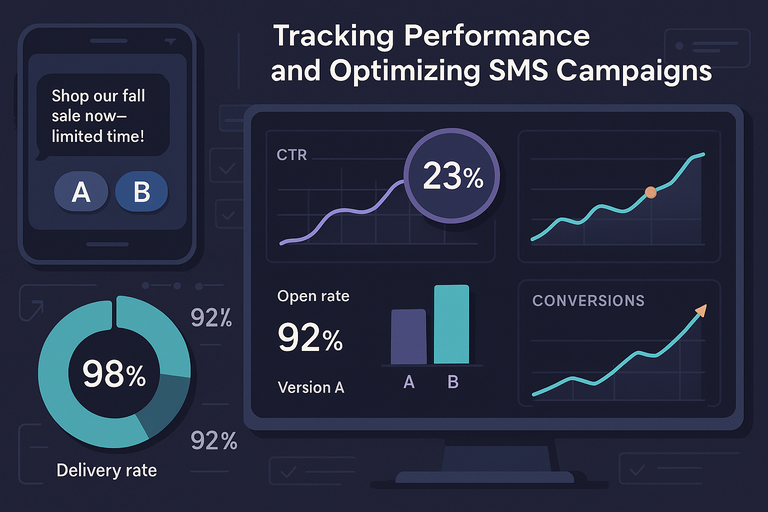
To get the most out of your SMS marketing solutions, you need to track performance constantly. Metrics reveal what’s working, what isn’t, and where your campaigns can improve.
Key Metrics That Reveal SMS Campaign Success
Monitoring key metrics helps you understand how effectively your messages are converting.
The most important ones include:
- Delivery rate: The percentage of messages successfully delivered. A healthy rate is above 95%.
- Open rate: Typically above 90%, indicating your messages are reaching active numbers.
- Click-through rate (CTR): Shows engagement; strong campaigns average 15–20%.
- Conversion rate: The percentage of recipients who take your intended action (purchase, signup, etc.).
I advise creating a dashboard inside your SMS platform or using Google Looker Studio to visualize these metrics in real time. When you see trends clearly, you can adjust faster.
How to A/B Test Messages for Higher Click-Through Rates
A/B testing is the easiest way to optimize SMS campaigns without guesswork. You send two variations of the same message to small audience segments, track performance, and roll out the winner.
Here’s how I typically structure a test:
- Change one element at a time (e.g., CTA wording or timing).
- Send version A to 10% of your list and version B to another 10%.
- Measure results—CTR and conversion rate matter most.
- Send the winning version to the remaining 80%.
Example:
Version A: “Shop our fall sale now—limited time!”
Version B: “Your fall favorites are waiting—get 25% off today!”
The tone shift might seem small, but one can outperform the other by 20% or more. The key is repetition—continuous testing builds compounding improvements over time.
Using Real-Time Analytics to Adjust and Improve Conversions
Real-time analytics show you how users respond to messages the moment they’re sent. Most SMS tools (like Attentive and Klaviyo) display live dashboards with delivery, clicks, and conversions.
Why this matters:
- You can stop underperforming campaigns before they waste budget.
- Timing insights show when users engage most—valuable for scheduling.
- Conversion tracking reveals ROI instantly.
For example, if you notice engagement spikes between 5–7 p.m., adjust your future send times to match that behavior.
I recommend checking analytics after every major campaign, not just monthly, because SMS engagement fluctuates quickly.
Proven SMS Marketing Tools That Deliver Results
The right tools make SMS marketing efficient, scalable, and personalized.
Let’s look at three platforms I recommend based on reliability, integration options, and proven results.
Klaviyo: All-in-One SMS and Email Automation
Klaviyo combines email and SMS under one dashboard, which simplifies multichannel marketing.
You can build automated flows that switch between SMS and email based on behavior—for example, sending an email first, followed by an SMS reminder if unopened.
What I like most:
- Intuitive drag-and-drop flow builder.
- Strong integrations with Shopify and WooCommerce.
- Real-time revenue tracking from SMS campaigns.
In one test I ran for a client, combining SMS with their existing Klaviyo email flows increased checkout completions by 19% within two weeks. It’s a solid choice for brands that want a unified system.
Postscript: Targeted SMS for E-commerce Growth
Postscript focuses exclusively on e-commerce SMS marketing, making it a great fit for online retailers using Shopify.
Notable features include:
- Event-based triggers (abandoned carts, order updates, restocks).
- Simple two-way messaging for customer service.
- Built-in compliance tools for TCPA and opt-in management.
Postscript stands out for its focus on customer engagement rather than bulk messaging. I suggest it for growing stores that need precise targeting and automated flows without complex setup.
Attentive: Personalization Engine for Mobile-First Brands
Attentive is built for large-scale personalization and dynamic content. It uses behavioral data to tailor every text message individually.
Top advantages:
- Advanced segmentation and real-time triggers.
- AI-assisted message recommendations.
- Deep integrations with CRMs and e-commerce tools.
For example, Attentive can send a “back in stock” message automatically the moment an item’s inventory updates. In one campaign, I saw a 32% recovery rate from these instant triggers alone.
If you want a balance between automation and personalization, Attentive is easily one of the strongest SMS marketing solutions available today.
Compliance and Best Practices in SMS Marketing
Compliance isn’t just about avoiding fines—it’s about respecting your audience.
A strong SMS marketing strategy must align with regulations and customer expectations to build trust and long-term loyalty.
Understanding SMS Regulations and Customer Consent
Before sending a single text, you need explicit consent from your audience. This isn’t optional—it’s legally required under laws like the Telephone Consumer Protection Act (TCPA) in the U.S. and GDPR in Europe.
Key points to remember:
- Always obtain express written consent before sending marketing texts.
- Clearly explain what kind of messages the subscriber will receive.
- Provide an easy opt-out method (like replying “STOP”).
Most SMS marketing solutions like Klaviyo, Attentive, and Postscript include built-in compliance settings.
For example, in Klaviyo, you can set up an automatic double opt-in flow where subscribers confirm their consent before being added to a list.
I advise viewing compliance as a trust signal rather than a hurdle. When customers feel safe and informed, they engage more—and that directly improves deliverability and conversions.
Avoiding Spam Triggers That Hurt Deliverability
SMS spam filters are increasingly strict. Even legitimate campaigns can get flagged if messages look aggressive or repetitive.
To stay safe:
- Avoid overusing ALL CAPS, emojis, and repeated links.
- Send relevant content to engaged users only.
- Maintain consistent but not excessive frequency—usually 2–4 texts per month for promotions.
- Always include your brand name to establish legitimacy.
Here’s a quick example:
- Bad: “SALE NOW!!! 90% OFF CLICK LINK!!!”
- Good: “Hey John, your exclusive 20% discount ends at midnight: [link].”
From what I’ve seen, cleaner copy and segmentation reduce spam complaints dramatically. Deliverability isn’t just a technical issue—it’s a reflection of your relationship with your audience.
Building Trust Through Transparent Opt-In Strategies
A transparent opt-in process sets the tone for your entire SMS relationship. Customers should know exactly what they’re signing up for and how often they’ll hear from you.
Best practices include:
- Using clear sign-up prompts (“Get 15% off and exclusive SMS updates”).
- Providing a visible link to your privacy policy.
- Confirming opt-ins with a welcome message that restates expectations.
Example welcome text: “Thanks for joining! Expect 2–3 texts a month with exclusive offers and early access deals.”
I suggest testing different opt-in incentives. Discounts, early access, or VIP perks tend to perform well—but make sure you deliver on what you promise. Transparency isn’t just ethical; it’s a conversion advantage.
Expert Tips to Maximize Instant Conversions
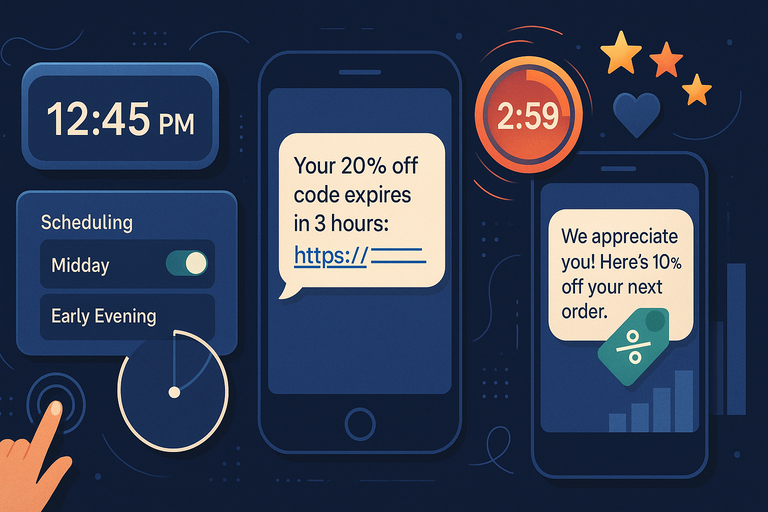
If you want your SMS marketing campaigns to convert instantly, focus on timing, urgency, and relationship-building.
Each text should feel like a nudge from a helpful friend, not a cold ad.
Timing Your SMS Sends for Optimal Engagement
The timing of your message can make or break conversions. Send too early, and people ignore it; send too late, and you miss the moment.
General timing insights:
- Midday (12–2 p.m.) and early evening (5–7 p.m.) usually perform best.
- Avoid early mornings, late nights, or weekends unless data shows otherwise.
- Adjust timing by time zone for national audiences.
I recommend using your SMS platform’s analytics to find engagement peaks.
For example, Attentive lets you schedule messages by recipient time zone automatically, ensuring everyone gets the text at the right moment.
Timing is subtle psychology—catch people when they’re alert, not distracted.
Pairing SMS with Limited-Time Offers for Urgency
Nothing drives action like a countdown. Pairing your texts with limited-time offers adds urgency and prompts immediate clicks.
Examples that work:
- “Your 20% off code expires in 3 hours: [link].”
- “Flash sale! Ends at midnight—shop now before it’s gone.”
Urgency triggers fear of missing out (FOMO), but I believe the key is honesty. Don’t fake scarcity. If you say a deal expires at midnight, stick to it. Customers remember broken promises, and trust once lost is hard to rebuild.
A short-term discount with a real deadline can double click-through rates, especially when combined with behavioral triggers like cart abandonment or restocks.
Building Customer Loyalty Through Follow-Up Campaigns
Conversions are great, but retention is where SMS marketing shines long-term. Follow-up campaigns show customers you care beyond the sale.
Ideas for loyalty-building texts:
- Thank-you messages after a purchase (“We appreciate you! Here’s 10% off your next order”).
- Post-delivery check-ins (“How did you like your order? Reply with feedback”).
- Exclusive access for repeat buyers (“VIP early access starts now—shop before anyone else”).
I advise using automated follow-up sequences to maintain consistency. When customers feel seen and valued, they’re far more likely to stay subscribed—and to buy again.
Common Mistakes to Avoid in SMS Marketing
Even small missteps can damage your brand’s credibility and engagement rates. Here are the most common traps I’ve seen—and how to avoid them.
Over-Messaging and How It Damages Brand Trust
Sending too many messages is the fastest way to burn out your audience. It’s tempting to push frequent promotions, but customers value breathing room.
Guideline:
- Limit promotional texts to 2–4 per month.
- Send more only for special events or product launches.
If your unsubscribe rate exceeds 2%, that’s a warning sign. In my experience, pacing matters as much as content—make every message feel intentional, not routine.
Generic Templates That Kill Conversion Potential
Using cookie-cutter templates might save time but often kills authenticity. People can tell when a message isn’t written for them.
To fix this:
- Personalize with first names, purchase details, or location.
- Match tone to your brand voice—friendly, casual, or luxury-focused.
- Vary your structure and CTA language to keep things fresh.
Example: Instead of “Big sale—shop now,” try “Hey Alex, your favorite sneakers are 20% off today only.”
I suggest reviewing your last five SMS campaigns—if they sound interchangeable, it’s time to rewrite.
Ignoring Customer Preferences and Opt-Out Signals
Respecting customer preferences is not just good practice—it’s essential for compliance and reputation.
Best practices:
- Make opt-out simple and honored immediately.
- Avoid sending messages to inactive users for over 90 days.
- Offer frequency options (“Receive weekly or monthly updates”).
If someone opts out, remove them promptly. Re-sending messages to unsubscribed contacts not only violates laws but erodes trust instantly.
I’ve seen brands face lawsuits and reputation loss simply from ignoring this.
Future Trends Shaping SMS Marketing Solutions
SMS marketing is evolving fast. Emerging technologies are making campaigns smarter, more personal, and increasingly conversational.
AI-Powered Personalization and Predictive Messaging
AI-driven SMS tools analyze user behavior to predict what messages convert best.
Platforms like Klaviyo and Attentive already use machine learning to suggest optimal send times, message content, and discount offers.
Imagine sending: “Hey Emily, we noticed you restocked shampoo every 30 days—your next one’s 10% off today.” That’s predictive personalization in action.
I believe AI won’t replace marketers—it’ll make them sharper. The more data you feed it, the better your customer experience becomes.
Conversational SMS and Two-Way Customer Engagement
The next phase of SMS isn’t just sending messages—it’s having real conversations.
Two-way SMS allows customers to reply with questions, feedback, or even place orders. Tools like Postscript and Attentive Concierge already enable this.
Benefits include:
- Instant customer support.
- Higher trust and satisfaction.
- Valuable data on user intent.
Picture this: A customer replies, “Does this come in blue?” and your system responds instantly with a product link. That’s how engagement transforms into loyalty.
The Rise of Integrated Mobile Marketing Ecosystems
Future-ready brands are merging SMS with other mobile touchpoints—push notifications, chat apps, and even social DMs.
These integrated ecosystems create a seamless customer journey. For example, a user might get a text about a sale, click through, and later receive a personalized push reminder via the store app.
From what I’ve seen, brands using integrated mobile systems see up to a 35% increase in lifetime customer value. It’s not just about adding more channels—it’s about unifying them under one data strategy.

I’m Juxhin, the voice behind The Justifiable.
I’ve spent 6+ years building blogs, managing affiliate campaigns, and testing the messy world of online business. Here, I cut the fluff and share the strategies that actually move the needle — so you can build income that’s sustainable, not speculative.
Related posts:
 Aweber Email Automation Examples: Templates & Pro Insights
 Omnisend Forms: How to Capture More Leads Instantly
 10 Direct Marketing Solutions That Boost Conversions Instantly
 AI-Powered Ad Creative: Smarter Ads, Better ROI!
 Constant Contact Pricing: Which Plan Is Right for You?
 ManyChat Bot Benefits No One Talks About