
Table of Contents
Some links on The Justifiable are affiliate links, meaning we may earn a small commission at no extra cost to you. Read full disclaimer.
If you’ve ever wondered how to start dropshipping for free without draining your savings, you’re not alone.
Many aspiring entrepreneurs want to build an online store but feel stuck by startup costs, supplier fees, or marketing expenses.
The real question is—can you launch a profitable dropshipping business without spending a dime upfront? The answer is yes, but it requires strategy, creativity, and smart use of free tools.
Let’s break down exactly how to do it step by step so you can build a business that actually earns money from day one.
Understanding How Dropshipping Works Without Upfront Costs
Starting dropshipping for free sounds like a dream, but it’s actually quite practical if you understand how the model really works.
You’re essentially building a bridge between customers and suppliers—without ever touching the product yourself.
What Makes Dropshipping Different From Traditional Retail
In traditional retail, you buy products upfront, store them, and sell them later for a profit.
With dropshipping, it’s flipped:
- No inventory: You don’t purchase stock before selling. You only buy from a supplier after a customer places an order.
- No warehouse costs: Your supplier ships directly to the customer, meaning no packaging or logistics headaches.
- Lower risk: Because you’re not holding inventory, you’re not stuck with unsold products.
I like to think of it as being a “storefront curator.” You pick products from suppliers (like Salehoo or Doba), list them in your online shop, and keep the margin between your retail price and the supplier’s cost. The magic is in smart pricing and solid marketing—not massive capital.
How You Can Start Without Buying Any Inventory
You can absolutely start without buying inventory by using platforms that connect stores with suppliers offering free integration and no subscription fees.
Here’s a quick breakdown of how to do that:
- Choose a free eCommerce platform like Shopify’s free trial, WooCommerce (WordPress plugin), or Ecwid.
- Connect a free supplier app like AliExpress via DSers or CJ Dropshipping.
- List products directly from suppliers—just customize the titles, descriptions, and images.
- Only pay the supplier when a customer makes a purchase.
That’s it. You’re essentially using digital tools to act as the “middle manager” in a global product flow—without the financial stress of stocking shelves.
Common Myths About Starting Dropshipping for Free
Many people believe starting dropshipping for free is impossible or unprofitable.
Let’s unpack a few myths:
- Myth 1: You need money to start.
- Truth: You only need internet access, time, and strategy. Free tools can handle most startup tasks.
- Myth 2: You can’t make profits without ads.
- Truth: Free traffic channels like SEO, TikTok organic, and Pinterest are incredibly powerful if you post consistently.
- Myth 3: Free dropshipping means low quality.
- Truth: Reliable suppliers exist on free platforms—you just need to research and test them carefully.
I’ve seen people earn their first $500 in profit just by selling a single trending product with organic marketing. So, yes—it’s doable if you’re persistent and strategic.
Choosing a Profitable Niche With Zero Investment
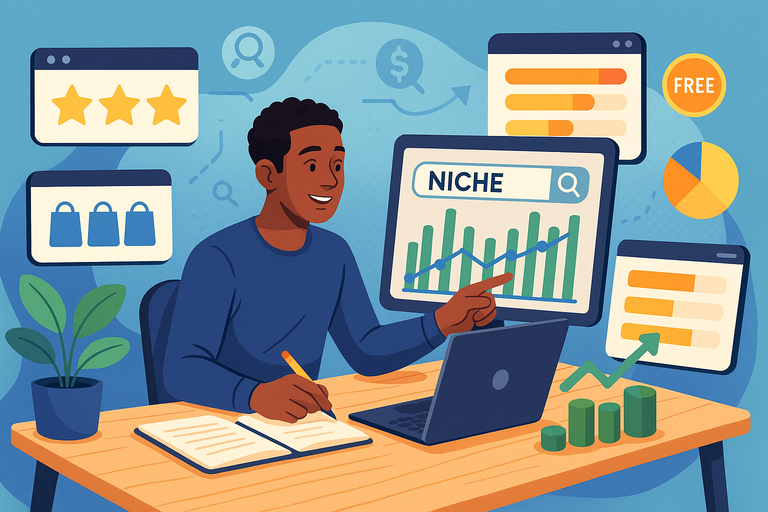
Choosing the right niche is the heart of dropshipping success. Since you’re starting free, you can’t afford to experiment blindly.
You need a niche that attracts traffic naturally and solves real customer problems.
How to Identify High-Demand, Low-Competition Products
You’re looking for the sweet spot between high demand and low competition.
Here’s what to look for:
- Evergreen needs: Products that people buy year-round (e.g., fitness gear, home organization).
- Emotional appeal: Items that spark impulse buys or solve small frustrations.
- Lightweight & easy to ship: Keep shipping costs low since you’re bootstrapping.
I recommend starting with tools like Google Trends and TikTok Creative Center. For example, if you notice “portable blenders” trending, check how saturated they are using keyword tools. The goal is to find something that’s rising in interest but hasn’t exploded yet.
Free Tools to Research Profitable Dropshipping Niches
There are plenty of free tools that can replace expensive subscriptions:
- Google Trends: Tracks search interest for products over time.
- Sell The Trend (Free Trial): Identifies trending items with engagement data.
- Pinterest Trends: Great for visual niches like fashion and home decor.
- Facebook Search Bar: Use phrases like “I need this!” or “Where can I buy this?” to see what’s going viral.
A quick example: If you search “eco-friendly kitchen gadgets” on Pinterest and see consistent saves, that’s your cue that the market has interest but likely not oversaturation.
Avoiding Oversaturated Markets When Starting for Free
Oversaturation happens when too many sellers flood the same market with identical products.
To avoid it:
- Search your potential products on AliExpress and note how many sellers offer them.
- Check Google Shopping results—if hundreds of stores appear, it’s crowded.
- Look for unique angles: Offer bundles, custom packaging, or niche branding (like “eco gear for campers”).
In short, don’t chase what’s already viral; look for what’s about to become viral.
Finding Reliable Dropshipping Suppliers With Free Options
Without good suppliers, even the best store idea will collapse. But the good news is—you can find trustworthy, free-to-use suppliers easily with the right approach.
Top Free Platforms to Connect With Trusted Suppliers
Here are some of the most reliable free platforms to get started:
- AliExpress: The go-to platform for beginners; offers millions of products and integrates with free apps like DSers.
- CJ Dropshipping: Provides faster shipping times and branding options without upfront costs.
- Zendrop (Free Plan): Offers automated fulfillment and tracking with a free starter plan.
- Spocket (Free Trial): Focuses on US/EU-based suppliers, which can mean faster delivery for Western customers.
I often suggest CJ Dropshipping for beginners—it’s beginner-friendly, and the UI makes it easy to search and list products directly to your store with just a few clicks.
How to Negotiate Product Terms Without Paying Upfront
Even if you’re starting free, you can still negotiate with suppliers for better terms.
Here’s how:
- Start by messaging suppliers directly through their platform. Introduce yourself as a new store owner looking to test products.
- Ask about sample discounts—some suppliers will send free or low-cost samples to get long-term clients.
- Inquire about shipping options: Ask if they offer ePacket or other affordable, tracked shipping methods.
Suppliers often appreciate communication and consistency more than volume. Building rapport early helps later when you scale and need better pricing.
Vetting Suppliers to Ensure Product Quality and Fast Shipping
Before trusting any supplier, run a few quick checks:
- Review ratings: Only choose suppliers with at least a 4.7/5 average rating.
- Order a test sample: Even if it costs $5–10, it’s worth confirming quality before promoting it.
- Check delivery speed: Products that take 20+ days are often abandoned by customers. Look for those with warehouses in your target region.
I once tested two “same” products from different AliExpress sellers—the cheaper one had flimsy packaging, while the other offered better branding. That $2 difference saved me dozens of refund headaches later.
Creating a Free Online Store to Launch Your Dropshipping Business
Starting dropshipping for free begins with one crucial step—building your online store. The good news is, you can create a fully functional, professional-looking storefront without spending a cent.
Let’s go through the simplest ways to do it.
How to Build a Shopify Store With a Free Trial
Shopify is one of the easiest platforms for beginners because it takes care of hosting, payments, and design in one dashboard. You don’t need coding experience—just some creativity and time.
Here’s how you can start for free:
- Sign up for a free trial on Shopify’s website. They often offer a 3-day free trial or even extended ones during promotions.
- Choose a store name and a template (Shopify calls them “themes”). You can start with the free “Dawn” theme—it’s simple and mobile-friendly.
- Customize your store: From the admin dashboard, click “Online Store” → “Themes” → “Customize.” You can edit colors, fonts, and images directly.
- Add products through a free app like CJ Dropshipping.
- Set up payments by connecting Shopify Payments or PayPal.
I suggest using the trial to build your foundation—upload products, write descriptions, and design your homepage. If you make your first few sales quickly, the store will start paying for itself before the trial ends.
Best Free Alternatives to Shopify for Beginners
If you’d prefer not to rely on a trial, there are great free platforms to start with:
- WooCommerce: A free plugin for WordPress. It’s a great choice if you already have a WordPress site. Just install it, and you’ll have an eCommerce store instantly.
- Ecwid: A simple free tool that lets you turn any website (even a free Google Site or Wix site) into a store.
- Big Cartel: Offers a free plan for up to 5 products—perfect if you’re testing your first few dropshipping items.
- Square Online: Lets you set up a free store with built-in payment processing.
From my experience, WooCommerce is best if you want flexibility, while Big Cartel is great for minimalist, low-cost setups.
Setting Up Product Pages That Convert Without Paid Tools
Your product page is where people decide whether to buy or click away. Even without premium apps, you can create pages that build trust and drive conversions.
Focus on these essentials:
- Clear, high-quality photos: Use supplier images but edit them with free tools like Canva to improve lighting and add context.
- Simple descriptions: Use short sentences, focus on benefits, and avoid buzzwords.
- Example: Instead of saying “innovative ergonomic handle,” say “a comfortable grip that reduces wrist strain.”
- Add social proof: Screenshot real supplier reviews or create a “Customer Favorites” section using free page-builder blocks.
- Trust badges: Include free icons like “Secure Checkout” or “Money-Back Guarantee” (you can find free ones on Flaticon).
I suggest looking at your product pages through a buyer’s eyes. Ask yourself: Would I trust this site enough to buy here?
Adding Winning Products Without Spending Money
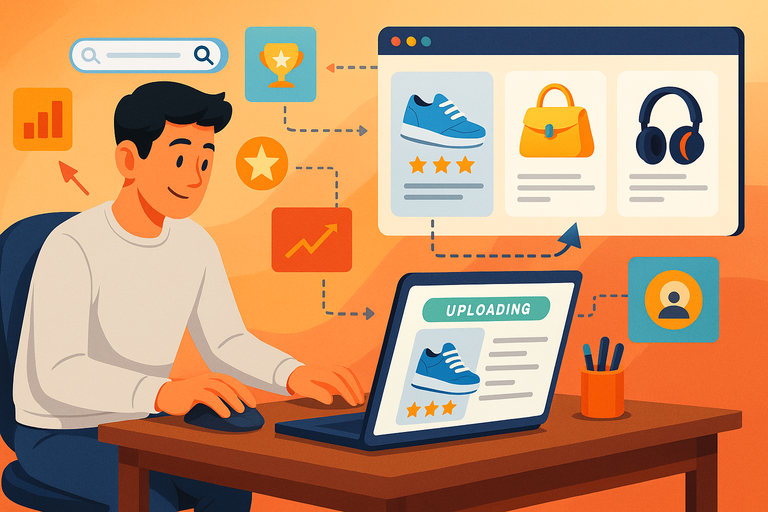
Finding and adding the right products is the engine of your dropshipping store.
You can use free tools to import, test, and optimize product performance before investing a single dollar.
Where to Find Free Product Import Tools for Dropshipping
A few standout tools help you import products directly into your store for free:
- DSers: The official AliExpress partner tool, lets you add products to Shopify or WooCommerce instantly.
- CJ Dropshipping: Lets you import products, manage inventory, and fulfill orders automatically without upfront fees.
- Wiio: Offers free sourcing and fulfillment, ideal for custom-branded items later.
- AutoDS (Free Trial): Automates pricing, tracking, and stock updates, which helps even when scaling.
Example setup: If you’re using Shopify, go to “Apps” → search “DSers” → click “Add app.” Once installed, link your AliExpress account, and you can add products with one click.
How to Test Products for Free Before Scaling Up
Testing is where you separate “potential winners” from time-wasters. You don’t need paid ads to test products—you can use organic reach.
Here’s how:
- Post organically on TikTok using the product. Create simple short videos showing how it works or solves a problem.
- Track engagement manually: If your videos get views, comments, or shares, that’s a sign your product has traction.
- Use free analytics tools like Google Analytics or Shopify’s built-in reports to see which products get the most clicks or add-to-carts.
One store I helped tested a $12 kitchen gadget with three TikTok videos and hit $600 in sales within two weeks—without spending on ads. Free testing can absolutely validate ideas if you commit to posting regularly.
Creating Product Descriptions That Drive Sales Organically
A well-written description can sell your product without a single ad.
Here’s a simple formula I recommend:
- Lead with a problem: “Tired of messy cables taking over your desk?”
- Show the solution: “This magnetic cable organizer keeps everything neat in seconds.”
- Highlight benefits over features: “No drilling, no glue—just snap and stick.”
- Include a mini call-to-action: “Get yours before our free shipping offer ends.”
You can use free SEO tools like Ubersuggest to sprinkle in search-friendly terms like “best cable organizer” or “minimalist desk accessories.” This helps your product pages rank on Google organically.
Promoting Your Dropshipping Store Without Paid Ads
You don’t need a marketing budget to grow your store—just consistency, creativity, and smart use of free channels.
Organic marketing works beautifully for beginners when done strategically.
Free Social Media Marketing Strategies That Work
Social media is your best free traffic source.
Here’s what I recommend focusing on:
- TikTok: Post short, fun videos showing your products in action. Authentic, low-production videos often outperform polished ads.
- Pinterest: Create boards around your niche and pin product images with links to your store. Pinterest drives long-term traffic.
- Instagram Reels: Repurpose your TikToks here to double your reach with zero extra effort.
Consistency matters more than perfection. Post daily or every other day, experiment with hashtags, and reply to comments. Over time, algorithms reward engagement and regular posting.
How to Use SEO to Drive Free Organic Traffic
Search engine optimization (SEO) is your invisible salesperson. It works quietly in the background to attract buyers searching for your products.
Here’s how to apply SEO for free:
- Research keywords using tools like Google Trends or Ubersuggest.
- Optimize product titles: Example: Instead of “Eco Bottle,” use “Reusable Eco-Friendly Water Bottle with Filter.”
- Write meta descriptions: Summarize what your page offers in under 160 characters to improve click-throughs.
- Add alt text to images: Helps with both accessibility and Google ranking.
I’ve seen new stores rank for low-competition keywords within 30 days simply by optimizing titles and descriptions properly.
Leveraging TikTok, Pinterest, and Instagram for Free Promotion
Each of these platforms has its own “sweet spot” for free exposure:
- TikTok: Post 2–3 videos daily showing your product’s use or transformation (before/after).
- Pinterest: Upload attractive product photos and link them to your store’s collections. Use keywords in pin titles.
- Instagram: Use Reels and Stories to show behind-the-scenes clips—like packaging or customer testimonials.
Here’s a small example workflow:
Record one 10-second video of your product → post it on TikTok → reuse it on Instagram → screenshot a still frame and pin it on Pinterest. That single piece of content now works across three platforms.
I believe in making your content do double (or triple) duty—because time is your real currency when you’re starting dropshipping for free.
Pro Tip: Consistency beats budget. If you post, optimize, and test daily, even with free tools, your results compound faster than you think. Each small improvement—whether it’s better SEO, a sharper video, or an optimized title—builds long-term profit without any paid ads.
Managing Orders and Customers Without Extra Costs
Once your store starts getting sales, managing orders and customer relationships efficiently becomes crucial.
You don’t need fancy software or paid services for this—free tools can automate much of the work and help you maintain a professional, trustworthy brand image.
Free Tools to Automate Dropshipping Orders
Automation saves time and eliminates human error. You can use a few free tools to simplify the process from order to delivery:
- DSers (Shopify or WooCommerce): This free AliExpress-integrated app automatically places orders, updates tracking numbers, and syncs product availability.
- CJ Dropshipping App: Once linked to your store, it handles order fulfillment, shipping, and customer notifications without manual input.
- AutoDS (Free Trial): Great for automating inventory and pricing updates so your listings stay accurate even if suppliers change their stock.
I recommend starting with DSers—it’s the most reliable for beginners and walks you through setup.
Once installed, go to your DSers dashboard, connect your Shopify store, and enable “Automatic Order Sync.” This way, every customer order triggers supplier fulfillment automatically.
How to Handle Customer Inquiries Professionally for Free
Good communication builds trust and repeat buyers. You don’t need a customer service team to handle it—just consistency, clarity, and the right tools.
- Use a shared inbox tool: Gmail with labels or Zoho Mail’s free plan works perfectly for tracking customer conversations.
- Set up autoresponders: In Shopify, go to “Settings” → “Notifications” → “Customer Notifications” to automate “order confirmed” or “item shipped” messages.
- Use free chat widgets: Tawk.to and Crisp Chat both offer free live chat tools you can embed on your store.
When replying, always keep your tone calm and helpful. A simple, empathetic message goes a long way:
“Hi [Customer Name], thanks for reaching out! Your order is currently in transit and should arrive by [date]. Here’s your tracking link: [link]. Let me know if there’s anything else I can help with.”
I believe the goal isn’t just solving the issue—it’s leaving the customer feeling heard.
Managing Refunds and Returns Without Hurting Profit Margins
Refunds are part of doing business, but managing them smartly ensures they don’t destroy your profits.
Here’s how to approach it:
- Set clear policies: On your site footer, include a “Refund & Returns” page with realistic timelines and conditions.
- Use supplier return policies: Most AliExpress or CJ Dropshipping sellers offer partial refunds for damaged or lost items—make sure to pass that on fairly to your customers.
- Offer store credit when possible: Instead of a full refund, propose a replacement or discount code to retain the customer.
I’ve found that transparency reduces refund disputes dramatically. For example, if you clearly state “Delivery may take 10–15 business days” before checkout, customers are more patient and understanding.
Maximizing Profit While Keeping Expenses at Zero
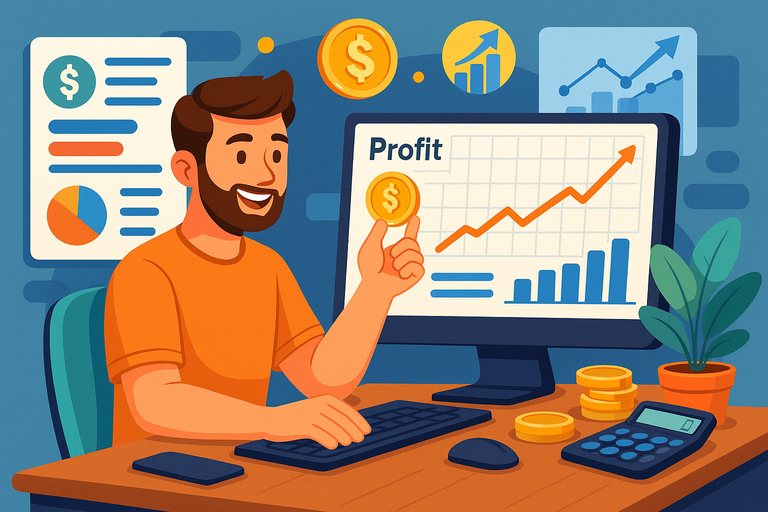
You can make real profits even with zero startup budget—it’s all about pricing smartly, tracking results, and avoiding costly mistakes that creep in unnoticed.
How to Price Products for Profit When Starting Free
Your profit margin is the difference between what you charge and what your supplier charges, minus transaction fees.
A simple formula I suggest:
Product cost + shipping cost + 20–30% buffer = retail price.
For instance, if your supplier price is $10 and shipping is $3, list it around $19.99 to $22.99. This covers transaction fees and still leaves room for profit.
Also, test psychological pricing—people respond better to prices ending in .99 or .95. A $24.99 price feels cheaper than $25, even though it’s only a few cents apart.
Using Free Analytics Tools to Track and Grow Revenue
Understanding your data is key to maximizing profits. You don’t need paid analytics tools—several free ones do the job beautifully:
- Google Analytics: Tracks traffic sources, conversion rates, and customer behavior.
- Shopify Analytics (Free Plan): Gives you sales reports and customer data.
- Hotjar (Free Plan): Shows heatmaps of where users click on your site so you can optimize layout.
- Ubersuggest: Free keyword tracking for product SEO performance.
For example, if Analytics shows most visitors leave before checkout, that’s your cue to simplify the cart process or add trust badges. I often advise checking metrics weekly—it’s the easiest way to spot profit leaks early.
Common Mistakes That Kill Profit in Free Dropshipping
Some mistakes quietly eat into your profit margins without you noticing:
- Overpricing low-value products: Customers compare prices easily; find your balance between value and affordability.
- Ignoring shipping times: Long wait times cause refund requests, which hurt margins.
- Neglecting organic marketing: Without consistent social posting or SEO, you’ll lose free traffic and rely on luck.
In my experience, focusing on quality over quantity—fewer but well-optimized products—leads to higher profits and fewer customer issues.
Scaling Your Free Dropshipping Business the Smart Way
Once you start generating consistent sales, it’s time to think about growth. The key is to scale without adding unnecessary costs.
When and How to Reinvest Earnings Strategically
Reinvesting your first earnings wisely determines how fast you grow.
I suggest splitting your profits this way:
- 50%: Reinvest into better tools or ads (once your store proves profitable).
- 30%: Keep for operational reserves (refunds, replacements).
- 20%: Save as profit or emergency fund.
Start small—maybe invest in a custom domain, a paid app like AutoDS, or even low-budget influencer marketing once you have momentum. Always make sure every dollar reinvested has a clear purpose.
Expanding Product Lines Without Paying Extra
Adding new products doesn’t have to cost you anything.
You can do it strategically by:
- Exploring related niches using CJ Dropshipping or AliExpress categories.
- Checking Google Trends for seasonal or complementary items.
- Adding “variants” like new colors or bundles (which use the same supplier base).
For example, if you sell reusable water bottles, consider adding accessories like bottle brushes or carry sleeves. You’re appealing to the same audience without extra supplier work.
Building Long-Term Brand Value on a Budget
Your brand is more than a logo—it’s the experience customers remember. You can strengthen it for free by:
- Creating a consistent tone on social media and emails.
- Using free design tools like Canva to maintain your store’s visual identity.
- Gathering customer reviews and showing them on your homepage.
I believe long-term success comes from trust. A brand that feels human, responsive, and authentic will always outperform a copy-paste store.
Expert Tips to Stay Competitive in Free Dropshipping
The dropshipping space moves fast, but with strategy and consistency, you can stay ahead of competitors without spending a fortune.
How to Build Customer Loyalty Without Spending Money
Customer retention is cheaper than acquiring new ones.
Focus on creating small, memorable experiences:
- Send a personalized thank-you email using Shopify’s free automation.
- Offer loyalty discounts or free gifts (even a digital guide related to your niche).
- Create a sense of community through your social media page or newsletter.
A simple message like, “Thanks for supporting small businesses!” can turn one-time buyers into repeat customers.
Staying Ahead of Market Trends Using Free Data Sources
Keeping up with what’s trending helps you adapt quickly.
Use these free data sources regularly:
- Google Trends: Spot rising keywords before competitors do.
- TikTok Creative Center: Find trending product categories and content ideas.
- Reddit Communities: See what people actually talk about (e.g., r/BuyItForLife or r/Dropship).
I check these every week—it’s an easy habit that keeps your product catalog fresh and relevant.
Turning Your Free Dropshipping Start Into a Sustainable Business
Eventually, your goal should shift from quick profits to long-term growth.
Here’s how:
- Automate more: Use tools like DSers and Shopify Flow as your volume increases.
- Build email lists: Use free tools like Mailchimp or Klaviyo (free tier) to nurture repeat customers.
- Expand responsibly: Reinvest profits only into what improves efficiency—like better branding or faster suppliers.
From what I’ve seen, the most successful dropshippers don’t chase trends—they build systems. By starting free, learning carefully, and improving steadily, your small store can evolve into a stable, sustainable online business.
Pro Tip: Consistency and small improvements outperform expensive shortcuts. Keep testing, learning, and refining your store every week. That’s how free dropshipping turns from a side hustle into a dependable source of income.

I’m Juxhin, the voice behind The Justifiable.
I’ve spent 6+ years building blogs, managing affiliate campaigns, and testing the messy world of online business. Here, I cut the fluff and share the strategies that actually move the needle — so you can build income that’s sustainable, not speculative.
Related posts:
 Affiliate Advertising vs. Dropshipping: Which One Wins?
 How to Start a Dropshipping Business in 5 Easy Steps
 Advantages of a Dropshipping Company: Genuine Business Knowledge
 How To Start A Dropshipping Business With No Money
 Dropshipping Guide: Build a Store That Actually Sells
 How to Make Money Dropshipping Without Huge Upfront Costs