
Table of Contents
Some links on The Justifiable are affiliate links, meaning we may earn a small commission at no extra cost to you. Read full disclaimer.
A freelance website developer can make or break your online presence, which is why choosing the right expert is such a big deal. The tricky part?
The internet is full of freelancers, but not all of them are equally skilled, reliable, or trustworthy. Where do you actually go to find a professional who delivers on time and knows what they’re doing?
That’s the question we’ll dig into, walking through the best platforms, strategies, and insights to help you connect with a trusted developer for your project.
Why Hire A Freelance Website Developer Instead Of An Agency
Hiring a freelance website developer can often be a smarter move than going through a full-blown agency.
Let me break down the biggest reasons why people make that choice and what it means for your project.
Cost Savings Without Compromising Quality
Agencies usually come with big overhead costs—office space, project managers, extra layers of staff. Those expenses get passed directly onto you in their pricing. A freelance website developer, on the other hand, works independently, so their rates are usually far more competitive.
That doesn’t mean you’re cutting corners. Many freelancers are seasoned pros who left agencies to work for themselves. You’re essentially getting the same level of technical expertise without paying for the middleman.
For example, I’ve seen small business owners save 40–60% on website builds by hiring a freelancer instead of an agency.
The real value is that you can scale your budget toward what matters most. Instead of paying $10,000 for “project management,” you could put that money into custom features, SEO optimization, or faster hosting.
With the right vetting, you’ll get quality work at a fraction of the cost.
Flexible Scheduling To Match Project Needs
Agencies often run on strict timelines and batch projects together, which can make you feel like you’re just one client in their queue.
Freelance developers typically offer more flexibility. They can work evenings, weekends, or on short bursts of sprints depending on your deadlines.
Say you suddenly realize your online store needs a holiday landing page up in a week. An agency might need two weeks just to slot you in.
A freelancer can often jump in immediately, and because you’re dealing directly with them, you can negotiate hours and delivery speed in real time.
It’s the difference between waiting in line at a big-box store and having a personal shopper at a boutique—it just feels more responsive.
Direct Communication And Collaboration Advantages
When you hire an agency, your messages usually pass through an account manager, then a project manager, then finally the developer. That chain can dilute your vision. With a freelance website developer, you talk directly with the person writing your code or designing your site.
This direct communication makes collaboration smoother. You can share screen recordings, hop on quick Zoom calls, or even chat over Slack.
If you’ve ever sent feedback like “make the logo pop more” and had it misunderstood, you’ll appreciate how quickly freelancers can adjust because you’re explaining it straight to them.
The collaboration often feels more human and less corporate. You’re not just another “account”—you’re building a working relationship that tends to be more personal and transparent.
Wider Access To Specialized Skill Sets
Agencies usually have a set stack of tools and frameworks they use, but freelancers often bring niche expertise. Need someone fluent in Shopify liquid coding?
Or a developer who knows advanced WordPress security hardening? You’ll often find freelancers specializing in exactly that.
Think of agencies like general hospitals—they can treat a wide range of conditions, but if you need a top heart surgeon, you’d go directly to the specialist.
The same applies here. A freelance website developer can bring in cutting-edge knowledge for the exact platform or feature you need.
This access also means you can build a “dream team” of freelancers for different roles—designer, front-end developer, SEO consultant—without locking into one agency’s limitations. It’s flexible, scalable, and gives you more control over the expertise you bring to your project.
Top Freelance Platforms To Find Trusted Website Developers
Now that we’ve looked at why freelancers can be a better option, the next big question is where to actually find them.
Here’s a breakdown of the most popular freelance platforms, plus insider tips to help you hire the right person instead of wasting time or money.
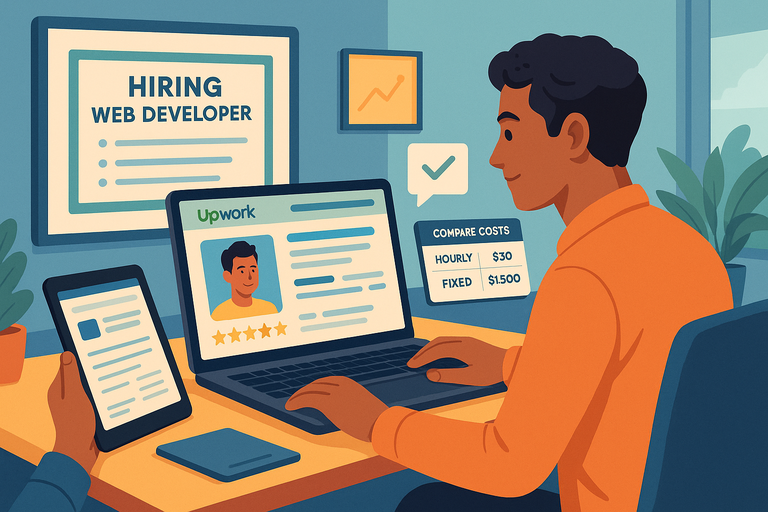
Upwork: How To Spot Verified And Skilled Developers
Upwork is one of the largest freelance marketplaces, and it’s full of talent—but also full of noise. The key is knowing how to filter.
Start by looking for freelancers with the “Top Rated” or “Top Rated Plus” badges. These developers have consistent high ratings, completed dozens of projects, and often maintain 90%+ job success rates.
Another shortcut is to check their hourly rate—seasoned developers usually charge between $40 and $100 per hour. If you see someone quoting $10 an hour, that’s often a red flag for inexperience.
One trick I recommend: Create a detailed job post that asks applicants to include a specific phrase in their proposal (like “banana pancakes”) to prove they actually read the description.
This filters out the copy-paste applications and leaves you with developers who care enough to follow instructions.
Upwork also offers escrow protection, meaning your money is safe until you approve the work. It’s an extra layer of security that makes the platform a great first stop.
Fiverr: Best Practices For Choosing The Right Gig Packages
Fiverr has grown beyond its “$5 gig” reputation and now offers serious professional services. The platform is especially good if you need smaller, well-defined tasks—like setting up WordPress, creating custom plugins, or designing a landing page.
The key is to read beyond the glossy gig titles. Scroll through the portfolio samples carefully. A strong freelance website developer will showcase live links to real websites, not just mockups.
Look for developers with high repeat client rates, as that’s often a stronger indicator of reliability than reviews alone.
I suggest starting with a smaller gig package to test the waters. For example, hire a developer to fix a plugin issue. If they nail that, you can then upgrade to a full website build. This keeps your risk low while testing both their technical skills and communication style.
Toptal: Finding Pre-Vetted Elite Developers For Complex Projects
If budget isn’t your main concern and you want top-tier talent, Toptal is worth exploring. They claim to only accept the top 3% of freelance talent, and the screening process backs that up.
Developers go through coding tests, live interviews, and even personality screenings before they’re allowed on the platform.
What this means for you: The developers are vetted, and you don’t have to wade through dozens of profiles to find someone good. The downside is cost—expect rates that start around $60 an hour and can easily go above $150.
Toptal is particularly valuable for complex builds, like SaaS platforms, custom e-commerce sites, or high-security applications. If you’re running a startup and need someone who can operate almost like a CTO, this is the place to go.
Freelancer.com: Tips For Navigating Bids And Proposals
Freelancer.com works on a bidding system, so you’ll often get a flood of proposals within minutes of posting a project. That can be overwhelming. The best strategy here is to focus on freelancers who tailor their proposals specifically to your project.
If the proposal is generic (“We are a team of experts ready to help…”), it’s usually a copy-paste template.
Check their completion rate—it shows how often they actually finish projects successfully. Aim for 90% or higher. I also recommend chatting with the developer directly before awarding the project.
Ask them how they’d approach your specific request. A skilled freelance website developer will give you a thoughtful answer, not just promise “100% satisfaction guaranteed.”
Freelancer.com is also strong for short-term contracts, but be prepared to spend more time vetting compared to curated platforms like Toptal.
PeoplePerHour: Matching With Developers For Short-Term Needs
PeoplePerHour connects clients with freelancers based on “Hourlies”—fixed-price offers for specific tasks. It’s a great platform if you need quick, one-off jobs like fixing site speed issues, adding e-commerce functionality, or migrating hosting.
What I like about PeoplePerHour is the matching system. You can post a project and get automatically paired with freelancers whose skills match your needs. This saves time compared to sifting through endless profiles.
One insider tip: Look for developers with “Cert” badges, which rank freelancers based on project success and responsiveness. Cert 5 and Cert 6 are top-level developers. Those badges aren’t just vanity—they actually help you filter out unreliable freelancers.
Pro tip: I recommend starting your search on Upwork or Fiverr to get a feel for pricing and quality, then moving to specialized platforms like Toptal or PeoplePerHour when you’re ready to scale or need niche expertise.
Niche Job Boards That Focus On Web Development Talent
Sometimes the best freelance website developer isn’t hanging out on general marketplaces like Upwork or Fiverr. If you want more serious professionals, niche job boards can be goldmines.
These platforms attract developers who are already invested in their craft and often filter out the casual or less experienced freelancers.
Authentic Jobs: Why It Attracts Experienced Web Professionals
Authentic Jobs has been around for years, and it’s built a reputation as a go-to place for creative and technical professionals. Developers who frequent this platform are often mid-to-senior level, with experience working for startups, agencies, and even big names.
If you’re looking for a freelance website developer who can handle projects like building a membership site or optimizing complex front-end frameworks, Authentic Jobs is a solid place to post.
The setup is simple: You create a detailed listing (the more specifics, the better), and your post goes live for freelancers to apply.
I’ve noticed that Authentic Jobs tends to attract applicants who care deeply about design as well as function. This is useful if you don’t just want a developer, but someone who understands user experience, accessibility, and responsive layouts.
It’s not the cheapest option for posting jobs, but the talent pool justifies the investment.
We Work Remotely: Global Talent For Long-Term Projects
We Work Remotely (WWR) is one of the largest job boards focused entirely on remote work. This isn’t just a gig site—it’s where companies and startups post long-term or recurring work opportunities.
If you’re hoping to build an ongoing relationship with a freelance website developer, WWR is ideal. Many developers here are looking for stable, consistent contracts rather than one-off tasks.
That means you’re more likely to find someone interested in becoming your go-to partner rather than a quick fix.
The platform also attracts a global audience. You can connect with talent from North America, Europe, Asia, and beyond. This gives you flexibility in pricing and time zones.
For instance, if you want someone who can update your site overnight while you sleep, hiring a developer in a different time zone can be a secret weapon.
Gun.io: Matching Startups With Vetted Freelance Developers
Gun.io is a bit different from traditional job boards. Instead of just posting a job and waiting, the platform vets developers for you. They claim to only accept about 10% of applicants, so you’re dealing with pre-screened professionals.
Here’s how it works: you share your project details with Gun.io, and they match you with developers who have the right skills. It’s kind of like having a recruiter, but focused specifically on tech talent.
The freelancers on Gun.io often have startup experience, which makes them particularly good at working in fast-paced, resource-limited environments.
If you’re a founder trying to build an MVP (minimum viable product) quickly, I recommend giving Gun.io a look. The pricing is higher than more open platforms, but you save time and reduce risk by avoiding endless vetting.
Codeable: A Dedicated Space For WordPress Development Experts
If your website runs on WordPress, Codeable is the place to go. Unlike general freelance platforms, Codeable is 100% dedicated to WordPress professionals.
Developers here specialize in everything from custom theme development to plugin troubleshooting and WooCommerce optimization.
I’ve personally found Codeable useful when clients needed advanced WordPress tweaks—like scaling a site to handle sudden traffic spikes or integrating complex third-party APIs.
The beauty of Codeable is that you don’t deal with a race-to-the-bottom bidding system. Instead, you describe your project, and Codeable assigns a fixed price based on the scope. Only vetted experts apply, which saves you from sifting through amateurs.
If WordPress is central to your business, this platform ensures you’re working with people who live and breathe it.
Networking Strategies To Discover Reliable Freelance Developers
Sometimes the best way to find a freelance website developer isn’t through job boards or platforms at all—it’s through people and communities you already trust.
Networking often leads to stronger, longer-lasting relationships because referrals carry credibility.
Using LinkedIn Connections To Vet Developer Portfolios
LinkedIn can be more than a digital résumé—it’s a powerful networking tool for finding freelancers. Here’s what I suggest:
- Search for “freelance website developer” in your network.
- Filter results by “Connections” or “2nd Degree Connections.”
- Browse their portfolios directly from their profiles.
What makes LinkedIn valuable is the social proof. You can see mutual connections and even ask those people about their experiences.
For example, if a friend of yours worked with a developer, you can message them and ask, “How was their communication? Did they meet deadlines?” That kind of real-world feedback is often more honest than polished testimonials on freelance sites.
Leveraging Online Communities And Tech Forums For Referrals
Communities like Reddit (r/webdev), Indie Hackers, and specialized Slack or Discord groups are hidden gems for referrals. Developers often hang out in these spaces to share tips, showcase projects, or answer technical questions.
Instead of posting “I need a freelance website developer,” I recommend starting by engaging with the community. Ask for advice about a project problem, and you’ll naturally come across developers offering helpful insights. That’s how you spot people who genuinely know their stuff.
A real-world example: I once saw a small e-commerce founder post about cart abandonment issues on a community forum. Within hours, a freelance developer jumped in with a step-by-step fix. The founder ended up hiring them on the spot.
How Local Meetups And Tech Events Lead To Long-Term Partnerships
Local meetups and events—like WordCamps, startup weekends, or city-based tech meetups—are fantastic for meeting developers in person. Even if you’re not technical, just showing up and networking can put you in touch with freelancers looking for projects.
The advantage here is face-to-face trust. A 15-minute chat over coffee can give you more confidence in someone than hours of online vetting. Plus, these events often attract people who are serious about growing in their field, not just chasing the next quick gig.
I advise keeping business cards or a simple pitch about your project handy. If you meet someone who clicks with your vision, you can move the conversation forward right there.
Building Trust Through Developer Recommendations From Peers
Sometimes the simplest strategy is the most powerful: ask your peers. Other business owners, colleagues, or friends who’ve worked with freelance developers can often point you toward someone reliable.
The benefit of referrals is that they come pre-vetted. If your trusted colleague had a great experience, chances are you will too. I’ve seen this work countless times—business owners who got burned by flaky freelancers finally landed the right developer through a friend’s recommendation.
If you’re stuck, try posting on your personal social media with a simple ask: “Looking for a freelance website developer for a new project—any recommendations?” You’d be surprised how many quality leads can come just from your immediate circle.
Pro tip: Networking strategies might take longer than posting on a freelance platform, but they often lead to stronger partnerships. A developer found through a trusted referral is far more likely to stick around for future projects than someone you randomly hire from a massive pool.
Red Flags To Watch Out For When Hiring Freelancers
When you’re searching for a freelance website developer, it’s not just about spotting the right person—it’s about avoiding the wrong one.
I’ve seen too many projects fall apart because the warning signs were ignored. Here are the big red flags that should make you pause.
Unrealistic Pricing That Seems Too Good To Be True
If a developer offers to build you a “full e-commerce website with unlimited features” for $50, run. Quality development takes time and skill, and professionals charge accordingly.
The danger of going with ultra-cheap freelancers is hidden costs: sloppy code, unfinished work, or a site that crashes the first time it faces traffic. You’ll often end up hiring another developer to clean up the mess, which costs more in the long run.
I believe pricing should make sense for the project scope. For example, a basic WordPress site might reasonably range between $500–$2,000 depending on complexity. Anything drastically below that should set off alarms.
Poor Or Generic Portfolios With No Case Studies
A solid freelance website developer should proudly showcase their past work. If their portfolio is sparse, generic, or full of stock templates, it usually means a lack of real-world experience.
Don’t just skim screenshots—ask for live links to actual websites. Even better, request a quick breakdown of what they specifically did on those projects. Did they handle the full build, or just tweak a theme?
From my experience, a good portfolio tells a story. It shows diversity—maybe a restaurant site, an online store, a blog. That’s how you know they can adapt to different industries and needs.
Limited Communication Or Delayed Responses
If a freelancer takes three days to respond during the hiring phase, imagine what it’ll be like once the project starts. Communication is a skill, not an afterthought.
One trick I use is to test responsiveness early. Send them a detailed message and see how long they take to reply and how thorough their response is. A professional developer will usually acknowledge your message quickly, even if they need more time for a detailed answer.
When communication breaks down, deadlines slip, revisions pile up, and stress levels skyrocket. That’s why I always prioritize developers who are proactive communicators.
Inconsistent Reviews Across Platforms
If you see glowing reviews on one platform but terrible ones elsewhere, that’s a major red flag. It suggests the developer might be cherry-picking where they operate, or worse, padding reviews.
Pay attention to patterns in reviews. A single bad review isn’t a dealbreaker, but repeated complaints about missed deadlines or poor quality should make you reconsider.
I like to compare feedback across multiple places—Upwork, LinkedIn recommendations, and even social proof on personal websites. Consistency across platforms usually means you’re dealing with a reliable professional.
How To Evaluate A Freelance Website Developer Before Hiring
Once you’ve narrowed your list of candidates, it’s time to put them through a proper evaluation.
Think of it like test-driving a car before you buy—it’s the only way to see how well they’ll perform for your specific needs.
Reviewing Past Projects For Design And Functionality Fit
The best predictor of future work is past work. I recommend digging into their portfolio not just for design but also for functionality.
- Is the site responsive on mobile?
- Does it load quickly?
- Are the navigation and user flow smooth?
I once evaluated a developer who had gorgeous designs, but when I tested the sites on mobile, half the buttons didn’t work. That’s why you should interact with the sites like a real user, not just admire the visuals.
Conducting Paid Test Tasks To Gauge Real Skills
I’m a big believer in small paid test projects. Instead of committing thousands upfront, give the freelancer a bite-sized task—like fixing a plugin conflict or building a single landing page.
This does two things: it shows you their technical skills under real conditions, and it reveals their workflow and communication style. Paying for the test ensures they take it seriously, and it gives you peace of mind that you’re not wasting your time.
I suggest keeping these tasks under $100–$200 and clearly outlining expectations. It’s a small investment to avoid a costly mistake later.
Asking The Right Technical And Process Questions
Interviews aren’t just for full-time jobs. Asking smart questions helps you gauge how well a developer thinks and works. For example:
- “How do you approach optimizing site speed?”
- “What tools do you use to manage revisions?”
- “How do you handle unexpected scope changes?”
The answers will show you whether they’re problem-solvers or just code executors. In my experience, the best freelancers explain technical solutions in simple language. If they drown you in jargon without clarity, it’s a warning sign.
Checking Client Testimonials Beyond The Platform
Don’t stop at the reviews you see on Upwork or Fiverr. Ask if they have clients you can contact directly for references.
A quick email exchange with a past client can reveal things reviews don’t mention—like whether the freelancer was reliable months after launch for maintenance.
Trust is built through consistency. If multiple clients independently praise their professionalism, you can feel confident you’ve found a strong candidate.
Best Practices For Working Successfully With Freelance Developers
Hiring a great freelance website developer is only the first step. To get the most out of the relationship, you need systems and habits that keep things smooth and stress-free.
Setting Clear Deliverables And Milestones Early On
Ambiguity is the enemy of progress. I always recommend creating a clear roadmap at the start. Break the project into milestones—for example:
- Wireframes and design mockups
- Initial site build
- Content integration
- Testing and revisions
- Final launch
Each milestone should have specific deliverables and deadlines. This structure helps you track progress and gives the freelancer a sense of accountability. It also makes payments smoother if you’re releasing funds per milestone.
Using Collaboration Tools To Stay Organized
Email alone is a recipe for lost messages. I suggest using tools like Trello, Asana, or ClickUp to organize tasks. For real-time communication, Slack or even WhatsApp works wonders.
For example, I once worked with a developer where we set up Trello boards labeled “To Do,” “In Progress,” and “Completed.” It made it easy to see exactly where the project stood at a glance.
When everything is centralized, you save hours of back-and-forth and avoid the dreaded “I thought you meant…” moments.
Creating Contracts To Protect Both Parties
A handshake agreement might sound friendly, but it leaves you vulnerable. Always put terms in writing—scope of work, timelines, payment structure, and what happens if either party needs to end the project early.
Even a simple one-page contract can save you from disputes. Freelancers often appreciate contracts too, because it protects their time and ensures they get paid fairly.
I advise including clauses about ownership rights, so you’re not left wondering who actually “owns” the code or design after the project is complete.
Maintaining Long-Term Relationships For Future Projects
The best freelancers become long-term partners. If you find someone who delivers quality work, treat them well. Pay promptly, give clear feedback, and acknowledge their efforts.
I’ve seen businesses thrive simply because they had a trusted developer on call for years. It’s like having your own tech department, but without the overhead. Building that kind of relationship can save you from starting the stressful hiring process all over again.
Pro tip: Think of working with a freelance website developer as building a partnership, not just buying a service. When you invest in the relationship, you get not only a great website but also a reliable ally for your business growth.
Alternative Options Beyond Traditional Freelance Platforms
Not every great freelance website developer is sitting on Upwork or Fiverr. Some of the best talent is tucked away in alternative places where you can find unique advantages depending on your project needs.
Exploring Agency-Freelancer Hybrids For More Support
There’s a growing trend of small hybrid agencies—teams of freelancers who band together under one umbrella. You get the agility of freelancers with the structured support of an agency.
Here’s how it works: Instead of hiring one developer, you hire a small team. Maybe it’s a freelance developer, a designer, and a copywriter who regularly collaborate. They’re independent contractors, but because they’ve worked together before, the handoffs are smoother.
This setup is great for bigger projects like e-commerce stores or membership sites where multiple skills are needed. You still avoid the heavy overhead of a traditional agency while getting a more holistic service.
I’ve worked with hybrid teams where the developer handled code, the designer handled branding, and I only had to coordinate with one point of contact. It was faster and less stressful than juggling separate freelancers.
Hiring Through University Job Boards For Fresh Talent
If you’re on a tight budget but willing to train or mentor, university job boards can be a hidden gem. Many computer science or digital design departments post freelance and internship opportunities.
Students and recent graduates are often hungry for real-world projects. While they may not have the polish of a seasoned freelance website developer, they bring enthusiasm and fresh ideas. I once hired a student to build a small microsite for under $300. He overdelivered, and it became a stepping stone for his career.
Of course, the trade-off is experience. You’ll need to provide more guidance and possibly accept slower turnaround times. But if your project is low-risk and you’re open to mentoring, it can be a cost-effective option.
Considering Developer Marketplaces Built For Startups
Platforms like AngelList (now Wellfound) or niche startup-focused networks often have developers who specialize in early-stage projects. These aren’t your typical “gig” freelancers—they’re people who understand the scrappy, MVP-first mindset.
If you’re building something like a SaaS tool or an app prototype, these marketplaces can connect you with developers who’ve been there before. Some even offer equity-based arrangements, where a freelance website developer is willing to work at a reduced rate in exchange for a small stake in your company.
It’s not for everyone, but for founders who need more than just code—for example, strategic input and product vision—startup-focused marketplaces can be a powerful alternative.
What To Expect In Terms Of Pricing And Project Timelines
Money and time are usually the two biggest questions when hiring a freelance website developer. The truth is, pricing and timelines vary widely, but you can still set realistic expectations if you know the benchmarks.
Common Hourly Rates For Freelance Developers By Experience
Hourly rates usually depend on skill, location, and specialization. Here’s a rough breakdown:
- Beginner (0–2 years): $15–$30/hour
- Intermediate (3–5 years): $30–$60/hour
- Advanced (5+ years): $60–$100/hour
- Specialist (e.g., Shopify, React, custom WordPress): $100–$150+/hour
From my experience, paying a bit more upfront for a skilled developer almost always saves you money. A $25/hour beginner might take 20 hours to fix a problem, while a $100/hour expert solves it in 2 hours—and it’s done right the first time.
Typical Project Timelines For Websites Of Different Complexity
Project length is tied to scope. To give you an idea:
- Simple landing page: 1–2 weeks
- Small business site (5–10 pages): 3–5 weeks
- E-commerce site with 50 products: 6–10 weeks
- Custom web application: 3–6 months
Timelines stretch if feedback is slow or the project scope changes. That’s why I always recommend agreeing on milestones upfront—so both sides know what to expect.
Budgeting For Ongoing Maintenance After Launch
A mistake I see often is people budgeting only for the build, not the upkeep. Websites are living things—they need updates, bug fixes, and security patches.
A safe rule of thumb: set aside 10–20% of your initial project budget for yearly maintenance. For example, if your site costs $5,000 to build, plan for around $500–$1,000 per year to keep it running smoothly.
I advise negotiating a maintenance package with your freelance website developer from the start. It’s usually cheaper and easier than scrambling to find help when something breaks six months later.
Pro Tips To Secure The Best Freelance Website Developer For You
Finding the right developer isn’t just luck—it’s about setting yourself up for success with a few smart moves. These pro tips can help you avoid headaches and build a strong, long-term relationship.
Balancing Budget With Long-Term Value In Hiring Decisions
It’s tempting to go with the cheapest option, but I suggest thinking about value instead of just cost. A more expensive developer who writes clean, scalable code saves you from paying double later when you need fixes or upgrades.
Ask yourself: Will this person’s work support my business for the next 3–5 years, or will I be rebuilding in 12 months? If the answer leans toward the latter, it’s worth investing more upfront.
Testing Communication And Problem-Solving During Early Stages
Technical skills are important, but how a developer communicates and handles problems is just as critical. That’s why I always test this early.
For example, assign a small task and throw in a curveball, like changing the requirements halfway through. See how they respond.
Do they get defensive, or do they adapt and propose solutions? A strong freelance website developer stays calm, asks clarifying questions, and explains trade-offs clearly.
This is the kind of insight you can’t get from a portfolio alone.
Building A Talent Pool Instead Of Relying On Just One Freelancer
Relying on a single developer for everything can backfire if they get sick, move on, or get too busy. I recommend building a small network of trusted freelancers with complementary skills.
Think of it like your personal “mini-agency.” Maybe one developer is your go-to for WordPress, another for custom coding, and another for emergency fixes. That way, you’re never stuck when timelines shift or availability dries up.
Over time, this talent pool becomes one of your business’s most valuable assets. You’ll have reliable professionals you can call on for almost any web-related challenge.
Pro tip: Hiring the right freelance website developer isn’t just about getting a website built—it’s about building relationships that support your business long-term. Treat your developers as partners, and they’ll often go the extra mile to make your project shine.

I’m Juxhin, the voice behind The Justifiable.
I’ve spent 6+ years building blogs, managing affiliate campaigns, and testing the messy world of online business. Here, I cut the fluff and share the strategies that actually move the needle — so you can build income that’s sustainable, not speculative.
Related posts:
 Hire Freelance Web Developer for Custom Websites That Convert
 How to Hire Web Developer Without Blowing Your Budget
 The Benefits of Hiring a Freelance PHP Developer
 10 Smart Questions to Ask a Freelancer for Website Development
 How to Hire an Upwork Web Developer Without Overpaying
 Python Freelance Jobs Where to Land High-Paying Projects