
Table of Contents
Some links on The Justifiable are affiliate links, meaning we may earn a small commission at no extra cost to you. Read full disclaimer.
Automotive marketing solutions can make or break how fast car dealerships turn interest into actual sales. With the competition accelerating across both local lots and online platforms, having the right strategies in place is non-negotiable.
But what specific marketing solutions help car businesses attract qualified buyers, boost test drives, and close deals faster?
This guide breaks down the most effective, data-driven methods that dealerships and auto brands can use right now to drive measurable sales growth.
Build a Strong Automotive Marketing Foundation
A solid marketing foundation keeps your dealership visible where buyers are already searching.
I’ve seen even small dealers compete with national brands by mastering the basics—local SEO, optimized profiles, and search-intent-driven pages.
Leverage Local SEO for Dealership Visibility
Local SEO is what helps your dealership appear when someone searches “car dealerships near me” or “buy used Honda in [city name].” You can do this by optimizing your website and listings for geographic relevance.
- Use location-based keywords like “new Toyota dealer in Austin.” Include them in your homepage title, meta description, and headers.
- Build local backlinks from auto repair shops, car review blogs, and community event sites.
- Embed Google Maps on your contact page and ensure your name, address, and phone number (NAP) are consistent across the web.
I recommend using tools like Moz Local or BrightLocal to monitor local citations and fix inconsistencies that might affect your ranking.
Optimize Google Business Profile for Test Drive Conversions
Your Google Business Profile (GBP) is often the first impression of your dealership. Think of it as your digital showroom.
- Add high-quality photos of vehicles, interiors, and your lot.
- Use posts to promote limited-time deals and upcoming events.
- Enable the “Book a Test Drive” button directly in GBP. You can do this by connecting your scheduling link (e.g., Calendly or TimeTap).
I’ve seen dealerships boost test drive bookings by up to 40% just by regularly updating their GBP posts and replying to reviews promptly.
Create Landing Pages for Each Car Model and Location
Instead of one generic inventory page, create dedicated landing pages.
For example:
- “2025 Toyota Camry for Sale in Dallas”
- “Certified Pre-Owned Ford Trucks in Denver”
Each page should include:
- SEO-optimized headings with model + location
- Photos, specs, and financing options
- Clear CTAs like “Schedule a Test Drive” or “Get Financing Quote”
Tools like WordPress + Elementor make this easy—you can duplicate and modify templates per model to save time.
Use Automotive Keywords with Purchase Intent
Focus on transactional keywords that signal readiness to buy, such as:
- “lease new Nissan Altima”
- “used SUVs under $20,000 near me”
- “0% APR car deals [city]”
Avoid wasting budget on broad terms like “car reviews” unless you’re also nurturing leads with blog content.
I suggest using SEMrush to track keyword difficulty and search intent before targeting them.
Use Paid Advertising That Converts Fast
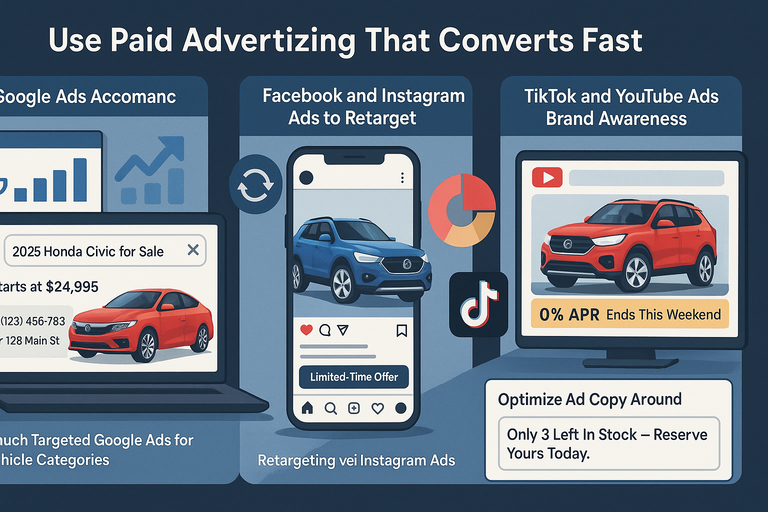
Paid ads help you capture buyers at the decision-making stage. With the right targeting and ad copy, you can convert leads faster than relying on organic traffic alone.
Launch Targeted Google Ads for Vehicle Categories
Google Ads allows you to target people searching for exact car makes and models.
Set up Search Campaigns with:
- Keywords like “buy 2025 Honda Civic” or “best SUV lease deals”
- Ad extensions showing price, phone number, and dealership address
- A dedicated landing page per vehicle category
I advise starting with a daily budget of around $30–$50 per ad group to collect data, then increase spend on top-performing keywords.
Use Facebook and Instagram Ads to Retarget Interested Buyers
Retargeting ads remind people who visited your site but didn’t convert. You can set them up easily through Meta Ads Manager:
- Target visitors who viewed vehicle detail pages
- Show dynamic ads displaying the same car they viewed
- Include limited-time offers or financing options
These visual ads are perfect for showing off car interiors and deals. I’ve seen retargeting alone increase dealership conversions by 25–35%.
Experiment with TikTok and YouTube Ads for Brand Awareness
Short-form videos build recognition and trust. Showcase behind-the-scenes dealership moments, vehicle features, or real customer testimonials.
- TikTok: Use trending sounds to promote “just arrived” vehicles.
- YouTube: Run pre-roll ads targeting local users watching car reviews.
Keep videos under 15 seconds with captions and a visible call-to-action like “Book Your Test Drive.”
Optimize Ad Copy Around Urgency and Special Offers
Car buyers act fast when they see urgency. Use phrases like:
- “Ends This Weekend: 0% APR on All SUVs!”
- “Only 3 Left In Stock – Reserve Yours Today.”
Pair urgency with benefit-driven copy—highlight value, warranty, and easy financing. Always A/B test two versions of each ad to find what resonates best.
Strengthen Automotive Email Marketing Campaigns
Email marketing still drives impressive ROI for dealerships when done right.
Personalization and automation can nurture leads until they’re ready to buy.
Segment Leads by Buyer Intent and Car Type
Don’t send the same email to everyone. Instead, divide your list into:
- Hot leads: Ready to buy now
- Warm leads: Researching options
- Cold leads: Past customers or inactive prospects
You can use CRM tools like Freshsales or Activecampaign to automatically segment based on actions—like viewing certain models or opening past emails.
Personalize Email Templates with Dynamic Vehicle Data
Use merge tags to include personalized details such as:
- “We noticed you viewed the 2024 Ford Explorer—take it for a test drive today!”
- “Only 2 of your selected models remain in stock.”
Dynamic content, when synced with your inventory system, makes every message feel hand-written.
Use Automated Drip Campaigns to Nurture Cold Leads
Set up 3–5 email sequences that gradually re-engage leads over a few weeks.
Example flow:
- Reintroduce your dealership and current offers.
- Showcase top-rated models with customer reviews.
- Offer a limited-time discount or service coupon.
These campaigns work quietly in the background, turning cold leads warm again.
Highlight Trade-In Offers and Financing Options
Trade-in programs attract hesitant buyers. Send personalized trade-in value estimates through email.
For instance:
- “Your 2020 Toyota Corolla could be worth up to $12,500 toward your next purchase.”
Also, spotlight financing promotions like 0% APR or no down payment options. This kind of messaging removes friction and encourages test drive bookings.
Implement High-Converting Automotive Website Strategies
Your website is more than just a digital brochure—it’s your most powerful sales tool.
The best automotive marketing solutions always start with optimizing how fast, responsive, and helpful your website feels for potential buyers.
Optimize Site Speed and Mobile Experience
Most car shoppers start their search on mobile. If your site takes more than three seconds to load, you risk losing nearly half your visitors.
I suggest using Google PageSpeed Insights to identify issues that slow down your website—like large image files or unnecessary plugins.
Quick ways to improve speed:
- Compress images with tools like TinyPNG or ShortPixel.
- Use a reliable hosting provider such as SiteGround or WP Engine.
- Implement lazy loading so images appear only when scrolled into view.
Equally important is mobile responsiveness. Test your website across multiple devices—tablets, iPhones, and Androids.
Buttons should be large enough to tap easily, and call-to-action (CTA) sections like “Book a Test Drive” should remain visible without endless scrolling.
I’ve seen dealerships increase on-site conversions by up to 30% after improving mobile load speed and navigation structure alone.
Integrate Real-Time Inventory and Pricing Updates
Car buyers want accurate, up-to-the-minute information. Outdated inventory listings erode trust.
By integrating your site with your dealership’s inventory management system, you can display real-time availability, pricing, and financing details automatically.
For example:
- Use APIs from systems like Dealer.com, VinSolutions, or Reynolds and Reynolds to sync listings.
- Show dynamic labels like “New Arrival” or “Sold” to create urgency.
This transparency builds confidence and saves your sales team hours of manual updates. I believe the more frictionless your digital experience, the easier it becomes for prospects to move from browsing to booking.
Add Interactive Tools Like Payment Calculators and 360-Views
Interactive elements keep visitors engaged longer, signaling trust to both users and Google’s algorithm.
- Payment Calculators: Let users estimate their monthly payment based on down payment, loan term, and credit score. This transforms vague interest into actionable intent.
- 360-Degree Vehicle Views: Platforms like Monday allow you to embed high-quality panoramic car views, helping buyers visualize their potential purchase from every angle.
Dealerships that add these features often see a 25–40% boost in lead form submissions. Engagement tools make your website feel alive—and buyers notice.
Include Chatbots for Instant Lead Capture
Chatbots are like 24/7 digital sales reps. When a visitor lands on your site, an automated message such as “Hi! Want to check our latest SUV offers?” instantly opens communication.
You can use automotive-focused tools like ManyChat or Drift to automate conversations, qualify leads, and schedule test drives. Always set up your chatbot to collect name, contact info, and vehicle interest before routing the conversation to your sales team.
The goal isn’t just automation—it’s responsiveness. I’ve seen dealerships cut response time from hours to seconds, dramatically increasing lead conversion rates.
Boost Lead Generation with Social Media Marketing
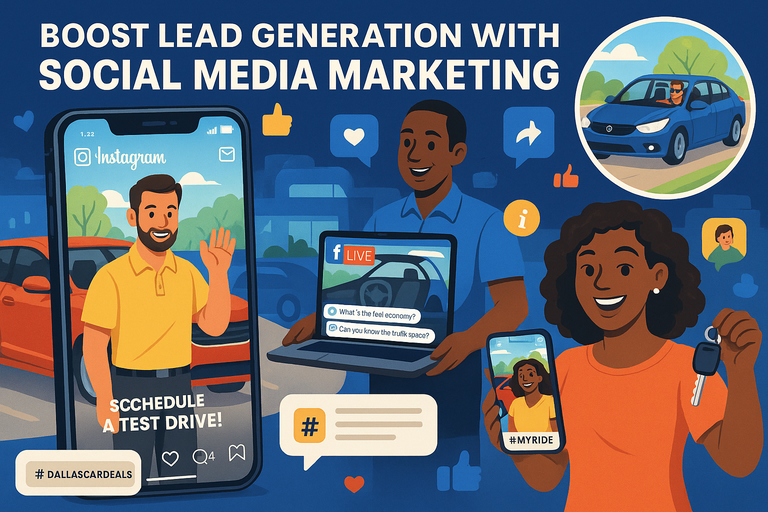
Social media is where car buyers hang out, research, and compare brands before visiting a dealership.
The right content can turn casual scrollers into serious buyers fast.
Use Instagram Reels to Showcase New Arrivals
Instagram Reels get far more reach than static posts. Create 10–20 second clips that highlight new arrivals, feature upgrades, or quick dealership tours.
Keep the tone casual, and include captions like “Tap the link to schedule a test drive!”
Tip: Post consistently and use local hashtags such as #DallasCarDeals or #BuySUVsAustin to attract local traffic. I recommend tracking engagement in Meta Business Suite to see which Reels drive the most inquiries.
Host Live Walkthroughs of Vehicles on Facebook
Facebook Live is an underrated sales channel. You can walk viewers through vehicle interiors, answer questions in real-time, and even showcase special discounts.
- Schedule a weekly “Live Test Drive” session.
- Encourage viewers to comment questions like “What’s the fuel economy?” or “Can you show the trunk space?”
- Save your live videos to your page for future viewers.
It’s a great way to create authentic engagement while showing off your dealership’s personality.
Partner with Local Influencers to Build Trust
Influencer marketing works best when it feels genuine. Instead of big-name celebrities, collaborate with local lifestyle creators or automotive vloggers.
Example: A local influencer could film a “Weekend Road Trip in the New Hyundai Tucson” sponsored by your dealership. This kind of collaboration builds trust and local visibility.
Negotiate deals where influencers create video content you can repurpose for ads or website embeds. It’s a win-win strategy that feels organic and community-driven.
Encourage User-Generated Content with Hashtag Campaigns
Buyers trust real customers more than polished marketing. Encourage happy customers to post photos or short videos with their new vehicles using a custom hashtag.
For instance: #MyRideFromABCmotors or #DriveHappyWith[DealershipName]. Offer small incentives—like free car washes or oil changes—to encourage participation.
Then, share these posts on your official social pages and website. This type of content amplifies credibility and builds emotional connection with your audience.
Improve Dealership Reputation Through Reviews and Trust Signals
Your online reputation can either attract or repel potential buyers.
Most customers read at least ten reviews before choosing a dealership, which makes reputation management non-negotiable.
Automate Review Requests After Vehicle Purchase
Don’t wait for customers to leave reviews on their own. Automate the process. Tools like Podium and Birdeye can send review requests via text or email immediately after purchase.
Include links directly to Google Reviews, Facebook, or DealerRater to simplify the process. I suggest adding a friendly personal message such as, “We’d love to hear how your new car is treating you!”
Dealerships that automate this process often see review volume triple within months—instantly improving visibility and SEO rankings.
Respond Professionally to Both Positive and Negative Feedback
How you respond matters more than the review itself. Always thank happy customers for their feedback and invite them to return for maintenance or upgrades.
For negative reviews:
- Respond calmly within 24 hours.
- Acknowledge the issue and offer a solution publicly.
- Move detailed discussions to private channels.
A professional, empathetic tone shows future buyers that your dealership values customer care. I’ve seen poor reviews turn into glowing ones after genuine responses.
Display Reviews Prominently on the Homepage
Don’t bury reviews deep within your site. Use widgets or plugins like Trustpilot, Google Reviews Embed, or Yotpo to display testimonials right on your homepage and vehicle pages.
Highlight average star ratings and customer satisfaction percentages. For example, “Rated 4.8/5 by over 600 happy drivers in [city name].” These social proofs dramatically increase buyer confidence and drive higher conversion rates.
Use Video Testimonials to Build Credibility
Written reviews are powerful, but video testimonials hit harder. Record short clips of customers picking up their new cars or sharing their experience in your dealership.
Keep them authentic—no scripts, no forced emotion. Post these videos on your website, YouTube channel, and even in retargeting ads.
Video reviews humanize your brand and establish genuine trust faster than any headline claim could. I believe this is one of the most underrated ways to build authority in automotive marketing.
Apply Data-Driven Automotive Marketing Solutions
The smartest dealerships today rely on data to make decisions, not assumptions.
Data-driven automotive marketing solutions help you understand exactly where leads come from, which ads convert, and what your customers are most likely to buy next.
Use Google Analytics and CRM Data to Track Buyer Journeys
Every click, page view, and form submission tells a story. By connecting Google Analytics 4 (GA4) with your CRM system—such as VinSolutions —you can see a complete view of how potential buyers move from browsing to booking.
Here’s how to make it practical:
- Set up custom events in GA4 to track actions like “Book a Test Drive” or “Get Financing Quote.”
- Integrate CRM data to identify which marketing channels (Google Ads, Facebook, email) drive the highest-quality leads.
- Analyze session duration and bounce rate to understand where visitors lose interest.
I recommend checking your analytics weekly. A dealership I worked with discovered their truck inventory page had a 60% higher exit rate.
They restructured the layout and cut that rate in half—simply because the data made the problem visible.
Segment Ad Audiences Based on High-Intent Behavior
Not all traffic is equal. Data lets you segment audiences by behavior—turning random browsers into tailored ad groups.
For example:
- Users who viewed pricing pages can be shown limited-time financing offers.
- Repeat visitors to SUV listings can see new inventory updates.
- Shoppers who abandoned lead forms can receive retargeting ads with service discounts.
Using Meta Ads Manager or Google Ads Audience Insights, you can build these segments in just a few clicks. This precision saves you money and improves conversion rates dramatically.
Monitor Conversion Rates and Adjust Campaign Budgets
A campaign without data tracking is like driving blindfolded. I believe every dealership should track at least three core metrics weekly:
- Cost per lead (CPL) – How much you’re paying per qualified contact.
- Conversion rate (CVR) – The percentage of visitors who turn into leads or buyers.
- Return on ad spend (ROAS) – The revenue generated from every dollar spent on ads.
If you notice one ad set generating higher CPL, reduce its budget and shift that spend to better-performing campaigns.
Tools like Google Looker Studio make these metrics easy to visualize in dashboard form.
Leverage Predictive Analytics to Forecast Seasonal Demand
Predictive analytics uses historical data to anticipate future buying patterns. For instance, you can forecast higher truck sales in spring or SUV demand before winter.
Use AI-powered CRMs or analytics platforms like Tableau and HubSpot’s predictive lead scoring to forecast:
- Inventory demand spikes
- Service department bookings
- Seasonal campaign opportunities
I’ve seen dealerships use this approach to prepare their ad campaigns weeks in advance, securing higher margins and inventory turnover when the season peaks.
Drive More Sales with Video and Content Marketing
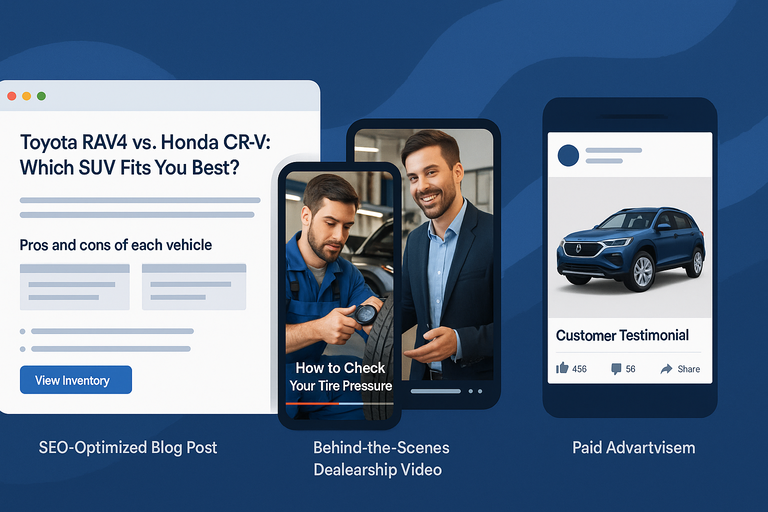
Video and content marketing turn curiosity into connection.
When done right, they educate, build trust, and keep your dealership top-of-mind even when buyers aren’t ready to purchase yet.
Create SEO-Optimized Blog Posts About Vehicle Comparisons
People love comparing models before visiting a showroom. Writing SEO-focused articles like “Toyota RAV4 vs. Honda CR-V: Which SUV Fits You Best?” captures this search intent early.
Structure your post with:
- A quick summary comparison table
- Pros and cons of each vehicle
- A CTA linking to available inventory
Use tools like Surfer SEO or Clearscope to optimize readability and keyword placement. These posts don’t just drive traffic—they position your dealership as a trusted automotive authority.
Use YouTube Tutorials on Car Maintenance to Build Authority
Educational content builds long-term credibility. Record short tutorials such as “How to Check Your Tire Pressure” or “When to Replace Brake Pads.”
Keep them under five minutes and film using a smartphone tripod. End each video with a light pitch: “If you’re nearby, our service team can handle it for you.”
This kind of approachable, helpful content builds brand loyalty and generates consistent organic reach without a huge ad spend.
Post Behind-the-Scenes Dealership Videos for Transparency
People buy from people, not faceless brands. Share authentic moments—introduce your sales team, walk through your service center, or show how you inspect used cars before listing.
Even a simple “Meet Our Team” video shot on a phone can outperform polished corporate ads because it feels human. I suggest uploading these to Instagram Reels, YouTube Shorts, and your homepage video carousel.
Repurpose Video Snippets into Paid Ad Creatives
Once you have video content, reuse it across channels. Take 10–15 second snippets of your best clips and turn them into ads.
- Feature customer testimonials as retargeting ads.
- Showcase model highlights for awareness campaigns.
- Recycle tutorial intros as Facebook story ads with direct CTAs.
You get more mileage from every piece of content while maintaining consistency across your digital marketing funnel.
Enhance Customer Retention with Post-Sale Marketing
Winning a sale is great, but keeping that customer for life is even better.
Strong post-sale marketing keeps your dealership top-of-mind and ensures customers return for maintenance, upgrades, and future purchases.
Send Service Reminders and Loyalty Offers
Simple, well-timed reminders work wonders. Use your CRM to send automated messages about oil changes, inspections, or tire rotations every few months.
Include personalized loyalty offers like “10% off your next service” or “Free car wash with maintenance booking.” Tools such as AutoLoop can automate these sequences seamlessly.
I’ve seen service appointment rates jump 25% when dealerships consistently follow up post-sale.
Create VIP Maintenance or Trade-In Programs
Turn your customers into repeat buyers through exclusive benefits. Offer a VIP Service Club where members get perks such as:
- Priority scheduling
- Free annual inspections
- Extra trade-in bonuses after three years
Promote this program through email, website banners, and social media. These small incentives strengthen loyalty and increase lifetime customer value.
Collect Feedback Through Surveys for Continuous Improvement
Send a short survey after each purchase or service visit. Ask about their experience, satisfaction level, and what could be improved.
Use platforms like Typeform and integrate them with your CRM. When you act on that feedback—say, by improving wait times or communication—customers notice.
It’s not just about data collection; it’s about showing that their opinion shapes your dealership’s service.
Build Long-Term Relationships with Personalized Messaging
The key to retention is relevance. Stay in touch without overwhelming your customers. Send messages that matter—birthday greetings, service milestones, or anniversary thank-yous.
I recommend a quarterly email campaign featuring:
- New model releases matching their previous purchase
- Seasonal driving tips or maintenance guides
- Referral bonuses for friends and family
Personalization reminds them that they’re more than just a transaction—they’re part of your dealership’s community.
Partner With Automotive Marketing Agencies And Tools
Collaborating with the right automotive marketing agencies and tools can completely transform how fast your dealership generates and closes leads.
I’ve seen dealerships double their monthly sales simply by outsourcing to specialists who understand the industry’s language—inventory feeds, lead scoring, and ad attribution.
Use Tools Like VinSolutions, DealerSocket, And Fullpath
Automotive-specific tools are designed to simplify your marketing stack and improve efficiency.
- VinSolutions: Integrates your CRM, marketing, and inventory management into one platform. It automatically tracks customer interactions, helping you personalize follow-ups based on what vehicles or offers a buyer viewed.
- DealerSocket: Offers CRM, digital retailing, and equity mining tools. You can identify which customers are ready for trade-ins and send personalized email offers instantly.
- Fullpath: Uses AI-driven automation to manage digital ads, retargeting, and lead nurturing. It’s like having a virtual marketing assistant running 24/7 campaigns optimized for conversions.
I advise linking these platforms together where possible. For instance, connect Fullpath ad automation with DealerSocket’s CRM data to ensure every lead is captured and followed up on in real time.
Hire An Automotive Marketing Agency For Multi-Channel Campaigns
An experienced automotive marketing agency knows the nuances of your audience—what works on Facebook might flop on Google Ads if not localized.
These agencies handle SEO, PPC, content creation, and lead tracking across all platforms while ensuring brand consistency.
When choosing an agency:
- Review case studies showing increased lead-to-sale ratios.
- Ask if they provide data dashboards and monthly reports.
- Ensure they have automotive-specific experience, not just generic marketing.
Agencies like PureCars and Dealer Inspire specialize in dealership growth. I believe working with an agency allows dealerships to focus on customer service while professionals handle scaling visibility and ad efficiency.
Outsource PPC And SEO Management For Scalable Results
Paid advertising and SEO require constant monitoring. Outsourcing these to specialists means you’re always one step ahead of algorithm changes and competitor strategies.
SEO outsourcing keeps your site ranking for high-intent local searches like “used SUVs near me” or “new Toyota Camry deals.”
PPC outsourcing ensures budget allocation toward the best-performing keywords and ad creatives.
A dealership I consulted increased monthly conversions by 45% after outsourcing PPC to an agency that used heatmap data to optimize ad landing pages. That’s the power of expert focus.
Track ROI Using Centralized Analytics Dashboards
Without data, you’re guessing. With it, you’re growing. Use a centralized analytics dashboard that integrates ad performance, CRM data, and website traffic into one view.
Tools like Google Looker Studio (formerly Data Studio) or Tableau allow you to track KPIs such as:
- Cost per lead
- Conversion rate
- Ad spend efficiency
- Lead source performance
I suggest reviewing ROI reports weekly to catch trends early—if Facebook leads suddenly drop while Google’s rise, you can reallocate your budget in real time.
Optimize For The Future Of Automotive Marketing
The automotive industry is evolving faster than ever. Staying ahead means adapting early to emerging technology and shifts in buyer behavior.
Adopt AI-Powered Chat And Lead Management Systems
AI chat tools can respond to customer inquiries instantly and qualify leads around the clock. Platforms like Drift, AutoLeadStar, and Conversica analyze customer intent and can schedule test drives or service appointments automatically.
Imagine this: A visitor clicks “Book a Test Drive” at 11 p.m.—AI responds immediately, gathers key info, and schedules the appointment for the next morning. You wake up to a confirmed lead instead of a missed opportunity.
AI also scores leads based on engagement, helping your sales team prioritize the hottest prospects first.
Explore AR/VR For Virtual Test Drives
Augmented reality (AR) and virtual reality (VR) give buyers immersive experiences without stepping foot on the lot.
For instance, Hyundai’s Virtual Showroom lets users explore vehicles, customize colors, and even “sit” inside using VR headsets or smartphones.
Smaller dealerships can use 360-degree photography or Matterport tours to replicate that effect. These interactive experiences build trust and excitement—two emotions that heavily influence purchasing decisions.
Integrate EV-Specific Campaigns As Demand Grows
Electric vehicle (EV) demand is skyrocketing. By 2030, EVs could make up over half of new car sales in several regions. I suggest building dedicated campaigns for EV inventory now.
Include:
- Local incentives and rebate info
- Charging station maps near the buyer’s area
- Educational blogs about EV maintenance and performance
Dealerships that position themselves early as EV specialists will dominate this growing segment over the next decade.
Keep Up With Shifting Consumer Buying Habits Online
Today’s buyers expect convenience, transparency, and instant responses. Over 80% of car shoppers research online before contacting a dealership.
Make sure your digital experience mirrors what consumers want:
- Transparent pricing with no hidden fees
- Easy online scheduling
- Digital retailing options like Shop.Click.Drive or CarNow integrations
Adaptation isn’t optional—it’s survival. The dealerships that evolve fastest are the ones that thrive.
Pro Tip: Combine Automation With Human Touch
Automation drives efficiency, but human connection drives trust. The most successful dealerships know how to blend both seamlessly.
Use Marketing Automation To Handle Scale, But Keep Personalization
Automation handles the heavy lifting—email drip campaigns, appointment reminders, and lead scoring. Yet personalization makes people feel valued.
I suggest using tools like HubSpot Automotive CRM to personalize automated messages with the customer’s name, past interactions, and preferred vehicle types. For example, “Hey Alex, we noticed you viewed our 2025 Toyota RAV4 inventory—want to schedule a test drive this week?”
That’s automation working with empathy.
Schedule Manual Follow-Ups To Convert High-Value Leads
Not all leads should be automated. When a prospect visits your dealership, requests a quote, or interacts multiple times with a specific model, schedule a personal call or text from your sales team.
I’ve seen conversions jump 20–30% when sales reps take five minutes to follow up manually with serious buyers. Technology sets up the opportunity—but the human voice closes it.
Balance Technology Efficiency With Genuine Sales Interaction
Think of automation as your co-pilot, not the driver. Let tech manage repetitive tasks while your team focuses on meaningful engagement.
Train staff to use CRM alerts wisely—when the system flags an engaged lead, reach out with warmth and genuine curiosity. It’s the difference between being remembered and being ignored.
Measure Impact And Refine Strategy Every Quarter
Every 90 days, evaluate what’s working and what’s not. Review key metrics like conversion rate, lead response time, and ROI from automation tools.
If something underperforms, don’t hesitate to pivot. The auto market shifts quickly—continuous optimization keeps your dealership competitive.

I’m Juxhin, the voice behind The Justifiable.
I’ve spent 6+ years building blogs, managing affiliate campaigns, and testing the messy world of online business. Here, I cut the fluff and share the strategies that actually move the needle — so you can build income that’s sustainable, not speculative.
Related posts:
 AI-Powered Ad Creative: Smarter Ads, Better ROI!
 Voluum Pricing: Which Plan Saves You the Most Money?
 Constant Contact Pricing: Which Plan Is Right for You?
 CartFlows Pricing & Alternatives: Which One Wins?
 Top 10 Leadpages Competitors You Need to Know!
 Astra Schema Pro Warning: What You Must Know Before Buying