
Table of Contents
Some links on The Justifiable are affiliate links, meaning we may earn a small commission at no extra cost to you. Read full disclaimer.
If you’ve been wondering how to grow online community that doesn’t just look good on paper but actually feels alive, you’re not alone. In a world overflowing with followers, likes, and algorithms, real human connection can seem like an endangered species.
But here’s the truth: communities built on authenticity—not ads—are the ones that last. So how do you nurture genuine engagement and attract people who truly care about your mission, not just your content?
Let’s dig into the strategies that help you grow online community organically and build connections that matter.
Define Your Community’s Purpose and Identity
Before learning how to grow an online community, you need a clear purpose.
Communities don’t grow because of clever hashtags or algorithms; they grow because people feel aligned with what the community stands for.
Clarify the Mission and Core Values
Your mission is the heartbeat of your community. It answers why you exist and what people gain by joining.
I always recommend starting small: write down three sentences that describe your community’s why, who, and how. Then, refine it into one memorable line that members can repeat with pride.
For example, if your mission is to “help freelancers find freedom through community learning,” your core values might be:
- Transparency — sharing knowledge openly
- Empowerment — helping others grow together
- Authenticity — valuing real stories over polished perfection
A clear mission helps you filter every decision. When members see consistency between your values and actions, they naturally trust and engage more.
Identify the Right Audience Persona
Not everyone online is your audience, and that’s perfectly fine. The goal is to understand who belongs in your space. I suggest using a simple three-part framework:
- Demographics: Who are they? (Age, location, profession)
- Psychographics: What motivates them? (Goals, struggles, beliefs)
- Behavioral traits: How do they interact online? (Preferred platforms, content style)
Once you visualize your ideal member, build everything—from your posts to your group guidelines—with that person in mind.
Communities thrive when people feel like they’re among peers, not strangers.
Craft a Memorable Brand Voice That Feels Human
A strong community voice is like a trusted friend: warm, reliable, and a little bit distinct. Whether you write posts or host live chats, consistency builds connection.
Here’s a simple tip I use: imagine your community as a person. How would they talk? Are they playful or thoughtful? Do they sound like a coach or a co-creator?
Define three adjectives that describe your tone and let them guide your communication.
For example, if your tone is friendly, encouraging, and real, your posts will naturally reflect that energy. A human voice attracts human responses—simple as that.
Communicate a Shared Vision That Inspires Belonging
People don’t join communities for information; they join for transformation. A shared vision gives members something to believe in together.
Share your long-term dream openly: where you’re headed, what you’re building, and how members can be part of that journey. Use “we” language instead of “I”—it creates unity.
For instance, instead of saying, “I want to help creators succeed,” say, “We’re building a space where creators can grow together.” That subtle shift fosters belonging and helps members see themselves as co-architects of the mission.
Choose the Right Platform for Organic Growth
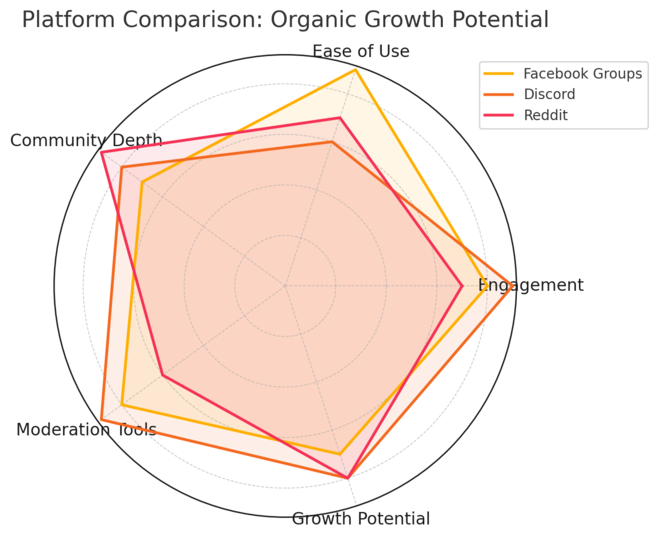
Once your purpose is clear, the next step in learning how to grow an online community is choosing the right home for it.
The platform shapes how people interact, so choose one that matches your community’s rhythm and goals.
Evaluate Where Your Ideal Members Already Gather
The easiest way to grow organically?
Go where your people already are. If your target members spend time on Reddit threads discussing startup tools, or on Facebook groups about parenting, that’s your entry point.
Start by observing: What type of content sparks conversation? What tone do members respond to? This social listening helps you tailor your approach and language before you even launch.
Compare the Strengths of Facebook Groups, Discord, and Reddit
Each platform has unique strengths, and understanding them helps you pick wisely:
- Facebook Groups: Best for community storytelling and casual updates. Easy to manage events, polls, and discussions.
- Discord: Perfect for real-time interaction. Ideal for tech, gaming, or creator communities that love chat-based communication.
- Reddit: Excellent for interest-based growth. Allows anonymity and deeper topic-driven engagement.
In my experience, Facebook Groups often excel for relationship-building, while Discord wins for real-time collaboration. The right choice depends on your members’ communication style.
Focus on One Platform Before Expanding to Others
It’s tempting to plant flags everywhere—LinkedIn, Slack, Telegram—but that spreads your energy thin. I always recommend starting with one core platform until you’ve built strong engagement habits.
Here’s a rule of thumb: grow your first 500 active members in one place before expanding.
Once you understand their needs and content preferences, replicating that success elsewhere becomes much easier.
Optimize Profiles and Group Descriptions for Discovery
Think of your community’s profile as your front door. It should instantly tell newcomers what you stand for and who belongs.
To optimize for organic reach:
- Include your community mission in the description.
- Add keywords your ideal members would search (e.g., “creator growth community”).
- Keep your cover image clean and message-driven.
- Use a clear call-to-action: “Join us to learn, grow, and share with fellow creators.”
Platforms like Facebook and Discord also use algorithms to recommend groups, so optimizing metadata (titles, tags, descriptions) can boost your organic visibility without paid ads.
Create Value-Driven Content That Sparks Conversations
The soul of community growth lies in meaningful interaction. Value-driven content is what turns passive followers into active participants.
Develop Educational and Emotional Content Themes
People stay when they learn something useful and feel something real. I suggest balancing educational posts (like tutorials or insights) with emotional ones (like shared struggles or wins).
For example:
- Educational post: “3 ways to keep your freelance clients happy without burnout.”
- Emotional post: “When was the last time you took a day off without guilt?”
This balance keeps your community intellectually and emotionally fed—two sides of genuine engagement.
Use Storytelling to Make Members Feel Seen and Heard
Stories build empathy faster than facts. When members share experiences, others relate, respond, and connect.
I recommend creating weekly storytelling prompts such as:
- “Share the biggest lesson you learned this week.”
- “Tell us about a time you nearly gave up but didn’t.”
These narratives humanize your space. When members see vulnerability and growth, they mirror it—turning content into conversation.
Encourage Two-Way Dialogue Instead of One-Way Broadcasting
Communities are not audiences. If all your posts are announcements, people tune out. Ask questions, start discussions, and let members lead.
You can use engagement formats like:
- Polls (“What’s your biggest challenge this week?”)
- Q&A threads (“Ask anything about scaling your business.”)
- Peer feedback loops (“Share your project, and give feedback to two others.”)
The more ownership members feel, the stronger their emotional investment becomes.
Experiment With Different Media Formats (Polls, Lives, AMAs)
Different formats reach different types of learners. Some love reading long-form posts, others prefer quick polls or live discussions. Rotate formats to keep your community dynamic.
For instance:
- Polls help gather insights fast.
- Live sessions (on Facebook or Discord) build real-time connection.
- AMAs (Ask Me Anything) establish trust and authority.
I’ve found that mixing formats keeps engagement fresh and organic. It’s not about doing everything—it’s about doing what fits your members’ habits best.
Pro insight: Building an online community organically isn’t about shouting louder—it’s about listening deeper. The real growth comes when members feel heard, valued, and connected to something greater than themselves.
Foster Genuine Engagement and Connection
Once people join your community, the real work begins—keeping them engaged in meaningful ways. This is where many communities falter.
Growing an online community isn’t about numbers; it’s about nurturing authentic relationships that make people want to return every day.
Welcome New Members With Personal Introductions
A warm welcome sets the tone for how people feel in your space. When someone joins, they should immediately sense belonging.
I suggest creating a welcome ritual—something simple but consistent.
For example:
- Send a personalized DM or a group tag like “Welcome @Alex! Tell us what inspired you to join.”
- Use a pinned post or an automated message (like in Discord’s Welcome Channel or Facebook Group’s New Member Greeting Tool) to introduce community rules, upcoming events, and ways to get involved.
These small touches reduce the “newbie” anxiety. When people are greeted personally, they’re far more likely to engage early—and early engagement often predicts long-term participation.
Use Interactive Prompts to Encourage Daily Participation
Engagement thrives when members have reasons to interact. You can spark conversation without forcing it by using interactive prompts that invite quick, low-effort replies.
Try these formats:
- “What’s one win you had this week?”
- “Drop your favorite productivity tool below.”
- “Vote: Would you rather work from a café or from home?”
These aren’t random icebreakers—they serve a purpose. They help members see their own voices reflected in the community’s flow.
I recommend scheduling 2–3 prompts weekly, depending on community size. Tools like Circle, Slack, or Facebook Group scheduling can automate this rhythm without losing the personal touch.
Host Live Events or Challenges to Build Shared Experiences
Shared experiences deepen bonds faster than text threads ever will. Live events give members a reason to show up and feel part of something.
You can host:
- Live Q&A sessions: Use Facebook Live, Zoom, or Discord Stages.
- Themed challenges: A “7-Day Productivity Reset” or “30 Days of Writing.”
- Community town halls: Open discussions about goals and feedback.
I’ve seen participation triple when communities include recurring live experiences. They don’t have to be huge—consistency matters more than production value.
Reward and Acknowledge Active Members Authentically
Recognition is fuel for engagement. But it only works when it feels genuine. Instead of gamifying participation with meaningless badges, highlight contributions that reflect your community’s values.
You can:
- Feature “Member of the Month” posts that celebrate real impact.
- Give small rewards, like early access to new features or private sessions.
- Publicly thank members who consistently help others.
I believe people stay where they feel seen. The more you celebrate sincere effort, the more your culture reinforces itself.
Build Trust Through Consistency and Transparency
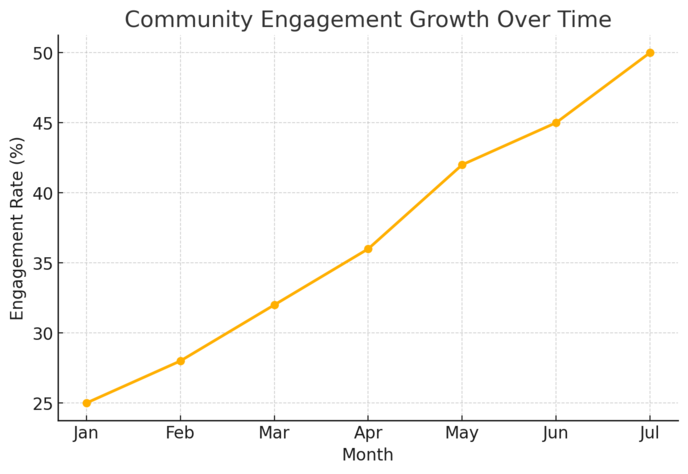
Trust is what transforms a group of people into a true community. Members should feel confident that you’re showing up, being honest, and listening.
Transparency keeps growth sustainable and your relationships strong.
Show Up Regularly With Authentic, Real-Time Updates
Consistency is the simplest but most powerful trust signal. If you post only when you have time, engagement will follow the same pattern—sporadic.
I suggest using a predictable posting rhythm:
- Weekly updates or summaries
- Monthly reflections or plans
- Scheduled live sessions
Even short updates like, “Here’s what we’re working on this week,” help members feel connected to the ongoing journey. The key isn’t perfection—it’s presence.
Share Behind-the-Scenes Insights to Humanize the Brand
People don’t connect with logos; they connect with people. Share real moments—like the struggles, lessons, or funny mistakes behind your growth.
For instance:
- Post about a challenge you faced running the community.
- Share screenshots of progress boards or milestones.
- Show your workspace or process when preparing events.
When members see the human side of your leadership, it deepens authenticity. Transparency turns spectators into allies.
Address Feedback Openly and With Empathy
No matter how positive your space is, feedback will come—and sometimes it stings. The way you handle it can either strengthen or weaken trust.
Here’s how I usually approach it:
- Acknowledge publicly: Thank the person for speaking up.
- Respond privately if needed: Handle sensitive topics with respect.
- Act visibly: Show that feedback leads to change.
Communities grow stronger when members feel heard. Ignoring or over-defending creates distance; honesty bridges it.
Let Members Contribute Ideas or Co-Create Initiatives
One of the best ways to sustain trust is through collaboration. Invite members to shape the direction of the community.
Ask questions like:
- “What topics should we cover next month?”
- “Would anyone like to host a mini-session on this theme?”
You can even use tools like Google Forms, Typeform, or Discord polls to gather structured input. The more members see their ideas brought to life, the more they’ll treat the space as their own.
Empower Members to Lead and Collaborate
Eventually, a thriving community outgrows what one person can manage. That’s a good sign—it means people are ready to take ownership.
The next phase of how to grow an online community is turning members into co-leaders.
Create Opportunities for Peer-Led Discussions
Leadership doesn’t always mean admin roles. Encourage members to start discussions, share tutorials, or run themed days.
For example, in a design community I helped manage, we introduced “Member Mondays,” where anyone could share a tip or portfolio. Participation jumped 40% within two weeks because people love to teach what they know.
You can use structured prompts like:
- “Who wants to lead this week’s discussion on tools?”
- “Anyone up for sharing a personal growth story?”
This approach builds leadership naturally and diversifies the conversation.
Identify and Support Emerging Community Leaders
Every community has natural leaders—those who show up often, encourage others, or ask great questions. I recommend identifying them early.
Once you spot them:
- Offer mentorship or moderator roles.
- Give them small responsibilities like welcoming new members or running discussions.
- Recognize their contributions publicly.
These roles not only lighten your load but also strengthen the community’s social structure. Members trust leaders who’ve grown from within.
Use Mentorship or Ambassador Programs to Sustain Growth
Formalizing leadership can give your community longevity. Ambassadors and mentors help onboard new members, maintain engagement, and embody your values.
You can structure it simply:
- Ambassadors promote community events externally.
- Mentors guide newcomers and foster connection.
Tools like Slack channels, Discord roles, or Notion databases can make coordination smoother. I suggest holding monthly syncs with leaders to keep communication strong.
Encourage Collaborative Projects or Knowledge Sharing
Nothing strengthens connection like creating together. Invite members to collaborate on projects, guides, or creative challenges.
Ideas include:
- A community blog where members submit guest posts.
- A shared resource hub (using Airtable).
- Peer-led workshops or mini-courses.
These initiatives transform your community from a collection of followers into a living network of co-creators.
Expert tip: The real secret of community growth isn’t in the platform, strategy, or content—it’s in empowerment. When people feel ownership and belonging, they naturally invite others, defend the culture, and fuel growth from within. That’s how an online community grows organically and sustains itself for years.
Measure Growth Through Connection, Not Just Numbers
When learning how to grow an online community, it’s easy to get caught up in vanity metrics—like follower counts or post reach.
But these numbers can be misleading. What truly defines a thriving community is the depth of engagement and the quality of relationships formed inside it.
Track Engagement Metrics That Reflect Real Relationships
The first step is shifting what you measure. Instead of just tracking likes or members added, focus on signals of genuine interaction.
Here are meaningful metrics I suggest:
- Active participation rate: How many members engage weekly (post, comment, or react)?
- Response ratio: How often do members reply to others versus only the admin?
- Peer-to-peer engagement: Are members interacting with each other, not just you?
For example, on Discord, you can use tools like Statbot to analyze message activity per user. On Facebook Groups, check “Active Members” and “Engagement Rate” under Group Insights. These metrics reveal whether your space feels like a community—or just a content feed.
Evaluate the Quality of Discussions, Not Just Volume
A community that’s loud but shallow isn’t healthy. I often evaluate discussions based on their depth. Are members sharing advice, experiences, or simply dropping one-word comments?
To assess quality:
- Look at comment threads for meaningful exchanges.
- Identify posts that spark multi-perspective dialogue.
- Track how often members reference each other’s insights (a strong sign of connection).
An authentic conversation might take longer to grow, but it builds stronger emotional investment than ten empty replies ever could.
Use Feedback Surveys to Understand Member Satisfaction
Numbers only tell part of the story. Direct feedback from your members fills the rest of the picture. I recommend running short, quarterly surveys to understand what’s working and what’s not.
Ask questions like:
- “What type of discussions do you find most valuable?”
- “Do you feel your voice is heard in this community?”
- “What could we do to make your experience better?”
Tools like Google Forms, Typeform, or Slack polls make this easy. I always keep surveys under five questions—you’ll get higher response rates that way.
Adjust Community Strategies Based on Authentic Insights
Collecting feedback means nothing unless you act on it. Share what you’ve learned and explain what changes you’re making. For instance:
- “You asked for more skill-sharing sessions—so we’re adding monthly member spotlights.”
- “Several of you mentioned post overload, so we’ll focus on fewer, deeper threads.”
Transparency in action builds credibility. Members feel respected when they see their input shaping the space. That’s how engagement becomes mutual—not managed.
Sustain Long-Term Growth With Authentic Storytelling
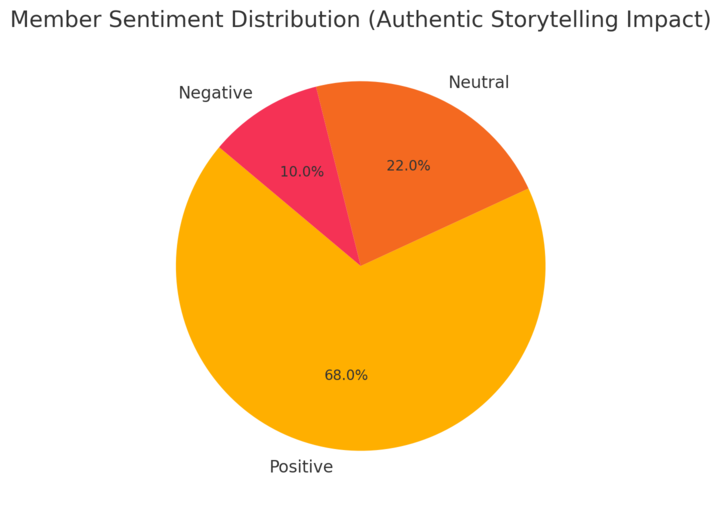
Every thriving community has a story—and that story keeps it alive.
Authentic storytelling transforms your group from a digital meeting space into a living, breathing collective.
Use Member Stories to Celebrate Real Success
Highlighting member success is one of the most powerful ways to build community pride. I’ve found that when you share a member’s journey, others see themselves in it.
You can:
- Post weekly “Member Spotlights” featuring real wins or breakthroughs.
- Use short video clips or quotes to make stories more personal.
- Encourage self-nominations with prompts like, “What achievement are you proud of this month?”
It’s not about showing off—it’s about showing growth together.
Build Emotional Resonance With Transparent Narratives
People connect through honesty, not perfection. When you share your community’s ups and downs openly, members feel included in the story, not just the results.
For instance, if participation dips, talk about it: “We’ve noticed things slowing down—what can we do to bring more energy back?” This approach invites collaboration rather than silent frustration.
I believe vulnerability is the secret weapon of trust. Every time you tell a real story, you remind people why they belong.
Create Traditions That Strengthen the Community Culture
Traditions make communities feel alive. They create rhythm and anticipation. Whether it’s a monthly gratitude thread, annual virtual meetup, or Friday meme day, small rituals build a sense of continuity.
One of the best examples I’ve seen is a writing community that celebrates “First Draft Fridays,” where everyone shares their unpolished work. It turns vulnerability into celebration—and strengthens bonds effortlessly.
Traditions should always reflect your mission. They’re not just fun—they’re identity markers.
Keep Evolving While Staying True to the Original Mission
Communities that thrive long-term adapt gracefully. Trends change, tools evolve, but your mission remains the compass.
Check in every few months: Is the content still serving members’ evolving needs? Are new members resonating with the same purpose as the early ones?
Evolution doesn’t mean abandoning your roots. It means letting your mission breathe and grow with your people.
Handle Challenges Without Losing Authenticity
Every community faces friction. Conflicts, criticism, or growing pains—it’s part of the process. What defines a strong community is how it responds.
Address Conflicts With Compassion and Fairness
Tension is natural when passionate people gather. The key is handling it transparently and calmly.
I recommend a simple three-step framework:
- Listen fully before responding—most issues resolve when people feel heard.
- Acknowledge publicly when appropriate, but handle details privately.
- Reinforce community values instead of assigning blame.
For example: “Let’s remember our value of respectful dialogue. We can disagree without disrespect.” Clear boundaries protect everyone’s sense of safety.
Manage Negative Feedback Without Silencing Members
You’ll occasionally face negative feedback—sometimes constructive, sometimes not. Instead of deleting or ignoring it, approach it with curiosity.
I’ve often replied with: “Thanks for sharing this. Can you tell me more about what led to that experience?” That small sentence turns a complaint into collaboration.
Silencing criticism may feel easier, but it erodes trust. Engaging it respectfully models emotional intelligence for the rest of your members.
Stay True to Core Values Even During Growth Pains
Growth brings new members—and sometimes new tensions. It’s easy to compromise your original culture for faster scaling. Don’t.
Document your core values clearly. Revisit them when making big decisions, like adding moderators or changing policies. Ask: “Does this reflect who we are?”
A consistent moral compass keeps your space authentic, even as it evolves.
Learn From Setbacks to Strengthen Future Strategies
Every misstep is data. When something doesn’t work—like a failed event or disengaged challenge—treat it as a learning opportunity, not a loss.
I suggest keeping a community log (a simple Notion or Google Sheet) where you record:
- What went wrong
- What you learned
- How you’ll adjust next time
Over time, this creates a playbook of lessons that strengthens resilience. Communities that adapt thoughtfully don’t just survive—they mature.
Pro Tip for Building a Real Online Community
If I could leave you with one truth about how to grow an online community, it’s this: focus on people, not metrics.
Algorithms change. Platforms fade. But relationships—the genuine, human kind—last. Measure connection, celebrate small wins, and nurture the quiet moments between big events.
Because when people feel truly seen, they don’t just join your community—they help you build it. And that’s the kind of growth that lasts forever.

I’m Juxhin, the voice behind The Justifiable.
I’ve spent 6+ years building blogs, managing affiliate campaigns, and testing the messy world of online business. Here, I cut the fluff and share the strategies that actually move the needle — so you can build income that’s sustainable, not speculative.
Related posts:
 Internet Marketing Ideas: Increase Your Marketing Efforts
 How to Increase Social Media Followers
 Squirrly SEO – The Ultimate WordPress SEO Plugin for Boosting Your Website’s Rankings
 Top 7 Skills Every Marketing Manager Needs
 What’s the Best Site to Start a Blog for Beginners?
 Create a Blog Free and Start Earning With No Risk