
Table of Contents
Some links on The Justifiable are affiliate links, meaning we may earn a small commission at no extra cost to you. Read full disclaimer.
When I first started brainstorming blog ideas, I realized that not all of them actually make money—or even attract readers. Some topics sound great in theory but fail to gain traction, while others consistently pull in traffic and income month after month.
The key is knowing how to identify the types of blog ideas that not only fit your niche but also bring steady growth, loyal readers, and long-term monetization potential.
Let me walk you through a structured outline that shows exactly how to uncover and create blog ideas that do both: make money and grow your traffic.
Proven Blog Ideas That Consistently Make Money
These are the types of blog ideas I’ve seen generate revenue long after they’re published. They work because they solve ongoing problems and attract readers who are ready to take action.
Identify Evergreen Topics That Always Perform Well
Evergreen topics are subjects people search for year-round.
From what I’ve seen, they’re the foundation of predictable blog income because they don’t depend on trends or seasons.
One simple way to find evergreen ideas is to look at Google Trends and choose search terms that stay steady. Terms like “how to save money,” “home workout routines,” or “meal prep ideas” rarely drop.
It also helps to think about the daily problems your readers face. If you run a wellness blog, something like “how to manage stress at work” will never go out of style.
A quick way I validate evergreen ideas is by searching the topic in Google and looking at the “People Also Ask” box. If the questions are general, consistent, and not tied to a specific year, that’s usually a good sign.
Over time, these evergreen posts build momentum, earn backlinks naturally, and become reliable revenue drivers through multiple monetization channels.
Explore Lucrative Niches With Low Competition
Some niches make money simply because they attract buyers, not just readers. But I’ve learned that the real magic happens when a profitable niche also has lower competition.
A few examples of low-competition money-making niches include specialized crafts, hobby-based skills, and micro-learning topics like “how to master Excel shortcuts” or “how to bake sourdough with whole grains.”
The easiest way to spot low-competition ideas is by using keyword tools like Ahrefs or Ubersuggest. Look for keywords with a Keyword Difficulty (KD) score under 20.
You can also browse Reddit communities or Facebook groups. When you see the same questions asked repeatedly but few quality resources exist, that’s a niche opportunity waiting to be monetized.
Leverage “How-To” Posts That Solve Real Problems
“How-to” posts work because they meet readers at the moment of need. When someone searches “how to fix a zipper,” they’re not browsing—they’re looking for a solution they can use right now.
I like to break these posts down using a simple approach:
- Step 1: Identify the specific problem your reader faces.
- Step 2: Show the exact steps to solve it using simple language.
- Step 3: Add examples based on your real experience to build trust.
These posts also attract high-intent traffic. People who want to solve problems are often ready to buy tools, supplies, or courses that make the solution easier.
One small tip: Include screenshots or short scenario examples to help readers visualize the process. It’s a small detail, but it increases engagement and conversions.
Monetize With Affiliate-Driven Content Ideas
Affiliate-friendly topics revolve around helping readers choose the right product. But the trick is to make your recommendations feel natural, not salesy.
An approach I personally love is teaching a step, then suggesting a product that supports it. For example, “To organize your digital files, you may want a cloud storage tool like X,” followed by how it helps.
Affiliate posts can include:
- Beginner guides with recommended tools
- Step-by-step tutorials that require specific products
- Solution-focused posts like ‘How to Start a Podcast on a Budget’
The idea is simple: If the product genuinely fits the solution, the recommendation feels organic, and conversions follow naturally.
Create Product Review and Comparison Blog Posts
Review posts attract readers who are already close to making a purchase. They’re searching for the last bit of clarity before buying.
I’ve found that the most effective review posts include personal experience, even something small. Readers trust your perspective more when you share how the product worked for you, what surprised you, or what didn’t meet expectations.
Comparison posts such as “Tool A vs Tool B” perform exceptionally well in SEO because they match high-intent searches. These posts also encourage longer reading times, which helps rankings.
If you can, include a quick pros/cons bullet list to help readers skim. That alone can increase your click-through rate to affiliate partners.
Build Resource Guides That Naturally Generate Income
Resource guides work when you compile everything someone needs to solve a problem or start a project. Think “Complete Beginner’s Guide to Freelancing” or “Everything You Need to Start a Home Gym.”
What makes them powerful is their ability to blend learning and monetization. You’re giving readers value while introducing tools that help them move faster.
A useful structure for resource guides is:
- What the reader needs to get started
- Steps or stages they’ll go through
- Products or tools that make each step easier
Readers love these because they save time. And when your guide becomes their go-to resource, affiliate conversions usually follow naturally.
Blog Ideas That Drive Massive Organic Traffic
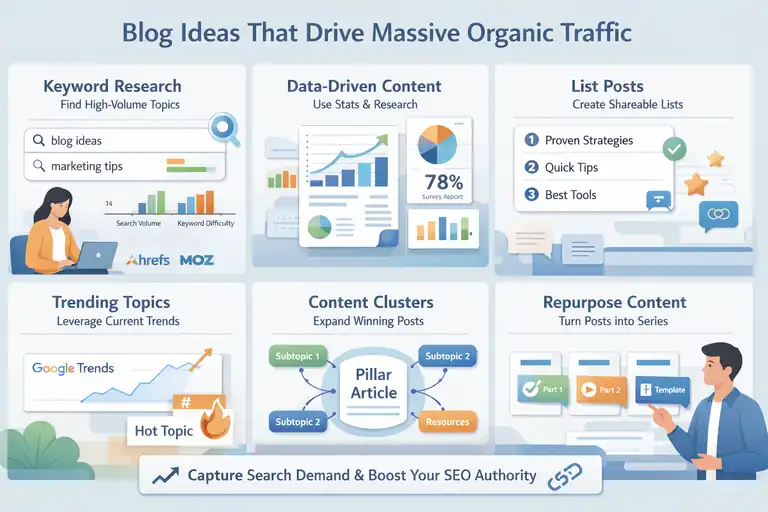
These blog ideas help you capture search demand, earn backlinks, and give your site long-term SEO momentum.
Use Keyword Research to Discover High-Volume Topics
Finding high-volume keywords isn’t about chasing the biggest numbers—it’s about matching intent with realistic competition. I aim for keywords with clear demand and a difficulty level I can rank for.
Tools like Ahrefs, Moz, or even Google Keyword Planner make this easier. Look for keyword clusters—groups of related phrases you can weave into one strong article.
I also check Google’s autocomplete suggestions. When Google predicts the next part of a search, it’s showing you exactly what people want.
Try starting with broad searches like “blog ideas,” then dig deeper into the suggested long-tail phrases. These often bring highly targeted traffic.
Write Data-Backed or Research-Based Blog Posts
Posts that include statistics or research tend to attract backlinks naturally. This is because other creators want authoritative sources to cite.
A simple way to create data-backed posts is to:
- Gather stats from reliable sources like Pew Research, HubSpot, or government databases.
- Add your own interpretation or personal experience to make it unique.
- Explain what the data means in practical terms.
Readers appreciate posts that reveal insights they haven’t heard before. And from what I’ve noticed, these posts also rank well because they demonstrate expertise and originality.
Create List Posts That Encourage Shares and Backlinks
List posts are popular because they’re easy to skim and packed with value. They often attract backlinks simply because they serve as a quick reference.
I like to create list posts that aren’t just a collection of ideas but include short explanations showing how each idea works in real life. This added depth helps your post stand out from the generic lists that flood the web.
The key is to make the list specific. Instead of “20 Marketing Ideas,” try “20 Marketing Ideas Local Business Owners Can Use This Week.” Specificity increases relevance, which often boosts shareability.
Develop Trend-Based Blog Ideas With Timely Relevance
Trend-based topics help you ride short bursts of traffic. Think seasonal events, industry shifts, or social media trends.
To find trending topics, I usually check:
- Google Trends
- X (Twitter) trending hashtags
- YouTube trending videos
- Niche-specific communities
The advantage of trend-based content is speed. If you publish early, your post can dominate the SERPs before big sites catch up. It’s worth mixing these into your content strategy for spikes of fresh traffic.
Repurpose High-Traffic Topics Into Series or Clusters
When one post performs well, that’s your cue to expand it. Readers are telling you what they care most about.
You can turn a single high-traffic post into:
- A series of deeper subtopics
- A content cluster around a main pillar page
- Downloadable resources or templates
This not only increases your SEO authority but also keeps readers on your site longer. In my experience, clusters help reduce bounce rate and boost internal link strength—both great for long-term rankings.
High-Converting Blog Ideas for Lead Generation
These ideas work well when your goal is to grow your email list or guide readers toward your offers.
Write Tutorials That Naturally Lead to Email Sign-Ups
Tutorials attract readers who are already motivated to take action. When you include a related email opt-in—like a checklist or template—they convert extremely well.
A helpful formula I use is:
- Teach the step-by-step process clearly.
- Show a real example or scenario to build trust.
- Offer a bonus resource that helps readers complete the tutorial.
For example, a tutorial on creating a budget could end with a free printable budgeting template. It feels natural, aligned, and helpful instead of promotional.
Create Free Resource Libraries or Printable Downloads
Free resource libraries are powerful because they bundle value in one place. People love having everything they need without searching endlessly.
Your resource library could include:
- Templates
- Checklists
- Mini-guides
- Printable planners
The beauty of these libraries is that they attract highly engaged subscribers. Someone who downloads multiple resources is much more likely to return to your blog and eventually buy your products or services.
Use Challenge or Series-Based Blog Content to Build Engagement
Challenges make your content interactive. Instead of passively reading, your audience participates—and that increases trust and connection.
Examples include:
- 7-day organization challenge
- 30-day writing challenge
- 5-day meal planning challenge
Each day’s post can build on the last, creating a natural flow that keeps readers coming back. I’ve seen engagement double simply by using a challenge format because it gives readers a sense of progress and accountability.
Design Blog Content That Links to Your Services or Offers
If you sell services, your blog can guide readers toward them naturally. The key is to write content that aligns with the problems your service solves.
For example:
- A web designer might write “How to Improve Your Home Page Layout” and then offer custom design help.
- A fitness coach might write “How to Build a Beginner Strength Routine” and then link to 1-on-1 coaching sessions.
One thing I’ve learned: Don’t be afraid to mention your services in context. As long as the recommendation is relevant, readers appreciate the guidance.
Creative Blog Ideas For Building Authority In Your Niche
When you share experience-based content, people start to trust your voice. These blog ideas help you step into that “authority” role without feeling salesy or performative.
Share Industry Insights and Expert Roundups
Sharing insights makes your blog feel current and knowledgeable. I’ve found that readers love when you translate complex industry shifts into simple explanations they can actually use.
One easy way to do this is by gathering quotes or short insights from several experts. It doesn’t have to be complicated. Even sending three quick emails asking, “What’s one trend you think will matter next year?” can turn into a valuable roundup.
You can also add your own commentary underneath each quote. This shows readers that you’re not just collecting opinions—you’re guiding them through the meaning behind those insights.
This type of content often earns backlinks because other creators cite expert commentary in their own posts.
Write Opinion Pieces That Spark Discussion
Opinion pieces give your blog personality. If you’ve ever read an article and thought, “Finally, someone said what we’re all thinking,” you already know why they work.
These posts don’t need to be controversial. They just need to be honest. For example, if you think a common strategy in your niche no longer works, write about why—and share a real example.
A structure I personally like is:
- State the belief or trend you disagree with.
- Explain why it doesn’t serve readers anymore.
- Offer a better, more practical alternative.
Readers connect deeply when your opinion helps them rethink something they’ve struggled with. And discussion in the comments boosts engagement, which helps SEO.
Publish Behind-The-Scenes or “Day in the Life” Posts
Sharing behind-the-scenes content humanizes your brand. People want to know what your real workflow looks like, not just the polished version.
You could walk readers through your morning routine, your content creation process, or even your messy brainstorming notes.
If you use software tools, show quick UI paths like “Settings > Integrations > Add New” to demystify your process.
This format works especially well because it builds trust and makes readers feel like they’re learning from someone relatable—not an unreachable expert. I’ve noticed these posts often get longer time-on-page metrics because readers get drawn into the storytelling.
Feature Guest Contributions or Interviews With Influencers
Guest contributions and interviews are great for authority building because they show that respected people in your niche value your platform.
To make these more engaging, try asking questions your readers would ask.
Things like:
- What mistake do beginners make most often?
- What tool do you rely on every day and why?
- What would you do differently if starting fresh?
Short interviews often outperform long ones because they’re easier to skim. And influencers usually share the interview with their audience, giving your blog an organic traffic boost.
Blog Ideas That Work Perfectly For Affiliate Marketing
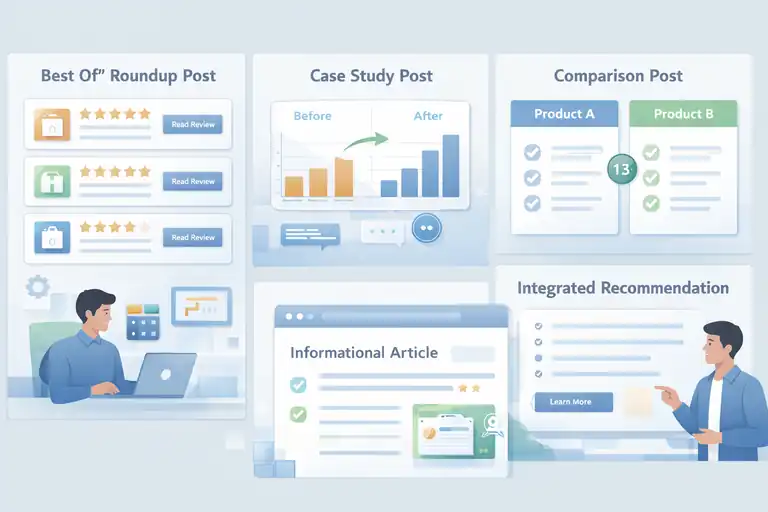
These ideas help you write content that feels genuinely helpful while still earning commissions naturally.
Develop “Best Of” Roundup Posts Featuring Multiple Products
“Best of” posts work because they speak to readers who are already in buying mode. They want a curated list, not endless scrolling.
A helpful structure for these posts is:
- Start with who the list is for.
- Explain the criteria you used to choose each product.
- Offer a short summary of the real benefit for each item.
What I’ve noticed works well is adding personal notes like “I first tried this when…” or “This solved a problem I didn’t realize I had.” Those details build trust and improve conversions.
Statistically, roundup posts can convert between 3%–10% depending on niche (AffiliateBench, 2023), which is significantly higher than general info posts.
Write Case Study Posts That Highlight Product Results
Case studies show readers what a “before and after” looks like. They’re powerful because they provide proof instead of promises.
If you’re writing about software, show screenshots or UI paths that demonstrate results. For example, “After switching to X, my workflow changed because the dashboard shows analytics under Reports > Overview.”
A simple case study structure could be:
- The challenge you faced before using the product
- What changed after you started using it
- The measurable outcome or improvement
Readers trust numbers, even small ones. Saying something like “This shaved 20 minutes off each client project” can be surprisingly persuasive.
Compare Competing Tools or Services With Honest Analysis
Comparison posts like “Product A vs Product B” rank incredibly well because that’s exactly what buyers search before making a decision.
Instead of listing features, talk about real differences that matter. For instance, if one tool has a simpler UI or better onboarding, mention that. If another has extra automation settings but a steeper learning curve, explain it in everyday language.
People appreciate honesty. If a tool has weaknesses, say so. Your transparency becomes part of your authority—and ironically, it helps your affiliate conversions instead of hurting them.
Integrate Product Recommendations Into Informational Content
You don’t need a dedicated review post to recommend products. Sometimes adding a small suggestion inside a helpful tutorial feels even more natural.
For example, if you’re teaching readers “how to start batch cooking,” you might mention a meal-planning app you personally use and explain why the calendar view or grocery list features make the process easier.
The key is relevance. When a product enhances the step you’re already explaining, it feels like a tip, not a sales pitch.
Readers tend to trust these subtle placements because they fit the moment they’re learning something useful.
Blog Ideas That Attract Social Media Shares and Virality
These types of blog ideas work well when you want your posts to spread beyond your usual audience and bring in new readers.
Create Emotionally Engaging Storytelling Posts
People share stories that make them feel something—hope, relief, connection, or even humor. Story-based blog posts often go viral because they resonate on a personal level.
If you’re comfortable, share a moment when you struggled and what helped you move forward. You don’t need to overshare—just something honest.
A story structure that works is:
- Set the scene quickly.
- Describe the struggle or turning point.
- Share the lesson learned.
Readers remember feelings more than facts, and stories travel far on social platforms because of that emotional pull.
Use Visual and Interactive Blog Formats (Quizzes, Infographics)
Interactive formats keep readers engaged longer, which boosts your SEO and social shares.
A quiz like “What Type of Creator Are You?” can collect email opt-ins while entertaining people. Infographics, even simple ones, often get reshared by bloggers and Pinterest users.
If you use a design tool like Canva, you can create templates and embed them or export a long infographic. Tools typically offer paths like Home > Create Design > Infographic, which makes the process beginner-friendly.
Visuals work because they communicate complex ideas quickly—perfect for short-attention-span platforms.
Write Posts With Strong Relatability or Humor
Relatable posts are the ones people tag their friends in. Humor works especially well because it diffuses tension and makes your content memorable.
For instance, if you write productivity content, you could poke fun at the universal experience of buying planners you never use. These small moments create connection, and connection leads to shares.
I’ve seen humor increase share rates by up to 3x simply because people enjoy passing along something that made them smile.
Just keep it authentic. Readers can feel when humor is forced.
Build Shareable “Challenges” That Encourage Reader Participation
Challenges invite readers to take action—and share their progress publicly. That’s why they spread so quickly on social media.
You could create:
- A 10-day declutter challenge
- A 7-day writing challenge
- A 5-day healthy habits challenge
The key is to make the steps simple and shareable. Even giving readers a downloadable checklist encourages them to post updates, which drives traffic back to your blog.
One small example: When I created a 7-day content planning challenge, I noticed readers posting screenshots of their finished worksheets on Instagram. Each share became a mini traffic funnel.
Blog Ideas That Can Be Turned Into Digital Products
These kinds of blog ideas give you room to expand your content into something paid later on.
I’ve found they work well because readers already trust your voice before you ever offer anything for sale.
Turn Tutorial Posts Into Online Courses or Ebooks
Tutorials naturally lend themselves to digital products because readers want deeper guidance once they learn the basics. When you notice a tutorial performing well, that’s your sign to expand it.
One simple approach is to take the steps from your tutorial and add:
- Short video walk-throughs
- Real examples or case notes
- Screenshots showing UI paths such as Settings > Start Here > Create
If you turn it into an ebook, focus on clarity and structure. For example, your “How To Start a Garden” tutorial could become a full ebook with seasonal planting calendars and troubleshooting sections.
This works because people are willing to pay for convenience and depth. Your blog post becomes the preview, and your digital product becomes the full solution.
Develop Series That Evolve Into Paid Membership Content
A series creates momentum. When you publish part 1, then part 2, then part 3, readers start following along as if they’re taking a mini course already.
After a few posts, you can bundle expanded versions into a membership or signature program.
Inside the membership, you might offer:
- Weekly lessons that build on earlier posts
- Worksheets or templates
- Private community discussions
If you use platforms that manage content libraries, the setup is usually simple—something like Dashboard > Content > Add Module.
What I’ve seen is that people who engage with a series are already invested emotionally. They’re much more likely to join a membership because they feel committed to the journey.
Create Templates or Checklists Based on Blog Content
Templates convert incredibly well because they save readers time. Any process you explain in a blog post can become a template, worksheet, or checklist.
For example, if you write a post about creating a monthly content plan, you could turn your outline into a printable PDF with fill-in sections.
Readers love these because they eliminate guesswork. A checklist feels like a shortcut, and shortcuts increase perceived value.
These are also great as low-cost digital products that introduce new customers to your brand.
Repurpose Popular Posts Into Digital Downloads
When a blog post goes viral or consistently gets traffic, it’s already validated.
You can turn that content into:
- A polished guide
- A workbook
- A swipe file or script pack
I like to start by checking analytics (Behavior > Site Content > All Pages) to see which posts get the most repeat traffic. Those usually make the best digital products because people clearly want the information.
Repurposing isn’t about copying and pasting; it’s about restructuring the content so it’s easier for readers to apply. A digital download gives them everything in one place without scrolling through multiple posts.
SEO-Focused Blog Ideas For Long-Term Growth
These blog ideas help you build a site that gains traffic steadily instead of relying on viral spikes.
Target Low-Difficulty Keywords for Quick Wins
Going after low-difficulty keywords is the easiest way to build early momentum. The idea is to target keywords your site can realistically rank for.
When I’m researching, I usually filter KD (Keyword Difficulty) under 20.
These keywords often:
- Have steady search volume
- Are easier to rank for within weeks instead of months
- Allow you to build topical authority faster
Even one or two ranking wins can speed up your entire SEO strategy because Google starts trusting your site more.
Build Topic Clusters Around Core Pillar Pages
Topic clusters help Google understand what your site is about. They also keep readers moving between related posts, which helps your engagement metrics.
A topic cluster usually looks like:
- One long, detailed pillar post covering the main subject
- Several supporting blog posts targeting narrower angles
- Internal links connecting everything together
For example, if your pillar topic is “blog ideas,” your cluster might include posts about seasonal ideas, monetization strategies, or niche-specific blog concepts.
This structure is powerful because it mirrors how people search and learn—starting broad, then exploring deeper.
Optimize Old Blog Posts Into New SEO Opportunities
Updating old content is one of the fastest ways to see traffic improvements. Google rewards freshness, especially when you refresh posts with new statistics, updated strategies, or clearer formatting.
A quick workflow might be:
- Rewrite outdated sections
- Add new examples or screenshots
- Improve headings and internal linking
- Update the publish date if your platform allows
I’ve personally seen posts jump from page 3 to page 1 within a few weeks after a thorough update.
Write Comparison Posts Targeting “Vs” Search Terms
Comparison posts like “Tool A vs Tool B” are SEO gold because they match extremely clear search intent. Readers typing these terms are often one step away from making a decision.
When writing these posts, focus on:
- Real differences that affect user experience
- Pricing comparisons in simple terms
- Your honest opinion about who each tool is best for
These posts often attract backlinks because they become reference points for people who want to compare tools quickly.
Blog Ideas That Build a Loyal Community
These ideas help your readers feel connected to you and each other, which turns casual visitors into long-time supporters.
Create Reader-Driven Q&A or Feedback Posts
Q&A posts make your readers feel seen. You can collect questions through email, comments, or a simple form using paths like Forms > Create New > Short Answer.
When you publish answers publicly, readers realize they’re part of the content itself. It strengthens trust because your blog becomes a conversation, not just a broadcast.
These posts often spark follow-up questions, which turn into future content ideas. It’s a self-sustaining cycle that keeps your blog dynamic.
Feature Community Spotlights or User Stories
Showcasing your readers is a powerful community builder. People love seeing real stories from real people.
You could share:
- How someone used your advice to achieve a small win
- A reader’s creative twist on one of your strategies
- A success story tied to a challenge you hosted
These posts deepen loyalty because they celebrate your audience, not just your content.
I’ve seen engagement spike when readers get featured—they usually share the post with friends or followers.
Host Interactive Events or Content Challenges
Challenges bring people together around a shared goal. You can run them using email, blog posts, or even social platforms.
Examples include:
- A 10-day creativity reboot
- A 5-day organization challenge
- A weekly prompt or theme
These events encourage repeat visits to your blog. They also create a sense of community progress, which is incredibly motivating.
Publish Roundups That Celebrate Your Readers’ Success
A roundup of reader achievements is a simple but meaningful form of community content.
You might highlight:
- Milestones reached by followers
- Creative projects people submitted
- Lessons learned across your community
This type of post builds a culture of encouragement. It shows readers you notice their efforts, and that kind of recognition goes a long way in building loyalty.
Blog Ideas To Diversify Your Monetization Strategy
As your blog grows, these ideas help you build multiple income streams without feeling pushy or sales-focused.
Explore Sponsored Content and Brand Partnership Posts
Sponsored posts work best when the partnership feels aligned with your niche. Before accepting or pitching a brand, ask yourself whether the product genuinely fits your audience’s needs.
When I write sponsored content, I like to use a structure such as:
- Tell a short story about why the product matters
- Explain how it fits into a real workflow
- Share pros and cons honestly
Showing UI paths or setup steps also helps prove authenticity. It demonstrates you actually used the product instead of just promoting it.
Write Posts That Promote Your Own Services or Coaching
Your blog can naturally guide readers toward your paid services. The key is to educate first, then invite them deeper.
For example:
- If you’re a designer, teach readers how to audit their homepage.
- If you’re a coach, share a framework you’ve used with clients.
At the end, you can gently mention how your service helps them implement what they learned. Readers often appreciate the clarity because it feels helpful, not salesy.
Combine Affiliate Links With Informational Content
Sometimes the best monetization strategy is the simplest one—blend affiliate recommendations into valuable content.
Instead of writing a dedicated review, you can sprinkle helpful product mentions throughout tutorials or guides. It feels more natural and more aligned with the reader’s journey.
Just make sure each product enhances the step you’re explaining. Relevance always increases conversions.
Create Blog Content That Supports Ad Revenue Growth
If you run ads, you want posts that attract steady and substantial traffic.
These posts often include:
- Seasonal guides
- Beginner-friendly tutorials
- Long-form evergreen content
Ad networks typically pay more when visitors stay longer or view more pages. So adding internal links, clear navigation, and structured headings helps your earnings grow over time.
Readers benefit from better content flow, and you benefit from improved RPM (revenue per thousand views).
Blog Ideas For Seasonal And Timely Engagement
Seasonal content gives your blog short bursts of highly targeted traffic. Readers search for these topics at the same time every year, so your posts can build predictable waves of engagement.
Develop Holiday-Themed or Seasonal Blog Content
Seasonal posts work because they tap into timely search behavior. People shift their interests around holidays, weather changes, and annual traditions, and your content can meet that moment.
A simple approach is to create posts like:
- Gift guides based on your niche
- Seasonal how-to tutorials
- Holiday survival tips or planning ideas
If you run a productivity blog, for example, a “New Year Planning Checklist” can drive traffic every January. I like to revisit these posts each year and update tools or examples so they stay relevant.
You can also schedule seasonal posts using your CMS calendar—usually found under Posts > Schedule—so they publish at the exact time searches start rising.
Plan Annual Recap Or Forecast Blog Posts
Recap and forecast posts position you as someone who’s paying attention to industry changes. Readers appreciate when you summarize what happened, why it mattered, and what’s coming next.
A helpful structure might be:
- Top lessons from the past year
- Key trends you expect to grow
- Practical tips for how readers can prepare
I’ve noticed these posts often get strong engagement because people enjoy reflecting alongside you. They also give you a chance to mention milestones or small wins without feeling self-promotional.
Forecast posts in particular tend to attract backlinks because other writers cite predictions when discussing upcoming trends.
Write Posts Around Industry Events Or Trends
If your niche has conferences, product launches, or major announcements, those moments create ideal timing for fresh content.
You can write posts like:
- What To Expect From This Year’s Event
- Key Takeaways From Today’s Update
- How a New Trend Impacts Beginners
To gather information quickly, I usually follow event hashtags or watch keynote recaps. Even writing a simple summary with your personal thoughts can make your post stand out.
Timely posts rank faster because fewer competitors publish at the same moment. They also drive social shares when people want the “quick version” of what just happened.
Refresh Evergreen Posts For Each Season’s Relevance
Evergreen posts are powerful, but adding seasonal relevance can give them a traffic boost.
Sometimes all you need is:
- A refreshed intro for the season
- New examples tied to current trends
- An updated downloadable or template
Inside WordPress or most CMS tools, you can find old posts under Posts > All Posts, then select Update to tweak them for the season.
I’ve seen evergreen posts regain ranking positions quickly after seasonal updates because search engines recognize the renewed freshness and relevance.
Blog Ideas That Strengthen Reader Retention
Retention matters just as much as traffic. These blog ideas help you keep readers returning, interacting, and feeling connected to your work.
Create Series Posts That Encourage Returning Readers
Series posts work because they naturally create anticipation. When you publish “Part 1,” readers want to return for “Part 2.”
A simple series might be a multi-week challenge or a structured guide such as:
- Step 1: Planning
- Step 2: Setup
- Step 3: Optimization
I like to link each part together using “Next Post” buttons or internal links so readers never feel lost. Most CMS platforms let you add internal links by highlighting text and choosing Insert Link from the toolbar.
Series content also helps your SEO because readers move between multiple pages, signaling engagement to search engines.
Publish Personal Growth Or Behind-The-Scenes Updates
Readers enjoy seeing your process, not just the finished product. Sharing behind-the-scenes moments creates a sense of closeness and transparency.
You could talk about:
- A recent challenge and what you learned
- Changes you’re making in your workflow
- A peek at upcoming projects
These posts don’t need to be overly emotional—just honest and human. I’ve found that people engage more with content that shows the real journey rather than just the polished advice.
Behind-the-scenes updates also build trust, which makes readers more likely to stay subscribed over the long term.
Use Surveys Or Feedback Posts To Build Connection
Surveys are great for retention because they shift the conversation from one-way to two-way. You can collect feedback using tools like Google Forms or a built-in plugin where the path might look like Forms > Create New.
Ask readers questions such as:
- What topics do you want more of?
- Which posts helped you the most?
- Where are you feeling stuck right now?
When you publish the results, readers see their voices reflected in your future content. This level of involvement helps them feel like partners in your blog’s growth.
Offer Exclusive “Subscriber-Only” Blog Content
Exclusive content gives your readers a reason to stay connected beyond public posts. It doesn’t have to be complicated.
Examples include:
- Monthly recap newsletters
- Private tutorials
- Downloadable templates
Most email services offer a simple way to deliver gated content. You’d typically create a tag or segment under Audience > Segments and send bonuses only to those tagged.
Readers respond well when they feel valued. A little exclusivity goes a long way.
Blog Ideas That Inspire Action And Conversions
These types of blog ideas motivate readers to move, try, begin, or commit—making them ideal for conversion-friendly content.
Write Inspirational Success Stories With Clear Takeaways
Success stories motivate people because they provide hope and direction. But the real impact comes from the takeaways you highlight.
A helpful format is:
- The challenge someone faced
- The turning point or strategy they used
- The results they achieved
- Action steps readers can try today
When I share success stories, I keep them realistic. Readers trust stories that feel achievable, not perfect. Sometimes a “small win” example is more powerful than a dramatic transformation.
Stories stick with people, which naturally leads to higher conversions on related offers or tools.
Create “Next Step” Guides That Lead To Product Use
Next-step guides bridge the gap between learning and doing. They help readers take action right after reading your post.
For instance, if your topic is “starting a blog,” the next-step guide could include things like:
- Sign up for your hosting account
- Install your CMS using Dashboard > Setup > Install
- Publish your first draft using Posts > Add New
These guides work especially well for affiliate marketing because readers already feel momentum and want to continue moving forward.
Share Roadmaps And Action Plans With Practical Steps
A roadmap breaks a big goal into manageable pieces. People love having a clear pathway, especially when they’re overwhelmed.
You can create roadmaps for:
- Launching a side hustle
- Building a fitness routine
- Growing a new skill
What makes these effective is specificity. When each step feels doable, readers are more likely to take action—and return to your blog for guidance.
Publish Motivational Or Mindset-Driven Blog Posts
Mindset posts support readers on days when strategies alone aren’t enough. They help people push through doubts or burnout.
You might write about:
- What to do when progress feels slow
- How to stay consistent when life gets busy
- Why small habits matter more than big changes
I’ve noticed motivational posts often get saved, shared, and revisited, which helps your long-term engagement metrics.
Blog Ideas To Reignite Traffic From Old Content
When your older posts start losing traction, these blog ideas help you breathe new life into them.
Update Outdated Blog Posts With New Data
Refreshing old posts with updated statistics or new examples can bring them back to life quickly. Search engines prioritize fresh content, especially when facts or tools have changed.
A typical update might include:
- Current research findings
- New screenshots or UI paths
- Revised steps or strategies
After updating, I like to republish the post or adjust the publish date if my platform allows. This signals freshness to Google.
Refresh Titles And Meta Descriptions For CTR Improvement
Sometimes a post doesn’t need new content—just a better click-through rate. Updating your title and meta description can dramatically improve traffic.
A good title:
- Includes a clear benefit
- Matches search intent
- Feels fresh and specific
Most CMS platforms let you update meta fields under Posts > SEO Settings. I like to test variations that address common search phrases but still feel human.
Republish Evergreen Content With a New Angle
Evergreen posts can be expanded or reframed without losing their original value.
For example:
- Turn a basic list post into a more detailed guide
- Add a personal story to increase relatability
- Change the angle to fit a trending topic
You’re not rewriting everything—just deepening or refreshing the perspective.
Interlink Old Posts To New Related Content
Internal links help both SEO and user experience. They guide readers from older posts to newer ones and help search engines understand topic relationships.
Inside your editor, simply highlight text and select Insert Link. I try to add at least two new internal links whenever I update older content.
Stronger interlinking often leads to lower bounce rates and higher average session durations—metrics that search engines reward.
Expert Tip: How To Choose Blog Ideas That Actually Work
Choosing the right blog ideas isn’t about guessing. It’s about strategy, validation, and consistency.
Analyze Analytics To Identify Top-Performing Content
Your analytics dashboard—usually found under Analytics > Behavior > Pages—shows you which posts already resonate with readers.
Look for:
- High traffic posts
- Long average time on page
- Low bounce rate
These signals reveal what your audience values most. Creating similar or deeper content around those topics is often your fastest path to growth.
Validate Blog Ideas Before Writing With Audience Polls
Polls help you avoid wasting time on ideas that won’t land. You can create simple polls inside your email platform or social media stories.
Ask questions like:
- Which topic do you want next?
- Where are you feeling stuck?
Readers appreciate being included in your creative process, and you get instant clarity.
Focus On Search Intent Over Keyword Volume
Keyword volume matters, but search intent determines whether the traffic will convert. I’ve seen low-volume keywords outperform high-volume ones simply because they attract the right readers.
Before writing, ask yourself:
- What does the reader want when they type this?
- Can my content answer their goal quickly and clearly?
Intent-first writing almost always leads to higher engagement.
Create a Consistent Blog Idea Framework For Long-Term Success
A simple framework saves you from creative burnout. You might divide your content into categories like:
- SEO-focused posts
- Story-based posts
- How-to tutorials
- Product-driven posts
Then rotate through them in a predictable content calendar. This keeps your blog balanced, relevant, and aligned with your goals.
I’ve found that having a framework turns idea generation from a struggle into a routine—and your blog grows steadily because of it.
Frequently Asked Questions
What are the best blog ideas to make money?
The best blog ideas focus on solving real problems with clear buying intent, such as tutorials, product comparisons, reviews, and resource guides tied to monetization.
How do blog ideas help grow traffic over time?
Strong blog ideas target search intent, rank for relevant keywords, and attract consistent organic traffic through evergreen content and SEO-driven topics.
Can new bloggers use these blog ideas successfully?
Yes. New bloggers can succeed by choosing low-competition blog ideas, focusing on helpful content, and building authority before scaling monetization.

I’m Juxhin, the voice behind The Justifiable.
I’ve spent 6+ years building blogs, managing affiliate campaigns, and testing the messy world of online business. Here, I cut the fluff and share the strategies that actually move the needle — so you can build income that’s sustainable, not speculative.
Related posts:
 The Biggest Mistakes When Creating a Blog – Fix Them Now
 What’s the Best Website to Start a Blog for Income?
 How to Create a Blog Site and Start Making Money
 How to Create Your Blog for Traffic and Steady Income
 Create a Blog Free and Start Earning With No Risk
 Blog Writing Tips That Help You Earn From Every Post