
Table of Contents
Some links on The Justifiable are affiliate links, meaning we may earn a small commission at no extra cost to you. Read full disclaimer.
When I first dipped my toes into social media affiliate marketing, I had no idea how powerful it could be. What started as sharing products I genuinely loved turned into a consistent income stream—and the best part?
I didn’t need a huge following or fancy tools to start. If you’ve ever wondered how people make money promoting products on platforms like Instagram, TikTok, or YouTube, you’re in the right place.
Let me walk you through, step by step, exactly how to start social media affiliate marketing the right way—from choosing the right niche to turning your audience into loyal buyers.
Understand How Social Media Affiliate Marketing Works
Before diving into links, commissions, and followers, it helps to truly understand how social media affiliate marketing functions.
Once you see the logic behind it, the process of earning online becomes far less mysterious and a lot more strategic.
How Affiliate Marketing Generates Income Online
At its core, affiliate marketing is a performance-based system where you earn a commission by promoting someone else’s product or service.
Every time someone clicks your unique affiliate link and makes a purchase, you get paid.
Here’s how it typically works:
- You join an affiliate program — offered by brands or networks like Awin or Amazon Associates.
- You get a unique tracking link — this identifies sales or leads that come from your content.
- You promote that product on social media — through posts, videos, or stories.
- You earn a commission when someone buys through your link.
Example: If you share a skincare product on Instagram using your affiliate link and a follower buys it, you might earn a 10% commission on that sale.
Over time, even small commissions add up—especially if your audience trusts your recommendations. What matters most isn’t the number of followers you have, but how engaged they are and how well your content aligns with their needs.
The Role of Social Platforms in Affiliate Promotion
Every social platform plays a slightly different role in how you reach your audience and share affiliate products.
- Instagram: Perfect for visual storytelling. Use product demos, before/after photos, and reels.
- TikTok: Ideal for short, authentic videos that quickly build trust.
- YouTube: Works well for long-form reviews, tutorials, and product comparisons.
- Pinterest: Great for driving traffic to blogs or product pages through keyword-optimized pins.
Each of these platforms can serve as a mini “sales funnel.” A single short-form video can reach thousands of people organically—something nearly impossible with traditional ads unless you’re spending heavily.
A good rule of thumb: Match your platform to your personality. If you’re comfortable on video, TikTok and YouTube will serve you well. If you prefer visuals and captions, Instagram or Pinterest might be better starting points.
Common Myths About Affiliate Marketing You Should Ignore
Let’s clear up a few misconceptions that stop beginners from getting started:
- Myth 1: You need a huge following. Reality: Even micro-influencers (1,000–10,000 followers) earn well because smaller audiences often trust them more.
- Myth 2: It’s passive income right away. Affiliate marketing can become passive later, but it requires consistent testing and posting upfront.
- Myth 3: You must promote tons of products. The opposite is true—focus on fewer, high-quality products that genuinely fit your audience.
Once you drop these myths, you’ll start focusing on what truly drives results: consistency, authenticity, and audience alignment.
Choose a Profitable Niche for Affiliate Success
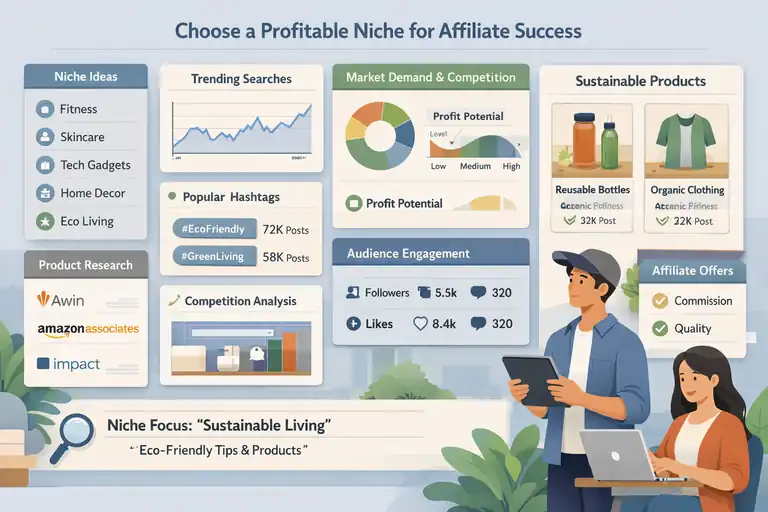
Choosing your niche is one of the most critical early decisions you’ll make.
The right niche helps you stand out, attract loyal followers, and increase your chances of earning consistent affiliate income.
How to Find a Niche You’re Passionate About
Start with what feels natural to you. Think about topics you could talk about for hours without getting bored—fitness, skincare, tech gadgets, home decor, or finance, for example.
Passion fuels creativity, and audiences can tell when you’re genuinely interested in what you promote.
Here’s a quick exercise:
- List 3–5 topics you love discussing.
- Research if they have affiliate products available. (Check Awin, Impact, or Amazon Associates.)
- Explore competitors’ profiles to see how they approach that niche.
Example: If you’re into eco-friendly living, look for brands selling sustainable fashion or reusable home products. These niches often have loyal, engaged communities eager for trustworthy recommendations.
Evaluating Market Demand and Competition Before You Commit
Even if you love a topic, it needs to be profitable and have a real audience.
Here’s how to test that:
- Check search volume: Use tools like Google Trends or AnswerThePublic to see if people are searching for that topic.
- Browse social media hashtags: Are there active communities? Are influencers getting engagement?
- Research affiliate programs: Ensure that there are quality products and brands offering decent commissions in your niche.
You’re looking for what I call the sweet spot: high enough demand to earn money, but not so saturated that you can’t stand out.
If “home workouts” feels too broad, for instance, narrow it to “home workouts for busy moms.” That’s how you create focus—and authority.
Why Audience Alignment Is More Important Than Popularity
Many beginners chase what’s “popular,” thinking a bigger audience equals better income. In reality, alignment beats volume every time.
When your audience shares your interests and trusts your taste, conversions naturally rise. A creator with 2,000 loyal followers can easily outperform someone with 20,000 disengaged ones.
Your goal isn’t to appeal to everyone—it’s to speak directly to the people most likely to take your advice.
Ask yourself: Would I personally use this product? Would I recommend it to a friend? If the answer is yes, you’re already aligned with your future customers.
Select the Right Affiliate Programs to Join
Once your niche is set, it’s time to find affiliate programs that match your goals. The right partnerships make all the difference between earning pocket change and building real income.
Top Affiliate Networks for Beginners to Explore
Here are some trusted networks that make it easy for beginners to get started:
- Awin: A global affiliate network that now includes former ShareASale programs. It covers thousands of merchants—from fashion and fitness to finance and tech. Once approved, you can join multiple brands under one dashboard.
- Impact: Known for high-quality partnerships like Canva, Adobe, and Uber. Its interface is clean, and tracking tools are easy to understand.
- Amazon Associates: Great for beginners because it offers nearly any product imaginable, though commissions tend to be smaller.
- ClickBank: Focuses more on digital products (like courses and eBooks) with high commission rates.
Each platform has a different approval process, so it’s wise to apply to two or three and experiment with what fits best.
How to Identify High-Commission and Trustworthy Programs
Before you hit “apply,” look beyond flashy commission rates. A 50% commission sounds tempting, but it’s only valuable if the product actually sells.
Look for:
- Reputable brands: Research reviews and community feedback before promoting.
- Cookie duration: Longer tracking windows (30–90 days) mean more chances to earn.
- Average order value: Higher-priced products can make even small commissions profitable.
For instance, a 10% commission on a $500 product earns you $50—often more than several low-cost sales combined.
Pro tip: Promote products you personally use or can vouch for. Authentic recommendations convert far better than random links.
What to Look for in Affiliate Terms and Payout Structures
Reading the fine print might sound boring, but it protects you long-term. Always check:
- Payment thresholds: The minimum amount you need to earn before payout (usually $25–$100).
- Payment methods: Common ones include PayPal, bank transfer, or direct deposit.
- Restrictions: Some programs limit how or where you can promote links (for example, no paid ads or email promotion).
Most affiliate dashboards clearly display these under “Program Terms.” In Awin, for example, you can view it directly by navigating: Dashboard → Advertisers → Program Details → Terms & Conditions.
By understanding how these structures work, you’ll avoid surprises later and build relationships with brands that value transparency and fairness.
Build and Optimize Your Social Media Profiles
Your profile is the first impression potential buyers and followers get of you. Think of it as your storefront.
A clean, trustworthy, and engaging profile can turn casual scrollers into engaged followers—and eventually, paying customers.
Creating a Compelling Bio That Attracts Clicks
Your bio is like your 10-second elevator pitch. It should quickly tell visitors who you are, what value you offer, and what action they should take next.
Here’s a simple framework I often use:
- Who you help: For example, “Helping busy moms build income from home.”
- What you offer: “Simple social media affiliate marketing tips and tools.”
- Call to action: “👇 Start here with my favorite tools.”
If you’re using Instagram, include your affiliate link or a link-in-bio tool like Later’s Linkin.bio or Linktree. These tools let you display multiple links—perfect if you promote more than one brand.
Small detail, big difference: Use emojis sparingly to make your bio visually friendly without cluttering it. And always choose a profile photo that’s clear, friendly, and consistent across platforms—it builds instant trust.
Choosing the Right Platform Based on Your Niche and Goals
Not every platform will serve you equally. Each one attracts different types of audiences and suits specific content styles.
Here’s how to decide where to focus:
- Instagram: Great for lifestyle, beauty, and fashion affiliates. Strong visual storytelling.
- TikTok: Best for quick, relatable videos and viral trends. Great if you’re confident on camera.
- YouTube: Ideal for long-form tutorials, reviews, or unboxings. Best for tech, fitness, and education niches.
- Pinterest: Works beautifully for evergreen content like home décor, recipes, or DIY.
- Facebook: Still relevant for community-based niches like parenting or local services.
Try this: Start with one primary platform and one secondary. This keeps your energy focused and helps you master one algorithm at a time.
Example: If you’re in the fitness niche, post workouts and product reviews on Instagram while pinning fitness guides on Pinterest to drive traffic back to your profile.
Setting Up Tracking Links and Optimizing Your Profile for Conversions
Once your bio is ready, your links need to work as hard as your content. Tracking links help you know what’s actually driving clicks and sales.
- Use UTM parameters: Tools like Google Campaign URL Builder let you create custom links to track where conversions come from (e.g., “Instagram Bio” vs. “Story Link”).
- Shorten links for cleaner visuals: Bitly or Awin’s built-in shortener works well.
- Check link placement: Keep your most important link visible and above the fold on mobile devices.
In Awin, for example, you can generate a custom tracking link directly from your advertiser dashboard by selecting Program → Generate Tracking → Custom Parameters.
A small pro tip: Include a short CTA near your link—something simple like “Shop my favorites” or “Get my top tools.” These small cues nudge followers to take action.
Create High-Quality Content That Drives Sales
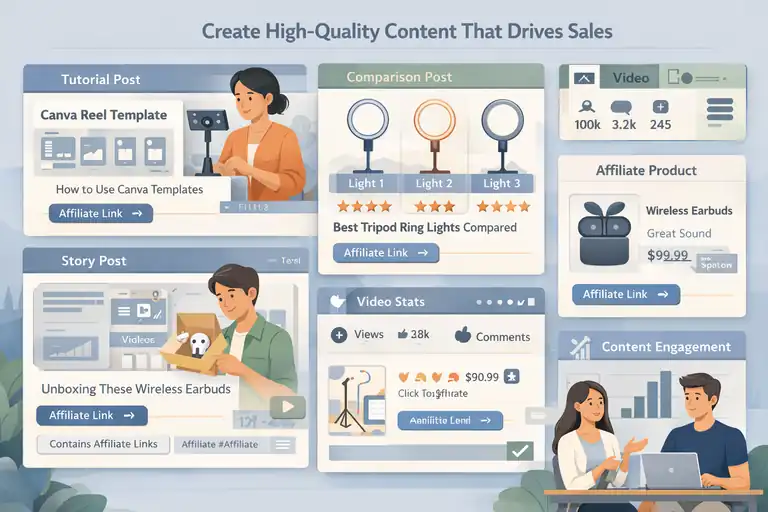
Now comes the fun part—content creation. This is where you connect with your audience and naturally weave in your affiliate recommendations without sounding pushy.
How to Blend Affiliate Links Naturally Into Content
The golden rule? Focus on value first, product second. Teach, entertain, or solve a problem—then introduce the product as part of that solution.
Here’s how:
- Tutorial posts: “Here’s how I use this Canva template to create Reels in under 5 minutes.”
- Comparison posts: “I tested three tripod lights—here’s the one that gave me the best lighting.”
- Story posts: Share real experiences or mini-challenges. People trust honest stories far more than polished ads.
Also, always include a clear disclosure like “This post contains affiliate links” to stay compliant with FTC guidelines. Transparency builds credibility.
From what I’ve seen, posts that educate and entertain convert much better than those that simply promote.
Using Video, Reels, and Stories to Boost Engagement
If you’re not using short-form video yet, you’re missing out. Platforms like Instagram and TikTok now prioritize Reels and short videos over static posts.
Quick ideas that work well:
- Unboxings: Showcase how a product looks and feels in real life.
- Before-and-after demos: Especially powerful in beauty, fitness, or home improvement niches.
- Mini tutorials: Show how to use a product in 30 seconds.
When filming, focus on natural lighting, clear audio, and authentic delivery. You don’t need a fancy setup—a smartphone and good energy are enough.
A small hack: Add text overlays with your affiliate links or discount codes. It’s subtle but keeps your offer visible even if viewers mute your video.
The Importance of Authenticity and Storytelling in Conversions
People don’t buy products—they buy trust. And storytelling is how you earn it.
Instead of saying, “This supplement is great,” try:
“I started taking this supplement because I felt constantly tired after work. Within two weeks, I noticed I wasn’t crashing mid-afternoon anymore.”
That’s real, relatable, and powerful.
You can use storytelling in any format—captions, videos, even comments. It’s about showing transformation rather than just listing features.
If you consistently share honest experiences, your followers will start viewing you as a trusted friend rather than a salesperson—and that’s when sales happen effortlessly.
Grow Your Audience With Proven Engagement Strategies
Building an audience takes patience, but it doesn’t have to feel overwhelming. With a few smart strategies, you can grow faster while staying authentic.
Building Trust and Community Through Consistent Posting
Consistency beats intensity. Posting regularly—even just three times a week—keeps you visible and relevant.
Here’s how to stay consistent without burning out:
- Batch create: Plan content in one sitting for the week ahead.
- Repurpose: Turn a YouTube clip into a Reel or a TikTok snippet.
- Engage: Reply to every comment or message personally when possible.
You can use scheduling tools like Meta Business Suite, Later, or Buffer to automate posts.
A small reminder: Algorithms favor creators who engage with others. Spend 10–15 minutes commenting on similar creators’ posts daily—it signals genuine activity.
Collaborations, Giveaways, and Challenges to Increase Reach
Partnerships are one of the fastest ways to expand your audience.
Try:
- Collaborations: Co-create a live session or Reel with another creator in your niche.
- Giveaways: Offer small prizes in collaboration with a brand or another affiliate.
- Challenges: Run a themed weekly challenge, like “7 Days of Smoothie Recipes.”
These interactive campaigns help you reach new audiences while strengthening trust with your current followers.
Just make sure the collaborations fit your niche—irrelevant partnerships can dilute your credibility.
Using Analytics to Understand What Resonates With Followers
Data might sound boring, but it’s your growth GPS. Every platform gives you insights into what’s working—and what isn’t.
Focus on three metrics:
- Reach: How many people saw your post.
- Engagement rate: Likes, comments, shares, and saves.
- Click-throughs: How many people clicked your affiliate link.
On Instagram, you can check this under Insights → Content You Shared → See All → View Insights.
When you notice patterns—like videos performing better than static posts—double down on them.
In my experience, one data-driven tweak can double your engagement overnight. That’s the beauty of testing: small adjustments lead to big results over time.
Use SEO and Hashtags to Boost Discoverability
Once you’ve built your profile and started sharing valuable content, the next step is helping people find it.
This is where social SEO (search engine optimization) and hashtags play a big role. They make your posts more discoverable to the right audience—without paying for ads.
How Social SEO Works Differently on Each Platform
Social SEO is all about optimizing your captions, profile, and even video text so algorithms understand what your content is about.
The idea is to help platforms like Instagram, TikTok, YouTube, or Pinterest show your posts to people already searching for similar topics.
Here’s a quick breakdown of how it works on each platform:
- Instagram: Focus on keyword-rich captions and alt text. For example, if you post about “home workout gear,” include that phrase naturally in your caption and reel description.
- TikTok: Say your keywords out loud in the video itself. TikTok uses speech recognition to categorize videos.
- YouTube: Use keywords in the title, description, and tags. Example: “Best Social Media Affiliate Marketing Tools for Beginners.”
- Pinterest: Optimize pin titles and descriptions. Pinterest is more like a visual search engine than a social platform.
In short, think of each post as a mini webpage that the platform’s search engine needs to “read.” The clearer your language, the more likely you’ll show up in searches and suggested feeds.
Researching and Using Hashtags Strategically
Hashtags act like content labels. They help categorize your post and make it easier for people to discover your content when they search or follow a topic. But throwing in random or overly popular hashtags won’t help.
Here’s what works better:
- Use a mix of hashtag types:
- Broad hashtags: #affiliatemarketing, #socialmediaincome
- Niche hashtags: #mombossaffiliate, #fitnessequipmentreviews
- Community hashtags: #smallcreators, #contentcreatorslife
- Check hashtag volume: On Instagram, type your hashtag in the search bar and note the number of posts using it. Go for a mix of medium (10K–500K) and small (under 10K) ones for better visibility.
- Use platform tools: TikTok’s search suggestions or Pinterest’s auto-complete can reveal trending phrases in your niche.
A small tip I’ve seen work well: keep a “hashtag bank” in your notes app. Organize them by topic so you can quickly rotate them with each post. This keeps your reach fresh and prevents your account from looking repetitive.
Writing Captions That Improve Engagement and Search Visibility
Captions aren’t just for storytelling—they’re also SEO opportunities. But the trick is to write for humans first, algorithms second.
Here’s how to balance both:
- Lead with a hook: Start with a question or emotional line that grabs attention. For example, “Ever wonder why your affiliate links aren’t converting?”
- Add value mid-caption: Offer a tip, insight, or story that makes readers stay.
- End with a soft CTA: Something like “Save this for later” or “Check my link in bio for the exact tool I use.”
Also, use natural language instead of stuffing keywords. Algorithms today are smart—they understand variations like “affiliate marketing tips” and “how to make affiliate sales.”
Longer captions often perform better when they’re structured with line breaks, emojis, or lists. Keep it conversational and personal, like you’re texting a friend.
Drive Traffic to Your Affiliate Links Strategically
Once people discover you, your next challenge is leading them to click. Strategic link placement and calls to action (CTAs) can make a huge difference in your conversion rate.
Crafting Strong Calls to Action Without Sounding Salesy
The best CTAs don’t feel forced—they guide people naturally toward a decision. Think of it as helping, not selling.
Here are a few examples that sound human, not robotic:
- “This is the tripod I use for all my Reels—link’s in my bio if you want to check it out.”
- “You guys always ask what tool I use to design my posts—it’s Canva Pro, and I’ve linked it above.”
- “I saved 30 minutes editing this with [Product Name]. You’ll love it if you hate tedious work.”
Notice how these examples blend personal experience with value. Always explain why you recommend something—it adds authenticity and builds trust.
How to Use Link-in-Bio Tools and Landing Pages Effectively
If you promote multiple affiliate links, a link-in-bio tool is a must. Tools like Linkin.bio (Later), Beacons, or Linktree allow you to host multiple links under one short URL.
For example, in Later’s Linkin.bio, you can connect each Instagram post to a specific affiliate link. Just go to Linkin.bio → Add Button → Paste Link → Assign to Post. It’s simple and saves followers from scrolling through your feed to find the right product.
Pro tip: Customize your landing page with clean visuals, short link labels, and one main CTA at the top—like “Shop My Favorites” or “Start Here.” This design choice improves click-through rates and user experience.
If you have your own website, consider creating a “Resources” or “Shop My Tools” page instead. It gives you full control over analytics, branding, and affiliate disclosures.
Retargeting and Cross-Promotion Techniques That Increase Clicks
Getting a click isn’t always a one-time effort. People often need to see a product several times before they buy. That’s where retargeting and cross-promotion help.
- Retargeting ads: Use Facebook Pixel or TikTok Pixel to show your affiliate content again to people who visited your link but didn’t purchase.
- Cross-promotion: Share snippets of your YouTube reviews on TikTok or Pinterest to drive traffic across platforms.
- Email follow-ups: If you collect emails through a lead magnet (like a free guide), send affiliate offers subtly within helpful content.
From what I’ve tested, cross-posting a short-form video on multiple platforms (TikTok, Reels, Shorts) increases overall link clicks by 40–60%. It’s simple leverage—you’re maximizing reach with the same effort.
Track, Analyze, and Improve Your Affiliate Performance
You can’t improve what you don’t measure. Tracking your data helps you see what’s working, what isn’t, and where your time is best spent.
Tools to Track Clicks, Conversions, and Earnings
Affiliate dashboards like Awin, Impact, or Amazon Associates already show key stats such as clicks, conversions, and commissions. But pairing them with additional tools gives you deeper insights.
Here’s a quick toolkit you can rely on:
- Awin Dashboard: Shows clicks, conversion rates, and sales by program.
- Google Analytics: Track traffic and link performance from different platforms.
- Pretty Links: Create shorter, trackable links for your posts.
- UTM tracking: Use Google’s Campaign URL Builder to track where clicks originate (e.g., Instagram Story vs. YouTube video).
Set a habit to review your performance weekly. Even a simple spreadsheet tracking “Platform – Post – Clicks – Conversions” can reveal powerful trends over time.
Identifying Which Posts or Platforms Bring the Most Sales
Not all platforms will convert equally. For example, TikTok might drive massive traffic, but YouTube could bring higher sales because of deeper trust.
To identify your winners:
- Track affiliate links by platform using UTM codes.
- Compare conversion rates, not just clicks.
- Double down on the platforms or content types that perform best.
In my experience, evergreen tutorials (like “how-to” videos) often outperform short trends because they keep generating clicks for months. It’s a steady, compounding traffic source.
A/B Testing and Data-Driven Adjustments for Continuous Growth
A/B testing simply means comparing two versions of something to see which performs better—like testing two caption styles or CTAs.
Try small experiments like:
- Changing your CTA from “Link in bio” to “Shop the exact one I use.”
- Testing video length—does 15 seconds convert better than 45?
- Trying two thumbnail styles on YouTube.
Track each test for at least one week to get reliable data. Use platform insights or Google Sheets to note engagement and conversion changes.
Over time, these micro-optimizations stack up. A 5% improvement here, 8% there—it compounds. And that’s exactly how creators scale their social media affiliate marketing income sustainably.
Scale Your Affiliate Marketing Business Long-Term
Once you’ve built a steady rhythm and started seeing regular affiliate commissions, the next step is to scale.
Scaling means creating systems, expanding your reach, and turning your social media affiliate marketing into a sustainable business rather than just a side hustle.
Diversifying Income Streams Beyond Affiliate Links
Affiliate income is fantastic, but it’s not wise to rely on a single source. Algorithms change, affiliate programs shut down (remember when ShareASale merged into Awin?), and trends shift overnight.
The key to long-term success is diversification.
Here’s how to expand your revenue streams without losing focus:
- Digital products: Create an eBook or mini-course related to your niche. For example, if you promote fitness products, sell a “7-Day Home Workout Guide.”
- Sponsored posts: Partner directly with brands for paid collaborations, separate from affiliate deals.
- Coaching or consulting: Offer one-on-one help to people who want to start their own affiliate journey.
- Ad revenue: Platforms like YouTube and TikTok’s Creator Rewards Program can add a steady secondary income.
In my experience, adding even one extra stream—like selling digital templates or brand collabs—can double your earnings in under six months. It’s all about building layers that support your main affiliate business.
Automating Content and Using Scheduling Tools Wisely
As your business grows, you’ll quickly realize you can’t be online all the time. Automation helps you stay consistent without burning out.
Here’s what I recommend:
- Scheduling tools: Use tools like Later, Buffer, or Meta Business Suite to plan and auto-post content. You can upload your videos, write captions, and select dates ahead of time.
- Template systems: Create reusable post templates for product reviews, tips, or announcements. Canva’s folder system helps organize these visuals so you can edit quickly.
- Batch creation: Record multiple videos or write several posts in one sitting. This helps you stay consistent even during busy weeks.
One simple system I use: Spend one day per week planning, one day creating, and the rest engaging and analyzing. This rhythm prevents burnout while keeping your content fresh and purposeful.
Automation doesn’t replace authenticity—it supports it by freeing up time for real engagement.
Building Partnerships and Turning Affiliate Marketing Into a Brand
If you want longevity, treat your affiliate work like a personal brand. Brands don’t just sell products—they represent values, trust, and personality.
Start by asking yourself: What do I want people to associate with me? Maybe it’s transparency, reliability, or a certain lifestyle. Let that guide your tone, visuals, and collaborations.
When reaching out to potential partners, personalize your pitch. Instead of a generic “I’d love to promote your brand,” say:
“I’ve been using your skincare line for six months, and my audience constantly asks about it. I’d love to create an educational video series featuring your products.”
That kind of authenticity gets noticed.
Over time, your brand identity will attract higher-quality partnerships, media opportunities, and even product creation deals. That’s when affiliate marketing evolves from a side hustle into a full-fledged digital business.
Common Mistakes Beginners Should Avoid
Even experienced creators slip into habits that limit growth. Recognizing these early helps you avoid unnecessary frustration.
Promoting Too Many Products Too Soon
I see this mistake often—people get excited and sign up for ten affiliate programs at once. The result? A scattered message and confused audience.
Stick to one or two core products per niche until your followers start engaging with your recommendations. It’s easier to build trust when your message is consistent.
Example: If your content focuses on home organization, don’t suddenly start promoting finance tools. Stay within your audience’s expectations, and your conversions will stay strong.
Remember, trust compounds. One solid partnership can outperform ten random ones.
Ignoring FTC Disclosure Rules and Transparency
Affiliate marketing thrives on trust, and transparency isn’t optional—it’s the law. The FTC (Federal Trade Commission) requires that you disclose affiliate relationships clearly whenever you share a link that earns you a commission.
Simple ways to disclose:
- Add “affiliate link” next to your URL.
- Use hashtags like #affiliate or #ad in captions.
- Mention it in videos: “This product is linked through my affiliate program, so I may earn a small commission if you buy through it.”
It doesn’t have to sound robotic—just honest. I’ve found that being upfront actually builds more trust with followers. People appreciate honesty when they know you’re recommending something you genuinely believe in.
Neglecting Relationship-Building With Your Audience
It’s easy to get caught up in numbers—follower counts, clicks, conversions—but engagement always wins over vanity metrics.
Building relationships looks like:
- Replying to DMs and comments thoughtfully.
- Asking your followers questions and listening to their pain points.
- Creating polls or Q&As to involve your community in decisions.
When followers feel seen and valued, they become loyal supporters who click, share, and advocate for your recommendations.
Affiliate marketing isn’t just about selling products—it’s about earning trust repeatedly.
Pro Tips to Succeed Faster in Social Media Affiliate Marketing
Now that we’ve covered the foundation and common mistakes, let’s talk about how to accelerate your success without losing your authenticity.
Focus on Building Trust Before Promoting Heavily
If you’re new, resist the urge to flood your feed with affiliate links right away. Spend your first month simply providing value—tips, tutorials, relatable stories.
Once your audience starts trusting your advice, introducing affiliate links feels natural, not forced.
A quick example: Share “3 products that helped me stay organized working from home,” instead of “Buy this now.” It’s softer, story-driven, and far more effective.
Reinvest Early Earnings Into Better Tools or Ads
Your first affiliate payments might feel small—but how you reinvest them makes a huge difference.
Smart reinvestments include:
- Upgrading your lighting or microphone for better video quality.
- Investing in scheduling or analytics tools like Later or Metricool.
- Running small, targeted ads to test audience growth.
Even $50 reinvested strategically can boost your reach and conversions faster than waiting for organic growth alone.
Think of it as planting seeds—each small investment multiplies future results.
Learn From Analytics and Adapt Faster Than Competitors
Analytics are like your personal GPS—they show what works and what doesn’t.
Here’s how to use them effectively:
- Check your link click-through rate weekly.
- Identify your top 3 performing posts.
- Ask yourself: Why did these work? Was it the format, tone, or topic?
Then repeat and refine.
One creator I know doubled her affiliate income simply by noticing that her audience engaged most with short “before/after” reels—so she made that her weekly focus.
The faster you adapt based on data, the harder it becomes for others to keep up.
Final Thought:
Scaling your social media affiliate marketing business isn’t about luck—it’s about consistency, trust, and evolution. Keep learning, stay human, and remember: every post you share is a new opportunity to build both income and impact.
Would you like me to continue with a conclusion or “Expert Tip Recap” section next, keeping the same tone and SEO structure?
FAQ
How do I start social media affiliate marketing as a beginner?
Start by choosing a niche you’re passionate about, joining trusted affiliate programs like Awin or Amazon Associates, and creating engaging content on platforms such as Instagram, TikTok, or YouTube. Focus on building trust before promoting heavily.
Which social media platform is best for affiliate marketing?
It depends on your content style. Instagram and TikTok are best for short, visual content, YouTube works well for detailed reviews, and Pinterest is ideal for driving long-term traffic to affiliate links.
How much can I earn from social media affiliate marketing?
Earnings vary widely—from a few dollars to several thousand per month—depending on your niche, engagement rate, and consistency. The more trust and traffic you build, the higher your affiliate income potential.

I’m Juxhin, the voice behind The Justifiable.
I’ve spent 6+ years building blogs, managing affiliate campaigns, and testing the messy world of online business. Here, I cut the fluff and share the strategies that actually move the needle — so you can build income that’s sustainable, not speculative.
Related posts:
 Affiliate Marketing Online Business Tips for Big Earnings
 Methods for Marketing Affiliate Websites – Simple Ways
 What Methods Do Successful Affiliate Marketers Use
 How to Make Money with Affiliate Marketing
 How to Become a Better Affiliate Marketer
 10 Proven Strategies for Creating Passive Income Streams