
Table of Contents
Some links on The Justifiable are affiliate links, meaning we may earn a small commission at no extra cost to you. Read full disclaimer.
When I first started looking for affiliate marketing offers that actually made sales, I remember feeling completely lost. There were thousands of programs promising “high commissions” and “easy conversions,” yet most barely moved the needle.
Over time, I learned that finding offers that truly convert isn’t about luck—it’s about understanding your audience, analyzing data, and partnering with the right networks.
In this guide, I’ll break down exactly how to identify affiliate marketing offers that drive real revenue, not just clicks.
Understand What Makes an Affiliate Offer Convert
Before promoting affiliate marketing offers, you need to understand why people buy in the first place.
Conversions don’t happen because you’ve shared a link—they happen because the offer solves a real problem for your audience.
Let’s break this down step by step.
Analyze Audience Intent Before Selecting Offers
When someone clicks on your content, they already have an intention—whether it’s research, comparison, or purchase. Your job is to match that intent with the right offer.
For example, if you run a fitness blog and your audience reads “best protein powders for beginners,” they’re likely researching but open to buying. Recommending a trusted supplement brand at this stage works well.
Here’s how I usually analyze audience intent:
- Review Top Search Queries – Use Google Search Console or Ahrefs to see what keywords bring people to your site. Look for action-oriented terms like buy, best, review, or discount.
- Segment Content by Intent – Map each article to a buyer stage: awareness, consideration, or decision.
- Align Offer Type – Promote free trials or guides for early-stage visitors, and promote paid tools or premium products for decision-ready users.
In short, match the mindset, not just the product.
Identify Pain Points and Desired Outcomes of Your Niche
The easiest way to find converting affiliate marketing offers is by listening—really listening—to what your audience struggles with.
If you’re in the productivity niche, for instance, readers might say: “I waste time switching between too many apps.” That pain point points toward an affiliate offer like Notion or ClickUp, tools that solve that problem directly.
Try this:
- Use Community Data – Browse Reddit, Quora, or Facebook Groups related to your niche. Look for common frustrations.
- Collect Reader Feedback – Send a quick email survey asking, “What’s your biggest challenge with [your topic]?”
- Analyze Competitor Offers – Check which products similar blogs or creators promote repeatedly. If they keep running the same offer, it likely converts well.
The real goal here is fit. You’re not selling products—you’re connecting solutions to pain points.
Evaluate Offer Fit Based on Buyer’s Journey Stages
Different visitors are ready for different actions. Promoting a $500 online course to someone who’s never heard of you rarely works.
Here’s a simple breakdown:
- Awareness Stage: People just realized their problem. Offer free lead magnets like a trial, ebook, or toolkit from your affiliate partner.
- Consideration Stage: They’re comparing solutions. Promote side-by-side comparisons or honest reviews with pros and cons.
- Decision Stage: They’re ready to act. Use clear CTAs like “Start your free trial” or “Claim your discount now.”
Matching the offer’s level to the buyer’s stage can easily double your conversion rate without changing the product itself.
Research High-Converting Affiliate Networks and Marketplaces
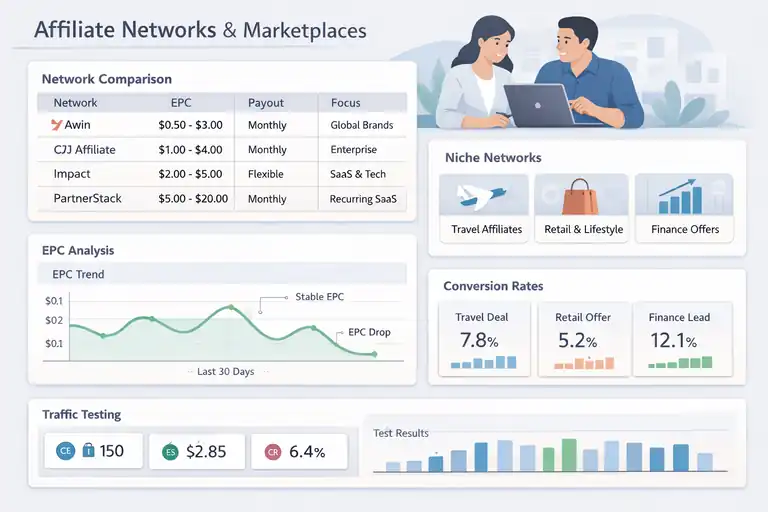
Once you understand what makes an offer convert, the next step is finding where those offers live. Not all networks are equal—some specialize in volume, others in quality.
Compare Reputable Affiliate Networks by Conversion Performance
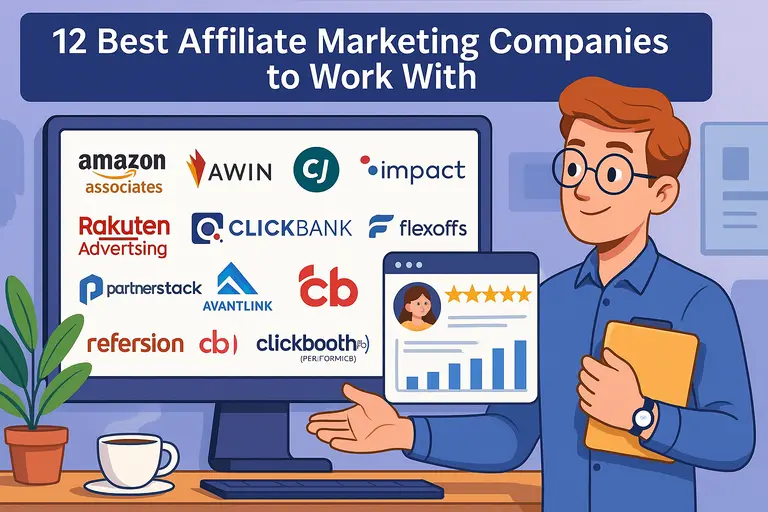
Today, most of the old ShareASale programs have moved under Awin, a trusted network with reliable payouts and transparent reporting. Awin offers a range of top-performing verticals—from SaaS to fashion to finance.
Here’s how Awin and others compare:
| Network | Known For | Typical EPC | Payout Terms |
| Awin | High-quality global brands | $0.50–$3.00 | Monthly |
| CJ Affiliate | Enterprise-level merchants | $1.00–$4.00 | Monthly |
| Impact | Strong SaaS & tech offers | $2.00–$5.00 | Flexible |
| PartnerStack | Recurring SaaS programs | $5.00–$20.00 | Monthly |
When comparing networks, look beyond commissions. Focus on EPC (Earnings Per Click)—a metric showing how much affiliates earn per click. EPC helps predict real earning potential more accurately than a flat commission rate.
Explore Niche-Specific Networks for Targeted Audiences
If you’re in a focused niche—like health, finance, or travel—it’s often better to join niche-specific affiliate platforms.
Examples include:
- Travelpayouts (for travel content creators)
- Rakuten Advertising (for retail and lifestyle)
- FlexOffers (broad network, but with niche filters)
I personally like how Travelpayouts breaks down average conversion rates for each offer directly on their dashboard, making it easy to choose partners that already perform well.
Use Network Tools to Evaluate EPC (Earnings Per Click) and Conversion Rates
Most networks show EPC and CR (Conversion Rate) metrics, but few affiliates really use them strategically.
Here’s how I do it:
- Filter by EPC Range: Start by shortlisting offers with EPC above your network’s average.
- Check 30-Day Trends: A stable EPC means consistent conversions; sharp drops could signal saturation.
- Test Small Traffic Samples: Drive 100–200 clicks to each shortlisted offer and compare actual EPC vs. reported EPC.
Remember, metrics guide decisions—but real-world performance always tells the truth.
Evaluate Product Quality and Credibility Before Promoting
Even the most promising affiliate marketing offers won’t convert if people don’t trust the product. Credibility builds conversions.
Check Reviews, Refund Rates, and Brand Reputation
Before signing up, take a quick look at what actual users say. High refund rates are often a red flag—meaning people regret their purchase.
- Read Trustpilot and G2 Reviews: Look for patterns in complaints. One bad review isn’t an issue; repeated problems are.
- Check Refund Policies: Transparent refund policies signal brand confidence.
- Search the Brand + “Scam” or “Issues”: If you find too many complaints, skip it.
In my experience, a trustworthy product with slightly lower commission often beats a sketchy one with flashy payouts.
Test the Product or Service Personally When Possible
The best affiliates use what they promote. Testing builds authenticity and lets you write from personal experience.
If you can, request a demo or trial from your affiliate manager. For instance, Awin and Impact partners often provide demo access for high-performing affiliates.
Use it to:
- Capture screenshots for your blog or YouTube video.
- Highlight real pros and cons.
- Share how the tool fits into your workflow.
When readers see you’ve actually used it, trust skyrockets.
Avoid Overhyped or Low-Trust Offers That Damage Credibility
It’s tempting to promote offers with “huge” commissions, but hype usually comes with risk.
Avoid:
- Unverified “get rich quick” programs.
- Overpromised health or finance products.
- Brands with no visible support or contact info.
Once your reputation takes a hit, rebuilding audience trust takes far longer than replacing a low-performing affiliate offer.
A good rule I follow: If I wouldn’t recommend it to a friend, I don’t promote it to my audience.
Use Data Metrics to Identify Proven Converting Offers
When it comes to affiliate marketing offers, guessing doesn’t work—you need numbers. The right data shows which offers are worth your effort and which ones quietly drain your traffic without converting.
I’ll walk you through the key metrics I always track and how to use them to make better affiliate decisions.
Monitor EPC, Average Order Value, and Payout Frequency
These three metrics—EPC, AOV, and payout frequency—tell you how profitable an offer truly is. Let’s decode them.
EPC (Earnings Per Click): This measures how much you earn on average for every click your affiliate link receives. Most networks like Awin, CJ Affiliate, or Impact display this right inside your dashboard.
- If you see an EPC of $2.50, it means affiliates typically earn $2.50 for every 100 clicks.
- A consistently high EPC (above your niche average) usually signals strong conversions and reliable tracking.
AOV (Average Order Value): This shows how much the customer spends per transaction. Higher AOV means bigger commissions even if conversion rates are average. For example, a $50 AOV product at a 10% commission earns $5 per sale, while a $200 AOV product earns $20.
Payout Frequency: Some networks pay monthly, others biweekly or even weekly. Frequent payouts help with cash flow, especially when you’re scaling paid traffic campaigns. For instance, Impact and PartnerStack often allow faster payouts once you hit a minimum threshold.
My suggestion? Create a simple spreadsheet to log these numbers side by side for each offer. Seeing patterns visually helps you spot which products give the best ROI.
Track Conversion Rate Trends Over Time
Conversion rate isn’t a static number—it changes with seasons, trends, and even landing page updates. What converts well in January may not perform the same in July.
Here’s how I keep track of conversion performance:
- Export Monthly Reports: Most affiliate dashboards let you download performance data by date range.
- Visualize in a Chart: Plot monthly conversion rates to identify peaks or dips.
- Cross-Check Campaign Changes: If conversions spike after you updated a blog layout or CTA, that’s a pattern worth repeating.
For example, when I tested a “Try for Free” button instead of “Buy Now,” conversions for one SaaS product increased by 18%. That one tweak came from analyzing three months of trend data.
Data doesn’t just tell you what’s working—it tells you why it’s working.
Compare Commission Structures (Recurring vs. One-Time)
A big decision in affiliate marketing is choosing between recurring and one-time commissions. Both have pros and trade-offs.
Recurring Commissions:
- Typically found in SaaS or subscription-based products (like Aweber or Canva Pro).
- You earn a percentage every month as long as the user stays subscribed.
- Great for building predictable income over time.
One-Time Commissions:
- Common in eCommerce or digital products.
- You get paid once per sale—often higher upfront, but no long-term benefit.
If you’re just starting out, one-time payouts are motivating because you see cash flow faster. But if your goal is sustainable income, recurring programs often outperform in the long run.
I personally like mixing both—quick one-time offers for short-term gains and recurring programs for stability.
Analyze Competitors’ Top-Performing Affiliate Campaigns
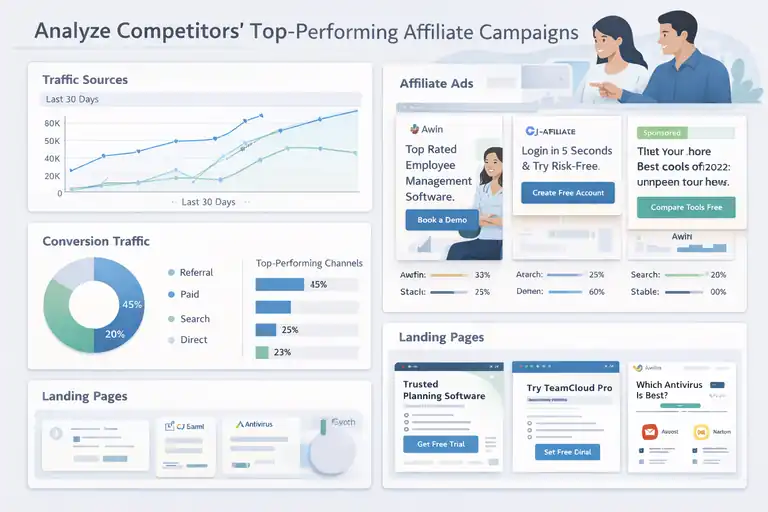
One of the smartest shortcuts to finding high-converting affiliate marketing offers is to study what’s already working for others in your niche.
Competitor analysis saves you time, helps you spot hidden gems, and shows how successful affiliates structure their content.
Spy on Competitors Using Tools Like SimilarWeb and WhatRunsWhere
You don’t need to guess what your competitors are promoting—you can see it. Tools like SimilarWeb show which traffic sources and landing pages drive the most engagement.
For example:
- Go to SimilarWeb → Enter a competitor’s domain → Check their top referral sources. If many referrals come from affiliate networks like Awin or CJ Affiliate, note those merchants.
- Use WhatRunsWhere (for ad intelligence) to see the ads they’re running, where they appear, and which creatives stay live the longest. Long-running ads usually mean they convert.
Even just five minutes inside SimilarWeb can uncover patterns like “They’re getting 60% of their traffic from software review pages,” which gives you a direction to test.
Study Landing Pages and Funnels of Successful Affiliates
If you want to improve conversions, study where your competitors send their audience after the click. Their landing pages are often a goldmine of ideas.
What to look for:
- Clear value proposition above the fold (usually one strong headline).
- Trust signals like testimonials or “as featured on” badges.
- Simple CTAs such as Get Started Free or See Plans & Pricing.
You can use BuiltWith or your browser’s “Inspect” tool to see what tracking scripts or funnel builders they’re using (like ClickFunnels, Unbounce, or Thrive Architect).
By reverse-engineering their flow—from blog to email to landing page—you’ll understand how they guide users through the decision process.
Identify the Types of Offers They Repeatedly Promote
Consistency is a clue. If a competitor promotes the same product across multiple pages or over several months, it’s probably converting well.
Look for these signs:
- They have multiple articles linking to the same affiliate program.
- The product appears in comparison lists and reviews.
- They use different CTAs for the same brand (for example, “Try Canva Free” and “Upgrade to Canva Pro”).
I once noticed a creator mentioning the same SaaS tool in every “Top Tools” roundup—they weren’t doing that for fun. When I joined the same program, my conversions validated that insight.
Competitor research isn’t about copying—it’s about learning what resonates and adapting it in your authentic way.
Match Affiliate Offers to Your Audience and Content Type
Even the best affiliate marketing offers won’t convert if they don’t align with your content or audience’s mindset.
The goal is relevance—finding products that feel like a natural extension of what you already share.
Select Offers That Align With Your Niche Content Topics
Relevance is everything. If you run a finance blog, promoting travel accessories won’t make sense, no matter how high the commission.
To align offers:
- Choose products your audience already uses or aspires to use.
- Audit your top-performing posts and see what kind of products fit naturally.
- Use affiliate marketplaces like Awin or Impact to filter offers by category.
For instance, if your top article is “Best Tools for Freelancers,” you could integrate SaaS offers like FreshBooks, Toggl Track, or Notion.
The tighter the match between content and product, the higher your conversions will be.
Integrate Offers Naturally Into Tutorials, Reviews, or Guides
Nobody likes a hard sell. The trick is to blend your affiliate recommendations into genuine educational or storytelling content.
Here’s what works well:
- In tutorials, show the tool in action. Example: “To design my workflow dashboard, I use Notion—it lets me create drag-and-drop templates.”
- In reviews, share your honest experience: pros, cons, and who the product is best for.
- In guides, integrate links as natural next steps, not interruptions.
The goal is to make your affiliate link feel like a logical solution, not an ad. That’s what earns trust—and sales.
Segment Offers Based on Audience Demographics and Interests
Your audience isn’t one-size-fits-all, so your offers shouldn’t be either. A college student, a freelancer, and a business owner might all read your blog—but their purchase power and needs are different.
Try segmenting your promotions like this:
- By Demographics: Younger audiences might prefer budget tools, while professionals look for premium solutions.
- By Content Type: Use lighter offers in educational content and stronger CTAs in decision-focused posts.
- By Engagement Level: Offer entry-level products to new subscribers, and higher-ticket options to loyal readers.
Using email segmentation tools (like Kit’s tags or ActiveCampaign automations), you can send tailored affiliate recommendations that feel personal.
In my experience, just segmenting one campaign by reader type can increase CTR (click-through rate) by 20–30%.
Test Multiple Offers and Track Performance Consistently
Even if you’ve found a few affiliate marketing offers that seem to perform well, you’ll never really know what’s best until you test them. Consistent testing and tracking are the backbone of profitable affiliate marketing.
Let’s look at how to do this strategically without feeling overwhelmed.
Run A/B Tests on Links, Banners, and Landing Pages
A/B testing means showing two versions of a page, link, or creative to different users to see which one converts better. It’s not about guessing—it’s about proving what works with real data.
You can start small:
- Test link placements: For example, put your affiliate link once near the top of a blog post and once at the end. Track which placement gets more clicks.
- Test banner designs: Use different call-to-actions (CTAs) like Start Free Trial versus Get Instant Access.
- Test landing page variations: Change one element at a time—like a headline, button color, or testimonial section—to see its effect on conversions.
Tools like VWO (for simple A/B tests) or Thrive Optimize (for WordPress) can make this process easy without coding. The goal isn’t to make huge changes—it’s to learn how small tweaks impact performance.
I once ran two identical reviews for a software tool, except one included a short video demo near the top. That version converted 27% better. A single test can literally change your earnings.
Use Analytics Tools Like Voluum or ClickMagick for Tracking
If you’re serious about affiliate marketing, you need to know exactly where your conversions come from. Platforms like Voluum or ClickMagick help track clicks, conversions, devices, and traffic sources in one place.
Here’s how I usually set it up:
- Create a tracking link inside Voluum for each affiliate offer.
- Label traffic sources (e.g., Blog, YouTube, Email) so you can see which channel performs best.
- Review metrics weekly—check CTR (Click-Through Rate), CR (Conversion Rate), and ROI (Return on Investment).
These platforms also help you catch wasted clicks. For example, if you notice that mobile users click but rarely convert, it might mean your landing page isn’t mobile-friendly.
For simpler setups, some affiliates use Bitly for basic link tracking. But as you grow, Voluum gives deeper insights and real-time optimization options that are worth it.
Eliminate Low-Converting Offers and Double Down on Winners
Once you start gathering data, it’s time to act on it. You don’t need dozens of affiliate programs—you need a few that consistently perform.
Here’s a simple process:
- After 1,000 clicks, evaluate each offer’s EPC and conversion rate.
- Cut offers that underperform by more than 20% compared to your average.
- Redirect your best-performing traffic toward offers with proven EPCs.
This approach keeps your strategy lean and profitable. Think of it like pruning a garden—by cutting weak plants, you give your best ones more room to grow.
I remember dropping a low-converting digital course that paid $100 per sale. It looked good on paper but converted poorly. Replacing it with a recurring SaaS offer brought steady income instead of occasional spikes.
Optimize Affiliate Offer Presentation for Conversions
You can have the best affiliate offers in the world, but if they’re not presented effectively, they won’t sell. Presentation builds trust and guides readers naturally toward taking action.
Craft Compelling Copy That Focuses on Benefits, Not Just Features
People don’t buy features—they buy what those features do for them. Instead of listing product specs, show outcomes.
For example:
- Instead of “This tool automates email follow-ups,” write “This tool saves you hours each week by sending your follow-ups automatically.”
- Instead of “This course has 12 modules,” say “In 12 short lessons, you’ll go from beginner to confident marketer.”
Keep your copy conversational and human. Avoid hype. If you genuinely like a product, explain how it fits into your workflow or solved a specific problem. Authentic enthusiasm converts better than fancy adjectives.
Use Scarcity and Urgency Without Being Pushy
A little urgency can help, but only when it’s real. Fake scarcity destroys credibility fast.
Here’s how to apply it naturally:
- Mention real deadlines, like limited-time discounts or seasonal bonuses.
- Use soft urgency cues: “Spots are filling fast” or “This bonus ends Friday.”
- Add a countdown timer only if it’s genuine—tools like Deadline Funnel make it easy to automate this without being manipulative.
The goal is to encourage timely action, not pressure your readers.
Add Trust Elements Like Testimonials and Case Results
Trust sells more than any persuasive headline ever could. Real examples and social proof help your audience feel safe making a purchase through your link.
You can add trust signals like:
- Short testimonials from verified users.
- Screenshots showing your own experience (with sensitive info blurred).
- Mention of the product’s existing reputation, like “used by over 10,000 marketers.”
In my own reviews, adding a simple screenshot of my dashboard after using a tool (like Awin’s reporting panel or a ClickMeter analytics snapshot) increased engagement noticeably. People like proof—it makes your recommendation feel real.
Build Long-Term Relationships With Affiliate Managers
Behind every good affiliate marketing offer is an affiliate manager—the person who connects you with brands, negotiates payouts, and helps optimize your campaigns.
Building real relationships with them is one of the most overlooked ways to boost affiliate income.
Request Custom Offers or Higher Commissions for Proven Results
Once you’ve proven that you can drive consistent sales, don’t be afraid to ask for more. Managers often have flexibility to increase your commission rate or create special coupon codes for your audience.
When reaching out, be polite but specific:
“Hi [Manager’s Name], I’ve generated X conversions in the past 30 days for [Brand]. I’d love to discuss a custom rate or exclusive bonus to help scale further.”
Most brands are happy to reward affiliates who perform. I’ve seen rates increase by 10–20% simply by asking.
Ask for Exclusive Bonuses or Early Access to New Products
Brands often launch new features, products, or updates, and affiliates who get in early benefit from lower competition.
By maintaining a friendly relationship with your affiliate manager, you can get access before others do.
For example, when Awin partners launch seasonal campaigns, their managers often send early promotional materials or discount codes to trusted affiliates.
Using these first gives you a conversion advantage before the wider network catches on.
Collaborate on Co-Branded Campaigns for Better Conversions
If you’ve built a strong platform (blog, newsletter, or social following), some brands will co-create campaigns with you. These could be joint webinars, limited offers, or featured spotlights that include your name.
This works because it blends the brand’s authority with your trust. Even a small co-branded email or landing page can lift conversions by 15–25%.
I once partnered with a SaaS tool on a “Creator Toolkit” promo where my name appeared alongside the brand. That single collaboration generated three times more sign-ups than my usual campaign.
Affiliate marketing is about relationships as much as data—and when you blend both, your results compound over time.
Keep Updating and Rotating Offers Based on Market Trends
Affiliate marketing isn’t a “set it and forget it” kind of game. Even the best affiliate marketing offers can lose traction if they’re not refreshed or adapted to what’s happening in the market.
Keeping your offers updated, relevant, and engaging ensures your audience always sees value in what you promote.
Stay Aware of Seasonal or Trend-Driven Opportunities
Every niche has its seasons—both literally and figuratively. Whether it’s Black Friday, New Year’s resolutions, or the latest AI software trend, timing can multiply your conversions.
Here’s how I personally stay ahead:
- Use Google Trends: Type your main keyword (like “email marketing tool” or “home workout app”) to spot when interest spikes.
- Plan Ahead for Seasonal Events: Many affiliate networks like Awin and Impact release campaign calendars in advance. I usually mark key events—like Cyber Monday or Valentine’s Day—to schedule content weeks before demand peaks.
- Watch Social Buzz: X (formerly Twitter), TikTok, and Reddit often reveal what’s trending before it hits mainstream search. If your niche overlaps, jump in early with a relevant offer.
For example, I once capitalized on a new “AI writing tools” surge by updating an old content marketing guide. I added Jasper AI as an affiliate recommendation, and within a month, that post tripled in clicks. Timing made all the difference.
Rotate Offers to Prevent Audience Fatigue
Even loyal readers tune out if they see the same product mentioned repeatedly. Rotating offers not only keeps your content fresh but also helps you discover what else resonates with your audience.
Here’s a simple approach:
- Set a Rotation Schedule: Every quarter, review your top affiliate links and replace underperforming ones with new offers.
- Test New Partners Gradually: Don’t replace everything at once. Keep your best-performing offers steady while testing 1–2 new programs per month.
- Diversify Within the Same Category: If you promote one project management tool, try featuring an alternative with a unique edge (like Monday.com vs. ClickUp).
By rotating offers smartly, you protect your audience’s trust while improving conversions through variety. Think of it like refreshing a restaurant menu—familiar, but with new flavors.
Follow Industry Updates and Consumer Shifts Regularly
Markets evolve fast. A product that converted well last year might fall behind due to competition, pricing changes, or new technology. Staying updated keeps your recommendations accurate and valuable.
To stay informed, I suggest:
- Subscribing to Affiliate Network Newsletters: Awin, Impact, and PartnerStack regularly announce trending offers, new merchants, and program updates.
- Joining Niche-Specific Communities: Reddit threads, Slack groups, or Facebook communities for affiliates often share real-world performance insights you won’t find on dashboards.
- Reviewing Analytics Monthly: Look for declining EPCs or conversions—they might signal it’s time to switch focus.
For instance, I once noticed a steady drop in conversions for a finance app I’d promoted for years. After checking reviews, I found users were frustrated by new fees. Replacing it with a competitor improved conversions by 42% within a month.
Adapting early always beats reacting late.
Pro Tip: Focus on Evergreen Affiliate Offers for Stability
While chasing trends can bring short-term wins, your long-term income depends on stability.
Evergreen affiliate marketing offers are products or services that stay relevant year after year—those are the real foundation of sustainable affiliate income.
Choose Offers With Consistent Demand Over Time
Evergreen offers don’t rely on hype or seasonality. They solve ongoing problems—like productivity tools, web hosting, or personal finance apps.
I like to look for offers that meet these three criteria:
- The product solves a problem people always have (e.g., saving money, managing time, learning skills).
- The brand has a track record of updates and support.
- The search volume for related keywords remains steady on Google Trends.
Examples include:
- Hostinger for web hosting (people always need websites).
- Canva Pro for design (constant content creation demand).
- Mailerlite for email marketing (recurring business need).
These programs might not deliver overnight spikes, but they provide reliable income and less maintenance.
Balance Between Evergreen and Trend-Based Promotions
It’s smart to keep a mix of both evergreen and trending offers. Evergreen products ensure steady income, while trend-based ones help you capture temporary surges in traffic and conversions.
Here’s how to balance them:
- Use 70/30 Rule: Keep 70% of your affiliate promotions evergreen and 30% trend-driven.
- Leverage Trend Offers for Growth: Use high-interest periods to attract new subscribers or traffic. Then, nurture them with evergreen offers later.
- Plan Content in Layers: For example, publish a “2025 Marketing Trends” post (short-term traffic) that links internally to a “Best Email Marketing Tools” evergreen guide (long-term value).
In my experience, this combination smooths out income fluctuations and keeps your strategy both adaptable and sustainable.
Prioritize Offers With Recurring Commissions for Long-Term Growth
If you want real financial stability, recurring commissions are your best friend. These programs pay you monthly as long as a referred customer remains active.
Common examples include:
- SaaS products like Grammarly, Notion Plus, or HubSpot.
- Membership-based services like Skillshare or Teachable.
- Subscription tools like TubeBuddy for YouTube creators.
Recurring offers help compound your earnings. Imagine adding just $100 in recurring revenue each month—it might not sound like much, but over a year, that’s $1,200 in predictable income without extra effort.
I once replaced three one-time commission offers with two recurring ones in the same niche. Within six months, my monthly passive income became more stable—even when traffic dipped. That’s the quiet magic of compounding affiliate growth.
FAQ
How do I find affiliate marketing offers that actually convert?
Look for affiliate marketing offers with high EPC (earnings per click), strong conversion rates, and trusted brands. Test multiple offers and focus on those that match your audience’s needs.
What makes an affiliate offer high converting?
A high-converting affiliate offer solves a clear problem, has a credible product, compelling landing pages, and aligns with the buyer’s intent and stage in the sales funnel.
Which networks have the best affiliate marketing offers?
Top affiliate networks with reliable, high-performing offers include Awin, Impact, PartnerStack, and CJ Affiliate. These platforms provide transparent data and proven conversion metrics.

I’m Juxhin, the voice behind The Justifiable.
I’ve spent 6+ years building blogs, managing affiliate campaigns, and testing the messy world of online business. Here, I cut the fluff and share the strategies that actually move the needle — so you can build income that’s sustainable, not speculative.
Related posts:
 How to Become a Better Affiliate Marketer
 5 Best Affiliate Marketing Programs: Boost Your Earnings Now!
 What No One Tells You About Affiliate Marketing
 10 Digital Marketing Affiliate Marketing Hacks That Work
 12 Best Affiliate Marketing Companies to Work With
 How to Become an Affiliate Marketer and Earn Online