
Table of Contents
Some links on The Justifiable are affiliate links, meaning we may earn a small commission at no extra cost to you. Read full disclaimer.
When I first started exploring affiliate marketing, finding the right affiliate platform felt like trying to pick the best key for a lock I hadn’t learned to open yet.
With so many options promising easy setup and big rewards, it’s easy to get overwhelmed. The truth is, beginners need platforms that are simple, transparent, and offer great support.
I’ve narrowed down the 12 best affiliate platform options that truly make starting out both profitable and beginner-friendly.
1. Awin: Best All-Around Affiliate Platform for Beginners
Awin stands out as one of the most beginner-friendly affiliate platforms, combining simplicity with powerful features that make starting out both easy and rewarding.
It’s known for its global reach, transparent tracking, and access to thousands of quality merchants.
Awin’s Easy Setup and Global Reach
What I like most about Awin is how effortless the setup feels. After you create an account, you’ll complete a short onboarding process—just verify your website or social media, add payment details, and you’re ready to apply for affiliate programs.
Awin supports affiliates in over 180 countries, so you’re not limited by geography. Whether you’re promoting fashion, finance, or digital tools, you can find programs that pay well in your region.
Example path: Dashboard → Advertisers → Apply to Program → Get Tracking Link
This global coverage means you can build partnerships with international brands without worrying about local restrictions or limited payout options.
Types of Programs Available on Awin
Awin offers a massive variety of affiliate programs across almost every niche you can imagine.
Here are some of the most popular categories:
- E-commerce & Retail: Access to brands like Etsy, HP, and AliExpress.
- Travel: Work with companies like Booking.com and Expedia.
- Finance: Partner with banks, credit card providers, and insurance brands.
- Tech & SaaS: Join programs for software tools and subscriptions.
Because all programs are vetted before being listed, you’ll rarely encounter low-quality or scammy offers. This gives you peace of mind as a beginner trying to build credibility with your audience.
How Awin Supports New Affiliates
What makes Awin beginner-friendly is its educational and technical support. The Awin Opportunity Marketplace suggests affiliate programs based on your content category. If you’re a travel blogger, for example, it’ll automatically recommend hotel or flight brands.
Awin also offers an Awin Access tier designed specifically for small creators and new affiliates. It features low barriers to entry, real-time support, and learning resources.
A small but underrated feature is the Awin Chrome Extension, which lets you generate affiliate links directly while browsing partner websites. It saves a lot of time compared to manually logging into your dashboard every time.
Payment Structure and Minimum Payout Details
Awin operates on a commission-per-sale model, but you’ll find programs offering recurring payments or cost-per-lead structures, depending on the advertiser.
The minimum payout threshold is usually $20, and payments are processed twice monthly once you’ve reached that amount. Awin supports multiple payout currencies, including USD, GBP, and EUR, which is great if you’re working with brands in different regions.
Payment methods include direct bank transfer and PayPal, both with reliable payment tracking. You can monitor your earnings in real time using Awin’s intuitive dashboard, making it easier to see which campaigns are performing best.
2. ClickBank: Trusted Affiliate Platform for Digital Products
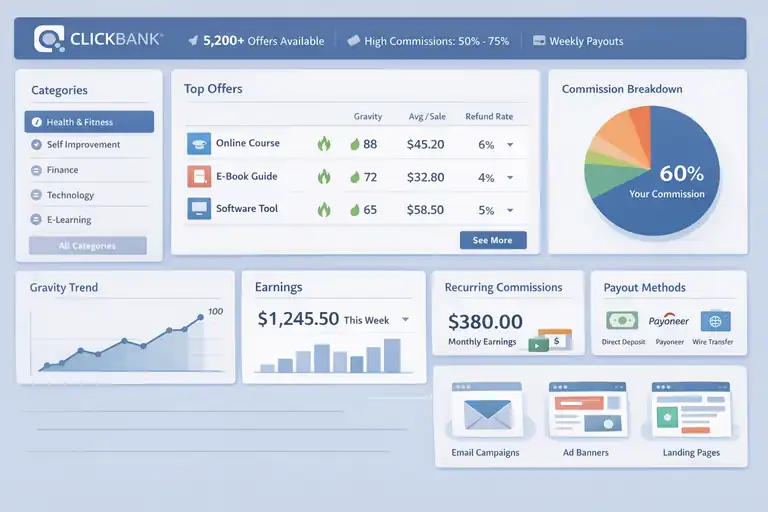
ClickBank is one of the oldest and most trusted affiliate platforms focused on digital products—like online courses, eBooks, and software.
For beginners, it’s an easy way to start earning since it doesn’t require approval to promote most offers.
Why ClickBank Is Ideal for New Digital Marketers
Unlike many networks that require manual application reviews, ClickBank lets you instantly access thousands of offers. This means you can start promoting products within minutes of signing up.
ClickBank’s niche diversity is impressive—covering health, self-improvement, finance, and tech. Each product comes with a gravity score, which tells you how well it’s currently selling. As a beginner, this helps you avoid guesswork and focus on high-converting offers.
Commission Rates and Payout Flexibility
One of ClickBank’s strongest points is its high commission structure. Many products pay 50–75% per sale, and digital products often mean instant delivery—so the commissions come faster.
Payouts are available weekly or bi-weekly, and you can choose between direct deposit, Payoneer, or wire transfer. The minimum payout is $10, which is great for new affiliates testing small campaigns.
Pro tip: Use ClickBank’s Recurring Billing Products filter to find offers that generate monthly commissions—perfect for building passive income.
Finding High-Converting Offers on ClickBank
Here’s a quick path to locate profitable offers:
Marketplace → Choose Category → Sort by Gravity → Analyze Average $/Sale → Check Refund Rate
Look for products with a gravity score between 30–100, a refund rate under 10%, and solid average earnings per sale. These metrics show stability and real customer demand.
You can also analyze affiliate tools provided by vendors—like email swipes, banners, and landing pages. These resources make promoting products far easier when you’re just starting out.
Tips for Promoting ClickBank Products Effectively
The key to success with ClickBank is relevance. Pick offers that naturally align with your content. For example, if you run a fitness blog, promoting a workout app or nutrition guide feels authentic.
A few proven tactics include:
- Create tutorial-style content: “How I Used [Product] to Lose 10 Pounds” performs better than generic reviews.
- Build an email funnel: Capture leads using free resources, then promote related ClickBank products.
- Use YouTube or TikTok short-form content: Quick video breakdowns drive fast engagement.
Over time, test multiple products within the same niche to see which has the best conversion rate. ClickBank’s tracking tools will show you what’s performing and where to optimize.
3. Impact: Best Affiliate Platform for Brand Partnerships
Impact has become a go-to affiliate platform for creators who want to work with major brands and high-quality advertisers. It’s designed to support long-term partnerships, making it ideal once you’ve built a bit of traction.
What Makes Impact Different from Traditional Networks
Unlike marketplaces where you apply to programs individually, Impact gives you access to a partnership marketplace that feels more like LinkedIn for affiliates.
You can view detailed brand profiles, audience demographics, and average conversion rates before applying. This transparency helps you make smarter decisions about which brands fit your audience.
Impact also supports influencer collaborations alongside traditional affiliate links—so you can earn commissions from both clicks and branded campaigns.
Navigating the Impact Dashboard as a Beginner
When you log in, the dashboard might look intimidating, but it’s actually well-structured. Here’s a simple UI path:
Dashboard → Brands → Discover → Apply → Get Tracking Link
You’ll see performance insights, real-time conversions, and payment tracking on the main screen. Impact’s reporting system breaks data into clear visuals—showing clicks, leads, and approved commissions by date.
The Partner Portal even lets you track multiple websites or influencer profiles under one account, saving time if you manage different channels.
Top Brands and Niches on Impact
Impact’s portfolio is stacked with major names across industries.
Some examples include:
- Retail: Walmart, Adidas, and Levi’s.
- Finance: American Express and Capital One.
- Travel: Expedia and Hotels.com.
- Tech & SaaS: Canva, Shopify, and Semrush.
This makes it especially attractive if you’re aiming to build a premium affiliate brand. You can move from promoting generic products to working with household names that improve your credibility.
How to Maximize Earnings with Impact’s Tracking Tools
Impact’s tracking suite gives you access to deep data on every click, conversion, and payout. You can create custom tracking links for different campaigns and monitor which content channels bring the best ROI.
Here’s how I usually optimize campaigns:
- Use SubID Tracking: Add identifiers (like “blogpost1” or “ytvideo”) to track performance by source.
- Compare EPC (Earnings Per Click): Focus your time on programs with consistent EPC over short spikes.
- Automate Reports: Schedule weekly reports to your inbox for ongoing campaign analysis.
Over time, this kind of data-driven optimization compounds your results, helping you earn more with less guesswork.
4. Rakuten Advertising: Great for Established Retail Brands
Rakuten Advertising is one of the most respected affiliate platforms for partnering with premium retail brands.
If you’re aiming to promote household names and trusted companies, Rakuten offers the credibility and tools you need to start strong.
Why Rakuten Appeals to New Affiliates
What makes Rakuten attractive to beginners is its stability and simplicity. It’s backed by Rakuten, a global e-commerce giant often called the “Amazon of Japan,” giving you confidence that you’re working with a legitimate network.
Unlike some affiliate networks that overwhelm you with options, Rakuten’s interface feels clean and structured. When you sign up, you’ll notice a clear navigation path:
Dashboard → Advertisers → Categories → Apply → Get Link
It may take a little longer to get approved for certain programs, but the brands you’ll access are worth the wait—think Walmart, Macy’s, and Best Buy.
Rakuten also provides solid affiliate education through its Publisher Learning Center, helping you understand commission tracking, link creation, and campaign optimization.
Partnering with Major Retailers Through Rakuten
Rakuten’s biggest strength lies in its partnerships with top-tier global retailers. As a beginner, working with such names immediately adds credibility to your content.
Some of the well-known brands available include:
- Macy’s: Ideal for lifestyle, fashion, and home decor affiliates.
- Walmart: Perfect for promoting household or tech products.
- Best Buy: Great if your audience is tech-savvy or gadget-focused.
- Sephora: Excellent for beauty influencers and bloggers.
You can browse by category or search specific retailers. Each listing includes details like approval rate, average order value, and cookie duration—so you can make informed decisions about which programs to join.
Understanding Rakuten’s Commission Model
Rakuten uses a cost-per-sale (CPS) model, meaning you earn a commission each time a user makes a purchase through your affiliate link. Commission rates vary widely depending on the brand, usually ranging between 2% to 15%.
One nice feature is Rakuten’s transparent payment reporting. You can track commissions by day, advertiser, and campaign, making it easy to spot which products perform best.
Payments are made monthly via direct deposit, and there’s no confusing payout system. You just need to meet the minimum payout threshold of $50 to receive your earnings.
Pro tip: Focus on brands with high average order values (AOV) like electronics or luxury fashion—this can multiply your commission even at lower percentage rates.
Best Practices for Getting Approved as a New Affiliate
Rakuten’s approval process is stricter than many networks, but you can increase your chances with a few smart steps:
- Have a live website or social channel: Make sure it looks professional and relevant to the niche you’re targeting.
- Write a short application note: Explain how you plan to promote the brand authentically.
- Avoid generic applications: Tailor your message for each retailer. For example, “I run a tech blog focused on comparing home gadgets and plan to feature Best Buy products in weekly reviews.”
- Keep traffic organic: Rakuten often declines applicants using paid ads only.
Once approved, Rakuten’s reporting tools help you build data-driven strategies from day one.
5. CJ (Commission Junction): Reliable Network for Diverse Offers
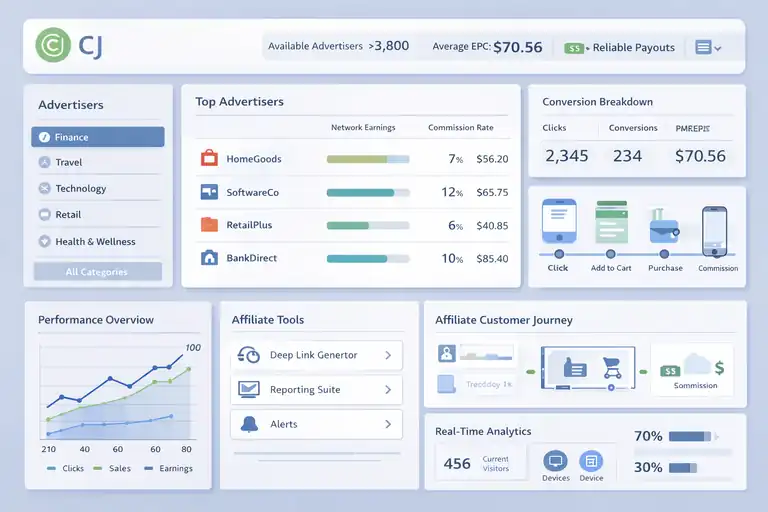
CJ, formerly known as Commission Junction, is a veteran in the affiliate marketing world.
It’s known for its wide selection of advertisers, advanced analytics, and reliable payments, making it one of the most stable affiliate platforms for both beginners and experienced marketers.
How CJ Simplifies Affiliate Management for Beginners
CJ’s interface might look professional at first glance, but it’s surprisingly intuitive once you get started. The dashboard consolidates all essential data—earnings, clicks, and conversions—into one clear snapshot.
To find programs, you simply navigate this path:
Advertisers → Categories → Apply → Create Link → Track Performance
Beginners appreciate how CJ integrates everything under one roof. You can manage multiple advertisers without juggling separate dashboards or confusing tools.
There’s also a Performance Overview tab that gives real-time analytics, helping you quickly spot trends or underperforming campaigns without digging through complex reports.
Tools and Analytics Available on CJ
CJ offers some of the most detailed analytics tools of any affiliate platform. Their Deep Link Generator lets you create affiliate links to any page on a retailer’s site, not just predefined product links.
Other helpful tools include:
- Performance Insights: Track conversions by source, device, or time period.
- Affiliate Customer Journey Reports: See how customers move through your funnel.
- Automated Alerts: Get notifications when a program updates terms or commission rates.
These features help you move from “just promoting” to strategically optimizing your affiliate campaigns.
Finding Profitable Niches Within the CJ Marketplace
CJ covers almost every niche, but some perform better for beginners than others. Based on data and experience, here are high-performing categories:
- Finance: Banks, credit cards, and investment apps.
- Travel: Hotels, flight booking platforms, and car rentals.
- Technology: Software subscriptions and digital tools.
- Retail: Fashion, beauty, and lifestyle brands.
When browsing, sort advertisers by Network Earnings—a metric that shows which programs generate the most revenue across all affiliates. This is a strong indicator of conversion potential.
A quick example: if a “Tech Tools” program has high network earnings and offers a 10% commission, it’s likely a solid choice for a new affiliate.
Common Mistakes to Avoid When Using CJ
New affiliates often make a few avoidable errors that limit their success:
- Applying to too many programs at once: Focus on 2–3 solid partnerships initially.
- Ignoring reporting tools: Check your analytics weekly to understand performance trends.
- Using direct product links only: Create deep links to category pages for higher conversions.
- Neglecting compliance rules: Always disclose affiliate relationships to maintain transparency.
By taking time to analyze results and refine content strategy, you’ll quickly move from beginner to professional on CJ.
6. PartnerStack: Top Choice for SaaS Affiliate Programs
PartnerStack is my favorite platform for promoting software-as-a-service (SaaS) products.
It’s tailored specifically for the tech world, giving you access to recurring commissions, clean dashboards, and professional-grade partner management tools.
Why PartnerStack Works Well for Tech and SaaS Niches
The reason PartnerStack stands out is simple—it’s designed for affiliates who love promoting tools and software. Unlike retail networks, it focuses entirely on SaaS companies.
You’ll find programs for marketing tools, analytics platforms, CRMs, and productivity software—all of which pay recurring commissions.
This model means you keep earning as long as the customer stays subscribed, creating a compounding effect over time. For instance, if you refer a $50/month product with 30% commission, you’ll earn $15 every month per active user.
Earning Recurring Commissions on PartnerStack
PartnerStack uses a revenue share model, so you earn a percentage of the user’s subscription fee instead of a one-time payment.
The average recurring commission ranges from 20% to 40%, depending on the software. Many companies offer performance bonuses or milestones—for example, extra payouts when you reach 10 or 50 referrals.
Payments are processed automatically once per month, and you can withdraw funds directly to your bank or PayPal. The platform tracks everything transparently under Dashboard → Rewards → Withdrawals.
Pro tip: Focus on software with low churn rates (like email automation tools or CRMs), since users tend to stay subscribed longer.
Examples of Popular SaaS Brands on the Platform
PartnerStack partners with some of the biggest SaaS names in the industry, including:
- Brevo: Email and CRM automation for small businesses.
- Unbounce: Landing page builder with high conversion optimization potential.
- FreshBooks: Accounting software for freelancers and entrepreneurs.
- Asana: Task and project management platform.
Each program includes detailed information about commission structure, cookie duration, and bonus tiers—so you can pick the ones that fit your audience and goals best.
Step-by-Step Guide to Applying for PartnerStack Programs
Joining PartnerStack is straightforward, but to make it even easier, here’s the simple process:
- Sign up on PartnerStack.com.
- Complete your affiliate profile—add details about your niche and promotional methods.
- Browse available programs under Discover Programs.
- Apply to relevant SaaS partners (each has its own approval timeline).
- Grab your tracking link and start promoting.
Once approved, PartnerStack automatically tracks referrals, subscriptions, and commissions in real time.
If you’re serious about building long-term affiliate income, PartnerStack is one of the most rewarding affiliate platforms to master—especially if you love promoting tools that help businesses grow.
7. Amazon Associates: Beginner-Friendly With Massive Reach
Amazon Associates is often the first affiliate platform most people join—and for good reason. It’s easy to use, highly trusted, and lets you promote almost any product imaginable.
Whether you’re running a small niche blog or a YouTube channel, it’s one of the most beginner-friendly programs to start earning commissions quickly.
Understanding Amazon’s Cookie Duration and Rules
Amazon’s cookie duration is one of the most talked-about aspects of the program. When someone clicks your affiliate link, a tracking “cookie” stays active for 24 hours.
That means you’ll earn a commission on any item they buy within that time—even if it’s not the one you originally linked.
Here’s the part many beginners miss:
- If a user adds a product to their cart within 24 hours, your cookie extends to 90 days, but only for that specific item.
- If they click someone else’s affiliate link after yours, the last link clicked gets the credit.
Because of this short window, timing and placement are everything. I suggest linking to products right when users are most interested—like immediately after showing them how to use it in a tutorial or review.
Also, remember that Amazon has strict rules. You can’t use affiliate links in email newsletters or offline promotions. And you must clearly disclose your affiliate relationship, for example: “As an Amazon Associate, I earn from qualifying purchases.”
Finding Profitable Products Within Amazon’s Catalog
With millions of products available, knowing where to start can feel overwhelming. A smart strategy is to focus on niche relevance—promote items your audience already cares about.
Here’s how to find profitable options:
- Check Amazon’s Best Sellers: Navigate to Amazon.com → Best Sellers and browse categories that match your niche.
- Look for High-Priced Everyday Products: Items like home gadgets or fitness equipment often have smaller commissions but consistent volume.
- Use the “Movers & Shakers” Page: This shows trending products that are gaining traction—perfect for quick wins.
- Analyze Reviews: Items with 500+ reviews and 4+ star ratings are safer bets, as they already have buyer trust.
For instance, if you run a kitchen blog, promoting a $120 air fryer with steady demand will likely outperform random low-ticket items.
How to Increase Conversions with Amazon Associates
The key to success with Amazon Associates is earning trust and creating contextual recommendations rather than random links.
Here are methods that consistently boost conversions:
- Use Comparison Tables: Show side-by-side pros, cons, and prices of 2–3 products to help readers decide quickly.
- Write “Best Of” Articles: Titles like “Top 5 Home Office Accessories for 2025” work great because they target purchase-ready search intent.
- Use Native Shopping Ads: Amazon’s native widgets (available under Product Linking → Native Shopping Ads) automatically display relevant items within your content.
- Add Links Naturally: Don’t stuff affiliate links. Add them only when they truly help readers—like after explaining a product’s benefit.
One small tip that’s worked wonders for me: Always link both text and product images. Readers often click visuals first, and those clicks still count toward your commissions.
Common Pitfalls and How to Avoid Them
Even though Amazon Associates is simple, there are a few traps beginners fall into:
- Overpromoting Low-Value Items: Small commissions on cheap products add up slowly. Mix in higher-priced items to balance earnings.
- Ignoring Regional Links: Use tools like Amazon OneLink to redirect visitors to their local Amazon store automatically.
- Breaking Amazon’s Rules: Never shorten affiliate links with Bitly or hide them behind redirects—Amazon can suspend your account.
- Not Tracking Performance: Use Amazon’s built-in Reports → Earnings → Tracking IDs to identify which links perform best.
If you stay consistent and follow the rules, Amazon Associates can be the foundation that teaches you how affiliate marketing really works.
8. FlexOffers: Best for Access to Hundreds of Programs
FlexOffers is a massive affiliate platform that acts as a bridge between affiliates and advertisers across dozens of industries.
It’s perfect if you want variety, flexibility, and access to hundreds of programs without signing up for each one individually.
How FlexOffers Connects You to Multiple Brands
Once you create your account, FlexOffers gives you instant access to thousands of brands—ranging from big names like Nike and Samsung to niche services in travel, finance, and education.
You can think of it like a marketplace where all affiliate opportunities are under one roof. The interface helps you filter programs by category, commission rate, EPC (earnings per click), and advertiser approval time.
This saves hours of research. Instead of jumping from site to site, you can find the right fit by searching Dashboard → Advertisers → Search → Apply → Get Link.
The big advantage here is scale. You can test several offers at once to see which performs best for your audience.
Navigating FlexOffers’ Interface as a Beginner
FlexOffers’ dashboard can feel data-heavy at first glance, but it’s actually beginner-friendly once you know where things are.
- Dashboard: Displays your earnings summary and active campaigns.
- Advertisers Tab: Lets you browse available programs.
- Reports Section: Tracks clicks, conversions, and commissions.
- Payment Hub: Manages payouts and financial history.
FlexOffers also features a Performance Dashboard that updates daily, so you can identify which brands are driving results in real time. This kind of visibility helps you pivot quickly if something isn’t converting.
Pro tip: Use the “Favorites” feature to bookmark your top-performing advertisers, so you can easily access them later.
Managing Multiple Affiliate Links Efficiently
If you’re promoting multiple brands across blogs or social media, link management becomes crucial. FlexOffers helps you stay organized with Tracking IDs and automated link generators.
For example, if you’re promoting both a travel booking site and a credit card offer, assign each campaign a unique tracking ID (like “travelblog1” or “financeYT”). This lets you monitor conversions per source in Reports → Link Activity → Tracking ID Summary.
To make it even smoother, connect FlexOffers with link management tools like Pretty Links or ThirstyAffiliates so you can cleanly embed affiliate URLs on your website.
Earning Strategies for Maximizing FlexOffers Income
From what I’ve seen, the affiliates who earn the most on FlexOffers use a mix of high-payout and evergreen offers.
Here’s how to make the most of it:
- Balance Fast-Paying and Long-Term Programs: Mix instant commission offers (like retail sales) with recurring services (like credit cards or software trials).
- Promote Seasonal Offers: FlexOffers regularly highlights seasonal campaigns—Black Friday, holiday sales, or back-to-school promotions.
- Use Content Clusters: Instead of one-off posts, create a series around a niche—like “Best Tools for Freelancers” featuring multiple FlexOffers partners.
- Check EPC Weekly: Focus on advertisers with consistent EPC over time rather than occasional spikes.
The more you test, the faster you’ll identify your top money-making programs.
9. Digistore24: Ideal Affiliate Platform for Digital Creators
Digistore24 is one of the best affiliate platforms for creators who prefer selling digital products—like online courses, eBooks, or membership sites.
It’s well-loved for its simplicity, high commissions, and global accessibility.
Exploring Digistore24’s Marketplace for Beginners
The Digistore24 marketplace is laid out to help you find winning offers quickly. After logging in, go to Marketplace → All Offers (Affiliate) → Choose Category.
You’ll see product stats such as:
- Commission Rate (%): The percentage you earn per sale.
- Earnings/Conversion (EPC): Average earnings per click.
- Cart Conversion: The percentage of visitors who purchase after clicking.
This transparency helps beginners make smart, data-driven decisions.
I’d suggest starting with evergreen categories like Health & Fitness, Personal Development, or Online Business, since these consistently attract buyers worldwide.
Commission Models and Payment Cycles
Digistore24 typically offers 40%–85% commissions, which is much higher than most physical product platforms. Payments are made weekly or bi-weekly via PayPal or direct deposit.
Another key advantage is instant approval. Unlike some networks that require you to apply for each product individually, most Digistore24 offers can be promoted immediately after signup.
You can track performance in Account → Statistics → My Affiliate Sales to see clicks, conversions, and refunds in real time.
Popular Niches and High-Paying Offers
Here are some high-performing niches and examples from the platform:
- Health & Fitness: Supplements, weight-loss guides, and home workout programs.
- Finance & Crypto: Trading courses and digital investment tools.
- E-learning: Courses on productivity, online business, or social media growth.
- Software Tools: Digital marketing automation or funnel builders.
Digital products tend to convert better because they’re instantly accessible and often come with upsells—meaning you earn commissions on multiple purchases from one customer.
Tips for Promoting Digital Products Successfully
If you want to get real traction with Digistore24, treat each offer like your own product. That means building content around it, not just dropping links.
Here are a few practical approaches:
- Create Educational Content: Write or record tutorials explaining how the product solves a problem.
- Offer Bonuses: Give a free resource (like a checklist or mini-course) to anyone who buys through your link.
- Leverage Email Sequences: Use simple email funnels that build trust before pitching a product.
- Optimize Landing Pages: Use tools like Unbounce or Elementor to make clean, focused landing pages that match your product’s promise.
From what I’ve experienced, affiliates who personalize their content and build relationships with their audience see far better conversion rates—especially when promoting digital products that require trust before purchase.
10. Shareit: Trusted Platform for Software Affiliates
Shareit is one of the most established affiliate platforms dedicated to software and digital product sales.
If you’ve ever wanted to promote desktop applications, creative tools, or utility software, Shareit provides a solid base with a proven track record in software distribution and affiliate marketing.
Why Shareit Works Best for Software Promotions
Shareit focuses specifically on software developers and digital publishers. That focus makes it ideal if your audience includes tech enthusiasts, freelancers, or small businesses looking for tools to simplify their work.
Unlike broad networks that mix physical and digital products, Shareit’s catalog is niche but deep. You’ll find categories like multimedia editing tools, antivirus software, productivity apps, and developer utilities.
Because it’s part of the Digital River network—a global e-commerce company—Shareit ensures professional tracking, licensing management, and reliable payments. This gives you the confidence that your referrals are recorded accurately, even for downloadable or subscription-based products.
A good example: if you promote software like Movavi Video Editor, you’ll get access to official promotional assets and pre-approved campaigns right inside your dashboard. That helps you skip the usual setup delays and start promoting right away.
Tracking and Reporting Features for Beginners
One of Shareit’s strongest points is its robust analytics and tracking tools. Beginners often appreciate how clearly the system visualizes performance data without overwhelming you.
You can find key metrics under Dashboard → Reports → Sales Overview.
Here’s what you can monitor:
- Click performance: How many users clicked your link.
- Conversion rate: The percentage of those who completed a purchase.
- Commission breakdown: A clear view of earnings per sale or subscription.
- Refund monitoring: Helps you track and adjust campaigns based on cancellations.
What makes this especially helpful is the integration with SubID tracking. You can tag links based on campaigns or traffic sources (for example, “YouTubeReview1” or “BlogPost_Antivirus”) to know exactly which strategy performs best.
Pro tip: Check your Top Products report weekly. It highlights trending software tools, so you can jump on new opportunities early.
How to Join and Get Approved Quickly
Getting started with Shareit is quite simple if you follow the right steps.
- Go to affiliate.mycommerce.com and click Join Now.
- Fill in your contact and payment details.
- Add your website or promotional channel with a short description of how you plan to promote software products.
- Submit and wait for approval, which usually takes 1–3 business days.
To increase approval chances, make sure your website or YouTube channel looks professional and relevant to the niche. Even a simple site with a few software tutorials or reviews can demonstrate your credibility.
Once approved, you can browse available programs, generate tracking links, and access creative materials provided by developers—all from your Affiliate Dashboard.
Best Software Categories to Promote on Shareit
Here are the top-performing software niches on Shareit, especially if you’re just starting:
- Multimedia Tools: Video and photo editing software like Movavi, CyberLink, or Wondershare.
- Security Software: Antivirus and VPN services, which have consistent global demand.
- Office & Productivity: PDF editors, project management, and time-tracking tools.
- Utilities: System cleaners, optimization software, and backup tools.
Since software often comes with recurring updates or subscription renewals, it’s an excellent way to build stable, repeat income streams over time.
11. Sovrn //Commerce (VigLink): Best for Content Creators
Sovrn //Commerce, formerly known as VigLink, is a smart affiliate platform designed for content creators who want to monetize existing links effortlessly.
It’s particularly useful for bloggers, online magazines, and niche publishers who already have an audience but want to add affiliate income without extra manual work.
How Sovrn Automatically Turns Links Into Affiliate Links
Sovrn //Commerce uses an intelligent automation system that scans your website and automatically converts ordinary product mentions into affiliate links.
Here’s a simple example: if you mention “Nike Air Max” in your blog post, Sovrn automatically converts that mention into a trackable affiliate link without you lifting a finger.
The best part is you don’t need to manually find or apply to each affiliate program. Sovrn’s technology matches your content with relevant offers across thousands of brands in its network.
It’s especially effective for large sites with older content—because you can instantly monetize hundreds of pages just by adding one line of JavaScript code.
Setting Up Sovrn on Blogs or Websites
Setting up Sovrn //Commerce takes only a few minutes:
- Sign up at commerce.sovrn.com and add your website domain.
- Once approved, copy the JavaScript snippet provided in your dashboard.
- Paste it before the closing </body> tag on your website or install it through a plugin if you’re using WordPress.
- That’s it—your existing outbound links will start converting automatically.
You can also use Sovrn’s Link Monetization Tool to manually create affiliate links if you prefer more control. It’s located under Dashboard → Tools → Link Monetization.
Sovrn works seamlessly with WordPress, Blogger, and Medium, making it perfect for non-technical users.
Monetization Tips for Publishers and Bloggers
Here’s how to get the most out of Sovrn:
- Update older posts: Revisit your top 10 articles and ensure product mentions are still relevant.
- Use contextual mentions: Write naturally about products readers are already interested in, like “My favorite home coffee grinder.”
- Leverage comparison content: Articles that compare multiple brands tend to convert best since readers are already ready to buy.
- Combine with display ads: Sovrn integrates with its own ad solutions, so you can earn from both affiliate and ad revenue simultaneously.
Because the system runs passively, Sovrn is excellent for time-strapped creators who want to monetize without daily maintenance.
Tracking and Performance Optimization
You can track performance in Dashboard → Reports → Commerce Analytics.
Metrics include:
- Clicks and revenue by merchant.
- Conversion rates across articles.
- Earnings per 1,000 clicks (EPC).
To optimize, pay attention to which merchants generate the most conversions, then create new content featuring those brands.
If you’re a data-driven person, you’ll love Sovrn’s Merchant Report—it lists all partnered stores, showing average commission rates and EPC so you can prioritize high-value ones.
Pro tip: Add UTM tags to your URLs (like “utm_source=blog&utm_medium=affiliate”) to cross-check data in Google Analytics for deeper insights.
12. Kit: Perfect for Creator and Influencer Affiliates
Kit, formerly known as ConvertKit, has evolved far beyond email marketing—it’s now one of the most powerful affiliate platforms for creators and influencers looking to build, nurture, and monetize audiences directly.
What Kit Offers Beyond Email Marketing
Kit isn’t just an email platform; it’s a full creator commerce ecosystem. It helps you sell digital products, manage affiliate promotions, and grow your list—all from one dashboard.
You can use Kit to:
- Create digital storefronts for ebooks, templates, or mini-courses.
- Build email funnels that promote your affiliate offers naturally.
- Track conversions and payments within the same system.
The integration between audience management and affiliate tracking makes it ideal for creators who want to promote tools they genuinely use—without relying on third-party software or complicated dashboards.
How Kit Helps You Build and Monetize Your Audience
Kit’s biggest strength lies in how it connects your content to revenue. You can create targeted sequences that match affiliate offers to audience interests.
For example, if someone downloads your “Beginner’s Guide to Podcasting,” Kit can automatically send a follow-up email recommending your favorite podcast hosting service with your affiliate link.
The Automation tab inside Kit lets you build these funnels visually—just drag and connect steps like Subscribe → Deliver Freebie → Offer Tool Recommendation.
This approach makes affiliate promotions feel authentic, not salesy.
Automating Promotions Through Kit’s Integrations
Kit integrates seamlessly with major platforms like Shopify, Gumroad, and Teachable, as well as payment processors like Stripe. This means you can automate affiliate and product promotions together.
Here’s a quick example path:
Dashboard → Automations → Add Event → Choose Integration (Shopify/Stripe) → Connect → Add Email Sequence.
You can also schedule timed product launches or recurring recommendations (like a “Tool of the Month” series). This creates a hands-off affiliate revenue stream once set up.
Practical Tips for New Affiliates Using Kit
If you’re just starting out with Kit, here’s how to make the most of it:
- Start with a small niche list: Don’t worry about thousands of subscribers; focus on building engagement first.
- Use storytelling in emails: Share your real experience with the product you’re promoting. People buy from people they trust.
- Automate one workflow at a time: Avoid overwhelming yourself. Start with a single email sequence promoting one product.
- Track clicks and open rates: Check which emails get the most engagement, then refine your content style accordingly.
From what I’ve seen, creators who blend personal connection with smart automation on Kit often outperform those relying purely on traditional affiliate networks. It’s about trust, timing, and authentic recommendations.
FAQ
What is the best affiliate platform for beginners?
Awin and Amazon Associates are among the best affiliate platforms for beginners because they’re easy to join, offer global reach, and provide trusted brands to promote.
How do I choose the right affiliate platform?
Choose an affiliate platform based on your niche, commission structure, and ease of use. Look for platforms with transparent tracking and beginner-friendly tools.
Can I join multiple affiliate platforms at once?
Yes, you can join multiple affiliate platforms to diversify income. Start with one or two, learn how they work, then expand to others as your traffic and experience grow.

I’m Juxhin, the voice behind The Justifiable.
I’ve spent 6+ years building blogs, managing affiliate campaigns, and testing the messy world of online business. Here, I cut the fluff and share the strategies that actually move the needle — so you can build income that’s sustainable, not speculative.
Related posts:
 Affiliate Marketplace vs. Direct Affiliate Programs: Which Wins?
 Awin Network Explained for Affiliate Marketers
 Becoming an Affiliate: Master the Art of Passive Income
 Affiliate Marketing Success: Best Place to Start
 Affiliate Business Guide: How to Earn $10K a Month
 15 Must-Have Affiliate Marketing Tools to Grow Faster