Table of Contents
Some links on The Justifiable are affiliate links, meaning we may earn a small commission at no extra cost to you. Read full disclaimer.
When I first looked into starting a blog for money, I remember feeling both excited and overwhelmed. There were so many success stories online promising “easy income” from blogging—but few explained the real steps to get quick results.
The truth is, making money with a blog isn’t magic, but it is achievable when you know how to start smart.
In this guide, I’ll break down a step-by-step plan to help you set up your blog strategically, attract readers fast, and turn those visitors into income sooner than you might expect.
Choosing a Profitable Niche That Makes Money Fast
Before you dive into writing, it’s crucial to pick a niche that can actually make money. I’ve seen many people start blogs in areas they love, but passion alone doesn’t pay the bills.
You want a topic that blends what you enjoy with what people are already spending money on.
Identify Niches With High Income Potential
When it comes to starting a blog for money, your first big decision is your niche. Think of it like picking the business idea behind your blog.
Here’s how I approach it:
- Look for buying intent. Choose niches where people already make purchases—like health, personal finance, tech, or travel.
- Check affiliate programs. See if the niche offers products with good commissions (Amazon Associates, Awin, or Flexoffers are good starting points).
- Search for ad value. Use Google’s Keyword Planner to find niches with high CPC (cost per click) keywords—these usually bring higher ad income.
For example, “personal finance for millennials” often pays more in ad revenue than “DIY crafts” because advertisers spend more in that space.
Research Audience Problems and Search Intent
Your blog should solve problems people actively search for. Start with a tool like AnswerThePublic or simply type your niche idea into Google and look at the “People also ask” section.
Ask yourself:
- What keeps your audience up at night?
- What do they wish someone would explain simply?
- What solutions are they already paying for?
If your niche is “budget travel,” your readers probably search for “cheap flight hacks” or “travel on $50 a day.” Build content around those exact questions. That’s where quick results come from—meeting search intent immediately.
Validate Your Niche With Competition and Trends
I always tell new bloggers: competition isn’t a bad sign—it means there’s money in that space. The trick is finding a gap you can fill.
Do this:
- Google the top blogs in your niche.
- Analyze what content performs best using Ubersuggest or SimilarWeb.
- Check Google Trends to confirm your topic’s interest is stable or growing.
If you see consistent traffic and monetization options, you’ve found a solid niche. But if the interest is declining or overly saturated without a unique angle, move on.
Avoid Common Mistakes That Slow Down Profitability
From what I’ve seen, many bloggers make the same early mistakes:
- Picking a niche just because it’s trendy, not sustainable.
- Targeting everyone instead of a defined audience.
- Ignoring monetization until months later.
Instead, define your money path early. Ask: “How will this blog make money?” If you can’t answer that in one sentence, refine your niche before moving forward.
Setting Up a Blog That’s Built to Earn
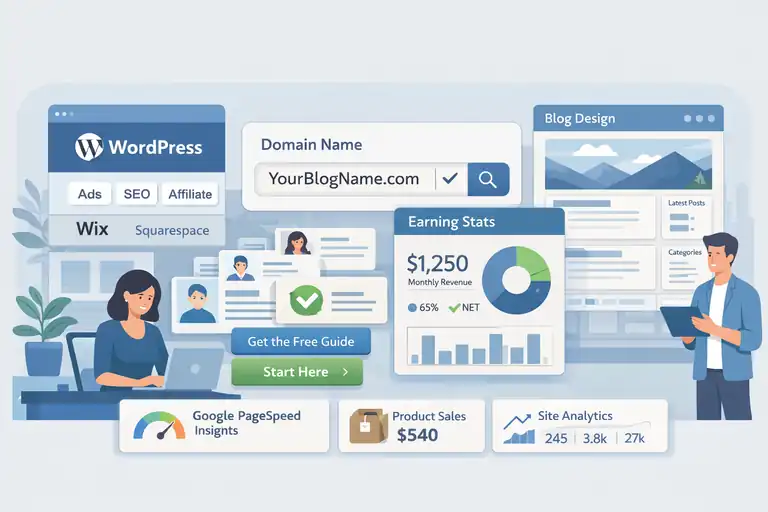
Once your niche is clear, the next step is creating a blog that’s ready to make money from day one. It’s not about having a perfect design—it’s about having the right setup that supports your goals.
Pick the Right Blogging Platform for Monetization
I’ve tested several platforms, and I’ll be honest—WordPress.org wins every time for making money. It gives you full control over SEO, ads, and affiliate integrations.
If you want something easier but still powerful, Wix or Squarespace can work too—but they’re more limited in monetization flexibility.
My quick tip:
- Use WordPress.org if you plan to run ads, sell products, or optimize SEO.
- Avoid free blogging platforms like WordPress.com or Blogger; they restrict monetization options.
Choose a Domain Name That Builds Brand Trust
Your domain is your brand identity—it’s how people remember you.
What I suggest:
- Keep it short and easy to spell (under 15 characters).
- Choose .com if possible; it builds trust faster.
- Reflect your niche subtly, like FitBudgetLife.com for personal finance or TheNomadNest.com for travel.
Make sure the name feels timeless. You don’t want to rebrand six months later once you start earning.
Optimize Your Blog Design for Conversions
A pretty design is nice—but a conversion-focused design is better. You want your blog to guide visitors naturally toward taking action (clicking, subscribing, buying).
Focus on:
- Clean layouts: White space helps content breathe.
- Clear CTAs: Use short action phrases like “Get the Free Guide” or “Start Here.”
- Fast loading times: A slow blog kills conversions—test your speed with Google PageSpeed Insights.
If readers enjoy your experience, they’ll stay longer—and that’s the first sign your blog can make money.
Set Up Essential Pages for SEO and Credibility
Even if your blog is brand new, certain pages boost your credibility and help you rank.
You need:
- About Page: Tell readers who you are and what your blog helps them achieve.
- Contact Page: Adds trust and enables brand partnerships.
- Privacy Policy & Disclaimer: Required for ad networks and affiliates.
- Blog Category Pages: Organize content for both readers and search engines.
These pages may not directly make money, but they support every part of your monetization strategy.
Creating Content That Attracts Readers and Buyers
Your content is where the money starts flowing. The right words can turn a casual visitor into a loyal subscriber—or even a paying customer.
Write Blog Posts That Solve Real Problems
Instead of writing what you want to say, write what readers need to know. That’s how you create value that attracts consistent traffic.
Try this:
- Start each post with a clear question (e.g., “How can I make money from home with no experience?”).
- Provide step-by-step solutions with examples.
- End with a clear next action (“Try this tool,” “Download this checklist”).
People return to blogs that help them get results quickly.
Use SEO Keywords to Drive Organic Traffic
SEO can feel intimidating, but it’s simply about matching your content with what people search for.
Here’s my process:
- Use KeySearch or Ahrefs to find low-competition keywords.
- Include the main keyword in your title, intro, and one subheading.
- Use related terms naturally throughout (Google understands context now).
For instance, if your post targets “how to start a blog for money”, sprinkle in phrases like “monetize your blog,” “earn income blogging,” or “blogging business.”
Create Click-Worthy Headlines and Intros
Your headline is your first impression—make it irresistible.
Headline formula I use:
- [Number or Power Word] + [Keyword] + [Emotional Promise]
- Example: “7 Proven Ways to Start a Blog for Money in 2025.”
In your intro, hook the reader with a relatable statement or personal story, then clearly explain what they’ll learn. People stay when they feel seen and promised value fast.
Add CTAs That Turn Readers Into Subscribers or Buyers
Every blog post should lead readers to take the next step—subscribe, click, or buy.
Try using:
- In-text CTAs: “Grab my free checklist here.”
- End-of-post CTAs: “Join my newsletter for weekly tips.”
- Pop-ups or slide-ins: Subtle reminders to stay connected.
Remember, your readers won’t take action unless you invite them to. CTAs are not pushy—they’re pathways to deeper engagement and, eventually, income.
Expert Tip: The key to starting a blog for money quickly is intention. Don’t just publish posts—publish with a goal. Each piece of content should either attract new readers, build trust, or generate revenue. That’s how you move from “just blogging” to running a blog that actually earns.
Driving Traffic Quickly to Your New Blog
If you’ve set up your blog and created valuable posts but no one’s reading them yet—don’t panic. This is where smart traffic strategies come in.
When you’re starting a blog for money, fast traffic is key to building momentum and income early.
Leverage Pinterest and Social Media for Fast Exposure
Pinterest is one of the fastest ways to get eyeballs on your new blog—especially if your niche has visual or lifestyle appeal. Unlike Instagram or TikTok, Pinterest acts more like a search engine. Pins can bring you traffic for months or even years.
Here’s how to do it right:
- Create fresh pins for every post using Canva (simple design tool).
- Use Pinterest SEO: Add keywords in your pin title, description, and board names.
- Post consistently: Aim for 5–10 fresh pins a day using a scheduler like Tailwind.
Beyond Pinterest, pick one social platform to focus on. If you’re in finance or entrepreneurship, LinkedIn might be better. For lifestyle or food niches, Instagram or TikTok could work faster.
In my experience, spreading too thin too early kills progress. Start with one traffic source you can manage and master it before expanding.
Use Guest Posting to Get Authority and Backlinks
Guest posting simply means writing for another blog in your niche. It’s one of the most underrated ways to grow fast—because it builds both traffic and authority.
When your content appears on an established site, you instantly tap into their audience and gain backlinks that help your SEO.
Quick guest posting plan:
- Search “Your niche + write for us” on Google.
- Study the blog’s tone and top posts before pitching.
- Offer a helpful, non-promotional topic that fits their readers.
- Link back to a relevant post on your blog naturally within the article.
Example: If your blog is about productivity, write a guest post on “5 Morning Habits of High Performers” for a business site—and link back to your detailed guide on time management. That one backlink can keep sending traffic for months.
Build an Email List From Day One
Many new bloggers delay this step—and it’s one of the biggest mistakes. Email subscribers are your most valuable traffic source because you own that audience.
Even with just 50 subscribers, you can start generating clicks and income.
How to start easily:
- Use Aweber or Mailerlite to create a free signup form.
- Offer a lead magnet—something valuable like a checklist or mini eBook.
- Place signup forms at the top, middle, and end of your posts.
For instance, if you blog about meal planning, your lead magnet could be “7 Easy Dinner Templates for Busy Nights.” People love practical freebies. Once they join your list, you can email them your latest posts or affiliate offers.
Repurpose Blog Posts Into Multiple Traffic Channels
If you want quick exposure, don’t let your content live only on your blog. Repurpose it. Turn one solid post into multiple bite-sized versions across platforms.
Here’s what I do:
- Turn blog sections into short social media tips (great for Instagram captions).
- Record a 2-minute video summary for TikTok or YouTube Shorts.
- Convert posts into Pinterest infographics using Canva templates.
- Share highlights as LinkedIn posts with a link to the full article.
Repurposing not only saves time—it multiplies your visibility. The more places your ideas appear, the faster your traffic grows without creating new content every day.
Monetizing Your Blog for Quick Income
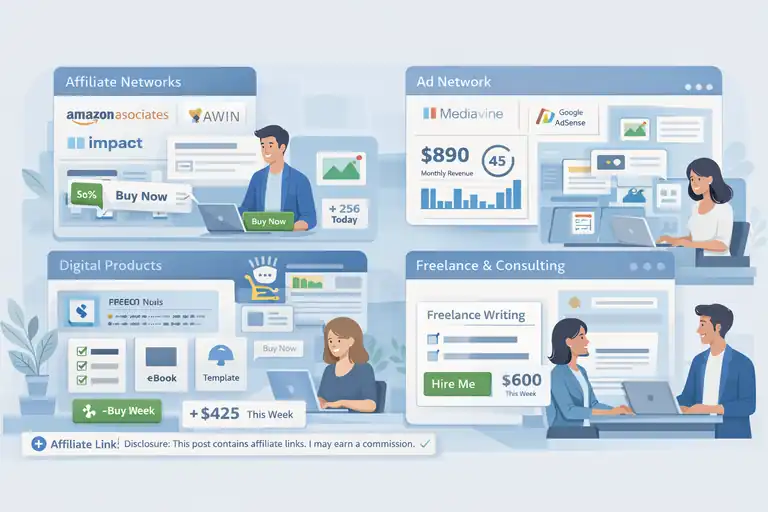
Once you’ve started attracting traffic, it’s time to turn it into income. There are several monetization paths—but the key is to focus on one or two that fit your stage of growth.
Use Affiliate Marketing to Earn Early Commissions
Affiliate marketing means promoting products you trust and earning a commission when readers buy through your link. It’s one of the fastest ways to monetize even a small audience.
To start:
- Sign up for networks like Awin, Impact, or Amazon Associates.
- Promote products you already use or believe in.
- Add affiliate links naturally inside helpful content.
Example: If you’re reviewing “best SEO tools,” you can include an affiliate link to one you recommend. The goal is to help, not hard-sell. Honest reviews always outperform pushy ones.
Pro tip: Always include a disclaimer stating you earn a small commission—it builds trust and keeps you compliant with FTC guidelines.
Add Display Ads Once You Have Steady Traffic
Display ads are small banners or boxes placed around your content. They’re great for passive income—but only after you have enough visitors (usually 10K+ monthly).
Here’s a simple approach:
- Start with Google AdSense if you’re a beginner.
- Move to higher-paying networks like Mediavine or Raptive once you qualify.
- Test ad placements to balance user experience and income.
Ads alone won’t make you rich early on, but they’re an easy way to earn while focusing on growing your audience.
Sell Digital Products or Printables for Passive Income
Digital products let you make money without trading time for every sale. You create something once, and it sells repeatedly.
Product ideas that work:
- Printable planners or checklists
- eBooks or mini courses
- Templates (for blogging, resumes, social media)
You can sell them using platforms like Gumroad or Etsy.
For instance, a blogger in the fitness niche might sell a “30-Day Meal Prep Planner.” Once created, it can generate income every week with almost zero extra effort.
Offer Freelance or Consulting Services Through Your Blog
Your blog doesn’t just make money—it can lead to money. Offering a service related to your niche is often the fastest way to earn early income.
You could offer:
- Freelance writing (if you enjoy content creation)
- Coaching or consulting in your niche
- Design or social media management services
Your blog becomes your portfolio. Add a “Work With Me” page, list your services clearly, and include testimonials as you grow. One client can often fund your blog for months.
Using Smart SEO to Rank Faster in Google
SEO (Search Engine Optimization) is your long-term growth engine. It takes time—but when done right, it brings free, consistent traffic that fuels every income stream.
Focus on Low-Competition, High-Intent Keywords
Instead of chasing big keywords like “start a blog,” target long-tail phrases—specific searches that are easier to rank for.
Here’s my approach:
- Use tools like KeySearch to find keywords with low difficulty scores.
- Choose ones that show buying intent, such as “best blogging platforms for beginners” or “how to start a blog for money.”
- Create deep, helpful content that fully answers that search.
Low-competition keywords help your posts get seen faster while building authority over time.
Structure Posts With SEO-Friendly Headings and Links
Google loves organized, easy-to-scan content. Use clear H2 and H3 headings that reflect your post’s flow, and add internal links to related content.
Best practices:
- Include your focus keyword in at least one H2.
- Link to 2–3 of your own posts and 1–2 reputable sources.
- Add short paragraphs and bullet points for better readability.
This helps both readers and search engines understand your post’s structure—and rewards you with better rankings.
Build Backlinks Strategically Without Spam
Backlinks (links from other sites to yours) tell Google your content is trustworthy. But not all backlinks are equal—quality matters more than quantity.
To build strong backlinks:
- Guest post on authority blogs.
- Offer expert quotes to journalists using platforms like HARO.
- Create data-driven or unique posts people want to cite.
Avoid buying links or using automated tools—it can hurt your rankings more than help.
Track SEO Progress With Analytics and Adjust Regularly
SEO isn’t “set and forget.” I check my blog stats weekly to see what’s working.
Tools to use:
- Google Analytics for traffic and behavior tracking.
- Google Search Console to see keywords you’re ranking for.
- Ahrefs for keyword performance insights.
Watch which posts get traffic and which don’t. Update old posts with fresh information and better keywords every few months. That’s how you keep growing without starting from zero each time.
Pro Tip: When you’re starting a blog for money, focus on momentum over perfection. Get traffic from one solid source, monetize through one clear method, and build consistency before expanding. The fastest growth always comes from doing fewer things, better.
Scaling Your Blog Income Over Time
Once your blog starts making consistent income, the next challenge is growth without burnout.
The key is to think long-term — how to scale your systems, revenue streams, and content so your blog keeps earning even when you’re not constantly hustling.
Diversify Monetization Streams for Stability
Relying on one source of income (like affiliate marketing or ads) can feel unstable. Algorithms change, programs shut down, and traffic can dip. The solution is to spread your income across several monetization channels.
Here’s how you can do that:
- Combine affiliate marketing with digital products to balance passive and active income.
- Add email sponsorships once you have a solid subscriber base.
- Explore online courses or memberships for recurring revenue.
For example, one of my clients started with affiliate links promoting blogging tools, then added a paid digital planner. Her income went from $400 a month to $2,000 within six months, simply by diversifying.
Diversification protects your blog like insurance — if one stream slows down, the others keep flowing.
Automate Key Blogging Tasks for Consistency
As your blog grows, time becomes your biggest bottleneck. Automation helps you stay consistent without burning out.
You can automate:
- Social media posting with tools like Buffer or Tailwind.
- Email sequences using Kit or Brevo.
- Content scheduling in WordPress to keep posts publishing on time.
I like to batch-create content for the week, then schedule it out in one sitting. It keeps things flowing even when I’m offline or working on new projects. Think of automation as your silent assistant — it keeps your business running while you focus on growth.
Outsource Content Creation as You Grow
At some point, doing everything yourself limits your earning potential. Outsourcing isn’t just for big businesses — even solo bloggers can hire help.
Start small:
- Hire a freelance writer to help with topic research or first drafts.
- Use a virtual assistant to format posts or update old content.
- Bring in a designer for Pinterest graphics or digital product covers.
I remember the first time I hired a writer for $50 a post — it felt risky. But freeing up my time allowed me to launch a new course that earned over $1,000 that month. That’s the power of working on your business, not just in it.
Reinvent Old Content to Maintain Traffic Momentum
Your existing posts are gold mines waiting to be refreshed. Updating and repurposing them can bring back lost traffic and boost rankings.
To do this effectively:
- Check your analytics for top-performing posts.
- Update stats, add new visuals, and refresh internal links.
- Turn older content into new formats — like videos, reels, or eBooks.
I once updated a 2019 post with new keyword data and visuals — and traffic tripled within two weeks. Reinventing content is the easiest way to grow without constantly creating from scratch.
Avoiding Common Mistakes That Kill Blog Growth
Growth can stall for reasons that are surprisingly preventable. Most bloggers fail not because they lack skill, but because they lose direction or miss small but crucial steps.
Not Having a Clear Monetization Plan Early
Many bloggers jump in, write dozens of posts, and then wonder why they’re not making money. You need a monetization plan from day one.
Ask yourself: How will this content eventually earn? Is it through affiliate links, products, or services?
For instance, if your blog is about skincare, plan early to review products or create skincare routines linked to affiliate programs.
Think of it like planting seeds in rows — each post should fit into your income garden.
Ignoring Analytics and Data-Driven Decisions
I can’t emphasize this enough: numbers tell the truth. Google Analytics and Search Console show you what’s working and what’s wasting your time.
Watch for:
- Pages with high traffic but low conversions (optimize CTAs).
- Posts with traffic drops (refresh SEO and update content).
- Traffic sources that bring the best ROI (double down on them).
When you make decisions based on data instead of guesses, every move compounds your results.
Focusing Only on Traffic Instead of Conversions
Traffic looks exciting — but if no one subscribes, buys, or clicks, it’s just vanity. Conversion should always be the end goal.
Instead of chasing views, optimize for results:
- Add stronger calls-to-action (CTAs).
- Use lead magnets to capture emails.
- Test different blog layouts or button placements.
A blog with 1,000 monthly readers can outperform one with 10,000 — if it converts better.
Giving Up Too Soon Before Momentum Builds
Blogging is not a sprint; it’s a slow burn that suddenly catches fire. Many bloggers quit at month six, right before things start clicking.
Traffic and income compound — one post boosts another, one backlink helps ten others rank.
When it feels slow, remember: the foundation you’re building is invisible for a while. Keep going. Every successful blogger has faced that “should I quit?” moment — and they all chose to stay.
Proven Strategies to Stay Consistent and Motivated
Blogging for money takes discipline. It’s easy to lose steam when results aren’t instant, but the right systems and community make it much easier to stay consistent.
Set Realistic Goals and Track Small Wins
Break big goals into achievable milestones. Instead of saying, “I want to make $5,000,” say, “I want to publish 12 posts and grow my list to 100 subscribers this month.”
Celebrate tiny wins — a new comment, a backlink, your first affiliate sale. These little moments keep motivation alive.
I track my wins on a whiteboard beside my desk. Seeing the progress daily reminds me how far I’ve come — even on tough days.
Create a Simple Weekly Blogging Schedule
You don’t need a complicated system. What matters is consistency.
Try this simple routine:
- Monday: Keyword research and planning.
- Tuesday: Write or edit one post.
- Wednesday: Create graphics or schedule pins.
- Thursday: Update or repurpose old content.
- Friday: Engage on social media or with your email list.
When you treat your blog like a business, it starts to perform like one.
Join Blogging Communities for Accountability
Blogging can feel isolating, especially at the beginning. Joining a community gives you support, feedback, and new ideas.
You can join Facebook groups like Blogging for Beginners or private membership communities like Create and Go Pro Bloggers.
Being around people who “get it” can reignite your motivation. Sharing your struggles and wins keeps you grounded and inspired.
Keep Learning and Experimenting to Stay Ahead
The digital world changes fast — SEO rules, algorithms, even monetization trends evolve constantly. Staying curious helps you stay competitive.
Set aside one hour a week for learning. Watch a YouTube tutorial, take a short course, or test a new strategy.
In my case, one new SEO strategy I learned in 2024 doubled my blog traffic in just two months. That’s the reward for never stopping at “good enough.”
Turning Your Blog Into a Long-Term Business
Once your blog earns consistent income, the next stage is turning it into a true business. This means scaling beyond content — into branding, systems, and strategic partnerships.
Build a Recognizable Brand Around Your Blog
A blog isn’t just about posts — it’s your online identity. A strong brand builds trust and recognition.
Focus on:
- A consistent visual style (colors, fonts, tone).
- A clear brand voice — how you sound across every platform.
- A story that connects your content and offers together.
When people can instantly identify your content, that’s when you know your blog has evolved into a brand.
Create Scalable Systems for Passive Growth
Systems are the difference between constant hustle and predictable income.
Automate workflows, document your processes, and set up templates for repetitive tasks. For instance, create a reusable launch checklist for every new product or a blog post template to speed up writing.
Think of your blog as a business engine — your systems are the gears that keep it running smoothly even when you step away.
Expand Into Courses, Memberships, or Coaching
As your authority grows, people will want deeper guidance. That’s where courses or memberships come in.
You could offer:
- A mini-course on a specific topic (like SEO for beginners).
- A paid community with exclusive tutorials.
- One-on-one coaching sessions for personalized help.
You don’t need a massive audience to start — even 50 engaged readers can fill your first program. Focus on value and transformation, not size.
Reinforce Authority Through Email Marketing and PR
Your email list is still your most powerful asset. It allows direct communication with your readers — no algorithms in between.
Keep nurturing it by:
- Sending weekly tips or behind-the-scenes updates.
- Sharing personal insights that build connection.
- Occasionally promoting your offers without being pushy.
Pair this with PR exposure — like guest podcasting or being quoted in media. Every feature builds your reputation and brings new, high-quality traffic.
Pro Tip: The real secret to starting a blog for money — and keeping it profitable — is to treat it like a growing business, not a side hustle. Build consistency first, then scale strategically. Over time, you’ll find your blog isn’t just another income stream — it’s your personal brand, your platform, and your long-term asset.
FAQ
How long does it take to make money when starting a blog for money?
With the right niche and monetization strategy, some bloggers earn their first income within 30–90 days, usually through affiliate marketing or services.
What is the fastest way to monetize a new blog?
Affiliate marketing and offering services are the fastest options because they don’t require high traffic or product creation upfront.
Do you need a lot of traffic to make money blogging?
No. A small, targeted audience with clear intent can earn more than large traffic with no conversions, especially when starting a blog for money.

I’m Juxhin, the voice behind The Justifiable.
I’ve spent 6+ years building blogs, managing affiliate campaigns, and testing the messy world of online business. Here, I cut the fluff and share the strategies that actually move the needle — so you can build income that’s sustainable, not speculative.