
Table of Contents
Some links on The Justifiable are affiliate links, meaning we may earn a small commission at no extra cost to you. Read full disclaimer.
Affiliate marketing opportunities can look deceptively simple: join a program, share a link, and earn a commission. In practice, beginners usually struggle with a harder question—what should you promote, to whom, and through what kind of content?
The right opportunity matches your audience, buying intent, experience, and ability to create useful content consistently.
This guide shows you how to compare beginner-friendly programs, choose a focused niche, prepare for approval, publish content that supports real purchase decisions, troubleshoot weak results, and scale only after you have evidence that your strategy is working.
How Affiliate Marketing Opportunities Actually Work
Before comparing programs, it helps to understand what you are really choosing. An affiliate opportunity combines a product, audience, commission structure, tracking system, and content strategy rather than simply giving you a link to promote.
Understand What Creates a Valuable Affiliate Opportunity
An affiliate program allows you to earn compensation when someone completes a qualifying action after reaching a merchant through your tracked referral. Depending on the program, that action might be a purchase, subscription, registration, trial, or another defined conversion.
The commission percentage is only one part of the equation. Imagine one program pays 40% on a $20 product while another pays 10% on a $300 product. The lower percentage can potentially generate more revenue per customer. Conversion rates, refund behavior, customer demand, attribution rules, and the merchant’s reputation can matter just as much.
Beginners should therefore evaluate opportunities based on the entire buying journey. Ask whether people actively want the product, whether you can explain why someone should choose it, and whether your content can reach people at the appropriate stage of their decision.
A useful product with a modest commission can outperform an expensive offer that barely matches your audience. This is why I recommend thinking about audience-product fit before payout size.
Your first objective is not finding the highest-paying program. It is finding something you can recommend credibly to people who already have a reason to care.
Match the Offer to the Reader’s Buying Intent
Buying intent describes how close someone is to making a purchase. Understanding it helps you choose affiliate marketing opportunities you can realistically monetize.
Someone searching “what is project management software?” is still learning. Someone searching “best project management software for freelancers” is comparing possibilities. A person searching “Tool A vs Tool B for a five-person agency” may be much closer to choosing.
Affiliate content usually performs best when your offer naturally continues the reader’s existing journey. If someone wants to solve a specific problem, you can explain the available approaches, compare realistic options, and help that person decide whether a product is appropriate.
This also explains why random affiliate links tend to perform poorly. A gardening audience probably will not respond strongly to an unrelated accounting software recommendation just because the commission looks attractive.
Look for overlap between three things: what your audience already wants, what you can explain well, and what merchants are willing to reward.
When those elements line up, selling becomes less important. Your job becomes helping someone make a decision they were already considering.
Understand Direct Programs and Affiliate Networks
You will encounter both direct affiliate programs and affiliate networks. They solve similar problems but organize the relationship differently.
A direct program is managed primarily by one merchant. You apply to that company’s program, receive its links, and follow its individual terms. This can work well when there is a particular product you already know you want to recommend.
Networks provide access to programs from multiple merchants. Platforms such as Awin, CJ Affiliate, and Impact can make discovering and managing several partnerships more convenient, although acceptance to a network does not necessarily mean automatic acceptance to every advertiser inside it.
Neither model is inherently better for a beginner. Direct programs can make your strategy simpler, while networks provide more choices as your content expands.
I suggest starting with a small number of highly relevant programs. Managing ten dashboards will not compensate for having no traffic or weak content. Build a working promotional process first, then expand your merchant relationships when additional offers solve genuine audience needs.
Best Affiliate Marketing Opportunities for Beginners
Different affiliate categories have different strengths. The best starting point depends on the subjects you cover, how your audience buys, and whether you prefer physical products, subscriptions, digital products, professional services, or travel.
| Opportunity Type | Often Best For | Main Advantage | Main Challenge |
|---|---|---|---|
| Retail marketplaces | Product-focused content | Familiar purchasing behavior | Often competitive |
| SaaS and online tools | Business and creator audiences | Strong problem-solution fit | Requires useful product knowledge |
| Digital products | Education and specialist niches | Easy online delivery | Quality varies by offer |
| Freelance services | Business and entrepreneurial content | Clear service needs | Purchase intent can be specific |
| Travel programs | Destination and travel content | Many monetizable decisions | Demand can be seasonal |
Retail and Marketplace Affiliate Programs
Retail programs are among the easiest affiliate models to understand because readers already recognize the purchasing process. You recommend a relevant item, send an interested visitor to the retailer, and potentially earn from a qualifying purchase.
Amazon Associates is a familiar example because Amazon sells products across an enormous range of categories. eBay Partner Network provides another option for publishers whose content naturally leads readers toward products available on eBay, while Walmart Affiliates can fit certain consumer-focused niches.
The opportunity is strongest when your content helps people narrow a choice rather than merely displaying products. A beginner covering home coffee equipment, for example, could create comparisons for grinders, explain which machine suits different budgets, and show what accessories are actually necessary.
Avoid building pages that merely repeat descriptions found on retailer websites. Your advantage comes from selection, explanation, context, testing where genuinely performed, or careful research.
Retail affiliate marketing works particularly well when readers face many similar choices and need someone to organize those choices into a sensible decision.
SaaS and Business Software Programs
Software-as-a-service, commonly called SaaS, can be attractive because businesses and professionals continually search for tools that save time, increase revenue, organize work, or automate repetitive tasks.
PartnerStack is particularly relevant to publishers interested in B2B software partnerships. Networks such as Impact, Awin, and CJ Affiliate also connect publishers with merchants across software and other categories.
The advantage is that software purchases often begin with a clearly defined problem. A freelance designer may need invoicing software. An ecommerce owner may need email marketing tools. A small company may need project management software. Those problems create natural opportunities for tutorials, comparisons, alternatives, and implementation guides.
The difficulty is credibility. You should understand what a tool does before recommending it. Copying a feature list rarely helps a reader decide whether software fits their workflow.
A stronger article might explain who needs a particular feature, when the cheaper alternative is sufficient, and where the product becomes limiting.
If you enjoy learning software and explaining processes, SaaS can provide some of the most sustainable affiliate opportunities because useful content can support both discovery and purchase decisions.
Digital Products and Online Learning Offers
Digital products include courses, templates, memberships, ebooks, software, and other products delivered online. They can be particularly useful in niches where people are actively trying to acquire a skill or reach a measurable outcome.
ClickBank is one marketplace associated with digital offers across multiple categories. However, availability alone should never determine what you promote.
Product quality needs careful attention. Review the sales page, understand exactly what customers receive, consider whether the promise sounds realistic, and investigate the refund and support experience where possible. High commissions do not make an unsuitable product worth recommending.
For example, a website teaching beginner photography might eventually monetize through educational products covering editing or composition. The offer works because education is already part of the audience’s journey.
This model becomes weaker when the publisher chases whichever product currently pays most and changes topics constantly.
Your reputation is more valuable than one commission. If you would feel uncomfortable explaining why you recommended something to a reader after the purchase, leave the offer alone.
A useful beginner filter is simple: promote products because they fit the problem you already help readers solve, not because an affiliate dashboard says the payout is attractive.
Freelance Services and Travel Affiliate Programs
Not every affiliate opportunity revolves around products. Service marketplaces and travel platforms can work well when your audience is trying to accomplish something that requires outside help or a booking.
The Fiverr affiliate program, for example, can make editorial sense within content about outsourcing design, writing, programming, marketing, or other freelance tasks. Instead of inserting the link into a generic business article, connect the recommendation to a situation where hiring a freelancer is a realistic solution.
Travel creates a different set of opportunities. Travelpayouts is designed around travel partnerships, while individual travel companies may also maintain their own programs.
The key is to monetize decisions rather than destinations alone. Someone planning a trip may need transportation, accommodations, activities, insurance, connectivity, or tours.
A destination article that only describes what to see may attract traffic without producing many affiliate clicks. A guide explaining where to stay, how to get around, and which activities require advance booking has clearer commercial pathways.
Service and travel partnerships work best when your content arrives at the exact moment a reader needs to take the next practical action.
How to Choose the Right Affiliate Niche
Once you understand the available models, choosing a niche becomes the most important strategic decision. A good niche needs enough buyer demand to monetize while remaining focused enough for you to build recognizable expertise.
Start With Problems Rather Than Product Categories
Many beginners choose niches by starting with products: laptops, supplements, cameras, software, or kitchen appliances. I suggest reversing that process and identifying the problem first.
Consider a hypothetical reader starting a home office. That person might need a desk, ergonomic equipment, productivity software, video conferencing accessories, lighting, and organization tools. “Creating an effective home workspace” gives you a broader editorial purpose than simply “office chairs,” while remaining connected to commercial decisions.
Problems also generate more useful content ideas. You can address preparation, mistakes, comparisons, budget choices, setup, maintenance, and upgrades without forcing every article to resemble a product roundup.
Evaluate whether people regularly spend money to solve the problem and whether their decisions require research. Affiliate marketing becomes easier when readers genuinely benefit from guidance before purchasing.
Avoid choosing a topic solely because someone describes it as profitable. A theoretically lucrative niche will not help much if you cannot produce credible content or maintain interest long enough to build traffic.
Your niche should give you room to become useful first and commercial second.
Check Whether the Niche Supports Enough Content Depth
A niche needs enough depth to support a connected body of content. One useful test is to imagine the reader’s journey from beginner to experienced buyer.
Could you explain foundational questions? Can you create setup tutorials, product comparisons, troubleshooting articles, alternatives, upgrades, and specialized use cases? If the answer is yes, you probably have room to build topical authority.
Suppose you choose espresso for beginners. You could cover beans, grinders, machines, extraction, milk preparation, maintenance, accessories, common brewing problems, and equipment upgrades. Commercial recommendations naturally appear inside a much larger educational ecosystem.
Compare that with choosing one extremely specific gadget as the entire niche. You may run out of meaningful subjects quickly and become dependent on a handful of commercial keywords.
Also consider whether you can access enough information to write accurately. Certain topics require professional expertise, firsthand testing, specialized equipment, or careful regulatory treatment.
You do not need to be the world’s leading expert before starting. You do need a realistic path toward producing information that is more useful than a rewritten product description.
Evaluate the Economics Before Committing
A niche can attract plenty of traffic and still be difficult to monetize. Before building dozens of articles, examine the commercial environment around the audience.
Look at the number of relevant merchants, typical product values, frequency of purchases, potential subscription models, and range of decisions readers make. You do not need precise revenue projections at this stage; you are checking whether multiple viable paths exist.
A niche dependent on one merchant is fragile. The merchant can change its program, modify its commission structure, reject your application, discontinue a product, or alter tracking conditions.
A healthier niche might support physical products, software, educational products, and services without requiring you to promote all of them immediately.
Also consider customer value rather than price alone. An expensive product with a long sales cycle may convert rarely, while an inexpensive product purchased frequently can create repeated opportunities.
The goal is optionality. You want enough commercial depth that your entire business does not collapse if one program stops fitting your strategy.
What You Need Before Applying to Affiliate Programs
You do not need a huge website or massive following to begin learning affiliate marketing. You do, however, need a credible publishing foundation that shows merchants what you cover, who you help, and how you intend to promote their products.
Build a Real Publishing Platform First
Your platform might be a website, newsletter, video channel, social account, or another format accepted by the program you want to join. Regardless of format, an empty profile with no useful content makes your application harder to evaluate.
If you are building a website, publish enough content to demonstrate a clear subject and editorial direction before applying widely. A handful of well-developed resources can communicate more value than dozens of thin posts.
Your homepage or about page should make the audience understandable. Instead of saying your site covers “everything you love,” explain the specific reader you help and the problems you address.
The same principle applies to social or video channels. Consistency signals that you are creating an audience resource rather than signing up merely to obtain affiliate links.
Do not delay forever while trying to make the site perfect. You need credibility, not a giant media company.
A simple, focused site with useful articles, functioning navigation, basic contact information, and a clear topic can provide enough foundation to begin pursuing appropriate partnerships.
Create Trust and Affiliate Disclosures From the Beginning
Affiliate marketing depends on trust because your financial interests overlap with the recommendations you make. Readers should be able to understand that relationship without hunting through your website.
Use clear affiliate disclosures wherever appropriate and follow the advertising, privacy, consumer protection, and platform requirements that apply to your location, audience, and promotional channels. Program agreements can also impose rules beyond general advertising requirements.
More importantly, build disclosure into your editorial mindset. Do not describe every product as perfect. Explain limitations, indicate who should skip an offer, and distinguish factual information from your judgment.
If you have not personally used something, do not imply that you have. Research-based comparisons can still be useful when their methodology is transparent.
Trust also affects conversion. Readers who believe you are helping them choose are more likely to take a recommendation seriously than readers who feel pushed toward whichever link pays you.
Affiliate disclosure should therefore be treated as part of a professional publishing system rather than an inconvenience added after monetization begins.
Improve Your Chances of Program Approval
Affiliate programs vary widely in their approval criteria. Your objective is to make it easy for a program manager to understand what you publish and why their offer belongs in your content.
Before applying, review the program’s requirements and merchant terms. Check whether your traffic sources, content format, geography, promotional methods, and niche fit the program.
A good application should accurately describe your site or channel, audience, primary content types, and intended promotional approach. Avoid vague statements about generating enormous traffic if you cannot support them.
If you are new, position yourself around relevance rather than size. A focused audience with genuine buying intent can be valuable even before traffic becomes substantial.
Rejection is not necessarily permanent. Improve your content, establish a stronger publishing history, generate relevant traffic, and consider applying again where the program permits it.
Most importantly, never build your entire strategy around being accepted by one merchant. Begin with the audience and content model. Affiliate programs should plug into that foundation rather than determine whether the foundation exists.
How to Start Promoting Affiliate Offers
Approval is only the beginning. The next stage is creating an organized system that connects the right offer with content where the reader has a legitimate reason to consider it.
Start With a Small Opportunity Shortlist
It is tempting to join every available network after discovering how many programs exist. That usually creates administrative work without improving your results.
Choose a small initial portfolio. One to three closely related merchants can be enough to learn how tracking, content placement, click behavior, and conversions work.
Compare programs on audience relevance, merchant reputation, product usefulness, conversion path, attribution conditions, promotional restrictions, support resources, and payment terms. Read the actual agreement rather than relying on a third-party summary because program conditions can change.
You should also understand what happens after the click. Visit the merchant’s website as a customer would. Is the offer understandable? Does the landing page match the product you want to recommend? Does the purchase process feel credible?
A strong publisher cannot completely compensate for a poor merchant experience.
Starting small gives you cleaner data. When a recommendation works, you can understand why. When it fails, you have fewer variables to diagnose.
Expand only when another program serves a distinct audience need or provides a genuinely useful alternative.
Map Each Affiliate Offer to the Right Content
Instead of inserting links into every article, decide which pages should naturally lead to commercial actions.
A product comparison can support readers choosing between alternatives. A “best for” guide can narrow a crowded category. A tutorial can recommend a tool required to complete a task. A troubleshooting article can introduce an upgrade when the reader’s current solution no longer works.
Imagine you run a site for new podcasters. A beginner microphone guide may contain equipment recommendations. An editing tutorial can introduce editing software. A remote interview guide can discuss recording tools. Each offer appears because the content creates a legitimate reason for it.
This mapping process also prevents irrelevant promotion. An article explaining how podcast storytelling works does not need several microphone links simply because the audience happens to own microphones.
Think of affiliate links as possible exits from an information journey. The reader should encounter the exit when taking action makes sense.
When every recommendation has an editorial purpose, your content becomes easier to trust and your monetization becomes easier to analyze.
Track Links and Organize Your Affiliate Operations
Once several pages contain affiliate links, organization matters. Keep a record of the program, promoted product, destination, relevant content, and any important program restrictions.
Use tracking information supplied by your affiliate platform when available to understand which pages, placements, or campaigns generate activity. Do not assume that total revenue alone tells you what worked.
You also need a maintenance routine. Products disappear, merchants change landing pages, programs update terms, and old content becomes inaccurate. Schedule periodic reviews of your most commercially important pages.
Check whether links still work, recommendations remain relevant, pricing language has become outdated, or a better alternative now exists. Avoid hard-coding temporary claims such as exact discounts unless you can maintain them reliably.
As your site grows, this operational discipline becomes a competitive advantage. A small affiliate site can be managed from memory. A large content library cannot.
Treat every commercial page as an asset that requires maintenance rather than an article you publish once and forget.
How to Create Affiliate Content That Converts
Traffic alone does not produce affiliate revenue. The content needs to attract the right visitor, answer the questions blocking a purchase, and make the next action easy without turning the article into a sales pitch.
Create Decision Content for High-Intent Readers
High-intent content serves people who already know they may need a product or service. Comparisons, alternatives, “best for” guides, reviews, pricing explanations, and use-case pages commonly fit this stage.
The goal is not to crown a universal winner. Help readers understand which option fits which situation.
A useful software comparison, for example, can address ease of use, essential features, integration needs, learning curve, scalability, and the type of user each product suits. Someone making a decision gains much more from that framework than from reading two feature lists copied from company websites.
Be willing to recommend different products to different readers. If the cheapest option is sufficient for beginners but another tool suits growing teams, say so.
This approach can improve both trust and conversion because the recommendation becomes specific.
Commercial content should remove uncertainty. Identify the questions a buyer asks immediately before purchasing and answer those questions thoroughly.
When the reader finishes the page, they should understand their options well enough to make a sensible next move—even when that move is not clicking your affiliate link.
Use Informational Content to Build the Path to Conversion
Not everyone arrives ready to buy. Informational content lets you reach people earlier and help them progress naturally toward a decision.
Suppose you promote email marketing software. Articles about building an email list, creating a welcome sequence, improving subject lines, or organizing subscribers can attract readers before they start comparing platforms.
The important step is connecting these educational resources to deeper decision content. Someone learning how email automation works might later benefit from a guide comparing automation platforms. That internal journey is more natural than placing aggressive software calls to action in every paragraph.
Informational content can also establish topical authority and earn trust before a commercial recommendation appears.
Think in clusters rather than isolated posts. One core commercial guide might be supported by several educational articles addressing the problems surrounding that decision.
This approach requires patience because early-stage visitors may not convert immediately. However, it creates a more durable content business than relying exclusively on highly competitive “best product” keywords.
Help the reader learn first, then provide a logical route toward choosing when the decision becomes relevant.
Make Calls to Action Useful Rather Than Aggressive
A call to action should tell the reader what useful next step is available. It does not need exaggerated urgency.
Weak calls to action often say things such as “buy now” without explaining why the reader should leave the page. A stronger transition connects directly to the decision being discussed: the reader has identified the appropriate option, so checking current details, availability, or the merchant’s offer is now logical.
Placement matters as much as wording. Someone who has just started reading may not be ready to visit a merchant. A reader who has finished a detailed comparison may be.
Use links where a product is meaningfully discussed, not wherever you can squeeze one into the text. Too many competing calls to action can make the page confusing and reduce confidence in your recommendations.
You should also avoid manufacturing scarcity or making claims about deals you cannot verify.
The best affiliate call to action feels like assistance: the reader understands why the next click helps complete the decision they are already making.
Conversion improves when the recommendation, context, and next action all point in the same direction.
Common Affiliate Marketing Mistakes and How to Troubleshoot Them
Most beginners will publish content that does not perform as expected. Rather than treating weak results as proof that affiliate marketing does not work, diagnose where the reader journey is breaking down.
What to Do When You Get Traffic but Few Affiliate Clicks
Traffic with few affiliate clicks usually means the visitors and commercial opportunity are poorly aligned, or the content does not give readers enough reason to investigate the offer.
Start with search intent. An article attracting people who want a free solution may struggle to send visitors toward an expensive paid product. That does not necessarily mean the page is bad; the audience may simply be wrong for the offer.
Next, inspect the recommendation itself. Have you explained what problem the product solves, who needs it, and when it is worth considering? A button without context gives the reader little motivation to click.
Placement can also be responsible. Relevant recommendations buried at the bottom of a long article may receive limited visibility, while links placed too early may appear premature.
Do not immediately add more links. Improve the decision context first.
Compare pages with similar traffic but different click behavior. Look for differences in intent, format, positioning, and product relevance.
Your objective is to determine whether the visitor needs the offer at all. When the answer is no, changing button text will not solve the underlying problem.
What to Do When People Click but Do Not Convert
Clicks without conversions move the problem further down the funnel. Visitors are interested enough to investigate, but something prevents the transaction.
First, consider whether your content sets accurate expectations. If you describe a product as inexpensive and the merchant page presents a substantially higher cost, visitors may leave immediately. If your article targets beginners but links to an advanced enterprise product, the mismatch can have the same effect.
The merchant’s page also matters. Availability, geographic limitations, product-market fit, checkout complexity, and overall credibility can affect conversion after the reader leaves your site.
Review whether the product truly represents the strongest next step. Sometimes high click rates simply mean curiosity, not purchase intent.
You can also compare multiple suitable offers instead of forcing every reader toward one merchant. Different audiences may need different price points or features.
Avoid drawing conclusions from tiny samples. A handful of clicks is rarely enough to establish a reliable pattern.
As traffic increases, focus on repeated behavior. If hundreds of highly relevant visitors investigate an offer without producing results, reconsider the audience, merchant, recommendation, or expectation you are creating.
Avoid Thin Content, Overpromotion, and Program Violations
A common beginner mistake is treating affiliate marketing as a link-distribution exercise. That can produce content with little reason to exist beyond sending visitors to merchants.
Build the page around the reader’s question instead. Product links should support the answer, not become the answer.
Overpromotion creates another problem. When every product receives glowing praise, recommendations become interchangeable and credibility disappears. Include trade-offs. Explain when a cheaper solution is enough and when purchasing anything would be unnecessary.
You must also respect the individual rules governing each affiliate relationship. Programs can restrict promotional channels, paid advertising methods, trademarks, coupon activity, email use, link placement, or other practices.
Never assume a technique is permitted because another affiliate uses it. Review the terms that apply to your account and promotional method.
Compliance becomes especially important as you scale because a meaningful portion of your revenue may eventually depend on several relationships.
Good affiliate publishing aligns three interests: the reader receives useful guidance, the merchant receives appropriate customers, and you receive compensation when the relationship creates value.
How to Measure, Optimize, and Scale Affiliate Revenue
Scaling should happen after you understand what is already working. The objective is not to produce more content blindly, but to identify repeatable combinations of audience, page intent, offer, and conversion path.
Measure More Than Total Affiliate Revenue
Revenue is ultimately important, but it is a lagging indicator. Earlier metrics help you understand why revenue changes.
Track relevant page traffic, affiliate link clicks, click-through behavior, conversions where your reporting allows it, and revenue generated by specific content or campaigns. You can then work backward from the outcome.
If a page receives little traffic, conversion optimization is not yet the main issue. If it receives strong traffic but almost no clicks, examine intent and recommendation placement. If readers click frequently without purchasing, inspect offer fit and the post-click experience.
Revenue per visitor can also provide a useful directional comparison between commercial pages because traffic volume alone can hide differences in audience quality.
Avoid obsessing over daily fluctuations, particularly while your site is small. Affiliate purchases can be uneven.
Look for patterns across meaningful periods and sufficient traffic. Your analytics should help you decide what to improve next rather than provide another dashboard to check compulsively.
Measurement becomes useful when each metric corresponds to a specific action you can take.
Optimize Existing Winners Before Publishing More
When a page begins generating affiliate results, it gives you valuable information about what your audience wants. Improving that page can sometimes be more productive than immediately publishing another ten articles.
Review whether the content still matches current search intent and reader questions. Add missing comparisons, clarify confusing explanations, strengthen decision criteria, improve internal links, and update outdated product information.
Then investigate the topic surrounding the successful page.
If a guide about beginner video-editing software performs well, related opportunities might include tutorials for specific workflows, alternative software for particular users, hardware requirements, export settings, or upgrade decisions.
This is different from randomly expanding into “more technology content.” You are following evidence that a particular audience problem attracts useful traffic and commercial interest.
Optimization should preserve what made the original page valuable. Do not transform a helpful article into a wall of affiliate buttons simply because it earns money.
Improve usefulness and conversion together. When a page becomes a stronger resource, commercial performance often has a better foundation from which to grow.
Diversify Only After You Have a Working Model
Diversification protects an affiliate business from becoming excessively dependent on one page, traffic source, merchant, or product category. But diversifying too early can spread your effort so widely that nothing gains traction.
Start by expanding around proven topics. If one content cluster produces consistent traffic and conversions, build related resources for adjacent audience needs.
Next, consider suitable alternative merchants. Giving readers legitimate choices can improve decision quality while reducing your dependence on one program.
You can eventually diversify traffic as well. Search, newsletters, video, social platforms, and direct audiences have different strengths. You do not need to master all of them at once.
The same principle applies to monetization. A mature publisher might combine affiliate revenue with advertising, sponsorships, services, memberships, or owned products where those models fit the audience.
Do not interpret diversification as abandoning what works. Use successful content as the foundation from which new channels grow.
The safest scaling strategy is usually sequential: prove one audience and monetization relationship, strengthen it, document what you learned, and then repeat the process in the next logical area.
Choose Your First Affiliate Opportunity Based on Fit, Not Hype
The best affiliate marketing opportunities for beginners are rarely the programs with the loudest income claims. They are the ones that connect naturally to an audience you can understand, useful content you can create, and purchases people already have a reason to consider.
Start with one focused niche and a small number of relevant programs. Build credible content before chasing commissions, map offers to genuine reader decisions, and track where the journey breaks when results are weak.
As evidence accumulates, optimize the pages and topics already producing useful signals before expanding into new programs or traffic channels.
Affiliate marketing becomes much easier to manage when you stop asking, “Which link can I promote?” and start asking, “What decision is my reader trying to make?”
Choose one audience problem you can explain well, identify the affiliate opportunity that genuinely helps solve it, and build your first useful content cluster around that relationship.

I’m Juxhin, the voice behind The Justifiable.
I’ve spent 6+ years building blogs, managing affiliate campaigns, and testing the messy world of online business. Here, I cut the fluff and share the strategies that actually move the needle — so you can build income that’s sustainable, not speculative.
Related posts:
 5 Best Affiliate Marketing Programs: Boost Your Earnings Now!
 12 Best Affiliate Marketing Companies to Work With
 10 Digital Marketing Affiliate Marketing Hacks That Work
 The Affiliate Marketing Guide No One Told You About
 10 Best Affiliate Marketing Products That Sell Like Crazy
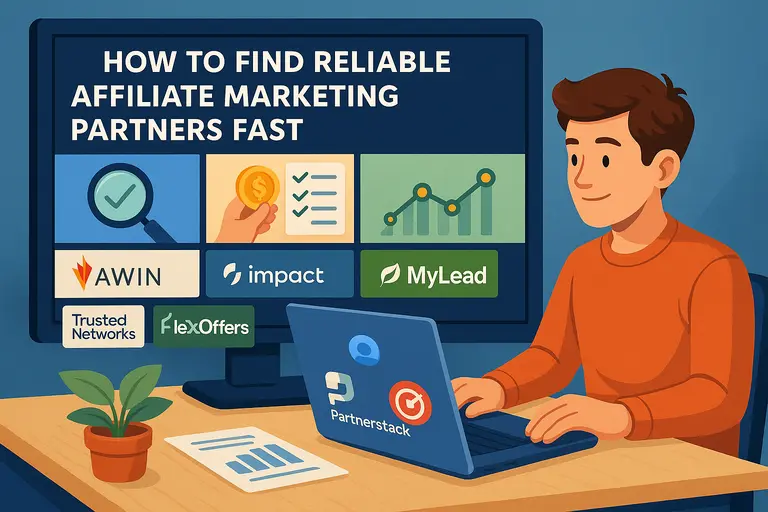 How to Find Reliable Affiliate Marketing Partners Fast