
Table of Contents
Some links on The Justifiable are affiliate links, meaning we may earn a small commission at no extra cost to you. Read full disclaimer.
When I first started experimenting with blog advertising, I thought it was just about placing a few banner ads and waiting for clicks.
But over time, I realized that turning ads into real income takes strategy—understanding your audience, choosing the right ad formats, and balancing user experience with revenue.
If you’ve been wondering how to make your blog ads actually pay off, this guide breaks down proven, practical tips that can help you boost your ad income faster than you think.
Choose The Right Blog Advertising Strategy For Your Niche
Finding the best blog advertising strategy isn’t about following what everyone else does.
It’s about choosing methods that match your niche, your readers, and your long-term goals. Let’s look at how to do that with intention and clarity.
Understand Your Audience’s Behavior And Intent
Before adding a single ad, take time to really understand why people visit your blog. Are they looking for solutions, inspiration, or entertainment?
If your readers come for how-to content (like tutorials or reviews), display ads and affiliate links often perform well because users are already in a buying mindset.
But if your content is story-driven, native ads or sponsored partnerships might feel more natural.
Here’s a quick way to start:
- Use analytics tools like Google Analytics or Plausible to see what content drives the most engagement.
- Study behavior flow to identify which pages convert best.
- Survey your readers occasionally to learn what kind of recommendations they value.
When you align your ad choices with reader intent, ads stop feeling like clutter and start becoming part of the experience.
Match Ad Types To Your Blog’s Content Style
Every blog has a rhythm, and your ads should fit it. For example:
- Lifestyle blogs: Native ads and brand collaborations feel more organic.
- Tech or finance blogs: Banner or contextual ads (like Google AdSense) can perform well because users expect informational layouts.
- Recipe or craft blogs: In-content ads, like ones from Mediavine or Raptive, work great because users scroll slowly through instructions.
Don’t try to squeeze in every ad type. Focus on one or two formats that blend with your writing style. I’ve found that simplicity almost always earns higher engagement than clutter.
Balance User Experience With Ad Placement Strategy
It’s easy to overdo it—more ads don’t always mean more money. Too many can slow your site, frustrate readers, and actually lower your income.
Here’s how to keep it balanced:
- Place ads where eyes naturally land, such as after introductions or between paragraphs.
- Keep at least one screen’s worth of content ad-free to improve readability.
- Test lazy loading so ads appear only when needed, improving page speed.
From what I’ve seen, when users enjoy reading your posts, they spend more time on-page—and that time is what advertisers pay for.
Avoid Common Ad Strategy Mistakes That Hurt Revenue
Even experienced bloggers trip up on these:
- Overstuffing pages with too many ad units. It lowers click-through rates (CTR).
- Ignoring mobile optimization. More than 60% of blog traffic is mobile, and poorly placed ads can destroy usability.
- Not tracking performance. Without data, you can’t tell what’s working.
The fix? Start small. Run one ad type for 2–3 weeks, review analytics, and then iterate. Blog advertising success is built on testing, not guesswork.
Optimize Ad Placement For Maximum Engagement
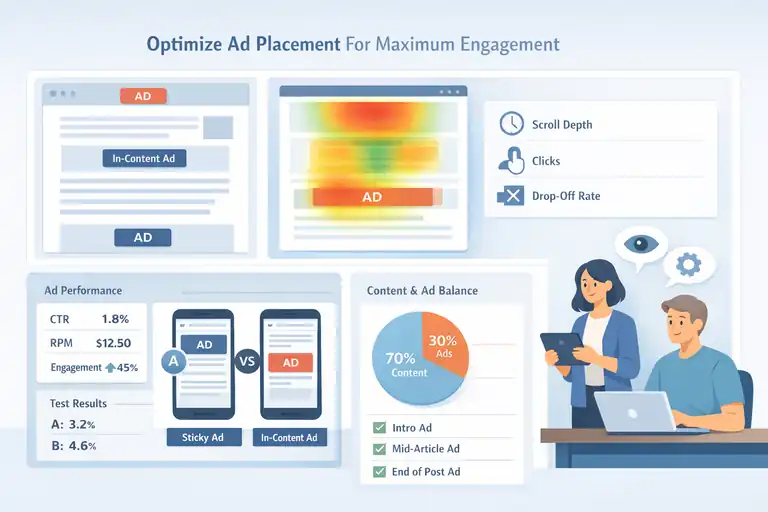
Once you’ve chosen your ad strategy, placement becomes your power lever.
Strategic positioning can easily double your earnings without adding new ads.
Identify High-Visibility Areas Without Distracting Readers
Think of your blog layout like a magazine page—some sections naturally draw more eyes.
- Above the fold: The area visitors see before scrolling. Great for a single, impactful ad.
- Mid-content: Perfect for contextual or native ads that appear between paragraphs.
- End of post: Often overlooked, but ideal for related product or affiliate promotions.
The key is blending visibility with comfort. You want your ads noticed but never resented.
Use Heatmaps To Test And Adjust Ad Locations
Heatmaps are your silent teachers. They visually show where readers click, scroll, and pause.
Tools like Hotjar or Microsoft Clarity can reveal:
- Which areas of your blog get ignored.
- Whether users scroll past ads too quickly.
- How far readers go before dropping off.
When you see readers consistently skip a section, move your ad. This data-driven tweaking is how top bloggers boost income without adding more traffic.
Experiment With Sticky Ads And In-Content Ad Blocks
Sticky ads (ads that follow users as they scroll) can significantly raise visibility—if used sparingly. They work best on mobile or sidebars, where space is limited.
Meanwhile, in-content ads that appear naturally within paragraphs or between sections perform well because they meet readers mid-engagement.
Try this test:
- Add one sticky ad on mobile.
- Add two in-content ads in long posts.
- Compare CTR after two weeks.
You’ll quickly learn which placement brings more clicks—and which ones annoy readers.
Find The Right Ratio Between Ads And Organic Content
As a rule of thumb, for every 500 words of content, limit yourself to 2–3 ads. Anything beyond that risks user fatigue.
Readers come for value first. The moment your ads outweigh your insights, income drops. Balance is everything.
I usually use this structure:
- One ad after the intro
- One mid-article ad
- One post-content ad
This keeps engagement high while maintaining a professional look advertisers love.
Increase Blog Traffic To Boost Ad Revenue
Traffic is the foundation of blog advertising. The more qualified visitors you attract, the more impressions and clicks your ads get.
Let’s focus on ways to bring the right kind of traffic—people who actually engage and convert.
Leverage SEO To Drive Targeted Visitors
Search engines remain the most consistent traffic source for ad monetization. Start with keyword research to find what your audience is already searching for.
Use tools like Ahrefs, Semrush, or Ubersuggest to uncover high-traffic, low-competition phrases. Then:
- Write long-form guides (1,500–2,500 words) with clear headers.
- Add schema markup for better search appearance.
- Optimize for intent, not just keywords—think, “What is my reader trying to accomplish?”
Remember, targeted traffic performs better than high-volume traffic because advertisers pay more for users who are likely to convert.
Use Social Media Promotion To Expand Reach
Social media can act like an amplifier for your blog. Platforms like Pinterest, LinkedIn, and X (formerly Twitter) are especially useful depending on your niche.
- Pinterest: Great for lifestyle, food, and design blogs.
- LinkedIn: Perfect for business, finance, or B2B blogs.
- Instagram: Ideal for visual storytelling or product demos.
Don’t just share links—create micro-stories that invite curiosity. I’ve found that short, relatable captions outperform direct “click here” promos every time.
Create Evergreen Content That Consistently Attracts Views
Evergreen content—posts that stay relevant over time—becomes your passive traffic engine.
Examples include:
- “How to” guides
- Resource lists
- Step-by-step tutorials
These posts keep bringing in search traffic month after month, which means your ads keep earning without extra effort. Update them quarterly with fresh data or examples to maintain rankings.
Build An Email List That Brings Repeat Traffic
Your email list is traffic insurance. Social algorithms change, SEO fluctuates—but your list is yours.
Send newsletters that do three things:
- Provide value first. Share useful insights, not just blog links.
- Segment your audience. Send ads or posts relevant to each group.
- Automate drip sequences. Keep traffic flowing to older, high-converting posts.
Over time, this creates a reliable cycle: content → readers → clicks → income.
Mix Different Blog Advertising Models For Stability
If there’s one thing I’ve learned about blog advertising, it’s that relying on one single income stream is risky.
Ads fluctuate, algorithms change, and advertisers rotate. Mixing models keeps your income more stable and predictable.
Combine Display Ads, Affiliate Links, And Sponsored Posts
Each ad type serves a different purpose—and when they work together, your blog becomes more profitable.
- Display ads: Great for consistent passive income. Platforms like Monetag or Adsterra handle placement automatically and pay per impression.
- Affiliate links: Perfect for content that solves problems. When you recommend a tool or product you personally use, conversions feel natural.
- Sponsored posts: Ideal for one-off collaborations where brands pay you directly for exposure.
In practice, you might combine all three. For instance, a post reviewing productivity tools could have display ads in the sidebar, affiliate links inside the article, and a sponsored paragraph about one partner brand. The trick is keeping it authentic so readers feel helped, not sold to.
Understand CPM, CPC, And CPA Models
These three payment models are the foundation of advertising income:
- CPM (Cost per Mille): You get paid per 1,000 impressions. Works best for high-traffic blogs with broad audiences.
- CPC (Cost per Click): Payment happens when someone clicks an ad. Great for blogs with engaged, curious readers.
- CPA (Cost per Action): You earn when a user completes a specific action, like signing up or making a purchase.
From my experience, new bloggers often start with CPM networks (like Google AdSense), then transition to CPA or affiliate models as their niche matures. The goal is to test and see which one matches your audience’s behavior.
Use A Diversified Ad Network Approach
Don’t tie your entire blog to one ad provider. Each network has different strengths, payout structures, and policies.
Here’s a simple approach I recommend:
- Use one premium network (like Mediavine or AdThrive) for display ads.
- Add one affiliate platform (like Awin or Impact) for product-based income.
- Experiment with direct brand partnerships once your blog gains traction.
Diversification means that if one source slows down, the others keep you earning.
Avoid Over-Reliance On A Single Income Stream
It’s tempting to stick with the ad setup that works now, but digital trends move fast. I’ve seen bloggers lose half their income overnight after an ad network policy change or algorithm update.
Instead, reinvest part of your ad earnings into creating new revenue streams: a paid course, a digital product, or email sponsorships. Think of ads as your foundation—but never your entire house.
Partner With High-Performing Ad Networks
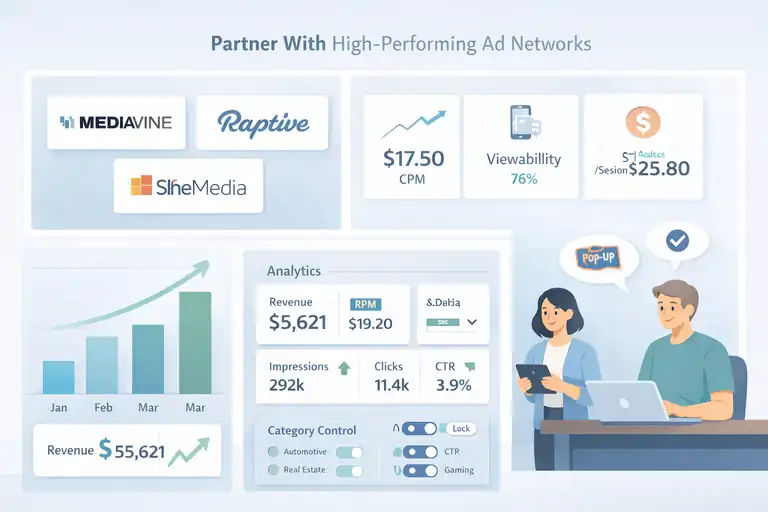
The right ad network can make or break your income potential.
A high-quality network optimizes placements, improves viewability, and pays better rates—all while keeping your blog user-friendly.
Explore Premium Ad Networks For Higher CPM Rates
Once your blog reaches about 50,000 monthly sessions, consider joining premium ad networks. These include Mediavine, Raptive (formerly AdThrive), and SheMedia.
They typically offer:
- Higher CPM rates due to better advertiser relationships.
- Smarter, AI-driven ad placements.
- Access to premium campaigns that smaller networks can’t offer.
It’s not just about traffic—it’s about quality traffic. If your visitors engage deeply with your content, premium networks will compete to place better ads on your blog.
Evaluate Ad Quality And Relevance Before Joining
Not every network is a good fit. Some display irrelevant or low-quality ads that can damage your blog’s reputation.
Before signing up, ask these questions:
- Are the ads relevant to my niche?
- Can I control categories or block unwanted content?
- Does the network offer responsive ad formats for mobile?
I once joined a network that showed flashy pop-ups, and my bounce rate skyrocketed. Lesson learned: always test for quality before committing.
Use Platforms That Offer Real-Time Analytics
Data tells the truth. Choose networks that provide real-time dashboards showing metrics like impressions, CTR, and revenue per session.
Mediavine and Raptive excel at this—they let you see how each placement performs daily. This helps you tweak strategy and remove underperforming ads fast.
Watching metrics like “RPM” (Revenue per Mille) helps you understand where your blog truly earns—and that’s where you double down.
Negotiate Custom Deals With Brands For Better Payouts
Once your traffic and engagement grow, reach out to brands directly. They often pay more for exclusive placements because they trust your audience’s loyalty.
Here’s what works well:
- Offer a custom ad package (e.g., sidebar banner + newsletter mention).
- Provide data like audience demographics and click rates to build confidence.
- Set clear terms about ad length, placement, and payment schedule.
Direct brand deals can earn you 2–5x more than network placements if managed well.
Improve Website Speed And Mobile Optimization
Fast websites earn more. Slow-loading pages frustrate users and reduce ad impressions. Every second of delay can cut conversions by up to 7%, according to Google’s own data.
Reduce Loading Time For Better Ad Viewability
When your site loads faster, ads display sooner—and viewability increases.
Try these optimizations:
- Use a content delivery network (CDN) like Cloudflare to speed up global access.
- Enable browser caching so repeat visitors load pages faster.
- Minimize heavy scripts that slow down rendering.
I once shaved 2.3 seconds off a client’s page load time—and their ad RPM jumped by 18% the next week.
Optimize Images And Scripts For Faster Performance
Large image files are silent performance killers. Use compressors like EWWW.io or ShortPixel to reduce file sizes without losing quality.
For scripts, defer loading of non-essential JavaScript so that visual content appears first. Tools like WP Rocket make this easy even for non-developers.
The goal: your content should load before your ads. This improves both user trust and ad visibility.
Ensure Ads Display Smoothly On Mobile Devices
More than half of blog traffic now comes from mobile. Ads that aren’t optimized for smaller screens often break layouts or get ignored.
What to do:
- Use responsive ad units that adapt automatically to screen size.
- Test your site on multiple devices weekly.
- Keep sidebar ads minimal—focus on in-content or sticky footer placements.
A clean mobile experience directly increases your CPM, as advertisers pay more for visible, user-friendly ad space.
Use A Responsive Theme That Maximizes Ad Fit
Your WordPress or CMS theme should naturally accommodate ads without breaking your layout.
Responsive themes like Astra, GeneratePress, or Kadence handle this beautifully—they balance speed with flexibility.
If your current theme isn’t optimized, consider switching. Sometimes the simplest design changes unlock major ad performance gains.
Create Content That Attracts High-Value Advertisers
High-paying advertisers want one thing: targeted, quality audiences.
Your content should signal credibility, intent, and engagement—all the things brands value most.
Focus On Topics With Strong Commercial Intent
Commercial intent means readers are close to buying. Think “best,” “review,” or “how to” topics.
For example:
- “Best Productivity Apps for Bloggers” attracts software advertisers.
- “How to Start a Fitness Blog” draws health brands and affiliate programs.
By aligning topics with buyer-ready intent, you attract higher-value campaigns automatically.
Use Data-Driven Keywords To Attract Lucrative Niches
Relying on intuition alone can limit your growth. Instead, use tools like Ahrefs or Semrush to uncover keywords advertisers pay premium rates for—often in tech, finance, or lifestyle niches.
Focus on metrics like keyword difficulty and CPC (Cost per Click) to gauge profitability. A keyword with a CPC of $4–$6 typically signals high advertiser competition—and higher ad rates.
Write Long-Form, Insightful Content That Increases Ad Relevance
Advertisers love blogs that hold attention. The longer readers stay, the more ad impressions you earn.
Aim for 1,500+ words per article, but focus on depth, not word count. Share first-hand experiences, real data, or niche-specific insights.
When your blog becomes a trusted source, advertisers see value in appearing beside your content—and they’ll pay for that association.
Keep Your Content Fresh To Maintain Advertiser Interest
Outdated blogs lose rankings and advertiser trust. Refresh your top-performing articles every few months.
Update numbers, swap outdated links, and remove products that no longer exist. Google rewards freshness, and so do advertisers.
It’s simple: consistent, updated content equals consistent, higher-paying ads.
Use Analytics To Track And Improve Ad Performance
If there’s one truth about blog advertising, it’s this: what gets measured gets improved.
You can’t increase ad revenue without knowing what’s working—and what’s quietly draining potential income. Tracking your numbers gives you clarity, confidence, and control over your strategy.
Set Up Conversion Tracking For Each Ad Type
Conversion tracking helps you understand which ads are actually leading to clicks, sales, or signups.
Start by connecting your site to Google Analytics 4 (GA4) or Matomo—both allow you to set up event tracking for ad interactions. Then, make sure your ad network (like Mediavine, Raptive, or Awin) is properly integrated so data syncs automatically.
Why this matters:
- You can see which ad types (display, affiliate, native) generate results.
- You’ll spot which traffic sources convert best—social, search, or email.
- You’ll uncover low-performing placements and replace them faster.
In my experience, just identifying your top 20% of converting ads can increase total revenue by 30% or more.
Analyze Click-Through Rates And Adjust Strategy
Your CTR (Click-Through Rate) tells you how often people engage with your ads compared to how many times they see them.
If CTR is below 0.3%, it’s often a placement or relevance issue.
Try:
- Moving ads closer to high-engagement content.
- Using cleaner, distraction-free layouts.
- Testing contextual ad units that match content topics.
For affiliate ads, adjust call-to-action text. Even a small tweak like “Learn more” instead of “Buy now” can lift clicks by 10–15%. I’ve tested this firsthand—and subtlety often wins over pushiness.
Identify Top-Performing Pages For Better Placement
Not all pages earn equally. Your analytics will show where visitors spend the most time or scroll the farthest.
Those are your prime ad zones.
Here’s what to look for:
- Pages with high time-on-site or scroll depth.
- Posts that rank well in search and bring steady traffic.
- Evergreen tutorials or guides that retain visitors for long sessions.
Place premium ad units (or affiliate promotions) on those high-value pages first. This focused approach beats adding more ads everywhere.
Use A/B Testing To Continuously Optimize Results
A/B testing means showing two ad variations—different placements, designs, or formats—and seeing which performs better.
You can use tools like VWO or Optimizely.
Test one change at a time:
- Move an ad block from sidebar to in-content.
- Compare sticky footer vs. inline ads.
- Try a new color or size for affiliate buttons.
I once ran a simple test moving an ad 200 pixels higher—and saw a 19% lift in CTR. Sometimes, small shifts make the biggest difference.
Experiment With Native Advertising For Better Integration
Native ads are the bridge between editorial content and brand promotion.
They look and feel like part of your content—when done right, readers engage naturally instead of feeling interrupted.
Blend Ads Seamlessly Into Content Without Disrupting Flow
The magic of native advertising lies in integration. These ads match your blog’s tone, style, and format, making them feel like genuine recommendations.
You can do this by:
- Using in-text product mentions where relevant.
- Embedding sponsored widgets that align with your topic.
- Writing comparison-style posts that educate, not just promote.
Think of it as ad storytelling. The smoother the flow, the more trust you earn—and the better the conversion rate.
Use Sponsored Articles That Deliver Real Reader Value
A good sponsored article shouldn’t read like a press release. It should feel like something you would’ve written anyway.
For example, if your blog covers productivity, a post titled “5 Tools That Simplify Your Workday” can include one sponsored tool—but still offer genuine value.
That balance is what keeps readers loyal and advertisers happy. I’ve personally found that when you focus on helping first and selling second, brand partnerships tend to last longer.
Maintain Transparency To Build Audience Trust
Always disclose when content is sponsored. Readers appreciate honesty, and it actually builds long-term credibility.
Use simple language like “This post is sponsored by [Brand], but all opinions are my own.”
Transparency not only protects your reputation—it also reassures advertisers that their message sits on a trustworthy platform.
Measure Reader Engagement To Refine Native Ad Strategy
Track how readers behave with your sponsored content. Key metrics include:
- Average time on page.
- Scroll depth.
- Click-throughs on links or CTAs.
If engagement drops, adjust your storytelling approach or placement. Native ads thrive on relevance—if your readers stop interacting, it’s time to recalibrate tone or topic.
Continuously Update Your Blog Advertising Approach
Blog advertising isn’t a “set it and forget it” system. The digital ad world changes constantly—from new ad formats to shifting privacy laws. Staying adaptable keeps your income stable.
Monitor Industry Trends And Algorithm Updates
Follow industry sources like AdExchanger or Search Engine Journal. They regularly cover changes in ad policies, privacy updates, and emerging platforms.
Google’s algorithm updates, for example, can drastically affect which posts get traffic—and therefore, which ads get seen.
I make it a habit to check updates monthly and tweak strategy accordingly. A few hours of adjustment can prevent big revenue drops.
Refresh Ad Designs And Formats Regularly
Just like fashion, ad design trends evolve. Outdated banner styles or clunky CTAs can turn readers off.
Here’s what to update periodically:
- Replace static banners with responsive or video formats.
- Update affiliate buttons with new colors or wording.
- Rotate creative visuals to prevent “banner blindness.”
Changing visuals every 3–4 months keeps things fresh and can revive declining CTR rates.
Learn From Competitors’ Ad Strategies
Don’t copy—observe. Tools like SimilarWeb let you see how competitors monetize their blogs and which networks they use.
Ask yourself:
- What ad types do they prioritize?
- How often do they run sponsored posts?
- What seems to resonate with their audience?
Then, adapt what fits your niche while adding your own unique spin.
Reinvest A Portion Of Ad Earnings Into Blog Growth
Treat your ad revenue like a business. Set aside at least 20–30% of your earnings to reinvest in things that increase future income—like better hosting, SEO tools, or design upgrades.
For example, I once reinvested part of my ad profits into improving site speed. Within a month, ad viewability rose 15%, and revenue followed.
Growth compounds when you keep reinvesting strategically.
Leverage Direct Brand Partnerships For Higher Earnings
When your blog builds trust and authority, brands will want to collaborate directly. These deals often pay far more than network ads because you’re offering access to a loyal, engaged audience.
Reach Out To Brands That Align With Your Niche
Start with products you already use and love. Authenticity makes pitching much easier.
Craft a simple outreach email highlighting:
- Who your readers are.
- Your traffic and engagement stats.
- How your content aligns with their brand.
Even smaller blogs can win partnerships by showing niche influence rather than massive traffic.
Pitch Value Propositions With Audience Insights
Brands want results, not just exposure. Use data to demonstrate the value of working with you.
Include:
- Audience demographics (age, interests, geography).
- Engagement metrics (click rates, average time on page).
- Examples of past successful collaborations if you have them.
When you present data confidently but humbly, brands view you as a professional partner, not just a publisher.
Negotiate Long-Term Ad Collaborations
One-off deals are fine, but recurring partnerships create stability.
Offer brands a package deal—like three sponsored posts over six months or a mix of banner placements and newsletter mentions.
This not only secures ongoing income but also helps brands see better cumulative results. Long-term relationships usually bring repeat business and referrals.
Track ROI To Strengthen Future Partnerships
After each collaboration, track performance and share a brief report with the brand.
Highlight:
- Clicks and conversions from the campaign.
- Audience engagement and sentiment (from comments or feedback).
- Lessons learned for future optimization.
Brands love transparency and accountability. When they see you track ROI seriously, they’ll come back for more—and often at higher rates.
Use Retargeting Ads To Maximize Repeat Conversions
Most visitors don’t convert the first time they visit your blog. Retargeting helps bring them back—reminding them of what they saw or read, and giving them another nudge to take action.
Done right, it can multiply your ad revenue without extra traffic.
Set Up Pixel Tracking To Capture Returning Visitors
A pixel is a tiny piece of code that tracks who visits your blog. It helps you identify people who’ve interacted with your content so you can show them relevant ads later.
Start by installing the Meta Pixel (for Facebook and Instagram) or the Google Ads tag. If you’re using a network like Mediavine or Awin, they often have built-in pixel integration.
Once it’s set up, you’ll be able to:
- Build custom audiences (like people who viewed specific posts).
- Retarget readers who didn’t click your affiliate links.
- Track which segments bring the best returns.
It’s like keeping your audience list warm—so your ads reach people already familiar with your blog.
Create Personalized Ad Campaigns For Returning Users
Generic ads don’t perform nearly as well as personalized ones. Retargeted visitors already know your brand, so you can use ads that feel more direct.
For instance:
- If someone read your “best productivity tools” post, retarget them with ads for a featured software.
- If they abandoned a subscription page, remind them of the value they missed.
Use simple tools like Google Ads Remarketing or Meta Custom Audiences to set up these campaigns. Personalization often increases conversion rates by 30–50%, especially for repeat readers.
Offer Incentives Or Discounts To Drive Conversions
Sometimes people just need a little push to take action. That’s where incentives work wonders.
You can:
- Offer a limited-time discount for a product you promote.
- Add a free resource or bonus in exchange for sign-ups.
- Use countdown timers in your ad copy to create gentle urgency.
The key is to make it genuine—don’t fake scarcity. Readers can sense manipulation, and it damages trust long-term.
Measure Retargeting ROI To Optimize Ad Spend
Retargeting shouldn’t just “feel” effective—you should know if it’s profitable.
Monitor key metrics like:
- Cost per conversion (how much each sale costs you).
- View-through conversions (sales that happen after someone sees, not clicks, your ad).
- Frequency (how often one person sees your ad).
If frequency gets too high, your audience will tune out. I recommend keeping it under 5 impressions per user per week. That’s enough to stay top-of-mind without being intrusive.
Build Trust To Encourage Ad Engagement
At the heart of successful blog advertising is trust. Readers won’t click—or buy—if they feel manipulated. When you create a space that respects them, engagement follows naturally.
Maintain Transparent Communication With Readers
Always let your readers know when an ad or affiliate link is present. Phrases like “This post includes affiliate links that support this site” are honest and appreciated.
Transparency doesn’t reduce clicks; it builds confidence. Readers who trust your integrity are more likely to support you intentionally.
Avoid Spammy Or Misleading Ad Content
Avoid pop-ups that interrupt reading or clickbait headlines that mislead. They might increase short-term clicks but harm your brand over time.
Instead, choose ad networks that allow control over categories and style. Mediavine, for example, lets you block entire ad topics that don’t fit your audience values.
A clean, comfortable reading experience increases both loyalty and RPM (revenue per thousand views).
Ensure Ads Reflect Your Blog’s Core Values
If you write about minimalism, don’t promote cluttered consumer products. If your focus is sustainable living, prioritize eco-friendly advertisers.
Aligning ads with your message tells readers: “I care about what I share.” It keeps your reputation intact while attracting brands that genuinely fit your niche.
Prioritize Long-Term Reader Relationships Over Short-Term Gains
It’s tempting to accept every paying ad, especially when income is new. But I’ve learned that consistency matters more than fast money.
When you focus on building relationships, your audience keeps returning. That loyalty compounds—turning casual readers into long-term revenue streams.
In short: protect your readers’ trust as fiercely as your traffic.
Monetize With Video And Interactive Ads
Video ads are growing fast, and for good reason—they capture attention better than static banners. Interactive ads, meanwhile, let users engage with brands in fun, memorable ways.
Both can elevate your blog advertising strategy when used thoughtfully.
Explore Video Ads For Higher Engagement
Video ads can deliver 2–3x higher engagement than standard banners. Networks like Raptive and Mediavine offer pre-roll and in-content video placements that autoplay silently until clicked.
If you publish tutorials or product demos, consider creating short branded videos that advertisers can sponsor. These often pay higher CPMs because of longer view times.
Tip: Keep videos under 30 seconds. Attention spans drop quickly after that.
Add Interactive Ad Elements To Increase CTR
Interactive ads invite action—hover effects, polls, sliders, or mini quizzes. They don’t just “show” an offer; they involve readers.
For example, a travel blog could include an ad widget asking, “Where do you want to visit next?” before linking to a flight deal.
These interactive formats improve CTR and also signal to advertisers that your audience is genuinely engaged.
Test Short-Form Video Ads On Mobile Devices
Short-form videos, similar to Instagram Reels or TikTok-style snippets, perform especially well on mobile.
Try embedding short clips between sections or near product reviews. If your ad platform allows vertical video units, enable them—mobile users respond 1.5x more to vertical formats compared to horizontal.
Always preview them yourself to ensure smooth playback and non-intrusive sound settings.
Balance Video Ads With User Experience Expectations
Too many video ads can slow down your site and frustrate visitors. Keep one or two per page, and let them complement the flow rather than dominate it.
If possible, use “click-to-play” formats instead of auto-play with sound. Readers appreciate control, and respecting that balance keeps them coming back.
Turn Blog Advertising Into A Sustainable Revenue Stream
Making money from ads is exciting—but keeping that income steady is where the real challenge lies. The key is to treat blog advertising like a business: strategic, adaptable, and built for the long run.
Set Clear Income Goals And Track Progress
Start by defining your numbers. Ask yourself:
- How much do I want to earn monthly from ads?
- How much traffic and RPM do I need to reach that goal?
For example, if your RPM is $20, you’ll need 50,000 pageviews to earn $1,000. Tracking this gives you clarity and motivation. Tools like Mediavine’s dashboard or Looker Studio make monitoring easy.
Automate Low-Value Tasks To Focus On Strategy
Manually checking every metric wastes time. Automate what you can:
- Use analytics dashboards to pull data automatically.
- Schedule ad reports weekly.
- Set email alerts for sudden RPM changes.
Automation frees you to focus on creative work—like testing new ad placements or improving content.
Reinvest In Content, SEO, And List Building
Your blog’s growth fuels ad growth. Use part of your ad earnings to:
- Hire freelance writers or designers to scale quality.
- Invest in SEO tools like Ahrefs or Surfer SEO.
- Grow your email list with lead magnets.
This creates a compounding effect: better content → more traffic → higher ad revenue.
Keep Testing, Learning, And Refining Your Ad Tactics
Digital advertising evolves constantly. What worked last year might flop today.
Make ongoing testing a habit:
- Experiment with new ad types quarterly.
- Attend webinars from ad networks to stay current.
- Join blogger communities to share performance insights.
Every small improvement—whether in load speed, layout, or topic focus—adds up. Over time, your blog becomes not just a platform for ads, but a well-oiled business that sustains itself.
Frequently Asked Questions
What is the fastest way to increase income with blog advertising?
The fastest way is to optimize ad placement on high-traffic pages and combine display ads with affiliate links. This improves visibility and monetization without needing more traffic.
How much traffic do you need for blog advertising to be profitable?
Blog advertising can be profitable with as little as 10,000 monthly pageviews, but income grows significantly once you reach 50,000+ sessions and qualify for premium ad networks.
Are display ads or affiliate links better for blog advertising?
Neither is better alone. Display ads provide steady passive income, while affiliate links offer higher payouts per conversion. Using both creates faster and more stable earnings.

I’m Juxhin, the voice behind The Justifiable.
I’ve spent 6+ years building blogs, managing affiliate campaigns, and testing the messy world of online business. Here, I cut the fluff and share the strategies that actually move the needle — so you can build income that’s sustainable, not speculative.
Related posts:
 Facebook Ad Optimization: How to Boost Your Campaign’s Performance
 How to Start a Blog and Make Money
 How to Increase Your SEO Ranking
 Internet Marketing Ideas: Increase Your Marketing Efforts
 How to Grow Online Presence Fast: Proven Steps That Actually Work
 15 Must-Have Affiliate Marketing Tools to Grow Faster