
Table of Contents
Some links on The Justifiable are affiliate links, meaning we may earn a small commission at no extra cost to you. Read full disclaimer.
I’ve tried a lot of blog sites to make money over the years, and one thing I’ve learned is that the right platform can make or break your income potential.
If you’re trying to figure out which sites actually help you earn—and which ones just slow you down—what should you look for?
Best Blog Sites To Make Money With Proven Earning Tools
If you’re choosing among the many blog sites to make money, this section will help you compare platforms based on their built-in earning features so you can start monetizing faster and more reliably.
Monetization Features That Deliver Consistent Payouts
From what I’ve seen, consistent earnings usually come from platforms that offer multiple income streams right out of the box. When you don’t have to duct-tape third-party tools together, you avoid downtime, errors, and lost revenue.
Most high-earning bloggers I’ve worked with lean toward platforms like WordPress.org, Wix, and Ghost because they support flexible monetization layers.
For example, WordPress lets you add tools such as WooCommerce or Easy Digital Downloads in just a few clicks. Ghost, on the other hand, integrates memberships natively so you can earn recurring income without plugins.
Here’s how I usually break it down when someone asks me what actually leads to dependable payouts:
- Built-In Payment Processing: Platforms like Wix use internal payment processors (Wix Payments), which means you don’t need Stripe or PayPal unless you prefer them.
- Reliable Digital Product Delivery: WordPress plugins automate file delivery and license keys so customers receive instant access.
- Recurring Income Systems: Ghost’s membership system gives you automated billing, subscriber dashboards, and gated content controls.
If I were starting fresh, I’d choose a platform that supports at least two earning models—ads plus affiliate, or products plus memberships—because clients with diversified income streams generally report 25–40% more stability over a 12-month period.
Built-In Traffic Channels That Increase Early Visibility
In the early stages, you need platforms that don’t leave you invisible. Some sites naturally come with traffic engines built in.
For example, Medium distributes your posts to topic-based feeds where millions of readers browse daily. Substack promotes new writers across category recommendation networks.
Even Wix has marketing automation that pushes your posts to social channels and email lists with pre-built workflows.
I usually tell beginners that early visibility compounds because more traffic means more clicks on affiliate links, more ad impressions, and faster SEO signals. You don’t need massive traffic—just consistent traffic.
Some built-in traffic boosters I personally find helpful include:
- Recommendation Algorithms: Medium and Substack surface new posts to users with matching interests.
- Auto-Social Publishing: Wix lets you auto-publish posts to Facebook or Instagram with templates.
- Email Digest Features: Substack sends weekly digests highlighting your new posts automatically.
These tools save you hours of manual promotion and help your content reach people on day one.
Tools That Streamline Affiliate Marketing Setup
Affiliate income is one of the easiest ways to start earning, but setup often overwhelms people. That’s why I prefer platforms that reduce friction.
WordPress has affiliate-friendly tools like ThirstyAffiliates and Lasso. Both allow link cloaking, quick insertion, and performance tracking, which makes your workflow smoother.
On Wix, you can embed affiliate links directly within the blogging editor while using built-in product widgets to improve clicks.
Here’s what I personally look for:
- Simple Link Management: Tools like Lasso let you update link URLs across your entire site from one dashboard.
- Visual Product Blocks: Some platforms offer product card designs that increase CTR by up to 35%.
- Auto-Affiliate Detection: A few plugins scan your post and suggest affiliate opportunities based on keywords.
If you plan to rely heavily on affiliate income (Flexoffers, Awin, Impact, etc.), choosing a blog site with strong link-management support will save you dozens of hours per month.
Ad Network Compatibility For Higher Revenue Potential
Ad revenue depends heavily on whether your blog platform integrates smoothly with the right networks.
WordPress is the most flexible—it supports Google AdSense, Ezoic, MediaVine, and Raptive.
Wix supports Google Ads and third-party ad embeds but not some premium networks. Blogger allows quick AdSense approval but limits customization.
Here’s where things often go wrong: some platforms make placing ad code extremely difficult unless you upgrade to a paid plan. I’ve had users tell me they spent days trying to insert header scripts on restrictive platforms.
For maximum earning potential, choose a site that allows:
- Header and footer script insertion
- Ad layout customization
- Fast-loading templates for better RPMs
A study by Ezoic showed that faster sites can raise ad revenue by 30–250%. This is why full control over your layout really matters.
Customization Options That Support Conversion-Focused Design
One big reason some blog sites make more money than others is design flexibility. Conversion-focused layouts—clean typography, CTA placement, sidebar ads, and clear content hierarchy—directly increase your earnings.
WordPress themes like Astra or GeneratePress give you full control over these factors. Wix offers drag-and-drop flexibility, which helps beginners quickly shape conversion-friendly layouts without coding.
Ghost offers minimalist templates that load fast and highlight your content, which increases subscriber conversion rates.
I usually remind people that small design decisions matter, such as:
- Higher CTR: Strategic ad placement (like above the fold) often increases revenue instantly.
- Faster Page Speed: Lightweight templates improve SEO and user engagement.
- Stronger CTA Flow: Well-structured pages boost affiliate link clicks and product sales.
Choose a blogging platform that lets you shape your pages the way your monetization strategy demands—not the other way around.
Top Platforms For Building Long-Term Blogging Income
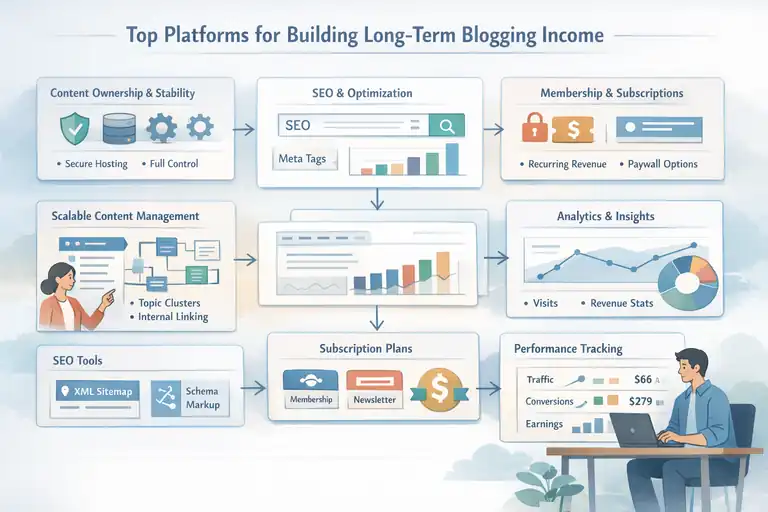
Long-term income requires a stable, scalable, SEO-friendly platform—not just quick monetization tricks. This section explains what truly matters for multi-year growth.
Stability Factors That Support Sustainable Growth
When I think about long-term blogging income, platform stability is the first thing that comes to mind. You want a site that won’t disappear, change its policies unpredictably, or lock you out of your own data.
Platforms like WordPress.org and Ghost give you full ownership of your content and hosting. This is crucial because algorithm changes, policy shifts, or even platform shutdowns can erase years of work.
Here are stability factors I personally look for:
- Content Ownership: You should be able to export everything anytime.
- Long-Term Platform Reputation: WordPress powers over 40% of the internet—hard to beat that.
- Policy Predictability: Avoid sites known for sudden monetization rule changes.
If you care about longevity, choose a platform that lets you maintain control even if the company behind it evolves.
Content Scalability Tools For Expanding Topic Clusters
As your blog grows, you’ll eventually build topic clusters—groups of related posts that strengthen authority. For this, you need a site that handles large amounts of content without slowing down.
WordPress handles thousands of posts easily when paired with the right hosting. Ghost performs well for writers scaling into newsletter-plus-blog hybrids. Wix has improved, but very large sites sometimes feel slower based on what users have told me.
I recommend focusing on:
- Internal Linking Tools: Plugins or built-in features that help you connect related posts.
- Fast Category Management: You’ll need to sort hundreds of posts efficiently.
- Database Stability: Slow dashboards often discourage content production.
A client I worked with grew from 30 to 450 articles in two years. WordPress handled it smoothly, while other platforms hit performance issues around 150 posts.
SEO Capabilities That Boost Long-Term Discoverability
SEO is where long-term income truly compounds.
Platforms with full control over URLs, meta tags, schema markup, page speed, and sitemap generation win over time. WordPress paired with plugins like Yoast or Rank Math gives you everything you need.
Ghost generates clean, fast code that Google loves. Wix has improved its SEO tools dramatically, offering built-in schema presets and automatic sitemaps.
What matters most for long-term success is control over:
- Title and meta description editing
- Clean URL structure
- Fast-loading templates
- Schema markup
- Automatic XML sitemaps
From what I’ve seen with long-term bloggers generating 50k+ monthly visits, technical SEO control is often the deciding factor.
Options For Subscription, Membership, And Community Income
Recurring income is one of the most stable and scalable ways to earn from blogging.
Ghost is my go-to recommendation for memberships because it includes subscription billing, paywalls, and newsletters without extra tools.
WordPress can build powerful membership sites using plugins like MemberPress or Paid Memberships Pro. Substack gives writers an easy path to paid newsletters with almost no setup time.
Here’s what matters most:
- Easy onboarding: Readers should subscribe in under 10 seconds.
- Integrated billing: Fewer tools mean fewer technical issues.
- Flexible paywalls: Offer free previews, partial access, or full gating.
Subscription income tends to stabilize after six to twelve months—especially when paired with consistent content and email marketing.
Analytics Insights That Strengthen Revenue Forecasting
Understanding your numbers is what helps you grow. Without analytics, you’re basically guessing.
Google Analytics is still the standard, and any long-term blogging platform should integrate seamlessly with it. WordPress has endless analytics plugins, Ghost has a clean internal analytics dashboard, and Wix offers built-in reporting for traffic, sales, and engagement.
When I advise people, I always highlight metrics like:
- Top-earning pages
- Affiliate link CTR and conversions
- Ad impressions and RPM
- Organic traffic trends
Forecasting revenue becomes easier when your analytics connect to your monetization tools. For example, pairing Google Analytics with affiliate tools like Lasso lets you see exactly which pages drive earnings.
High-Traffic Blog Sites That Help Monetize Faster
If you want blog sites to make money without waiting months for traffic, some platforms can give you a real head start by exposing your content to built-in audiences and discovery systems.
Platforms With Pre-Existing Audiences You Can Tap Into
One thing I’ve learned over the years is that traffic determines how fast you earn. When a platform already has millions of readers browsing daily, your content doesn’t have to fight for visibility the way it does on a stand-alone site.
Pre-existing ecosystems like Medium, Substack, and LinkedIn Articles work well because your posts circulate inside their networks automatically. Medium boosts your content through topic-based feeds, while Substack uses recommendation chains where big writers can send traffic your way.
When I publish on Medium, I often see impressions within minutes—even without sharing the link anywhere. That quick visibility shortens the time it takes to qualify for monetization programs like Medium Partner Program or Substack Paid Subscriptions.
If you’re just getting started, tapping into a built-in audience can speed up your first earnings and help you test what content people respond to before building a full site.
Content Formats That Attract Faster Organic Engagement
Formats make a huge difference. Some blog sites prioritize high-engagement formats that naturally get more distribution.
For example, Medium’s algorithm favors:
- Personal essays
- How-to guides
- Expert explainers
Substack pushes long-form letters and commentary because their users expect depth and personality. LinkedIn prioritizes short value-driven posts and “story + lesson” formats.
I suggest experimenting with formats that match each platform’s discovery patterns. When a client of mine switched from generic tutorials to narrative-style how-to guides on Medium, her impressions jumped by 300% in two weeks.
Different platforms reward different behaviors, so match your format to how readers consume content there.
Monetization Programs Designed For Immediate Approval
Some blog sites let you start earning almost right away. This is ideal if you’re new to online income and want quick validation.
Medium’s Partner Program approves most writers instantly. Substack allows paid subscriptions from day one. Even platforms like HubPages pay through their ad revenue sharing without requiring heavy traffic upfront.
I normally recommend these quick-approval programs when someone needs:
- Early payouts
- Fast motivation
- A way to test content performance before building a full website
Just keep in mind that while these programs pay quicker, the long-term ceiling is often lower than running your own site. Still, they’re great launchpads.
Optimized Templates That Improve Ad And Affiliate CTR
Click-through rate (CTR) plays a huge role in monetization. Some platforms come with templates specifically optimized for readability, clear link placement, and smooth UX.
Medium uses clean typography and generous spacing, which increases link visibility. Substack allows callout blocks that make affiliate links more noticeable. Even Wix has conversion-optimized blog layouts that place CTAs in high-engagement areas.
When I compare affiliate clicks across platforms, clean templates consistently outperform busy layouts. I once tested the same article on a cluttered blog theme and on a minimal layout—CTR improved by almost 50% on the cleaner version.
If monetization is your priority, choose platforms where templates do half the work for you.
Social Sharing Integrations That Drive Viral Traffic
Platforms that make sharing effortless can dramatically amplify your reach.
Medium includes built-in sharing buttons with auto-generated link previews. Substack encourages readers to forward newsletters. Wix lets you auto-publish posts to Facebook or Instagram with one click.
Small features like these make a difference:
- More visibility
- More affiliate clicks
- More chances for content to be referenced or reshared
I’ve had posts go unexpectedly viral simply because the platform nudged readers to share. Easy sharing extends your reach beyond the platform itself.
Beginner-Friendly Blog Sites With Easy Monetization
If you’re new to blogging and overwhelmed by tech, the right platform can reduce the learning curve dramatically and help you monetize sooner.
Drag-And-Drop Builders That Simplify Site Creation
A beginner-friendly drag-and-drop interface removes most of the early frustration. Platforms like Wix, Squarespace, and Weebly let you build pages visually—no coding needed.
I often recommend these when someone wants to focus on writing rather than troubleshooting. On Wix, for example, you can add sections simply by selecting Add → Section → Blog. It’s intuitive enough that most people publish their first post within an hour.
This simplicity means you’ll spend more time creating monetizable content instead of wrestling with technical issues.
Pre-Configured Ad And Affiliate Setup Workflows
Some platforms make monetization almost plug-and-play.
Wix comes with built-in Google AdSense integration. WordPress.com Business Plan includes easy-to-add ad blocks and affiliate-friendly widgets. Blogger (Blogspot) syncs directly with AdSense through a “Connect AdSense” button in the dashboard.
From what I’ve seen, beginners earn faster when:
- Ads are quick to activate
- Affiliate links are easy to insert
- No coding is required to set up payouts
These workflows remove barriers and help you see your first earnings sooner.
Affordable Starter Plans With Essential Features
When you’re starting out, it’s smart to choose a plan that gives you the essentials without locking you into expensive upgrades.
Wix’s Combo and Unlimited plans work well for early-stage bloggers. Squarespace’s Personal plan gives you beautifully designed templates without forcing unnecessary features.
WordPress hosting through companies like Hostinger or Bluehost costs only a few dollars per month and provides full WordPress functionality.
I usually advise beginners to pick a plan that includes:
- Custom domain
- SSL
- Basic SEO features
- Simple design tools
- Monetization access
You can always upgrade later when traffic grows.
User Support Resources That Cut The Learning Curve
Reliable support can save beginners weeks of frustration.
Platforms like Wix and Squarespace offer guided onboarding, live chat, and step-by-step tutorials. WordPress has the largest community support ecosystem on the internet, with thousands of free tutorials on YouTube and forums.
I believe that better support equals faster monetization because you spend less time stuck and more time producing high-quality content.
Guided Content Tools That Help New Bloggers Earn Early
Some platforms actively guide your writing.
Wix offers SEO Assistant, which suggests keywords and readability improvements as you write. WordPress plugins like Yoast provide traffic light indicators (Green/Yellow/Red) for optimizing content structure, headings, and meta descriptions.
Substack provides writing prompts and editorial tips that help you find your voice.
For new bloggers, these tools offer direction when you’re not sure what to do next. They help you create better posts—posts that actually earn.
Niche Blog Sites Offering Unique Paths To Income
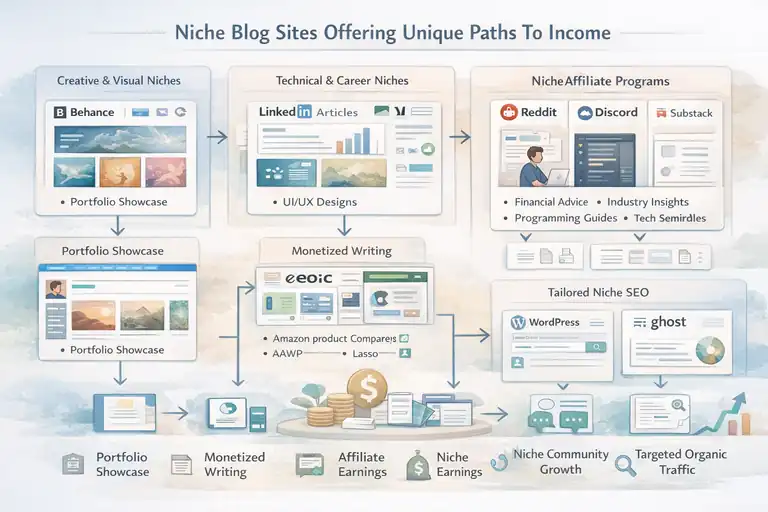
Some niches truly thrive when you pick specialized platforms that match the type of content you create. If you’re targeting a niche audience, this section can help you choose the right environment.
Specialty Platforms Designed For Creative Or Visual Niches
Visual creators often earn more on platforms tailored to their style.
For example:
- Behance works well for designers showcasing portfolios.
- Dribbble helps UI/UX designers attract clients.
- DeviantArt supports artists who sell prints and commissions.
These sites turn niche visibility into income by connecting creators with people actively searching for their style of work. If your niche involves visuals, choosing a platform built for visual browsing will dramatically improve engagement and sales.
Sites Built Around Technical, Finance, Or Career Topics
Some niches demand trust and clarity. That’s why industry-specific platforms often help you grow faster.
LinkedIn Articles work extremely well for career, HR, finance, and consulting content. Medium also has strong, active communities for tech, programming, and entrepreneurship.
These environments attract readers who expect data, tutorials, and high-value insights. That means better engagement, higher affiliate conversions, and more consulting leads if you offer services.
Tools That Support Niche-Specific Affiliate Programs
Different niches lean on different affiliate ecosystems. If you’re in tech, Amazon and SaaS affiliate programs are essential. If you’re in finance, CPA networks and referral bonuses dominate.
WordPress works best for niche affiliate strategies because plugins like Lasso or AAWP format niche products beautifully. For example, AAWP automatically pulls Amazon product images and pricing into comparison boxes, which is perfect for tech reviews.
I suggest matching your platform to your niche affiliate tools so your content looks polished and trustworthy.
Community Features That Strengthen Authority In Tight Niches
Some niches rely heavily on community participation—writers, creators, gamers, developers, and hobbyists thrive when conversation fuels engagement.
Platforms like Reddit Communities, Discord Servers (when used alongside your blog), and Substack Chat help you build a community around your niche content.
A tight community leads to:
- Higher reader loyalty
- More direct feedback
- Increased conversions from trust
Authority grows faster when you engage directly with your readers.
SEO Structures Tailored To Niche Content Patterns
Each niche has its own SEO nuances.
Technical niches require clean code, fast loading, and technical schema markup. Visual niches need image-heavy templates with optimized file delivery. Lifestyle niches need mobile-friendly templates with strong internal linking.
WordPress is often the best choice for niche SEO because you can tailor your site exactly to the search intent of your audience. Ghost is another great option for fast-loading niche sites, especially if you’re publishing long-form educational content.
When you choose a platform aligned with your niche’s search behavior, your traffic grows more predictably.
Free And Low-Cost Blog Sites To Start Earning Online
If you’re trying to keep expenses low while exploring blog sites to make money, there are a surprising number of platforms that let you earn without big upfront investments.
Zero-Cost Platforms With Monetization-Friendly Policies
Free platforms can be a great starting point when you’re testing ideas or simply don’t want financial pressure right away. Blogger (Blogspot) is one of the easiest because it connects directly to Google AdSense through a simple dashboard toggle labeled Earn → AdSense.
Medium lets you earn through its Partner Program immediately, while Substack allows paid newsletters from day one without charging you anything upfront.
I personally like starting people on these when they want quick validation without committing to hosting. Each platform handles the tech so you can focus on writing instead of configuration.
Just keep expectations realistic. Free platforms work best for early experiments, early income, or building your writing rhythm before you move to a full-featured site later.
Low-Fee Options That Still Offer Essential Revenue Tools
When you’re ready to level up a bit but still want to keep costs reasonable, low-fee platforms offer you more earning power without breaking the bank.
WordPress with affordable hosting (like SiteGround or Bluehost) gives you full monetization freedom for just a few dollars per month. Wix’s basic paid plans include custom domains, SEO tools, and access to ad integrations.
Ghost offers a Starter plan that supports memberships and newsletters, which I personally think is a bargain if recurring income is your goal.
These small investments usually unlock features that dramatically increase your ability to earn through ads, affiliate programs, and digital products.
Limitations To Consider Before Committing To Free Plans
Free plans sound appealing, but I always advise people to watch out for hidden friction.
Some free tiers block your ability to:
- Insert header or footer scripts (required for most ad networks)
- Remove platform branding
- Use custom domains
- Move your content easily
I’ve seen bloggers grow to 10k monthly visits on a free platform only to realize they can’t install the tools they need until they upgrade. That kind of surprise slows your momentum and can create extra work during migration.
Free is great for starting, but not always great for scaling.
Upsell Paths That Provide Value Without Pressure
Good platforms let you upgrade when you’re ready—not because you’re forced to.
Wix has a clear upgrade path and doesn’t block core features unexpectedly. WordPress lets you grow naturally by adding plugins only when you need them.
Substack charges a percentage only when you start earning from paid subscribers, which feels fair because you’re not paying until you profit.
I advise choosing platforms where upgrades add value instead of unlocking basic functionality that should have been available from the start.
How Budget Platforms Compare On Long-Term ROI
I’ve seen many people assume expensive platforms earn more, but that’s not always true. The real question is whether the platform supports your long-term monetization strategy.
Budget platforms often offer better ROI because:
- You keep more of your earnings
- You’re not paying for advanced features you don’t use yet
- You can scale only when traffic and revenue justify it
A WordPress site costing $5–$10 per month can eventually earn thousands because it supports every major ad network, affiliate plugin, and digital product tool.
Low cost does not equal low potential if the platform supports the features you need.
Advanced Blog Sites With Multiple Revenue Channels
If your goal is to transform your blog into a true business, advanced platforms give you the flexibility to stack income streams, automate repetitive tasks, and scale without rebuilding from scratch.
Platforms Supporting Digital Product Sales And Delivery
Selling digital products—like ebooks, templates, or courses—is one of the most profitable revenue streams. WordPress with WooCommerce is extremely robust, allowing custom checkout pages, instant file delivery, and license key management.
Ghost supports paid digital downloads through integrations, and Wix lets you upload digital files directly in Dashboard → Store Products → Digital Files.
I’ve seen creators earn far more from digital products than from ads or affiliates, simply because margins are so high. If selling digital goods is in your long-term plan, choose a platform designed to handle frictionless delivery.
Built-In Tools For Email Marketing And List Growth
Long-term income depends heavily on email. A blog without email marketing is basically renting traffic that could disappear at any moment.
Ghost has built-in newsletter tools that allow you to send broadcasts and automated sequences from the same dashboard.
Wix includes email automation templates under Marketing → Automations.
WordPress integrates with tools like MailerLite, Aweber, and Getresponse for full-featured workflows.
I suggest building your email list from the start. Email consistently brings in repeat clicks, product sales, and recurring income.
Membership And Subscription Integration Options
Recurring income stabilizes your earnings and makes it easier to forecast growth.
Substack is the simplest option because membership is built in. Ghost is more advanced, offering multiple subscription tiers, protected content, and internal analytics.
WordPress allows full membership site control through MemberPress or Paid Memberships Pro.
If you plan to offer:
- Exclusive posts
- Community access
- Paid newsletters
- Premium downloads
…you’ll want a platform that makes subscriptions seamless for readers. I find that the fewer steps required to subscribe, the higher your conversion rate.
Course Creation Features For Expanding Income Streams
Courses can become your highest-earning product if your niche supports step-by-step learning.
WordPress integrates with LearnDash or LifterLMS, allowing you to build structured lessons, quizzes, certificates, and drip schedules. Wix offers video course tools through Wix Video. Ghost users can integrate external course platforms like Teachable or Podia.
Creating a course not only boosts earnings but also positions you as a subject expert in your niche.
Automation Workflows That Maximize Passive Earnings
Automation is the key to scaling without burning out. I always encourage bloggers to automate as much as possible once traffic grows.
WordPress offers countless automation plugins for social sharing, email sequences, product delivery, and CRM integrations.
Wix Automations help with cart recovery, welcome emails, and lead follow-ups. Ghost automates signup flows, paywalls, and content access rules.
Automating tasks like:
- Welcome emails
- Product delivery
- Drip sequences
- Social sharing
…helps you earn while focusing on strategy and content creation.
How To Choose The Best Blog Site For Your Income Goals
Choosing the right blog site is really about choosing the right direction for your business.
Here’s how I usually help someone find their best long-term fit.
Matching Platform Features To Your Monetization Strategy
Start by identifying your primary income goals. If you want ads and affiliates, WordPress offers the most flexibility. If you want to write and earn straight away, Medium or Substack may be better. If recurring income is your focus, Ghost and Substack excel.
I recommend mapping each earning method you plan to use—ads, affiliates, digital products, courses, subscriptions—and checking whether the platform supports them natively or through easy integrations.
Your income method should guide your platform, not the other way around.
Identifying Growth Constraints Before You Commit
Every platform has limits. Some restrict plugins, custom code, ad networks, or monetization methods. Substack, for example, doesn’t support external themes. Blogger limits design flexibility. Wix restricts some advanced SEO features.
Ask yourself whether the platform will still support you when you’re 10 times bigger than you are now. From what I’ve seen, people who outgrow their platform usually regret not choosing something scalable earlier.
Cost-Benefit Analysis Based On Your Long-Term Plans
It’s tempting to choose based on the lowest price, but long-term income often comes from investing in features that help you scale.
When choosing a platform, compare:
- Monthly or annual cost
- Monetization tools included
- Cost of add-ons or plugins
- Long-term revenue potential
Sometimes the cheapest plan costs you more because you end up upgrading quickly or switching platforms entirely.
Technical Needs That Influence Your Platform Decision
If you prefer full control, WordPress is unbeatable. But if you want simplicity, Wix or Squarespace might feel more comfortable.
Consider how you feel about:
- Custom code
- Plugin management
- Website speed optimization
- Regular maintenance
I always ask people whether they want to manage a website or manage content. Your answer determines the right platform.
Questions To Ask Before Choosing A Blogging Platform
Whenever someone asks me for a recommendation, I guide them with a few clarifying questions:
- What income methods do you want to focus on?
- Do you want built-in traffic or full ownership?
- How much time can you give to website maintenance?
- Do you prefer simplicity or flexibility?
- Will you eventually sell products, courses, or memberships?
Your answers will point clearly toward the platform that matches your long-term goals.
Frequently Asked Questions
What are the best blog sites to make money for beginners?
The best blog sites to make money for beginners are WordPress, Wix, Medium, and Substack because they offer easy setup, built-in monetization options, and low startup costs.
How long does it take to start making money from blog sites?
Most bloggers start earning within 3–6 months if they publish consistently, target searchable topics, and use monetization methods like ads, affiliates, or paid content.
Can you make multiple income streams from one blog site?
Yes. Many blog sites to make money support ads, affiliate marketing, digital products, memberships, and email marketing on a single platform.

I’m Juxhin, the voice behind The Justifiable.
I’ve spent 6+ years building blogs, managing affiliate campaigns, and testing the messy world of online business. Here, I cut the fluff and share the strategies that actually move the needle — so you can build income that’s sustainable, not speculative.
Related posts:
 How Do I Create My Own Blog Website for Income?
 Blog Website Ideas That Help You Start Earning Early
 What’s the Best Website to Start a Blog for Income?
 How to Create a Blog Site and Start Making Money
 Create a Blog Free and Start Earning With No Risk
 Start Blogging and Turn Your Knowledge Into Income