
Table of Contents
Some links on The Justifiable are affiliate links, meaning we may earn a small commission at no extra cost to you. Read full disclaimer.
If you’re reading this doba dropshipping review, you’re probably wondering whether Doba is actually worth your time or just another dropshipping platform that overpromises and underdelivers.
I wrote this for new dropshippers, side hustlers, and small ecommerce store owners who want an honest breakdown before committing money or time.
The main question this answers is simple: what are Doba’s real pros, cons, and overall verdict based on how it actually works today?
What Is Doba Dropshipping And How The Platform Works
Doba positions itself as an all-in-one dropshipping platform that connects store owners with pre-vetted suppliers, mainly based in the U.S.
Instead of hunting for suppliers one by one, everything lives inside a single dashboard, which is the main promise behind this doba dropshipping review section.
How Doba Connects Retailers With Verified Suppliers
Doba works as a middle layer between you and suppliers, rather than a pure open marketplace. In simple terms, you’re not messaging factories directly. Doba has already approved suppliers and lists their products inside its system.
Here’s how that plays out in practice:
- Supplier vetting is handled upfront: Doba screens suppliers for reliability, fulfillment capability, and basic quality standards before listing them.
- You never negotiate directly: Pricing, shipping rules, and order processing are standardized inside the platform.
- Centralized communication: If something goes wrong, you contact Doba support rather than chasing individual suppliers.
In my experience, this setup removes a lot of early friction, especially if you’ve ever dealt with unreliable AliExpress sellers. According to Doba, the platform gives access to over 2 million products from hundreds of suppliers, though actual availability depends heavily on your niche.
The tradeoff is control. You gain convenience and structure, but you give up direct supplier relationships, which matters more as you scale.
What Products You Can Source Through Doba Marketplace
Doba’s product catalog is broad, but it’s not evenly strong across all categories. The platform leans heavily toward general merchandise rather than trend-driven products.
Common categories you’ll see include:
- Home and kitchen items: Small appliances, storage, décor
- Electronics and accessories: Phone add-ons, office tech, gadgets
- Health and lifestyle products: Fitness accessories, wellness tools
- Apparel and accessories: Mostly basics rather than fashion-forward items
One thing worth knowing is that Doba is better for evergreen products than viral ones.
You’re unlikely to find fast-moving TikTok trends here before they peak. Where it does shine is consistency. Products usually have stable supply and predictable fulfillment, which reduces refunds and customer complaints.
If your goal is building a long-term niche store instead of chasing trends, the product mix makes more sense than it first appears.
How Order Fulfillment And Shipping Are Handled
Order fulfillment is mostly hands-off once your store is connected. When a customer places an order, Doba automatically sends that order to the supplier for processing.
Here’s what typically happens behind the scenes:
- Automatic order routing: Orders are pushed directly to the supplier without manual work.
- Supplier-managed shipping: Each supplier controls shipping speed and carrier choice.
- Tracking updates sync back: Tracking numbers flow back into your store once available.
Shipping times vary. U.S.-based suppliers often deliver within 3–7 business days, which is significantly faster than overseas dropshipping. That said, not all products ship from the U.S., so you still need to check fulfillment locations carefully.
From what I’ve seen, shipping reliability is decent but not perfect. Some suppliers update tracking slowly, which can create short-term customer anxiety if you don’t set expectations clearly.
Supported Ecommerce Platforms And Store Integrations
Doba integrates with most major ecommerce platforms, but it’s not universal. The focus is on established systems rather than custom builds.
Current integrations typically include:
- Shopify: The most seamless and widely used integration
- BigCommerce: Solid automation, similar to Shopify
- WooCommerce: Requires a bit more setup but still functional
- API access: For advanced or custom workflows
If you’re running Shopify, setup is fairly quick. Product imports, pricing rules, and order syncing are all handled inside the Doba dashboard. For WooCommerce users, expect a slightly steeper learning curve, especially around product mapping.
If you’re on a less common platform, this is one area to double-check before committing.
How Doba Handles Inventory Sync And Stock Updates
Inventory management is one of Doba’s quieter strengths. Stock levels are updated automatically based on supplier data, reducing the risk of selling out-of-stock items.
Key inventory features include:
- Real-time stock updates: Supplier inventory changes reflect in your store
- Automatic product disabling: Out-of-stock items can be paused automatically
- Bulk product management: Pricing and availability can be adjusted at scale
This matters more than people think. According to ecommerce studies, overselling is one of the top causes of negative dropshipping reviews and chargebacks. Doba’s system helps reduce that risk, though it’s still smart to monitor high-volume products manually.
I’d describe inventory syncing here as reliable, not magical. It works best when you stick with fewer suppliers and avoid constantly rotating products.
Doba Dropshipping Pricing Plans And True Costs
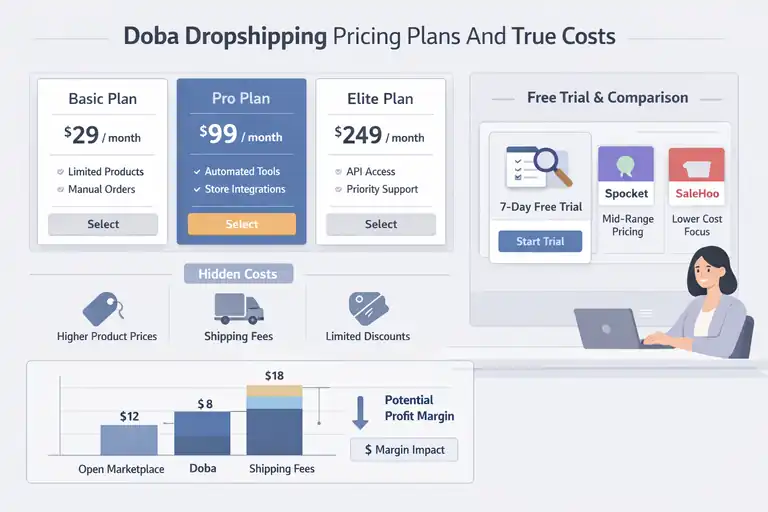
Pricing is where most people hesitate with Doba, and honestly, that hesitation makes sense. Unlike free marketplaces, Doba operates on a subscription model, which directly impacts your margins.
Breakdown Of Doba Subscription Plans And Features
Doba offers tiered pricing based on how deeply you want to integrate automation and how many products you plan to sell.
Typical plans include:
- Basic plans: Limited product access, manual order processing
- Mid-tier plans: Automation, store integrations, bulk tools
- Advanced plans: API access, higher order volumes, priority support
Monthly pricing often ranges from around $30 to over $250, depending on features. The jump between tiers can feel steep if you’re just starting out.
What you’re really paying for is time savings and supplier access. If you’re processing dozens of orders per month, automation can quickly justify the cost. If you’re just testing ideas, it may feel heavy.
Hidden Costs That Affect Profit Margins
The subscription fee is only part of the real cost. This is where many beginners get surprised.
Common margin killers include:
- Higher product base prices: Doba products often cost more than open marketplaces
- Shipping fees: Shipping is rarely free and varies by supplier
- Lower pricing flexibility: Limited room for negotiation or bulk discounts
For example, a product that costs $18 on Doba might cost $12 elsewhere, but with faster shipping and fewer headaches. Whether that tradeoff is worth it depends on your pricing strategy and audience.
In my opinion, Doba works best when you price for reliability and service, not rock-bottom deals.
Who The Free Trial Is Actually Useful For
Doba’s free trial isn’t meant to build a full store. It’s more of a testing environment.
The trial is most useful if you want to:
- Explore product quality and pricing
- Test the dashboard and workflow
- Evaluate supplier shipping locations
It’s less useful if you expect to make sales immediately. I suggest using the trial to shortlist products, calculate real margins, and decide whether automation features justify the cost for your situation.
If you go in with realistic expectations, the trial can save you from a costly mismatch later.
Comparing Doba Pricing To Other Dropshipping Tools
When compared to tools like Spocket or SaleHoo, Doba sits in the mid-to-high price range. The difference is structure.
Here’s a simple comparison view:
- Doba: Higher subscription, strong automation, centralized suppliers
- Spocket: Similar pricing, more branded product focus
- SaleHoo: Lower cost, more research-oriented than fulfillment-focused
If you value speed, predictability, and fewer supplier headaches, Doba’s pricing can make sense. If you’re optimizing purely for margins, it may feel restrictive.
My honest take is this: Doba is not cheap, but it is predictable. For certain business models, that predictability is the real product you’re buying.
Doba Dropshipping Pros That Stand Out In Practice
This part of the doba dropshipping review focuses on where the platform genuinely delivers value when you’re using it day to day, not just reading the marketing page.
These are the advantages that tend to matter once real orders start coming in.
Access To Pre-Vetted U.S. And Global Suppliers
One of Doba’s biggest strengths is supplier quality control. You’re not browsing a completely open marketplace where anyone can list a product. Every supplier inside Doba is pre-approved.
Here’s why that matters in real life:
- Fewer scams and bait-and-switch listings: You’re less likely to see fake inventory or misleading product photos.
- More consistent fulfillment standards: Suppliers already understand dropshipping workflows.
- Stronger U.S. supplier presence: Many products ship domestically, which customers now expect.
From what I’ve seen, U.S.-based fulfillment can cut delivery times by more than half compared to overseas-only sourcing. Industry data shows that delivery times under 5 days can improve conversion rates by up to 20 percent for ecommerce stores.
This doesn’t mean every supplier is perfect. But the baseline reliability is noticeably higher than open platforms where anyone can sell.
Centralized Product And Supplier Management
Doba’s dashboard acts like a control center for your entire sourcing operation. Instead of juggling multiple supplier accounts, emails, and spreadsheets, everything lives in one place.
Practically, this gives you:
- Unified product catalog: Search, filter, and import products from multiple suppliers in one view.
- Single order management flow: Orders, tracking, and fulfillment updates happen inside one system.
- Cleaner scaling experience: Adding more products doesn’t add the same chaos.
I personally think this is one of Doba’s most underrated benefits. It doesn’t feel exciting, but it reduces mental load. When you’re running ads, handling customer support, and managing cash flow, fewer moving parts matter more than flashy features.
If you value structure and predictability, this alone can justify the platform.
Faster Supplier Onboarding Compared To AliExpress
If you’ve ever tried to build supplier relationships on AliExpress, you already know how slow and inconsistent it can be. Doba removes that entire phase.
Here’s the difference in onboarding speed:
- No supplier outreach needed: You don’t message sellers or wait for replies.
- Instant access to product data: SKUs, pricing, and shipping rules are already defined.
- Immediate order readiness: Products are ready to sell the same day.
In practical terms, this can save weeks when launching a new store. I’ve seen beginners go from idea to live store in under a week using Doba, something that’s much harder when you’re negotiating with individual sellers.
You trade flexibility for speed, but for many people, speed wins early on.
Built-In Product Data And Order Automation
Doba handles a lot of the “boring but critical” backend work automatically. That includes product details and order flow.
Key automation features include:
- Pre-filled product descriptions and specs
- Automated order routing to suppliers
- Tracking number sync back to your store
This reduces human error. According to ecommerce operations studies, manual order handling increases fulfillment mistakes by over 30 percent at scale.
Automation won’t make your store successful by itself, but it does remove friction. And friction is what quietly kills most beginner dropshipping projects.
Doba Dropshipping Cons You Should Know First
No platform is perfect, and this doba dropshipping review wouldn’t be honest without calling out the real downsides.
These issues don’t affect everyone equally, but they’re important to understand upfront.
Higher Product Costs Compared To Open Marketplaces
Doba products usually cost more than what you’ll find on open platforms like AliExpress. That’s the most common complaint, and it’s a fair one.
Why prices are higher:
- Suppliers bake reliability into pricing
- U.S. fulfillment costs more
- Doba’s platform fees exist
For example, a kitchen gadget that costs $10 elsewhere might cost $16 on Doba before shipping. That forces you to price higher or accept thinner margins.
In my opinion, Doba works best when you sell on trust and convenience, not bargain pricing. If your audience is ultra price-sensitive, this becomes a real limitation.
Limited Control Over Branding And Packaging
Branding is another area where Doba feels restrictive. Most suppliers ship in neutral packaging, but true custom branding is rare.
Common limitations include:
- No custom boxes for most products
- Limited or no branded inserts
- Supplier-controlled packaging standards
If your long-term goal is building a recognizable brand, this can feel like a ceiling. Doba is better suited for validation and steady cash flow than premium brand storytelling.
Some sellers work around this with post-purchase emails and strong customer experience, but packaging itself is usually out of your hands.
Supplier Shipping Times And Tracking Inconsistencies
While shipping is faster than overseas-only dropshipping, it’s not always perfectly smooth.
Issues you might encounter:
- Tracking numbers updating late
- Different carriers across suppliers
- Inconsistent delivery estimates
This isn’t unique to Doba, but it does require proactive communication. I recommend setting clear delivery expectations on product pages to avoid support tickets.
When customers know what to expect, small delays become less dramatic.
Platform Learning Curve For New Sellers
Doba is not hard, but it’s not instantly intuitive either. There’s a learning curve, especially if you’re brand new to dropshipping tools.
New users often struggle with:
- Understanding pricing rules
- Choosing the right suppliers
- Optimizing automation settings
The dashboard is powerful, but it assumes you’re willing to spend time learning it. If you expect plug-and-play simplicity, this can feel frustrating at first.
That said, once you get past the initial setup, day-to-day operations become much smoother.
Doba Dropshipping Verdict: Who Should Use It
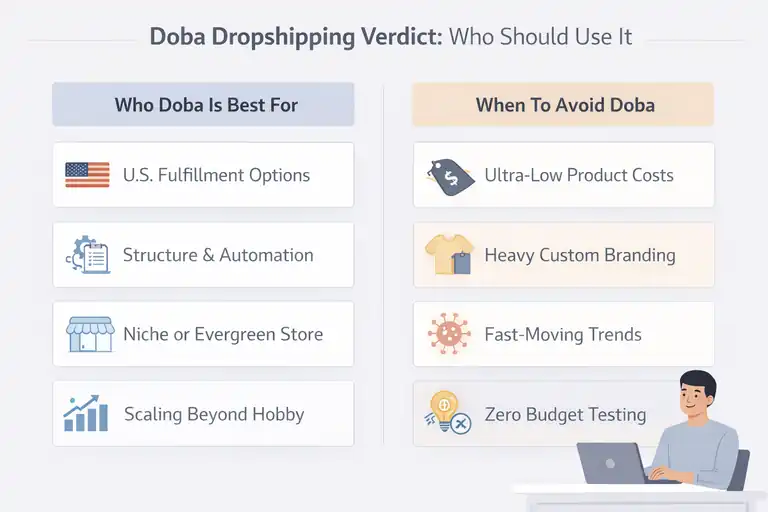
This final section of the doba dropshipping review is about fit. Doba isn’t for everyone, but for the right person, it can be a solid long-term tool.
Best Use Cases For Doba Dropshipping Stores
Doba makes the most sense if you value stability over experimentation.
It’s a strong fit if you:
- Want U.S.-based fulfillment options
- Prefer structure and automation
- Are building a niche or general store with evergreen products
- Plan to scale beyond a hobby project
I’ve seen Doba work especially well for solo founders who don’t want to manage supplier chaos while juggling marketing and support.
When Doba Is Not The Right Dropshipping Solution
Doba may not be the best choice if:
- You rely on ultra-low product costs
- You want heavy custom branding
- You chase fast-moving viral trends
- You’re testing ideas with zero budget
In those cases, open marketplaces or print-on-demand tools might give you more flexibility early on.
Final Recommendation Based On Cost Versus Value
My honest take is this: Doba is not cheap, but it is dependable.
You’re paying for vetted suppliers, automation, and fewer operational headaches. If that aligns with your business goals, the cost can be justified. If margins are your only priority, you’ll likely feel constrained.
If I had to sum it up simply, Doba is best for people who want dropshipping to feel more like a system and less like a gamble.
FAQ
Is Doba legit for dropshipping in 2026?
Yes. Doba is a legitimate dropshipping platform that works with pre-vetted suppliers, many based in the U.S. In this doba dropshipping review context, its main strength is reliability and structured order fulfillment, not ultra-low pricing.
Is Doba good for beginners?
Doba can work for beginners who want automation and fewer supplier risks, but it is not the cheapest option. New sellers with limited budgets may find the subscription cost challenging, while beginners who value stability often find it easier than open marketplaces.
Is Doba worth the monthly cost?
Doba is worth the cost if you prioritize faster shipping, vetted suppliers, and automated order management. If your business model depends on very high margins or custom branding, the value may not justify the price.

I’m Juxhin, the voice behind The Justifiable.
I’ve spent 6+ years building blogs, managing affiliate campaigns, and testing the messy world of online business. Here, I cut the fluff and share the strategies that actually move the needle — so you can build income that’s sustainable, not speculative.
Related posts:
 Doba Review: Honest Pros, Cons, and Real Costs
 Best Online Store Platforms to Launch Your Brand Today
 SaleHoo Review: Is It Legit or a Scam? My Honest Take
 Doba Dropshipping Explained: Is It Worth Starting Today?
 Doba Website Walkthrough: Features, Limits, and Usability
 Connective Ecommerce Explained: Build Without Inventory