
Table of Contents
Some links on The Justifiable are affiliate links, meaning we may earn a small commission at no extra cost to you. Read full disclaimer.
Dropshipping how to start?—it’s the question almost every aspiring online entrepreneur asks when dreaming of building a store without holding inventory.
The beauty of this business model is its simplicity: you sell products online, and suppliers handle storage, packaging, and shipping.
But where do you begin? How do you find reliable suppliers, choose profitable products, and build a brand that stands out in an overcrowded market?
In this complete beginner’s guide, I’ll walk you through every essential step to start your dropshipping business the right way—without wasting time or money on guesswork.
Understanding The Dropshipping Business Model
Starting with dropshipping how to start means first understanding the backbone of the business model. Dropshipping is an eCommerce setup where you sell products online without keeping them in stock.
When a customer places an order, the supplier ships it directly to them—so you act as the bridge between buyer and supplier.
Let’s break down what makes it unique, how it works, and what you need to know before diving in.
What Makes Dropshipping Different From Traditional Retail
In traditional retail, a store buys products in bulk, stores them, and ships them to customers. That means higher upfront costs, storage fees, and unsold inventory risk.
With dropshipping:
- No inventory needed: You only pay for a product after a customer orders it.
- Low startup costs: You don’t need a warehouse or bulk purchases.
- Faster store setup: You can launch a store in days using platforms like Shopify or WooCommerce.
For example, imagine you’re selling phone cases online. In a retail model, you’d buy 500 cases upfront, hoping they sell.
In dropshipping, you’d list them in your store and only pay your supplier when someone buys—zero risk of leftover stock.
I believe that’s what makes dropshipping such an appealing gateway into eCommerce: it lowers financial risk while giving you hands-on experience with marketing and branding.
How The Order Fulfillment Process Works
Here’s the simple flow behind every dropshipping sale:
- A customer places an order on your online store.
- You receive payment (let’s say $40 for a product that costs you $20).
- You forward the order details to your supplier (manually or via automation apps like DSers or AutoDS).
- The supplier ships the product directly to the customer.
- You keep the profit margin (in this case, $20).
That’s it—you’re essentially managing operations, marketing, and customer relationships, while suppliers handle logistics.
The best part is automation. Tools like Shopify + DSers can sync orders instantly so that fulfillment happens automatically without you manually contacting suppliers.
I recommend setting this up early—it saves hours of repetitive work later.
Key Players In The Dropshipping Ecosystem
Dropshipping isn’t just a seller-and-supplier game—it’s an interconnected ecosystem.
The key players include:
- Retailer (You) – Builds and manages the store, marketing, and customer experience.
- Supplier – Manufactures or stocks the products and ships them on your behalf.
- Ecommerce Platform – Shopify, WooCommerce, or BigCommerce provide your store framework.
- Customer – The end buyer whose satisfaction drives your business reputation.
- Apps & Tools – Services like Cj Dropshipping, Spocket, or Zendrop that simplify product sourcing and order fulfillment.
Understanding these roles helps you see where you add value: your job is to attract the right audience and provide smooth, trustworthy service.
The Pros And Cons Every Beginner Should Know
Pros
- Low financial risk: You don’t need upfront inventory or storage.
- Easy to scale: Add new products without major investment.
- Flexible lifestyle: Manage from anywhere with internet access.
Cons
- Low profit margins: Since you buy at retail prices, markups are smaller.
- Less control over shipping: You rely on supplier timelines.
- High competition: Many sellers use similar suppliers or products.
I suggest viewing dropshipping as a stepping stone—it’s a low-barrier entry point that teaches online sales, marketing, and customer management before you expand into private-label or branded eCommerce.
How To Choose A Profitable Dropshipping Niche
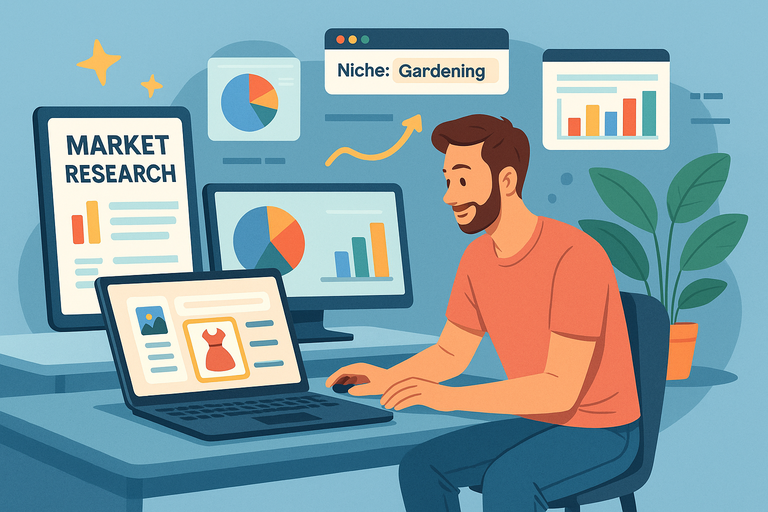
Selecting the right niche determines your success more than anything else. I’ve seen beginners fail simply because they chose products that didn’t align with market demand or pricing power.
The goal is to find a profitable, passionate, and underserved niche—one where customers want solutions and you can offer them effectively.
Why Niche Selection Determines Long-Term Success
Your niche shapes your audience, marketing strategy, and profit potential. For example, selling generic phone chargers might seem easy, but it’s oversaturated.
However, focusing on eco-friendly tech accessories narrows your audience but strengthens your appeal.
A profitable niche has three elements:
- Consistent demand (people need it year-round)
- Strong margins (room to profit after shipping and ads)
- Low-to-moderate competition (you can actually stand out)
I believe your niche should excite you—because passion sustains you when profits are slow at first.
Using Market Research Tools To Identify Winning Niches
You don’t need to guess. Use data-driven tools like:
- Google Trends – To check if interest is rising or falling.
- SaleHoo Market Research Lab – To find low-competition, high-demand products.
- Facebook Ad Library – To see which product types are getting engagement.
- SEMrush – To identify what products people are searching for online.
For example, type “wireless pet camera” in Google Trends—you might find a consistent upward trend, signaling a viable product niche. Always validate data before committing.
Analyzing Product Demand And Competition
To measure demand, look for:
- Over 1,000 monthly searches (using Google Keyword Planner)
- Consistent engagement on TikTok or Instagram Reels
- Multiple sellers but room for differentiation (branding, packaging, service)
Then, assess competition. Use tools like SimilarWeb to analyze top store traffic and product performance. If too many ads target your chosen niche, it’s likely oversaturated unless you have a unique angle.
Validating A Niche Before You Commit
Before investing in a niche, test it.
Here’s how I suggest you validate it:
- Launch a one-product store using Shopify.
- Run small-budget ads ($50–$100) to test conversion rates.
- Track data with tools like Hotjar to see user behavior.
- Adjust based on feedback and results.
If the product gets clicks, add-to-carts, and a few sales—that’s validation. If not, tweak your messaging or pivot to a related sub-niche.
Finding Reliable Dropshipping Suppliers
Even the best product idea fails with bad suppliers. You need partners who deliver fast, communicate clearly, and maintain consistent product quality.
Let’s talk about how to find and vet them properly.
What To Look For In A Trusted Supplier
Good suppliers share certain traits:
- Fast shipping times (ideally under 10 days for US/EU customers)
- Quality assurance processes (they inspect products before shipping)
- Clear communication and easy contact via email or WhatsApp
- Order tracking and real-time updates
Ask for sample products before listing them on your store. I always do this—it helps you test packaging, product accuracy, and shipping reliability firsthand.
Top Supplier Directories And Platforms To Use
Here are reliable platforms to start with:
- AliExpress – Large variety, ideal for beginners.
- Spocket – Focuses on fast US/EU suppliers.
- Zendrop – Integrates directly with Shopify for automation.
- SaleHoo – Curated supplier directory with verified vendors.
- CJ Dropshipping – Offers global warehouses and branding options.
I personally recommend Spocket if you want quick shipping to Western markets. Its dashboard lets you filter suppliers by shipping location and average delivery time.
How To Avoid Scams And Poor-Quality Vendors
Here’s how you protect yourself:
- Avoid suppliers who request upfront “membership” fees outside trusted directories.
- Look for verified ratings, customer reviews, and sample proof.
- Test order at least once before scaling campaigns.
- Communicate directly—poor response time often signals future headaches.
Transparency is everything. Reliable suppliers happily show product certifications, factory photos, or customer feedback upon request.
Building Strong Relationships With Your Suppliers
Once you find a good supplier, treat them like a business partner.
I suggest you:
- Stay consistent with orders and pay on time.
- Share feedback about product quality or customer concerns.
- Negotiate better prices as you grow your volume.
- Use WhatsApp or Skype for direct communication—it humanizes the relationship.
A reliable supplier can make or break your store’s reputation. When they trust you, they’ll prioritize your orders, offer discounts, and help you scale faster.
Pro Tip: Dropshipping success is built on systems, not luck. Focus on three pillars early—niche research, reliable suppliers, and customer experience. When these align, every other part of your business becomes easier to grow.
Choosing The Right Ecommerce Platform For Dropshipping
Before you get too deep into dropshipping how to start, the platform you build your store on will shape everything — from design and automation to how fast you fulfill orders.
Your eCommerce platform is the engine behind your business.
Choose it wisely, and you’ll save hours of frustration later.
Comparing Shopify, WooCommerce, And BigCommerce
Each major platform has its pros and cons. I’ve worked with all three, and while they share the same goal — helping you sell online — they differ in setup, customization, and costs.
Shopify
- Cloud-based (no hosting needed)
- Drag-and-drop builder with easy setup
- Seamless integration with dropshipping tools like DSers, Spocket, and Zendrop
- Subscription-based ($39–$399/month)
WooCommerce
- Free WordPress plugin (you’ll pay for hosting, themes, and plugins)
- Best for those who like control and customization
- Requires more technical setup and maintenance
- Great for content-heavy stores (blogs + shop combo)
BigCommerce
- Strong for scaling stores with many SKUs (product variations)
- Built-in features like multi-channel selling (Amazon, eBay, social media)
- Slightly steeper learning curve than Shopify
If you’re new, Shopify is typically the easiest way to start — no coding, built-in security, and tons of ready-made themes. WooCommerce fits best if you’re already familiar with WordPress. BigCommerce is ideal once you’re ready to scale or manage multiple brands.
Why Shopify Is Often The Best Choice For Beginners
I recommend Shopify to almost everyone starting out in dropshipping.
Here’s why:
- 1. Ease of use: You can set up a basic store in under an hour. The dashboard is simple — go to Products > Add product to upload items, or Online Store > Themes to edit design.
- 2. Built-in integrations: Shopify connects directly with popular dropshipping apps like DSers, CJ Dropshipping, and Zendrop — no need to juggle third-party tools manually.
- 3. Fast support: Their 24/7 chat is genuinely helpful. When I once had a checkout issue, support fixed it within minutes.
- 4. Mobile optimization: Most Shopify themes are automatically mobile-friendly, which is crucial since over 70% of online shoppers buy from their phones.
If you’re just learning dropshipping how to start, I believe Shopify’s all-in-one approach gives you a smoother entry into the game without overwhelming you with tech setup.
Integrating Dropshipping Apps And Plugins
Once your store is live, you’ll need apps to automate sourcing, inventory, and fulfillment.
Here’s how to connect them:
- DSers (Shopify App Store): Syncs with AliExpress and automates order forwarding. Just click Apps > DSers > Import List to start adding products.
- Spocket: Focuses on US/EU suppliers for faster shipping. Perfect for local delivery models.
- Zendrop: Combines automation with private labeling options — great once you’re scaling.
- CJ Dropshipping: Offers real-time tracking and branding services.
Each platform has its own app ecosystem, but Shopify leads in variety and reliability. I suggest you test multiple apps to see which matches your workflow best.
Setting Up Payment Gateways And Checkout Systems
To actually get paid, you’ll need to connect payment gateways — the services that process credit cards and PayPal transactions.
On Shopify, go to Settings > Payments and you’ll see options like:
- Shopify Payments: Default option with low transaction fees.
- PayPal Express Checkout: Easy for global customers.
- Stripe: Great for credit card processing worldwide.
For WooCommerce, you’ll manually install plugins like WooCommerce Payments or Stripe for WooCommerce.
I recommend activating multiple payment options to build trust. Some customers prefer PayPal for buyer protection; others just want to pay directly with a card. Make it easy for both.
Setting Up Your Online Store Step-By-Step
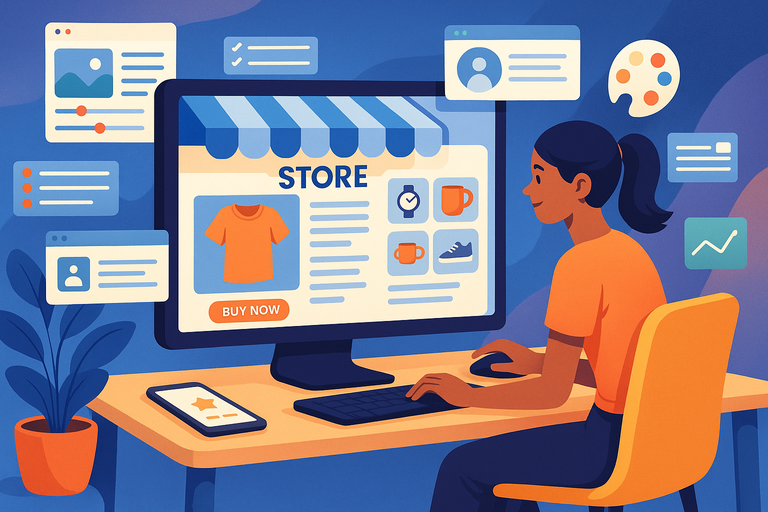
Once your platform is ready, it’s time to design your store. Think of this as your storefront window — it’s what makes people stay, browse, and buy. A clean, fast, and trustworthy layout will instantly improve conversions.
Designing A Professional Store That Builds Trust
Good design sells. I’ve seen stores double sales just by improving layout and visuals.
Focus on:
- Simple navigation: Limit your menu to 3–5 key pages (Home, Shop, About, Contact, FAQ).
- Consistent branding: Use the same color palette and font throughout.
- Clear calls-to-action: Buttons like Add to Cart or Buy Now should stand out.
Example: In Shopify, go to Online Store > Themes > Customize. Use the live preview editor to adjust colors, add logos, and rearrange sections.
Your homepage should instantly communicate what you sell and why you’re trustworthy. Add customer reviews or badges (e.g., “Money-Back Guarantee,” “Secure Checkout”) to reinforce confidence.
Writing Product Descriptions That Convert
Descriptions aren’t just words — they’re persuasion tools. I suggest following a structure like this:
- Problem: Briefly mention what the product solves.
- Solution: Explain how your product helps.
- Features: Highlight key specs with bullet points.
- Emotional trigger: Appeal to lifestyle or comfort.
- Call to action: Invite them to buy or learn more.
Example: “Say goodbye to tangled charging cables. This 3-in-1 wireless charger powers your phone, AirPods, and watch simultaneously — so your nightstand stays clean and organized.”
Keep descriptions easy to scan and use plain, benefit-driven language.
Optimizing Images And Site Speed For Better Performance
Slow sites lose sales. Research shows 53% of users leave if a page takes more than 3 seconds to load.
To fix this:
- Compress images using tools like TinyPNG.
- Choose a lightweight Shopify theme (e.g., Dawn or Minimal).
- Use lazy loading (images load only when visible).
- Test performance on Google PageSpeed Insights.
I also suggest keeping image dimensions consistent — around 1000x1000px for product photos — to maintain a clean, uniform look.
Creating Clear Policies For Shipping, Returns, And Refunds
Transparency builds trust, especially in dropshipping where shipping times can vary.
Include pages for:
- Shipping Policy: Mention average delivery times (e.g., “7–14 business days”) and tracking updates.
- Refund Policy: Clearly outline refund eligibility and process.
- Privacy Policy: Required by law in most regions.
You can find free templates in Shopify under Settings > Policies. Customize them to match your store’s tone.
I always advise being honest about shipping delays — it prevents complaints later and helps retain long-term customers.
How To Find Winning Dropshipping Products
Finding the right product is half the battle. Most beginners fail because they chase “viral” products instead of focusing on consistent demand and margin potential.
Let’s explore how to pick winners that sell.
Identifying Trending And Evergreen Products
Trends can bring quick wins, but evergreen products sustain your income.
- Trending: Items that spike in popularity (e.g., smart projectors, posture correctors).
- Evergreen: Always in demand (e.g., pet supplies, kitchen gadgets, home fitness gear).
I recommend using Google Trends to gauge interest. For example, search “portable blender” and check if interest remains steady year-round. If it does, you’ve found an evergreen niche with stable traffic.
Using Tools Like AliExpress, Spocket, And Zendrop
These platforms make product discovery simple:
- AliExpress: Ideal for testing products quickly. Use filters like “4-star rating and up” and “Orders > 100.”
- Spocket: Focuses on fast-shipping US and EU suppliers. Great for improving delivery times.
- Zendrop: Lets you bundle products, customize packaging, and even private label once you grow.
Example path: On Shopify, go to Apps > Spocket > Search Products. Filter by “Fast Shipping” and “Premium Supplier.” This instantly narrows options to reliable, profitable items.
Testing Product Performance Before Scaling
Before going all-in on a product, test it. I usually suggest this 3-step approach:
- Launch a simple, one-product store with minimal design.
- Run $50–$100 in ads (Facebook or TikTok) and track engagement.
- Monitor add-to-cart and purchase rates in Shopify Analytics.
If conversion rates exceed 2% and the cost per acquisition is manageable, you’re onto something. Double down and scale gradually.
Avoiding Low-Margin And Saturated Products
Avoid products where margins are below 30%. Shipping, transaction fees, and ad costs will eat your profits fast.
Warning signs of saturation:
- Dozens of identical listings on every platform.
- Heavy ad competition on Facebook.
- Falling engagement on product-related videos.
Instead, look for products you can improve through branding or bundling. For example, instead of selling plain yoga mats, offer “eco-friendly yoga sets” with straps and carrying bags — perceived value increases instantly.
Pro Tip: The real secret to dropshipping success isn’t luck — it’s systems. Start with one niche, one reliable supplier, and one winning product. Once you get consistent sales, scale with data, not hype.
Building A Strong Brand Around Your Dropshipping Store
When you’re learning dropshipping how to start, it’s tempting to focus on products and skip branding. But here’s the truth — your brand is what keeps people coming back.
It’s the feeling your store gives, the trust it builds, and the reputation it earns over time.
You’re not just selling products; you’re selling reliability, personality, and value.
Why Branding Matters More Than Ever
In today’s crowded eCommerce world, anyone can copy your product — but no one can copy your brand story. Branding transforms a generic dropshipping store into a trusted business.
Strong branding matters because:
- It builds recognition and repeat customers.
- It increases perceived value, letting you charge more.
- It improves ad performance — customers are more likely to click on ads from brands they trust.
Think of how Gymshark grew. They didn’t invent gym clothes; they built a powerful identity around fitness culture and community. That’s what branding does — it adds emotional gravity to what you sell.
I always suggest treating your brand as an experience, not a logo. Every detail — from packaging to customer emails — should reinforce your message.
Creating A Memorable Store Name And Logo
Your store name and logo are the first impressions customers get. Keep them simple, relevant, and easy to remember.
Here’s a quick checklist I use:
- Avoid hard-to-spell or overly long names.
- Use something that hints at your niche (e.g., “LumaPet” for pet accessories).
- Check domain availability on Namecheap or Shopify Domains.
- Keep the logo clean and scalable (works on both web and mobile).
Example: In Shopify, go to Settings > Domains to check your store’s domain options directly. For logos, I often use Canva or Looka — both let you design professional logos quickly.
I believe simplicity wins every time. Customers should be able to read your logo instantly and recognize it later on social media or packaging.
Crafting A Unique Value Proposition
A value proposition explains why customers should buy from you and not someone else. It’s that short, clear statement that answers: “What makes your store different?”
To craft one, ask yourself:
- What problem does my store solve?
- What benefit do customers get?
- How am I different from similar stores?
Example: “EcoThreads offers sustainable clothing made from recycled materials, shipped in zero-waste packaging.”
Keep it short and highlight it across your homepage, product pages, and ads. I suggest testing variations in your marketing to see which resonates most with your audience.
Building Brand Trust Through Social Proof
Social proof is your silent salesperson. People trust other people’s experiences more than your promises.
Ways to build social proof:
- Add customer reviews and ratings using apps like Loox or Judge.me.
- Feature user-generated photos or testimonials on your homepage.
- Display “as seen on” mentions or brand partnerships if you have any.
Example: In Shopify, go to Apps > Loox Reviews and enable automatic review requests after purchase. This helps build credibility over time without extra effort.
In my experience, even five solid reviews with real photos can double your conversion rate. Shoppers just want reassurance that others have bought — and loved — your product.
Marketing Strategies To Launch And Grow Your Dropshipping Business
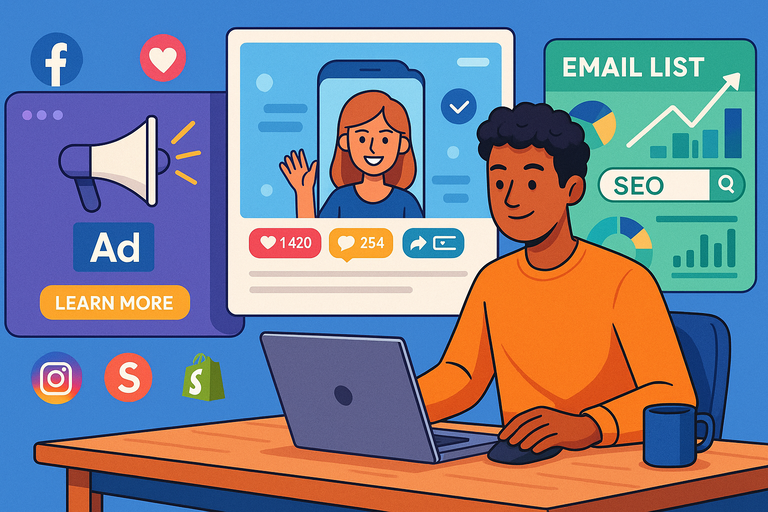
Once your brand and store are ready, it’s time to get traffic. Marketing is where dropshipping becomes a real business.
You don’t need a huge budget — just the right mix of paid and organic strategies.
Using Social Media Ads To Drive Targeted Traffic
Paid ads are the fastest way to test products and get sales. Platforms like Facebook, Instagram, and TikTok let you target audiences by interest, behavior, and location.
Here’s a simple setup I often recommend for beginners:
- Start with a small budget ($10–$20/day).
- Create 2–3 ad variations using different product images or angles.
- Target one audience per ad set (e.g., “pet owners” or “fitness enthusiasts”).
- Let ads run for 3–5 days before judging results.
Example UI path: Facebook Ads Manager > Create > Sales Objective > Audience Targeting.
I believe the secret to profitable ads isn’t spending more — it’s learning faster. Test, analyze, and optimize one variable at a time.
Leveraging Influencer Marketing For Quick Exposure
Influencer marketing is powerful because it builds instant trust. You borrow credibility from someone your target audience already follows.
Here’s what works best:
- Start with micro-influencers (5K–50K followers). They’re affordable and often deliver better engagement.
- Use TikTok Creator Marketplace or Collabstr to find creators in your niche.
- Offer free products or affiliate commissions instead of one-time payments.
Example: A pet store could send free collars to 10 dog influencers, asking them to post unboxing videos. The organic exposure alone can bring hundreds of visitors overnight.
Building An Email List For Long-Term Sales
I always say: social media gets you attention, but email builds relationships.
Steps to start:
- Offer a discount or free guide (like “10 Tips for Pet Care”) in exchange for email sign-ups.
- Use Shopify’s Email Marketing or tools like Omnisend to automate welcome and follow-up emails.
- Send helpful content, not just promotions — build trust first.
A simple welcome series could look like this:
- Email 1: Welcome message + small discount.
- Email 2: Share brand story or best-seller highlight.
- Email 3: Offer limited-time free shipping.
Email can generate up to 30% of your revenue once you start nurturing repeat buyers.
How SEO And Content Marketing Boost Store Visibility
SEO takes longer than ads but pays off in the long run. It helps your store appear on Google when people search for your products.
Here’s how to get started:
- Optimize product titles with long-tail keywords (e.g., “eco-friendly yoga mat for beginners”).
- Write helpful blog posts around your niche (e.g., “5 Benefits of Using Sustainable Gym Gear”).
- Add internal links between related products and pages.
Example path in Shopify: Online Store > Preferences > Title and Meta Description.
I recommend using Ubersuggest to find what keywords your competitors rank for. Combine SEO with blogging and you’ll build steady organic traffic — even when ads slow down.
Managing Orders, Customer Service, And Returns
Once sales start rolling in, your focus shifts from “getting customers” to “keeping them happy.” A smooth post-purchase experience builds loyalty, referrals, and glowing reviews.
Automating Order Fulfillment For Efficiency
Automation saves time and prevents mistakes. Tools like DSers or Zendrop can automatically forward orders to suppliers after a customer checks out.
Example UI path: Shopify > Apps > DSers > Settings > Auto Order.
Benefits include:
- Faster order processing.
- Real-time inventory updates.
- Automatic tracking numbers sent to customers.
I always advise enabling “auto-sync tracking” so your customers receive updates without you lifting a finger.
How To Handle Customer Inquiries Professionally
Your customer support style reflects your brand. Respond quickly, clearly, and with empathy.
Tips that work:
- Always reply within 24 hours.
- Use templates for common questions like shipping or returns.
- End messages with reassurance: “We’ve got your back, and we’ll fix this right away.”
Example: If you use Shopify Inbox, go to Apps > Shopify Inbox to manage all conversations in one place — email, chat, or social media.
I believe how you handle problems defines your reputation more than the problems themselves.
Managing Refunds, Exchanges, And Complaints
Refunds and exchanges are part of business — don’t fear them. The key is setting clear policies and keeping the process simple.
- Make refund requests easy to submit via a form or email.
- Issue partial refunds for shipping-only issues when possible.
- Use polite, professional language even if customers are upset.
Example: “I completely understand your concern. Let’s get this sorted for you right away.”
In practice, 80% of angry customers calm down when they see genuine effort to help.
Using CRM Tools To Improve Customer Experience
A Customer Relationship Management (CRM) tool helps track communication, orders, and satisfaction.
Good options include:
- HubSpot CRM: Free and integrates with Shopify.
- Zendesk: Great for managing multiple support channels.
- Gorgias: Built specifically for eCommerce customer service.
Example path: Shopify App Store > Search “Gorgias” > Add App.
These systems let you see every customer’s purchase and conversation history in one place. I suggest implementing one once you hit consistent weekly orders — it keeps everything organized and prevents mistakes.
Pro Tip: The most successful dropshipping stores don’t just sell products — they create experiences. When your brand looks professional, your marketing connects emotionally, and your customer service feels human, your business becomes more than a store. It becomes a trusted name people remember and return to.
Scaling Your Dropshipping Business For Sustainable Growth
Once your store starts generating consistent sales, the next step in dropshipping how to start is learning how to scale smartly.
Scaling isn’t about running more ads blindly — it’s about tightening your systems, expanding wisely, and turning short-term wins into long-term profit.
Tracking Key Metrics To Measure Success
Numbers tell you what’s really working. Without data, you’re just guessing. I always recommend setting up Shopify Analytics or Google Analytics 4 right away.
Here are the key metrics to monitor:
- Conversion rate: Percentage of visitors who make a purchase. Aim for 2–3%.
- Customer acquisition cost (CAC): How much you spend on ads per new customer.
- Average order value (AOV): The average amount customers spend per purchase.
- Return on ad spend (ROAS): Revenue generated per dollar spent on ads.
- Customer lifetime value (CLV): The total worth of a customer over time.
Example: If your AOV is $40 and your CAC is $20, you’re profitable. But if CAC rises above AOV, it’s time to optimize your ads or pricing.
I suggest checking these numbers weekly. Over time, patterns will show where your bottlenecks lie — slow shipping, poor upsells, or inefficient ads.
Expanding Your Product Line Strategically
Expanding your catalog doesn’t mean adding random products. The goal is depth before breadth — serve your existing audience better first.
A few smart ways to expand:
- Introduce complementary products (e.g., sell resistance bands if you already sell yoga mats).
- Offer product bundles to increase AOV.
- Test seasonal variations like colors or packaging.
You can track demand for new ideas using Google Trends or Spocket’s best-sellers section. When interest spikes consistently, it’s a signal to test.
In my experience, the best-performing expansions come from customer feedback. Pay attention to what shoppers ask for in reviews or emails — they often reveal your next winning product.
Outsourcing Tasks To Save Time And Increase Profit
As your store grows, you can’t do everything yourself. Outsourcing frees you to focus on high-impact tasks like marketing and strategy.
Here’s what to delegate first:
- Customer support: Hire a virtual assistant (VA) on Upwork or Fiverr.
- Order fulfillment: Use automation tools like Dropified or AutoDS.
- Ad management: Partner with freelancers experienced in Facebook or TikTok ads.
Example: If you’re spending three hours daily replying to customers, that’s 15 hours a week. A trained VA can handle that for $100–$200 a month while you focus on scaling revenue.
I believe outsourcing is one of the most freeing steps you can take. It transforms your store from a side hustle into a real business.
When And How To Transition Into A Private Label Brand
Once you’ve proven demand and understand your audience, consider transitioning from generic dropshipping to private labeling.
Private label means creating your own branded version of an existing product. For instance, instead of selling a generic water bottle, you create “HydroPeak,” your custom-branded line.
Steps to start:
- Identify your best-selling product.
- Find a supplier on Alibaba or CJ Dropshipping Private Label Service.
- Request branding options — custom logo, packaging, and inserts.
- Order small batches (100–300 units) to test.
Private labeling increases trust, allows better pricing, and differentiates you from copycats. It’s the natural next step toward building a brand customers remember.
Common Dropshipping Mistakes To Avoid
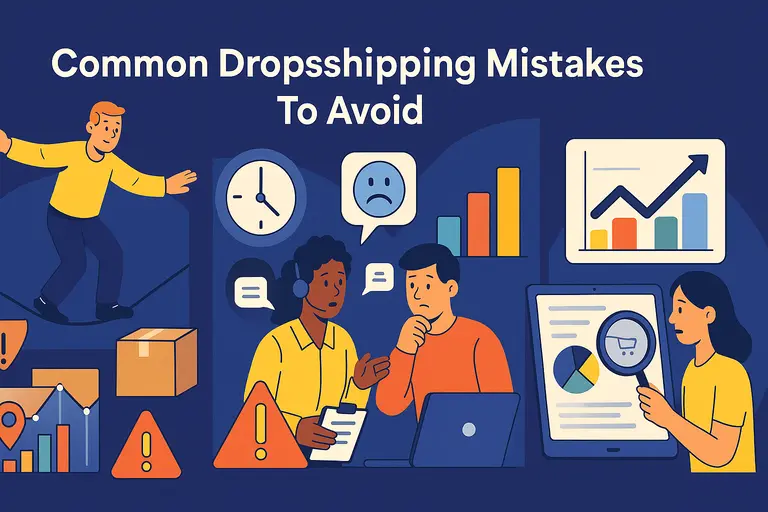
Even with the best products, beginners often stumble on avoidable mistakes. Recognizing them early can save you a lot of money — and frustration.
Over-Relying On A Single Supplier Or Product
Relying on one supplier is like walking on a tightrope — one delay or stock issue, and your business halts.
To avoid this:
- Always have backup suppliers for your top products.
- Use multiple sourcing platforms like AliExpress, Spocket, and CJ Dropshipping.
- Keep a small reserve of best-sellers (if possible).
Example: If your main supplier goes offline during a holiday, a backup ensures you can still fulfill orders and protect your reputation.
I recommend diversifying suppliers once you reach consistent monthly sales. It’s your insurance policy in eCommerce.
Ignoring Customer Experience And Shipping Delays
One of the biggest dropshipping pitfalls is ignoring post-purchase experience. Long shipping times and poor communication can destroy your store’s credibility.
Fix this by:
- Partnering with local or fast-ship suppliers (especially via Spocket or Zendrop).
- Setting realistic delivery times on product pages.
- Providing automatic tracking updates via email.
I’ve seen stores double retention rates simply by being transparent about shipping. Honesty goes further than speed in building trust.
Setting Unrealistic Profit Expectations
Dropshipping can be profitable, but it’s not a get-rich-quick system. Expect modest margins at first — usually 15–30%.
Avoid these traps:
- Spending more on ads than you can afford.
- Assuming immediate profits after launch.
- Copying “viral” products without testing your audience.
I suggest viewing your first three months as a learning phase. Focus on understanding data, not chasing instant revenue. Once you have proof of concept, scaling becomes sustainable.
Failing To Track Data And Optimize Performance
Many new sellers rely on gut instinct instead of analytics — that’s dangerous. Every click, sale, and abandoned cart is a clue.
Use tools like Shopify Analytics, Google Analytics 4, and Facebook Pixel to track performance.
Focus on:
- Which products have the best ROI.
- Which traffic sources convert best.
- Where customers drop off in the checkout process.
Optimization is ongoing. Even small tweaks, like shortening product pages or adjusting ad copy, can improve conversion rates by 10–20%.
Expert Tips To Build A Profitable Dropshipping Store
After helping countless entrepreneurs, I’ve noticed the most successful ones share the same habits. They don’t chase trends — they build systems, analyze data, and keep improving.
Start Small, Then Scale With Data-Driven Decisions
I always suggest starting with one niche and one main product. This helps you focus marketing, budget, and testing.
Once you gather enough data (cost per click, conversion rate, profit margin), scale what works. Double your ad budget on winning campaigns and kill the rest.
Example: If a product gets consistent sales with a 3x ROAS, scale gradually — increase budget by 20% daily until it stabilizes.
Scaling without data is gambling. Scaling with data is growth.
Invest In Customer Retention Over Constant Acquisition
Most beginners chase new customers but forget the ones they already have. Retention is cheaper and more profitable.
Ways to increase repeat sales:
- Offer discount codes for returning buyers.
- Send personalized emails with product recommendations.
- Launch a loyalty or referral program.
Example: In Shopify, use Smile.io to set up reward points for repeat customers. It builds loyalty effortlessly.
I believe retention is where real profit lives — happy customers buy again, leave reviews, and bring friends.
Use Automation Tools To Streamline Operations
Automation turns chaos into calm. It reduces human error and frees up your time for strategy.
Useful tools include:
- DSers / Zendrop: Automate order forwarding and tracking.
- Klaviyo: Automate email marketing flows.
- Shopify Flow: Automate internal processes like restock alerts.
Example path: Shopify > Apps > Shopify Flow > Create Workflow.
I suggest automating one process at a time. You’ll instantly see how much smoother your operations become.
Continuously Learn, Adapt, And Test New Strategies
Dropshipping evolves fast — what worked last year may not work today. Continuous learning is essential.
Ways to stay sharp:
- Follow Shopify and Oberlo blogs for updates.
- Join eCommerce communities on Reddit or Discord.
- Test new ad platforms like TikTok or Pinterest.
I treat every campaign as an experiment. Some fail, some succeed, but all teach you something valuable.
Conclusion: Your First Step Toward Dropshipping Success
You’ve learned what it takes to go from beginner to business owner. Dropshipping isn’t about luck — it’s about patience, testing, and consistent improvement.
Key Takeaways For Beginners
- Start simple with one niche and one supplier.
- Focus on building a brand, not just listing products.
- Automate early to save time.
- Track metrics weekly and optimize constantly.
I’ve seen even small stores grow into full-time income sources with this approach.
Setting Realistic Goals For Your First 90 Days
Here’s a roadmap I often recommend:
- Month 1: Launch store, validate niche, and test ads.
- Month 2: Optimize based on analytics.
- Month 3: Scale winning products and automate fulfillment.
This timeline keeps you focused on learning before scaling — a step most people skip.
The Mindset Shift You Need To Succeed In Dropshipping
Dropshipping success comes down to discipline. The biggest wins go to those who treat it like a business, not a side project.
You’ll face slow sales, supplier hiccups, and ad fatigue — but persistence pays. Each obstacle teaches you something critical.
I believe if you commit to learning, testing, and improving every week, you’ll build more than a store — you’ll build freedom.
Pro Tip: Your first store doesn’t need to be perfect. It just needs to launch. Every successful dropshipper started by taking imperfect action — and learning fast.

I’m Juxhin, the voice behind The Justifiable.
I’ve spent 6+ years building blogs, managing affiliate campaigns, and testing the messy world of online business. Here, I cut the fluff and share the strategies that actually move the needle — so you can build income that’s sustainable, not speculative.
Related posts:
 The Best Way to Dropship Without Wasting Money
 How to Become a Dropshipper With No Experience
 How To Start A Dropshipping Business With No Money
 Debutify Theme Free Download Guide: Safe & Easy Installation
 How to Launch a Dropshipping Startup From Scratch
 Salehoo and Shopify: How to Connect Them for Profit Fast