
Table of Contents
Some links on The Justifiable are affiliate links, meaning we may earn a small commission at no extra cost to you. Read full disclaimer.
Dropshipping with Doba is something I see a lot of beginners and even experienced sellers quietly wondering about—mainly because it promises simplicity, automation, and access to thousands of suppliers.
This article is for aspiring dropshippers, side-hustlers, and ecommerce sellers who want an honest breakdown before committing time or money.
The core question I’m answering is simple: is dropshipping with Doba actually profitable, or is it mostly hype once you dig into the details?
How Dropshipping With Doba Actually Works Step By Step
At a high level, dropshipping with Doba is about acting as the middle layer between your store and pre-approved suppliers.
You sell, Doba routes the order, and the supplier fulfills it. That sounds simple, but the details matter a lot.
What Makes Doba Different From Typical Dropshipping Platforms
Doba is not a supplier itself. It’s a centralized marketplace that connects you to hundreds of suppliers through one dashboard, which is very different from tools like AliExpress-based apps where you deal with sellers individually.
What stands out in practice:
- Centralized supplier access: You don’t message suppliers one by one or negotiate manually.
- US-focused fulfillment: Many suppliers ship from US warehouses, which shortens delivery times.
- Wholesale-style catalog: Pricing often resembles traditional wholesale rather than bargain imports.
From what I’ve seen, this setup removes friction early on. You can launch faster because you’re not chasing suppliers or worrying about who’s legit. The trade-off is control. You don’t build supplier relationships, and you don’t customize much.
If you like structure and guardrails, Doba feels comfortable. If you prefer flexibility and negotiation power, it can feel restrictive.
How Product Sourcing And Order Routing Function Inside Doba
Product sourcing inside Doba is essentially a search-and-filter experience layered on top of supplier feeds. You browse categories, filter by shipping location, price, or brand, then push products into your store.
Once an order happens, Doba automatically routes it to the supplier behind the scenes.
Here’s how a typical order flows:
- Customer places an order on your store
- Order syncs to Doba
- Doba forwards the order to the supplier
- Supplier ships directly to the customer
You don’t manually place orders, which saves time. However, you also don’t choose which supplier fulfills which order if multiple exist. That lack of control can matter if one supplier ships slower or packs poorly.
In real terms, this is great for hands-off operations but risky if you’re scaling and need consistency.
How Doba Handles Supplier Vetting And Inventory Sync
Doba positions itself as a “vetted supplier network,” and to their credit, they do remove a lot of junk suppliers you’d find elsewhere.
Supplier vetting usually includes:
- Business verification and compliance checks
- Warehouse and fulfillment capability reviews
- Product catalog quality standards
Inventory sync is automated but not real-time in the way Amazon sellers might expect. Stock updates are periodic, not instant.
This means overselling can still happen during high-demand periods. It’s not common, but it’s not rare either. In my experience, this matters most during promotions or viral product spikes.
How Pricing, Fees, And Access Tiers Are Structured
Doba runs on a subscription model, which immediately separates it from “free” dropshipping tools.
Typical pricing structure includes:
- Monthly subscription fee
- Access to product catalog
- Order automation and integrations
You’re paying for access, not performance. That means your margins must absorb the monthly cost before you see profit.
This model favors sellers who already have traffic or sales volume. If you’re testing ideas slowly, the clock starts ticking the moment you subscribe.
Real Costs That Impact Dropshipping With Doba Profitability
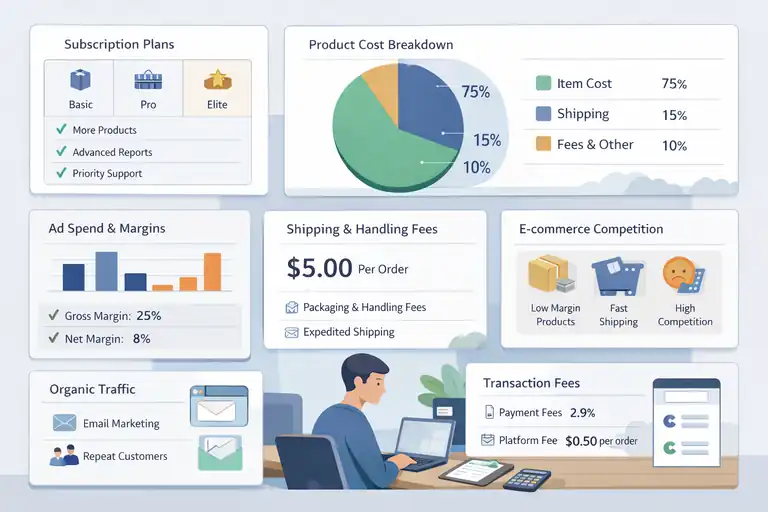
This is where dropshipping with Doba either makes sense or quietly falls apart. Most people underestimate how many small costs stack up.
Monthly Subscription Plans And What You Actually Unlock
Doba’s plans usually range from lower-tier starter access to higher-tier plans with advanced features.
What higher tiers typically unlock:
- More products and brands
- Advanced reporting
- Priority support
What they don’t unlock is better pricing. Supplier prices are mostly fixed regardless of your plan.
This means upgrading helps efficiency, not margins. If you’re not already selling, paying more rarely fixes that.
How Product Markups And Supplier Pricing Affect Margins
Doba suppliers price products assuming a wholesale buyer, not a dropshipper trying to undercut Amazon.
Common margin reality:
- 10–30% gross margin before ads
- Lower margins in competitive niches
- Better margins in boring, unsexy categories
For example, a $40 product might cost you $30 landed. After ads, returns, and fees, profit can shrink fast.
This is why many Doba sellers rely on:
- Organic traffic
- Email lists
- Repeat buyers
Paid ads with thin margins are tough here.
Shipping Fees, Handling Costs, And Hidden Profit Erosion
Shipping is rarely free inside Doba. Even when product prices look decent, shipping can quietly kill profitability.
Common hidden costs include:
- Per-item shipping fees
- Handling or packaging fees
- Expedited shipping upsells customers expect
Customers expect Amazon-like delivery. If your checkout surprises them with shipping fees, conversion rates drop. If you absorb shipping, margins drop.
Either way, you pay.
Transaction Costs Compared To Other Dropshipping Tools
Compared to AliExpress-based tools, Doba usually has:
- Higher product costs
- Faster shipping
- Lower dispute risk
Compared to supplier directories like SaleHoo:
- Less negotiation flexibility
- More automation
- Less margin upside
In my opinion, Doba sits in the “convenience premium” category. You pay extra for stability and simplicity.
Product Quality And Supplier Reliability On Doba
One of the biggest make-or-break factors with dropshipping with Doba is whether suppliers actually deliver what your customer expects.
On paper, everything looks clean. In reality, consistency varies more than most people realize.
How Consistent Doba Suppliers Are With Fulfillment Times
Doba suppliers often advertise faster shipping, especially compared to overseas marketplaces. Many ship from US warehouses, which helps. But consistency is not guaranteed across the board.
From what I’ve seen, fulfillment times usually fall into three buckets:
- Fast and predictable: 3–7 business days, mostly from established US brands.
- Acceptable but uneven: 7–12 days, often depending on stock location.
- Problematic: Delays during holidays, promos, or low-inventory periods.
Doba does not control fulfillment speed directly. It passes orders to suppliers, and you inherit their performance. That means two products in the same store can create totally different customer experiences.
If you plan to use dropshipping with Doba, I strongly suggest ordering test products yourself. This costs money upfront, but it saves you from surprise refund requests later.
Common Product Quality Risks Reported By Sellers
Doba generally filters out low-grade suppliers, but quality issues still happen. They’re just more subtle than the obvious knockoffs you see elsewhere.
Common complaints sellers report include:
- Inconsistent packaging: Product arrives intact but looks “warehouse generic.”
- Unbranded items: No inserts, no logos, no brand reinforcement.
- Material mismatches: Product works, but feels cheaper than photos suggest.
This matters because customers don’t compare you to other dropshippers. They compare you to Amazon.
In my experience, categories like office supplies, tools, and home basics perform better than fashion or beauty. Less emotional buying equals fewer complaints.
How Returns, Refunds, And Disputes Are Typically Handled
Returns with Doba are supplier-dependent, not platform-driven. That’s a key thing many sellers miss early on.
Here’s how it usually plays out:
- Customer contacts you
- You contact Doba
- Doba contacts the supplier
- Supplier approves or denies return
This process takes time. Sometimes days. Sometimes longer.
Most suppliers require unused products and original packaging. Return shipping is often paid by you or the customer, not the supplier.
My honest take: If your brand promise includes “hassle-free returns,” dropshipping with Doba will test your patience.
Supplier Transparency And Communication Limitations
Doba limits direct communication with suppliers. You don’t email them directly. Everything runs through the platform.
This creates two issues:
- Slower problem resolution
- Limited ability to negotiate or customize
You can’t ask for custom packaging, inserts, or priority handling unless the supplier already offers it.
This is fine for testing products. It’s frustrating when you’re trying to build something long-term.
Profit Margin Potential Using Doba In Real Scenarios
Profitability is where the hype around dropshipping with Doba usually gets challenged. It can work, but only in specific situations.
Low Ticket Vs High Ticket Products On Doba
Low-ticket products look tempting because they’re easier to sell. Unfortunately, margins rarely survive after costs.
Typical low-ticket math:
- Product cost: $15
- Shipping: $8
- Selling price: $29
- Gross margin before ads: $6
That disappears fast.
High-ticket products tell a different story:
- Fewer competitors
- Higher absolute margins
- Lower ad pressure
I’ve seen sellers do better with $150–$400 products like furniture, equipment, or B2B supplies. You need fewer sales to stay profitable.
How Competition Inside The Doba Marketplace Affects Pricing
Every Doba seller sees the same catalog. That creates internal competition, even if you’re in different niches.
This usually leads to:
- Price matching races
- Identical product descriptions across stores
- Limited differentiation
If you’re selling the same product as ten other stores, price becomes the main lever. That’s rarely a winning game.
The sellers who survive focus on:
- Content
- Bundles
- Trust signals
Not price alone.
Niche Selection Challenges When Using Shared Suppliers
Doba works best in niches where:
- Branding matters less
- Products solve boring, practical problems
- Repeat purchases are possible
Bad fits include:
- Trend-driven fashion
- Influencer-style products
- Highly emotional purchases
Shared suppliers mean shared limitations. If everyone has the same access, niche selection becomes your real advantage.
Scaling Limitations That Reduce Long Term Profitability
Scaling with Doba is possible, but it’s not frictionless.
Common scaling walls include:
- Supplier stock limits
- Slow support response times
- No volume discounts
- No private labeling path
In my opinion, dropshipping with Doba is best viewed as a stepping stone. It’s a solid starting point, not a forever platform.
Doba Vs Alternative Dropshipping Platforms Compared
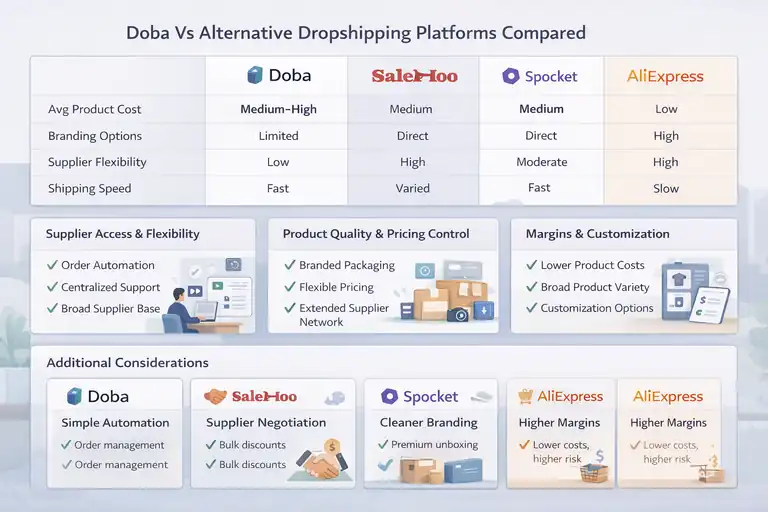
If you’re weighing dropshipping with Doba against other platforms, this is where things usually click. No platform is “best” overall. Each one rewards a different type of seller and punishes others quietly.
Doba Vs Spocket For Product Quality And Pricing Control
Spocket and Doba both lean toward US and EU suppliers, but they feel very different once you actually sell.
Key differences I’ve noticed:
- Product quality: Spocket generally wins for presentation and perceived quality.
- Pricing control: Spocket allows more margin flexibility through direct supplier pricing.
- Automation: Doba feels more centralized and rigid.
Here’s a simple comparison to make it clearer:
| Platform | Avg Product Cost | Branding Options | Supplier Control |
| Doba | Medium–High | Limited | Low |
| Spocket | Medium | Moderate | Medium |
If you want cleaner packaging and better product photos, Spocket often feels safer. If you want fewer supplier decisions and less setup thinking, dropshipping with Doba feels simpler.
Doba Vs SaleHoo For Supplier Access And Flexibility
SaleHoo is not an automation platform. It’s a supplier directory, meaning you contact suppliers yourself.
That difference matters.
SaleHoo gives you:
- Direct communication with suppliers
- Negotiation opportunities
- Potential bulk discounts
Doba gives you:
- Order automation
- Centralized support
- Less supplier management
In my experience, SaleHoo works better for sellers who already know what they want to sell. Doba works better when you want guardrails and fewer moving parts.
Doba Vs AliExpress For Margins And Customization
AliExpress is where margins look amazing on paper and collapse in reality.
AliExpress advantages:
- Lower product costs
- Massive product variety
- Customization options
AliExpress downsides:
- Long shipping times
- Quality inconsistency
- High refund risk
Doba flips that trade-off:
- Higher costs
- Better reliability
- Lower chaos
If you rely on paid ads, Doba’s predictability helps. If you’re experimenting organically and testing trends, AliExpress still has a place.
When Doba Makes More Sense Than Other Platforms
Dropshipping with Doba makes the most sense when:
- You value stability over margins
- You want US-based fulfillment
- You don’t want supplier outreach
- You prefer predictable workflows
It’s not exciting. It’s functional. And sometimes, boring works.
Who Dropshipping With Doba Is Best For And Who Should Avoid It
This is the section I wish more people read before signing up. Doba is not neutral. It favors certain behaviors.
Beginners Looking For Simplicity Over High Margins
If you’re new and overwhelmed, Doba can feel like relief.
It’s best for beginners who:
- Want fewer technical decisions
- Are okay learning with lower profits
- Prefer structure over freedom
You trade upside for calm. Early on, that’s not a bad deal.
Sellers Running Test Stores Or Short Term Experiments
Doba works well for:
- Market validation
- Niche testing
- Seasonal stores
Because setup is fast, you can test ideas without building deep supplier relationships. Just remember the subscription cost keeps ticking.
Why Brand Builders May Outgrow Doba Quickly
If your goal is to build a brand, Doba eventually feels limiting.
Common friction points:
- No private labeling path
- No custom inserts or packaging
- No supplier loyalty benefits
Once branding matters, most sellers move on.
Signs Doba Is Not The Right Fit For Your Business Goals
Doba may not be right if:
- You rely heavily on paid ads
- You want custom products
- You want supplier negotiation power
- You’re chasing maximum margins
My honest take? Dropshipping with Doba is a solid starting block, not a finish line. If you treat it like that, it does its job without disappointment.
FAQ
Is dropshipping with Doba profitable in 2026?
Yes, dropshipping with Doba can be profitable, but only in specific scenarios. It works best for sellers using organic traffic, selling higher-ticket or practical products, and prioritizing stability over aggressive margins. It is not ideal for ad-heavy or price-competitive strategies.
Why do many sellers say dropshipping with Doba is overhyped?
Dropshipping with Doba is often overhyped because subscription fees, fixed supplier pricing, and shipping costs reduce margins more than expected. Many beginners assume automation equals profitability, but success still depends on niche choice, traffic quality, and realistic pricing.
Who should use Doba instead of other dropshipping platforms?
Doba is best for beginners, test stores, and sellers who want US-based fulfillment with minimal supplier management. It is less suitable for brand builders, custom product sellers, or anyone chasing maximum profit margins.

I’m Juxhin, the voice behind The Justifiable.
I’ve spent 6+ years building blogs, managing affiliate campaigns, and testing the messy world of online business. Here, I cut the fluff and share the strategies that actually move the needle — so you can build income that’s sustainable, not speculative.
Related posts:
 Salehoo Dropshipping Reviews: Is It Worth Your Money Today?
 Dropshipping Business Model Success: Tips for Long-Term Growth
 Start Dropshipping Today: A Simple Guide for Complete Beginners
 Dropshipping Marketing Strategies That Actually Drive Sales
 Dropshipping Platforms Ranked: Speed, Fees, and Control
 Creating an Online Store: What You Need for Your First 50 Orders