
Table of Contents
Some links on The Justifiable are affiliate links, meaning we may earn a small commission at no extra cost to you. Read full disclaimer.
Here’s the thing about ecommerce bookkeeping: when it’s done right, you feel calmer about money, decisions get easier, and cash flow stops being this constant source of stress.
I’ve seen how small bookkeeping habits can quietly make or break an ecommerce business, so this guide focuses on practical tips that actually keep your cash flow clean and predictable.
Separate Ecommerce Finances To Protect Cash Flow Clarity
This is one of those ecommerce bookkeeping tips that sounds obvious, yet it’s where I see most cash flow problems quietly begin.
When finances are mixed, it becomes almost impossible to trust your numbers, and clean cash flow depends on trust.
Open Dedicated Business Bank And Payment Accounts
If there’s one habit I’d push you to adopt immediately, it’s opening accounts used only for your store.
A dedicated business checking account and payment processor account (like Stripe or PayPal) create a clean financial boundary that simplifies everything downstream.
Why this matters in real life: When payouts, refunds, fees, and taxes all flow through one place, you can quickly answer questions like “How much cash do I actually have to reorder inventory?” without guessing.
What I usually recommend setting up:
- One business checking account for operating cash
- One savings account for taxes and reserves
- Dedicated payment processors tied only to your store
In my experience, sellers who do this early spend far less time cleaning up books later, and accountants charge them less because the data is cleaner.
Isolate Personal Spending From Store Transactions
This is where ecommerce bookkeeping breaks down emotionally, not just technically. It’s tempting to swipe the business card for groceries or “borrow” from store funds, but that blurs reality fast.
What goes wrong when spending mixes:
- Profit looks higher or lower than it really is
- Expense categories become unreliable
- Cash flow forecasts turn into guesswork
A simple rule I use myself: Pay yourself, then spend personally. Owner draws or payroll create clarity and discipline. You’ll know exactly what the business can afford, and your books will finally reflect reality instead of intention.
Connect Sales Channels Directly To Financial Accounts
Every sales channel should flow straight into your bookkeeping system without manual handling. That includes platforms like Shopify, Amazon, Etsy, and Walmart Marketplace.
Here’s how this helps cash flow stay clean:
- Sales, refunds, and fees sync automatically
- Payout timing differences are easier to track
- Platform fees stop hiding inside “miscellaneous”
When everything is connected, ecommerce bookkeeping becomes a monitoring task instead of a data-entry chore. You’re watching trends, not chasing numbers.
Reconcile Accounts Weekly To Catch Errors Early
Weekly reconciliation sounds tedious until you realize it saves hours of stress later. This simply means matching your bank and payment account balances with what your books say.
Weekly reconciliation catches:
- Missing payouts
- Duplicate expenses
- Incorrect fee postings
- Sales tax misallocations
I suggest doing this every Friday or Monday morning. Fifteen minutes weekly beats a full weekend of cleanup at month-end, and your cash position stays trustworthy in real time.
Track Inventory Costs Accurately To Avoid Cash Surprises
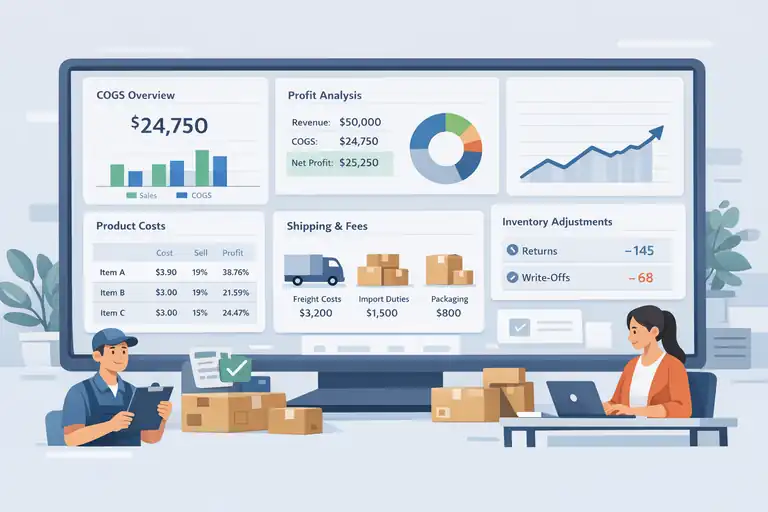
Inventory is usually the biggest cash commitment in ecommerce, yet it’s often tracked the worst.
Clean ecommerce bookkeeping depends on knowing not just what you sold, but what it actually cost you.
Record Cost Of Goods Sold In Real Time
Cost of Goods Sold (COGS) is the total cost to produce or purchase what you sell. When this lags behind reality, profit reports lie.
Real-time COGS tracking helps you:
- See true profit per product
- Avoid over-reordering low-margin items
- Spot rising supplier costs early
I’ve seen sellers think they’re profitable, only to discover months later that margins vanished due to supplier increases they never tracked. Real-time updates prevent that blind spot.
Account For Shipping, Duties, And Packaging Expenses
Inventory costs don’t stop at the product price. Cash flow suffers when “extra” costs aren’t included.
Expenses that should roll into inventory costs:
- Freight and last-mile shipping
- Customs duties and import taxes
- Boxes, inserts, and branded packaging
When these are excluded, your bookkeeping inflates profit and underestimates how much cash you’ll need for the next reorder. Including them gives you a more honest picture of how expensive growth really is.
Adjust Inventory Values For Returns And Write-Offs
Returns and damaged inventory quietly drain cash. If they’re not reflected properly, your books will overstate assets and understate losses.
Best practices I’ve found effective:
- Write off unsellable inventory monthly
- Adjust COGS when refunds are issued
- Track return rates by product
For example, a 12% return rate on apparel can turn a “winning” product into a break-even one. Ecommerce bookkeeping should surface that truth early, not months later.
Sync Inventory Tools With Ecommerce Bookkeeping Systems
Manual inventory tracking doesn’t scale. Syncing inventory software with your accounting platform keeps data aligned automatically.
Why syncing matters for cash flow:
- Inventory levels update with each sale
- COGS posts accurately without delays
- Reorder points are based on real numbers
When systems talk to each other, you stop reacting to cash shortages and start planning around predictable inventory cycles. That’s when ecommerce bookkeeping shifts from stressful to strategic.
Expert tip: If you want cleaner cash flow fast, fix separation first, then inventory second. Everything else in ecommerce bookkeeping becomes easier once those two foundations are solid.
Automate Ecommerce Bookkeeping To Reduce Costly Mistakes
Automation is where ecommerce bookkeeping starts saving you time instead of stealing it.
I’ve yet to meet a seller who enjoys manual data entry, and more importantly, humans are terrible at doing repetitive financial tasks without errors.
Automation isn’t about being fancy. It’s about protecting cash flow from silent mistakes.
Use Accounting Software Built For Ecommerce Sellers
Generic accounting tools work fine for service businesses, but ecommerce has extra layers: payouts, fees, refunds, inventory, and sales tax. Software built for ecommerce understands those layers natively.
Here’s what I personally look for in ecommerce-friendly accounting software:
- Handles gross sales versus net payouts correctly
- Separates marketplace fees automatically
- Supports inventory and COGS tracking
- Syncs directly with sales platforms
For example, QuickBooks Online paired with ecommerce connectors is popular because it handles multi-channel complexity well.
Xero is another solid option for sellers operating internationally. The key isn’t the brand. It’s whether the tool understands how ecommerce money actually moves.
A small stat worth noting: Intuit reports businesses using automated accounting tools reduce bookkeeping errors by over 30%. That’s fewer surprises and cleaner cash flow.
Sync Marketplaces Like Shopify, Amazon, And Etsy
This is where automation really earns its keep. Each marketplace reports money differently, and manually reconciling them is exhausting.
When you sync platforms directly:
- Sales post automatically
- Refunds are recorded correctly
- Platform fees don’t disappear into confusion
- Payout delays are clearly visible
A common scenario I see: A seller checks Shopify revenue and assumes that’s cash available. But Amazon might still be holding funds, and Etsy fees haven’t hit yet. Syncing shows what’s earned versus what’s actually usable.
That clarity alone can prevent accidental overspending.
Automate Expense Categorization And Bank Feeds
Bank feeds pull transactions directly into your accounting software. Expense rules then categorize them automatically based on past behavior.
Here’s how I usually set this up:
- Advertising tools always map to marketing expenses
- Shipping labels map to fulfillment costs
- Software subscriptions map to operating expenses
This removes decision fatigue and keeps categories consistent. Clean categories mean better reports, and better reports mean smarter cash decisions. Ecommerce bookkeeping should support decisions, not slow them down.
Schedule Regular Automation Audits To Ensure Accuracy
Automation isn’t “set it and forget it.” I suggest monthly or quarterly check-ins.
During an automation audit, I look for:
- Uncategorized transactions
- Duplicate entries
- Fee misclassifications
- Broken integrations
Think of this as maintenance, not cleanup. Ten minutes of checking prevents months of distorted data. Automation works best when you stay lightly involved.
Manage Sales Tax Properly To Prevent Cash Flow Gaps
Sales tax is one of the biggest cash flow traps in ecommerce bookkeeping. It feels like revenue when it hits your account, but it was never yours to spend.
Treating it correctly keeps you out of trouble and protects future cash.
Track Nexus Across States And Regions
Nexus simply means a tax obligation in a specific location. You create nexus through physical presence, inventory storage, or sometimes sales volume.
Common nexus triggers include:
- Warehousing inventory in fulfillment centers
- Exceeding sales thresholds in certain states
- Operating internationally with VAT requirements
I’ve seen sellers unknowingly build five-state nexus within a year. Tracking this early prevents panic filings later and keeps cash flow predictable.
Separate Sales Tax From Revenue Immediately
This is a mindset shift that changes everything. Sales tax should never sit in your operating cash mentally or practically.
A simple habit that works:
- Transfer collected sales tax into a separate savings account weekly
- Never include it in profit calculations
- Treat it as untouchable
This one move alone has saved clients from scrambling when quarterly filings hit. Ecommerce bookkeeping becomes calmer when tax money is clearly off-limits.
Automate Sales Tax Calculations And Filings
Manual sales tax calculations are risky. Rates change, rules differ, and mistakes are expensive.
Automation tools calculate tax at checkout and track liabilities automatically. That means:
- Accurate rates by location
- Clean reports for filing
- Less time worrying about compliance
According to Avalara, automated tax systems reduce filing errors by over 50%. That’s fewer penalties and fewer unexpected cash drains.
Prepare For Sales Tax Payments With Cash Reserves
Even with automation, timing matters. Marketplaces may delay payouts, but tax deadlines don’t move.
I recommend:
- Maintaining a rolling sales tax reserve
- Forecasting tax payments monthly
- Reviewing liabilities before major inventory buys
When reserves are ready, tax payments feel routine instead of stressful. That’s the real goal of ecommerce bookkeeping: stability, not perfection.
Best practice: Automate as much as you can, then review just enough to stay confident. Clean systems plus light oversight beat manual control every time.
Monitor Cash Flow Reports Weekly For Smarter Decisions

Weekly cash flow reviews are where ecommerce bookkeeping becomes practical instead of theoretical.
You’re no longer asking, “Did we make money last month?” You’re asking, “What can I safely do with cash this week?” That shift changes how confidently you operate.
Use Cash Flow Statements Instead Of Just Profit Reports
Profit reports feel comforting, but they don’t tell you whether money is actually available. Cash flow statements show what moved in and out of your accounts during a period.
Why I rely on cash flow statements weekly: Profit includes unpaid invoices, pending payouts, and accounting adjustments. Cash flow shows what’s real and usable right now.
Here’s what to focus on each week:
- Cash from operating activities
- Cash spent on inventory and ads
- Ending cash balance
I’ve worked with sellers who were “profitable” on paper but couldn’t pay suppliers on time. Once they switched to weekly cash flow reviews, those surprises stopped.
Identify Seasonal Trends And Revenue Cycles
Weekly data makes patterns visible fast. You start seeing which weeks are naturally strong and which quietly drain cash.
What patterns usually show up first: Holiday spikes, post-sale slowdowns, and ad-heavy weeks that lag in returns.
For example, many DTC brands see revenue peaks on weekends but ad charges hit midweek. Without weekly monitoring, that timing mismatch can feel like a mystery cash leak.
Once you see these cycles, you can:
- Time inventory orders better
- Delay non-essential expenses
- Prepare mentally and financially for slow weeks
Spot Cash Leaks In Ads, Apps, And Fulfillment Fees
Small recurring expenses are notorious for eroding cash flow. Weekly reviews make them obvious.
Common leaks I see repeatedly:
- Ad campaigns that spend daily but stopped converting
- App subscriptions no one remembers signing up for
- Fulfillment fees creeping up with dimensional pricing
A quick weekly scan often reveals one or two expenses you can pause immediately. Cutting even 3–5% of weekly outflow compounds into serious breathing room over a quarter.
Forecast Cash Needs For Inventory And Marketing
Once you understand weekly inflows and outflows, forecasting becomes realistic instead of hopeful.
A simple weekly forecast answers:
- How many weeks of cash runway you have
- When inventory reorders will strain cash
- Whether marketing spend is actually affordable
I suggest forecasting at least 6–8 weeks ahead. Ecommerce bookkeeping isn’t about predicting perfectly. It’s about seeing problems early enough to adjust calmly.
Record Refunds, Chargebacks, And Fees Correctly
Refunds and fees are unavoidable in ecommerce, but recording them incorrectly distorts reality.
Clean ecommerce bookkeeping shows the true cost of doing business, even when it’s uncomfortable.
Categorize Refunds Without Distorting Revenue Numbers
Refunds shouldn’t erase history. They should tell a story.
The clean approach I recommend: Record gross sales first, then record refunds separately. This keeps revenue trends visible while still reflecting what customers returned.
When refunds are netted incorrectly:
- Conversion data becomes misleading
- Product performance looks better than it is
- Cash flow projections drift off course
Seeing refunds clearly helps you decide whether a product needs fixing or just better expectation setting.
Track Payment Processor And Marketplace Fees
Every platform takes a cut, and those cuts add up faster than most sellers realize.
Fees that should always be tracked separately:
- Payment processing fees
- Marketplace referral fees
- Currency conversion fees
- Payout adjustment fees
Here’s a quick comparison example to illustrate why this matters:
| Platform | Avg Fee Range | Common Hidden Cost |
| Shopify Payments | ~2.9% + $0.30 | Chargeback fees |
| Amazon | 8–15% | Storage penalties |
| Etsy | ~6.5% | Listing renewals |
Once fees are visible, pricing decisions become grounded in reality instead of hope.
Monitor Chargeback Trends For Financial Impact
Chargebacks hurt twice: you lose revenue and pay penalties.
What I watch monthly:
- Chargeback rate by product
- Reason codes like “item not as described”
- Fees per incident
Even a 0.5% increase in chargebacks can materially affect cash flow at scale. Monitoring trends early gives you time to fix product pages or fulfillment issues before they snowball.
Reconcile Payout Differences From Sales Platforms
Marketplaces rarely pay exactly what you expect on the first glance.
Payout differences usually come from:
- Reserve holds
- Delayed refunds
- Fee adjustments
- Dispute reversals
Reconciling payouts ensures your books match reality, not assumptions. This step alone prevents countless “Where did the money go?” moments.
Prepare Monthly Financial Reviews To Stay In Control
Monthly reviews are your reset button. They turn daily noise into clear signals and help ecommerce bookkeeping support growth instead of reacting to it.
Close Books Monthly With Consistent Checklists
Consistency beats perfection here. A simple monthly checklist creates discipline and trust in your numbers.
A solid close checklist includes:
- Reconcile all bank and payment accounts
- Review uncategorized transactions
- Confirm inventory and COGS accuracy
- Lock the period once complete
When books are closed cleanly, decisions stop being emotional and start being informed.
Review Profit Margins By Product Or Channel
Not all revenue is equal. Monthly reviews reveal where cash is actually being generated.
I like breaking margins down by:
- Product SKU
- Sales channel
- Promotion versus full-price sales
It’s common to discover that a top-selling product barely breaks even once fees and returns are included. That insight alone can change your marketing focus instantly.
Adjust Budgets Based On Real Cash Performance
Budgets shouldn’t be static. They should respond to what actually happened.
If cash flow tightened:
- Reduce ad spend temporarily
- Delay inventory expansion
- Pause non-essential tools
If cash improved:
- Increase high-performing ads
- Order inventory earlier
- Build reserves
Ecommerce bookkeeping works best when budgets follow cash, not ego.
Use Clean Books To Plan Growth Without Overstretching
Clean books give you permission to grow responsibly.
With accurate data, you can:
- Model inventory expansion safely
- Plan hires without anxiety
- Invest in marketing without guessing
In my experience, growth doesn’t fail because of bad ideas. It fails because cash reality was misunderstood. Clean ecommerce bookkeeping keeps ambition grounded.
Pro tip: If weekly reviews keep you steady and monthly reviews keep you honest, your cash flow will rarely surprise you again.

I’m Juxhin, the voice behind The Justifiable.
I’ve spent 6+ years building blogs, managing affiliate campaigns, and testing the messy world of online business. Here, I cut the fluff and share the strategies that actually move the needle — so you can build income that’s sustainable, not speculative.
Related posts:
 Find Ecommerce Accountants Who Understand Online Sales
 Headless Ecommerce Platform: Is It the Faster Way to Scale?
 Ecommerce CRM Tools That Turn Customers Into Repeat Buyers
 Online Store Website Builder That Helps You Sell Fast
 Starting an Ecommerce Business: A Realistic Step-By-Step Guide
 Salehoo Directory Free: What You Can Access Without Paying