
Table of Contents
Some links on The Justifiable are affiliate links, meaning we may earn a small commission at no extra cost to you. Read full disclaimer.
If you’re a freelance Flutter developer, you’ve probably asked yourself: how do I stand out and consistently grow in such a competitive market?
Flutter has opened doors for independent developers to build beautiful cross-platform apps, but success as a freelancer takes more than technical skill. It’s about positioning, networking, consistency, and creating visible value that attracts clients.
In this guide, we’ll walk through seven practical steps to help you elevate your skills, increase demand, and build a thriving freelance career around Flutter.
1. Define Your Freelance Flutter Developer Niche
Before you start marketing yourself as a freelance Flutter developer, you need to know exactly who you’re serving and what kind of projects you want to attract.
This clarity helps you stand out in a crowded market, price your services properly, and build a strong brand around your expertise.
Identify Your Ideal Client and Project Type
Every successful freelancer has a clear vision of their ideal client. Are you targeting startups that need MVPs (Minimum Viable Products)?
Small businesses looking for affordable cross-platform apps? Or larger enterprises needing internal tools built with Flutter?
To find your sweet spot, look at your previous work and ask:
- Which projects did I enjoy the most?
- Where did I deliver the most value?
- What type of clients were the easiest to work with?
Let’s say you’ve built a few eCommerce apps with Flutter. That’s a clear direction to niche down into “Flutter apps for eCommerce brands.” You could then focus your portfolio, marketing copy, and pricing around that.
When you identify your client type early, your outreach becomes sharper—you stop being “a freelancer who does Flutter” and become “the Flutter developer who helps startups launch polished apps fast.”
That subtle difference builds trust and relevance instantly.
Research Market Demand for Specific Flutter Use Cases
Before settling on your niche, it’s smart to validate demand. You don’t want to pick a direction that has little or no paying clients.
Check platforms like Upwork, Fiverr, and Toptal to see what types of Flutter jobs are trending.
Use filters to identify:
- Job frequency by app type (e.g., fintech, eCommerce, SaaS).
- Average budget range.
- Skill requirements (e.g., state management, Firebase integration).
For example, Flutter is heavily in demand for cross-platform SaaS dashboards and mobile-first booking systems.
I suggest monitoring LinkedIn and GitHub repositories, too. Seeing active Flutter projects and hiring trends gives you a real-world signal of what’s growing.
Data-backed decisions here help you pick a profitable direction rather than following personal preference alone.
Align Your Skills With High-Value Industry Segments
Once you identify which industries pay well and hire consistently, align your skills accordingly.
For instance:
- Healthcare apps often need HIPAA-compliant systems—learn secure API integration.
- Fintech apps require smooth animations and precise UI—master Flutter’s CustomPainter and AnimationController.
- E-commerce clients value quick performance—optimize code for smooth scrolling and real-time inventory updates.
I recommend studying 2–3 Flutter projects in your target industry, replicating their features, and documenting the process.
This not only sharpens your niche expertise but also gives you concrete portfolio pieces that speak directly to your audience.
2. Build a Strong and Authentic Personal Brand
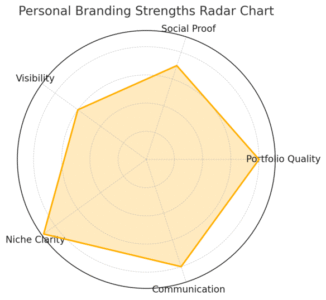
In freelancing, your brand is your business. It’s how clients perceive your reliability, skill, and personality before you ever speak with them.
A strong personal brand builds authority, shortens the sales cycle, and attracts the right clients naturally.
Create a Professional Portfolio That Tells a Story
Your portfolio shouldn’t just be a list of projects—it should be a narrative. Each project should communicate what problem you solved, how you approached it, and what results you achieved.
Here’s a simple structure I often suggest:
- Project Summary: What the app does and the goal.
- Tech Stack: Include Flutter version, Firebase, APIs used, etc.
- Before & After Impact: How your work improved performance, user engagement, or design.
For example, if you built a fitness tracking app, you could mention: “Reduced app load time by 45% after migrating to Flutter 3.16 using Dart null safety and custom caching logic.” These numbers tell your story better than vague claims.
Platforms like Dribbble, GitHub, or your own Notion portfolio can serve as excellent homes for your case studies.
Use Social Proof to Build Credibility and Trust
Clients trust other clients’ words more than yours. That’s why social proof—testimonials, ratings, and endorsements—matters.
Start collecting:
- Client testimonials with measurable outcomes.
- Before/after screenshots showing tangible app improvements.
- LinkedIn recommendations confirming your professionalism.
You can use short video testimonials or screenshots in your proposal PDFs. They humanize your work and give proof of reliability.
If you’re new, build your first few Flutter apps at a discounted rate in exchange for honest reviews. Early credibility compounds over time.
Optimize Your Online Presence Across Platforms
Your digital footprint is your resume. When someone Googles your name, they should instantly see your Flutter work, testimonials, and social engagement.
- LinkedIn: Write a headline like “Freelance Flutter Developer | Building Beautiful, Fast Apps for Startups.”
- GitHub: Keep your repositories public, with clear README files and Flutter badges.
- Portfolio Site: Use simple navigation—Home, Work, About, Contact—with CTAs linking to your email or Calendly.
I also suggest writing short, value-driven posts on LinkedIn about Flutter tricks or development insights. Consistency here helps you become known as a helpful expert in the community.
3. Strengthen Core Flutter and Mobile Development Skills
Technical growth is the foundation of your freelance success.
The better you get at solving complex problems, the higher you can charge and the more selective you can be with clients.
Master Advanced Flutter Features and Best Practices
Once you’re comfortable with the basics, move into advanced Flutter topics.
Focus on:
- State Management: Learn Riverpod, Bloc, or Provider deeply.
- Animations: Practice Implicit and Explicit animations for smooth UI transitions.
- Performance Optimization: Profile builds using Flutter DevTools to cut unnecessary rebuilds.
For instance, using Bloc architecture for complex apps can improve scalability and debugging clarity. If you can demonstrate this in your portfolio, clients instantly see senior-level skill.
Also, keep your Flutter and Dart versions updated. Many projects still use old versions, so being up-to-date sets you apart.
Learn Complementary Technologies (Firebase, REST APIs, etc.)
A Flutter app rarely exists in isolation—it usually connects to a backend. Understanding Firebase or REST APIs gives you a major advantage.
- Firebase: Learn authentication, Firestore, Cloud Functions, and push notifications.
- REST APIs: Practice handling JSON data, HTTP requests, and response parsing.
- CI/CD Tools: Use Codemagic or GitHub Actions to automate builds and deployment.
For example, integrating Firebase Analytics lets clients track in-app behavior—something businesses value for decision-making. I’ve found offering this as an “extra” in your proposal often justifies higher pricing.
Keep Up With Flutter Updates and Community Trends
Flutter evolves fast. To stay relevant, follow the Flutter Dev YouTube channel, Medium blogs, and Reddit’s r/FlutterDev community.
Here’s what I recommend:
- Watch Flutter’s release notes every quarter.
- Attend virtual Flutter meetups or conferences.
- Subscribe to the Flutter Weekly newsletter for curated updates.
Experiment with new widgets, frameworks, or patterns as they’re released. Being among the first to implement a new Flutter feature (like Impeller rendering engine or Material 3 widgets) can give you an edge and help you pitch yourself as a forward-thinking developer.
4. Showcase Your Work Through Real Projects and Open Source
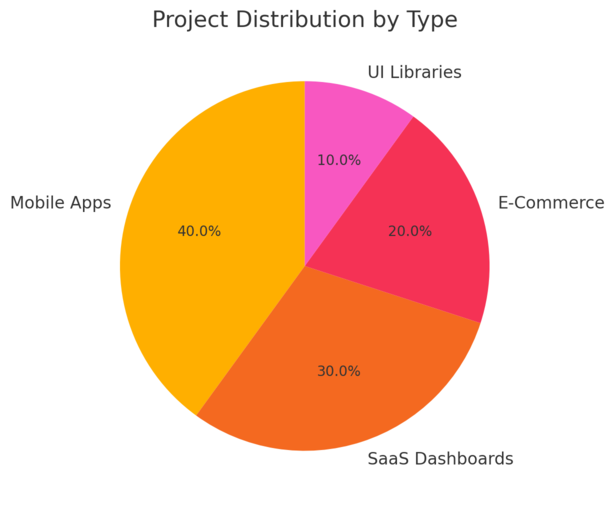
Nothing builds trust faster as a freelance Flutter developer than showing what you’ve built.
Real projects and open-source contributions let potential clients see your code quality, creativity, and problem-solving ability before hiring you.
Build Real-World Apps to Demonstrate Your Capabilities
When clients browse portfolios, they want proof you can deliver functional, well-structured apps—not just follow tutorials. That’s why I always recommend building at least two complete Flutter apps that solve real problems.
For instance, you could create:
- A task management app showcasing Flutter’s state management and animations.
- A weather app using REST APIs for live data and intuitive UI layouts.
- A shopping app prototype integrating Firebase for authentication and payments.
Focus on clarity in your GitHub repos—add a README that explains what technologies you used, your folder structure, and challenges you solved. Write it like a client brief, not just developer notes.
If you can, deploy your apps to Google Play or TestFlight (iOS). A live app link instantly boosts credibility. It signals, “I can take an idea all the way to deployment.”
Contribute to Open-Source Flutter Projects
One of the best ways to grow as a developer and get noticed is contributing to open-source. The Flutter community is vibrant and open to collaboration—contributing can lead to valuable networking and job opportunities.
Here’s how I recommend starting:
- Browse GitHub → Topics → Flutter and filter by repositories labeled “good first issue.”
- Pick projects that align with your skill level and interests, like FlutterFire or Awesome Flutter.
- Fix small bugs, improve documentation, or suggest new widgets.
Even a few consistent contributions make your GitHub profile more impressive. It shows you write maintainable, collaborative code.
One of my favorite examples is a freelancer who improved a Flutter UI library and later got hired by the project owner for a paid contract. Open-source work often leads to opportunities like that—without you ever applying.
Document and Share Case Studies to Build Authority
Think of a case study as storytelling for developers—it turns a project into proof of expertise. I suggest creating a simple case study layout for each completed app:
- Problem: What issue the client or project aimed to solve.
- Process: How you approached it using Flutter features (e.g., Provider for state management).
- Result: What performance or usability improvements came out of it.
Here’s an example: “I built a logistics tracking app that reduced manual reporting time by 40% using Flutter and Firebase Cloud Functions.”
Publish these stories on LinkedIn, Medium, or your personal site. They give you content to share, boost your SEO visibility, and demonstrate business impact—not just technical skill.
5. Learn How to Market Yourself Effectively
As a freelancer, your technical skill gets you in the game—but marketing yourself keeps the projects coming. Knowing how to promote your work without sounding “salesy” is a skill in itself.
Leverage Freelance Platforms Like Upwork and Toptal
Freelance marketplaces can be crowded, but they still offer massive opportunities if you approach them strategically.
I suggest:
- Optimize your profile: Write a headline like “Freelance Flutter Developer Building High-Performance Cross-Platform Apps.”
- Use strong keywords: Mention Flutter, Dart, Firebase, REST APIs, and UI/UX design.
- Create project-based proposals: Instead of sending generic pitches, reference the client’s pain point and share a specific solution.
For example, if a client posts about slow app performance, reply with: “I can optimize widget rebuilds and improve frame rendering using Flutter DevTools profiling. Here’s a similar case I worked on…”
Once you’ve built reputation on one platform, consider expanding to Toptal or Arc.dev—these focus on vetted, higher-paying clients.
Use Content Marketing to Attract Inbound Clients
I believe every serious freelancer should create content that attracts clients automatically. Writing or recording tutorials about Flutter not only shows your expertise but also drives leads.
Here’s what works best:
- Publish short Flutter tips on LinkedIn or X (Twitter).
- Write “how-to” guides on Medium (e.g., “How I Built a Chat App Using Flutter & Firebase”).
- Record quick YouTube demos explaining code optimizations or widget behavior.
When people learn from you, they start trusting you—and trust often leads to project inquiries. It’s inbound marketing that feels natural and sustainable.
Network in Flutter Communities and Developer Groups
Freelancing is about people as much as projects. Joining communities keeps you visible and connected to real opportunities.
Start with:
- Reddit’s r/FlutterDev for project collaboration and problem-solving.
- Discord and Slack groups like Flutter Community.
- Meetups and Flutter events where you can showcase your apps and meet startup founders.
I suggest genuinely engaging—helping others solve issues, reviewing code, and sharing what you learn. That authenticity builds your reputation faster than any cold pitch ever will.
6. Set Competitive and Sustainable Freelance Rates
Pricing can feel intimidating, but it’s one of the most important aspects of freelancing. You want to charge what you’re worth without scaring clients off.
Research Market Rates and Benchmark Your Value
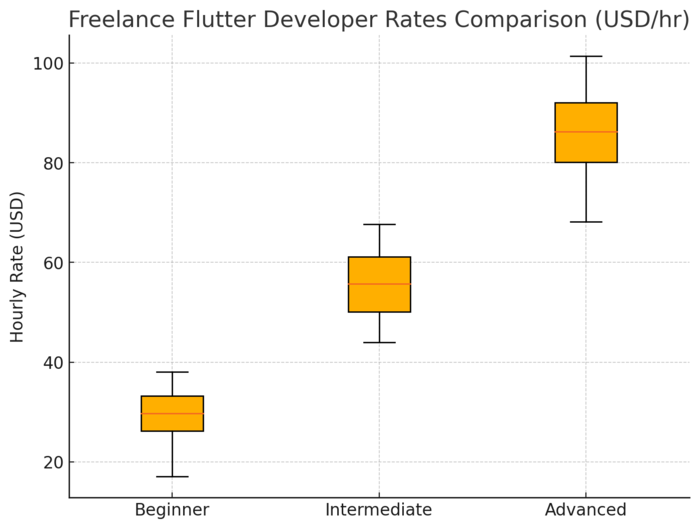
Start by checking platforms like Upwork, Toptal, and Glassdoor for rate benchmarks. You’ll see Flutter developers earning anywhere from $30 to $100+ per hour, depending on experience and region.
I advise breaking this down further:
- Beginners: $25–$40/hr
- Intermediate: $45–$70/hr
- Advanced/Specialized (e.g., Flutter + Firebase or AI): $80–$120/hr
Once you know the average, adjust based on your niche, demand, and speed. If you deliver faster with high quality, that’s extra value worth pricing in.
Build Tiered Pricing Packages for Different Clients
Clients love clarity. Instead of quoting random numbers, structure your pricing in tiers:
- Starter Package: Basic Flutter app, up to 3 screens, UI + API integration.
- Growth Package: Full cross-platform app with Firebase backend.
- Premium Package: Complete app with custom animations, CI/CD setup, and post-launch support.
This approach helps clients self-select based on budget while positioning you as a professional with structured offers. It also prevents endless scope creep—a common freelancer headache.
Learn to Negotiate Rates With Confidence
Negotiation isn’t about being aggressive—it’s about demonstrating value. When a client hesitates at your rate, remind them what they’re getting: reliability, communication, and quality Flutter development that saves them time.
A quick framework I use:
- Ask about their goals: Understand the business impact first.
- Reframe price as value: “This investment ensures your app launches faster with fewer bugs.”
- Stay calm: Silence is your best tool after stating your rate.
I’ve found that when you project quiet confidence, most serious clients will either meet your rate or adjust the scope to fit it.
7. Build Long-Term Client Relationships and Repeat Work
Getting new clients takes effort—but keeping existing ones is pure gold. Long-term partnerships bring stability and consistent income.
Deliver Consistently Exceptional Communication and Results
Technical skill gets you hired; communication keeps you hired. Always provide clear progress updates, respond promptly, and avoid surprises.
I recommend using tools like Trello or Notion for project transparency.
Share milestones like:
- App UI completion
- Backend integration
- Testing and deployment
When clients feel informed and involved, they’re more likely to rehire you for future projects.
Offer Maintenance and Support Packages
After launching an app, most clients still need updates, bug fixes, and new features. Offering ongoing maintenance packages is a great way to secure recurring income.
For example:
- Basic Support ($200/month): Monthly bug fixes and updates.
- Pro Support ($500/month): Includes analytics setup and performance optimization.
This turns one-time clients into ongoing partners. It also saves them time searching for new developers down the road.
Ask for Testimonials and Referrals Strategically
Once you’ve delivered a successful project, don’t let that goodwill fade—use it to fuel your growth. Ask for testimonials while the client’s enthusiasm is fresh.
You could say: “If you’re happy with the project, a short testimonial would mean a lot—it helps me connect with more great clients like you.”
Also, keep in touch every few months. Sometimes, just checking in about how the app is performing can lead to new work or referrals.

I’m Juxhin, the voice behind The Justifiable.
I’ve spent 6+ years building blogs, managing affiliate campaigns, and testing the messy world of online business. Here, I cut the fluff and share the strategies that actually move the needle — so you can build income that’s sustainable, not speculative.
Related posts:
 9 Best Freelance Websites for Beginners to Start Today
 Upwork Freelancer Tips to Avoid Scams and Wasted Money
 Freelance Coder: How to Land Your First Paid Gig Fast
 13 Top Freelance Websites to Land Jobs That Pay Well
 Fiverr Website Tips Every Buyer Should Know
 How to Become an Excel Freelancer With Steady Clients